Reviewed · VIP
Best of Split & Trogir: Private VIP Tour with Local Guide
Old Rome meets Venetian Trogir in one day.
This private VIP tour pairs the grand scale of Diocletian’s Palace with the small-town charm of Trogir, all in about 6 hours with a local guide who keeps you moving. I especially liked how the route gives you a fast orientation in Split’s palace complex, starting right at the Peristyle, the ancient “heart of the city” crossroads.
I also love the human touch from guides like Kristina and Andrea, who make the places make sense with clear explanations and personal stories, and who know how to handle busy areas without stressing you out. One consideration: several stops list admission as not included, including Diocletian’s Palace substructures and key Trogir sights like St. Lawrence’s Cathedral and the Kamerlengo Fortress, so you should plan a bit extra for entry fees.
In This Review
- Key highlights that make this tour worth your time
- A smooth, private day for your group
- The heart of Diocletian’s Palace: Peristyle orientation in minutes
- Saint Domnius and the old layers of faith
- Gregory of Nin: why one toe draws so many people
- Jupiter’s Temple: a Roman plot inside a palace complex
- Diocletian’s Palace substructures: the “basement halls” you should not skip
- How the private guide helps you move through Split
- Trogir’s central square: John Paul II Square as your compass
- St. Lawrence’s Cathedral: Romanesque-Gothic layers over centuries
- Kamerlengo Fortress: Venetian defense with a real view reward
- Town Loggia and civic life: where decisions happened
- Čipiko Palace: Gothic-Renaissance power in a residential shell
- Price and value: what $228.78 per person is really buying
- Practical tips so you enjoy every stop
- Who should book this tour
- Should you book the Best of Split and Trogir VIP tour?
- FAQ
- How long is the Best of Split & Trogir private VIP tour?
- What does the tour include in terms of language and tickets?
- Is pickup offered?
- Is this tour private?
- Are there group discounts?
- Which stops are free, and which require separate admission?
- Do I get confirmation after booking?
- What is the cancellation policy?
- Is the tour suitable for travelers with service animals?
- Where is the tour located?
Key highlights that make this tour worth your time
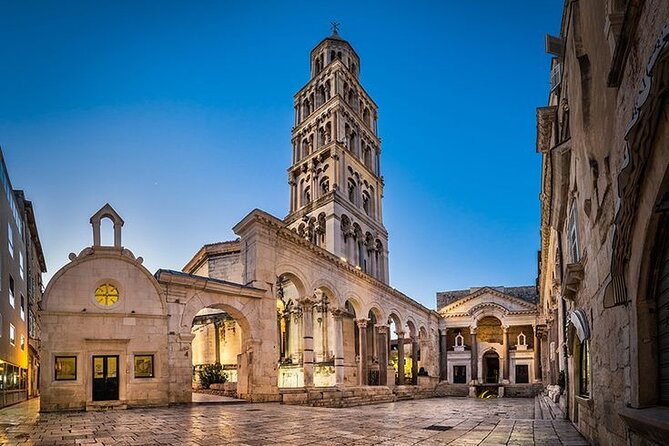
- Start smart at Diocletian’s Palace Peristyle, the palace’s main court at the crossroads of the two main roads
- See why the Cathedral of Saint Domnius matters, often cited as the oldest Catholic cathedral still in original structure and use
- Do the Gregory of Nin toe ritual, where the worn smooth toe is said to bring good luck
- Get guided access to the “basement halls” under the palace, a less-obvious layer of Roman life (some admission not included)
- Walk Trogir’s UNESCO old town core, moving from John Paul II Square past loggias and civic spaces
A smooth, private day for your group
This is built for people who want the highlights without the mental overhead. It’s a private tour, so it’s only your group, and you won’t be squeezed into a moving crowd while trying to read stone carvings and signs.
You can also get pickup, and the tour runs in English. There’s a mobile ticket, and group discounts are offered, which can make the price feel more reasonable if you’re traveling with at least a couple of people.
The tour length is about 6 hours, which is just enough time to see a lot and still pause for photos. It’s also a good sign that this is often booked well ahead, because this route is popular and timing matters when you want to avoid peak chaos.
The heart of Diocletian’s Palace: Peristyle orientation in minutes
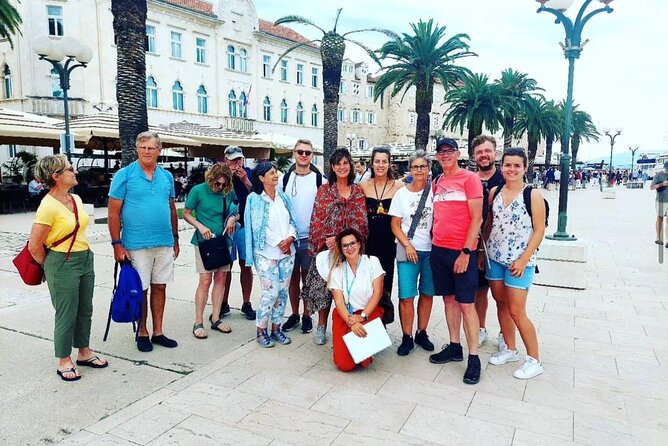
The day kicks off at the Peristyle of Diocletian’s Palace. This rectangular open court sits at the crossroads of the palace’s two main roads, and the idea was for it to act like the palace’s public center.
I like how starting here gives you a framework. Once you understand where the central court sits, the rest of the palace stops stop feeling random and start feeling like a mapped-out plan from Roman times.
Your visit here is listed as about 15 minutes, and admission is free. That makes it an easy first win, because you spend your energy on the guide’s storytelling and your own noticing, not on ticket timing.
Still riding at anchor off Split
- Split: Krka Waterfalls Trip with Boat Cruise and Swimming★ 4.8 · 10,519 reviews
- From Split: Krka Waterfalls, Food & Wine Tasting Tour★ 5.0 · 9,326 reviews
- Blue cave, Mamma Mia and Hvar, 5 islands speedboat tour★ 5.0 · 7,150 reviews
Saint Domnius and the old layers of faith
From the palace court, you move to the Cathedral of Saint Domnius. Consecrated at the turn of the 7th century AD, it’s regarded as the oldest Catholic cathedral in the world that remains in use in its original structure, with later changes that were not near-complete renovation.
What I find useful is that your guide can point out what stays from the earliest period and what is later, like the 12th-century bell tower. In a place this old, your eyes need a little help to separate original elements from later additions.
This stop is about appreciating continuity. You’re standing in a building that stayed relevant over centuries, even after the palace surroundings shifted into what Split looks like today.
Gregory of Nin: why one toe draws so many people
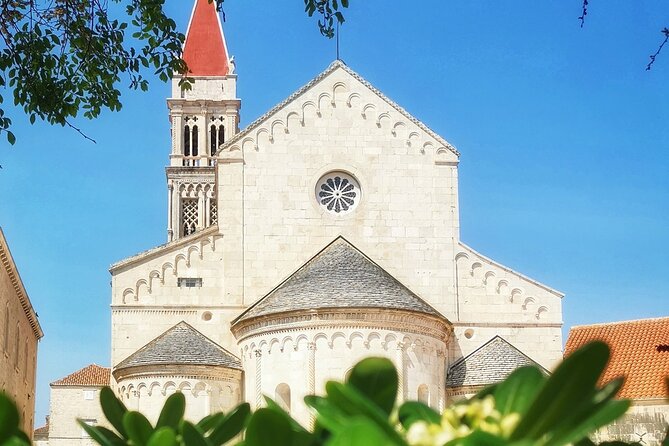
Next comes the Grgur Ninski Statue, a tall Gregory of Nin monument created by Ivan Meštrović. It’s about 8.5 meters tall, and the toe is famously smooth from the rubbing tradition.
It’s a simple cultural detail, but it’s also a clever way to get people interacting with history instead of just photographing it. The toe-rubbing custom is said to bring good luck, and it gives your stop a playful energy even if you’re not a big statue person.
This stop is short, around 15 minutes, and admission is free. It’s the kind of stop that works well in the middle of a longer walking day because it resets your attention without draining time.
Jupiter’s Temple: a Roman plot inside a palace complex
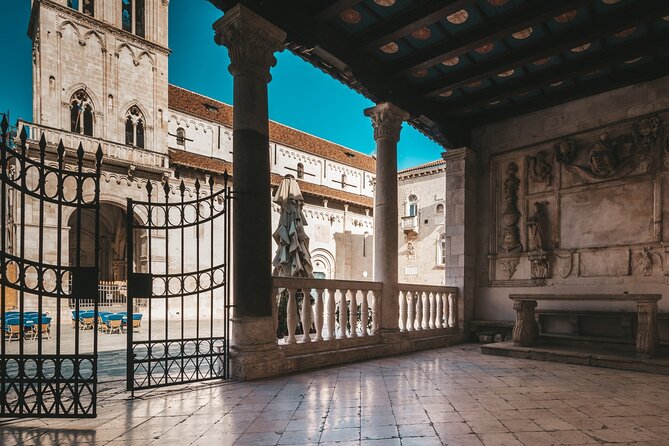
Inside Diocletian’s Palace, you’ll also see the Temple of Jupiter (Jupiterov hram). It’s in the western part of the palace complex near the Peristyle, and it was built between 295 and 305, during the palace’s construction.
This stop matters because it shows the palace was not just an administrative shell. It was a lived-in power center with religious architecture placed right inside daily Roman movement.
What’s great with a guide here is they can help you look for the temple’s setting within the palace layout. When you see it in context, you understand why it sits where it does, instead of treating it like a lone monument.
Two moorings down in Split:
- From Split: Krka Waterfalls, Food & Wine Tasting Tour
★ 4.9 · 6,598 reviews - Split/Trogir: Blue Cave, Mamma Mia, Hvar and 5 Island Tour
★ 4.6 · 6,320 reviews - Blue Lagoon & 3 Islands Cruise with Lunch from Split
★ 4.5 · 5,756 reviews - Blue Cave and Hvar Tour – 5 Islands Tour from Split and Trogir
★ 5.0 · 4,815 reviews
Diocletian’s Palace substructures: the “basement halls” you should not skip
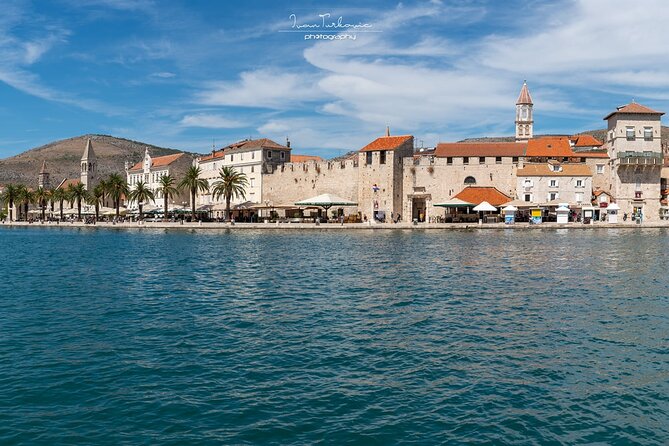
One of the most distinctive parts of the itinerary is the Diocletian Palace substructures, often called the cellars or “basement halls.” These sit at the southern end of the palace complex, in what’s now the southern edge of Split’s Stari grade area.
This is where you get a sense of how the palace supported private imperial life above. The substructures once held up Diocletian’s private apartments and are described as one of the best preserved ancient complexes of this kind.
The time here is about 15 minutes, and admission is not included. That’s your main budget heads-up on the tour, but it’s also your chance to see a layer most self-guided palace walks skip.
If you’re the type who likes structure, pathways, and behind-the-scenes parts of historic sites, this stop is one of the best values.
How the private guide helps you move through Split
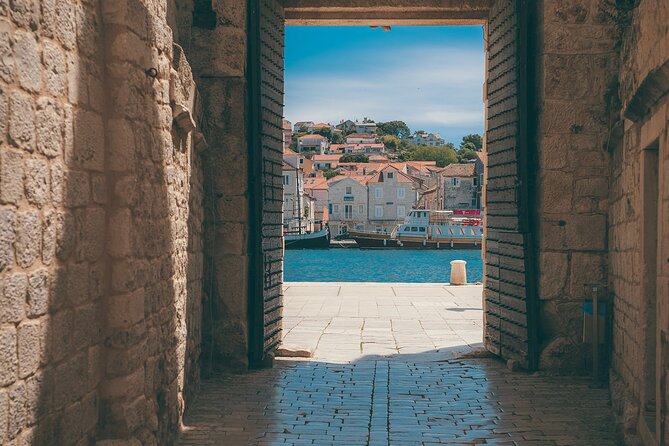
A big theme from the guides featured in feedback is practical ease. Andrea is praised for navigating crowds with confidence, and Kristina gets credit for being easy to understand and adding personal stories that make the day feel less like a checklist.
That matters in Split because the palace area can get crowded fast. With a private guide, you’re less likely to get stuck at the exact same bottleneck as everyone else, and you can follow a route that keeps your attention on what you’re seeing.
One note from the tour experience: the order can vary, and you might start with Trogir first depending on how the guide structures the route. That flexibility can help you fit the day to the flow of people.
Trogir’s central square: John Paul II Square as your compass
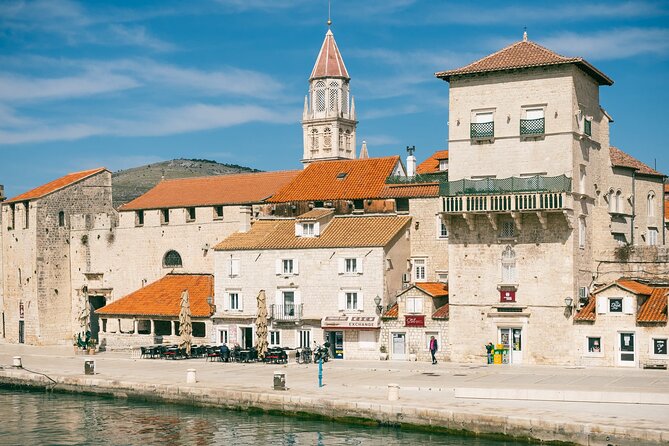
After Split, the tour shifts to Trogir, a small port town on the Adriatic in central Dalmatia. The Central Square in Trogir, also called John Paul II Square, is where your guided walk makes sense again.
This old town is listed as part of UNESCO monuments, and the square is framed by major buildings like the Loggia and Clock Tower. You’ll be there for about 15 minutes, and admission is free for this stop.
The guide can help you read the square like a map. Look for where civic life sat, where official decisions were made, and how the layout supports a town built for sea travel.
St. Lawrence’s Cathedral: Romanesque-Gothic layers over centuries
Next is Saint Lawrence’s Cathedral (Katedrala Sv. Lovre). It’s a Roman Catholic triple-naved basilica built in Romanesque-Gothic, and because construction lasted several centuries, it reflects multiple styles that followed each other in Dalmatia.
This stop works best if you pause and let the guide point out the style changes over time. Without guidance, these buildings can blur together. With guidance, you start seeing how architectural trends show up stone-by-stone.
Admission here is not included, and your visit is about 15 minutes. It’s still a key highlight because it’s described as the most imposing monument in Trogir.
Kamerlengo Fortress: Venetian defense with a real view reward
You’ll then reach Kula Karmelengo (the Kamerlengo Fortress), a 15th-century coastal fortress built during Venetian rule. It was designed to protect Trogir from naval attacks.
Even if you’re not a fortress person, you’ll probably enjoy this stop for the setting. The fortress is known for views over the old town, the marina, and nearby islands, so it gives your legs a short break while your eyes get a big payoff.
Admission is listed as not included, with about 15 minutes for the stop. If the day is hot, this is the point where you’ll feel thankful for the view, not just the history.
Town Loggia and civic life: where decisions happened
Back in the old town, you’ll see the Town Loggia, described as the public meeting place where medieval Trogir handled announcements and legal matters. It reflects the town’s long tradition of self-governance.
This is a good stop for travelers who like context. It’s not only about religion or Roman ruins. It’s about how everyday civic systems worked in a port town that needed rules, not just romance.
Admission is free here, and the stop is about 15 minutes. It’s also the kind of detail that helps you understand why Trogir felt special enough for UNESCO recognition.
Čipiko Palace: Gothic-Renaissance power in a residential shell
Finally, you’ll visit Palace Cipiko (Čipiko Palace), described as the largest residential palace in Trogir. It’s a strong example of Gothic-Renaissance architecture, tied to the influential Čipiko family.
This isn’t just about how it looks from the outside. A good guide will help you connect the palace to the idea of wealth and status in a town shaped by maritime trade.
Admission for this stop is not included, and it’s another short stop at about 15 minutes. If you enjoy noble residences and the way architecture signals social rank, this is a satisfying last stop.
Price and value: what $228.78 per person is really buying
At $228.78 per person for about 6 hours, the value mostly comes down to three things: a private local guide, a route that hits both Split and Trogir, and the time saved by not figuring out the order yourself.
You’re also getting help that goes beyond facts. Guides like Kristina are praised for being easy to understand, and Andrea for crowd navigation. That means less time wrestling with logistics and more time actually enjoying the places.
Then there’s the admission mix. Some stops are free, including the Peristyle, Grgur Ninski Statue, and parts of the Trogir civic core like the central square. Other stops are not included, such as the substructures in Split and major Trogir buildings like St. Lawrence’s Cathedral and the Kamerlengo Fortress.
So think of the price as paying for structure and guidance, plus a good chunk of free-access stops. If you budget for the paid entrances, the overall day tends to feel well balanced.
Practical tips so you enjoy every stop
Because this is a walking-heavy historic route, wear shoes you trust. The palace areas and old-town lanes are not the kind of surfaces where you want to test new sandals.
Plan your photos early. The palace viewpoints and the main Trogir squares can get busy, and a guide will likely help you time photo moments, especially if crowds build.
If you care about entrance planning, take a quick look at what’s not included in the itinerary. That way you do not get surprised mid-day.
Also, since a mobile ticket is provided and you can receive confirmation at booking time, you should be ready to keep your phone handy during the day.
Who should book this tour
This tour fits well if you want a guided overview of both Split and Trogir without spending the whole day reading maps. It’s also ideal for travelers who like history but prefer a guide to connect the dots, from Roman power to medieval civic life.
It’s marked for most travelers to participate, and service animals are allowed. The route also lists being near public transportation, which can help you if you’re coordinating your own day outside the pickup plan.
If you’re traveling with a group, the group discounts can make a noticeable difference, and private formats tend to work great for friends and couples who want a calm pace.
Should you book the Best of Split and Trogir VIP tour?
I think it’s a smart choice if you want a well-run day that covers the major landmarks while keeping your energy for walking and looking. The best part is how local guides can make the Roman palace and the UNESCO old town feel connected, not like two random lists you crammed together.
I would skip it or adjust expectations if you want a strictly DIY day and you already know how you want to plan admissions and timing. Since several key sites have admission not included, you’ll want to be comfortable adding those entries to your budget.
If you like clear guidance, a smooth pace, and the payoff of seeing both Split and Trogir in one pass, this tour is a strong bet.
FAQ
How long is the Best of Split & Trogir private VIP tour?
The tour lasts about 6 hours.
What does the tour include in terms of language and tickets?
It’s offered in English, and it includes a mobile ticket.
Is pickup offered?
Yes, pickup is offered.
Is this tour private?
Yes, it is a private tour, so only your group participates.
Are there group discounts?
Yes, group discounts are offered.
Which stops are free, and which require separate admission?
Some stops list admission as free, like the Peristyle of Diocletian’s Palace, Grgur Ninski Statue, and the Central Square in Trogir. Other stops list admission as not included, including the Diocletian Palace substructures, Saint Lawrence’s Cathedral, Kula Karmelengo, and Palace Cipiko.
Do I get confirmation after booking?
Confirmation is received at the time of booking.
What is the cancellation policy?
Free cancellation is available if you cancel up to 24 hours in advance for a full refund.
Is the tour suitable for travelers with service animals?
Yes, service animals are allowed.
Where is the tour located?
The tour is in Split, Croatia.
Latest arrivals logged at Split

VIP, compared.


3 Islands Luxury Boat Tour with Aperol Spritz
Read our review →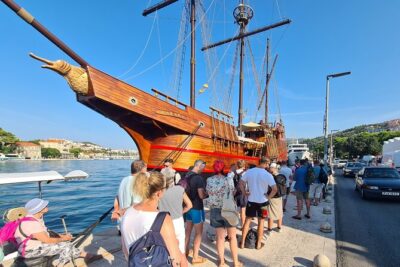
Elaphiti Islands On The Luxury Pirate Ship Karaka Dubrovnik
Read our review →
Luxury Blue Cave and Elaphiti Islands Small Group Tour
Read our review →
Aperol Spritz & Island Vibes on Luxury Speedboat
Read our review →
Luxury Blue Cave, Hvar and Vis Boat Tour from Split and Brac
Read our review →