Reviewed · GUIDED
Controversies behind Split and Croatia-Anthropologist guide
Split is arguing with itself, in stone. This English, small-group walk uses an anthropological lens to unpack the controversies around Diocletian’s Palace and how today’s Split talks back to the past, with a guide like Marin who relies on iPad maps to make the connections click.
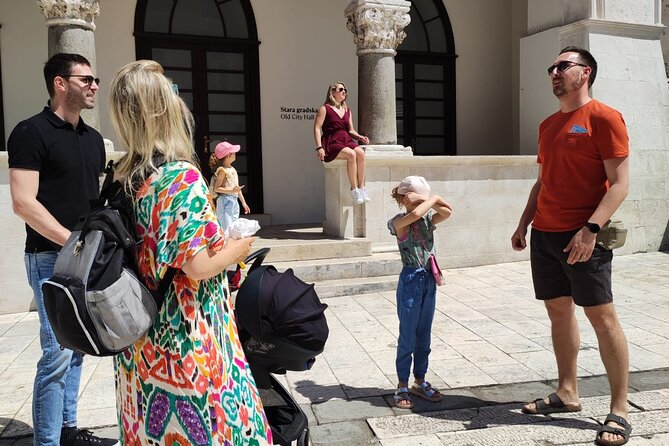
I also love the max 12 travelers set-up and the fact that the experience is built around conversation, not lectures, so you can ask hard questions and get clear answers. One possible drawback: it is a walking tour with stops in open squares, so plan for some standing and dress for the weather.
In This Review
- Key things I’d watch for
- Split’s Diocletian Palace, and the controversies you can feel
- What You Really Get for $35 in about Two Hours
- Palazzo di Diocleziano, where the past keeps changing owners
- Obala Hrvatskog narodnog preporoda, the promenade as a stage for public life
- Trg Braće Radić, the Ottoman frontier in everyday politics
- Narodni trg, a square over graves and later famous events
- Šperun ulica, turning a tourist street into neighborhood meaning
- Trg Franje Tuđmana, from the first president to today’s dividing lines
- Matejuška, a famous view that closes the modern loop
- Who should book this anthropological walk
- Should you book this Split culture tour?
- FAQ
- How long is the tour?
- What language is the tour in?
- How large is the group?
- Where does the tour start and end?
- Do I receive a mobile ticket?
- Are any admission tickets included?
- What key locations does the tour cover?
- Does the tour require good weather?
- What is the cancellation policy?
Key things I’d watch for
- Controversies as the main story, not just facts on a sign
- Marin’s map-and-visual approach, including iPad aids
- A tight route with 7 stops, timed so you stay engaged
- Entry tickets included where it matters, with other stops free
- Small group attention, plus real time for questions
- Modern identity themes showing up right in the center’s squares
Split’s Diocletian Palace, and the controversies you can feel

Split’s center is not a museum. It is a living argument, built out of stone that different generations kept re-reading, re-using, and sometimes blaming on each other. That is exactly what you get here: a story that treats Diocletian’s Palace as a contested object, shaped by locals across time.
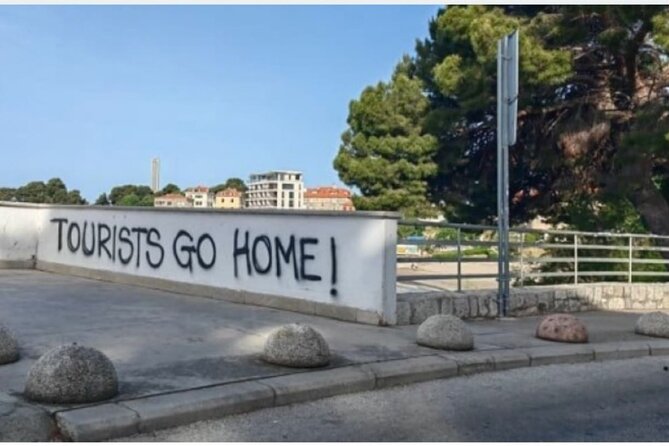
I like that the tour does not treat controversy like gossip. It treats it like culture. You’ll see how the same buildings can mean different things depending on the era, the politics of the day, and what people needed to believe.
This is especially true in Split, where the old and the new sit side by side. You’ll leave with a better sense of why certain “details” suddenly matter, once you understand the human side.
What You Really Get for $35 in about Two Hours
At $35 per person for about 2 hours, you’re paying for a guide who connects places to ideas, not just a route pass. The schedule is compact enough to fit into a tight itinerary, yet structured enough to cover both the ancient anchors and the modern viewpoints.
You’ll also appreciate the practical value points. You get a mobile ticket, you’re in English, and the group is capped at 12 travelers. On top of that, admission tickets are included at key moments, including Palazzo di Diocleziano, and the tour finishes at Matejuška with an included admission ticket as well, while several other stops are free to enter.
One more detail that affects value: the tour is offered at multiple times, so you can pick a slot that matches the light, your energy, and the day’s weather. And yes, the experience expects good weather, so plan to have a backup plan if conditions turn.
Still riding at anchor off Split
- Split: Krka Waterfalls Trip with Boat Cruise and Swimming★ 4.8 · 10,519 reviews
- From Split: Krka Waterfalls, Food & Wine Tasting Tour★ 5.0 · 9,326 reviews
- Blue cave, Mamma Mia and Hvar, 5 islands speedboat tour★ 5.0 · 7,150 reviews
Palazzo di Diocleziano, where the past keeps changing owners
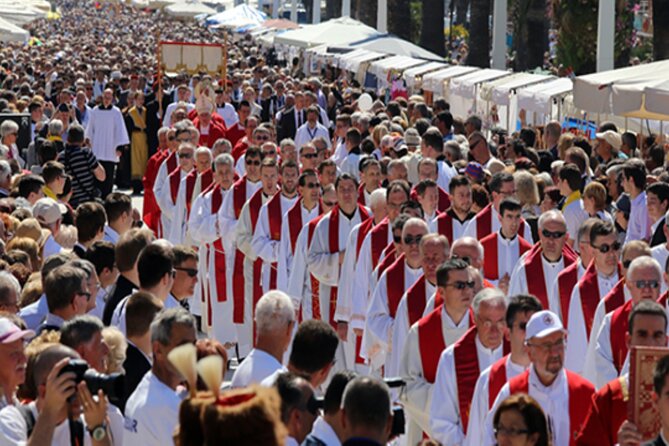
Your longest stop is the Palazzo di Diocleziano, about 35 minutes, and admission is included. This is the core of Split’s story, and the tour treats it like more than an impressive structure. It’s framed through the most controversial historical and modern issues of the area, and that changes how you read the space.
What you’ll like most is the angle. Instead of a straight timeline, you’ll hear how the palace became a problem to different groups, in different periods. People “used” it, defended it, argued over it, and even reshaped their relationship to it based on what their own era needed from the past.
Practical tip: because you’ll be inside and outside along the way, wear shoes that work on uneven ground. Expect the guide to point things out in context, so keep your eyes up and your questions ready.
Obala Hrvatskog narodnog preporoda, the promenade as a stage for public life
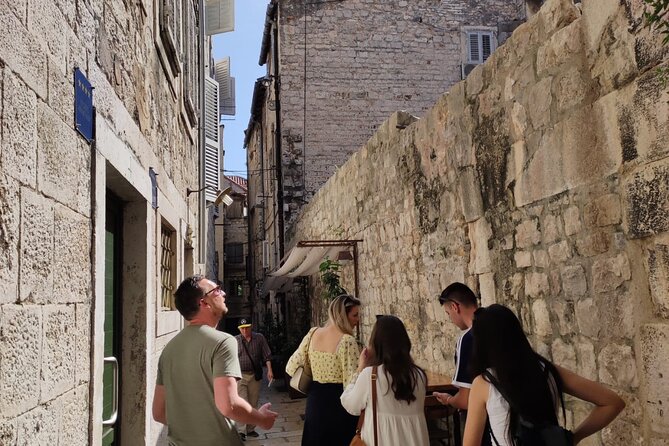
Next you move to the Obala Hrvatskog narodnog preporoda, the waterfront promenade, about 15 minutes with no admission cost. Promenades can turn into background scenery. Here, it is treated like a timeline you can walk along.
The riva style setting is the point. It’s where public life tends to happen in Mediterranean cities, and the tour connects the promenade to important moments in Split’s story. Even if you’re mostly focused on the big palace, this stop helps you understand why waterfront space becomes political space.
Practical tip: water locations can be windy, even on calm days. If you’re sensitive to that, bring a light layer.
Trg Braće Radić, the Ottoman frontier in everyday politics
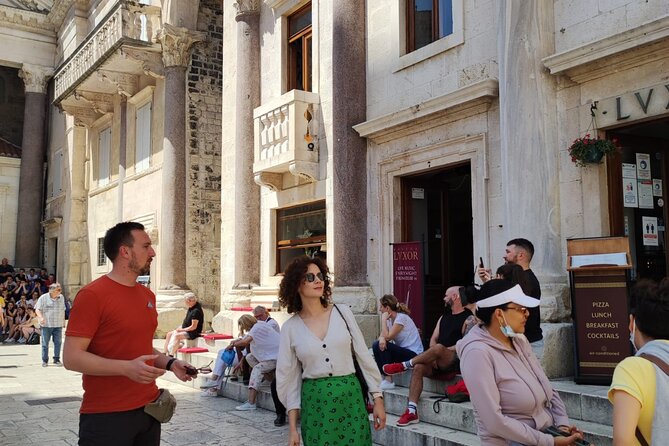
At Trg Braće Radić, you get about 15 minutes in a square with Venetian connections and a heavy theme: Split as a frontier during tense centuries when the Ottomans loomed large.
What matters here is not just learning what happened. The tour looks at how that period is perceived now, and why it continues to shape politics and local identity. I like this kind of explanation because it turns “old wars” into something you can actually recognize in the present.
Practical tip: squares like this are great for photos, but they can also be hot and exposed. If you start to feel like you’re overheating, say so, and use the guide’s pacing to catch your breath.
Two moorings down in Split:
- From Split: Krka Waterfalls, Food & Wine Tasting Tour
★ 4.9 · 6,598 reviews - Split/Trogir: Blue Cave, Mamma Mia, Hvar and 5 Island Tour
★ 4.6 · 6,320 reviews - Blue Lagoon & 3 Islands Cruise with Lunch from Split
★ 4.5 · 5,756 reviews - Blue Cave and Hvar Tour – 5 Islands Tour from Split and Trogir
★ 5.0 · 4,815 reviews
Narodni trg, a square over graves and later famous events
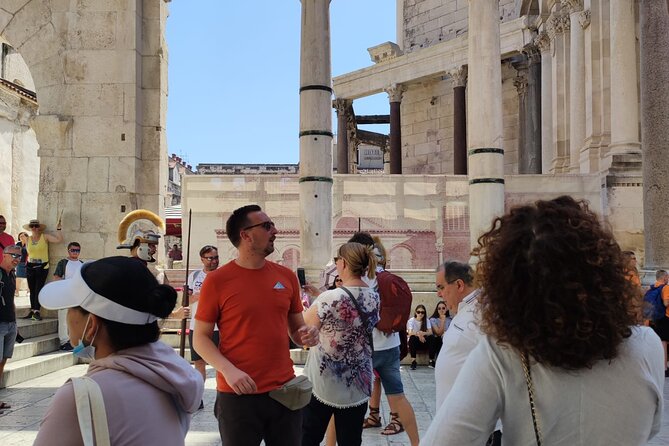
Narodni trg is one of those stops that changes the temperature in your head. You’ll spend about 15 minutes, with no admission ticket, and learn that human remains lie under your feet because this area used to be an ancient graveyard.
Then the story shifts to later periods, when “amazing events” and also “infamous events” happened here. The tour handles this kind of topic with care, and you’ll likely feel why the guide chose this stop for an anthropological walk. Places hold layers, but people also hold emotions about those layers.
If you want to understand Split beyond postcard walls, this stop is a good turning point. You start seeing how memory works, literally underground.
A note from the kind of stories this guide is willing to include: you may also hear about the Jewish ghetto along the route, which helps fill a gap that lots of faster city walks skip.
Šperun ulica, turning a tourist street into neighborhood meaning
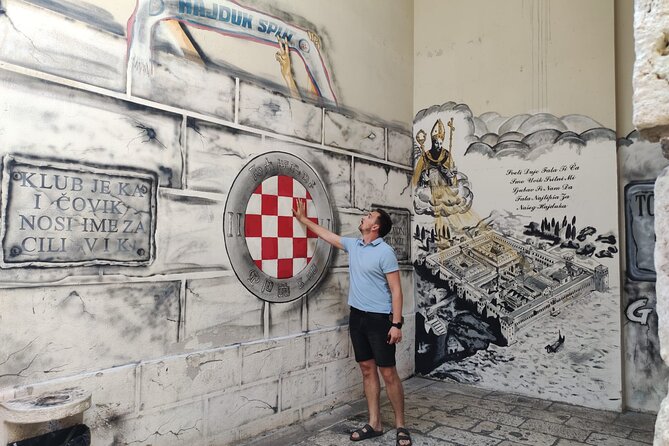
Then comes Šperun ulica, about 15 minutes. This is described as one of Split’s famous neighborhoods and also a popular place for tourist stays. The twist is that many visitors miss the story behind it.
I like this approach because it forces you to look at what you already think you understand. A street name can sound harmless until the guide puts it back into social context: who lived there, how it changed, and why it became known the way it is today.
Practical tip: neighborhoods are best read slowly. Use the time here to walk with your head up and listen for the human details, not just architecture.
Trg Franje Tuđmana, from the first president to today’s dividing lines
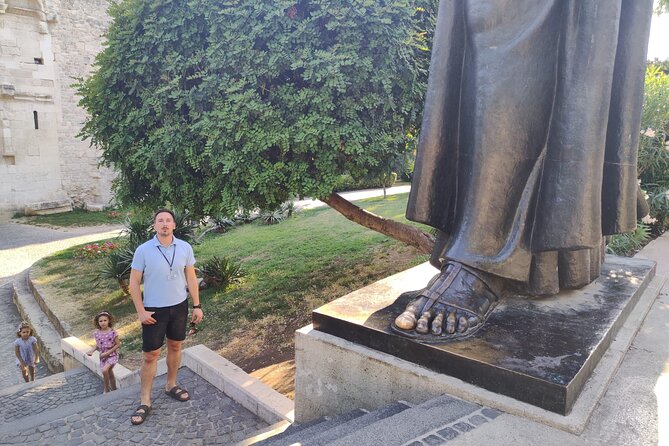
At Trg Franje Tuđmana, you’ll spend about 15 minutes in a square named after Croatia’s first president. The tour uses that naming to move into turbulent late 20th-century history, and then into the present, where many issues still divide Croatian society.
This is the part of the tour that can feel more personal than expected, because it deals with identity. Even if you’re not a politics person, the framing helps you understand why history lessons get remembered as arguments, not as facts.
Practical tip: keep an open mind and treat the guide’s interpretation as a starting point. If something feels sensitive, ask how locals talk about it now, and listen to the nuance.
Matejuška, a famous view that closes the modern loop
The walk ends at Matejuška, about 10 minutes, with an included admission ticket and a payoff viewpoint. This is where you get one of the best views of Split, and the guide uses the scene to land the tour’s final theme: what modern Split looks like when you understand the older layers.
I like ending here because it gives your brain a breather. You can look out, take photos, and connect the dots you heard earlier while the city lays itself out below you.
Practical tip: viewpoints can be crowded, and wind can pick up near the water. If you want the calmest photos, try to time your shot during a brief pause in foot traffic.
Who should book this anthropological walk
This tour fits best if you like learning that has edges. You’ll probably enjoy it most if you want to understand why people argue about the past, not just what happened. The small group helps a lot, because it makes room for questions and for the guide to adjust to what you care about.
It is also a strong choice if you hate standing around in front of plaques with zero context. The guide’s teaching style, including the iPad visuals and map comparisons, makes the walking route feel like a guided lesson you can actually follow.
You might want to skip it if you prefer a purely architectural highlights tour, with minimal politics or social context. And if you tire easily standing in open squares, plan for breaks and choose shoes that won’t punish you.
Should you book this Split culture tour?
Yes, I think it’s a great booking for the right traveler. At $35, with a max group of 12, and with the route designed to connect Diocletian’s Palace controversies to modern identity, you get more than a walk. You get a way of reading the city that sticks.
Book ahead if your dates are firm, since it’s regularly reserved in advance. And pack the basics: comfy walking shoes, water, and a light layer, because the tour expects good weather.
If your goal is to understand Split as a place where history keeps living in current debates, this is one of the better ways to do it in a short time.
FAQ
How long is the tour?
The tour lasts about 2 hours.
What language is the tour in?
The tour is offered in English.
How large is the group?
The experience has a maximum of 12 travelers.
Where does the tour start and end?
The tour starts at Ul. kralja Tomislava 12, 21000 Split and ends at Trumbićeva obala 2, 21000 Split.
Do I receive a mobile ticket?
Yes, it is a mobile ticket.
Are any admission tickets included?
Yes. Admission tickets are included at Palazzo di Diocleziano and at the tour end point (Matejuška). Other listed stops have free admission.
What key locations does the tour cover?
It covers Palazzo di Diocleziano, Obala Hrvatskog narodnog preporoda, Trg Braće Radić, Narodni trg, Šperun ulica, Trg Franje Tuđmana, and ends at Matejuška.
Does the tour require good weather?
Yes. The experience requires good weather. If it is canceled due to poor weather, you will be offered a different date or a full refund.
What is the cancellation policy?
You can cancel for free up to 24 hours in advance for a full refund.
Latest arrivals logged at Split





Guided, compared.


Plitvice & Rastoke Guided Day Trip with Ticket
Read our review →
Plitvice Lakes Guided Tour with Entry Tickets
Read our review →
Plitvice Lakes National Park Guided Day Tour from Split
Read our review →
Rastoke & Plitvice Lakes Guided Tour with Ticket
Read our review →