
Reviewed · DIOCLETIAN'S PALACE TOURS
Diocletian’s Palace Small Group Tour in Split
Split’s Roman walls turn into a city maze.
This small-group tour gives you two big wins: a professional local guide who connects the dots fast, and ticket-free access to several standout parts of Diocletian’s Palace. The main drawback is simple, the walk is short, so you get a solid overview rather than a slow, in-depth museum-style experience.
You’ll also have flexibility. With multiple departures during the day and a mobile ticket, it’s easier to fit this into your Split schedule, even if you’re juggling heat, ferry times, or day trips. The pace works best if you’re comfortable walking for about two hours, with moderate physical fitness.
In This Review
- Key things I’d circle before you book
- Split’s Diocletian’s Palace, where power became a neighborhood
- The 2-hour structure that works, and what it doesn’t
- Starting with the palace core, and why it feels like a fortress
- Stop inside the Peristyle, the palace’s central stage
- The Vestibulum: a short stop with a strong design lesson
- Diocletian’s Cellars, and why substructures matter
- The Golden Gate, and Diocletian walking in on 1 June 305
- What you’re really paying for: orientation plus a guide you can trust
- The guide makes or breaks it, and the good names stand out
- Picking the right departure time in Split
- Walking tour comfort: what to expect from the route
- Should you book this Diocletian’s Palace small group tour?
- FAQ
- How long is the Diocletian’s Palace small group tour in Split?
- Where does the tour start?
- Is the tour offered in English?
- What is included in the tour price?
- Are tickets included for everything in the old town?
- What about cancellation and physical fitness?
Key things I’d circle before you book
- Local guide storytelling that turns walls and gates into a real timeline
- Ticket-free palace highlights included, with cathedral access not part of the tour
- Multiple departure times so you can pick a less stressful moment
- A classic “old town orientation” walk through the palace core
- Short stops that still matter, including the Peristyle and the Golden Gate
Split’s Diocletian’s Palace, where power became a neighborhood
Diocletian’s Palace is not just ruins you pass by. In Split, it acts like a shell around daily life. Half of the palace is tied to Diocletian’s own use, and the rest supported the military. That mix is why the place feels unusual, not like a tidy archaeological site, but like a real part of town where you can keep walking and still feel the Roman plan under your feet.
What makes this tour a smart choice is the way it focuses on the best “reading points” of the palace. You’re not asked to memorize a map first. Instead, you get a walk that helps you understand how the palace functioned, then helps you spot it again once you’re on your own in Split. If you’re arriving with that, now what do I do? feeling, this kind of orientation is practical.
Also, Split’s UNESCO World Heritage center is woven through the palace area, so your time lands in a place that’s bigger than any one monument. You’ll see how centuries layer on top of Roman foundation, from older iconic elements to later buildings and street life.
The 2-hour structure that works, and what it doesn’t
This is about a 2-hour walking tour, give or take. That duration matters because Diocletian’s Palace can feel like a maze if you wander without any guide. The compact timing is designed to prevent that. You’ll get a route that hits the core landmarks, plus enough city-street time to absorb the atmosphere.
The other practical point, it’s built for a small group. The maximum group size is set at 99, but real-world pacing depends on departure volume, and guides can usually keep things friendly and interactive when the group isn’t huge. If you love asking questions, this format tends to make that easier than larger bus-style tours.
Now the “what it doesn’t do.” You won’t leave with an encyclopedia. Each stop is brief, and you’re moving through several palace sectors. If you want to sit down for long explanations at every corner, you may prefer a longer specialized tour later. Think of this as a quick, confident overview, then you go deeper on your own.
More corridors of the emperor’s palace:
- Split: Old Town and Diocletian Palace Walking Tour★ 4.9 · 4,727 reviews
- Walking Tour of Split and Diocletian’s Palace★ 5.0 · 2,588 reviews
- Split & Diocletian’s Palace Walking Tour★ 5.0 · 1,125 reviews
Starting with the palace core, and why it feels like a fortress
Your tour begins in Split’s old town area, at the South Tours Travel Agency on Mrčelina 1. From there, you work your way into the Diocletian’s Palace complex, which is often called a palace but behaves more like a fortress. That wording is useful, because it shapes what you’ll notice.
Instead of just seeing dramatic arches and stone corridors, you’ll learn to read the layout as a working defensive space, with separate roles for the emperor and the military garrison. It’s a big reason this palace still feels powerful even today.
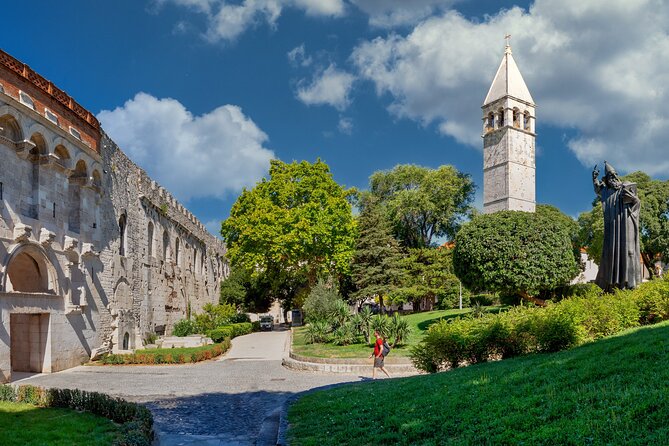
You’ll also spend time on the maze-like inner streets that fill the palace zone. That’s not just a bonus stroll. It’s where the palace stops being theory and starts being a place you can picture living in. One especially memorable detail in this area is the Egyptian sphinx you can spot in the palace complex. It’s the kind of object that makes you pause and realize Split’s story isn’t only Roman. The city has been reusing, reinterpreting, and repurposing over time, and that’s part of the charm.
One practical tip: wear shoes you trust for uneven historic streets and lots of turning corners. The tour info calls for moderate fitness, so treat it as an active walk, not a slow stroll.
Stop inside the Peristyle, the palace’s central stage
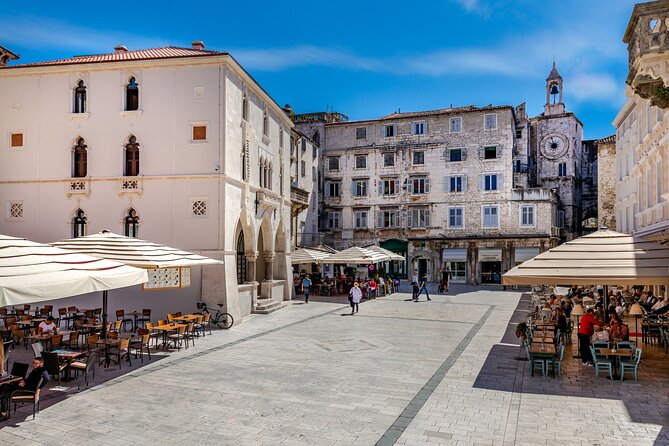
The Peristyle is the palace’s central square. It was linked to Diocletian’s public authority, including the idea that he celebrated himself as the living son of Jupiter. Even if you don’t care about titles, it helps you understand why this space is so important.
What I like about this stop is that it explains how the Peristyle functioned after it was built. It became a setting for performances, with its unusual acoustics making it ideal for opera classics and ancient literature. Even today, it’s not locked behind museum glass. You’ll see how urban life continues around it.
This is also one of the places where a good guide changes everything. Without context, the Peristyle could look like just another stone courtyard. With context, it becomes a “stage” where Roman power and later culture both make sense.
Potential drawback: because it’s a central square, it can feel busy compared with quieter corners of the palace. That’s not a reason to skip it, just manage your expectations about crowd noise during peak hours.
The Vestibulum: a short stop with a strong design lesson
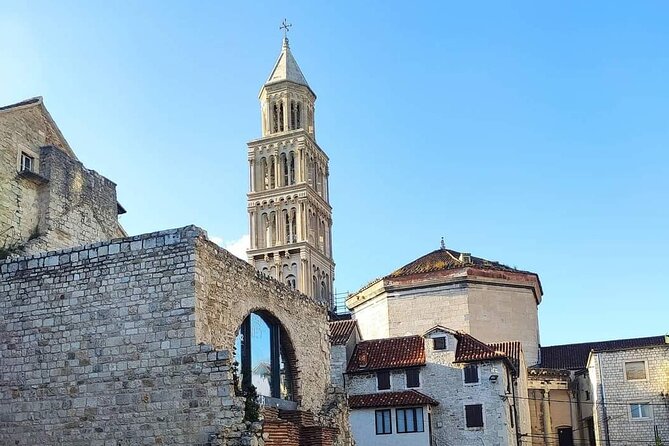
The Vestibulum is quick, but it’s built to stick in your memory. From the outside it reads as a rectangular structure, and from the inside it follows a circular ground plan. That contrast is exactly the kind of design detail guides can explain in a way that makes you see the structure as intentional, not random.
This stop is valuable because it teaches you how the palace communicates through geometry. When you later wander on your own, you’ll be more likely to notice shapes and how spaces transition.
If you’re the kind of traveler who loves architecture but doesn’t want an overwhelming technical lecture, the Vestibulum is a great middle ground. It’s short, visual, and tied back to how people moved through imperial spaces.
Still riding at anchor off Split
- Split: Krka Waterfalls Trip with Boat Cruise and Swimming
★ 4.8 · 10,519 reviews - From Split: Krka Waterfalls, Food & Wine Tasting Tour
★ 5.0 · 9,326 reviews - Blue cave, Mamma Mia and Hvar, 5 islands speedboat tour
★ 5.0 · 7,150 reviews - From Split: Krka Waterfalls, Food & Wine Tasting Tour
★ 4.9 · 6,598 reviews
Diocletian’s Cellars, and why substructures matter
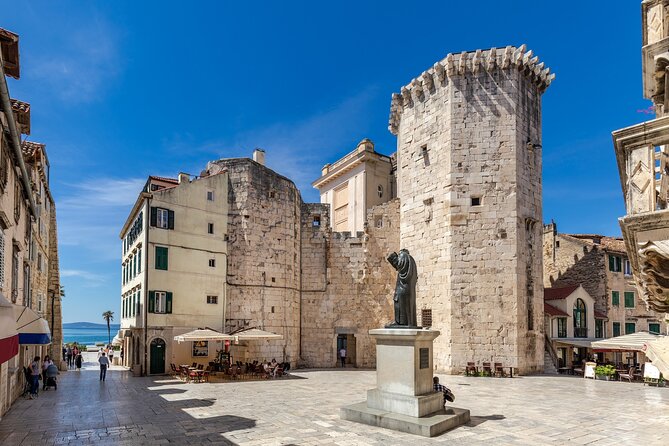
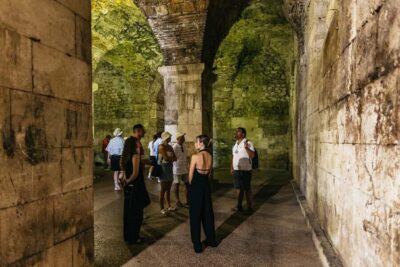
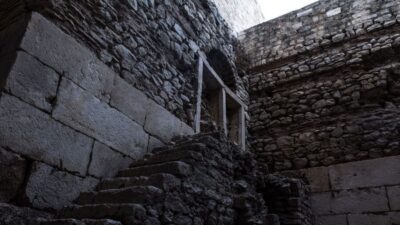
Next you’ll reach the palace’s cellars, the substructures that help define the scale and engineering of the complex. These aren’t just “basement rooms.” They represent one of the best preserved ancient complexes of their kind, and they help explain why Split’s historic core earned UNESCO World Heritage status in 1979.
I like this stop because it breaks a common tourist habit. Many people focus only on what stands at eye level. But when you get a glimpse of the substructures, you understand that the palace wasn’t only about grand entrances. It was also about the hidden parts that made the whole place work: storage, support, and the physical backbone of the upper areas.
You’ll also feel the shift from bright street life to something more atmospheric. Even with limited time, the cellars help you build a fuller mental model of the palace. You stop seeing it as a postcard and start seeing it as a functioning system.
The Golden Gate, and Diocletian walking in on 1 June 305

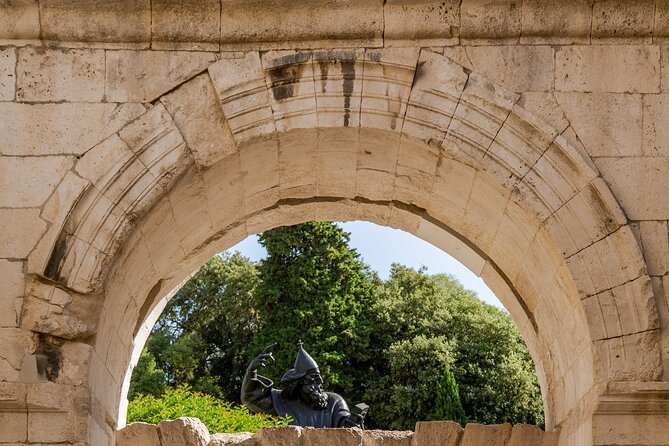
The Golden Gate is the highlight if you want a direct moment tied to a date. Its Roman name was Porta septemtrionalis, and the guide will connect it to Diocletian walking through the gateway on 1 June 305.
This stop is also about defensive design. The gate was built with a rectangular shape, double doors, and a plan tied to military tactics. That matters, because it changes the way you view it. You won’t only be admiring the gate as a landmark. You’ll understand it as part of a controlled entry, built for power and security.
And there’s another small value here. If you’re planning your self-guided time afterward, you’ll now know what you’re looking at when you pass it again. The Golden Gate becomes a reference point, not just a photo stop.
A real-world pacing note: the tour keeps each stop brief, so you’ll get enough to orient and feel the story, but you might want to linger longer afterward if you’re the type who can stand and rewatch a place sink into your memory.
What you’re really paying for: orientation plus a guide you can trust
At $60.21 per person for about two hours, this is priced like a focused walking experience rather than a long full-day excursion. The value comes from what’s included and what’s not.
Included highlights are a local guide and a professional guide, which is important. You’re not just getting someone with a phone and basic facts. The format is set up to give you both local perspective and strong historical framing, so you leave with a story and a sense of how to navigate the area.
Also, multiple parts of the palace you visit are ticket-free for the tour. The one notable exclusion is the cathedral. So if you were hoping your tour ticket covers everything inside the broader old town religious sights, you’ll want to plan separately for the cathedral.
This is where I’d be practical if you’re on a tight budget: this tour pays off when you want your first 2 hours in Split to feel organized. If you’ve already mapped every street and you don’t care about context, you might feel you could do it on your own. But if you want to get your bearings fast, a good guide turns wandering into understanding.
The guide makes or breaks it, and the good names stand out
The strongest praise in the experience centers on guides. The tone is consistently described as informative, friendly, and professional, with plenty of personality.
I’d pay attention to the guide names mentioned, because they signal the kind of energy you’re likely to get. Luka is described as amazing, with a deep sense of history and a real love for the job, plus solid recommendations beyond just facts. Sandra gets called out as incredibly knowledgeable and very nice, and Jelena earns praise for being knowledgeable and fun, while also offering tips about shops around town.
That last part is underrated. A walking tour is also about how you experience a city after the tour ends. If your guide gives you practical suggestions for where to browse or what to notice next, you get more value than the two hours you paid for.
If you’re curious, ask questions at the palace landmarks, not only at the end. The best moments often happen when you connect what you see to what you’re planning to do next.
Picking the right departure time in Split
This tour offers choice of several departures throughout the day. That’s great because Split can vary a lot in comfort level depending on time and season.
One smart strategy is to go earlier in the day when it’s still calmer and you can enjoy the atmosphere without feeling rushed. In August, timing can make a big difference to how much you enjoy the walk, and the tour’s multiple departures let you aim for a better moment.
Another tip: check the pace with your group. This tour is built for moderate physical fitness, so you want your energy to last until the final return to the meeting point.
Walking tour comfort: what to expect from the route
You’ll be walking through parts of the palace area and around the old town center. The tour is designed to be doable, but it’s not staged like a seated lecture. Expect enough movement that you should plan for it, especially if you’re combining this with other activities in Split.
The good news is that the tour format keeps the stops short. That prevents the “one long highlight” problem. You get several quick, meaningful segments, which is ideal for travelers who want variety.
The tour is also capped for group size, and the tour runs as a small group experience. That tends to make it easier to hear your guide and keep your place in the flow.
Should you book this Diocletian’s Palace small group tour?
Book it if:
- You want a short, structured orientation to Split’s UNESCO palace core.
- You value a guide who can explain the why behind gates, squares, and substructures.
- You like your tours with a local feel, not just a list of monuments.
Consider skipping or pairing it differently if:
- You’re already comfortable navigating Diocletian’s Palace on your own and you want to spend more time in fewer spots.
- You’re primarily after cathedral-specific sights, since cathedral tickets are not included and you’ll need separate planning.
If you’re visiting Split for the first time, or you only have a limited window before you move on, this is a strong way to get your bearings, learn how the palace worked, and leave with a clear sense of what you want to see again at a slower pace.
FAQ
How long is the Diocletian’s Palace small group tour in Split?
It runs for about 2 hours.
Where does the tour start?
The tour starts at South Tours Travel Agency, Mrčelina 1, 21000, Split, Croatia. The tour ends back at the meeting point.
Is the tour offered in English?
Yes, the tour is offered in English.
What is included in the tour price?
The tour includes a local guide and a professional guide. A mobile ticket is also included.
Are tickets included for everything in the old town?
Most palace areas on the route are free to access, but tickets for the cathedral are not included.
What about cancellation and physical fitness?
You should have a moderate physical fitness level for the walking tour. Free cancellation is available if you cancel at least 24 hours in advance for a full refund.
Latest arrivals logged at Split



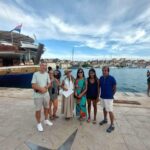
Diocletian's Palace Tours, compared.
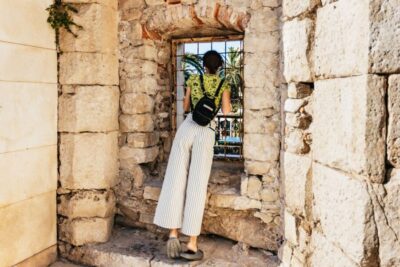

Walking Tour of Split and Diocletian’s Palace
Read our review →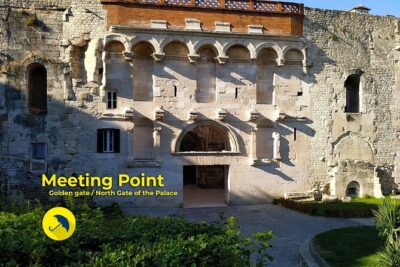
Diocletian Palace & Old Town Guided Walking Tour
Read our review →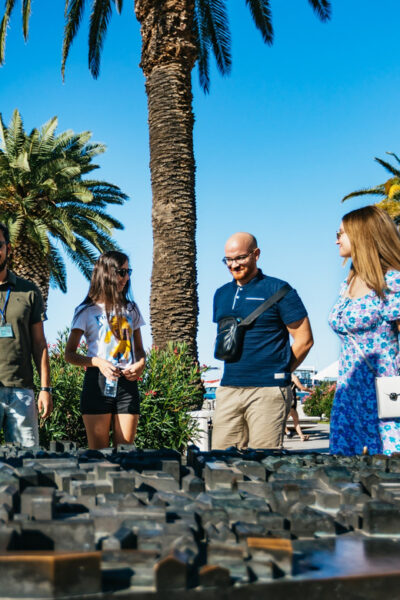
Game of Thrones Tour with Diocletian’s Palace Cellar
Read our review →
Diocletian’s Palace and Old Town SMALL GROUP Walking Tour
Read our review →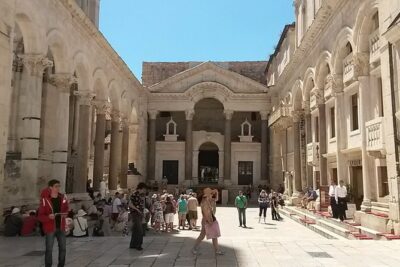
PRIVATE Walking Tour of Diocletian’s Palace & Old Town
Read our review →Browse the lists this tour appears in