
Reviewed · PULA TOURS & ACTIVITIES
Discover the Essence of Pula: Private Tour with a Local Pro
With a history teacher, Pula clicks fast. I love the private local guide feel and how the walk strings together the Pula Arena, Forum, and Temple of Augustus with smaller sights most people miss. The only thing to watch is that a few major stops may require paid admission while others are free.
This tour is built for a quick, satisfying overview. You cover a big chunk of Pula on foot in about 2 hours, and it runs in English with a mobile ticket. You will want to be comfortable with moderate walking, since the listed time is mostly on your feet.
You meet near Park Nimfeja and end at Forum Square, right in the historic core. It also helps that your guide can slow down or speed up a bit, because it is private, just your group.
In This Review
- Key highlights you will feel right away
- Start at Park Nimfeja, end at the Forum, and get your bearings fast
- Pula Arena: the Roman showpiece that still feels real
- Tito Park: a free mini-model that teaches you the city layout
- Twin Gates and the Gate of Hercules: the entrances that frame the story
- Zerostrasse: Pula’s WWI tunnel shelter under your feet
- Forum Square and the Temple of Augustus: the civic heart of ancient Pula
- A history teacher who makes Pula funny and personal
- Price and value: $60.01 per person for a private orientation
- Weather, walking pace, and the one drawback to plan around
- Should you book this private Pula tour with a local pro?
- FAQ
- How long is the private walking tour?
- Is the tour private?
- What language is the tour offered in?
- Where do you meet and where does the tour end?
- Are tickets included for the main sights?
- Are there free stops on the route?
- What fitness level is needed?
- What happens if the weather is bad?
- Are service animals allowed?
Key highlights you will feel right away
- A history-teacher guide who explains Pula with humor and personal touches
- Major Roman hits fast, including the Pula Arena and the Temple of Augustus area
- Extra stops most routes skip, like Tito Park’s miniature model and Zerostrasse
- Free sights mixed in, so your tour budget does not run away
- Hidden-gems style wandering, designed to catch details you might walk past
Start at Park Nimfeja, end at the Forum, and get your bearings fast
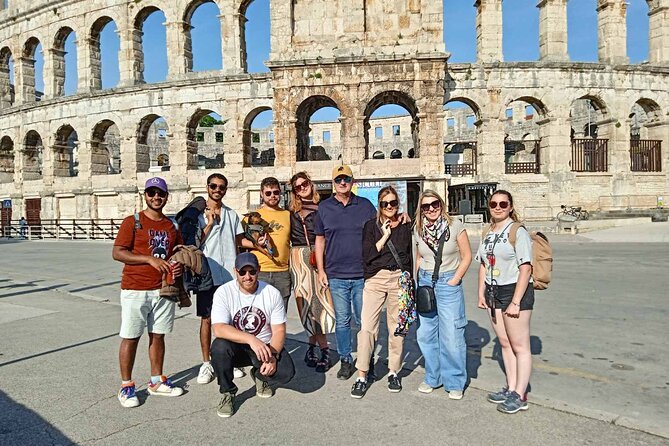
This is the kind of Pula tour you take early, because it helps you understand what you are looking at. The route is designed like a guided stroll through time, not a rushed checklist. In about 2 hours, you move from Roman spectacle to civic power, with quiet breaks and one truly different detour underground.
Meeting near Park Nimfeja and finishing at the Forum Square location matters more than it sounds. By the end, you are deposited right where Roman Pula’s main life happened, and where you can keep exploring on your own. If you are planning a day in Pula and want the rest of your time to feel easier, this is a smart way to do it.
Because it is private, your guide can adapt the pace for your group. The experience is listed for travelers with moderate physical fitness, so if you prefer slow sightseeing, tell your guide early and take advantage of the private setup.
Pula Arena: the Roman showpiece that still feels real
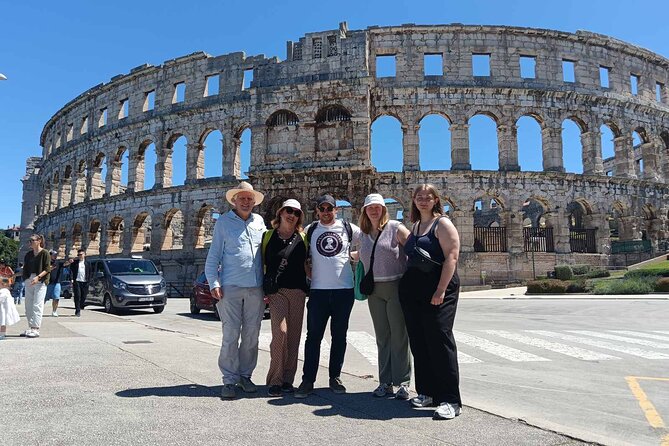
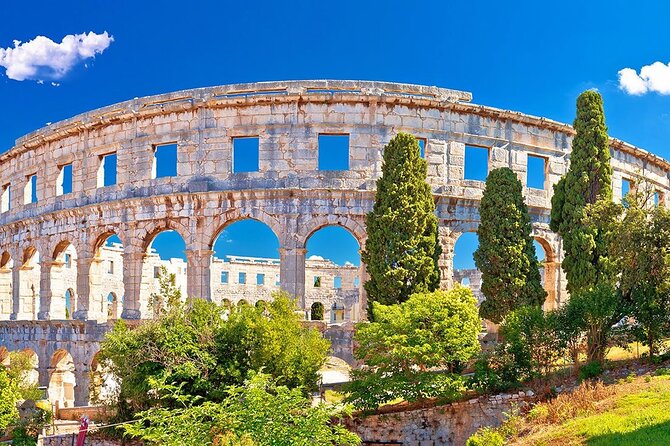
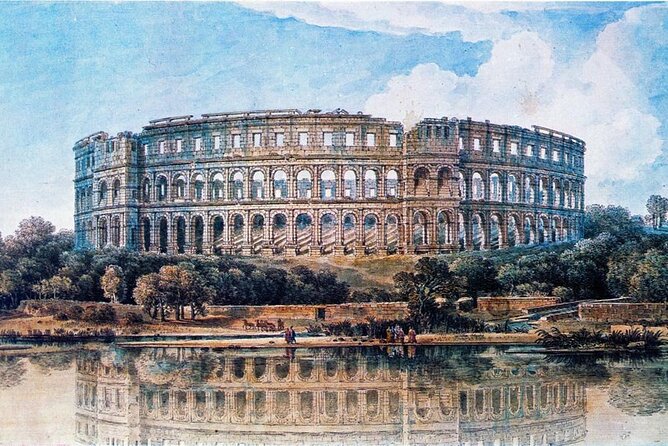
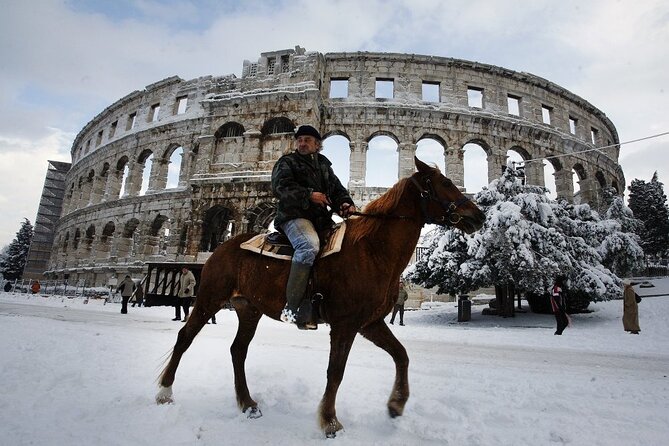
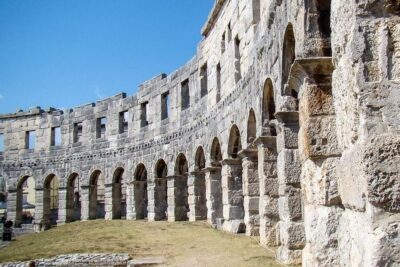
Your tour opens with the Pula Arena, one of the most well-preserved Roman amphitheaters in the world. It was built in the 1st century AD and held over 20,000 spectators, which is exactly the scale you want explained when you are standing in front of it. It is also more than a pretty relic. In ancient times it hosted gladiatorial contests, battles, and public spectacles.
What I like here is the way the visit connects the building to the experience. The arena is still linked to modern life too, because today it hosts events like concerts, film festivals, and theatrical performances. That makes it easier to picture how public entertainment worked then and now.
There is also the option to explore the underground passages and chambers, which gives you a different view of the arena than a top-down look from the stands. Admission for this stop is listed as not included, so you should mentally budget for that if you want to go inside.
Still riding at anchor off Pula
- Pula: Arena Entrance Ticket★ 4.3 · 2,590 reviews
- Medulin -Kamenjak 5h boat trip with lunch & drinks on Sandra Boat★ 5.0 · 1,621 reviews
- Full-Day Boat Tour of the Medulin Archipelago from Medulin★ 5.0 · 1,389 reviews
Tito Park: a free mini-model that teaches you the city layout
After the arena, you get a breather at Tito Park, a scenic green space near the city center. Named in honor of Josip Broz Tito, it is not just a rest stop. It has a miniature model of the city of Pula, which gives you a fast, visual sense of how the city is put together.
This is a quietly useful stop for two reasons. First, it helps your brain place landmarks while you are walking. Second, it gives you a moment to slow down, sit, and reset before the next cluster of old-city entrances and squares.
Tito Park is listed as free and about 10 minutes. That makes it the kind of stop you can enjoy even if your feet are starting to complain.
Twin Gates and the Gate of Hercules: the entrances that frame the story
You next pass the Twin Gates, a structure that once served as a crucial entrance to Pula. It is a good reminder that cities were not just built with monuments. They were built with controlled access, with gateways that mattered.
Then you visit the Gate of Hercules, marked by a depiction of Hercules’ head. Even without a long stop, these gates do something valuable: they give you context for the route your guide is leading you on. You start to notice how Pula’s “old town” feel comes from the edges, not just the center.
Both of these are listed as free and brief, around 10 minutes each. If you are the type who likes photos at big landmarks, you will probably want to take a moment here. If you are more interested in meaning, this is where your guide’s explanations help connect details into a bigger picture.
Zerostrasse: Pula’s WWI tunnel shelter under your feet
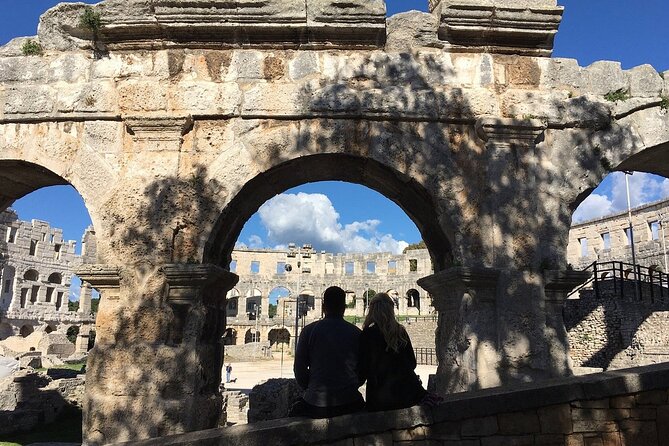
Not every city tour includes the chance to go underground during World War I. Zerostrasse is an underground tunnel system constructed as a shelter, and it is one of those stops that changes how you think about the city’s timeline.
This stop is listed as about 10 minutes, and admission is listed as not included. That means you should decide ahead of time if you want to spend the extra money for the inside access, since you do want to get your value from the experience.
Even if you only get a short look, it is still a great contrast after the bright Roman stone above. It turns the tour into more than an ancient history walk, because it adds a modern conflict layer to the same physical space.
Two moorings down in Pula:
- 3hours all inclusive Sunset&Dolphin Tour from Medulin on Sandra
★ 5.0 · 1,130 reviews - Dolphin Watching & Sunset Boat Tour With Dinner and Drinks
★ 5.0 · 1,075 reviews - Pula: Dolphin&Sunset Cruise in Brijuni with Dinner&Drinks
★ 4.6 · 1,010 reviews - Pula: Cave Kayak Tour, Snorkeling and Island Jumping
★ 4.6 · 929 reviews
Forum Square and the Temple of Augustus: the civic heart of ancient Pula
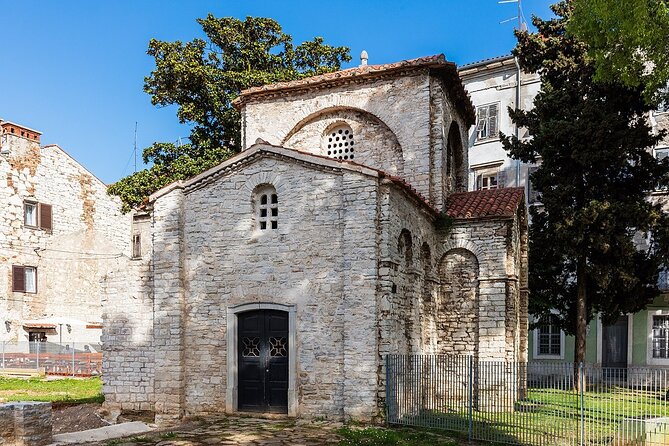
The tour ends in the area that really ties the Roman story together: the Forum and the Temple of Augustus. The Forum is Pula’s main square in the western side of the old town center, and it dates back to Roman times as the heart of political, administrative, and religious life.
What helps is that the Forum is not presented as just a wide open space. It includes specific monuments you can point to, like the Temple of Augustus and the Town Hall built on the site of the former Roman Capitolium. Even if you are not a Roman architecture expert, you can grasp that this was decision-making ground, not just a scenic square.
From there, you see the Tempio di Augusto, also called the Temple of Augustus. It was built between 2 BC and AD 14, dedicated to Emperor Augustus, and known for its Corinthian columns. Today it serves as a museum.
This is also a stop that carries a real sense of survival and recovery. The temple suffered significant damage throughout history, including during World War II bombing, but it was restored. Your guide’s storytelling style makes it easier to notice what you are seeing now versus what endured.
This stop is listed as about 10 minutes, and admission is not included. Since your tour is short overall, this is one of the places where paid entry can feel especially worth it if you want the museum context.
A history teacher who makes Pula funny and personal
This is where the tour earns its top rating. You are not just getting dates. You are getting someone who knows how to teach.
Two guide names show up in the experience feedback: Halan and Dalen. Both are described as enthusiastic and highly knowledgeable, with an entertaining way of explaining Pula and Croatia. You also get the sense that they genuinely enjoy being your guide, which matters on a walking tour because good energy keeps you attentive.
The strongest common thread is humor plus personal touches. People call it a perfect mix of laughs and facts, and that makes a huge difference when the sights are closely packed. Another praised element is the “hidden gems” approach. Your guide is not just sending you to the obvious photo spots, they are steering you to small details you might walk past and never notice.
There is also a practical angle. Dalen, for example, is mentioned for recommending good places to eat and for pointing out spots to sample free brandy/gin. That is not a promise for every guide, but it is a useful reminder that a local history teacher often doubles as a low-effort way to find good food nearby.
Price and value: $60.01 per person for a private orientation
At $60.01 per person for about 2 hours, this is priced like a true guided experience, not a bus tour deal. The private element is a big part of the value: it is only your group, and you do not have to share the guide’s attention with strangers.
What can affect your total cost is admissions. The tour lists several stops as free and several as ticketed. The Pula Arena, Zerostrasse, and the Temple of Augustus are marked as admission not included. The park, gates, and Forum area are marked as free.
So the smart way to think about value is this: you are paying for expert guidance and a route that covers major anchors plus quieter stops. You pay additional admissions only where you choose to enter deeper.
You also get a mobile ticket, and the tour language is English, which helps if you do not want to guess what each site means while you are walking.
Weather, walking pace, and the one drawback to plan around
This tour requires good weather. If conditions are poor, it can be canceled and you are offered a different date or a full refund. Because a lot of the experience is outdoors walking, this matters more than it would on a mostly indoor tour.
Walking time is also part of the deal. The itinerary is short at each stop, but the tour is still designed as a walking circuit, and the remaining time is meant for getting from place to place. If your group has anyone who tires quickly, consider going slow at the start so you do not feel rushed later.
The other potential consideration is admissions. Even though several stops are free, the ticketed sites may still be a factor in your budgeting, so decide early if you want inside access where it is offered.
Should you book this private Pula tour with a local pro?
If you want your first taste of Pula to feel organized, human, and fun, I would book it. The big reason is the guide style: a history teacher who uses humor and makes the city feel connected, not like disconnected monuments.
It is also a strong fit if you like Roman sites but want more than just the headline. The route includes the arena, the civic core at the Forum, and the Temple of Augustus area, then adds stops like Tito Park’s miniature model and Zerostrasse that give Pula a fuller timeline.
I would think twice only if you hate walking, or if you know you will skip most paid entry options. Since some admissions are not included, this is best when you are at least willing to consider entering the arena, the tunnel site, or the museum stop.
If that sounds like you, go. It is one of those short tours that makes the rest of your day easier.
FAQ
How long is the private walking tour?
It runs for about 2 hours (approx.). The schedule notes that remaining time is allotted for walking.
Is the tour private?
Yes. It is a private tour/activity, and only your group participates.
What language is the tour offered in?
The tour is offered in English.
Where do you meet and where does the tour end?
You start at Park NimfejaArena, 52100, Pula, Croatia, and you end at Forum Square, Forum 3, 52100, Pula, Croatia.
Are tickets included for the main sights?
Some are included as free stops, while others are marked as admission ticket not included. Pula Arena, Zerostrasse, and Tempio Di Augusto are listed as not included.
Are there free stops on the route?
Yes. Tito Park is free, the Twin Gates are free, the Gate of Hercules is free, and the Forum stop is listed as free.
What fitness level is needed?
The tour is listed for travelers with a moderate physical fitness level.
What happens if the weather is bad?
The experience requires good weather. If it is canceled due to poor weather, you will be offered a different date or a full refund.
Are service animals allowed?
Yes, service animals are allowed.
Latest arrivals logged at Pula


Pula Tours & Activities, compared.
Medulin -Kamenjak 5h boat trip with lunch & drinks on Sandra Boat
Read our review →
Full-Day Boat Tour of the Medulin Archipelago from Medulin
Read our review →
3hours all inclusive Sunset&Dolphin Tour from Medulin on Sandra
Read our review →
Dolphin Watching & Sunset Boat Tour With Dinner and Drinks
Read our review →
Dolphin&Sunset Cruise in Brijuni with Dinner&Drinks
Read our review →
BOAT & KAYAK! Sea Adventure – Snorkeling & Cliff Jumps
Read our review →Browse the lists this tour appears in