Reviewed · PRIVATE
Dubrovnik Homeland War Private Tour
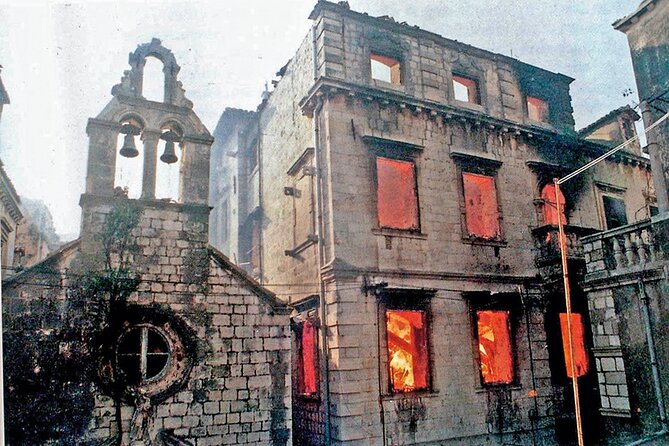
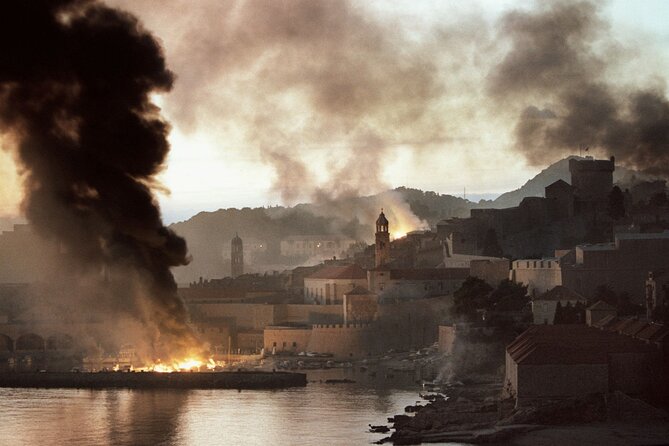
War stories, told where they happened. This Homeland War private tour pairs a veteran’s firsthand perspective with Dubrovnik’s most important historic landmarks, from fortress lookouts to the heart of the old city. I like how the route keeps you moving through real spaces, not just speaking in generalities, and I especially like the stop inside the War Memorial Room at Sponza Palace, where videos and photos make the siege feel immediate. One thing to consider: this is emotional history, and parts of the walk include stairs and uneven old-stone streets, so it helps to be comfortable walking.
You get a structured 2.5-hour experience that connects the 1991 to 1992 Homeland War to the city’s older layers too. In the hands of veteran guides such as Vlaho or Mato, the stories stay personal and specific, including what it was like for soldiers and civilians during the seven-month siege, and how Dubrovnik’s defenders shaped the outcome. You’ll also pick up context you cannot easily get on your own, like why certain walls, gates, and palaces matter to survival.
If you are coming mainly for carefree photos and light sightseeing, this tour may feel heavy. Also, because it’s a private walk with a set route, you do not get long breaks for wandering, so plan to stick with the pace and save extra museum time for later.
In This Review
- Key things I think you’ll care about
- A veteran-led route, east gate to west gate
- Revelin Fortress: the first taste of defense
- Dubrovnik City Walls and the harbor forts that matter
- Luza Square and Sponza Palace: where memory becomes visible
- Stradun and the Buža Gate streets: the city’s main stage
- Ivan Gundulić area and the small markers that ground the walk
- Rector’s Palace: government from Republic to crisis
- Cathedral of the Assumption and the gates of civic life
- The Jesuit Staircase, St Ignatius, and Minčeta Tower views
- Church of St Joseph: a quieter pocket before the finale
- Franciscan Church and monastery, Onofrio’s Fountain, then the west gate finish
- Price and value: what $120.16 buys you here
- What to expect emotionally, and how to prepare
- Who this private tour suits best
- Should you book the Dubrovnik Homeland War Private Tour?
- FAQ
- How long is the Dubrovnik Homeland War private tour?
- Is this tour private?
- What language is the tour offered in?
- What does the tour include?
- Are food or beverages included?
- Where do we meet and where does the tour end?
- What if weather is poor or I need to cancel?
Key things I think you’ll care about
- A veteran’s firsthand lens on the 1991 to 1992 siege, shared with respect and clarity
- Sponza Palace War Memorial Room entry plus video and photo displays
- A route that links defense to everyday Dubrovnik, from fortifications to civic buildings
- Streets you actually walk, including Stradun and the climb through the Jesuit Staircase area
- Professional, patient guiding with room for questions, in English
- Private format, so your group’s attention stays focused and not diluted
A veteran-led route, east gate to west gate
The tour meets in Dubrovnik’s old-town approach area by Ulica Vrata od Ploča, then proceeds through the historic core and finishes near the west gate area called Brsalje, around Pile Gate. That start-to-finish flow matters, because you do not just bounce between isolated landmarks. You walk through the city’s defensive spine, then into the civic and religious center, where the memorial context lands hardest.
This is built for an in-person, human scale of history. You will have a professional guide, and it is offered in English. It is also genuinely private, meaning only your group participates, which is helpful if you want to ask direct questions instead of waiting your turn. You are out for about 2 hours 30 minutes in total, so it fits nicely between a morning wall walk and an evening dinner.
One practical note: you start at the east side approach and end at the west side. That can affect your plan for where you go afterward. If you are taking a car or using public transport, line it up so you do not have to immediately cross the entire old town again in a hurry.
Revelin Fortress: the first taste of defense
The tour begins at Revelin Fortress, where you get a welcome and the opening context. The time is short, but it sets the tone. Fortress sites teach you to read the city differently. Instead of seeing stone and angles, you start thinking about fields of fire, sightlines, and how a shoreline and walls work together when pressure comes from outside.
Even if you already know Dubrovnik is famous for its walls, the guide helps you connect that fame to why defenders positioned themselves where they did. If your guide is Vlaho or Mato, the personal stories tend to do most of the heavy lifting here, because the history is not presented as a distant chapter. It’s presented as something people lived through, and the setting makes that feel real.
Still riding at anchor off Dubrovnik
- Blue Cave Small-Group Boat Tour from Dubrovnik★ 5.0 · 9,360 reviews
- Full-Day Dubrovnik Elaphite Islands Cruise with Lunch and Drinks★ 5.0 · 8,823 reviews
- Dubrovnik: Epic Game of Thrones Tour + Lokrum & Saver Option★ 4.9 · 5,995 reviews
Dubrovnik City Walls and the harbor forts that matter
Next you move onto the Dubrovnik City Walls segment. This is not a random wall stroll. You get a curated view of key coastal and military anchors, including the old city harbor area and fortifications you can identify as the city’s defense points, such as Fortress of St. John, the fortifications of St. Luke, and the Dominican Monastery.
This stop is one of the best parts for learning how siege logic works. A city wall is not just a boundary. It’s part of a layered system. From these viewpoints you can understand why certain areas were hard to reach, why movement had consequences, and why defenders needed both positioning and endurance.
The upside for your day: this wall portion gives you a mental map for the rest of the tour. Once you have seen how the defense works along the water and the fort points, the later stops around squares, palaces, and gates feel less like separate sightseeing and more like one continuous story.
Luza Square and Sponza Palace: where memory becomes visible
You then hit Luza Square, which is a strong pivot point. Here you see the clock tower and the City Hall area, along with the Church of St. Blaise and the Small Onofrio’s Fountain. It’s the kind of central space where history becomes public. When people talk about a city defending itself, the story is not only about soldiers, it’s also about civic life, leadership, and the community around them.
The real emotional anchor is the visit to the Homeland War Memorial Room inside Sponza Palace. This is included, and it is the one stop you are effectively paying for in the experience. You’ll see videos and photos connected to Dubrovnik’s defender experience. Because the displays are inside, you get a different kind of pause: less walking, more absorbing.
I like this format because it prevents war history from becoming only a speech. Seeing images and videos gives you something concrete to hold in your mind as you walk to the next streets and gates. If you are trying to understand what was at stake, this is where the tour most successfully turns facts into lived reality.
Stradun and the Buža Gate streets: the city’s main stage

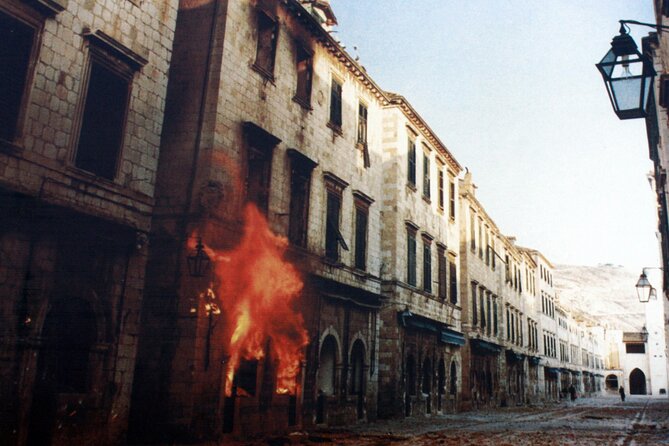
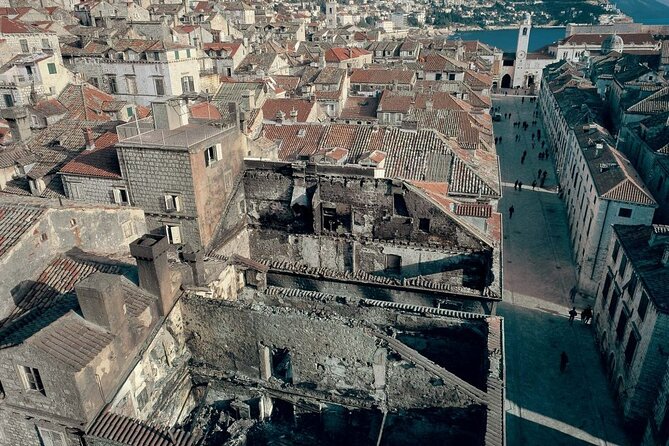
After Sponza Palace, you walk along Stradun, Dubrovnik’s main city street, plus the related Ruđera Boškovića street near the Buža Gate area. This part is short, but it works well as a breather between weighty stops. You get to see the city’s central axis in motion, and you can feel how the old town functions as one connected space.
This segment is also useful because Stradun’s openness helps you understand the contrast between daily life and crisis. A siege is about disruption, but it’s also about what remains visible and what changes. A guide can point out how a street that looks calm on postcards can carry different meaning when you know the surrounding story.
If you are prone to getting tired on long sightseeing days, you’ll appreciate the timing here: it’s not a marathon segment, it’s a focused walk that keeps the story moving.
Two moorings down in Dubrovnik:
- Dubrovnik: Elaphiti Islands Full-Day Cruise with Lunch
★ 5.0 · 5,938 reviews - Dubrovnik: Old Town Walking Tour
★ 4.8 · 5,174 reviews - Dubrovnik: The Original Game of Thrones Tour & Lokrum Option
★ 4.8 · 5,064 reviews - Dubrovnik Game of Thrones Tour & Optional Lokrum Island Visit
★ 5.0 · 4,702 reviews
Ivan Gundulić area and the small markers that ground the walk
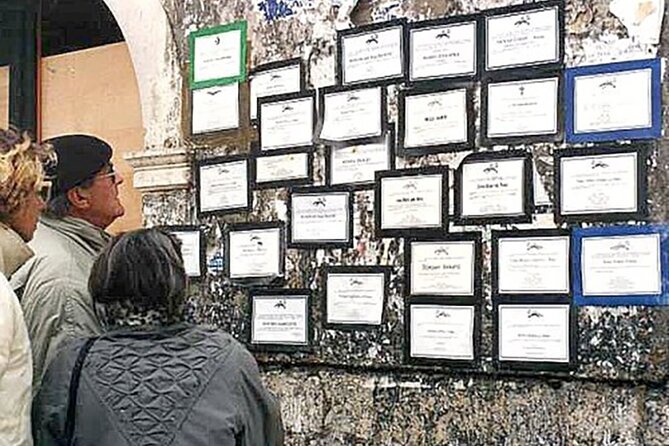
You stop at the Monument of Poet Ivan Gundulic, then pass the green market area, the Pucic Palace, and a small fountain. These are not big ticket sights, and that’s exactly why they matter. The siege story is not only set in fortresses and palaces. It lives in the places where people gathered, traded, and moved through everyday life.
This stop gives you a sense of continuity, the idea that culture and community survived alongside defense efforts. In a tour like this, these smaller points help you avoid war history feeling like a single dramatic scene. Instead, you see the city as a whole system.
Rector’s Palace: government from Republic to crisis
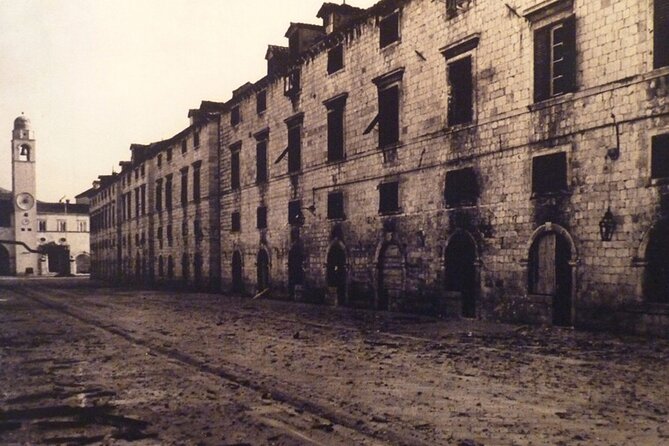
Next comes Rector’s Palace, the seat of the government of the Republic of Dubrovnik. Seeing it while the Homeland War context is fresh in your mind helps a lot. It reframes Dubrovnik not just as a backdrop, but as a civic machine that had to function under threat.
You are not just looking at a building. You are learning about leadership roles and governance, and you are seeing how that civic structure connects back to the defensive and memorial themes. It also helps explain why guides often weave in wider Croatian context and why they connect the city’s landmark identity to how people coped during the siege period.
If you enjoy architecture that signals power, this stop will likely stick with you more than you expect. It’s also a natural place to ask questions, because a strong guide can explain how Dubrovnik’s political identity differs from the crisis identity.
Cathedral of the Assumption and the gates of civic life
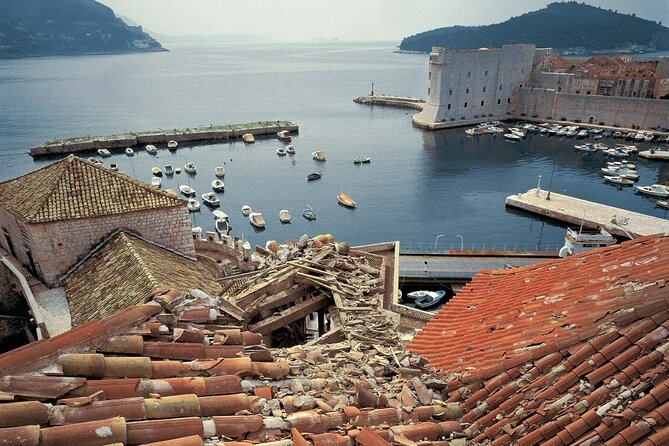
The tour continues to the Cathedral of the Assumption of the Virgin Mary area, including the Treasury of the Republic and the Bishop’s Palace, and you also pass the Ponta Gate. Even if you are not stepping deep into every space, the lesson is clear: this is the religious and civic heart where the story becomes layered.
The cathedral and its treasury context give you a way to understand what people were protecting beyond military positions. In many historical places, war is about buildings too, but it’s also about symbols, identity, and continuity. When your guide ties that to the 1991 to 1992 siege, the stop becomes more than sightseeing.
And the Ponta Gate mention matters because it reinforces the idea that doors and passages define both movement and defense. The tour is teaching you to read the city as an interlocking set of routes.
The Jesuit Staircase, St Ignatius, and Minčeta Tower views
One of the most memorable segments is the walk around the Church of St Ignatius of Loyola’s stairways and nearby streets. You’ll also pass through the surrounding old-city lanes and viewpoints, including the Great Granary and the Tower of Minčeta.
This stop is physically active. Stairs plus old-stone streets mean you get more than just intellectual history. Your body helps you feel scale and steepness, and that makes the defensive geography easier to grasp later. When you can imagine people moving up and down in tense times, it adds another dimension to the stories.
This is also where guides often layer in city-wide context, including pop-culture connections like Game of Thrones locations. If that topic interests you, it can make the scenery feel familiar without stealing focus from the real subject of the tour.
Church of St Joseph: a quieter pocket before the finale
After the Jesuit staircase area, you reach the Church of St Joseph area, including the Placeta, the Wide Street, and the House of Ivo Grbić. The pace here becomes calmer. It’s a smaller-scale stop compared with the big square sights, and it gives you time to absorb the route so far.
I like these church-area pauses because they help you reset emotionally. A war tour can get intense, and the old town has natural pockets where you can slow down for a moment. The guide can tie these quieter places back to how normal life continued under strain.
Franciscan Church and monastery, Onofrio’s Fountain, then the west gate finish
The tour concludes at the Franciscan Church and Monastery area, with stops around the Large Onofrio’s Fountain and the Church of the Holy Saviour. This is a good finale choice because monasteries and churches often represent long-term continuity. Even when the siege story is the focus, it’s reassuring to see how the city’s spiritual and cultural centers remain part of its identity.
From there, you end at Pile Gate, near the west side approach. You pass West Gate Pile, and you see St. Lawrence and Bokar Fortresses and the Kolorina Bay. Finishing at the west gate closes the loop. You started at a fortress and walls context, and you end at the big defensive edge, with water nearby.
This finish location also helps you plan. Since you end near Pile Gate, it’s a convenient place to shift to food, shopping, or a late-day walk around the western part of old town.
Price and value: what $120.16 buys you here
At $120.16 per person, this is not a budget group tour. The good news is that the value is clear if you look at what’s actually included.
You get professional guide time plus entrance to the War Memorial Room. Most other stops are observation-based, meaning you are walking and looking rather than paying for multiple separate attractions. That combination matters. You end up with a guided route through major landmarks, plus one key indoor memorial component that the tour specifically includes.
You also get private touring, which tends to make the experience feel more personal and question-friendly. The reviews strongly support that this is not just a scripted walk. Guides like Vlaho and Mato are described as sharing personal, moving accounts tied to the seven-month siege, and they answer questions patiently. That kind of guide-driven storytelling is where the price starts to make sense.
One small budgeting tip: the tour does not include food or beverages. In hot weather, plan to buy water or take a short break on your own if you need it. One guide-led experience note you might appreciate is that people have stopped for refreshments at a Veterans cafe nearby, which can be a practical way to cool down.
What to expect emotionally, and how to prepare
This is Homeland War history connected to Dubrovnik’s defenders and the 1991 to 1992 siege. The stories shared by veteran guides are personal and thought-provoking, including what it felt like for both soldiers and civilians. That means the tour is not the right choice if you want a purely light, visual city walk.
I suggest you approach it the way you would approach a memorial: be ready to listen. If you have a teenager, the format can still work. One account mentioned a 14-year-old son feeling the information emotionally and sticking with the story. Still, if your group includes someone who gets uncomfortable with intense, real-life events, it helps to check in beforehand.
The walking is another factor. There are stairways in the Jesuit area, plus cobblestones throughout old town. Since most people can participate, you do not need to be a mountain athlete, but you should wear good shoes.
Who this private tour suits best
This tour is ideal if you want more than a postcard version of Dubrovnik. You’ll get the old town landmarks you came for, but you’ll also understand why the city’s spaces mattered during a real siege.
I think it fits especially well for:
- People who like history with a human voice, not just dates
- Anyone interested in architecture linked to governance, religion, and defense
- Small groups who want a private, question-friendly pace
- Families with older kids who can handle serious topics
If your focus is mainly relaxation, or you only want the highlights without any emotional context, you might prefer a more general old town walking tour.
Should you book the Dubrovnik Homeland War Private Tour?
Book it if you want Dubrovnik explained through the lens of survival, and if you value a veteran’s perspective tied to the exact places you walk past. The inclusion of the Sponza Palace War Memorial Room is a key deciding factor, and the rest of the route turns that indoor memory into a real spatial story, from fortresses to gates.
Skip it if you want light sightseeing only, or if you know your group will struggle with intense personal wartime narratives. Also make sure you are ready for uneven streets and some stair segments.
If you are on the fence, here’s my practical advice: prioritize this tour on a day when you have time afterward for a slow meal. After a story like this, you’ll want a quiet pause to let what you learned settle in.
FAQ
How long is the Dubrovnik Homeland War private tour?
The tour lasts about 2 hours 30 minutes.
Is this tour private?
Yes. It is a private tour/activity, so only your group participates.
What language is the tour offered in?
The tour is offered in English.
What does the tour include?
It includes professional tour guidance and entrance to the War Memorial Room.
Are food or beverages included?
No. Food and beverages are not included.
Where do we meet and where does the tour end?
Meeting is at Ulica Vrata od Ploča, 20000 Dubrovnik, and the tour ends near the west gate of Pile called Brsalje, at Brsalje ul. 3, 20000 Dubrovnik.
What if weather is poor or I need to cancel?
The experience requires good weather. If it is canceled due to poor weather, you will be offered a different date or a full refund. You can also cancel up to 24 hours in advance for a full refund.
Latest arrivals logged at Dubrovnik





Private, compared.

Mostar and Kravice Waterfalls Tour from Dubrovnik (Semi-Private)
Read our review →
Blue & Green Caves Private Boat Tour with Drinks
Read our review →
Dubrovnik Private Speedboat Tour to Elaphite Islands with Drinks
Read our review →
Private Tour: Montenegro Day Trip from Dubrovnik
Read our review →
PRIVATE Walking Tour of Diocletian’s Palace & Old Town
Read our review →
Tour The Game of Thrones – Private Walking Tour
Read our review →
Private Krka Waterfalls tour with 30min Boat Cruse
Read our review →