Reviewed · SPLIT TOURS & ACTIVITIES
Experience Split With Local Professional Historian – Small Group
Split’s Roman walls make more sense after this walk. This small-group Split history tour led by local historian Boris turns famous stones into clear stories, and the included photo/3D display book helps you picture what you are seeing. I especially like the way you get practical orientation in Diocletian’s Palace, then connect it to everyday Split life along the waterfront. A possible drawback is you are mostly outside and moving between viewpoints, so if you want long indoor time, you may crave more on your own afterward.
You will feel the benefit of a maximum group size of 12 right away. It stays conversational, with time for questions, and the guide can even help you frame photos as you stop. Expect a good pace that still leaves room for curiosity.
The tour starts at the Golden Gate and finishes at People’s Square (Pjaca), so you end right where you can keep exploring. You are not buying a bunch of separate tickets for each stop, and you are given a visual tool to hold the timeline in your head as the city shifts from Roman to medieval to modern life.
In This Review
- Key highlights at a glance
- Walking Split with a historian, not just a route
- Meeting at Golden Gate, then learning how to read the old city
- Golden Gate and Grgur Ninski: two anchors for Roman to medieval Split
- Entering Diocletian’s Palace through Peristyle, cellars, and the emperor’s daily rhythm
- Jupiter’s Temple and St. Domnius: how belief changed the palace
- Vestibulum and Riva Harbor: from private chambers to the city’s public face
- Fruit Square and Pjaca: daily-life landmarks in the heart of old Split
- The value of the display book: turning stone into a story you remember
- Price and timing: is $38.62 worth it for 2 hours?
- Who should book this tour in Split?
- Should you book it? My quick decision guide
- FAQ
- How long is the tour?
- Is the tour in English?
- What is the group size?
- Are admission tickets included?
- Where does the tour start and end?
- What is the cancellation window for a full refund?
Key highlights at a glance
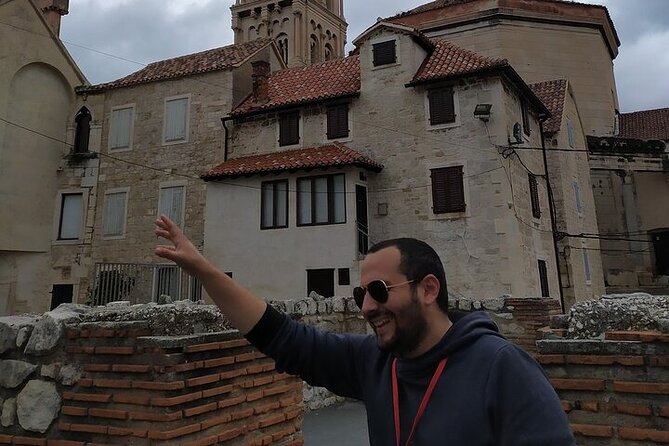
- Boris, a licensed historian (master’s in history), guides the experience and keeps it teacher-style and interactive
- 3D reconstruction images and pictures in a display book so you understand what the palace looked like
- Maximum 12 travelers, which makes it easier to ask questions and hear well at every stop
- A tight, sensible route from the Golden Gate through Diocletian’s Palace to Pjaca
- Photo help along the way, plus recommendations for what to do next in Split
Walking Split with a historian, not just a route
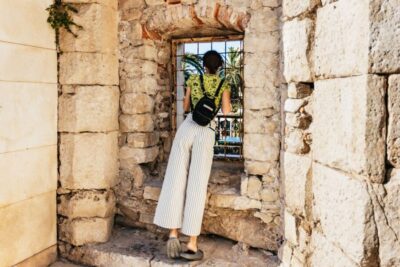
Split’s old town can feel like a puzzle when you arrive. The Diocletian’s Palace walls are everywhere, but without a guide’s framing, you end up just looking at impressive architecture. On this tour, you get a story thread that makes each corner click into place.
I like the small-group format here because it changes the entire vibe. With a maximum of 12 people, the walk stays personal, and Boris can learn names and respond to questions. In a place like Split, that matters because you often want context, not just facts.
Another smart choice is how the tour is built around big, obvious landmarks and then connects them to how locals lived afterward. You are not only covering Roman emperors in theory. You are seeing how the palace became a medieval city, and why the waterfront and squares turned into daily-life magnets.
Meeting at Golden Gate, then learning how to read the old city
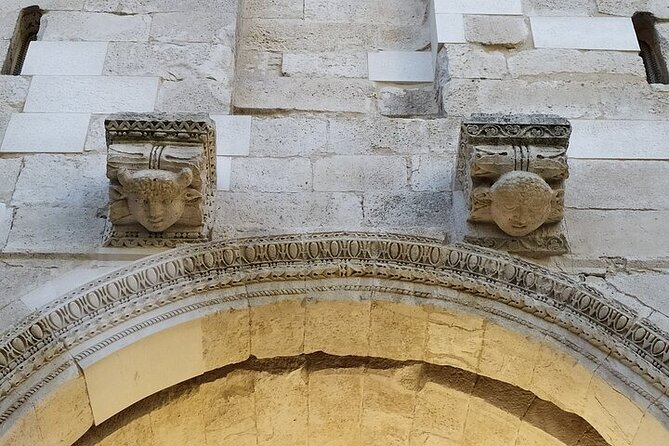
Your tour begins at the Golden Gate on Dioklecijanova 7. Even if you know the palace name, your first job as a visitor is orientation, and this start helps you build a mental map fast.
Golden Gate is a northern entry into Diocletian’s Palace, directly across from the statue of Gregory of Nin. The guide sets you up to notice how the palace sits in the old city and how key monuments keep showing up again and again in the same sightlines. It is a small start that pays off later when you realize you are repeatedly walking along the palace’s “logic.”
This early section also keeps your expectations grounded. The guide explains what Golden Gate is, its importance, and how it relates to Split’s larger history, including what came after Rome. It is a clean way to start without overwhelm.
Still riding at anchor off Split
- Split: Krka Waterfalls Trip with Boat Cruise and Swimming★ 4.8 · 10,519 reviews
- From Split: Krka Waterfalls, Food & Wine Tasting Tour★ 5.0 · 9,326 reviews
- Blue cave, Mamma Mia and Hvar, 5 islands speedboat tour★ 5.0 · 7,150 reviews
Golden Gate and Grgur Ninski: two anchors for Roman to medieval Split
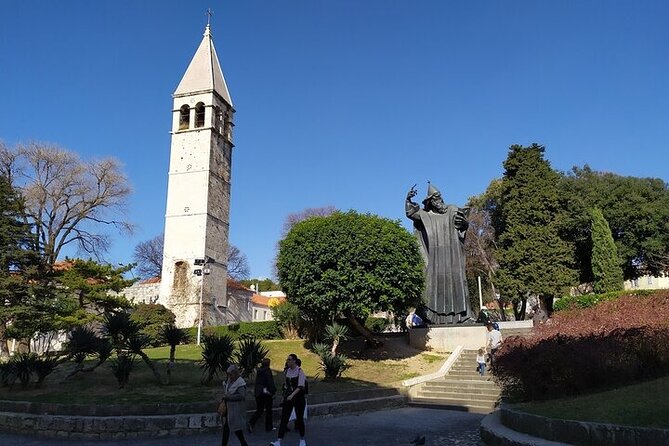
The Golden Gate stop is short, then you move on quickly to the statue of Grgur Ninski (Gregory of Nin). This pairing works because it puts two eras face to face. One is tied to Diocletian’s Roman world. The other highlights a historical figure with a major local presence later on.
At the statue, you get the story behind Gregory of Nin: why he matters in Split, plus details about the monument itself and who sculpted it. I like that this does not treat the statue as a random photo spot. The guide connects it to how Split remembers key people.
If you like learning by contrast, this is a strong moment in the tour. The Roman gate feels like power and structure. The statue feels like memory and identity, and you see how both still shape the city today.
Entering Diocletian’s Palace through Peristyle, cellars, and the emperor’s daily rhythm
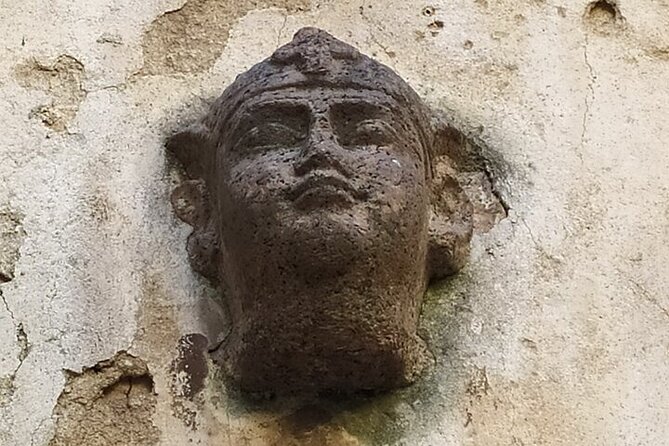
Most of your time is spent inside and around Diocletian’s Palace, and the tour’s best trick is how it divides the palace into functions you can actually understand.
You start with the palace’s main monument core, then the tour highlights key parts such as:
- Peristyle
- Jupiter’s Temple (viewed from outside)
- Diocletian’s Cellars (described as part of the central substructure area)
- Triclinium
- Mausoleum and Cathedral of St. Domnius (outside)
When you reach the Peristyle, the guide explains its role as a central connecting point and also a space that helps separate the emperor from others. This is where the palace stops being a block of ancient stone and starts acting like a real machine for movement, authority, and daily routine.
From Peristyle, you are guided toward the central cellars and then toward the Triclinium, where the guide talks about eating habits and how the emperor’s dining room was organized. Even if you do not care much about Roman lifestyle, these details help you picture how power was hosted. Food, seating, and layout become history you can visualize.
The 3D reconstruction tool makes this section especially useful. You are looking at existing stone, but the guide is also showing what is hard to see today. A small display book with pictures and 3D images helps your brain fill in the missing pieces, instead of leaving you with only guesses.
Jupiter’s Temple and St. Domnius: how belief changed the palace
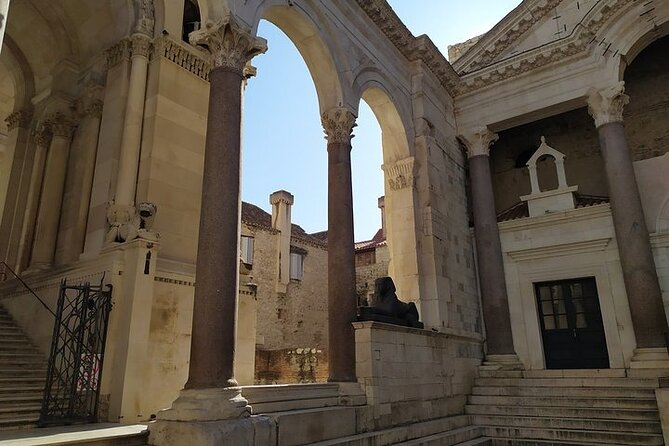
The tour then shifts from Roman governance to Roman religion, and later to Christian transformation.
At the Temple of Jupiter, you view it from outside and learn why temples mattered in the Roman Empire. This stop is brief, but it matters because it shows how religion was built into daily life and official space.
Next comes the Cathedral of Saint Domnius, again approached as an outside viewing. The guide points out significant parts and warns you about interesting interior details you might want to look for later on your own. This is a good way to keep the walking time efficient while still respecting that the interior can deserve your attention.
One practical benefit here: you stop learning just dates and names. You start learning “what changed” and “why.” The palace’s story becomes less like a history lecture and more like a chain of adaptations, first under Rome, then under Christianity.
Two moorings down in Split:
- From Split: Krka Waterfalls, Food & Wine Tasting Tour
★ 4.9 · 6,598 reviews - Split/Trogir: Blue Cave, Mamma Mia, Hvar and 5 Island Tour
★ 4.6 · 6,320 reviews - Blue Lagoon & 3 Islands Cruise with Lunch from Split
★ 4.5 · 5,756 reviews - Blue Cave and Hvar Tour – 5 Islands Tour from Split and Trogir
★ 5.0 · 4,815 reviews
Vestibulum and Riva Harbor: from private chambers to the city’s public face
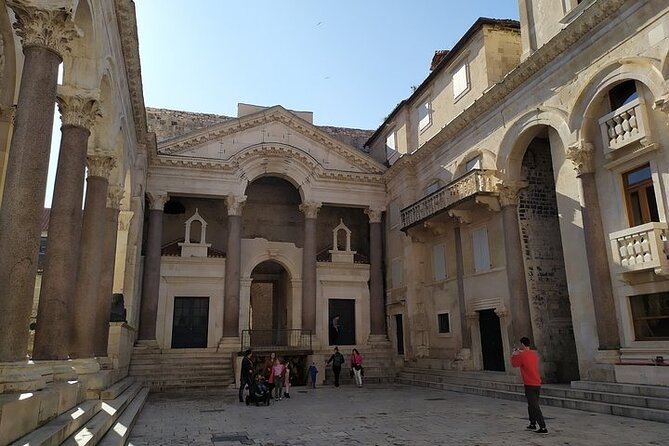
A notable stop is the Vestibulum of Diocletian’s Palace. This is described as the pre-entrance area to Diocletian’s private chambers, decorated according to its importance. You get a sense of how even the doorway zone carried meaning. That is a fun kind of detail because it reminds you that power was staged, not just held.
Then the tour reaches Riva Harbor, Split’s main city promenade. This is where the history stops living only in palace walls and starts showing up in how people actually move and meet.
The guide explains how Riva was built over the centuries and why it became central for locals. In other words, you see how the city kept evolving instead of freezing in time. That makes the rest of your self-guided exploration feel easier, because you understand why certain areas became social magnets.
Fruit Square and Pjaca: daily-life landmarks in the heart of old Split
Near the end, you visit Fruit’s Square (Trg Brace Radic). This small square has a charming personality, and the guide explains why it is called Fruit Square. There is also a significant monument in the middle, plus context about what surrounds it.
Then you finish at People’s Square (Pjaca), which has served as the center of city happenings from medieval times to today. This is one of the most useful wrap-up locations imaginable. You end in a lively area where you can decide what to do next, whether that is coffee, a quick snack, or continuing to explore nearby streets.
Before the tour ends, Boris suggests other places you can visit that are not part of the walk. One review also notes that he gives recommendations for restaurants and activities afterward, which is exactly what you want at the end of a history-heavy tour. You leave with a plan, not just memories.
The value of the display book: turning stone into a story you remember
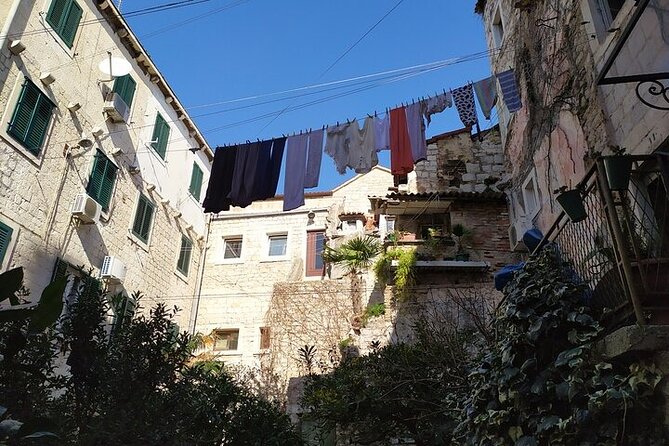
Included in the experience is a display book with pictures and 3D reconstruction images. I like this kind of support because Diocletian’s Palace is big and layered. You can easily stand in a location and struggle to understand where you are within the original layout.
The guide uses the book as a visual bridge while you are standing in place. You are not just hearing, you are seeing how the palace may have looked and how areas likely connected. That makes it easier to remember the differences between the emperor’s world and the public city that grew around it.
Also, the guide can help with photos. In a dense stone maze like Split, “help me take a good picture” turns into “teach me where to stand and what angle shows the story.” That is a small service, but it boosts your results.
Price and timing: is $38.62 worth it for 2 hours?
At $38.62 per person for about 2 hours, you are paying for three things you usually cannot get for free: a licensed professional historian, a structured route, and visual aids that make the palace readable.
The real value is not only the duration. Two hours is enough time to connect major points, but it is not so long that you melt in the heat or lose your attention. For first-time visitors, that balance is hard to beat.
The tour also sells well, based on booking lead time. That usually signals demand for the type of guide-led, small-group interpretation you get here. In plain terms, if you arrive in Split and you want a guided “why this matters” orientation, this is the kind of ticket that saves you time.
No admission tickets are included. The good news is this walking route is built around stops listed as free, and many are outside viewing points. Still, if you decide to go inside extra places on your own afterward, you will need to handle those separately.
Who should book this tour in Split?
This experience is a strong fit if you want:
- A first overview of Split that connects Roman, medieval, and modern layers
- A guide who teaches in a lively, interactive way, not a monotone lecture style
- A small-group walk where you can ask questions without feeling rushed
It is also a good option for families. One review highlights that Boris made history interesting for kids and adults, with interaction such as trivia-style questions that children enjoyed. If you are traveling with teenagers, that interactive element can matter more than you expect.
If you are the kind of traveler who prefers beach time, museum time, or long indoor visits, you might feel slightly constrained by the fact that most stops are short and outside-focused. You will likely want to pair this with additional independent exploration after.
And if you are visiting in weather that is not great, keep it in mind. The experience requires good weather, since this is a walking route built around outdoor stops.
Should you book it? My quick decision guide
Book this tour if you want Diocletian’s Palace to make sense fast, and you like learning through a teacher-style guide. The combination of Boris, the small group limit, and the 3D reconstruction visuals is exactly what helps Split click, instead of just looking impressive in photos.
Skip or supplement it if your main goal is deep museum-style time indoors. This walk is about orientation and storytelling across key landmarks, ending in Pjaca where you can keep exploring on your own.
If you book, come with at least one curiosity question. Ask why the palace changed over time, or how the city shifted from Roman control to later life. With a small group and a historian who teaches, your questions turn into part of the experience.
FAQ
How long is the tour?
It runs for about 2 hours.
Is the tour in English?
Yes, it is offered in English.
What is the group size?
The experience has a maximum group size of 12 travelers.
Are admission tickets included?
No admission tickets are included with the experience.
Where does the tour start and end?
It starts at the Golden Gate (Dioklecijanova 7, 21000 Split) and ends at People’s Square (Pjaca), 21000 Grad, Split.
What is the cancellation window for a full refund?
You can cancel up to 24 hours in advance for a full refund, based on the local start time of the experience.
Latest arrivals logged at Split




Split Tours & Activities, compared.

Krka Waterfalls Trip with Boat Cruise and Swimming
Read our review →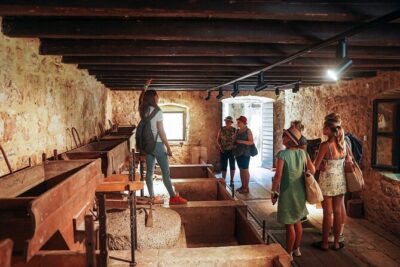
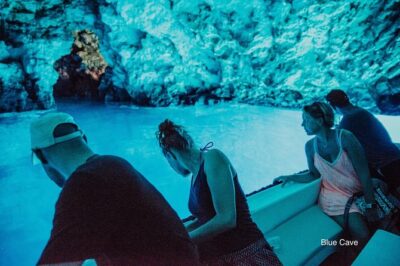
Blue cave, Mamma Mia and Hvar, 5 islands speedboat tour
Read our review →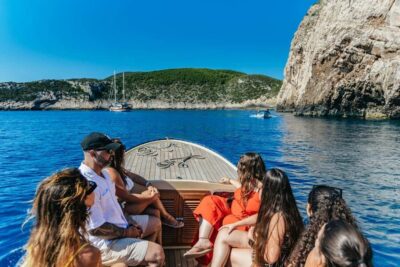
Blue Cave, Mamma Mia, Hvar and 5 Island Tour
Read our review →
Blue Lagoon & 3 Islands Cruise with Lunch from Split
Read our review →
Blue Cave and Hvar Tour – 5 Islands Tour from Split and Trogir
Read our review →