Reviewed · SPLIT TOURS & ACTIVITIES
Small-Group Communist Tour of Split – Boutique group tour
Split has a communist past worth hearing. This small-group tour uses WWII context and Yugoslavia-era sites around Split to explain how the communist state took shape, then shows you the architecture people still walk by today. I especially like the private, air-conditioned transport, which makes the stops feel doable, and I like the guide format: a local historian and history teacher who can connect buildings to daily life. The main drawback is simple, it is history-heavy and needs good weather, so it is not the laid-back beach stroll type of tour.
You meet at the bus station square at Trg Franje Tuđmana, and you return there at the end. With a max group size of 8, you get real conversation, not just a rapid-fire lecture, and one booking even turned into a one-on-one experience.
In This Review
- Key highlights you should know before you go
- A history-focused morning in Split, with transport that actually helps
- Price and logistics: what $108.14 buys you
- Trg Franje Tuđmana: the WWII setup that reframes everything else
- Poljud Stadium and the China Wall: socialist architecture with global attention
- Koteks and consumer life: what shopping looked like under the system
- Split 3: Tito-era planning, from housing to social life
- Kopilica railway station and the armored train: the violent end explained
- Who this tour suits, and who might feel out of place
- The guide makes the difference, especially Boris
- My value check: is this a good use of your time in Split?
- Should you book the Small-Group Communist Tour of Split?
- FAQ
- How long is the Communist tour of Split?
- What time does the tour start, and where is the meeting point?
- Is the tour offered in English, and how big is the group?
- Is there an admission fee for the stops?
- What is included in the tour price?
- What is the cancellation and weather policy?
Key highlights you should know before you go
- A purpose-built Communist tour of Split focused on Yugoslavia and its legacy in the city
- Local historian and history teacher guidance in English, with story-driven explanations at each stop
- Private vehicle with air conditioning, so scattered sites do not turn into a walking-only ordeal
- Yugoslavia architecture you can name fast, from Poljud Stadium to Split 3 and the China Wall
- Ending with the armored train at Kopilica, a stark way to understand the violent break-up of Yugoslavia
A history-focused morning in Split, with transport that actually helps
If your Split itinerary is mostly palace views and old stone walls, this tour adds a different layer. You are not just learning dates. You are learning how people lived, what they built, and what happens when a system collapses. The tour stays English, and it is designed for a small group, up to 8 people.
The route is also practical. Stops are dispersed enough that the private vehicle matters. You spend time outside where you need to, then you get moved when you do not. That is a big value point in a city where the best-looking history spots are never all next door to each other.
Price and logistics: what $108.14 buys you
At about $108.14 per person for roughly 3 hours 30 minutes, you are paying for more than narration. You are paying for a private vehicle with air conditioning, a small group cap, and a guide who teaches with intention, not just recites.
A few practical touches help too. You get a soft local drink tied to communist-era life. You also start at 9:00 am and finish back at the meeting point, which keeps the day from splintering into separate transfers.
One thing to consider is timing. The tour is typically booked around 10 days in advance, so if you want a specific date, booking ahead is smart. Also, confirmation comes at booking time, and you are using a mobile ticket.
Still riding at anchor off Split
- Split: Krka Waterfalls Trip with Boat Cruise and Swimming★ 4.8 · 10,519 reviews
- From Split: Krka Waterfalls, Food & Wine Tasting Tour★ 5.0 · 9,326 reviews
- Blue cave, Mamma Mia and Hvar, 5 islands speedboat tour★ 5.0 · 7,150 reviews
Trg Franje Tuđmana: the WWII setup that reframes everything else
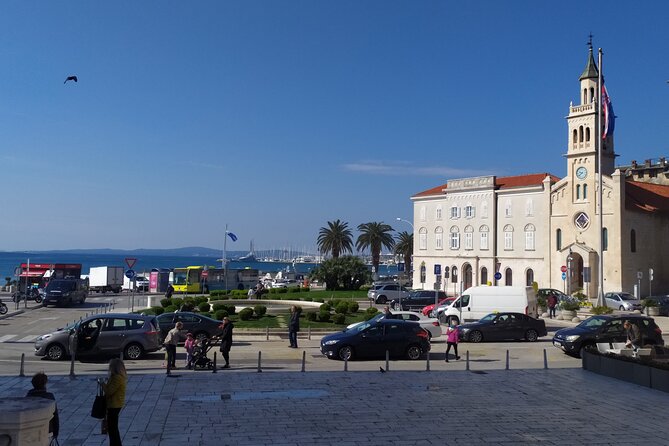
The tour begins at Autobusno stajalište Sv. FraneTrg at Trg Franje Tuđmana. This first stop does not jump straight to architecture. It starts with context, with details of WWII in Split and across Yugoslavia, and how those events contributed to the birth of the new communist state.
You also see pictures of damage in Split during the war. That visual piece matters. Without it, later discussions of public projects can sound like abstract ideas. With it, you understand why a new state would invest in planning and rebuilding, and why propaganda and policy showed up in brick and concrete.
This stop lasts about 25 minutes. It is a good pace for a morning start because it focuses your attention, then you move on before you fatigue.
Poljud Stadium and the China Wall: socialist architecture with global attention
One of the most compelling ways to learn is to stand somewhere recognizable and get a story that turns it into something new. Here, that moment happens around Poljud Stadium.
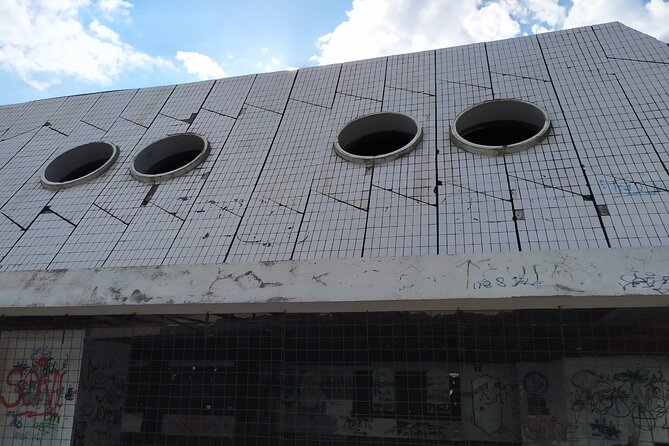
You get a short panoramic stop to hear about Poljud, described as one of the most beautiful stadiums built during the communist period in Yugoslavia. It was known internationally, and it was built to host the Mediterranean Games, one of the biggest sport events in Yugoslavia at the time. There is also a strong credibility signal in the details: Poljud Stadium was part of a Yugoslavia architecture exhibition held at MoMA in New York. That is how you know it was not just local showmanship.
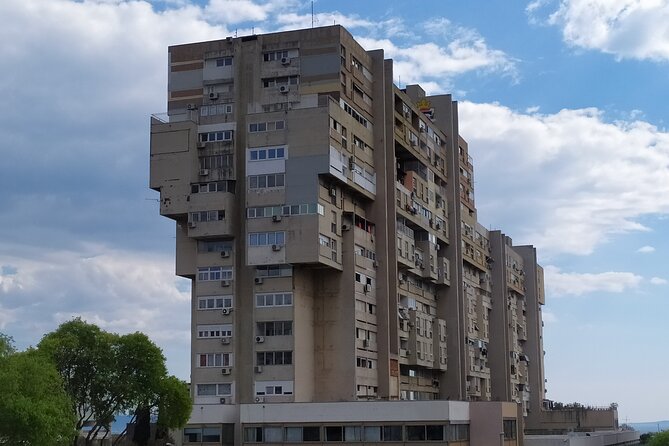
Right nearby, you also get the China Wall, noted as the widest existing building in Split. It is presented as part of Yugoslav socialist architecture. The China Wall is the kind of place you might pass without a second look. On this tour, you learn to read it like a clue.
The stop is brief, around 10 minutes, so you want to use your camera quickly and your questions thoughtfully. If architecture is your focus, this is one of the best value moments in the whole itinerary.
Koteks and consumer life: what shopping looked like under the system
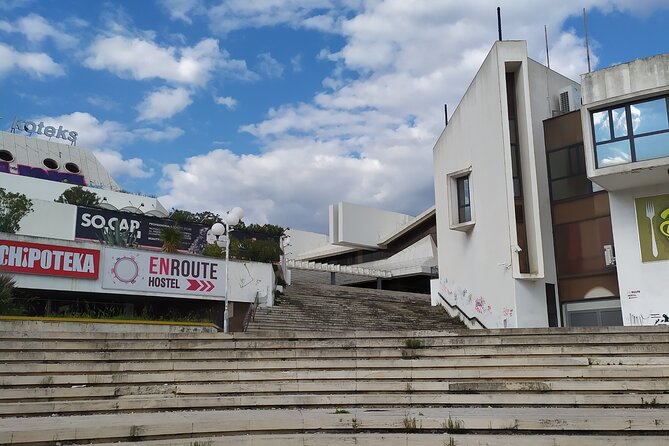
Next you move to Prodajni centar Koteks, introduced as what people consider the first shopping mall idea in Yugoslavia. You walk around and hear what made it modern at the time, and why it did not last.
This is where the tour turns from buildings into behavior. You learn the idea of consumer life in Yugoslavia as something balanced between open West and closed East influences, with its own story. One of the recurring themes is creativity. In a system where certain goods could be hard to find, people had to figure out how to supply everyday needs.
That is a useful perspective because it prevents a common mistake. It is easy to talk about communism as only politics or only shortages. Here, you get a more human scale, shopping, routines, and the way society adapted in practice.
This stop runs about 30 minutes. It is enough time to walk, absorb the story, and still keep the tour moving at a good clip.
Two moorings down in Split:
- From Split: Krka Waterfalls, Food & Wine Tasting Tour
★ 4.9 · 6,598 reviews - Split/Trogir: Blue Cave, Mamma Mia, Hvar and 5 Island Tour
★ 4.6 · 6,320 reviews - Blue Lagoon & 3 Islands Cruise with Lunch from Split
★ 4.5 · 5,756 reviews - Blue Cave and Hvar Tour – 5 Islands Tour from Split and Trogir
★ 5.0 · 4,815 reviews
Split 3: Tito-era planning, from housing to social life
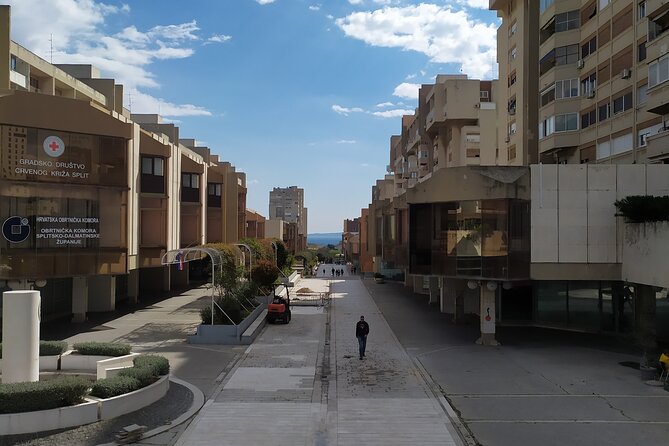
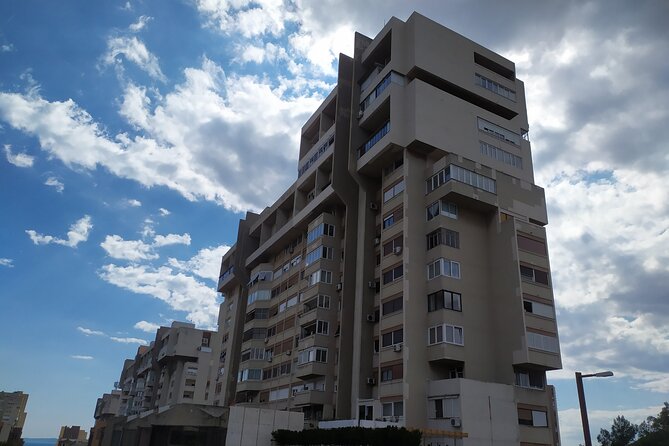
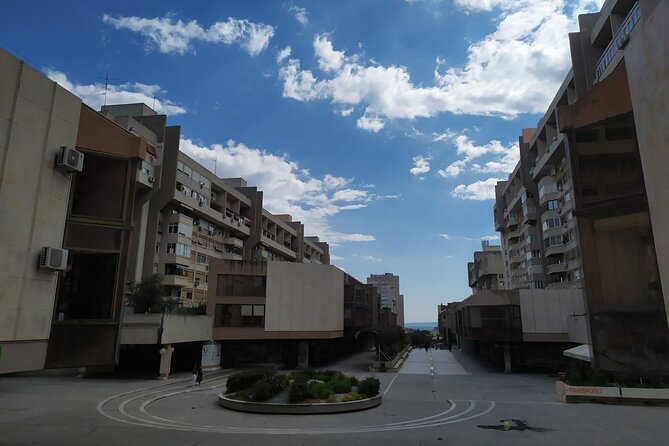
The longest and most discussion-heavy segment is Split 3, often described as a modern communist Yugoslavia neighborhood designed to provide quality living, working, and resting for its residents. The tour frames it as a high-quality project and an example of planned modern neighborhoods known in world terms.
As you walk through, you check different architecture styles and you hear about local architects who gave signature features to different buildings. One building you hear highlighted is called Cruiser. The point of naming specific structures is that it helps you anchor the entire system in visible details.
The guide then expands into policy and social design. You get explanations tied to housing policy, the educational system, health system, economy, social life, and politics, with emphasis on Tito and the dictatorship under Yugoslav communist leadership. Importantly, this is not delivered like a textbook. It is tied to what you can see: the logic of planning, the purpose of spaces, and why the state would invest in neighborhood structure.
Split 3 also gets special treatment in terms of cultural recognition. The tour notes that it was one of the top exhibits of Yugoslavia architecture at MoMA in New York. That gives you context if you are the type who likes to connect what you see in Split to how it was received abroad.
After the architecture and policy discussion, you get free time. The duration is generous, about 1 hour 10 minutes. Use it in whatever way helps you learn best. If you like photography, take your time. If you like reading your surroundings, just wander slowly and look for the building features you heard about.
Kopilica railway station and the armored train: the violent end explained
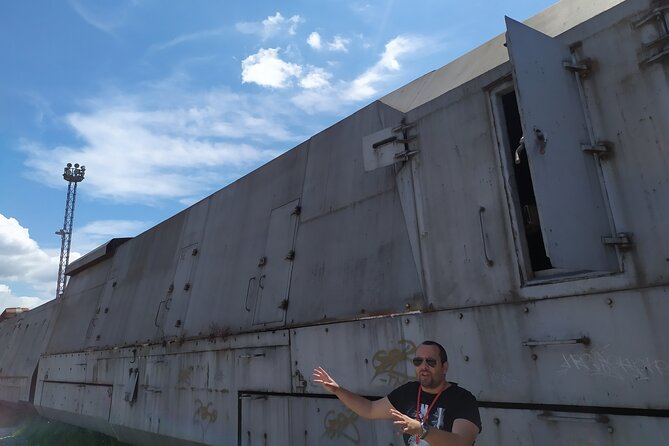
The tour closes at Split Predgrađe, with the final stop at Kopilica railway station and the appearance of an armored train exposed on the railway.
This is where the story becomes sharp. You hear reasons Yugoslavia did not manage to survive, and why the end of it in the 1990s was violent, finishing with a bloody war. The armored train is presented as a symbol of the beginning of the bloody end of Yugoslavia, with consequences that changed relations between nations and religions in southeast Europe again.
You also get a sense of how political collapse can turn transportation infrastructure into a kind of historical evidence. It is not an abstract symbol. It is a real object in a real place, and it shifts how you interpret the earlier focus on construction and planning. People build for stability, and when stability shatters, you can see the shift in the physical world too.
This last segment is about 30 minutes. It leaves you with a clearer frame for modern-day tensions in the region, even if you are not going deep into modern politics on the spot.
Who this tour suits, and who might feel out of place
This tour fits best if you meet one or more of these:
- You like Yugoslavia and communist-era architecture and want names, context, and why it mattered.
- You enjoy guided storytelling that connects policy to real locations, not just a photo stop circuit.
- You want to ask questions in English and get answers from a guide who teaches history as a living subject.
It might feel less satisfying if:
- You want a mostly scenic walk with minimal politics.
- You are traveling on a tight schedule and do not have flexibility for the weather requirement. The tour requires good weather, and if it is canceled due to poor weather you get offered a different date or a full refund.
Also, the tour is listed as for most travelers. That said, you should still expect walking and outdoor time during the stops.
The guide makes the difference, especially Boris
One of the best signals from the experiences shared is the role of the guide. You are in the hands of a local historian and history teacher, and one standout detail is that Boris is often named for being excellent and very knowledgeable. What that usually means in practice is not only facts, but the ability to explain why people cared about stadiums, malls, and neighborhoods in the first place.
Because the group stays small, those skills matter even more. You are not just hearing the story at you. You are more likely to get explanations that land at your pace. In one booking, the group even became one-on-one, turning the experience into something more personal.
My value check: is this a good use of your time in Split?
For the money, I think the tour works well if your goal is to understand Split beyond the standard tourist sweep. You get:
- A focused theme on communism in Split and Yugoslavia
- High-recognition architecture stops linked to international attention, including MoMA notes for Poljud Stadium and Split 3
- A practical transport solution so the itinerary stays comfortable
- A full narrative arc, WWII context, built environment, everyday life, and the violent end in the 1990s
If your Split visit is short and you can only do one guided experience, this one is a smart choice if you are curious about how politics shaped the city’s physical look. If you are only interested in coastal scenery and old medieval lanes, you might prefer a different style of tour.
Should you book the Small-Group Communist Tour of Split?
Book it if you want a guided, English-language explanation of Yugoslavia-era Split, with transport handled and a guide who brings the story into focus. I would especially recommend it if you enjoy architecture, if you like learning how everyday life operated under systems you do not see anymore, and if you are comfortable with a topic that includes WWII and the violent breakup of Yugoslavia.
Skip or swap it for something else if you are hoping for an easy scenic afternoon, or if you know the weather on your date could be shaky. The tour does require good weather, and a history-heavy format is not for every mood.
If you do book, come ready to look at ordinary-looking buildings like they are evidence. By the end, you will probably notice features you would have walked right past before, like the design logic behind Split 3 or the way Poljud Stadium and the China Wall fit into a planned world.
FAQ
How long is the Communist tour of Split?
It lasts about 3 hours 30 minutes.
What time does the tour start, and where is the meeting point?
The start time is 9:00 am. You meet at Autobusno stajalište Sv. Frane Trg Franje Tuđmana, 21000 Split, and the tour ends back at the meeting point.
Is the tour offered in English, and how big is the group?
Yes, it is offered in English. The maximum group size is 8 travelers.
Is there an admission fee for the stops?
The tour information lists admission tickets as free for each stop.
What is included in the tour price?
You get a soft local drink, and the tour includes an air-conditioned vehicle with private transportation.
What is the cancellation and weather policy?
Cancellation is free. You can cancel up to 24 hours in advance for a full refund. The tour requires good weather, and if it is canceled due to poor weather, you will be offered a different date or a full refund.
Latest arrivals logged at Split

Split Tours & Activities, compared.
Krka Waterfalls Trip with Boat Cruise and Swimming
Read our review →
Blue cave, Mamma Mia and Hvar, 5 islands speedboat tour
Read our review →
Blue Cave, Mamma Mia, Hvar and 5 Island Tour
Read our review →
Blue Lagoon & 3 Islands Cruise with Lunch from Split
Read our review →
Blue Cave and Hvar Tour – 5 Islands Tour from Split and Trogir
Read our review →