Reviewed · SPLIT TOURS & ACTIVITIES
Storytelling World War II in Split Tour
WWII lessons live in Split’s street corners. This tour links Split landmarks to the war’s real impact, with a local guide telling stories that feel personal and close to the stone. You walk through the old center, and you also get to see archival photos that most people never get to handle.
I especially love two things. First, the guide, Ina Nikolic, is a storyteller, not a lecturer, and you feel the chain of events as you move stop to stop. Second, you get archival WWII photographs connected directly to what you’re standing in front of, not just generic “history talk.”
One drawback to plan for: it’s only about two hours, but there is a good amount of standing while the story lands. If you hate stops where you just stand and listen, this may feel slower than a sightseeing loop.
In This Review
- Key highlights you will care about
- Turning a city walk into a WWII story
- Starting at Split Riva, where the war’s chapter begins
- Green Market bombing stories you can almost picture
- Through Diocletian’s Palace: Eastern (Silver) Gate to the Peristyle
- Narodni Trg and Marmontova Ulica, where streets hold memory
- Prokurative finish, prisons and executions in the final chapter
- Why the WWII photos change the whole experience
- Ina Nikolic’s storytelling style, and how it helps you learn
- Time, pace, and what to wear for a two-hour WWII walk
- Price value: what you get for about $60
- Who this tour is perfect for, and who should be cautious
- Should you book this WWII storytelling walk in Split?
- FAQ
- How long is the WWII in Split tour?
- Where does the tour start and end?
- Is pickup available?
- What language is the tour in?
- How big is the group?
- Are there admission tickets required for the stops?
- Does the tour include archival WWII photos?
- Can I cancel and get a full refund?
Key highlights you will care about
- Small group, max 15 people, so you can ask questions without shouting over everyone
- Ina Nikolic leads in English, with strong local context and clear storytelling
- WWII archive photos from the Museum of the City of Split, used with permission (not always on public display)
- Diocletian’s Palace through WWII eyes, including what parts were attacked and what you can still read today
- A focused route through key sites, ending at Prokurative for prisons and executions
Turning a city walk into a WWII story
Split has a talent for hiding its past in plain sight. You stroll past Roman stonework, medieval streets, and busy squares, and it is easy to think you are only seeing layers from long ago. Then the tour reframes it. You start to notice how a city built for empire also got treated like a target in modern war.
What makes this experience worth your time is the way the tour connects causes and consequences. The guide doesn’t just name bombings and battles. She ties those events to specific corners, entrances, squares, and streets you can point to. That matters, because WWII in this part of Croatia is not abstract. It happened here, with people living their daily routines, and Split still carries physical clues.
You also get a practical comfort factor: this is designed for a small group, it stays in the historical center, and the guide adjusts the meeting point to keep things simple for the group. The tour runs about two hours, so you can fit it around beaches, dinner, and the rest of your Split days without turning the day into a marathon.
Starting at Split Riva, where the war’s chapter begins
The walk starts at Obala Hrvatskog narodnog preporoda 27, right by the Split waterfront area called the Riva. This is a smart starting point because it’s one of the easiest places in the center to orient yourself. You get the meeting point handled, then the guide brings you into the story of when and why the war in Split started.
Riva is the kind of place where people assume modern comfort, promenades, photos, and cafes. Here, the guide uses that contrast to make you pay attention. You are not only looking outward at the sea, you are also looking back at how the city’s position and connections shaped what happened during WWII.
You’ll spend about 15 minutes at this first stop. That may sound short, but it sets the tone. It gives you a map in your head before you move deeper into the old streets. If you want to follow the narrative cleanly, start here ready to listen, not ready to multitask.
Still riding at anchor off Split
- Split: Krka Waterfalls Trip with Boat Cruise and Swimming★ 4.8 · 10,519 reviews
- From Split: Krka Waterfalls, Food & Wine Tasting Tour★ 5.0 · 9,326 reviews
- Blue cave, Mamma Mia and Hvar, 5 islands speedboat tour★ 5.0 · 7,150 reviews
Green Market bombing stories you can almost picture
Next you go to the Green Market, a familiar spot for food and everyday life. That’s exactly why it hits. Markets are where normal routines happen. When the guide talks about the most horrific bombing in Split connected to this area, you feel how war breaks the rhythm of a city.
This stop is also about 15 minutes. In that time, the story tends to focus on what changed for civilians: where people were, what the city looked like afterward, and why those events mattered beyond the day they happened. You come away understanding that “bombing” is not just a date in a textbook. It’s smoke, disruption, and a city forced into survival mode.
One practical note: markets can be crowded. If your group timing overlaps with peak market hours, expect people moving around you. The guide will keep you on track, but you may have to tolerate some background noise while you listen.
Through Diocletian’s Palace: Eastern (Silver) Gate to the Peristyle
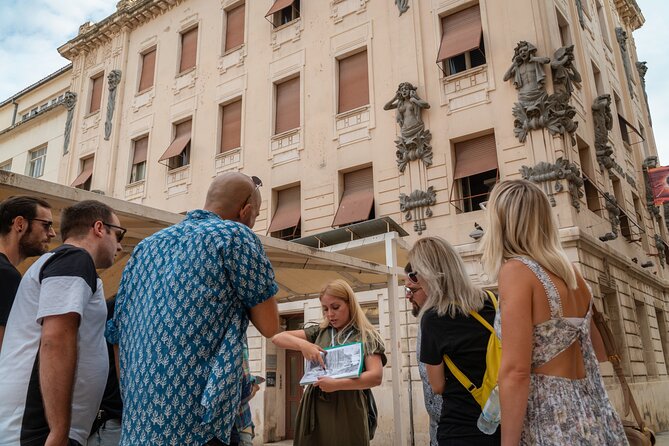
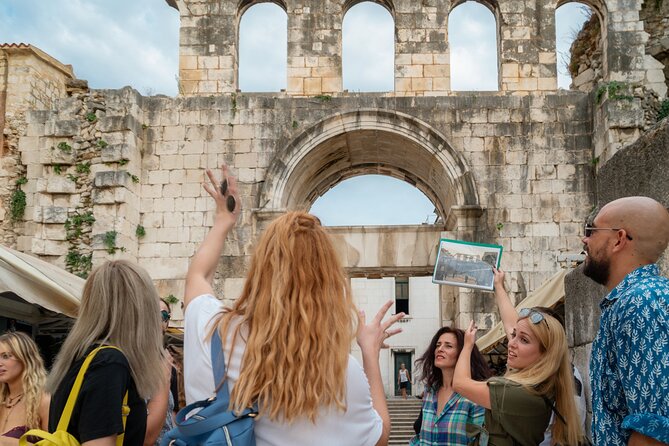
After the market, you head toward the Eastern (Silver) Gate, which is an entrance into Diocletian’s Palace. Even if you already visited the palace on your own, this stop works because you are guided through it with a new question: which parts of these ancient spaces got attacked during WWII?
This is where the tour becomes more than a WWII walk. You start reading the city differently. Roman architecture is built for long-term structure and movement. WWII brought a different kind of movement, and the guide explains it by linking attacks to visible parts of the palace complex you can still see.
Then you move into the Peristyle of Diocletian’s Palace for another about 15 minutes. The Peristyle is open and iconic, but it can also feel like “just another impressive courtyard.” The guide uses it as a historical anchor. You compare the scale of the space to what happened within it, and you understand why these monumental interiors were significant during crisis, not only during celebrations.
If you like history but you hate dry facts, this part is likely your favorite. You get the physical setting plus the human story. And the tour helps you notice details you would normally skip.
Narodni Trg and Marmontova Ulica, where streets hold memory
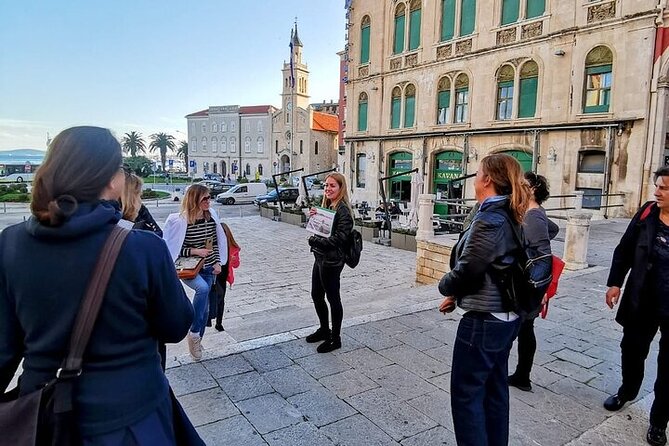
From the palace area, the tour heads to Narodni Trg, the city’s main square. The guide explains what terrible events took place here during the war, and she does it in a way that helps you connect “square” to lived reality. A square is where crowds gather. That makes it meaningful during war, too, because people gather when they are waiting, hoping, or moving between errands and safety plans.
Narodni Trg lasts about 15 minutes, which gives enough time for the story to land without dragging. You also get a useful habit from the guide: she trains you to notice the street layout, the sightlines, and how people would have moved through the same places you walk today.
Next comes Marmontova Ulica, the main street. This is a quick stop, about 5 minutes, but it’s not just a “photo stop.” It’s a reminder that the horrors of war are not limited to dramatic ruins. Even the main street can carry weight, especially when the guide ties it back to the war’s timeline and the city’s role.
This section is where you might feel the walking pace and listen time balance. You are moving, but you also have short bursts where you park yourself and let the story do the work.
Two moorings down in Split:
- From Split: Krka Waterfalls, Food & Wine Tasting Tour
★ 4.9 · 6,598 reviews - Split/Trogir: Blue Cave, Mamma Mia, Hvar and 5 Island Tour
★ 4.6 · 6,320 reviews - Blue Lagoon & 3 Islands Cruise with Lunch from Split
★ 4.5 · 5,756 reviews - Blue Cave and Hvar Tour – 5 Islands Tour from Split and Trogir
★ 5.0 · 4,815 reviews
Prokurative finish, prisons and executions in the final chapter
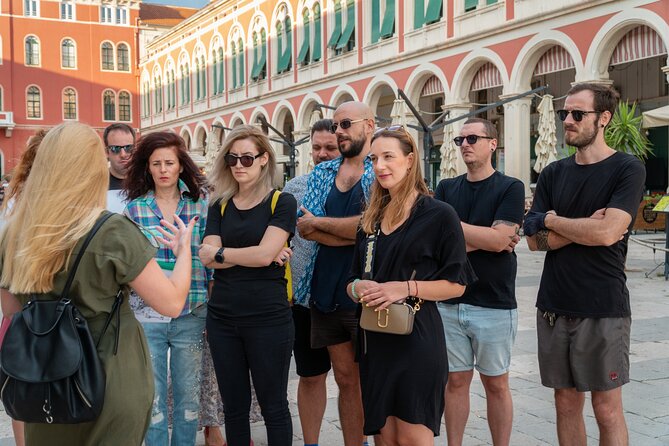
The tour wraps up at Trg Republike, near Prokurative square, at the end point of the experience. This is about 15 minutes focused on prisons and executions during WWII.
Ending here is a strong choice, because it closes the narrative with the harshest consequences. You are not left with only images of bombings or damage. You get the darker side of how the war played out locally, and you understand why people feared not just the air raids, but what could happen afterward.
The final stop is also practical. Staying near the promenade and central squares makes it easy to continue your evening plans. You can grab dinner, walk off the last bit of tension in a safer, brighter direction, or even revisit a stop on your own with a new lens.
Why the WWII photos change the whole experience
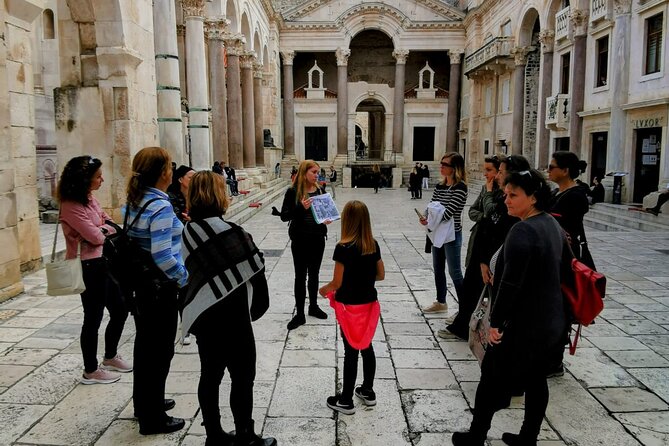
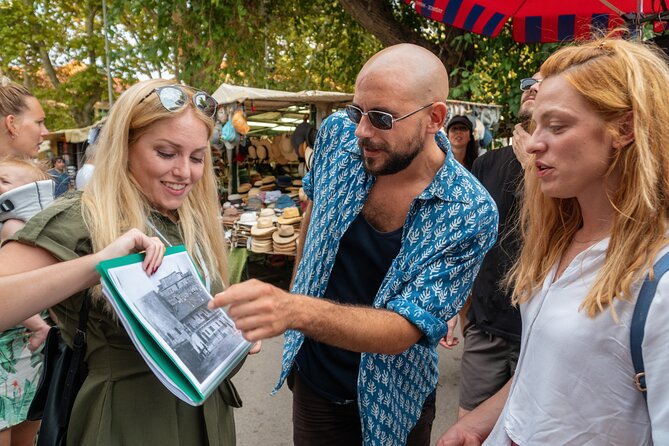
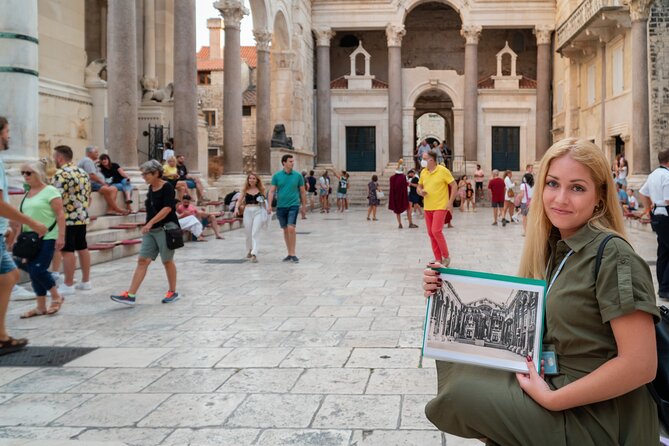
One of the best parts of this tour is the photo element. The guide brings old WWII photographs that are kept in the archive at the Museum of the City of Split. These images are not in permanent display, but the guide has permission to use them.
That detail matters. Most walking tours say “you’ll see photos.” Here, the photos come from an archive linked to Split itself. So the images feel grounded. You can compare what you see in the photo to what you see in front of you on the street.
In particular, the guide’s style is what makes the photos useful. She doesn’t treat them like trophies. She treats them like evidence. You get a sense of place and time, and you understand how the war reshaped daily life in Split, even for people not on the front lines.
The photos also help your brain connect the story to something visual. That is the difference between “I learned facts” and “I can picture the scene.” You’ll likely walk away with mental snapshots, not just dates.
Ina Nikolic’s storytelling style, and how it helps you learn
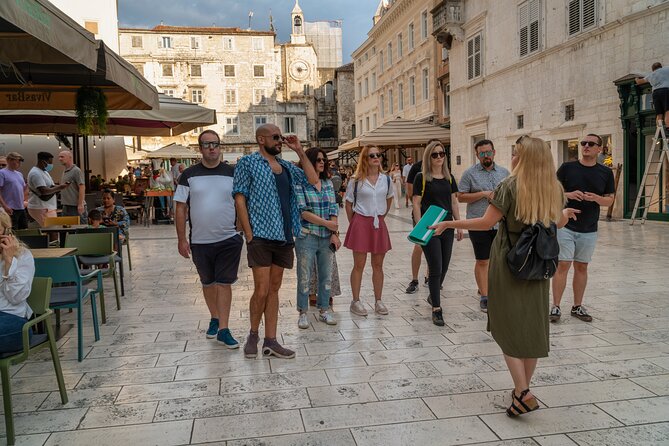
This tour is led by Ina Nikolic, a local licensed guide. From the way the tour is described and how the experience is consistently rated, Ina’s strength is storytelling with a clear historical thread.
You get a guide who answers questions in a friendly way. If history details are your thing, you’ll appreciate that the guide also updates context beyond WWII. For example, there’s an element of later conflict context included in the conversation, and you may hear about Jewish history in particular. That broader framing helps you understand that today’s history is not separate from yesterday’s.
You should also know that the tour can run a little longer sometimes, depending on how questions and discussion flow. The small group size supports this. You do not feel rushed out the door like a cattle line tour.
Time, pace, and what to wear for a two-hour WWII walk
The tour lasts about two hours and stays in the old historical center. Most of the stops are short, often 5 to 15 minutes, with a final cluster at the end. That structure makes it manageable, but you should still expect a certain amount of listening time.
The most common practical complaint is simple: there’s a fair amount of standing. That does not mean it’s slow or boring. It means the guide uses pauses for explanation, and the story works best when you stop and look at where you are.
What should you wear? Since you are walking and standing in central Split, wear comfortable shoes. If you are visiting in hotter months, plan for sun exposure at open-sky stops like the palace courtyard areas and squares.
Price value: what you get for about $60
At $60.01 per person for about two hours, you’re paying for several things at once: a local licensed guide, access to WWII archival photos, and a curated walking route that ties modern war history to old Split landmarks.
You also benefit from small-group structure, with a maximum of 15 travelers, and the experience supports group discounts and pickup options. There’s also a mobile ticket, which keeps things smooth on the day.
The stops themselves note admission ticket free for each location. That means you’re not adding extra site fees for this particular walk. Overall, the price feels fair if you like narrative history and you want a guide to connect the dots.
Who this tour is perfect for, and who should be cautious
This is a great fit if you:
- like WWII history tied to real places, not just museum talk
- want photos and street-level context
- enjoy asking questions and getting answers
- are traveling with a history-focused friend or teenager who likes explanations
It might be less ideal if:
- you dislike standing for short explanations
- you want a purely visual sightseeing route with minimal listening
- you prefer only light, non-grim themes
That said, the tour is not chaotic. It’s structured, timed, and focused. You are guided through a specific set of stops, and each one has a role in the larger story.
Should you book this WWII storytelling walk in Split?
If you are the type of traveler who looks at a building and wonders what happened there, book it. This tour gives you places, photos, and a clear human story connected to WWII in Split. You also get the advantage of a small group and a strong guide, Ina Nikolic, who tells the story in a way that makes you pay attention.
Skip it only if standing and listening feel like a chore for you, or if you want history that stays strictly upbeat. Otherwise, this is one of the more memorable ways to understand Split, because it turns the city from a backdrop into an active witness.
FAQ
How long is the WWII in Split tour?
It’s about 2 hours.
Where does the tour start and end?
The tour starts at Obala Hrvatskog narodnog preporoda 27, 21000 Split, and ends at Trg Republike (Republic Square), near Prokurative square.
Is pickup available?
Yes. Pickup is offered, with pickup details at Trajektna luka Split, Obala kneza Domagoja.
What language is the tour in?
The tour is offered in English.
How big is the group?
The tour has a maximum of 15 travelers.
Are there admission tickets required for the stops?
The listed stops are marked as admission ticket free.
Does the tour include archival WWII photos?
Yes. It includes old WWII photographs from the Museum of the City of Split archive, not necessarily in permanent display, and the guide has permission to use them.
Can I cancel and get a full refund?
Yes. You can cancel up to 24 hours in advance for a full refund.
Latest arrivals logged at Split




Split Tours & Activities, compared.

Krka Waterfalls Trip with Boat Cruise and Swimming
Read our review →
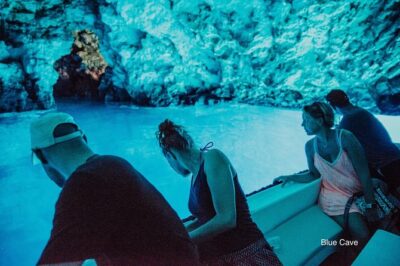
Blue cave, Mamma Mia and Hvar, 5 islands speedboat tour
Read our review →
Blue Cave, Mamma Mia, Hvar and 5 Island Tour
Read our review →
Blue Lagoon & 3 Islands Cruise with Lunch from Split
Read our review →
Blue Cave and Hvar Tour – 5 Islands Tour from Split and Trogir
Read our review →