
Reviewed · GUIDED
Zadar Guided Tour with Virtual Reality Experience
VR brings Zadar’s past to your feet. I like that the tour includes VR headsets and a live guide who ties each stop to what you are seeing, from St. Krševan to St. Anastasia. I also like that the walk ends at the Sea Organ, so your last stop feels modern even after all the time travel. One drawback to plan for is that the VR can feel pretty basic at some locations, and the visual quality may not be equally impressive everywhere.
This is a 2-hour old-town stroll that focuses on big turning points in Zadar’s story: Roman, medieval, Venetian, Crusader, and World War II. With a group size limited to 25, you should be able to ask questions without feeling herded, and the tour notes free admission for the listed sights.
In This Review
- Key highlights you will actually care about
- Zadar VR Walking Tour, what you are really paying for
- Meeting on Poljana Pape Aleksandra III, then walking into time
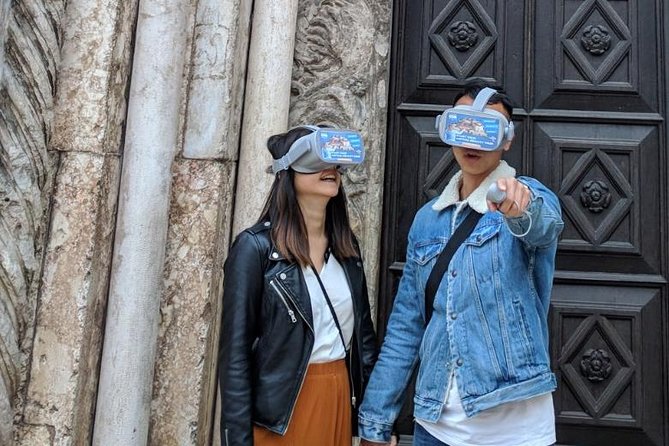
- Church of St. Krševan and St. Simeon, Romanesque beauty with VR access
- Five Wells to Roman gates, medieval entrances, and Venetian walls
- Roman Forum in VR, hot-air balloon views and Jupiter Juno Minerva
- WWII from the bell tower and the waterfront market
- Cathedral of St. Anastasia, and the parts usually off-limits
- Sea Organ and Greeting to the Sun, Crusaders and the view from above
- The VR quality question, what to expect and how to handle it
- Who this tour fits best, and who might choose differently
- Should you book this Zadar VR tour?
- FAQ
- How long is the Zadar guided tour with virtual reality?
- What time does the tour start?
- Where do we meet and where does the tour end?
- Are VR headsets included?
- What languages is the tour offered in?
- How big is the group?
- Is free cancellation available?
Key highlights you will actually care about

- VR headsets are included, and you use them at several key historic stops, including interiors that are normally hard to access.
- A real guide is with you throughout, and you get local context as you walk.
- You get multiple time periods in one loop, from Roman gates to WWII bombing to the Sea Organ era.
- The route is built for walking comfort, ending at the Sea Organ on the promenade.
- Small group size (max 25) keeps the experience more personal.
- English is available, plus the tour runs in multiple languages.
Zadar VR Walking Tour, what you are really paying for
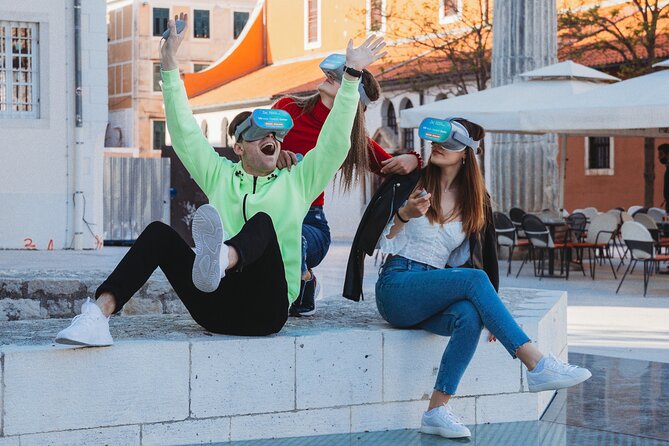
At $36.04 per person, this tour is not just a basic guided walk. You are paying for two things that most standard tours do not offer: a curated route through Zadar’s most important layers of history, and VR sequences that recreate vanished places and events you normally cannot see in real life.
The good news is that the sights on the itinerary are listed with free admission. That matters because it keeps the money focused on the experience itself, rather than stacking museum fees on top.
Also, the total time is about 2 hours, so this is not one of those half-day commitments. If you want a concentrated Zadar hit that still leaves you time to wander on your own, this format makes sense.
Meeting on Poljana Pape Aleksandra III, then walking into time
You start at Magic Croatia – Travel Agency on Poljana Pape Aleksandra III 7, in Zadar. The tour begins at 10:00 am, and it ends on the Sea Organ promenade at Obala kralja Petra Krešimira IV.
You get a mobile ticket, and the tour is set up to run near public transportation, which is handy if you are arriving from elsewhere in town. Confirmation comes at booking, and the tour allows service animals.
One more practical detail: the experience is offered in English, but it also runs in multiple languages. If you are traveling with someone who prefers a specific language, it is worth checking during booking so you do not get stuck with English-only on the day you want something else.
Still riding at anchor off Zadar
- Zadar: Plitvice Lakes Guided Day Tour with Tickets★ 4.9 · 3,148 reviews
- Zadar: Island Luxury Speedboat Tour with Snorkeling★ 5.0 · 2,452 reviews
- Zadar: 3-Stop Blue Lagoon & Snorkeling Cruise with Drinks★ 4.9 · 1,621 reviews
Church of St. Krševan and St. Simeon, Romanesque beauty with VR access

The first stop is the Church of St. Krševan, also known as Chrysogonus. This monastery church is described as Romanesque and built in 1175, and it is well preserved from the outside.
Here is why this stop is smart: the church is often closed to the public. Instead of just showing you the exterior, the VR portion takes you to the monastery courtyard and lets you visit the interior using VR glasses. Even if you have visited other churches in Croatia, seeing a closed space recreated in VR can be a real advantage when you are short on time.
Next comes St. Simon’s Church (St. Simeon). In VR, you get to see the interior, and the big highlight is the city’s notable treasure: a silver pleated Gothic chest built to hold the relics of St. Simeon, the patron saint still important today.
If you care about art objects and the meaning behind religious sites, these two early stops give you a clean theme: Zadar’s faith and its carefully guarded relic traditions, not just stone walls.
Five Wells to Roman gates, medieval entrances, and Venetian walls
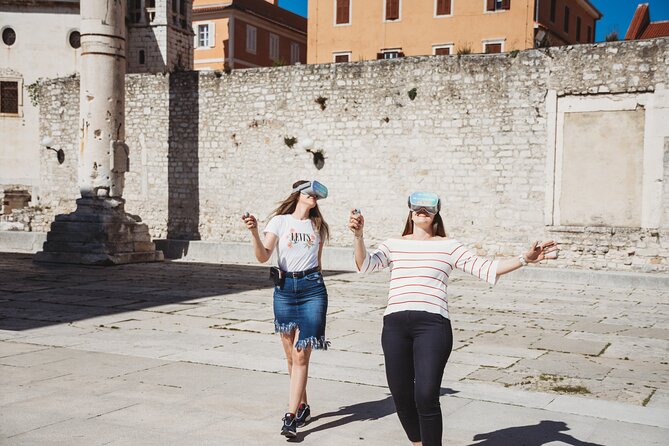
The tour’s third stop is the Five Wells, and this is where you start seeing Zadar as a map of entrances and fortifications.
You learn how the Roman gates worked, as this area relates to entry points into the ancient city of Zadar. Then the story moves forward to the medieval city entrance, and finally to the Venetian walls.
What makes this stop feel worth it is that it connects architecture to movement. You are not just looking at ruins or a street name. You are getting a mental picture of where people would have stood when they arrived, where they would have entered, and how later rulers reshaped the defenses.
Even though the stop is only about 10 minutes, it is the kind of quick orientation that makes the rest of the old town easier to understand when you walk it afterward.
Roman Forum in VR, hot-air balloon views and Jupiter Juno Minerva
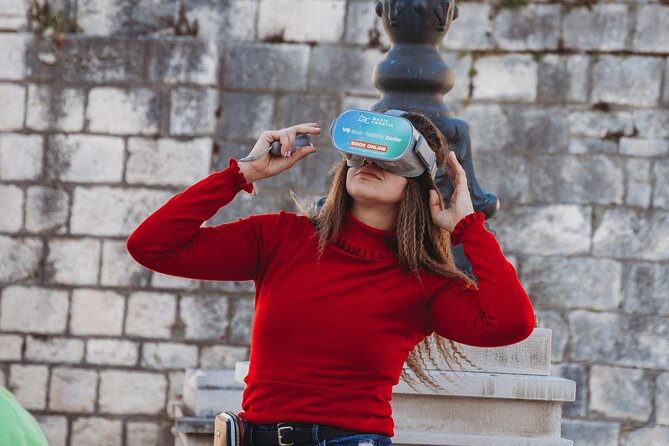
Stop four is the Forum, and it is one of the most powerful transitions on the whole route. The Roman Forum in Zadar was built from the 1st to the 3rd century, and today you see it mostly as ruins.
The VR part gives you the kind of scale a ruin alone usually cannot. You use VR glasses to see the Forum looking from the air, like a hot-air balloon view, and you also get an audio guide during the VR sequence.
Then you take the VR one step further: the experience places you inside the Forum, standing in the very center surrounded by recreated buildings and statues. After that, the sequence brings you to a temple dedicated to Jupiter, Juno, and Minerva, dated to the 1st century BC, with a story about ancient religious rituals.
A nice detail for your own walking afterwards: when the VR ends, you take the glasses off and you are meant to notice that some parts of the Forum construction still remain after more than 2000 years. That is the moment this tour earns its ticket price, because it turns abstract “ancient ruins” into something you can actually locate and visualize.
Two moorings down in Zadar:
- Zadar: Kornati Boat Trip with Lunch and Swim Stops
★ 4.5 · 1,498 reviews - Zadar: Plitvice Lakes with Boat Ride and Zadar Old Town Tour
★ 4.9 · 1,368 reviews - Zadar: 3 Islands Luxury Boat Tour with Aperol Spritz
★ 4.9 · 1,238 reviews - From Zadar: Plitvice Lakes with Boat Ride & Zadar Old town tour
★ 5.0 · 1,129 reviews
WWII from the bell tower and the waterfront market
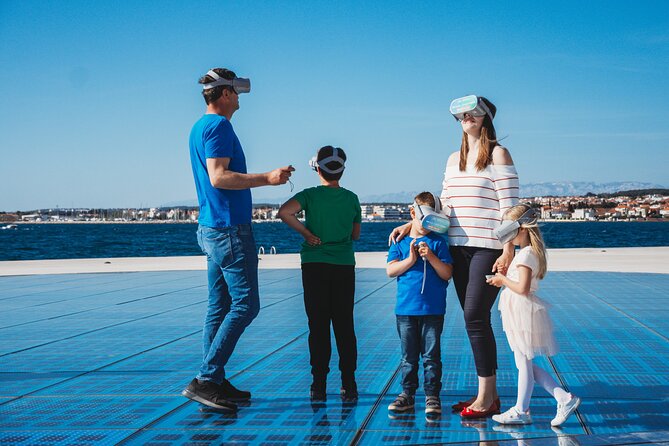
The tour has a distinct emotional turn with the WWII scenes. Stop five is the Bell Tower, where the VR sequence shows Zadar during bombing in World War II. You view the old town from the perspective of standing at the top of the St. Anastasia bell tower, with buildings burning and collapsing as airplanes drop bombs.
The VR sequence ends with a map showing heavily damaged areas of the city that no longer exist.
Stop seven continues the WWII theme at the Paseo Maritimo, the sea promenade area. The tour explains that this is the site of the former city market, where people used to sell fish, vegetables, fruits, and other goods. After WWII destruction, the market moved to the opposite side of town, and the old one you see now is different from what it used to be.
Using VR, you can witness that earlier market setting, including residential buildings and a post office that no longer exists. The VR also includes airplanes dropping bombs again, reinforcing how deeply the city was changed.
One practical consideration here: if you are sensitive to war imagery, decide in advance whether WWII VR is something you want as part of your trip. On the plus side, these scenes are not vague. They are tied directly to real places you are standing near, which helps the context land.
Cathedral of St. Anastasia, and the parts usually off-limits
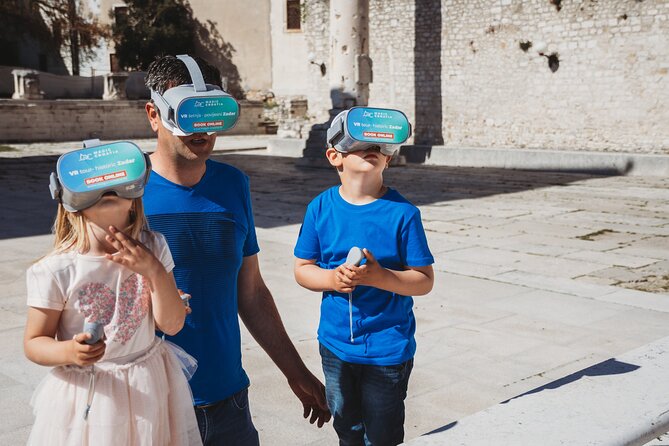
Stop six is the Cathedral of St. Anastasia, built in the 12th and 13th century and described as the largest cathedral in the Dalmatia region. St. Anastasia is a city protector, and the tour notes her relics are inside the cathedral.
The VR experience lets you visit the cathedral in a more complete way than you might get by just walking the public areas. You hear the story of St. Anastasia, and VR also takes you to spaces that are normally closed for public access, including the baptistery and sacristy.
This is the kind of stop that works for both religious travelers and non-religious travelers. If you care about architecture and symbolism, you get both. If you prefer stories, you get the saint’s role in the city’s identity.
Sea Organ and Greeting to the Sun, Crusaders and the view from above
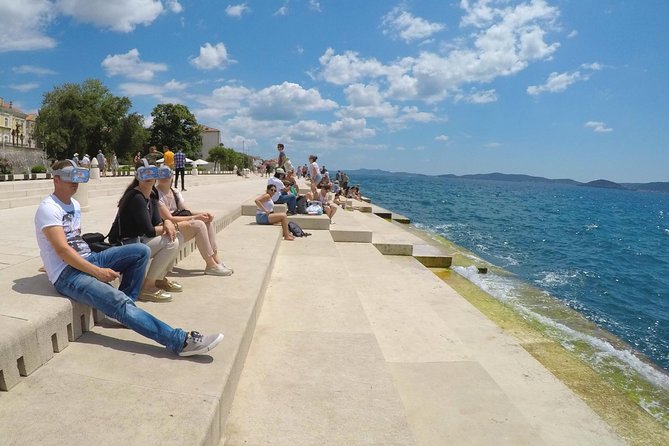
The final stop is the Sea Organ area on the promenade. The tour ties this modern landmark to the older stories of Zadar.
The Sea Organ and the nearby Greeting to the Sun were built in 2005, but the VR portion goes back in time to the 13th century. You also get that hot-air balloon style view again, with a story about Crusaders attacking Zadar from the sea. The tour connects this to the context of Zadar as a Catholic city during that era.
Why I like the tour ending here: it gives your brain a reset. After all the medieval and WWII content, you finish at a spot that feels lived-in and present-day, where you can look at the sea promenade after the VR sequence ends.
Also, your “walk” naturally closes on a satisfying note: you go from churches and forums, to war and destruction, and then you end at a place you can still see and enjoy in real time.
The VR quality question, what to expect and how to handle it
The VR is the headline feature, but it is also where you need the most realistic expectations.
The experience is set up so that some VR moments recreate full scenes and perspectives, while other moments may come across as more basic, like panoramic visuals where VR does not add a lot you could not see with your eyes. In plain terms, the “wow factor” will likely vary by stop.
You may also notice that some VR sequences use older-feeling visuals, which can make certain sections feel less cinematic and more like a computer simulation. Another small quirk some people find is the perspective shift, especially when the VR puts you at height with no obvious “floor” under your viewpoint.
My advice is simple: treat the VR as a storytelling tool, not as a premium video game. If you keep your eyes on what each scene is teaching you about Zadar, you are less likely to feel disappointed by the tech.
Who this tour fits best, and who might choose differently
This is a good match if you want:
- A guided walk that makes Zadar’s timeline feel connected, not random sightseeing.
- VR moments at real sites, including interiors that are otherwise hard to access.
- An experience that works well with families and younger travelers, since the VR element can add curiosity and focus.
It might be a less perfect match if:
- You are extremely picky about VR graphics and want top-tier realism.
- You dislike WWII-themed content, even when it is tied to actual places.
If you are the type who likes learning quickly and then wandering independently, this tour gives you a strong mental map. Afterward, Zadar’s old town has a better sense of order, because you have seen how gateways, forums, temples, and destruction all relate.
Should you book this Zadar VR tour?
Book it if you want a time-saving, story-heavy walking tour that adds VR access at multiple historic stops and ends at a memorable modern landmark. At $36.04, with the route lasting about 2 hours and the listed stops showing free admission, the value comes from the guided context plus the VR recreations.
Skip it or think twice if you know you are sensitive to war imagery, or if you have little interest in VR and plan to rely only on the visible sights. In that case, a traditional guided walk might feel more satisfying.
If you can accept that VR quality may be uneven and you are booking for the learning and perspective shifts, this Zadar experience is a strong way to see the city as one continuous story.
FAQ
How long is the Zadar guided tour with virtual reality?
The tour lasts about 2 hours.
What time does the tour start?
The start time is 10:00 am.
Where do we meet and where does the tour end?
You meet at Magic Croatia – Travel Agency on Poljana Pape Aleksandra III 7, Zadar. The tour ends on the Sea Organ promenade at Obala kralja Petra Krešimira IV.
Are VR headsets included?
Yes, VR headsets are included as part of the experience.
What languages is the tour offered in?
The tour is offered in English, and tours in multiple languages are available.
How big is the group?
The tour has a maximum of 25 travelers.
Is free cancellation available?
Yes. You can cancel for a full refund up to 24 hours before the experience starts.
Latest arrivals logged at Zadar






Guided, compared.
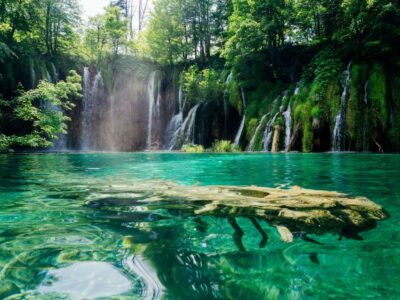

Plitvice & Rastoke Guided Day Trip with Ticket
Read our review →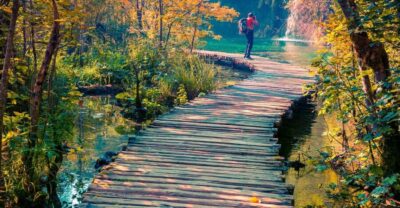
Plitvice Lakes Guided Tour with Entry Tickets
Read our review →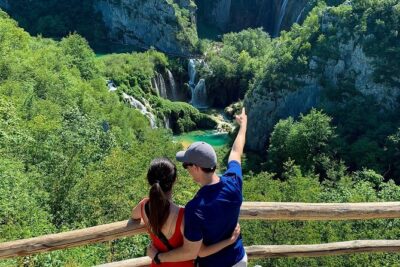
Plitvice Lakes National Park Guided Day Tour from Split
Read our review →
Rastoke & Plitvice Lakes Guided Tour with Ticket
Read our review →
Zrmanja River: Half-Day Guided Kayaking Tour Near Zadar
Read our review →Browse the lists this tour appears in