
Reviewed · FOOD & DRINK
Dubrovnik Food and Drink Walking Tour with a Local Guide
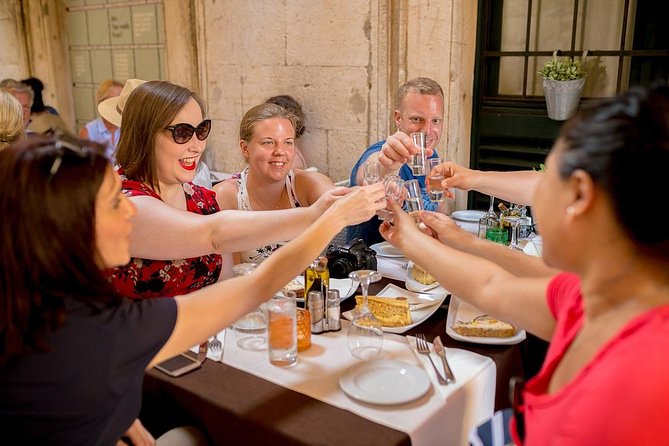
Dubrovnik can be a foodie maze. This 3-hour Old Town walk keeps you on track with food and wine included while a local guide ties bites to real landmarks. I also love the small-group size (up to 12), which makes it easy to ask questions and actually chat. One thing to consider: the history is shared while you’re standing and moving through busy streets, so long explanations might feel like a lot if you prefer pure eating.
I came away feeling like I had a plan for the rest of my stay, not just a meal. Along the way, you’ll stop for tastings that range from a charcuterie starter to mains like creamy barley with Adriatic shrimps (with cheese from Pag) and kopun salad, then finish with Dubrovnik carob cake plus wild bitter orange jam. You’ll also get coffee and bottled water, and wine is part of the pairing at multiple stops.
Guides such as Ana and Dražen are repeatedly mentioned in bookings, and that matters because the tour leans on stories, not scripts. You’ll leave the meeting point and return to it, making this an easy way to experience Dubrovnik’s UNESCO Old Town without trying to piece it together yourself.
In This Review
- Key things that make this tour work
- A 3-hour Old Town food walk that feels like a local plan
- Why the price of $175.35 often feels fair
- Meeting point and how you should show up
- Stop-by-stop: the Old Town route you’ll walk through
- Onofrio’s Large Fountain, the practical miracle at Pile Gate
- Ruđer Bošković Square, science meets street level
- Rector’s Palace, where civic power lived
- Church of Saint Blaise, Dubrovnik’s patron and its grand look
- Stradun, Dubrovnik’s main artery in limestone
- Orlando Column, the city’s justice and announcements in stone
- Gundulićeva Poljana Market, where mornings feel like a ritual
- Sponza Palace (Divona), the place where trade shows up in the buildings
- Porat Dubrovnik, the old port and the Mediterranean link
- Cathedral of the Assumption, big Baroque artistry in the middle of town
- Orthodox Church of the Annunciation, Byzantine and Adriatic flavors in architecture
- Bell Tower, reconstructed after the city’s buildings took a hit
- Four tastings and wine pairings, with a menu that actually makes sense
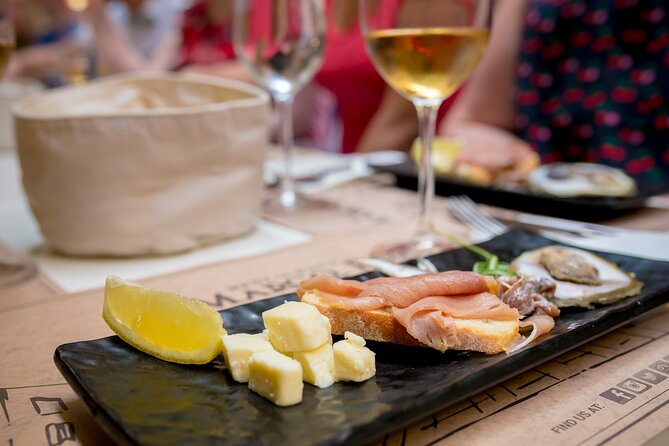
- Starter: a charcuterie board to get you rolling
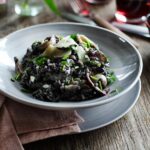
- Main course: creamy barley with Adriatic shrimps, plus Pag cheese
- Second main: kopun salad with seasonal produce
- Dessert: Dubrovnik carob cake and wild bitter orange jam
- The history and culture part you can actually use later
- Practical tips to get the most out of it
- Who should book this and who should skip it
- Should you book the Dubrovnik Food and Drink Walking Tour?
- FAQ
- How long is the Dubrovnik Food and Drink Walking Tour?
- Where does the tour start and end?
- How big is the group?
- What languages is the tour offered in?
- What food and drinks are included?
- Do they have vegetarian or vegan options?
- Does the tour run in bad weather?
- Is free cancellation available?
Key things that make this tour work
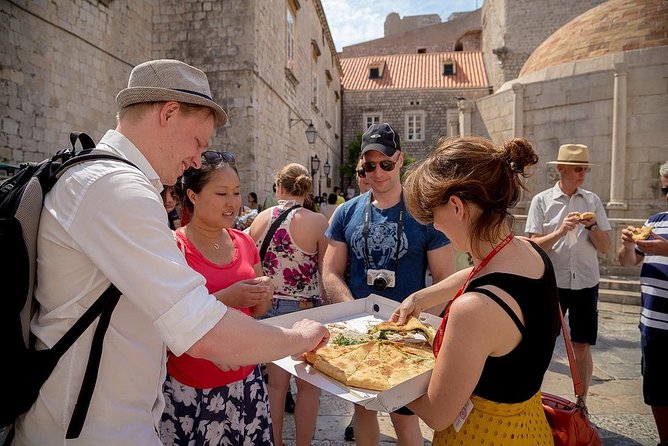
- Food and drinks are built into the price, including wine at three tasting stops and local brandy or liqueur with dessert
- Up to 12 people, so you get more conversation and faster, personal restaurant advice
- A history walk in plain sight, with meaningful pauses at places like Stradun, Saint Blaise Church, and the Rector’s Palace
- Regional menu choices, including kopun salad, Adriatic shrimp and barley, and Dubrovnik carob cake
- Smart pacing for a 3-hour window, with short landmark stops plus four restaurant tasting moments
A 3-hour Old Town food walk that feels like a local plan
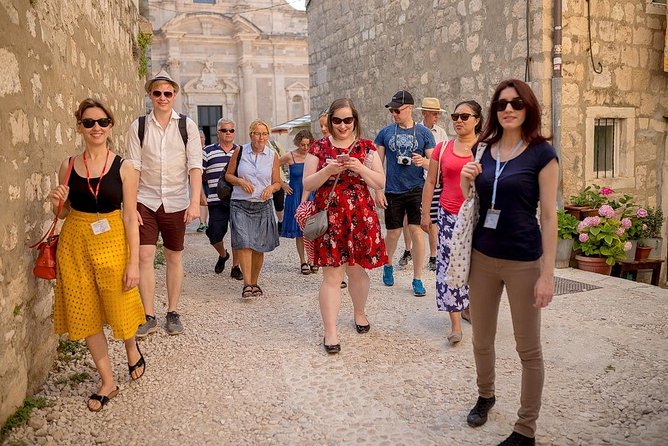
Dubrovnik’s Old Town is stunning, but it can also be a trap for decision-making. Menus look similar, prices climb fast, and you can end up eating safely rather than well. This tour is built to solve that problem. You get a guided route through the historic center, and you also get fed along the way, with tastings and pairings tied to the city’s culture.
The format is simple: you walk, you pause at key sights, then you sit down or stop in for the next course. That keeps you from spending the whole time scanning streets for the next place that looks right. Because the group is capped at 12, it stays friendly. You’re not packed into a loud herd, so you can ask practical questions like what to try next, what to skip, and where locals tend to go for a similar vibe.
If you like food tours that stop being just sampling and start being context, this one fits. It doesn’t treat history as an afterthought. It uses the city’s architecture and landmarks as the backbone for explaining how Ragusa Dubrovnik worked, what religious life looked like, and why certain traditions show up in the food.
Why the price of $175.35 often feels fair
At first glance, $175.35 per person is not cheap. But the value comes from what’s included. You’re not only paying for a guide and a walk, you’re also paying for multiple paid food and drink moments that would add up fast on your own.
Here’s what’s part of the package:
- Snacks and courses across four tasting points
- A starter (charcuterie board)
- Two main course tastings
- A dessert stop with a glass of wine and a local liqueur or brandy with dessert
- Wine at three stops (red or white, depending on what’s served)
- One liqueur or brandy at the final dessert stop
- Coffee and/or tea
- Bottled water at three stops
When you do this solo, you’d typically pay for entry fees, transport to restaurants, and each meal or wine pairing separately. Here, the total experience is timed and bundled. You also avoid the common annoyance of “hidden costs,” like paying extra for drinks after you thought they were included. It’s a straightforward way to budget for Old Town dining, especially in a place where restaurant prices can swing based on location.
More Culinary Tours in Dubrovnik
- Dubrovnik Old Town Food Tour: Small-Group Experience★ 5.0 · 419 reviews
- Dubrovnik Gastronomy: 3-Hour Food and Wine Tour★ 4.9 · 249 reviews
- Dubrovnik: Old Town Food Tour★ 4.8 · 119 reviews
Meeting point and how you should show up
The tour starts at Poljana Paska Miličevića, 20000 Dubrovnik, Croatia, and you end back there. That back-and-forth matters because it means you can plug this into your day without needing taxi math.
Plan on walking on Old Town stone. Bring comfortable shoes. You’re on foot for three hours, and you’ll be stopping at multiple landmarks, not just drifting through one neighborhood. The experience runs in all weather conditions, so dress for rain or heat and bring a light layer if you’re visiting in shoulder seasons.
Because the tour is in English and uses a mobile ticket, you’ll want your phone charged and ready. Service animals are allowed, and the activity is designed so most people can participate.
Stop-by-stop: the Old Town route you’ll walk through
This tour is paced like a guided stroll through the UNESCO core, with quick landmark stops that help you see the city differently. Many of these pauses are free to enjoy from the public areas, so you’re not paying separate fees just to look around.
Onofrio’s Large Fountain, the practical miracle at Pile Gate
You begin at Onofrio’s Large Fountain, just inside the Old Town near Pile Gate. It’s a famous meeting point, and it’s also a lesson in how Dubrovnik solved a basic problem long ago: water.
The fountain was constructed in 1438 by Italian engineer Onofrio della Cava as part of a water-supply system that brought water from a spring more than 7 miles away. It was damaged in the 1667 earthquake and later suffered during the Croatian War of Independence in the 1990s, but it’s been restored and still works as a public water source. You’ll likely appreciate the practical side of it right away, because it’s cool and refreshing in the middle of a walk.
A small tip: use this stop to reset your energy. Stretch your legs, fill your water bottle if needed, then roll into the next streets feeling less rushed.
More Walking Tours in Dubrovnik
- Dubrovnik: Old Town Walking Tour
★ 4.8 · 5,174 reviews - Dubrovnik Discovery Old Town Walking Tour
★ 5.0 · 4,458 reviews - Dubrovnik: Game of Thrones Walking Tour
★ 5.0 · 1,732 reviews - Dubrovnik Old Town History Walking Tour
★ 5.0 · 1,684 reviews
Ruđer Bošković Square, science meets street level
Next comes Ruđer Bošković Square, a public space named after the city’s famous son, the physicist, astronomer, mathematician, philosopher, diplomat, poet, theologian, and Jesuit priest from the 18th century. The point of this stop is not that you need to memorize his achievements. It’s that you start seeing Dubrovnik as a place that valued learning, not just trade and fortifications.
This is a short stop, but it helps you understand why Dubrovnik’s identity isn’t only about walls and battles. It’s also about thought, education, and culture.
Rector’s Palace, where civic power lived
At the Rector’s Palace, you’re looking at the former seat of the Rector of the Republic of Ragusa, Dubrovnik’s name during the Middle Ages when it functioned as a maritime republic. This Gothic-Renaissance building is one of the big “why this place mattered” stops.
Even if you’re not into architecture, the takeaway is clear: the city was run with structure and serious governance. The guide uses this kind of spot to connect political life to everyday life, including how food traditions travel and change when a port city is constantly dealing with merchants and visitors.
Church of Saint Blaise, Dubrovnik’s patron and its grand look
The Church of Saint Blaise is Baroque and dedicated to Sveti Vlaho (Saint Blaise), the city’s patron saint. This stop gives you a sense of religious identity tied to civic pride, especially in a town that repeatedly faced threats and rebuilding.
If you pay attention to details while you’re standing there, you’ll start noticing how art and faith worked together to reinforce community spirit.
Stradun, Dubrovnik’s main artery in limestone
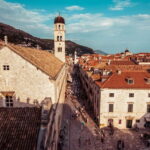
Then you’ll move into Stradun, also called Placa, the main pedestrian street that runs through the heart of the Old Town. It’s about 300 meters long, connecting Pile Gate and Ploče Gate, and it’s a limestone-paved spine the city built for flow.
This stop is more than photos. The guide uses Stradun to explain how movement worked, how trade and crowds shaped daily life, and why the city’s layout still matters. You can also think of it as your visual anchor. Once you see Stradun clearly, everything else feels easier to navigate later.
Orlando Column, the city’s justice and announcements in stone
You’ll also pause at the Orlando Column, also known locally as Orlando’s Pillar or Roland’s Column. Erected in 1418, it features a limestone statue of the medieval knight Orlando, linked to legend and tied to the idea of freedom and fortitude.
This column wasn’t just decoration. It was used as a public announcement point, as a symbol of justice, and even as a unit of measurement for cloth sellers. It’s one of those spots where you realize the city ran on visible rules and shared signals.
Gundulićeva Poljana Market, where mornings feel like a ritual
At Gundulićeva Poljana Market (often called the Gundulić Square Market), the area wakes up around the market hours. The square is named for poet Ivan Gundulić, and it’s a good stop to understand how Dubrovnik’s culture kept a day-to-day rhythm, not only monumental life behind walls.
This isn’t a long stop, but it gives you a sense of what locals do when the day starts: shop, chat, and keep routines going.
Sponza Palace (Divona), the place where trade shows up in the buildings
At the end of Stradun, you’ll see Sponza Palace, also called Divona, near the city bell tower. The value here is how the city’s architecture reflects its function. A palace like this belongs to the world of administration and commerce, which ties back to the whole theme of Ragusa as a trading power.
If you’re walking with your eyes open, you’ll start spotting how doors, facades, and street alignment all feel designed for the flow of business.
Porat Dubrovnik, the old port and the Mediterranean link
Next is Porat Dubrovnik, the Old Port area. Dubrovnik’s port history is the reason this place became what it was, linking the city to other Mediterranean ports and more distant routes. Even though you’re not touring a museum here, the stop makes the city’s food story make more sense.
Ports mean ingredients arrive. Ports mean techniques cross borders. Ports mean you get mixing and adaptation, which is exactly what you’ll keep tasting on the menu.
Cathedral of the Assumption, big Baroque artistry in the middle of town
The Cathedral of the Assumption of the Virgin Mary is Baroque and one of the city’s key landmarks. This is a stop for scale and artistry, but the practical part is how the cathedral reinforces the city’s identity as a place that invests in permanent, visible statements of faith.
The guide’s job here is to connect why buildings like this matter to a port city that also wanted to project stability.
Orthodox Church of the Annunciation, Byzantine and Adriatic flavors in architecture
You’ll also visit the Orthodox Church of the Annunciation, the Serbian Orthodox Church in Dubrovnik. The architecture shows a blend of Byzantine and Southern Adriatic influences.
This matters for context because it signals Dubrovnik’s religious and cultural mixing. A city built on travel and trade naturally brings variety, even in sacred spaces.
Bell Tower, reconstructed after the city’s buildings took a hit
Finally, you reach the Bell Tower of Dubrovnik, which rises 31 meters at the eastern end of Stradun. It was originally built in 1444, then reconstructed in 1928 after the original began leaning.
This stop is a reminder that Dubrovnik isn’t only old. It’s old, damaged, restored, and still functioning as a living city.
Four tastings and wine pairings, with a menu that actually makes sense
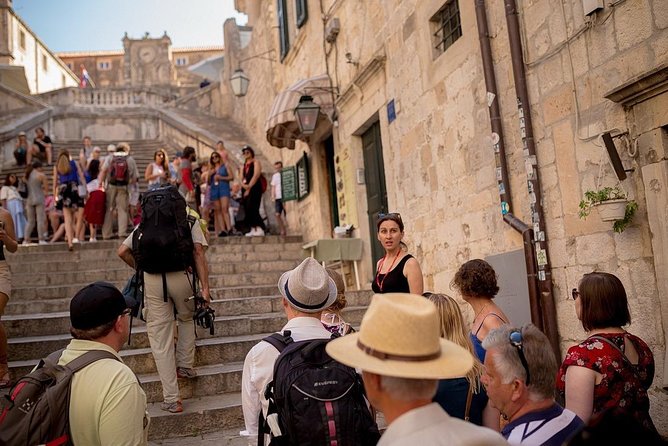
The food portion is the heart of the experience. You’ll have tastings across four restaurant stops, plus coffee or tea and water during the walk.
Starter: a charcuterie board to get you rolling
You start with a charcuterie board at the first stop. This is a smart entry dish. It helps you settle in and taste a mix of cured flavors before heavier mains. It also gives you a baseline for understanding the local approach to ingredients and seasoning.
Main course: creamy barley with Adriatic shrimps, plus Pag cheese
One of the mains includes creamy barley with Adriatic shrimps, served with cheese from the island of Pag. This is a very “Dubrovnik-by-the-sea” choice, and it’s also a clever pairing because barley feels hearty while shrimp brings the Adriatic note.
The Pag cheese detail is one of those small, specific touches that makes the meal feel connected to the region rather than generic seafood.
Second main: kopun salad with seasonal produce
For the second main, expect kopun salad, served with seasonal fresh veggies and fruits. Kopun is a traditional Croatian dish, and pairing it with fruit and vegetables gives you something lighter than you might expect from a main course.
This is where many people feel the tour is balanced. You don’t get stuck eating only heavy plates, and you get a sense of how seasonal produce fits into local cooking.
Dessert: Dubrovnik carob cake and wild bitter orange jam
You end with Dubrovnik carob cake with wild bitter orange jam. Carob is a signature choice in the area, and the bitter orange note gives you a grown-up sweetness rather than plain cake sugar.
At this last stop you’ll also get a glass of wine plus a local liqueur or brandy with dessert. It’s a finishing move that makes the tour feel like a full evening, even though the total time is just around three hours.
The history and culture part you can actually use later
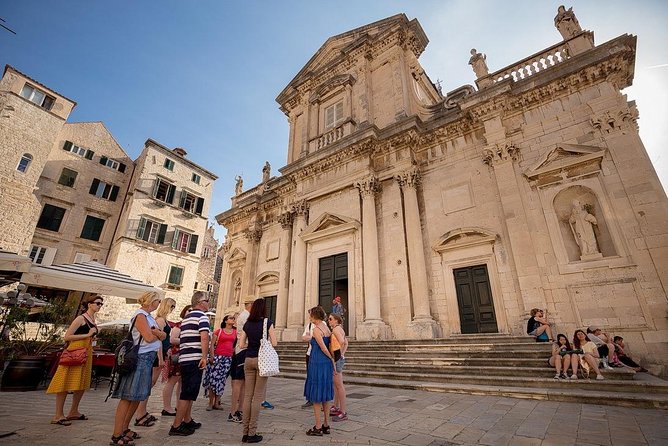
What makes this tour stand apart from a basic food run is how the guide connects your plate to your surroundings. Standing at the Rector’s Palace, you’re not only looking at stone, you’re hearing why the city organized itself like a republic. At the Church of Saint Blaise, the guide connects patronage and community identity to the way Dubrovnik talks about resilience.
When you walk Stradun, you also learn why the city’s main street is more than a pretty path. It’s the corridor where daily movement, trade, and public life happened.
And when you visit the port area and then eat seafood-adjacent dishes, you start understanding that food here is not random. It’s a result of where people traveled, what arrived, what was preserved, and what stayed worth repeating.
Many people also like the group feel. Because the cap is 12, conversations can happen naturally, and the guide can tailor suggestions. You’ll likely get direction for what to look for on a menu later, and you might even receive follow-up recommendations by email, which is handy in a place where restaurant options can be overwhelming.
Practical tips to get the most out of it
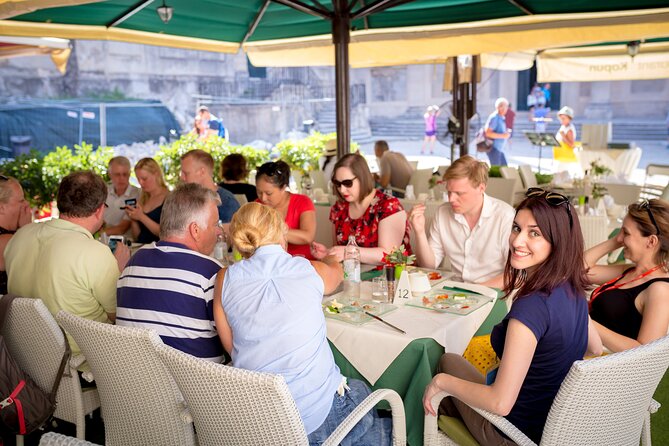
- Wear shoes with grip. Old Town stones can feel slick when wet.
- Bring water with you if you tend to run dry, even though water is provided at tasting stops.
- If you want to focus on food, keep your questions short. Ask about what’s next, what to order, and why the pairing works.
- If you want the history, stay mentally present during the stand-and-listen moments. That’s when the guide connects the dots.
Also, note the tour is not vegan friendly. Vegetarian options are available if you ask when booking, but vegan is not listed as available.
Who should book this and who should skip it
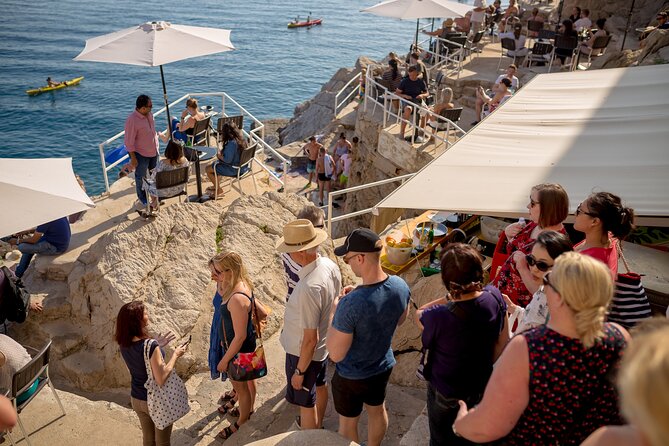
This tour is a strong fit if you:
- Want a planned Old Town route that reduces decision stress
- Like food tours that include real context, not only recipes
- Enjoy wine pairings with meals and want them handled for you
- Prefer a small group where you can talk back
It may not be your best match if you:
- Don’t want history commentary while standing and walking
- Prefer lots of tiny bites over fewer sit-down tasting moments
- Need vegan options, since vegan is not available
Should you book the Dubrovnik Food and Drink Walking Tour?
If you’re visiting Dubrovnik for the first time and you want a fast, reliable way to eat well while learning why the city is laid out the way it is, I think this is an easy yes. The big reason is the structure: four tasting stops, wine included at key points, and a walking route that helps you understand what you’re seeing.
Book it early in your trip if you want the extra payoff of knowing where to eat next. And when you arrive, come ready to pay attention for a few minutes at a time. The reward is that your dessert and your palace photos stop feeling separate, because the guide keeps linking food and place together.
FAQ
How long is the Dubrovnik Food and Drink Walking Tour?
It lasts about 3 hours.
Where does the tour start and end?
The meeting point is Poljana Paska Miličevića, 20000 Dubrovnik, and the tour ends back at the same meeting point.
How big is the group?
The tour is capped at a maximum of 12 people, and it requires a minimum of 2 people per booking.
What languages is the tour offered in?
The tour is offered in English.
What food and drinks are included?
The tour includes a starter, two main courses, dessert, coffee and/or tea, bottled water at three stops, wine at three stops, and a local brandy or liqueur with dessert.
Do they have vegetarian or vegan options?
A vegetarian option is available if you advise at booking. Vegan option is not available, and the tour is not recommended for vegans.
Does the tour run in bad weather?
It operates in all weather conditions, so dress appropriately.
Is free cancellation available?
Yes. You can cancel up to 24 hours in advance for a full refund.
More Food in Dubrovnik
Courses by the Sea


Latest arrivals logged at Dubrovnik



Food & Drink, compared.

Blue Lagoon and 3 Island Cruise with Food and Drinks
Read our review →
Krka National Park Tour with tour Guide & Wine tasting from Split & Trogir
Read our review →
Blue Lagoon, Borkko Beach & Šolta with Food & Drinks
Read our review →
Full-Day Catamaran Cruise to Hvar & Pakleni Islands with Food and free Drinks
Read our review →
Guided Speedboat Tour with Food, Oil & Wine Tasting
Read our review →Browse the lists this tour appears in