
Reviewed · HISTORICAL TOURS
Dubrovnik Old Town History Walking Tour
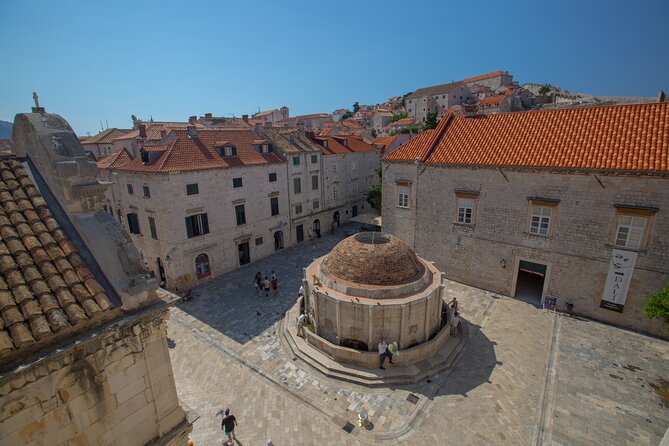
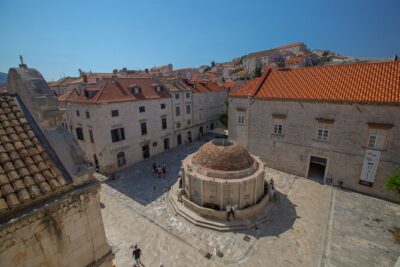
Dubrovnik packs a lot in 90 minutes. This Old Town history walk is a fast, guided circuit of major sights, with stories that connect Ragusa’s rise, Dubrovnik’s religious life, and the damage and rebuilding of the 1990s. You start right at Onofrio’s Large Fountain, then keep moving through the city’s key squares and churches without wasting time figuring out what goes where.
I especially like how the tour helps you get oriented quickly, then gives you enough context to understand what you’re seeing as you explore on your own. Second, I like the stop choices, because you see everything from the Franciscan complex and its long-running pharmacy to the harbor, then end at Luza Square with monuments and legends that make the Old Town feel lived-in.
One consideration: it’s a walking tour in a medieval town with lots of stone underfoot and occasional steps. If you’re mobility-limited or the crowds are intense on your date, plan to go slower and expect a few tougher stretches.
In This Review
- Key highlights you should care about
- A 90-minute Old Town history walk that actually helps you plan
- Meeting at Onofrio’s Large Fountain, right by Hard Rock Cafe
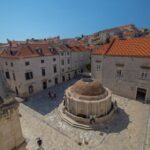
- Onofrio’s Fountain and the Ragusa origin story you can picture
- Franciscan Church and Monastery: 13th-century walls and a pharmacy from 1317
- Stradun (Placa): the main promenade where public life played out
- Holy Annunciation area plus a market stop you can actually use
- Rector’s Palace and the Cathedral legend of Richard the Lionheart
- City Harbor: where trade, quarantine, and fortresses come alive
- Luza Square and Orlando Column: legends plus monuments in one wrap-up
- Price, pacing, and the value of a guide who ties it all together
- After the tour: how to keep the momentum without overdoing it
- Should you book this Dubrovnik Old Town History Walking Tour?
- FAQ
- Where do I meet for the Dubrovnik Old Town History Walking Tour?
- How long is the tour?
- Is the tour in English?
- What is the price per person?
- Are any attractions included with paid admission fees?
- Do I get a mobile ticket?
- What is the group size limit?
- Is hotel pickup included?
- What if the weather is poor?
- What is the cancellation policy?
Key highlights you should care about
- Onofrio’s Large Fountain meetup makes the start simple, right by a recognizable landmark near Hard Rock Cafe
- Ragusa Republic context ties together the waterfront, religion, and major civic buildings
- Franciscan Church and Monastery includes the library and the pharmacy dating to 1317
- Stradun (Placa) is explained as both the city’s promenade and its historic stage for processions
- City Harbor and Quarantine stories give you a clearer picture of Dubrovnik’s trading power and defenses
- Luza Square end loop links the bell tower area, Sponza Palace surroundings, St. Blaise, and Orlando’s legend
A 90-minute Old Town history walk that actually helps you plan
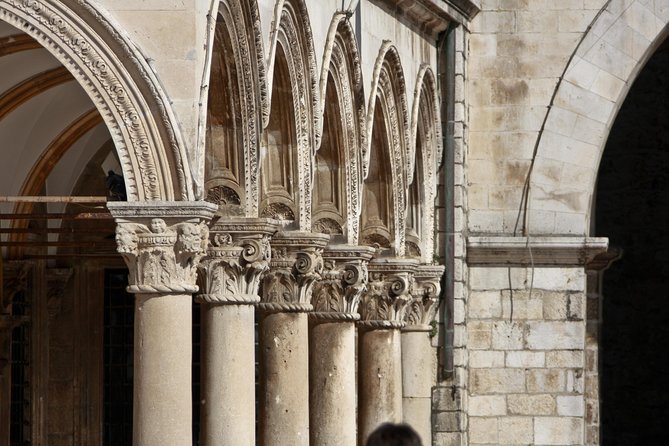
This tour is built for first-timers and for anyone who wants a smart framework before wandering. In about 1 hour 30 minutes, you cover a set of high-impact stops across Dubrovnik’s Old Town core. The route is not about rushing from building to building. It’s about showing you a sequence, so when you return later, you already know what you’re looking at and why it matters.
It’s also good value for a place where everything costs more. At $24.19 per person, you’re paying for a live guide plus the structure of a guided “story route.” Because many of the stops are described as admission-free on the walking route, the money goes into interpretation rather than tickets.
Who this suits best? If you want a clean introduction, or if you’re visiting for the first time and feel overwhelmed by the map, this is a strong choice. I also like it for mixed groups, since the pacing is short enough that most people can stay comfortable, yet it still covers enough ground to feel like you did something meaningful.
Meeting at Onofrio’s Large Fountain, right by Hard Rock Cafe
Your meeting point is Onofrio’s Large Fountain at Poljana Paska Milicevića 2000. The operator’s tours gather near a very specific spot: next to Hard Rock Cafe and by the Red Umbrella.
Why I like this kind of meeting point: it reduces stress. In Dubrovnik, “meet at the landmark” sounds easy until you’re looking at a sea of stone alleys. Here, the fountain is a big, obvious reference point, so you’re less likely to arrive late or wander in circles.
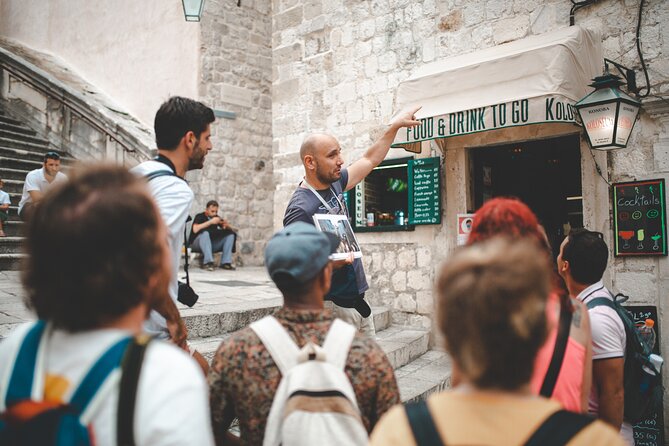
The tour runs in English, and it’s designed as a small-group experience, with a maximum of 30 travelers. That matters. Smaller groups generally mean you can hear the guide without fighting the crowd every few minutes, especially near narrow streets.
More Walking Tours in Dubrovnik
- Dubrovnik: Old Town Walking Tour★ 4.8 · 5,174 reviews
- Dubrovnik Discovery Old Town Walking Tour★ 5.0 · 4,458 reviews
- Dubrovnik: Game of Thrones Walking Tour★ 5.0 · 1,732 reviews
Onofrio’s Fountain and the Ragusa origin story you can picture
You start with a brief overview at the fountain itself, which is a smart move because it sets your mental map immediately. The guide connects Dubrovnik’s early identity as Ragusa, a small maritime trading city-state, and links that identity to its infrastructure.
Then you get a key detail that makes the fountain more than a pretty photo spot: the Large Onofrio’s fountain is tied to the innovative aqueduct system. Once you hear that, you start noticing how water, engineering, and the city’s trading life are connected. It also explains why Dubrovnik invested so heavily in “city survival” basics, not just palaces and churches.
Expect about 10 minutes here. It’s enough time for the big picture, and not so long that you lose momentum before the walk continues down the main corridor.
Franciscan Church and Monastery: 13th-century walls and a pharmacy from 1317
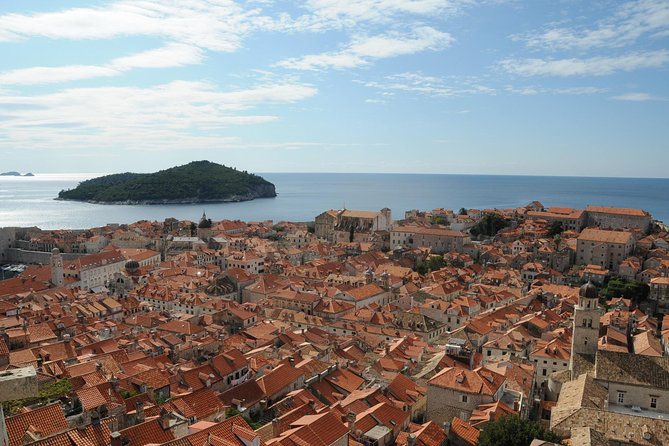
One of the most interesting segments is the Franciscan Church and Monastery, because it packs layers into a single stop. You’re looking at a major complex belonging to the Order of Friars Minor, including a church, monastery, library, and pharmacy.
A few highlights worth noting:
- The earliest monastery was built in the 13th century, outside the city walls at the time.
- The library, built in the 17th century, contains over 20,000 books, including 1200 valuable old manuscripts.
- The pharmacy dates from 1317 and is described as the third oldest still functioning pharmacy in the world.
This is the kind of place where a guide’s explanations matter. Without context, it can be easy to treat it like another church stop. With context, you start seeing it as a medical, educational, and spiritual service hub, and you also hear about local traditions that have persisted across centuries.
Practical note: the stop is scheduled for about 10 minutes, but the building details are the sort you may want to linger over later. If you’re the type who likes to zoom in on small inscriptions and architecture, keep your camera ready but don’t forget to listen, because the guide’s history framing makes those details click.
Stradun (Placa): the main promenade where public life played out

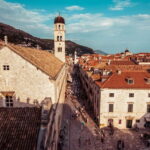
Next you move to Stradun, the city’s favored promenade and gathering place. This is the classic Dubrovnik main street, but the guide treats it as more than a walkway. They explain it as the venue of public feasts and processions and also the main business street of the city.
One detail I found especially useful: Stradun’s width and layout divide Dubrovnik into northern and southern halves. That’s the sort of “map knowledge” you can carry with you when you later explore side streets.
You also hear a blunt historical arc, and it’s not just medieval bragging rights. The guide connects the demise of the Ragusa Republic to later periods, including Yugoslavia and the Homeland War of the 1990s, and the troubles the city endured during that time.
This matters because Dubrovnik’s beauty can sometimes make it feel like a frozen museum. The history framing pulls it back into real time, so your photos stop feeling like you’re viewing a postcard. You start understanding why the city rebuilt the way it did, and why certain scars and stories are still part of how locals talk about the place.
Expect about 10 minutes here, and it’s usually enough to orient you, then send you back to explore without feeling lost.
More marble lanes taken slowly:
- Dubrovnik: City Walls Early Morning or Sunset Walking Tour
★ 4.8 · 1,523 reviews - Dubrovnik: Ancient City Walls & Wars Walking Tour
★ 5.0 · 1,270 reviews - Dubrovnik: City Walls, Old Town Walking Tour & Adriatic View
★ 4.9 · 982 reviews - Dubrovnik: Game of Thrones Walking Tour
★ 4.9 · 981 reviews
Holy Annunciation area plus a market stop you can actually use
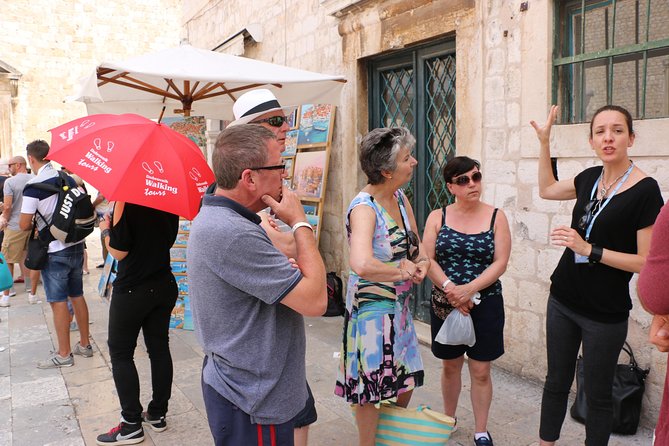
As the route continues, you step away from Stradun into narrower streets. One stop is the Church of the Holy Annunciation area, including discussion of Orthodox influence and how different religious communities shaped Dubrovnik over time. The guide also references other communities, including Jewish and Muslim influences.
I like this inclusion because it prevents the Old Town from becoming a one-religion story. Dubrovnik sat at crossroads of trade and travel, so you get a more accurate sense of how cultures touched the city.
Then you reach Gundulić Square and the Green market stop. This is the practical, real-life moment in the walk. The guide points out local produce you’ll see in the market and shares stories and traditions tied to everyday life, not just monumental buildings.
Why this matters: after a string of churches and palaces, it helps to see something ordinary and current. You’ll get ideas for what to try later when you’re hungry and wandering.
This segment is about 10 minutes, and it’s paced to keep you moving without turning it into a hard sell on snacks.
Rector’s Palace and the Cathedral legend of Richard the Lionheart
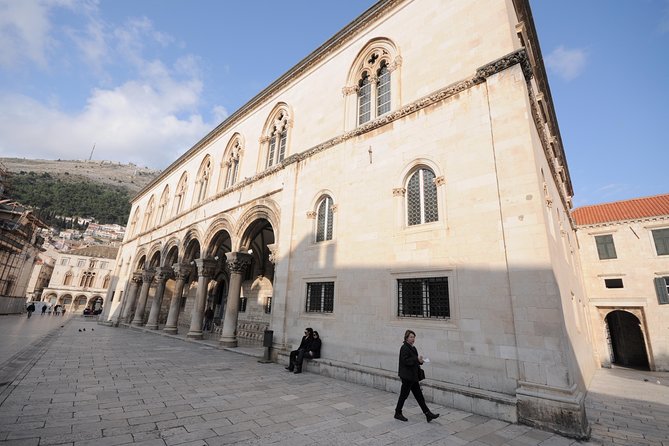
Two stops anchor the civic and royal-imperial feeling of Old Town.
First is the Rector’s Palace. The guide explains that it served as the seat of the Rector of the Republic of Ragusa from the 14th century until 1808. It also functioned as the seat of the Minor Council and state administration. On top of that, the same complex housed a armoury, powder magazine, watch house, and prison.
That combination of political power plus practical security is a big theme. You get the sense this was a government that understood both diplomacy and defense. It’s not just decorative. It’s built to run the place.
Then comes the Cathedral of the Assumption of the Virgin Mary, where the guide shares a legend: the story of Richard the Lionheart, allegedly returning from the Crusades in 1192, when he was shipwrecked in a storm and cast aground on Lokrum Island in front of Dubrovnik.
Whether you take every legend literally or not, a guide’s job here is to show how stories attach themselves to place. Legends like this are part of how Old Town keeps its personality across generations.
This portion is brief, about 5 minutes at the cathedral stop, so it’s more about hearing the legend and context than staring for long stretches.
City Harbor: where trade, quarantine, and fortresses come alive
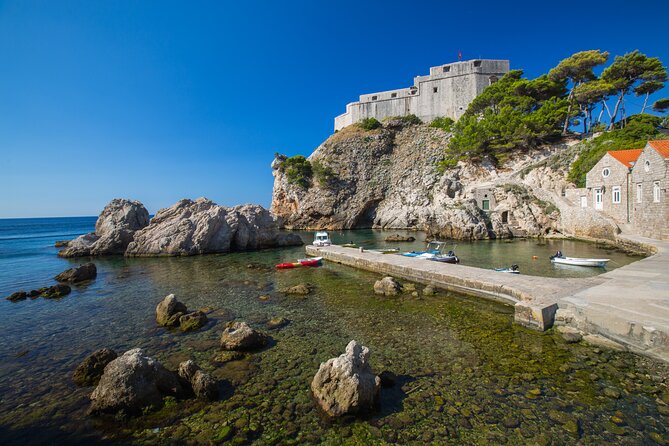
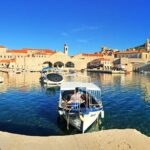
The tour then shifts from civic buildings back to the waterfront, stopping at the City Harbor. Dubrovnik’s ships were renowned throughout the Mediterranean, and galleons from the Republic could be found in navies across Europe and beyond.
The guide connects this maritime reach to the city’s production and logistics, referencing the Arsenal as part of the broader system behind shipbuilding. After that, you get stories tied to the port, including the famed Quarantine and nearby fortresses of St. Luke and St. John.
This is one of the best “big picture” sections. It explains why the harbor isn’t just pretty scenery. It’s where public health, defense, and trade policy meet stone and water.
Time-wise, the harbor stop is about 15 minutes, which is longer than the church stops. That extra time is a clue that the guide intends you to absorb the port’s role in Dubrovnik’s survival and success.
Luza Square and Orlando Column: legends plus monuments in one wrap-up
The tour ends with an area that feels like an outdoor history desk: Luza Square, at the eastern end of Placa (Stradun) near the City Bell Tower. Here the guide ties together multiple landmarks and stories.
You hear about:
- the church dedicated to Dubrovnik’s patron St. Blaise
- the legend of the knight Orlando and his column
- Sponza Palace in the surrounding context
- the Small Onofrio’s Fountain
- the high Bell tower
And yes, this is where legends matter. Legends are often how Dubrovnik explains itself. It turns stone into story, and story into memory, so even after the tour ends, you still know what you’re seeing when you glance up at towers and columns.
The final segment is about 15 minutes, and it’s designed to close your loop: you end near the heart of the Old Town, not deep in the outskirts, so you can immediately continue exploring at your own pace.
Price, pacing, and the value of a guide who ties it all together
At $24.19 per person for roughly 90 minutes, this is a budget-friendly way to “buy time back.” Dubrovnik can feel expensive and overwhelming because everything is close together, yet the details are dense. A guided walk helps you avoid the trial-and-error stage of deciding what matters.
Here’s what you’re really paying for:
- A sequence that makes the Old Town legible
- Interpretation of key monuments, like the Franciscan complex and Rector’s Palace
- Historic context that links eras, from Ragusa through later periods and the 1990s
- A local guide who can answer questions on the spot (in English)
You also get flexibility with scheduling. The tour offers departure times to suit your schedule, so you can pick a slot that fits your day.
I’ll also mention something that comes up in guide style. Some guides for this operator have personal, local touches in their stories. Names like Ermina and Ivana show up in guide comments tied to personal anecdotes and a lively pace, including references to how Dubrovnik’s history, including the Croatian War period of 1991-92, shaped what locals rebuilt and remembered. That kind of storytelling can make the tour feel less like a lecture and more like a conversation with someone who cares.
After the tour: how to keep the momentum without overdoing it
This tour is short, by design. When it ends back at the meeting point area, you can extend your visit in ways that match your energy level.
If you want an easy next step, consider pairing your walking time with a different perspective. One smart add-on that pairs well with this kind of route is a short boat tour around the city walls. It gives you views that the streets cannot, and it helps you see the harbor and fortifications from the waterline.
Also, since Dubrovnik can draw crowds, think about timing. If your tour runs on an overcast or slightly rainy day, that can actually work in your favor for photos and comfort, as long as conditions meet the operator’s good-weather needs.
Most importantly, use the tour to “name” what you’re looking at. Once you’ve heard the stories behind Stradun, the harbor, and the Rector’s Palace, you’ll find it easier to choose what to revisit, what to photograph, and what to skip.
Should you book this Dubrovnik Old Town History Walking Tour?
Book it if you want:
- a first-day orientation that makes the Old Town easier to navigate
- a quick route that connects big sights with clear historical context
- a guided experience that lasts about 90 minutes so you can keep exploring after
I’d skip it or adjust expectations if:
- you need a mostly flat, low-step route, because Dubrovnik’s Old Town can involve stone unevenness and steps
- you’re the type who prefers total freedom over a structured route, since this is still a guided circuit with set stops
If you’re on your first trip and you want to feel confident walking the Old Town streets without feeling clueless, this tour is a strong, practical starting move.
FAQ
Where do I meet for the Dubrovnik Old Town History Walking Tour?
You meet at Onofrio’s Large Fountain (Poljana Paska Miličevića 2000, 20000 Dubrovnik), next to Hard Rock Cafe near the Red Umbrella.
How long is the tour?
The tour lasts about 1 hour 30 minutes.
Is the tour in English?
Yes, the tour is offered in English.
What is the price per person?
The price is $24.19 per person.
Are any attractions included with paid admission fees?
The tour stops are listed as admission ticket free for the included sights.
Do I get a mobile ticket?
Yes, the tour includes a mobile ticket.
What is the group size limit?
The tour has a maximum of 30 travelers.
Is hotel pickup included?
No, hotel pickup and drop-off are not included.
What if the weather is poor?
This experience requires good weather. If it’s canceled due to poor weather, you’ll be offered a different date or a full refund.
What is the cancellation policy?
You can cancel for a full refund up to 24 hours before the experience starts. If you cancel less than 24 hours before, the amount paid is not refunded.
Venetian Stones, Roman Streets
Latest arrivals logged at Dubrovnik




Historical Tours, compared.
Walking Tour of Split with a ‘Magister’ of History
Read our review →
Split Walking Tour with Professor of History
Read our review →

Split History and Gastro Small-Group Tour with Food and Drinks
Read our review →
PREMIUM Emperor’s Walking Tour for History Lovers + Museum
Read our review →
Historic Walking Tour with Local Guide & City Views
Read our review →Browse the lists this tour appears in