
Reviewed · HISTORICAL TOURS
Walking Tour of Split with a ‘Magister’ of History
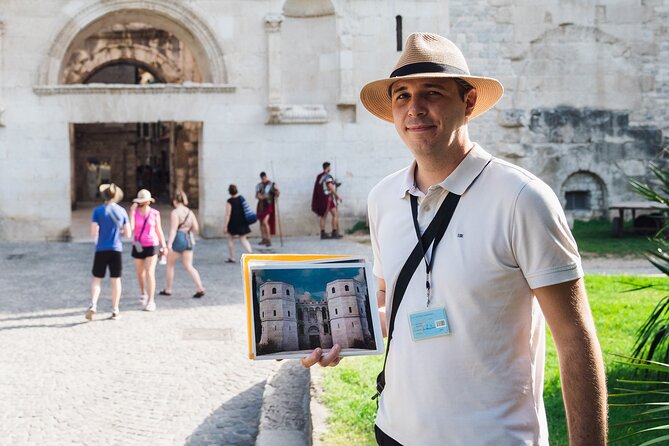
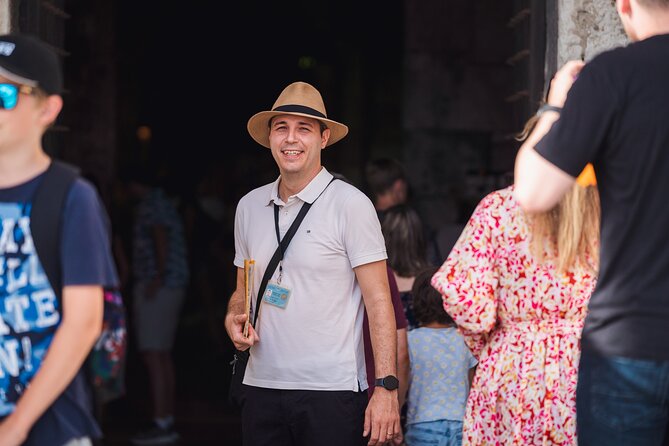
Diocletian’s walls talk, if you listen. This Walking Tour of Split with Toni Šare (owner of DiocleSpot Tours) turns the old city into a clear timeline, with 3D reconstructions that help you picture what you are looking at. I like that the walk is structured as a guided circuit, so you keep moving and you keep learning, without feeling stuck in one lecture spot.
The second thing I really liked is the tight focus on details you miss on your own, from the Peristyle to the Golden Gate and beyond, all the way to the medieval square where the tour ends. The only real drawback to consider is that you will not enter museums or paid interiors, including major stops where you get the explanations from the outside.
In This Review
- Key highlights you should care about
- How Toni Šare teaches Split: Roman stones, real stories, and clear visuals
- Start at Brass Gate, then get your bearings by the water at Riva Harbor
- The Peristyle: where you learn to read the palace from the center
- Cathedral of Saint Domnius: a mausoleum turned cathedral, seen from the outside
- Temple of Jupiter and the Silver Gate: anomalies, naming, and smart viewpoints
- Grgur Ninski to the Vestibulum: cultural identity meets the palace’s private side
- Golden Gate and the northern wall: how Split keeps using Roman structure for defense
- Courtyard time: Venetian and Renaissance palace vibes without paying museum entry
- Game of Thrones filming spots and those “wait, that’s there” moments
- Price and value: why $34.83 can be a good deal for this route
- When to go and what to bring for a comfortable old-town walk
- The bottom line: should you book this Split history walking tour?
Key highlights you should care about
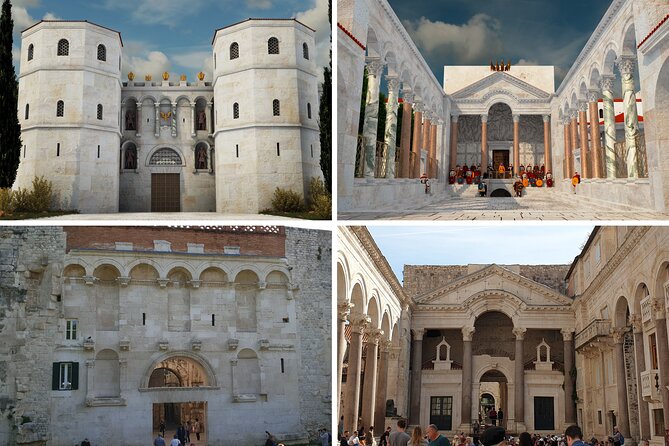
- Toni Šare’s 3D reconstructions help you visualize what Diocletian’s Palace looked like in its prime, then how it changed over time
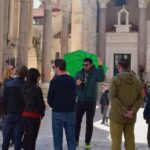
- A small group size (maximum 18) makes questions feel easy, not awkward
- You get an outside-only route that still covers Roman, medieval, Renaissance, and early modern layers of Split
- Photo-friendly viewpoints at stops like the Golden Gate and Eastern (Silver) Gate give you strong context fast
- You may get cultural extras timed into the walk, including moments of traditional singing described as a standout
How Toni Šare teaches Split: Roman stones, real stories, and clear visuals
Split’s charm is that the city is not a museum you visit. It is a working place where ancient Roman walls sit next to busy streets, homes, and daily life. What makes this tour different is the way Toni Šare connects those layers for you, without turning Split into a checklist.
You start with big anchors, then you zoom in. At each stop, Toni explains what you are seeing, why it matters, and how later eras reused, modified, or repurposed the Roman fabric. That is the key. You are not just learning dates. You are learning what survived, what changed, and why people kept using Roman structures long after Rome faded.
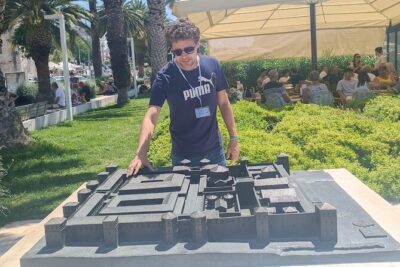
And yes, the 3D reconstructions are a big part of the magic. When you stand in the Peristyle or at a palace entrance, it is hard to know what is original and what is later work. Toni’s visuals help you connect the present stonework to the palace’s likely look during its glory years, which is especially helpful if this is your first time in Split.
Start at Brass Gate, then get your bearings by the water at Riva Harbor
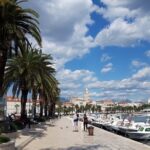
The meeting point is the Brass Gate (Porta Aenea), and the tour begins by orienting you quickly. From there, you head to Riva Harbor, Split’s waterfront where locals have long spent time and where the palace is part of the city’s daily view.
At Riva Harbor, Toni gives you an introduction to what you are about to see inside Diocletian’s Palace, including some graphic and model-style representations. You also get a clean look at the southern wall of the palace from outside, which helps your brain stop treating the palace as a single monument and start seeing it as walls, entrances, and spaces that connect to the city.
This is also one of your best early chances to set your expectations. Split is famous for Roman remains, but you will spend the rest of the walk tracking medieval, Renaissance, and early modern fingerprints too. If you take your time here, the rest of the tour clicks faster.
Practical note: the tour timing means you will cover a lot in a short period. So if you want photos, start selecting shots early rather than stopping at every corner.
More Walking Tours in Split
- Split: Old Town and Diocletian Palace Walking Tour★ 4.9 · 4,727 reviews
- Walking Tour of Split and Diocletian’s Palace★ 5.0 · 2,588 reviews
- Krka Waterfalls tour with Trogir Walking tour and Krka panoramic boat cruise★ 5.0 · 1,659 reviews
The Peristyle: where you learn to read the palace from the center
Your next major stop is the Peristyle of Diocletian’s Palace. This is the central square, and it is also one of the most important public spaces in Split today. You get a strong sense of how the palace worked as a place people moved through, lived near, and built around.
Toni points out incredibly preserved Roman structures and then uses his 3D reconstructions to show what parts still match the original design and what parts do not. That matters because standing in the Peristyle, it is tempting to assume the whole area is either fully Roman or fully later. This tour trains you to spot transitions and interpret what you see.
The good news here is that even though the stop is brief, you learn a framework you can reuse later in Split when you wander independently. You start thinking in entrances, sight lines, and functional spaces, not just landmarks.
Cathedral of Saint Domnius: a mausoleum turned cathedral, seen from the outside
Next comes the Cathedral of Saint Domnius, the mausoleum associated with Emperor Diocletian. This is one of the best-preserved Roman structures in Split, and it is still in use.
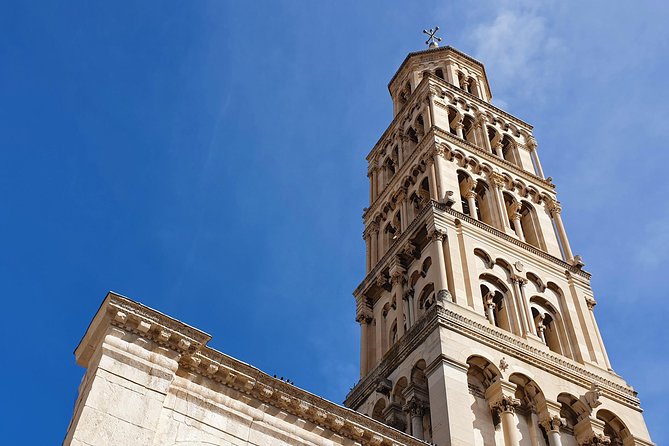
Important detail for your expectations: you will not enter. Toni explains what you need to know about the mausoleum, the bell tower, and how it was transformed when Christians repurposed the structure. The emphasis is on understanding the outside architecture and the logic of the conversion, which is exactly what many people miss if they only glance at the building from the plaza.
If you want quiet reflection, this stop gives you a moment. If you want museum-style interiors, plan to do that elsewhere, because this tour stays outside and focuses on interpretation over ticketed access.
Temple of Jupiter and the Silver Gate: anomalies, naming, and smart viewpoints
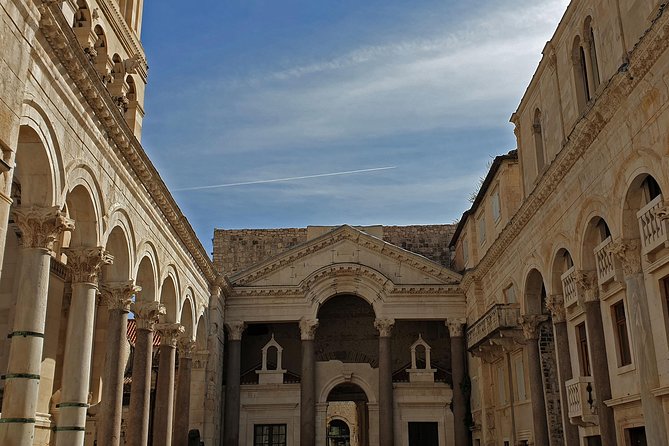
Split has a habit of calling things by names that do not always tell the whole story. One of the stops is the Temple of Jupiter, which locals and visitors often refer to that way. Toni uses this location to show anomalies and mistakes Romans made while constructing it.
You will also notice the tour is intentionally visual. You see the structure from the outside, and you learn why it looks the way it does. This is a good stop if you like architectural “why” questions, because Toni’s explanations are built to sharpen your eye.
Then you move to the Eastern (Silver) Gate, an entrance to the palace. From here, the view can be stunning for context: you can line up the palace spaces in your mind, with the cathedral on one side, the Silver Gate on the other, and a preserved portion of the original road beneath you. Even if you do not consider yourself a history person, this viewpoint helps you understand how the palace sat in a living city rather than behind a fence.
More marble lanes taken slowly:
- Split & Diocletian’s Palace Walking Tour
★ 5.0 · 1,125 reviews - Split Walking Tour with Professor of History
★ 5.0 · 926 reviews - Split: Diocletian Palace & Old Town Guided Walking Tour
★ 4.7 · 882 reviews - From Split: Krka Waterfalls Cruise & Trogir Walking Tour
★ 4.7 · 681 reviews
Grgur Ninski to the Vestibulum: cultural identity meets the palace’s private side
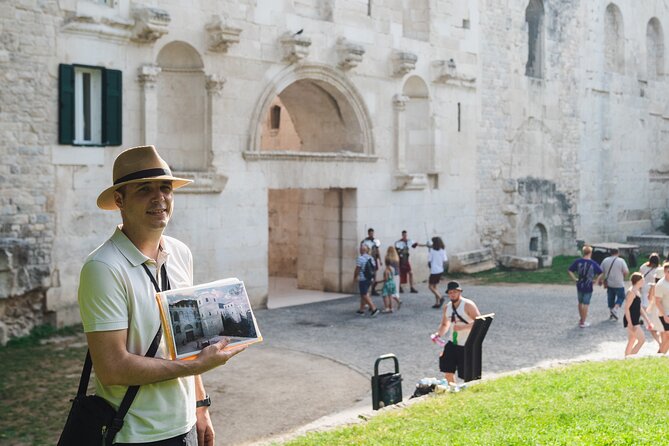
The tour then shifts from Roman architecture to cultural identity with the Grgur Ninski Statue. Toni explains what the statue represents and why it matters for early medieval Croatian language and culture. This is a reminder that Split is not only Roman leftovers. It is also a place where later identities formed, argued, and expressed themselves in art and public memory.
After that, you head to the Vestibulum of Diocletian’s Palace, the ancient entrance to Diocletian’s private residence area. Toni takes you around the remains of the emperor’s private spaces. This is where you get a different feel than the big public zones like the Peristyle. The palace becomes more human scale, with the tour helping you understand how power lived inside these walls.
The limitation, again, is that this is not an inside pass. But the upside is that the route is efficient. You keep the story moving instead of losing time to ticket lines and interior rules.
Golden Gate and the northern wall: how Split keeps using Roman structure for defense
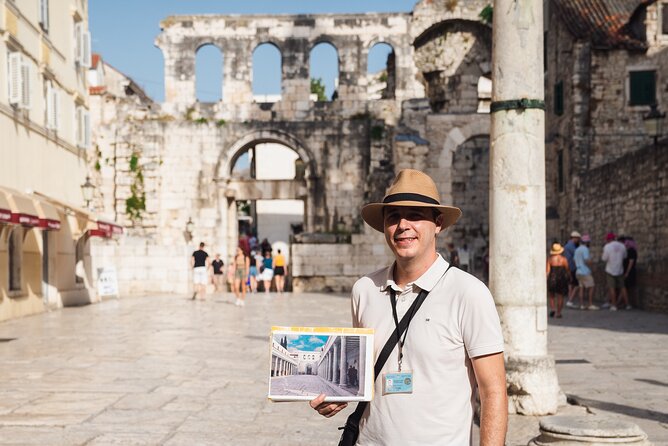
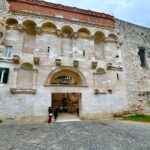
The highlight for many people is the Golden Gate, the main entrance to Diocletian’s Palace. It is described as the most preserved of the four entrances and also the most decorated and memorable. From this spot, you get a strong view of the northern wall too, and that view is where the Roman-to-medieval connection becomes obvious.
Toni explains how the medieval city still used Roman-made structures for defense. The palace was not simply abandoned. It became part of everyday fortification thinking, with later builders keeping what they needed and removing what they did not.
If you like that moment when history stops being abstract, this is it. You can literally see how the city adapted the old walls to new realities.
Courtyard time: Venetian and Renaissance palace vibes without paying museum entry
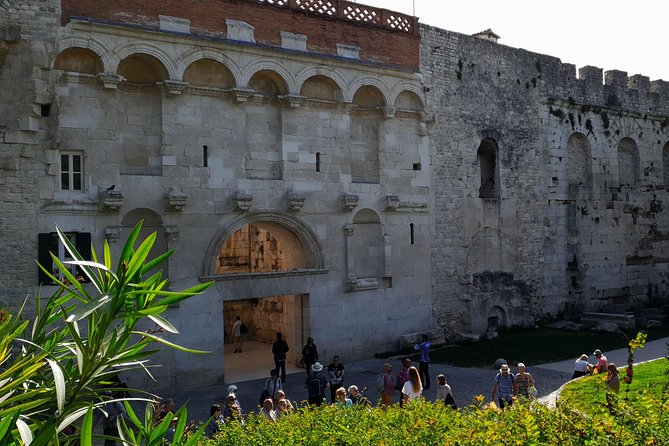
After the Golden Gate, the tour points you toward the City Museum of Split, located inside a Renaissance noble palace. Here, the plan is not to enter the museum. You see the palace courtyard, which is still a win because it gives you the Renaissance setting without turning your day into a museum ticket day.
Toni also explains Venetian connections and how these types of palaces developed during Venetian influence. Even if you are not trying to become an art historian in one afternoon, the courtyard stop helps you understand why Split’s city center does not look purely Roman. It looks like a city shaped by trade powers, local elites, and changing styles.
You finish by heading to Old Town Hall on Piazza Square (Narodni trg), a natural ending point because it is the main square of the city since medieval times. The 14th century town hall and surrounding buildings give you a central place to regroup, plan your next walk, and decide where you want to return later on your own.
Game of Thrones filming spots and those “wait, that’s there” moments
Split has become a screen setting, and this tour includes Game of Thrones filming locations you pass by if the group is interested. You also pass by a fan shop. If you are a fan, this adds a fun, low-effort layer to your walk because it piggybacks on the same architecture you are already learning to read.
Even if you are not into the show, it can still be useful. Screen-location talk encourages you to slow down and look at street angles and building facades more carefully, which is exactly what Toni is teaching you anyway.
Price and value: why $34.83 can be a good deal for this route
At $34.83 per person for about 1 hour 40 minutes to 1 hour 50 minutes, the value depends on your travel style. If you like structure and context, you are paying for time with Toni Šare and for those 3D reconstructions that make the palace legible.
You also avoid a trap that often inflates costs in historic centers. This tour does not require paying to enter museums or paid sites, and many stops are set up around outside views and free-to-see areas. You do get explanations where you would otherwise just look and guess.
Could it be expensive if you only want to take photos and do not care about interpretation? Sure. But if you want to walk away thinking you understand why Split looks like Split, this is one of the more cost-effective ways to get it quickly.
Bonus value point: the small group size helps you ask questions without shouting. That is often what makes a history tour feel worth it, because you can clarify what you are not sure about right on the spot.
When to go and what to bring for a comfortable old-town walk
This tour runs best when the weather supports easy walking. The experience notes good weather as a requirement, so if you pick a day with heavy rain risk, plan to have a backup in mind.
Timing helps too. One review highlight noted that an evening tour helped beat the summer heat, so if you are visiting in warmer months, think about booking later in the day. If you do the tour early, you also tend to get better “where should I go next?” instincts for your afternoon wandering.
Wear walking shoes with decent grip. The route is mostly exterior and involves moving between palace entrances, plazas, and streets in the old town. Bring water if you are out in warm weather.
And since some stops are short, be ready to work quickly with your camera. You do not want to miss Toni’s explanations while you are busy composing shots.
The bottom line: should you book this Split history walking tour?
Book it if you want a fast, understandable orientation to Split that goes beyond the usual big-name landmarks. This tour is built for people who enjoy seeing patterns, learning how Roman structures got reused, and getting practical stories you can carry into the rest of your day.
Skip it, or pair it with other tickets, if you mainly want to enter interiors and spend time inside museums. This walk stays outside and focuses on explanations, so you will not get indoor museum access from these stops.
If you are choosing one history-focused activity in Split, this is a strong contender because the guide is local, the storytelling is tailored to what you see right in front of you, and the 3D reconstructions make the palace feel real instead of just old.
Venetian Stones, Roman Streets

Latest arrivals logged at Split





Historical Tours, compared.
Split Walking Tour with Professor of History
Read our review →
Split History and Gastro Small-Group Tour with Food and Drinks
Read our review →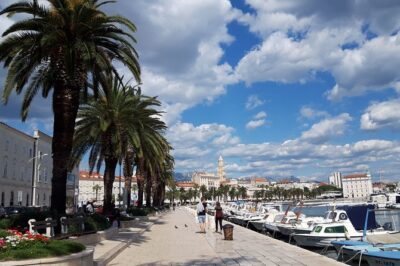
PREMIUM Emperor’s Walking Tour for History Lovers + Museum
Read our review →
Historic Walking Tour with Local Guide & City Views
Read our review →Browse the lists this tour appears in