
Reviewed · HISTORICAL TOURS
Split Walking Tour with Professor of History
History hits every corner in Split. This walking tour is led by a history professor, so the Diocletian Palace sites do not feel like random ruins. You walk the historic center with the kind of context that makes Diocletian Palace feel like a living plan of power, not just old stone.
I really like how the route connects places people actually use today, starting on Riva and ending in Fruit Square, so you get Roman scale and everyday city life in one loop. One watch-out: the tour is listed at about 2 hours 20 minutes, but it can run longer, and St. Domnius plus the Temple of Jupiter are outside-only unless you buy tickets after.
In This Review
- Key takeaways before you go
- Why a history professor guide makes Split click
- Price and value for money at about $24
- Meeting at Brass Gate, then easing in on Riva Harbor
- Diocletian Palace substructures: the underworld of Split
- Peristyle and the ceremonial square: picturing an emperor
- Vestibule (Rotonda): the power corridor made human
- St. Domnius and the Temple of Jupiter: outside views with optional tickets
- Golden Gate and Grgur Ninski: gates and small rituals
- Prokurative and Fruit Square: the modern city over the old plan
- Walking comfort, timing, and what to expect in the real world
- Should you book this Split walking tour with a history professor?
- FAQ
- How long is the Split walking tour?
- What does the $24.19 price include, and do I need extra tickets?
- Where does the tour start?
- Is the tour offered in English, and what group size should I expect?
- Can I see the Cathedral of Saint Domnius and the Temple of Jupiter on the tour?
- What happens if the weather is bad or I need to cancel?
Key takeaways before you go
- Professor-led, story-driven history that turns the Palace layout into something you can picture
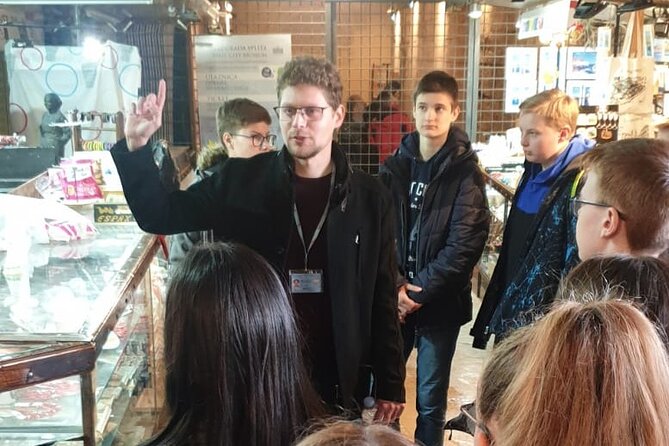
- Small group, max 17, which helps you ask questions and keeps you from feeling lost
- Mostly free entry stops, with St. Domnius and the Temple of Jupiter only included for outside viewing
- Practical city tips that help with what to do next, not just what to look at
- Mobile ticket in English, starting at Brass Gate near the waterfront
Why a history professor guide makes Split click
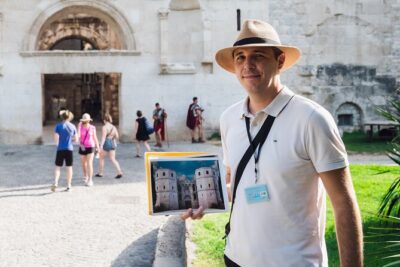
Split has layers, and most walking tours skim the surface. What makes this one work is the “professor” style: clear explanations, strong details, and a knack for connecting what you see to how people lived. You are not just hearing dates and names. You are learning why these buildings mattered, how they were used, and how later generations reused the space.
The tour also benefits from the small group limit of 17. That number matters in Split’s Old Town. Narrow streets and major landmarks can get crowded fast. A smaller group means you spend less time stuck behind other groups and more time actually looking, listening, and asking questions. It also helps the guide keep the pacing humane, with periodic movement so you are not standing in one spot for too long.
A bonus you will feel on the walk: the guides often mix solid scholarship with humor and real questions from the group. In other words, you get both the facts and the fun. And if you upgrade to a private tour, you can shift the focus to what you care about most, whether that is strict Roman history, medieval Split, or modern life around the Palace walls.
Price and value for money at about $24
At $24.19 per person, this is priced like a smart “first-day orientation” in Split. The value comes from two things.
First, the tour covers major landmarks in a compact time window, roughly 2 hours 20 minutes. Second, most stops have free admission built into the plan, so you are not constantly thinking about extra tickets while you walk.
The only real add-on risk is that St. Domnius and the Temple of Jupiter are not fully included. You can see them from the outside on the tour, and the tour offers guidance if you want to return later with an entry ticket. That is normal for walking tours in historic centers, but it is important for budgeting and expectations.
Also, the average booking window is about 33 days in advance, which tells me this is popular for a reason. If you are traveling in high season or on a tight schedule, I would book early so you get a time slot that matches your arrival day.
More Walking Tours in Split
- Split: Old Town and Diocletian Palace Walking Tour★ 4.9 · 4,727 reviews
- Walking Tour of Split and Diocletian’s Palace★ 5.0 · 2,588 reviews
- Krka Waterfalls tour with Trogir Walking tour and Krka panoramic boat cruise★ 5.0 · 1,659 reviews
Meeting at Brass Gate, then easing in on Riva Harbor
The tour meets at Brass Gate (Porta Aenea) on the waterfront, Obala Hrvatskog narodnog preporoda 22. That is a great start because you immediately feel the sea breeze and the rhythm of the city before you head into the Old Town maze.
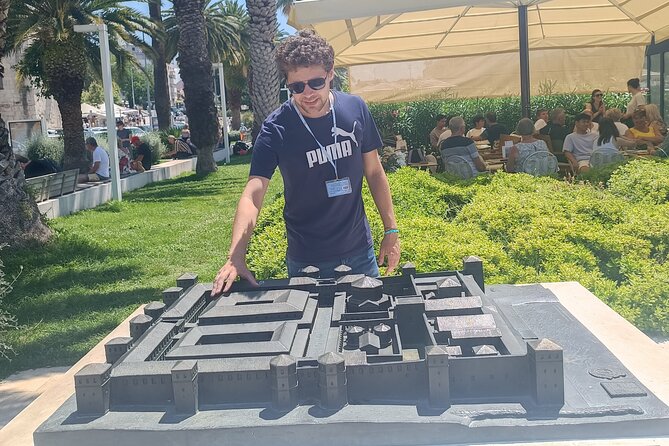
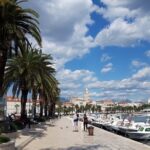
From there, you begin on the Riva promenade, right by the model of the Palace. Riva is not a dead museum street. It is where locals actually spend time, grabbing coffee, soaking up sun, and watching the day go by. Starting here does two helpful things.
- It gives you a reference point. You learn what the city feels like at street level before you drop into the Palace’s stone geometry.
- It sets up the big theme of the tour. Split is not only Roman archaeology. It is a real city built on top of real history.
This first stop is short, about 15 minutes, and admission is free. Wear decent shoes here too. The promenade is level, but the rest of the walk quickly becomes cobblestones and quick turns.
Diocletian Palace substructures: the underworld of Split
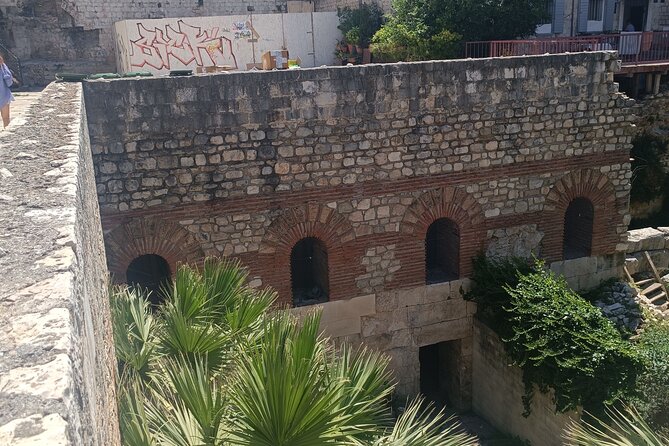
One of the biggest wins in this route is how it treats the Palace as an architectural system. Stop two is the Diocletian Palace substructures, the basement halls that are among the best-preserved classical antiquity complexes in the world.
You spend about 15 minutes here, and admission is free. The substructures matter because they explain a lot of what you see above. This is the kind of space where you can understand the scale of the engineering and why the Palace became so important as a foundation for the historic center of Split. Split’s historic center was added to the UNESCO World Heritage List in 1979, and the Palace complex is central to why it earned that status.
What I like about doing this early: it removes the “tourist confusion” feeling. People often stand in front of Diocletian Palace thinking, Where am I supposed to look? Seeing the substructures first gives your brain a map. Suddenly the later stops, the Peristyle and corridors, feel like part of one plan.
A small practical consideration: these spaces can feel cooler than the street, but you will still want to keep your phone camera ready. The guide’s explanations are easier to follow when you can visually match the story to the stone blocks and passageways.
Peristyle and the ceremonial square: picturing an emperor
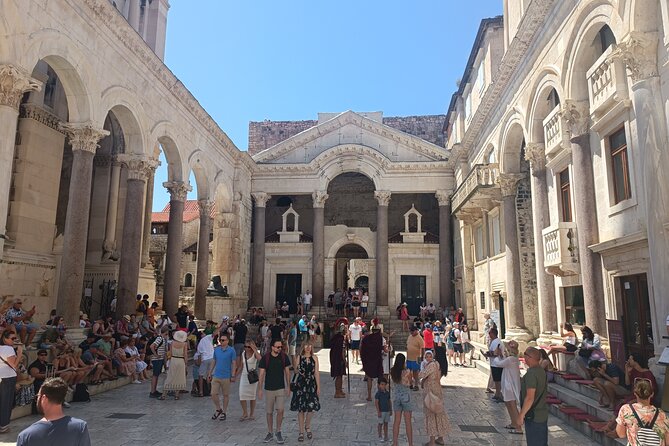
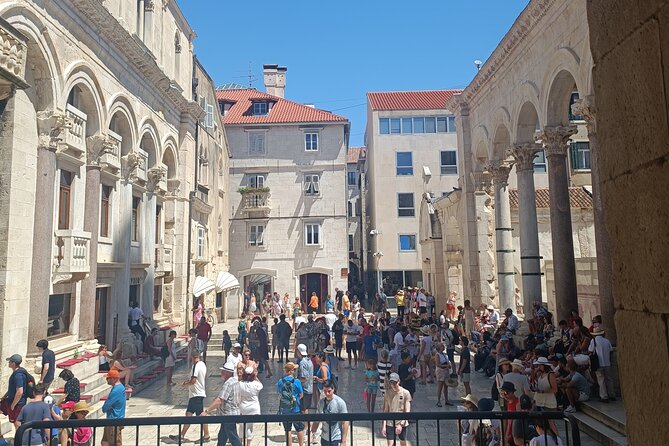
Next you move to the Peristyle, the central square of Diocletian’s Palace. This area is not just an open space. It is a stage. You get about 10 minutes here, and admission is free.
The guide frames it as a civic and ceremonial center. The Peristyle connects to temple spaces, and you hear how Diocletian was presented and approached. Depending on how you picture the scene, you can almost see processions, formal audiences, and the choreography of power.
Even if you are not the type who loves imperial theater, this stop helps you read Split differently. The Peristyle explains why so much later architecture grew around it, and why the Palace became the spine of the city.
Look around, not only at the big view. When you understand the square as a hub for movement and ceremony, you stop seeing random walls and start seeing intentional space.
More marble lanes taken slowly:
- Split & Diocletian’s Palace Walking Tour
★ 5.0 · 1,125 reviews - Walking Tour of Split with a ‘Magister’ of History
★ 5.0 · 1,122 reviews - Split: Diocletian Palace & Old Town Guided Walking Tour
★ 4.7 · 882 reviews - From Split: Krka Waterfalls Cruise & Trogir Walking Tour
★ 4.7 · 681 reviews
Vestibule (Rotonda): the power corridor made human
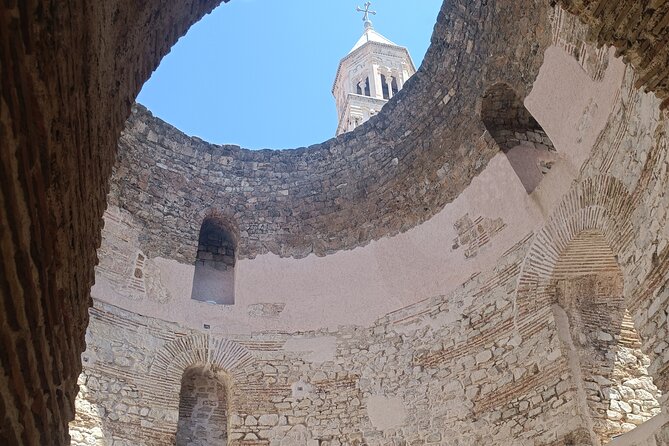
Stop four is the Vestibule, also called the Rotonda. It is part of the imperial corridor system that led from the Peristyle into Diocletian’s imperial apartments. You get about 10 minutes, and admission is free.
This circular hall was built up to the beginning of the 4th century. The details are part of the magic here: the Rotonda is about 17 meters high and 12 meters in diameter. The idea is that it was a grand meeting hall for selected audiences, including ambassadors.
This is a quick stop, but it is a useful one. You see how Roman design used geometry for control and impression. The corridor routes people, the hall gathers them, and the architecture makes the political moment feel important.
Practical tip: if you are sensitive to heat or sun glare, this is the kind of stop where the guide’s positioning matters. The better guides pace you, so you are not roasting while listening.
St. Domnius and the Temple of Jupiter: outside views with optional tickets
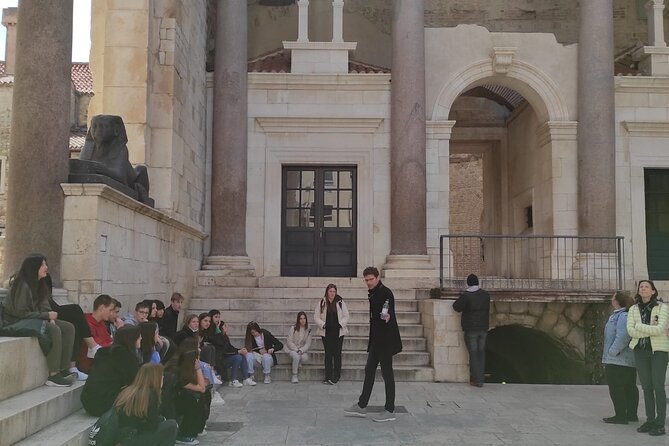
Now you hit two landmark transitions where Roman and Christian layers overlap. Stop five is the Cathedral of Saint Domnius. You get about 20 minutes here, but entry is not included. That means you will visit it from outside only, though the guide provides detailed information if you want to visit after the tour.
Stop six is the Temple of Jupiter. Here too, you see it from outside only, and you learn how the temple was converted into a baptistery dedicated to St. John the Baptist.
These two stops are the moment where Split stops being a strict Roman sightseeing list. You see how older structures kept getting repurposed. That is one reason Split does not feel dead. The stones keep being useful.
Between these sites, you walk through a small street called Let Me Pass Street. Local people believe it is the narrowest street in the world. It is the kind of detail that seems small until you realize how often Split’s historic center forces people to adapt, compress, and squeeze daily life into tight spaces.
A smart way to handle the outside-only limitation: treat the tour as your “preview.” If either St. Domnius or the Jupiter area interests you more, plan time after the walk to pay for entry and see what the inside reveals.
Golden Gate and Grgur Ninski: gates and small rituals
Stop seven is the Golden Gate. It is one of the four principal Roman gates into the old town of Split. The gate was part of Diocletian’s Palace and served as the main gate for the emperor’s entrance. It was elaborate and status-marking, but over the Middle Ages it was sealed and lost columns and statuary. In modern times, it was reopened and repaired, and it now functions as a major tourist attraction.
You get about 15 minutes here, with free admission. This stop is one of the best “anchor points” for first-timers because gates help you understand boundaries. Once you know where entry points were, you start seeing why streets bend and why certain plazas feel like natural gathering places.
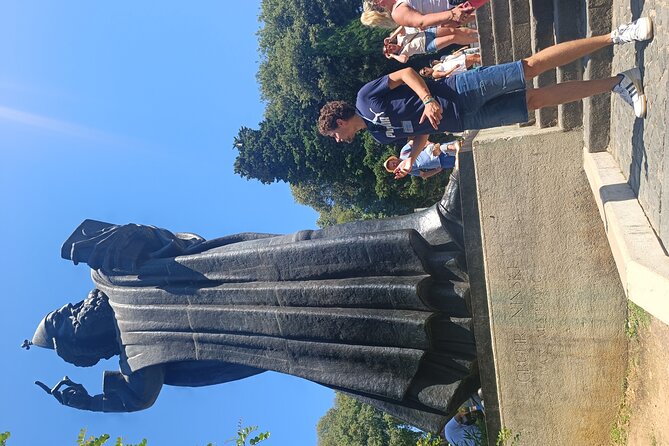
Then stop eight is the Grgur Ninski Statue by Ivan Meštrović. The statue is tall, about 8.5 meters, and it is one of those city icons where tiny actions become part of the tradition. The toe of the statue has been worn smooth because rubbing it is said to bring good luck.
You get about 10 minutes here. It is quick, but it adds a playful layer. When history is presented with a wink like this, it stops being intimidating.
Right after, you walk down Marmontova Ulica, a street named after Napoleon’s marshal Marmont. The city named the street for him in recognition of his role in the urbanization of Dalmatian cities.
These are smaller stops, but they matter because they show you how history keeps getting referenced in daily life.
Prokurative and Fruit Square: the modern city over the old plan
Stop ten is Prokurative at Republic Square, a large open square lined on three sides with elaborate neo-Renaissance buildings. You get about 10 minutes here, and admission is free.
This stop is a palate cleanser after the Roman geometry. It helps you see how Split kept building new styles while reusing old spaces. Once you reach the open square, your feet and neck get a breather, and your brain gets a better sense of city scale.
Finally you end at Fruit Square (Trg Brace Radic). You get about 15 minutes here and admission is free. This small square has stories behind its everyday vibe. Ladies used to sell fruit here, and you hear about important monuments too, including the statue of Marko Marulić, often described as the father of Croatian literature.
This last stop is where the tour often shifts from stone to living culture. The guide uses the square as a springboard for stories about Croatian history and gastronomy, which is exactly what you want after two plus hours of architecture.
Practical note: use this ending moment to decide what to do next. You are standing in a good location to grab a drink, reset, and then pick an optional paid visit if something caught your attention earlier.
Walking comfort, timing, and what to expect in the real world
This is a walking tour through outdoor spaces, so plan for real weather. The experience requires good weather, and if it is canceled due to poor weather, you will be offered a different date or a full refund.
Timing is another practical point. The tour is listed at about 2 hours 20 minutes, but it can run longer. I would treat it as a half-day-ish commitment, especially if you are trying to stack other activities the same day.
Group size is limited to 17 travelers, so you should feel comfortable asking questions and getting individual attention. The guide also aims to help you keep your bearings and avoid unnecessary crowding by managing movement between stops.
Also consider this a “show up ready” tour. Bring comfortable shoes for cobblestones. Bring water on warm days. And if you want inside access, remember that the cathedral and Temple of Jupiter are outside-only during the tour, though the guide can point you toward what is worth paying for afterward.
Good news for logistics: service animals are allowed, and the start point is near public transportation. Most people can participate, but if you have limited mobility, you might want to think about your comfort with standing and walking through uneven streets.
Should you book this Split walking tour with a history professor?
Book it if you are a first-timer who wants your Split visit to make sense fast. This tour is a strong fit for history lovers who like explanations, but it is also a good choice if you just want to feel confident navigating the Old Town. The professor-led framing, the small group size, and the quick route through the key Diocletian landmarks make it a high-value way to start.
Skip it or adjust your expectations if you mainly want beach time, or if you prefer tours that include lots of paid interior entrances. Here, several major sites are handled from the outside, with optional paid entry after you finish walking.
If you like structure plus stories, this is an easy yes. If you hate standing around or you are sensitive to long durations, plan your day with buffer time and treat it as an important learning walk, not a quick checklist.
FAQ
How long is the Split walking tour?
The tour lasts about 2 hours 20 minutes (approx.).
What does the $24.19 price include, and do I need extra tickets?
The price includes all fees and taxes. Most stops have free admission, but the Cathedral of Saint Domnius and the Temple of Jupiter are not included for entry, since you only view them from outside during the tour.
Where does the tour start?
It starts at Brass Gate (Porta Aenea), Obala Hrvatskog narodnog preporoda 22, 21000 Split, Croatia.
Is the tour offered in English, and what group size should I expect?
The tour is offered in English, and the group size has a maximum of 17 travelers.
Can I see the Cathedral of Saint Domnius and the Temple of Jupiter on the tour?
You can view both from the outside only. The tour information says the Cathedral of Saint Domnius entrance is not included, and the Temple of Jupiter is also outside-only.
What happens if the weather is bad or I need to cancel?
This experience requires good weather. If it is canceled due to poor weather, you will be offered a different date or a full refund. You can cancel for a full refund up to 24 hours in advance.
Venetian Stones, Roman Streets

Latest arrivals logged at Split




Historical Tours, compared.
Walking Tour of Split with a ‘Magister’ of History
Read our review →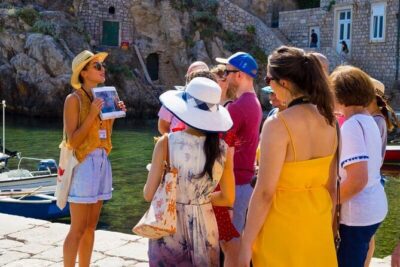
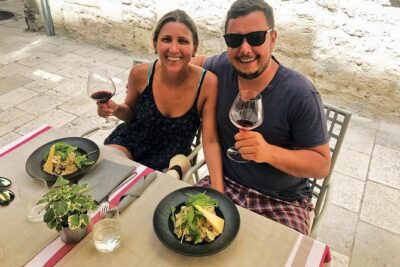
Split History and Gastro Small-Group Tour with Food and Drinks
Read our review →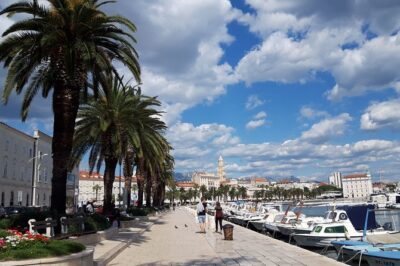
PREMIUM Emperor’s Walking Tour for History Lovers + Museum
Read our review →
Historic Walking Tour with Local Guide & City Views
Read our review →Browse the lists this tour appears in