
Reviewed · WALKING TOURS
Dubrovnik: Private Guided Walking Tour
Dubrovnik’s walls tell stories fast. This private walking tour starts at Pile Gate and then turns a short visit into a clear understanding of how the city was founded, rebuilt, and reshaped by major events. I especially like the way you get context as you walk the 2-kilometer-long city walls, and I love that the tour feels genuinely personal with a certified guide. One drawback to plan for: entrance tickets are not included, so if you want to step inside specific sites, you may pay extra.
The tour lasts 75 minutes, which is long enough to hit the key landmarks without making you sprint. You’ll also hear the 1991 to 1995 story with the help of a city map, plus the earthquake of 1667 and the Baroque rebuild. Expect mostly walking on uneven Old Town surfaces, so wear grippy shoes.
In This Review
- Key highlights you should care about
- Starting at Pile Gate: where Dubrovnik’s story kicks off
- Walking the Old Town and its walls: more than a pretty perimeter
- The city map approach to 1991 to 1995
- Earthquake of 1667: why Baroque Dubrovnik looks the way it does
- Franciscan Monastery and the old pharmacy stop
- The cathedral in the center of the Old Town: finishing with orientation
- Private group value: who this tour works for
- Price and logistics: what’s included, what to plan for
- About the guides: the kind of delivery that earns 4.9 stars
- Who should book this Dubrovnik walking tour
- Should you book this private guided walking tour?
- FAQ
- How long is the Dubrovnik private guided walking tour?
- Where do I meet the guide?
- Is it a private tour or a shared group?
- What’s included in the price?
- Are entrance tickets included?
- What topics does the guide cover?
- What are the main stops on the tour?
- What languages are available?
- Is the tour wheelchair accessible?
- Can you pick me up from my hotel or the port?
Key highlights you should care about
- Pile Gate meeting point right where the Old Town story begins, no confusing transfers
- Old Town walls explained with practical, visible context, including what still protects the city
- 1991 to 1995 war timeline shown on a city map, so you can connect streets to events
- Earthquake of 1667 and Baroque rebuild in a way that makes the architecture easier to read
- Franciscan Monastery and the old pharmacy connection, plus the church dedicated to Saint Ignace of Loyola
- Cathedral in the center of the Old Town as a strong finish point for orientation
Starting at Pile Gate: where Dubrovnik’s story kicks off
Meeting at Pile Gate, directly in front of the Old Town, is smart for two reasons. First, you avoid wasting your energy on figuring out where to start. Second, the guide can begin with the city at its most recognizable boundary: the point where Dubrovnik pulls you into the walled core.
From there, you’ll learn when and how Dubrovnik was founded. That sounds basic, but the timing matters because the Old Town layout makes more sense when you know the city’s origin and development. A good guide keeps the pace steady, shares the “why” behind what you see, and helps you connect names and places without drowning you in details.
This is also a private group tour, and that changes the vibe. When you can ask questions without waiting, you get more of the local, street-level understanding that makes a city feel real.
Walking the Old Town and its walls: more than a pretty perimeter
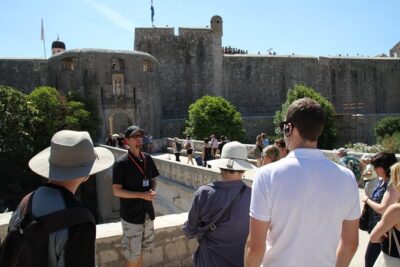
The heart of Dubrovnik is often described in photos, but the tour gives you something photos can’t: a usable sense of scale and purpose. You’ll admire the city walls, which still protect Dubrovnik today, and the tour frames them as a defensive system rather than just a view.
The walls measure about 2 kilometers long. Hearing that number once is fine. Seeing the line of stone around the city and understanding how it works as protection is what makes it stick. You also learn how Dubrovnik’s construction developed and why the city needed strong fortifications.
A private guide can point out what matters most as you walk. That means you spend less time staring at facades and more time noticing how the town’s shape and key points relate to history. If your main goal is to stop feeling lost and start understanding what you’re looking at, this part of the experience is doing heavy lifting.
Practical note: the Old Town walk is not long in total, but the surfaces can be uneven. Grippy shoes help, and if you’re sensitive to stairs or cobblestones, you’ll want to pace yourself.
More Walking Tours in Dubrovnik
- Dubrovnik: Old Town Walking Tour★ 4.8 · 5,174 reviews
- Dubrovnik Discovery Old Town Walking Tour★ 5.0 · 4,458 reviews
- Dubrovnik: Game of Thrones Walking Tour★ 5.0 · 1,732 reviews
The city map approach to 1991 to 1995
One of the most important moments in the tour is how the guide covers the period of suffering between 1991 and 1995. Instead of treating it as a distant, abstract chapter, the tour uses a city map so you can connect events to the actual streets and spaces.
That method changes how you process what you see. You’re not just hearing dates, you’re learning how war affects everyday life and the physical damage that follows it. Dubrovnik has a recognizable visual identity today, but the guide helps you understand how recent history shaped what survived and what was repaired.
I like this style because it respects your time. The tour is only 75 minutes, so you get a clear arc without feeling like you need hours of reading. You walk away with a better mental map, which makes it easier to explore on your own afterward.
If you’d rather keep the mood light, know that this topic is part of the official storytelling. The guide handles it as history tied to places you can stand in, not as sensational drama.
Earthquake of 1667: why Baroque Dubrovnik looks the way it does
Dubrovnik’s story isn’t only about wars. The tour also explains the great earthquake in 1667, and what happened after. You’ll hear about the destruction it caused and then how the city was rebuilt in Baroque style.
This is where the walking tour earns its keep. Baroque isn’t just a word for a museum label. When you know a rebuild followed a catastrophe, the architecture reads differently. Details that might otherwise look decorative start to feel like choices made during recovery: how to rebuild civic pride, how to represent faith, and how to restore a city’s public face.
A good guide helps you notice these signals while you’re moving through the Old Town. You’re not stuck at a single stop staring at one wall. Instead, the tour builds a chain of understanding, from disaster to design.
If you’re the type who likes to connect art, religion, and politics to real events, you’ll find this segment especially satisfying.
Franciscan Monastery and the old pharmacy stop
One of the most memorable tour elements is the stop at the Franciscan Monastery, including its connection to one of the oldest pharmacies in Europe. Even if you’re not a pharmacy-history person, this is a strong moment because it shows Dubrovnik as a living city, not just a stage set.
The monastery stop also keeps the tour grounded in everyday human needs: care, learning, and long-term community institutions. It’s a reminder that cities are shaped by what they preserve, not only by what they rebuild after disaster.
You’ll also see the church dedicated to Saint Ignace of Loyola, founder of the Society of Jesus. That’s a specific, name-rich detail, and it matters because it ties Dubrovnik to broader European religious history. The guide’s job here is to help you see the connection between the site and the story, so you don’t just pass it by.
This is a good segment for photos, yes, but it’s also a good segment for comprehension.
More marble lanes taken slowly:
- Dubrovnik Old Town History Walking Tour
★ 5.0 · 1,684 reviews - Dubrovnik: City Walls Early Morning or Sunset Walking Tour
★ 4.8 · 1,523 reviews - Dubrovnik: Ancient City Walls & Wars Walking Tour
★ 5.0 · 1,270 reviews - Dubrovnik: City Walls, Old Town Walking Tour & Adriatic View
★ 4.9 · 982 reviews
The cathedral in the center of the Old Town: finishing with orientation
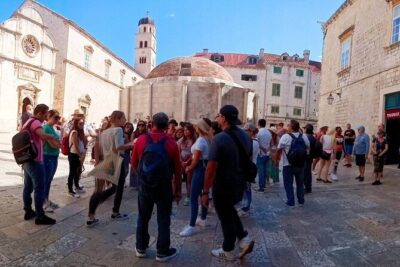
Every city has a “center,” and Dubrovnik’s Old Town center is the cathedral area. The tour ends at the cathedral in the middle of the Old Town, which is a practical choice because it helps you orient yourself for the rest of your day.
After 75 minutes, you should feel like you know where you are. Ending at a central landmark makes that happen. You can then wander with a mental framework rather than wandering just to wander.
If you want to keep exploring independently, this finishing point is helpful. You’ll know the logic behind the streets you walk next, because the guide already stitched together foundation, defenses, disasters, and more recent conflict.
Private group value: who this tour works for
This tour is priced at $197 per group up to 4, runs about 75 minutes, and is private. That pricing structure matters because it changes the math.
If you’re traveling as two or three, this can be excellent value. You get a certified guide, a focused route, and private pacing, without paying per person like some group tours do. If you’re a solo traveler, it can still be worth it, but you’re paying more per hour for the privacy.
The languages offered are Croatian and German, so pick the language you’re comfortable with. If you have questions and want a guide who can respond clearly, language choice becomes part of the value.
This is also a tour I’d recommend for people who want a “strong first pass” before deeper exploration. In a short time, you get the big storylines: founding, wall protection, the earthquake of 1667 and Baroque rebuild, the 1991 to 1995 war period, and major religious sites.
Price and logistics: what’s included, what to plan for
You’re getting a tour of the Old Town and a certified tour guide. Entrance tickets are not included, so if a specific site matters to you enough that you want to go inside, budget for that separately.
Pick-up is available from your hotel or the port on request. The standard meeting point is Pile Gate, directly in front of the Old Town. That combination helps if you’re staying nearby but also if you arrive by ship and want less hassle.
Also, the tour is listed as wheelchair accessible. If you need mobility support, it’s still smart to ask in advance how the guide handles cobblestones and any steps at stops, since accessibility can be site-dependent.
On pacing: 75 minutes is tight enough that the guide will keep things moving. It’s not meant to be an all-day “slow soak.” If that sounds like what you want, you might pair this with later independent exploration.
About the guides: the kind of delivery that earns 4.9 stars
The guide quality here is one of the strongest selling points. Names like Helena, Peggy, Jelena, and Gaby appear with consistently high marks, and the common thread is clarity plus friendliness. People described them as well documented, attentive, and able to answer questions without making you feel rushed.
I also like that the praise isn’t only about facts. One booking called the experience like walking with a good friend. That matters because in a city like Dubrovnik, the best guides help you feel comfortable asking, noticing, and connecting the dots.
For you, that means less mental work. You can focus on the streets, the walls, and the stories, instead of trying to self-navigate every historical detail.
Who should book this Dubrovnik walking tour
I’d book this tour if you want:
- A fast path to understanding Dubrovnik’s major turning points
- A private experience with a guide who can answer questions
- A route that combines the walls, key religious sites, and the 1667 earthquake and Baroque rebuild story
- A clear, map-supported way to understand the 1991 to 1995 period
I’d think twice if you already know Dubrovnik history deeply and you mostly want free time for museums or long stops inside churches. In that case, you might prefer a longer tour, because this one is built for orientation and context.
Should you book this private guided walking tour?
Yes, if you’re in Dubrovnik for a short window and you care about getting the story behind what you see. Meeting at Pile Gate, walking the Old Town and focusing on the city walls, then ending at the cathedral is a smart flow. The 1991 to 1995 segment with a map and the earthquake of 1667 Baroque rebuild explanation make the time feel meaningful, not like a checklist.
The main caution is simple: plan for entrance tickets if you want to go inside places, and wear shoes for Old Town surfaces. If that fits your style, this is a strong value choice, especially for groups up to four where the private format makes the price feel more reasonable.
FAQ
How long is the Dubrovnik private guided walking tour?
The tour runs for 75 minutes.
Where do I meet the guide?
Meet at Pile Gate, directly in front of the Old Town of Dubrovnik.
Is it a private tour or a shared group?
It is a private group experience.
What’s included in the price?
The price includes a tour of the Old Town and a certified tour guide.
Are entrance tickets included?
No, entrance tickets are not included.
What topics does the guide cover?
You’ll cover the city’s founding, the city walls, the earthquake of 1667 and the Baroque rebuild, the period of suffering between 1991 and 1995 using a map, and major sites including the Franciscan Monastery and the cathedral.
What are the main stops on the tour?
Key stops include the Old Town walls area, the Franciscan Monastery, the church dedicated to Saint Ignace of Loyola, and the cathedral in the center of the Old Town.
What languages are available?
The tour guide is available in Croatian and German.
Is the tour wheelchair accessible?
The tour is listed as wheelchair accessible.
Can you pick me up from my hotel or the port?
Pick-up from your hotel or the port is available on request.
Latest arrivals logged at Dubrovnik





Walking Tours, compared.

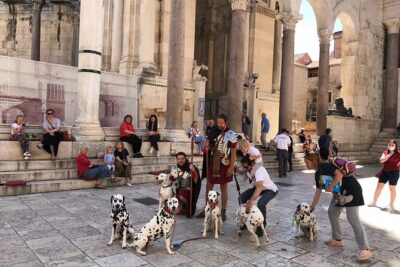
Walking Tour of Split and Diocletian’s Palace
Read our review →
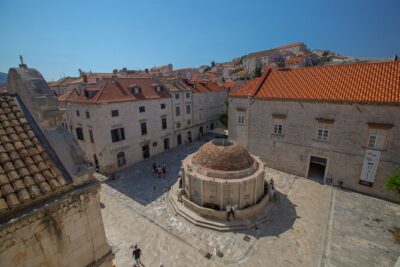
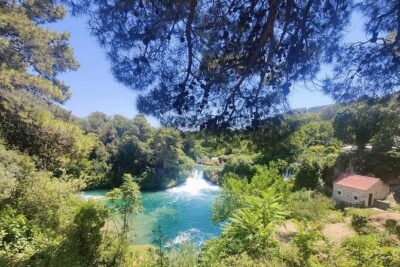
Krka Waterfalls tour with Trogir Walking tour and Krka panoramic boat cruise
Read our review →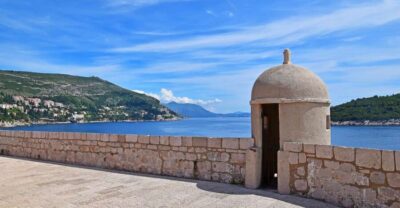
City Walls Early Morning or Sunset Walking Tour
Read our review →Browse the lists this tour appears in