
Reviewed · WALKING TOURS
Dubrovnik Private Old City Walking Tour
Old City gets personal fast. In this private 1.5-hour walk from Pile Gate, I love how Ajla brings the big landmarks to life without rushing you. You get a focused loop through the streets, churches, and palaces that shaped Dubrovnik, plus plenty of local context that helps you plan the rest of your days.
The main thing to consider is time. 1.5 hours is perfect for an orientation hit, but it is not long enough if you want deep, slow reading inside every building.
In This Review
- Key Points You’ll Actually Use
- Starting at Pile Gate, and why 7:30 matters
- Stradun, Dubrovnik’s limestone main street
- Franciscan Church and Monastery: medieval medicine in quiet rooms
- Little Onofrio Fountain: water engineering with 16 carved masks
- Jesuit Staircase: Baroque drama and a Game of Thrones nod
- The Cathedral of the Assumption: Baroque splendor and a treasury
- Rector’s Palace: how the Republic stayed honest for one month
- Sponza Palace: a trade hub and an earthquake survivor
- Price and value: is $189 per group worth it?
- Who this Dubrovnik private walk fits best
- Should you book this Pile Gate to Sponza private tour?
- FAQ
- What time does the Dubrovnik private Old City walking tour start?
- Where is the meeting point for the tour?
- How long is the tour?
- Is this tour private, and how many people are in a group?
- What language is the tour offered in?
- Do I need a ticket or can I use a mobile ticket?
- Is admission included at the stops?
- Is the tour suitable for most travelers?
- Are service animals allowed?
- Is there free cancellation, and how long do I have to cancel?
Key Points You’ll Actually Use
- Small private group (up to 8), so the pace stays human and questions get answered.
- Stradun to Sponza in one smooth morning route, so you see the core sights without zigzag chaos.
- Franciscan Monastery pharmacy (dating to 1317) gives you an unexpected angle on medieval life.
- Jesuit Staircase photos with context, including how it links to St. Ignatius and pop culture.
- Rector’s Palace and Sponza explain how Dubrovnik worked, not just how it looked.
- Mobile ticket and a set meeting point make the start simple.
Starting at Pile Gate, and why 7:30 matters
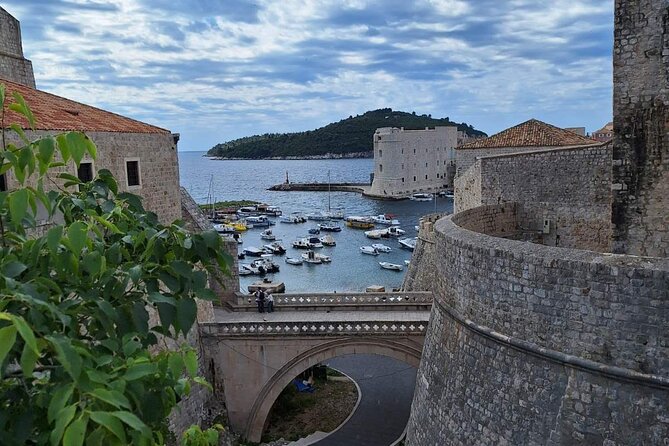
You begin at Pile Gate (Dubrovačke Gradske Zidine). This is the classic entry point to the Old City, and it sets the tone: stone walls, tight streets, and a feel for how Dubrovnik has always been a place of defense and trade.
The 7:30 am start is more than a time stamp. It helps you beat the heavier crowds later, which means you can actually hear your guide, not just compete with the noise. Since the walk is about 1 hour 30 minutes, you should expect a steady rhythm: outdoor views first, then a handful of stops where the story matters as much as the architecture.
This is a private tour, with only your group taking part. That matters because Ajla can adjust to how you travel, whether you’re the type who wants practical tips for what to do next or the type who wants every detail about the Republic of Dubrovnik’s political system.
Stradun, Dubrovnik’s limestone main street
You start with Stradun, Dubrovnik’s signature spine. The street is paved with smooth limestone, and you can feel the difference between a living road and a museum walkway. Stradun used to be a shallow sea channel, and now it’s the Old City’s central stage.
What I like here is how Stradun acts like a storyline. Your guide connects the facades you’re looking at with the city’s past role in trade and everyday life. You’re not just seeing a pretty street, you’re getting the meaning behind why it became the heart of the city.
A practical tip: if you like taking photos, this is your moment to do it without blocking people forever. Stradun is wide enough to pause, and it’s usually easier to get a clean shot here than later near smaller corners.
More Walking Tours in Dubrovnik
- Dubrovnik: Old Town Walking Tour★ 4.8 · 5,174 reviews
- Dubrovnik Discovery Old Town Walking Tour★ 5.0 · 4,458 reviews
- Dubrovnik: Game of Thrones Walking Tour★ 5.0 · 1,732 reviews
Franciscan Church and Monastery: medieval medicine in quiet rooms
Next comes the Franciscan Church and Monastery, where the highlight is the old functioning pharmacy dating back to 1317. It’s one of those places that makes you stop and think, because it shows how medicine, religion, and daily survival overlapped in medieval Dubrovnik.
The setting is calm, and that helps the history land. Romanesque architecture is part of the appeal here, but the real value is context. You learn why this pharmacy mattered and how the monastery served as a practical space, not just a spiritual one.
A possible drawback is that if you’re expecting a long interior visit, this stop is shorter. The whole tour is built for a tight overview, so you will see the key points and move on. Still, this stop is one of the best “wow, I didn’t expect that” moments of the walk.
Little Onofrio Fountain: water engineering with 16 carved masks
Then you hit Little Onofrio Fountain, a 15th-century structure that once supplied fresh spring water to Dubrovnik. It’s circular and filled with details, including 16 carved masks.
This stop is short, but it teaches a big idea: Dubrovnik wasn’t only about walls and palaces. It was also about systems, like getting reliable water into a dense city. Even if you’re not a technical person, the fountain’s design makes the point quickly.
What you can do here: take a second to look closely at the masks before you start walking again. A lot of people glide past fountains because they assume it’s just decoration. Here, the guide frames it as engineering plus symbolism, which makes it more interesting than you’d think.
Jesuit Staircase: Baroque drama and a Game of Thrones nod
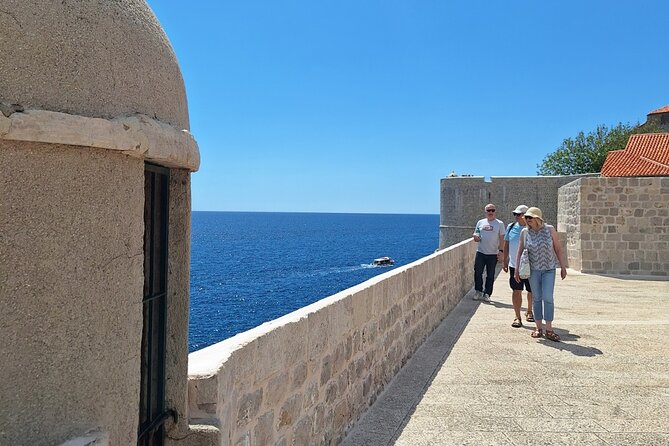
Next is the famous Jesuit Staircase, one of Dubrovnik’s most photogenic views. The steps are built in the 18th century, and they connect to the Jesuit Church of St. Ignatius. If the shape feels familiar, that’s because people often compare these stairs to Rome’s Spanish Steps.
Ajla’s value shows up here. Instead of treating it like a photo spot only, she gives you the backstory on why the staircase looks the way it does, and how Baroque design used space to create drama and movement.
And yes, it has a strong pop culture association, including its starring role in Game of Thrones. But the better use of that fact is this: it’s a gateway to the religious and architectural meaning of the site. You get the reference, then you get the real reason it matters.
If you’re short on time, this is a great place to focus. Climb a few steps for your perspective, then let the guide’s explanation do the heavy lifting.
More marble lanes taken slowly:
- Dubrovnik Old Town History Walking Tour
★ 5.0 · 1,684 reviews - Dubrovnik: City Walls Early Morning or Sunset Walking Tour
★ 4.8 · 1,523 reviews - Dubrovnik: Ancient City Walls & Wars Walking Tour
★ 5.0 · 1,270 reviews - Dubrovnik: City Walls, Old Town Walking Tour & Adriatic View
★ 4.9 · 982 reviews
The Cathedral of the Assumption: Baroque splendor and a treasury
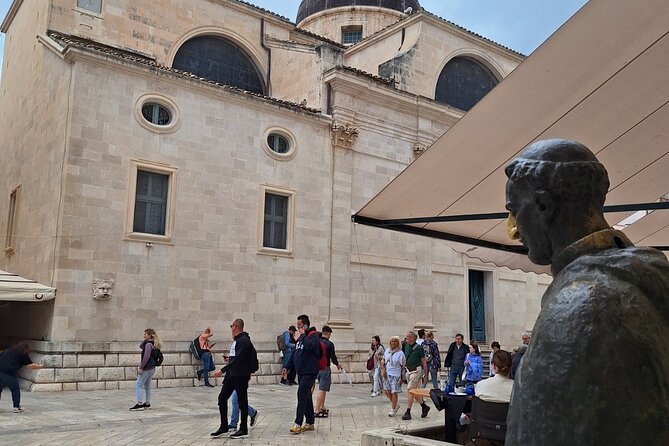
Now you reach the Cathedral of the Assumption of the Virgin Mary. This is a Baroque masterpiece built on the ruins of earlier churches, with funding tied to England’s King Richard the Lionheart. That detail is a neat reminder that Dubrovnik’s influence and connections extended beyond the Adriatic.
Inside, the cathedral houses important artworks and relics, and there is also a treasury component that highlights the city’s religious and cultural heritage. Even if you do not spend ages in every room, the stop is designed to orient you so you know what you are looking at and why it was worth preserving.
One practical consideration: cathedrals often have rules for quiet voices and respectful dress, depending on what’s going on at the moment. Plan to keep it simple and comfortable.
Rector’s Palace: how the Republic stayed honest for one month
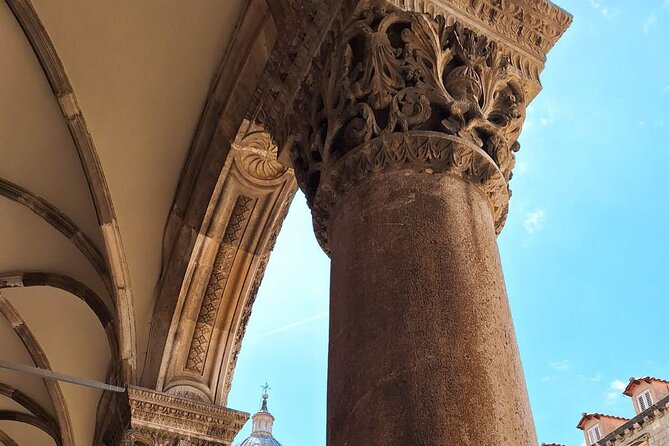
The tour then turns to politics, at Rector’s Palace. This Gothic-Renaissance building was the seat of power in the Republic of Dubrovnik, and it helps you understand how this city tried to protect fairness.
Here’s the striking detail: the elected Rector lived and ruled for just one month, designed to prevent corruption and support fairness. That’s not the kind of fact you get from looking at stone facades alone. It gives you a real sense of how governance shaped daily life and city decisions.
What I like about this stop is the mix of architecture and system. You’re not just admiring a palace, you’re learning why it operated the way it did. If your trip includes museums or history sights later, this stop makes the rest easier to connect.
Sponza Palace: a trade hub and an earthquake survivor
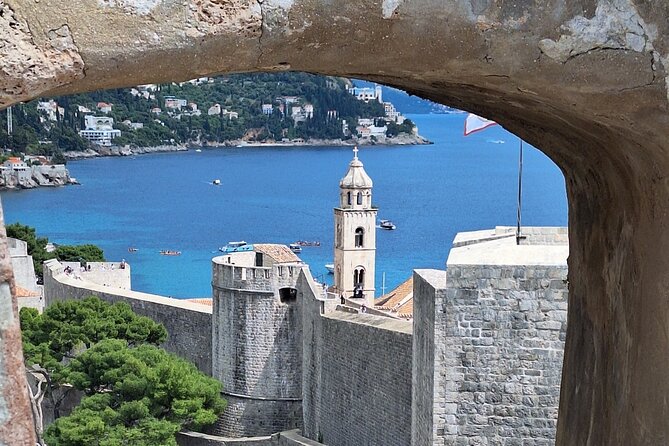
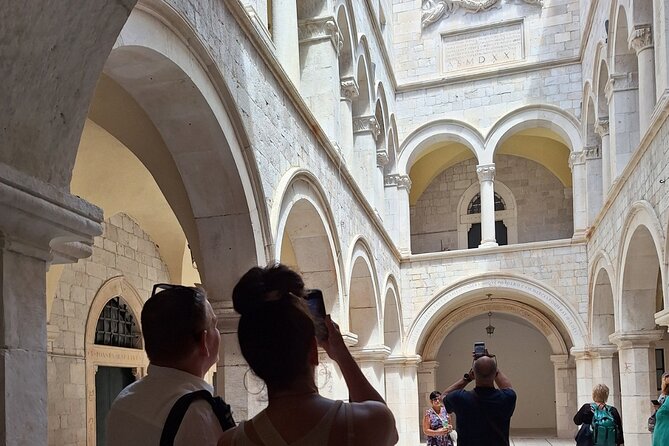
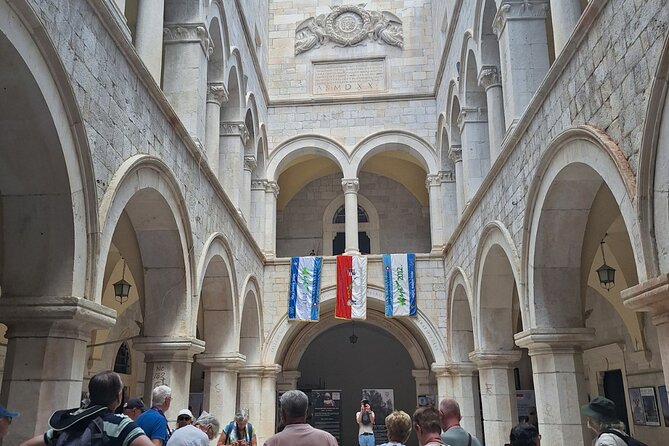
The walk ends with Sponza Palace, a standout survival from the disaster of 1667, when Dubrovnik was hit by a major earthquake. Sponza blends Gothic and Renaissance styles and was once used as a customs house and a center of trade.
That trade connection is important. Dubrovnik’s prosperity did not come from nowhere, and Sponza was one of the key places where the city’s economy showed itself in stone.
Today, you’ll also find a memorial related to the fallen defenders. It’s a sober note to close on, especially after you’ve learned about the city’s governance and resilience in earlier stops. This emotional thread is one reason the walking loop feels complete, not just sightseeing.
Price and value: is $189 per group worth it?
The price is $189.27 per group for up to 8 people, with a mobile ticket and the tour run in English. On its face, it can look pricey compared with big-group walking tours.
Here’s the value logic: you are buying focus. A private guide can pace the group, explain what you’re seeing, and answer questions without the guide repeating the same line for 25 people. In a place like Dubrovnik, where landmarks are close but the stories are layered, that one-on-group attention can feel like the difference between skimming and understanding.
Also, the route is smart for first-time orientation. You cover a core set of Old City anchors in about 1.5 hours, which helps you decide what deserves more time later. The guide’s energy is also a recurring theme in the experience, and that matters because it keeps the walk from feeling like a checklist.
If you’re traveling solo, the price still works out well when you value personalized context. If you’re a couple or small family, it can be a good way to reduce stress, since you avoid getting separated or trailing behind.
Who this Dubrovnik private walk fits best
This is a strong match if you want a clean overview with real explanations. I especially think you’ll like it if you:
- want a first-day walk to get your bearings fast
- enjoy history that mixes politics, religion, and daily life
- value a guide who uses storytelling, humor, and clear English to keep things moving
It’s also a good choice if you like photos but do not want the tour to become a photo contest. The key viewpoints here are built into the route, with context so you understand what you’re shooting.
Who might skip it? If you want a long, museum-style day where every stop gets extended interior time, you’ll feel the time limit. This is a highlight walk, not a deep immersion marathon.
Should you book this Pile Gate to Sponza private tour?
I’d book it if you want a high-quality Old City foundation without wasting time. The combination of classic landmarks, one or two unexpected stops like the monastery pharmacy, and the guide energy you’ll feel in the way the stories are told makes it a good use of limited vacation time.
One more thing: Ajla’s approach is described as funny, easy to follow, and full of local insight. That style matters in Dubrovnik, because the stones are famous, but the meaning is what turns the walk into something you actually remember.
If your schedule allows, start early, wear comfortable shoes for stairs and stone walking, and treat this as your launchpad. After this, you’ll know where to return for deeper time.
FAQ
What time does the Dubrovnik private Old City walking tour start?
The tour start time is 7:30 am.
Where is the meeting point for the tour?
You meet at Pile Gate (Dubrovačke Gradske Zidine, 20000, Grad, Dubrovnik, Croatia).
How long is the tour?
The duration is about 1 hour 30 minutes.
Is this tour private, and how many people are in a group?
Yes, it’s private, and it’s for up to 8 people in your group.
What language is the tour offered in?
The tour is offered in English.
Do I need a ticket or can I use a mobile ticket?
You’ll receive a mobile ticket.
Is admission included at the stops?
Admission is included for The Franciscan Church and Monastery. Other listed stops are marked free in the tour details.
Is the tour suitable for most travelers?
The tour states most travelers can participate.
Are service animals allowed?
Yes, service animals are allowed.
Is there free cancellation, and how long do I have to cancel?
Yes. You can cancel for a full refund if you cancel up to 24 hours in advance of the experience start time.
Latest arrivals logged at Dubrovnik







Walking Tours, compared.


Walking Tour of Split and Diocletian’s Palace
Read our review →
Krka Waterfalls tour with Trogir Walking tour and Krka panoramic boat cruise
Read our review →
City Walls Early Morning or Sunset Walking Tour
Read our review →Browse the lists this tour appears in