
Reviewed · WALKING TOURS
Old Town Secrets Walking Tour
Dubrovnik’s stories hit harder when you walk them. I love how the guide, Davor, ties history to what you see street by street, and I also like the small group size that keeps it personal. One thing to consider, though, is that it’s a tight one-hour loop, so you will get great highlights but not long, sit-down time inside each landmark.
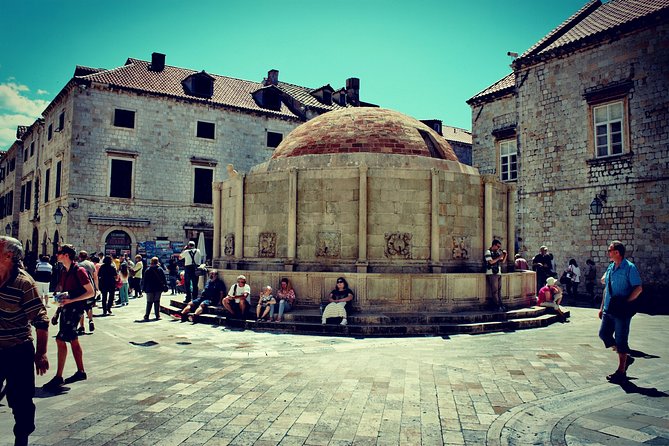
You start at Amerling Fountain and end on Stradun, which is an efficient way to get your bearings fast. The tour focuses on major turning points, including Dubrovnik’s defenses and the 1990s siege damage shown on a map, plus Croatian Independence War context. It runs in English, uses a mobile ticket, and the stops are quick, mostly for looking and listening rather than museum-style roaming.
It also helps that this is designed as a small-group, private experience for up to 10 people. In the reviews, Davor stands out for answering questions without dodging, so if you like to ask why something was built a certain way, you’ll probably feel well looked after.
In This Review
- Key reasons this walk is worth your time
- Entering Dubrovnik’s Old Town with Pile Gate in mind
- Stradun: the main street where architecture turns into a story
- Luza Square: government center, rivalries, and the showpiece buildings
- Rector’s Palace: the power center that also handled punishment
- Dubrovnik Cathedral of the Assumption: statues, treasures, and origin secrets
- Small-group private walking pace that stays friendly
- Price and value: what $239.65 per group really buys you
- Who this Old Town Secrets tour is best for
- Should you book this tour?
- FAQ
- How much does the Old Town Secrets Walking Tour cost?
- How long is the tour?
- How many people are in a group?
- Is the tour private?
- What language is the tour in?
- Where do I meet the guide?
- Where does the tour end?
- Do the stops require paid admission tickets?
- What is the cancellation policy?
- Is there a minimum number of travelers?
Key reasons this walk is worth your time
- Up to 10 people, private feel: easier pace and more chances to ask questions.
- Pile Gate defense story: siege damage and Croatian Independence War context right at the gateway.
- Stradun architecture route: St. Saviour’s Church, the Franciscan monastery pharmacy, and Onofrio’s Fountain.
- Luza Square as a political hub: Sponza Palace, Clock Tower, St. Blasius Church, Old Parliament building.
- Rector’s Palace power meets punishment: power center plus prison and treasury in one stop.
- Cathedral odds and ends: statues that are not Mary, plus Richard the Lionheart and origin secrets.
Entering Dubrovnik’s Old Town with Pile Gate in mind
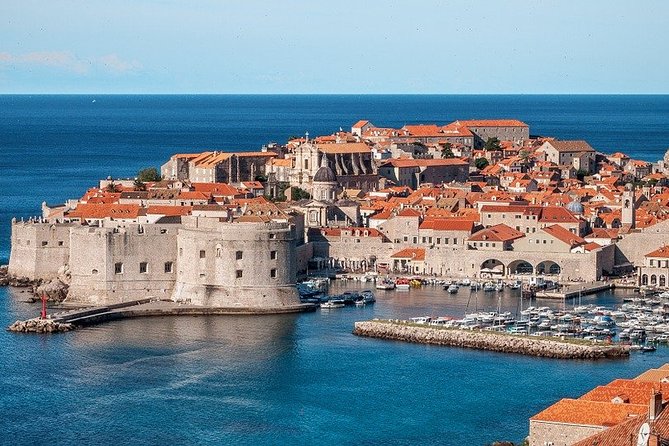
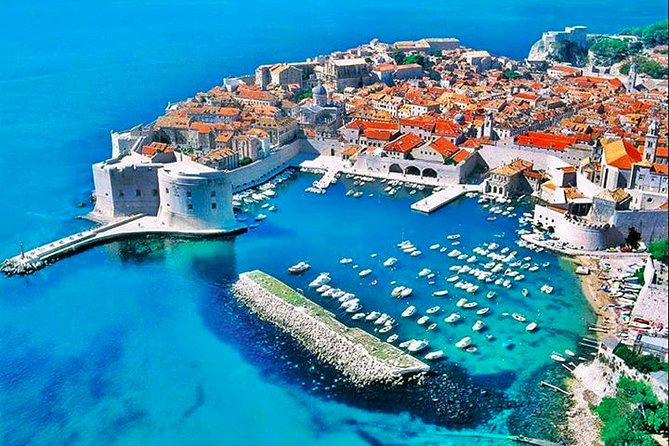
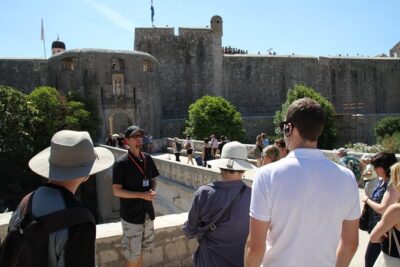
Dubrovnik’s Old Town can feel like a postcard until someone gives you the timeline. This tour starts at the entrance area near Pile Gate, so you get the right frame immediately, defenses first, then everything else. It is a smart move because the city’s fortifications explain why so many later choices look the way they do.
At the first stop, you learn about Dubrovnik as one of the most heavily fortified cities in Europe. You also get a look at a map showing damage done to the Old Town during the siege in the 1990s, plus a few words about the Croatian Independence War. The impact here is that history is not treated like a textbook topic, it is placed right where you are standing.
This is also where you learn the kind of detail that makes the rest of the walk click. If you understand the city’s security mindset early on, you will notice patterns in how spaces are laid out and why power and institutions took root where they did.
Stradun: the main street where architecture turns into a story
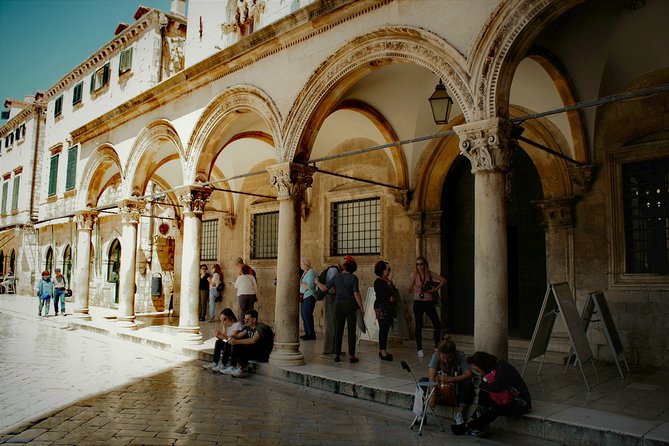
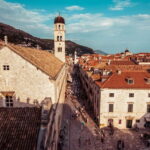
After Pile Gate, the walk flows onto Stradun, Dubrovnik’s main spine. This is the stretch where you can see the town’s architecture at close range, but the tour keeps you from just staring at pretty stone. You get a story tour through key sites along the street, including what they are and why they matter.
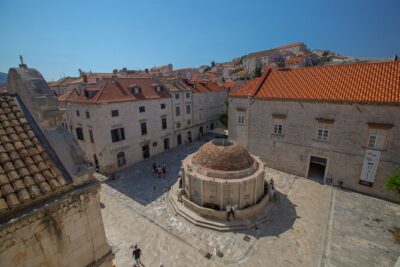
One of my favorite parts of this segment is how it links places to purpose. You hear about St. Saviour’s Church, and you also get the Franciscan monastery stop, including the note about one of the oldest working pharmacies in the world. Then there is Onofrio’s Fountain, described as a medieval engineering marvel, and that kind of detail helps you appreciate why it is still talked about.
The practical angle matters too. Stradun is wide enough to follow your guide without constantly squeezing past crowds, and the stop time is long enough for you to absorb what you’re seeing without feeling rushed. The only tradeoff is that the tour keeps things moving, so if you want to linger for photos or to read signage at length, you will likely do that on your own afterward.
More Walking Tours in Dubrovnik
- Dubrovnik: Old Town Walking Tour★ 4.8 · 5,174 reviews
- Dubrovnik Discovery Old Town Walking Tour★ 5.0 · 4,458 reviews
- Dubrovnik: Game of Thrones Walking Tour★ 5.0 · 1,732 reviews
Luza Square: government center, rivalries, and the showpiece buildings
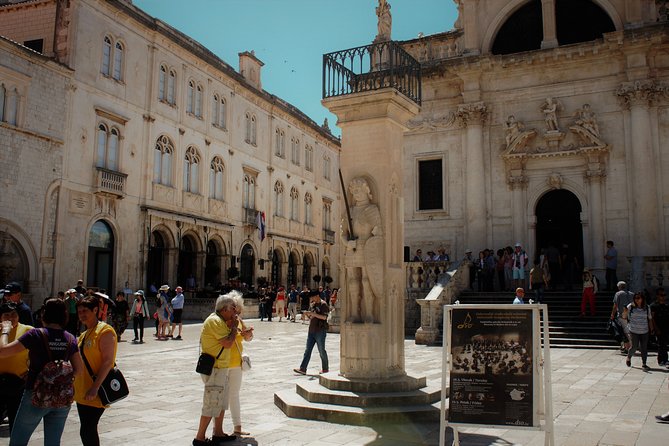
Next comes Luza Square, and it changes the mood from general street sightseeing to civic power. This square is described as the center that witnessed many important events in Dubrovnik’s history and it still connects to the city’s government. That means you are not only seeing buildings, you are learning how decisions played out in public space.
The tour focuses on architecture from the 15th to 18th centuries, which is helpful because Dubrovnik’s Old Town does not all belong to one era. In this area you hear about Sponza Palace and other landmark neighbors, including the Clock Tower, St. Blasius Church, and the Old Parliament building. You also get stories tied to rivalry and even monuments to bribery, which adds a human edge to the stonework.
What I like about Luza Square as a stop is that it teaches you to read the city. Once you understand that squares were for more than markets and ceremonies, you start to see how architecture communicates status. If you are the type who enjoys a little political intrigue mixed into travel, this segment will probably feel like your favorite part.
Rector’s Palace: the power center that also handled punishment
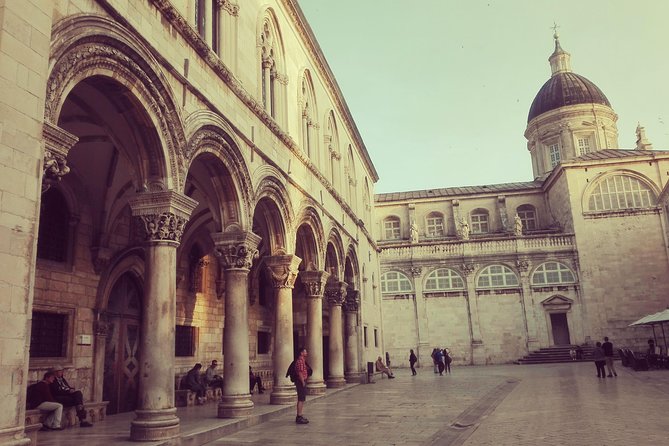
Rector’s Palace is one of those stops where it is hard not to look closely. The tour frames it as a center of power, a prison, and a treasury, all wrapped into striking architecture. Even if you have walked past impressive buildings before, hearing those roles in one place changes how you interpret what you see.
You also hear about a ridiculous inception story and an unlikely system of governing. The point is not that you should memorize every twist, it is that Dubrovnik’s institutions were unusual, and the building reflects that. It is also an easy stop to enjoy because you get a short but focused segment, letting you move on before you feel overloaded.
Possible drawback? If you are someone who likes long, independent museum time, this stop will feel like a taste. But if you want context fast, this is exactly the right format. You can treat the tour as the primer, then decide later if Rector’s Palace deserves extra time on your own.
Dubrovnik Cathedral of the Assumption: statues, treasures, and origin secrets
The final landmarks shift to religion and myth, and the tour ends with the Cathedral of the Assumption of the Virgin Mary. The description here is memorable because it starts with a contrast: it is dedicated to Mary, yet many statues are not Mary. That kind of detail makes you look differently, like the cathedral has its own inside jokes.
Inside the narrative, you learn that there are priceless items kept within its walls. You also get stories linked to Richard the Lionheart and secrets of Dubrovnik origins. The tour keeps you focused on what those items and stories might represent, rather than turning it into a dry lecture.
One more reason this stop works well at the end is pacing. After you have spent time with fortifications, main street life, and civic power, the cathedral comes in as a final layer that connects beliefs and identity to place. If you want a longer look, plan extra time afterward, because the tour segment itself is brief.
More marble lanes taken slowly:
- Dubrovnik Old Town History Walking Tour
★ 5.0 · 1,684 reviews - Dubrovnik: City Walls Early Morning or Sunset Walking Tour
★ 4.8 · 1,523 reviews - Dubrovnik: Ancient City Walls & Wars Walking Tour
★ 5.0 · 1,270 reviews - Dubrovnik: City Walls, Old Town Walking Tour & Adriatic View
★ 4.9 · 982 reviews
Small-group private walking pace that stays friendly
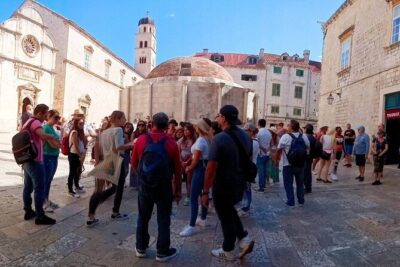
This is a small-group experience capped at 10 people, and it feels different from big walking tours that steamroll the sidewalk. The private angle matters too: only your group participates, so you are not stuck adjusting your questions to fit a mixed crowd. In the reviews, that personalized feel comes through, especially around the guide being ready to answer questions.
It also helps that the walking time per stop is short and intentional. Each location is allotted around 10 to 15 minutes, which means you are always moving, but you still get enough time to understand the theme and take in a few key views. You do not get stuck at one spot for ages.
If you enjoy asking follow-ups, pay attention to how the guide’s answers are described. Davor is noted as well-versed and able to talk through details in a way that keeps things engaging rather than turning into a monologue. I also appreciate the practical note from one review about booking a private tour at 9am to avoid the hottest part of the day. If you can snag an early time slot, you will likely enjoy the walk more.
Price and value: what $239.65 per group really buys you
The price is $239.65 per group, up to 10 people, for about one hour. If you split it among friends or family, it can land in a very reasonable range for a guided tour that also stays private. Even if you are going as a couple, the per-person cost depends on whether you fill the group, but the small cap helps keep it from feeling like a generic, mass-produced tour.
What you are paying for is not just access to a guide, it is the storyline that connects multiple parts of the Old Town: defenses at Pile Gate, everyday street architecture on Stradun, political life at Luza Square, institutional power and punishment at Rector’s Palace, and religious identity at the cathedral. That kind of coherence is where guided walking tours can be a real value, especially in a city where the same stones can look similar if you do not have context.
Also, the tour highlights are described as free at the stop level, so you are not stacking extra admission fees on top of the tour price. That keeps budgeting simpler.
Who this Old Town Secrets tour is best for
I think this walk fits best if you want a guided overview that still feels specific. You like history tied to real locations, and you enjoy learning the stories behind the places, not just checking boxes.
It is also a good match if you travel with someone who wants answers. One review notes Davor could handle a lot of questions, and another highlights his knowledge and entertaining anecdotes. If you prefer a guide who chats through details while you stroll, this is that style.
If you are already obsessed with deep architecture research or you want long interior time, you might treat this as a first pass. The timing suggests the tour is designed to get you oriented and informed, then you expand on what grabs you most.
Should you book this tour?
Yes, I would book it if your goal is a smart, story-driven walk through Dubrovnik’s most important Old Town landmarks. The biggest reasons are the tight, coherent route from Pile Gate to the cathedral, and the fact that Davor comes across as able to explain complicated history in a way that stays engaging and answer-friendly.
If you hate walking and you need lots of seated time, you may find the one-hour format a bit fast. But if you can handle a steady stroll and want to leave with practical understanding of what you just saw, this tour looks like a strong use of your Dubrovnik time.
FAQ
How much does the Old Town Secrets Walking Tour cost?
It costs $239.65 per group (up to 10 people).
How long is the tour?
The tour lasts about 1 hour.
How many people are in a group?
The tour is limited to a maximum of 10 people per booking.
Is the tour private?
Yes, it is a private tour or activity, so only your group will participate.
What language is the tour in?
The tour is offered in English.
Where do I meet the guide?
You meet at Amerling Fountain, Ul. Svetog Đurđa, 20000, Dubrovnik, Croatia.
Where does the tour end?
The tour ends on Stradun, 20000, Dubrovnik, Croatia.
Do the stops require paid admission tickets?
The itinerary lists each stop with admission ticket free.
What is the cancellation policy?
You can cancel for a full refund if you cancel up to 24 hours in advance of the experience start time. If you cancel less than 24 hours before, you do not get a refund.
Is there a minimum number of travelers?
Yes. The experience requires a minimum number of travelers, and if it is canceled for that reason, you will be offered a different date or a full refund.
Latest arrivals logged at Dubrovnik




Walking Tours, compared.


Walking Tour of Split and Diocletian’s Palace
Read our review →
Krka Waterfalls tour with Trogir Walking tour and Krka panoramic boat cruise
Read our review →
City Walls Early Morning or Sunset Walking Tour
Read our review →Browse the lists this tour appears in