
Reviewed · DUBROVNIK CITY WALLS TOURS
Private Dubrovnik City Walls Walking Experience
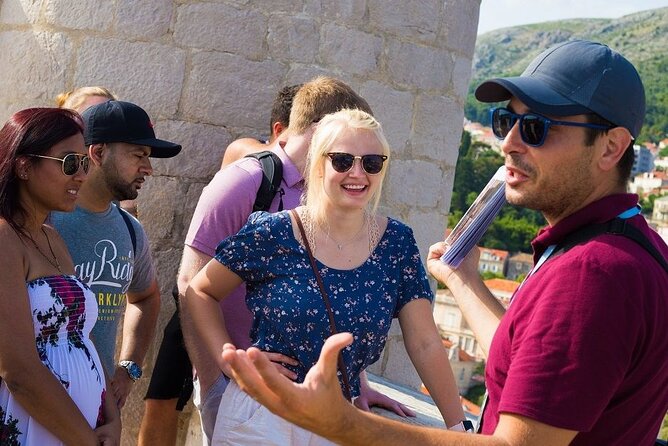
Walking Dubrovnik’s walls beats wandering alone. I like how this licensed guide keeps you focused on the top defenses from the start, with a clear orientation at Onofrio’s Large Fountain, plus a small-group feel that helps you move at a comfortable pace. The main catch is the route can feel tough if you have walking difficulties, since the walls involve lots of uneven stone underfoot.
This is priced at $129.40 per person for about 2 hours, and the guide is included, along with an English-speaking host and a mobile ticket. Just remember the big additional cost: the City Walls entrance fee is not included and is listed at €40 per person.
In This Review
- Key highlights to know before you go
- Onofrio’s Large Fountain: the start that makes the walls make sense
- Dubrovnik City Walls, guided: getting the right views without the stress
- Minčeta Fortress: the highest tower and why it’s built like that
- Bokar Fortress and Michelozzi: the western defense logic
- St John (Sveti Ivan) and the Mulo Tower nickname
- Revelin Fortress viewpoints: guarding the land entrance
- Finishing with Dubrovnik’s main street look after the earthquake
- Why the guide matters more than you think
- Price and tickets: what’s included, what’s extra, and the real value
- How hard is the walk, and what to wear
- Meeting points and flow: where you start and how the tour ends
- Who should book this private City Walls walk
- Should you book it?
- FAQ
- How long is the Dubrovnik City Walls walking experience?
- Is the City Walls entrance fee included in the price?
- Where do we meet for the tour?
- Where does the tour end?
- Is this a private tour?
- What is the cancellation policy?
Key highlights to know before you go
- Begin at Onofrio’s Large Fountain, where you get the Republic of Ragusa and walls-defense context
- A guided walk on the City Walls so you don’t waste time figuring out what you’re looking at
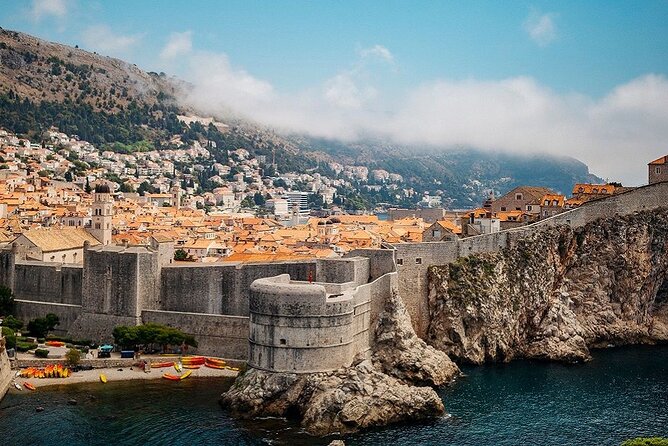
- Fortress stops with specific details, including Minčeta, Bokar, St John (Sveti Ivan), and viewpoints like Revelin
- Guide names come up for a reason, with Edi and Josip praised for smart commentary and pacing
- Private setup for your group, which usually means fewer slowdowns and less waiting around
- Bring comfortable shoes and expect real walking, since the experience is marked as challenging for anyone with limited mobility
Onofrio’s Large Fountain: the start that makes the walls make sense
The walk begins at Big Onofrio’s Fountain near the Old Town gates. That choice matters because Dubrovnik’s walls can look like a pretty loop from the outside, but they were built for a job. At the fountain, your guide sets the stage with the story of the Republic of Ragusa and explains why these walls were central to survival, trade, and diplomacy.
I appreciate this kind of opening because it changes how you see the stone. Instead of passively following a route, you start connecting the dots: where threats were expected, how the city controlled access, and why different parts of the wall system had different roles. It’s also a nice breather at the beginning, since the introduction is brief and you’re not yet dealing with the full length of the climb and walk.
One practical detail: the fountain stop is listed as having free admission. So if you’re budgeting, this is one place where you do not add another ticket layer.
Dubrovnik City Walls, guided: getting the right views without the stress
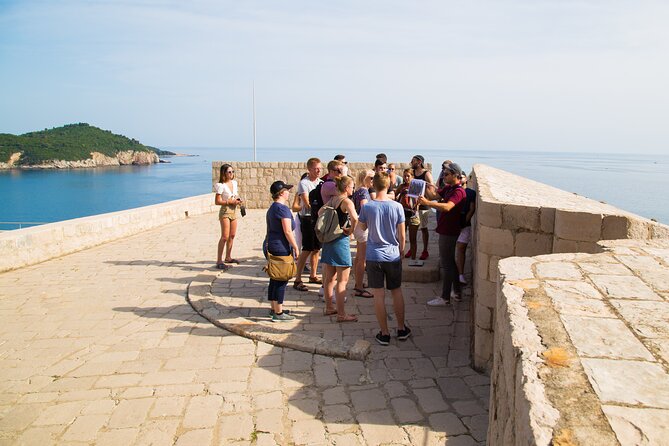
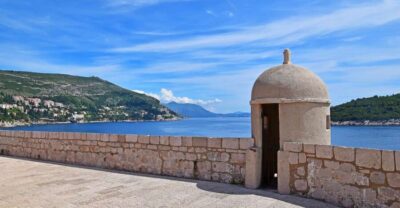
The heart of the experience is walking the City Walls from the Old Town wall access point near the fountain. This is the kind of guided route that helps you get the highlights in order, without constantly second-guessing where you are or what section you’re standing on.
You also get a structure to your sightseeing. Your guide explains the fortification system and construction history as you move, which makes the wall feel less like background scenery and more like a guided story in stone. And because the experience is private and small-group styled, the pace is more likely to fit your energy level, rather than being dictated by a large group rhythm.
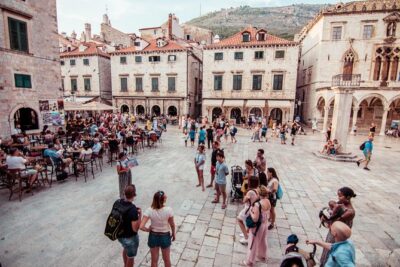
There’s also a big value in the “don’t get lost” part. Dubrovnik’s Old Town is famous, and that can mean crowds, narrow corners, and lots of distractions. A guided wall walk helps you keep your focus on the defensive viewpoints and key towers, the parts that are easiest to miss if you’re wandering on your own.
More Walking Tours in Dubrovnik
- Dubrovnik: Old Town Walking Tour★ 4.8 · 5,174 reviews
- Dubrovnik Discovery Old Town Walking Tour★ 5.0 · 4,458 reviews
- Dubrovnik: Game of Thrones Walking Tour★ 5.0 · 1,732 reviews
Minčeta Fortress: the highest tower and why it’s built like that
As you work your way through the walls, one of the most striking stops is Minčeta Fortress, on the highest north-western part of the defenses. This is the moment where the wall system starts to feel dramatic, because Minčeta is not just another tower. It’s described as a large circular tower with a massive battlement supported by stone supporters, which is a very visual reminder of medieval engineering.
The guide also brings in the timeline: there was an earlier, smaller quadrangular tower built by Nikifor Ranjina in 1319. Then the fortress as you see it later becomes the bigger, rounder command point. That back-and-forth between what came first and what was rebuilt helps you read the architecture instead of treating it like a static postcard.
If you like “see it, understand it” travel, this stop is a good payoff. Minčeta isn’t only about height. It’s about position, control, and visibility. Your guide’s explanation helps you spot how the defenses were meant to operate as a system, not as separate monuments.
Bokar Fortress and Michelozzi: the western defense logic
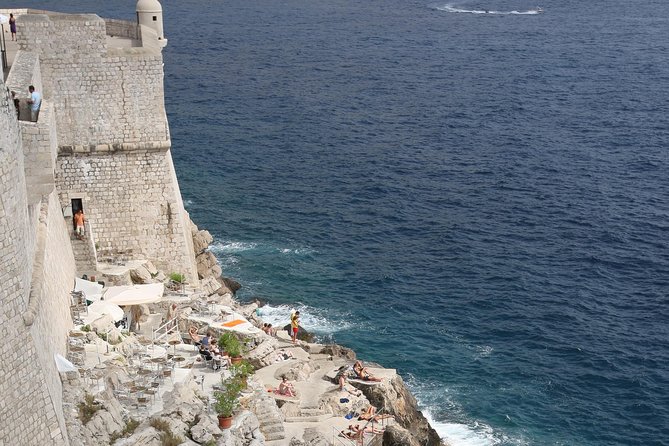
Next up is Bokar Fortress, which your walk frames as a key point for defending the western sea and the land approach to the town. That matters because it tells you why this fortress feels different in function from towers that guard other angles.
Bokar is also connected to architecture, not just warfare. It was designed by the Florentine architect Michelozzo di Bartolomeo Michelozzi, and the description is specific: it’s a semicircular, two-story building. When you know those details, you start noticing shapes and layout more carefully. A semicircle isn’t random decoration. It’s a form tied to how defenders could cover approaches.
On a wall walk, it’s easy to think you’re only getting views. But this is where the explanation shifts you into “how it worked” mode. You’ll come away with a better sense of why different structures were positioned where they were, and how the city could watch, block, and respond.
St John (Sveti Ivan) and the Mulo Tower nickname

Another strong defensive stop is the Fortress of St John (Sveti Ivan). It’s part of the medieval defense complex, and the details given on this experience help you date what you’re seeing. The towers date back to the 14th century, while the main structure is from the 16th century.
It’s also often called the Mulo tower, and that name adds a human touch to the stone. It reminds you this wasn’t only military design. It was also local identity, something people in Dubrovnik lived with and referenced.
Why this stop works on the tour is because it reinforces the idea that Dubrovnik’s walls were updated over time. Defensive systems weren’t frozen at one moment. They evolved. Your guide uses stops like St John to make that evolution clear while you’re still physically near the features being discussed.
More circuits of the old ramparts:
- Dubrovnik: City Walls Early Morning or Sunset Walking Tour
★ 4.8 · 1,523 reviews - Dubrovnik: Ancient City Walls & Wars Walking Tour
★ 5.0 · 1,270 reviews - Dubrovnik Combo: Old Town & Ancient City Walls
★ 5.0 · 1,019 reviews - Dubrovnik: City Walls, Old Town Walking Tour & Adriatic View
★ 4.9 · 982 reviews
Revelin Fortress viewpoints: guarding the land entrance
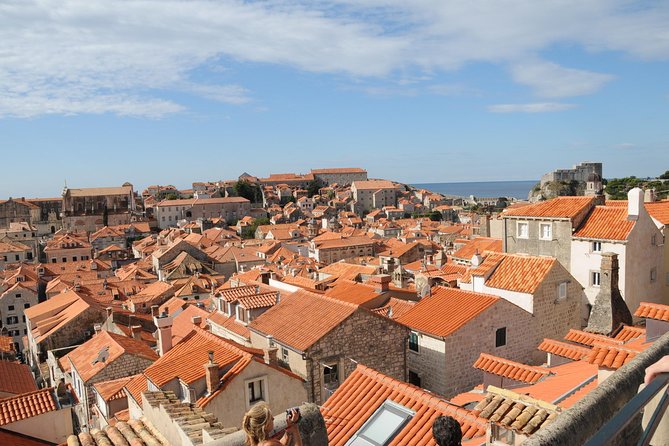
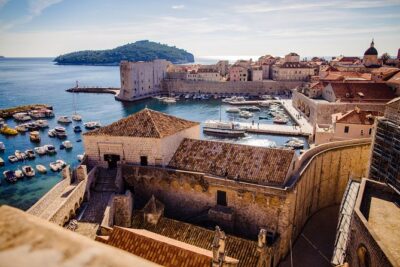
While you’re on the defensive circuit, you also get a stop framed as a Revelin Fortress view. Revelin is described as an eastern defensive stronghold protecting the land entrance to the city.
This is a great counterpoint to the sea-facing defenses. If you focus only on waterfront towers, you can miss the bigger strategy: the city had to defend land routes too. A land entrance fortress is a reminder that Dubrovnik was not just a sea town. It was connected to routes, goods, and travelers coming from inland areas.
If you like panoramic moments, viewpoint stops are where your eyes can finally rest after absorbing explanations. And if you don’t think you’ll care about fortifications, this is often where people change their minds, because you can connect what you’re seeing from the wall to what the fortress was built to control.
Finishing with Dubrovnik’s main street look after the earthquake
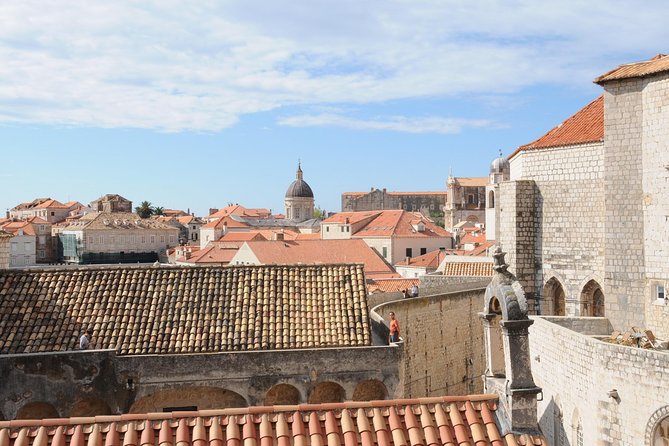
At the end of the wall walk, you can expect a brief guided look at Dubrovnik’s main street and how it evolved in the Baroque period after a major earthquake. This is a smart pairing. The walls are about protection and survival. Then the city street story shows what happened after disaster, when rebuilding shaped the urban look you see today.
Even if you mostly came for the views, this quick add-on gives you a fuller sense of how Dubrovnik got to the place you’re standing in now. It also helps your photos feel more intentional, because you can tie the defensive perimeter to the rebuilt city inside it.
Why the guide matters more than you think
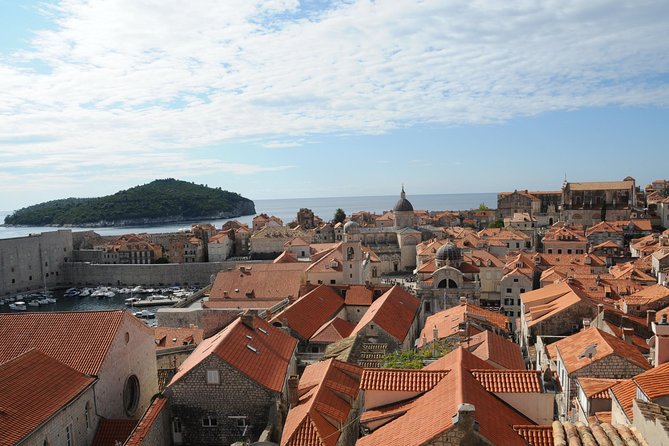
A wall walk lives or dies by pacing. The City Walls are not flat, and the experience is labeled as challenging for people with walking difficulties. So the best guides are the ones who can adjust the tempo, keep the group together, and still explain what you’re seeing.
The tour’s guide performance comes up strongly in feedback. Guides such as Edi are praised for remembering a lot and for sharing history in a way that feels personal rather than recited. Another guide named Josip gets credit for being both informative and able to match the group pace, including taking the heat into account. That matters because Dubrovnik can get hot, and a wall walk can feel twice as tiring when you’re under sun and wind off the stone.
I also like that your guide keeps you moving at a pace that lets you actually look. Some tours rush so hard you feel like you’re sprinting between photo stops. Here, the emphasis is on keeping you on the right path while still letting the details land.
Price and tickets: what’s included, what’s extra, and the real value
The headline price is $129.40 per person for the guided experience. That includes the licensed English-speaking guide, which is a big part of what you’re paying for. You’re also getting a private setup for your group, and a mobile ticket for the experience itself.
The one cost to plan for is the City Walls entrance fee, listed at €40 per person, since it is not included. The fountain introduction is free at the stop, but the main walls access comes with that separate entry.
So how do you judge value? I think you should look at this as two budgets:
- the guided time with a licensed professional, paid in the $129.40 figure
- the separate walls admission fee you pay at €40 per person
If you’re traveling in a small group, a guided walk can actually be cheaper than “everybody figures it out separately,” because you save time, reduce detours, and get context built into the physical experience. If you already know Dubrovnik’s fortifications well and you’re comfortable navigating the wall entrances on your own, you might question the need for a guide. But if you want your photos to match your understanding, this format is a good match.
Also note: the tour is commonly booked about 36 days in advance on average, which suggests people plan it as a must-do and like to lock in a guide time.
How hard is the walk, and what to wear
This experience is clearly marked for travelers with moderate physical fitness. It’s also flagged as challenging for people with walking difficulties.
In plain terms, expect:
- uneven, historic stone surfaces
- stairs or steep sections as you move between fortifications
- the fatigue of sustained walking at elevation
That means your shoe choice is not a minor detail. Wear comfortable shoes with grip. If your footwear is more about style than traction, you’ll feel it.
If you’re deciding between this and a gentler walking option, be honest about your limits. The wall walk can be demanding even when the guide keeps the pace reasonable. If you know you struggle on uneven ground, consider that warning seriously before booking.
On a plus note, service animals are allowed, and the meeting area is near public transportation. That makes it easier to fit into a day without stressing about getting to a remote pickup.
Meeting points and flow: where you start and how the tour ends
You start at Dubrovnik Walking Tours at Big Onofrio’s Fountain, Placa b.b., Grad, 20000 Dubrovnik. The end point is Poljana Paska Milicevića bb, 20000 Dubrovnik.
That “finish somewhere else” setup can be great because it helps you transition straight into exploring the interior of Old Town. It also means you should wear shoes you’re comfortable continuing in after the tour.
Your confirmation is received at booking time, and you’ll use a mobile ticket. That cuts down on last-minute printing and makes it easier to manage day-of logistics.
Who should book this private City Walls walk
This tour fits you if you want:
- a guided way to see the defensive circuit without getting turned around
- explanations tied directly to specific fortresses and walls
- a pacing approach that feels more human than a fast group tour
It’s also a smart choice if you like local depth. The guide connects the Republic of Ragusa story to why each defensive point mattered. Names like Nikifor Ranjina and architect Michelozzo di Bartolomeo Michelozzi are dropped in context, so it feels grounded, not like random trivia.
And because it’s private, it tends to work well for couples, friends, and anyone who values a quieter, more flexible feel than big group excursions.
Should you book it?
If you’re going to Dubrovnik for the big sights and want the walls experience to make sense, I’d book this. The combination of a licensed English guide, a clear route, and specific fortress details gives you a better payoff than wandering the walls without context. The main thing to double-check is your comfort with walking on uneven stone and your budget for the extra €40 City Walls ticket.
If you want the walls as a scenic stroll with minimal effort, you might feel this is too active. But if you’re okay with a real walk and you care about understanding what you’re seeing, this is one of the stronger ways to do Dubrovnik’s defenses.
FAQ
How long is the Dubrovnik City Walls walking experience?
It runs for about 2 hours (approximately).
Is the City Walls entrance fee included in the price?
No. The City Walls ticket is not included, and the listed entrance fee is €40.00 per person.
Where do we meet for the tour?
You meet at Dubrovnik Walking Tours, Big Onofrio’s Fountain, Placa b.b., 20000, Grad, Dubrovnik, Croatia.
Where does the tour end?
The tour ends at Poljana Paska Milicevića bb, 20000, Dubrovnik.
Is this a private tour?
Yes. It is a private tour or activity, and only your group participates.
What is the cancellation policy?
You can cancel for free up to 24 hours in advance for a full refund.
Marble Lanes, Slowly

Latest arrivals logged at Dubrovnik




Dubrovnik City Walls Tours, compared.
City Walls Early Morning or Sunset Walking Tour
Read our review →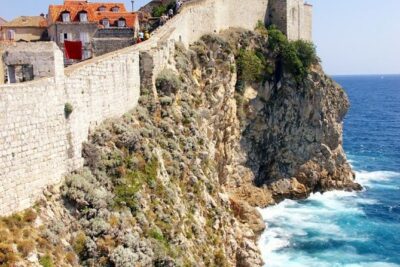
Dubrovnik Combo: Old Town & Ancient City Walls
Read our review →
City Walls, Old Town Walking Tour & Adriatic View
Read our review →
Dubrovnik Cable Car Ride, Old Town Walking Tour plus City Walls
Read our review →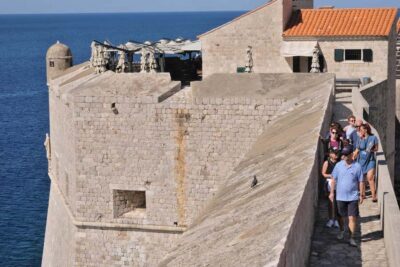
City Walls Tour for Early Birds & Sunset Chaser
Read our review →
Dubrovnik City Walls Tour for Early Birds or Sunset Chasers
Read our review →Browse the lists this tour appears in