

Reviewed · WALKING TOURS
Private Split Walking tour with LOCAL guide
Split history stops being a blur when someone points you to the exact stones. This private walking tour gives you a local guide and a slow, readable walk through Diocletian’s Palace, from Peristyle Square to the Cathedral of Saint Domnius. I especially like how you get story detail at each stop, and how the day includes both big landmarks and easygoing waterfront time.
One possible drawback: 12 hours is long, even at a walking pace, so you’ll want shoes that can handle lots of stone.
If you’re traveling in English, French, or German, you also get the benefit of a guide who can explain what you’re seeing without turning it into a lecture. And the route is flexible enough for personal interests, including optional viewpoints.
In This Review
- Key points worth knowing before you go
- Entering Diocletian’s Palace from Peristyle Square
- The Peristyle courtyard and why it feels like a stage
- Temple of Jupiter and St. John’s Baptistry
- The Vestibule and the emperor’s private feel
- Saint Domnius Cathedral: from mausoleum to cathedral
- Golden Gate and the palace entrance you can actually imagine
- Riva Promenade time, plus what to do with it
- Where the walk ends: Marjan Hill or local shops and cafés
- Price and what you actually get for $176 per group
- Who this tour is best for (and who might skip it)
- Should you book this private Split walking tour?
- FAQ
- Where does the tour start?
- How long is the Split walking tour?
- Is this a private tour?
- What languages are available for the guide?
- Is the tour wheelchair accessible?
- Can I climb the bell tower?
- Is there free cancellation and a pay later option?
Key points worth knowing before you go
- Peristyle Square as a starting anchor for Diocletian’s Palace, not just a random meeting point
- Temple of Jupiter and St. John’s Baptistry, where religious reuse tells a longer story
- Cathedral of Saint Domnius plus optional bell tower climbing for sea-and-city views
- Golden Gate and the palace layout, explained in a way that makes the map click
- Riva Promenade and Marjan Hill options for both people-watching and wide panoramas
- Guides named Daniella or Daniela are praised for keeping the experience personal
Entering Diocletian’s Palace from Peristyle Square

The tour starts near Peristyle Square, the heart of Diocletian’s Palace. That matters because Diocletian’s Palace is not one monument, it is an entire city-plan built into stone. Starting here helps you understand the logic of where streets, courts, and entrances fit together.
As you meet your guide and get oriented, you’ll get the kind of context that makes later stops easier. Instead of just seeing columns and arches, you start to understand what each space was for in Roman times, and how it shifted when Christianity became the dominant culture. That shift is a big theme throughout the day, and it is one reason this tour feels more “legible” than a typical sightseeing loop.
You’re also on a private group setup, which keeps the pace humane. If something catches your eye, your guide can adjust the emphasis. That sounds small, but on a 12-hour walking day it can be the difference between checking boxes and actually remembering what you saw.
The Peristyle courtyard and why it feels like a stage
One of the first stops is the Peristyle, the central courtyard surrounded by grand columns. This is where the palace starts to feel less like ruins and more like a lived-in space. Your guide will point out how the courtyard’s placement fits into the emperor’s world, including how power and daily movement worked in the palace.
What I like about starting here is the way it sets up the rest of the walk. If you get the courtyard first, the later rooms and entrances stop feeling random. You begin to notice sight lines, access routes, and how visitors would have moved through the complex.
This is also a good moment for small-picture thinking. When the guide explains what the space looked like in Roman times and what it became later, you’ll start spotting the clues on your own. You’re learning how to read the buildings, not just what they are called.
More marble lanes taken slowly:
- Dubrovnik: Old Town Walking Tour★ 4.8 · 5,174 reviews
- Split: Old Town and Diocletian Palace Walking Tour★ 4.9 · 4,727 reviews
- Dubrovnik Discovery Old Town Walking Tour★ 5.0 · 4,458 reviews
Temple of Jupiter and St. John’s Baptistry

Next comes the Temple of Jupiter, which your guide connects to its later Christian use as St. John’s Baptistry. This stop is valuable because it turns an architectural sight into a cultural lesson. You can see the reuse directly, and your guide gives the missing links: Roman religious space became Christian religious space over time.
Even if you do not consider yourself a history person, this is the kind of stop that makes you look at details differently. The guide’s stories help you understand why the building still matters today, not because it is old, but because it kept getting repurposed.
One small practical tip: if you are the type who likes taking photos, this is a stop where angles matter. With a guide, you can position yourself without losing time. You do not have to chase the perfect shot, your guide can help you understand where the best viewing spots are within the walking flow.
The Vestibule and the emperor’s private feel

You’ll also see the Vestibule, described as an elegantly preserved entrance hall leading toward the emperor’s private quarters. This is where the tour shifts from public power to controlled access. It is not just “another old room,” it’s a clue about how authority shaped movement.
The Vestibule stands out because it helps you grasp the palace as an arrangement of spaces, not a pile of stones. Your guide’s explanation makes clear that some areas were designed for circulation and visibility, while others were meant to feel more controlled and intimate.
In a private format, you can ask quick questions here. That’s where the tour often becomes more rewarding, because you can steer toward what you personally want to learn.
Saint Domnius Cathedral: from mausoleum to cathedral

The walk continues to the Cathedral of Saint Domnius, originally Diocletian’s mausoleum and later transformed into a Christian cathedral. This is one of the tour’s core stops for good reason. You get a major “before and after” story in one place.
Your guide will explain the cathedral’s evolution and why it became important to Split’s religious history. That storyline is more than a timeline, it shows how communities re-interpret old structures for new meanings.
If you wish, you can climb the bell tower for panoramic views of Split and the surrounding Adriatic coast. I like this optional element because it works in two directions: if you want a viewpoint, it is there, and if you are tired or simply not feeling it, you can stay with the walking and keep your day comfortable.
Still riding at anchor off Omis
- Cetina River: Rafting and Cliff Jumping Tour
★ 4.9 · 1,774 reviews - Split/Omiš: Cetina River Rafting with Cliff Jump & Swimming
★ 4.7 · 1,258 reviews - Omiš: 2-Hour Cetina River Boat Tour and Nature Park Visit
★ 4.6 · 1,066 reviews - Omiš: 3-Hour Cetina Canyon Zipline Experience
★ 4.9 · 1,050 reviews
Golden Gate and the palace entrance you can actually imagine

Another standout stop is the Golden Gate, the main entrance to Diocletian’s Palace. You will hear about its historical significance and the famous bronze doors.
Even if you only get a glance at the gate, your guide will help you imagine how it functioned as the boundary between the palace and the outside world. That boundary idea makes sense on a city level too. Split is built around Diocletian’s Palace, so understanding the entrance helps you see why so much of the old town feels shaped by this complex.
This is also a helpful moment to slow down and take in surroundings beyond the stone. The guide’s talk usually includes how the palace relates to streets and later development, which gives you a mental map you can use for the rest of your stay.
Riva Promenade time, plus what to do with it

After the palace-focused sections, the tour heads to the Riva Promenade, the iconic waterfront where locals and visitors gather for sea views and a break from walking. This stop is not just scenic. It gives your legs a chance to recover and it helps you reset your brain after dense history.
Your guide can also point out what to notice along the waterfront. Even without extra stops, you’ll come away with a better sense of where Split’s social life happens, which matters if you want to time your meals or choose a place to wander later.
If you like people-watching, this is a good slot. If you are more photo-focused, it’s also a strong place to grab a few steady shots without hiking to a viewpoint.
Where the walk ends: Marjan Hill or local shops and cafés

To wrap up, you have two directions depending on what you want that day. One option is heading to Marjan Hill for panoramic views of Split and the Adriatic Sea. The other option is staying near local shops and cafés, with your guide suggesting a good lunch spot and additional sightseeing ideas.
I appreciate this flexibility because it matches different energy levels. If you want a final view, Marjan Hill can give you that wide, calming perspective that history walks sometimes lack. If you prefer food and browsing, ending with local cafés can be a more relaxed way to close a long day.
The guide’s recommendations can also be practical. When someone who knows the area suggests where to eat, you waste less time guessing and more time enjoying.
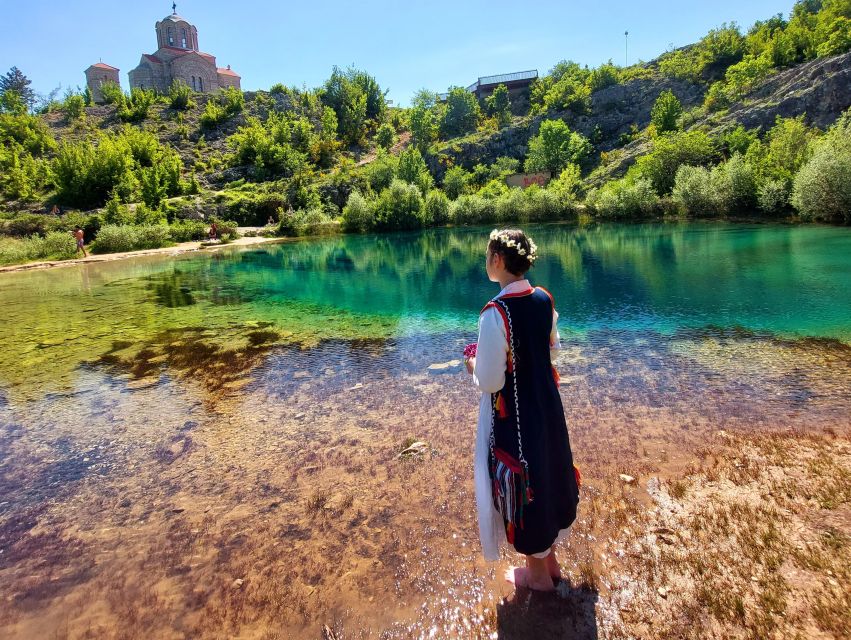
One bonus note from real-life experience: in at least one booking, the route included a stop related to the Eye of the Earth, which added an extra layer of perspective beyond the main monuments. If that is the kind of quirky viewpoint you enjoy, it’s worth asking your guide how it can fit into your route.
Price and what you actually get for $176 per group

At $176 per group (up to 10 people) for a 12-hour private walking tour, the price can look high if you are comparing it to a standard group ticket. But that comparison misses the real value.
The value here is threefold:
First, it’s private, so the guide can pace the day around you. On a history-heavy route, that control is huge. Second, the guide is covering a full arc of Split’s signature areas, from the palace core to the cathedral and the waterfront. Third, the day is long enough that you are not just “briefly” at each stop. You get time to hear context.
Because the price is per group, the cost per person drops if you travel with friends or family. If you are a solo traveler, it may still be worth it if you want a personalized experience and you’ll actually use the guide’s help to navigate and choose optional viewpoints like the bell tower or Marjan Hill.
Also, the tour includes a tour guide in the simplest sense: you are paying for someone to interpret the city for you, not just lead you down a route.
Who this tour is best for (and who might skip it)
This tour is a strong fit if you like real explanations, not just photos. It’s also a good choice if you want to walk the core of Split without feeling rushed, especially with the chance to tailor interests.
I especially think it works well for:
- People who want Diocletian’s Palace explained in a way that connects buildings and purpose
- Travelers who enjoy cathedral stops when they come with the story of how things changed
- Small groups and families who want flexibility, including optional climbs and viewpoint decisions
It might not be ideal if you:
- Want a shorter, lower-walking commitment (this is a full 12-hour day)
- Prefer to bounce between attractions independently, with no structured narrative
That said, the private format helps you manage your own pace, as long as you communicate what you want to see most.
Should you book this private Split walking tour?
I’d book it if your goal is to understand Split, not just photograph it. The combination of Diocletian’s Palace spaces, the Cathedral of Saint Domnius, and the finish options at Riva Promenade and Marjan Hill makes it feel like a real day in Split, not a checklist of stops.
Also, the guide quality seems to land well in practice. Names like Daniella and Daniela show up in feedback for being personable, and one review even highlighted a memorable human moment, meeting someone local like a grandma. That kind of thing is hard to engineer, which suggests the guide does more than recite facts.
If you are happy to do a long walk and you want someone to translate the city into a story, this tour is a very good way to start your Split trip.
FAQ
Where does the tour start?
The tour begins at Peristyle Square, at the heart of Diocletian’s Palace.
How long is the Split walking tour?
It lasts 12 hours.
Is this a private tour?
Yes, it is a private group experience.
What languages are available for the guide?
The live tour guide is available in English, French, and German.
Is the tour wheelchair accessible?
Yes, it is listed as wheelchair accessible.
Can I climb the bell tower?
You can climb the bell tower if you wish.
Is there free cancellation and a pay later option?
Yes. There is free cancellation up to 24 hours in advance for a full refund, and you can reserve now and pay later.
Latest arrivals logged at Omis






Walking Tours, compared.

Walking Tour of Split and Diocletian’s Palace
Read our review →
Krka Waterfalls tour with Trogir Walking tour and Krka panoramic boat cruise
Read our review →
City Walls Early Morning or Sunset Walking Tour
Read our review →Browse the lists this tour appears in