
Reviewed · FOOD & DRINK
Split: Food Tasting Walking Tour
Roman walls make snack stops better. This 2-hour Split food walk threads Diocletian’s Palace history into real food tastings you can actually repeat later. I like that the guide keeps things lively and practical, pointing out what matters in Dalmatian cooking and why Split eats the way it does.
My second favorite part is the pair of market visits: the Green Market for morning sweets and savory bites, then Peškarija, Split’s famed fish market. You end up sampling “everyday” foods people build meals around, like Soparnik, locally made prosciutto, salted anchovies, and classic bakery favorites such as rafiol cake.
One consideration: this is a walking tour on older stone streets, so comfy shoes and sun protection are non-negotiable, and it is not wheelchair accessible. Also, local wine may not show up consistently depending on the day, so don’t bank your expectations on it.
In This Review
- Key highlights worth planning around
- Split in 2 hours: how this food tour actually helps you travel better
- Finding Golden Gate and getting your bearings fast
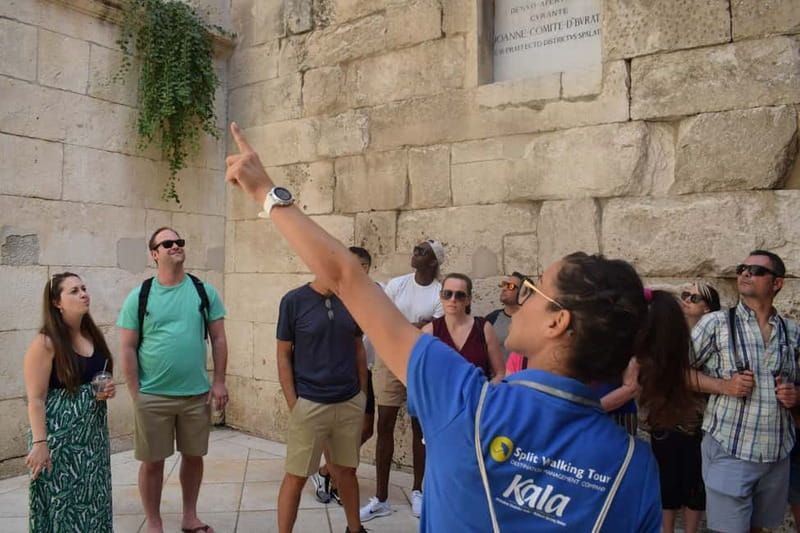
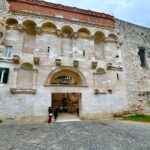
- Diocletian’s Palace start: history that leads into what you eat
- Green Market stop: arancini and sugared almonds to start the day
- The market rhythm: what to watch for in 30 minutes
- Soparnik and prosciutto: the UNESCO dish you should know
- Chocolate Guinness record stop: a sweet break that still fits the story
- Old bakery finale: rafiol cake and what it means in Split
- Peškarija fish market: anchovies, benches, and Dalmatian marenda
- The local bar and restaurant tastings that round out the picture
- Price and value: what $64 buys you in Split
- Who this tour suits best, and who might want alternatives
- Practical tips so you get the most from the walk
- Should you book this Split Food Tasting Walking Tour?
- FAQ
- FAQ
- How long is the Split Food Tasting Walking Tour?
- Where do I meet the guide?
- What is included in the price?
- What food stops are part of the tour?
- Is the tour wheelchair accessible?
- Is the tour available in English?
- Are children allowed?
Key highlights worth planning around
- Diocletian’s Palace streets, where Roman-era settings make food stories hit harder
- Green Market tastings like arancini and sugared almonds to start your morning right
- UNESCO-protected Soparnik, plus prosciutto and other Split classics along the way
- Peškarija fish market with very old benches and a lesson on salted anchovies and marenda
- Chocolate store stop tied to a Guinness record for the largest chocolate bar
- Rafiol cake at an older bakery, a sweet finale you can remember on the walk back
Split in 2 hours: how this food tour actually helps you travel better
A good food tour should do two things at once: make you hungry, and make you smarter about what to order next. This Split Food Tasting Walking Tour does both by linking bites to the city around you, starting inside the atmosphere of Diocletian’s Palace and then working through the market core.
The pace is quick but not frantic. You get a series of short tastings, each paired with small bits of context, so you are not just chewing, you are learning how Split flavors fit together. At $64 per person for a 2-hour guided experience with multiple stops, the value comes from the guide’s “how to eat here” guidance, not just the food.
And yes, the food hits. Think Mediterranean classics, market staples, and a few “only in Split” style surprises, all served in the places locals use.
Finding Golden Gate and getting your bearings fast
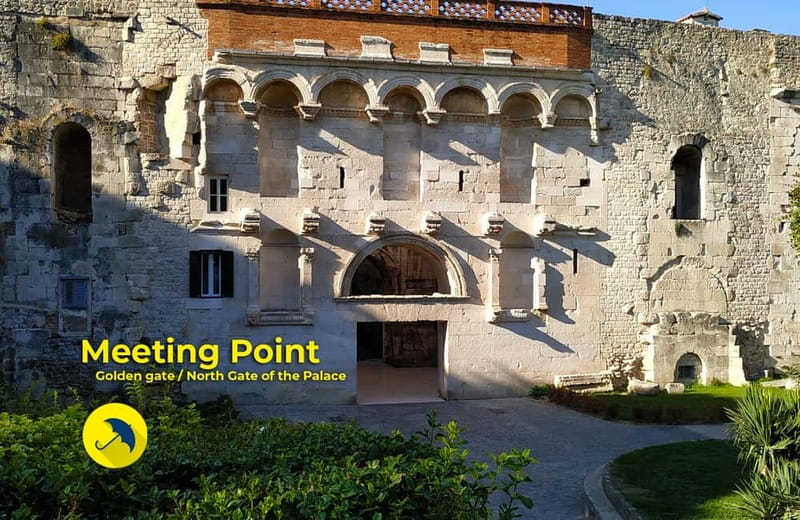
You meet at Golden/North Gate, near the statue of Gregory of Nin. Look for the blue umbrella and you will spot the group quickly.
This matters more than it sounds. Split’s old center can feel like a maze at first, and the guide’s early orientation helps you understand what you are looking at, especially once you transition into the palace complex. If you are new to town, going on this early in your trip helps, because you will leave with clear ideas of where to return for full meals.
Come prepared for walking. The tour runs about 2 hours, but the streets are uneven and the sun can be real, so comfortable shoes, sunglasses, and a sun hat are smart. The tour also is not for wheelchair users, so plan a different format if you need step-free access.
More Food Tours in Split
- From Split: Krka Waterfalls, Food & Wine Tasting Tour★ 5.0 · 9,326 reviews
- From Split: Krka Waterfalls, Food & Wine Tasting Tour★ 4.9 · 6,598 reviews
- Split: Blue Lagoon and 3 Island Cruise with Food and Drinks★ 4.8 · 1,969 reviews
Diocletian’s Palace start: history that leads into what you eat
The tour begins right where Roman Split still leaves an impression. The guide sets the tone with a history-and-food frame, so when you taste, you understand what shaped the ingredients and habits.
Even if you already know a bit about Diocletian’s Palace, the payoff is in how the tour connects everyday food to the city’s layout and trading life. You are not sitting through facts, you are walking through them, then tasting the flavors those walls have watched over.
One reason this opening works: it gives you a mental map. You start to see the connections between the markets, the eating spots, and the older streets that keep pulling people back into the center.
Green Market stop: arancini and sugared almonds to start the day
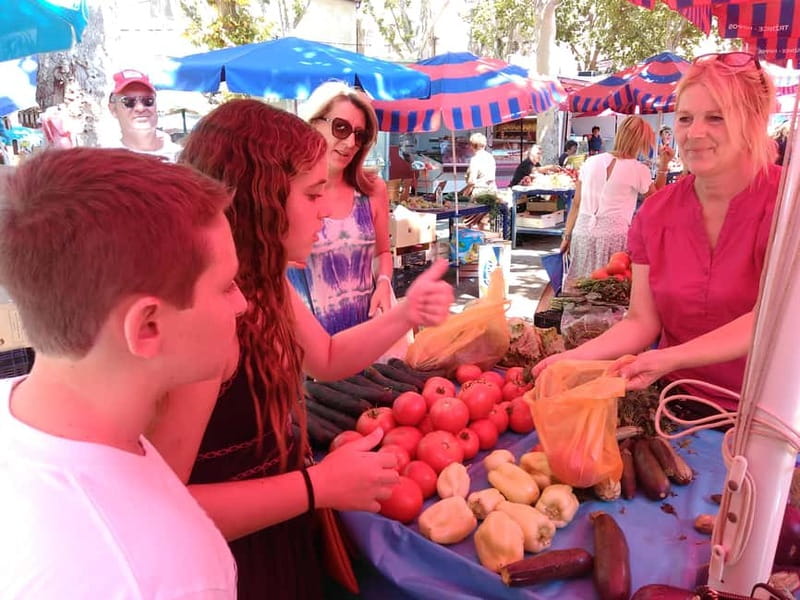
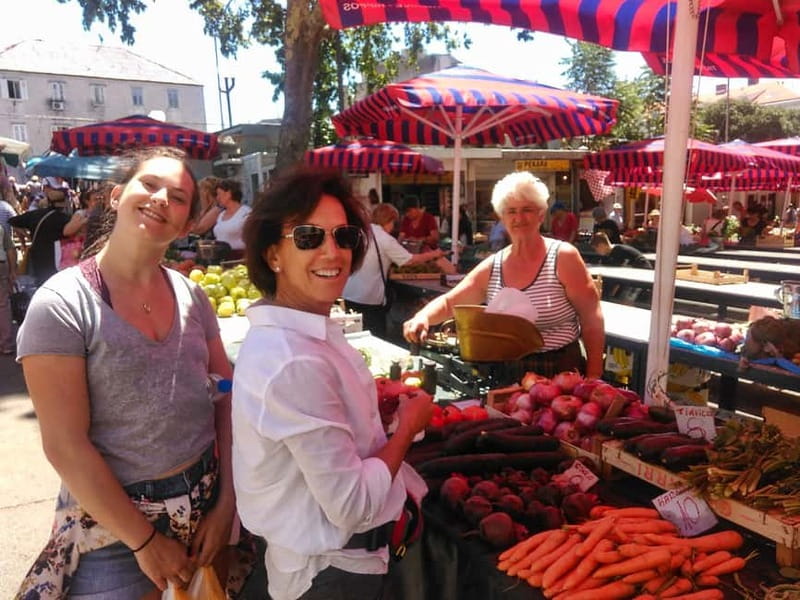
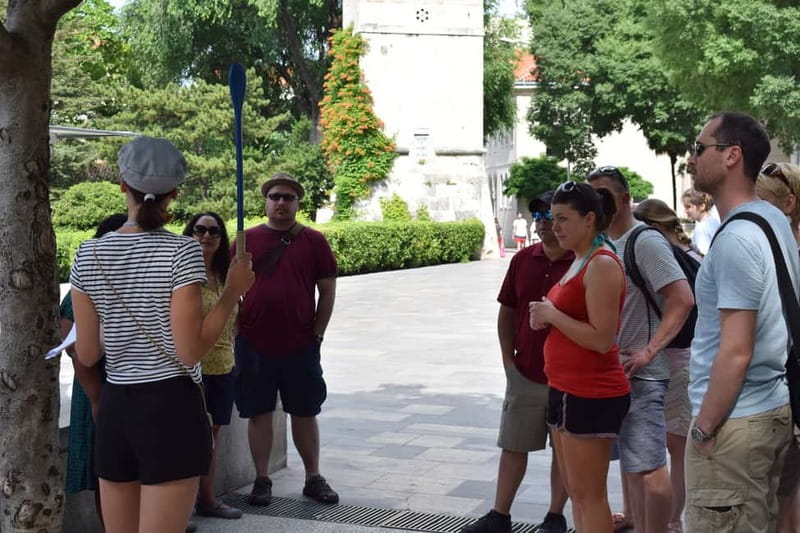
Your first real tastings happen at a local café, then you move to the Old Market, Split, commonly called the Pazar, or Green Market. This is where the tour sets up a classic Mediterranean breakfast vibe.
Early on, you taste local arancini, plus almonds in sugar, which is the kind of sweet that makes sense for a coastal morning. The guide uses these small bites to explain how Split balances savory and sweet, and how market shopping drives daily meals.
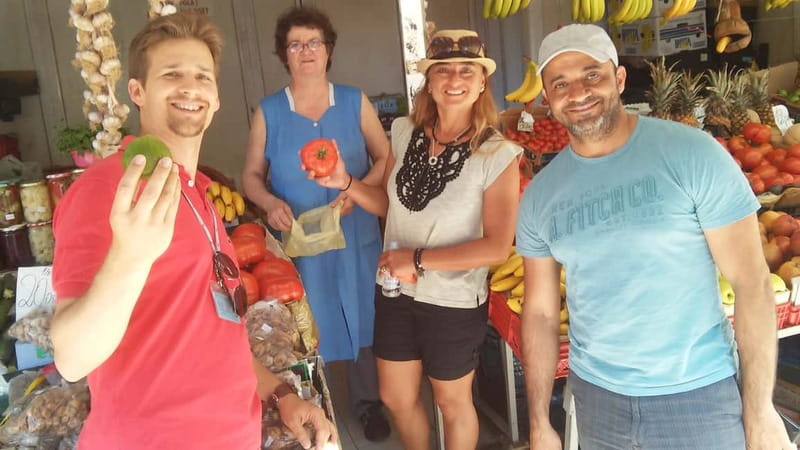
What I like about this Green Market timing is that it turns the market from a “look only” place into a “touch and taste” place. If you usually stroll through markets without buying anything, you will feel more confident after this stop. You will also pick up what to look for, so later, when you return on your own, you are less likely to guess.
The market rhythm: what to watch for in 30 minutes
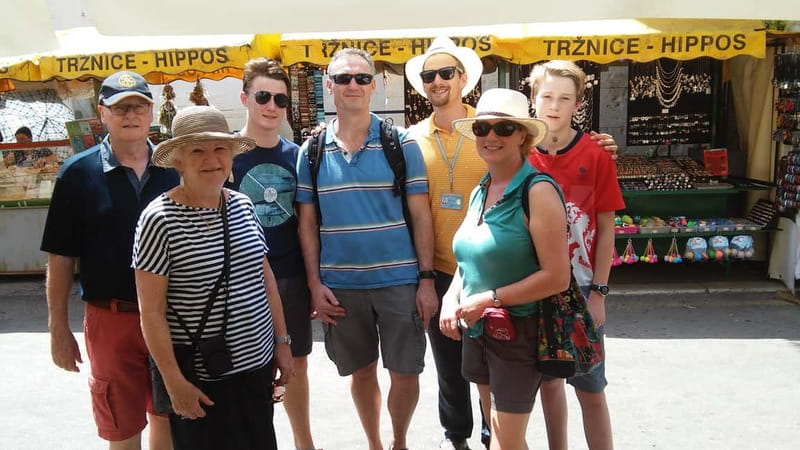
The tour gives you about 30 minutes at the market area, which is enough to taste multiple items without turning it into a sprint. You will see the commercial energy of the place, then you taste the food that fits right into it.
As you walk, pay attention to how foods are presented. Sugared nuts, baked goods, and cured items are often displayed like quick “take it now” solutions, which tells you something about local meal patterns. Split is famous for eating well outdoors and often, not only at formal sit-down dinners.
Also, the guide’s explanations help you sort out what is actually local versus what is just sold in tourist-heavy areas. That is how a food tour becomes more useful than a food gallery.
More Walking Tours in Split
- Split: Old Town and Diocletian Palace Walking Tour
★ 4.9 · 4,727 reviews - Walking Tour of Split and Diocletian’s Palace
★ 5.0 · 2,588 reviews - Krka Waterfalls tour with Trogir Walking tour and Krka panoramic boat cruise
★ 5.0 · 1,659 reviews - Split & Diocletian’s Palace Walking Tour
★ 5.0 · 1,125 reviews
Soparnik and prosciutto: the UNESCO dish you should know
After the market intro, the tour includes a tasting of Soparnik, described as unique and protected by UNESCO World Heritage. Soparnik is a dish you are unlikely to stumble upon naturally unless someone points you toward it, which is why it is a big deal on this route.
With a glass of local wine being mentioned in the tour description, the tasting sequence is often framed as a Mediterranean pairing moment. Still, some people have noticed wine may not be included every time, so if wine is important to you, check your specific booking details and do not treat it as guaranteed.
Prosciutto is another strong thread in this part of the tour. You taste traditionally made prosciutto while strolling through the old city streets, and the guide ties the cured flavor to how Split’s coastal lifestyle shaped what people preserve and serve.
This is where the tour starts to feel like more than samples. You start to understand the logic of local eating: breads and greens, cured meats, and market produce all show up together because that is what the region reliably produces.
Chocolate Guinness record stop: a sweet break that still fits the story
Then comes the playful part: a chocolate shop visit connected to a Guinness record for the largest chocolate bar in the world. It sounds like a gimmick, but the real value is that the tour uses the stop to talk about craft and tradition in a way you can feel.
In a food tour, you need one “wow” moment, and chocolate is a smart choice because it resets your palate before the final bakery segment. This stop also helps if you have any dietary doubts about fish or strong cured flavors later, because you still get a clear, memorable tasting.
I also like that the tour does not just hand you sweets. You get context for what you are eating, and that makes it easier to recreate at home or find the same style of product when you are shopping later.
Old bakery finale: rafiol cake and what it means in Split
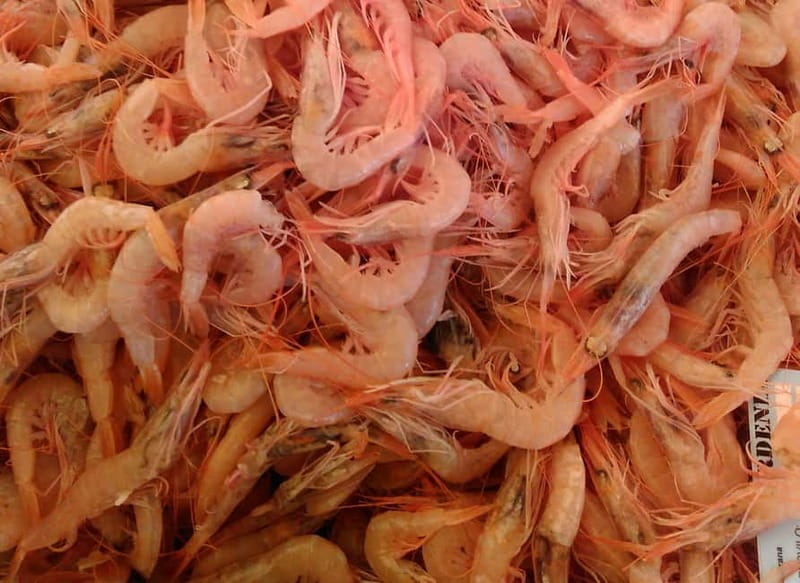
The tour ends with more of a classic sweet stop at an older bakery. You will try the famous rafiol cake, a dessert Split visitors and locals recognize as part of the region’s baked tradition.
This is one of those tastings that sticks because it is specific. It is not generic cake, it is an experience tied to place and habit. If you remember one pastry from your trip, make it this one.
Pro tip: after the rafiol cake, slow down on your walk back. Your body is probably carrying a sugar and salt mix from earlier tastings, and a steady pace helps you enjoy the last views of the medieval streets instead of rushing to get it all processed.
Peškarija fish market: anchovies, benches, and Dalmatian marenda
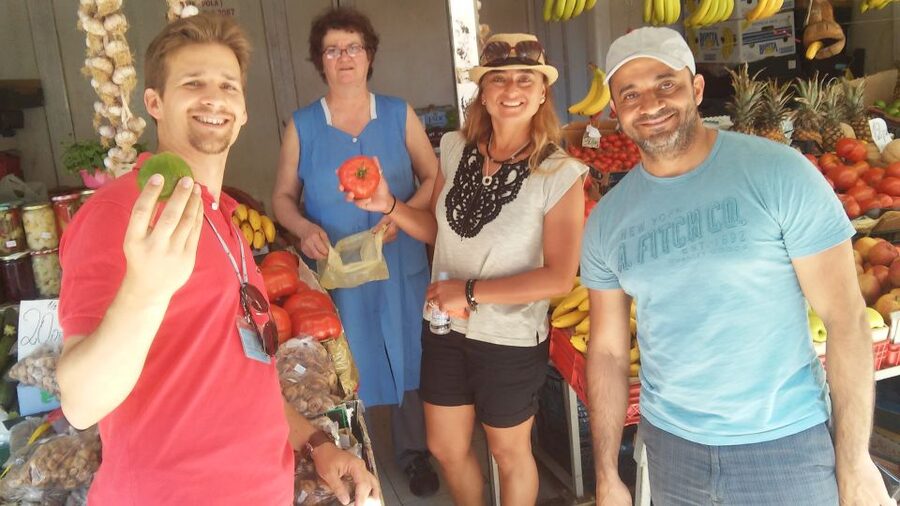
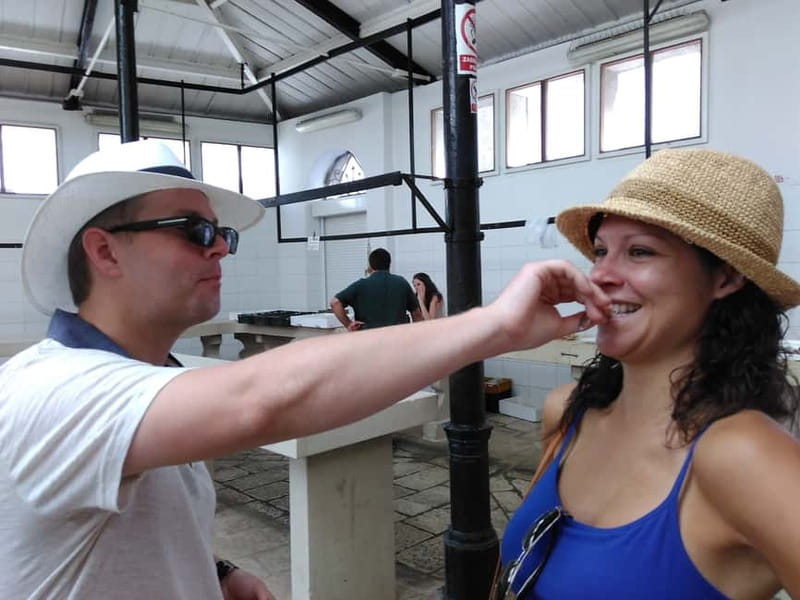
The highlight for seafood lovers is Split Fishmarket, Peškarija. It is described as the second oldest in Europe, with original benches over 120 years old.
This is not a modern mall market with identical stalls. The age and layout create a different mood. The guide turns that into a lesson on how locals eat fish, especially when preserved and salted.
You learn how to eat salted anchovies, and the tasting ties it to marenda, a Dalmatian brunch style. That link is important, because anchovies taste like anchovies, but the reason you eat them at a certain time, in a certain way, changes how you perceive the flavor.
If you usually think of anchovies as pizza-only, this stop can flip that. You taste them in a local context, with the right expectations, and suddenly they make sense as a coastal snack.
The local bar and restaurant tastings that round out the picture
After the fish market, the tour continues with a local bar tasting and then a traditional restaurant tasting. These two final stops are about completeness, not just finishing strong.
The local bar segment gives you a break from constant walking while tasting something that fits into Split’s casual rhythm. Then the restaurant stop is your bridge to what a full meal can be like, using flavors you already tasted so you can recognize ingredients faster.
This pairing works well for decision-making later. When you sit down to eat on your own, you are not starting from zero. You have tasted the building blocks, so ordering feels less like a gamble.
Price and value: what $64 buys you in Split
At $64 per person for a 2-hour guided experience with multiple food stops, the price feels fair if you judge it by two things: the number of tastings and the guide’s job to connect those tastings to the city.
You get a guided walk, tastings at several local spots, and traditional recipe context. Also, the tour is designed as a tight route. You are not spending extra time hunting down places or figuring out what to order. The guide handles that, and that saves both time and decision stress.
One reason the value holds: the stops include both iconic and practical experiences. Diocletian’s Palace gives the atmosphere, the Green Market gives your first “Split taste language,” and Peškarija gives you a seafood lesson you can carry into your next meal.
If you are short on time and want a fast path into Dalmatian cuisine, this price lines up well with what you get.
Who this tour suits best, and who might want alternatives
This tour is a great fit if you:
- want to see Split’s core streets without having to plan every food stop
- like learning the story behind the food, not just eating it
- are excited about markets, cured meats, and fish
- want a smaller group or private experience and a more conversational guide style
It may not be the best fit if you:
- need wheelchair access (the tour is not accessible for wheelchair users)
- want a slow, sit-down-only format (this is walking with short tastings)
- are traveling with unaccompanied minors, because unaccompanied minors are not allowed and children must be accompanied by an adult
Practical tips so you get the most from the walk
Wear comfortable shoes. Split’s old stones and tight turns mean you will feel every misstep.
Bring sun protection. You are outdoors for much of the experience, so sunglasses and a sun hat help a lot, especially during mid-day hours.
Go in hungry, but not ravenous. You will taste multiple items across markets, a chocolate shop, a bakery, and multiple quick meals. If you arrive stuffed from breakfast, you may not enjoy the later tastings as much.
Finally, ask your guide for “next time” advice while you are still in the city. The most useful part of a food tour is leaving with a short list of what to seek again for lunch or dinner.
Should you book this Split Food Tasting Walking Tour?
If you want a high-impact introduction to Dalmatian food in a short window, I think this is an easy yes. The route makes sense, the tastings cover both land and sea, and the guide-driven storytelling adds meaning to every stop, from UNESCO Soparnik to Peškarija anchovies to rafiol cake.
Book it early in your Split stay if you can. You will end up with clearer ordering instincts and better market confidence. Skip it only if walking is a problem for you, you need step-free access, or you prefer long restaurant meals over multiple short tastings.
FAQ
FAQ
How long is the Split Food Tasting Walking Tour?
The tour lasts about 2 hours.
Where do I meet the guide?
Meet at the Golden/North Gate near the statue of Gregory of Nin. Look for the blue umbrella.
What is included in the price?
The price includes the guide, food tastings, and traditional recipes.
What food stops are part of the tour?
You visit the Green Market and Fish Market (Peškarija), plus additional stops such as a chocolate shop and an older bakery for rafiol cake.
Is the tour wheelchair accessible?
No, the tour is not accessible for wheelchair users.
Is the tour available in English?
Yes, the live tour guide speaks English.
Are children allowed?
Children must be accompanied by an adult, and unaccompanied minors are not allowed.
More Food in Split
Courses by the Sea

Latest arrivals logged at Split




Food & Drink, compared.

Blue Lagoon and 3 Island Cruise with Food and Drinks
Read our review →
Krka National Park Tour with tour Guide & Wine tasting from Split & Trogir
Read our review →
Blue Lagoon, Borkko Beach & Šolta with Food & Drinks
Read our review →
Full-Day Catamaran Cruise to Hvar & Pakleni Islands with Food and free Drinks
Read our review →
Dubrovnik Food and Drink Walking Tour with a Local Guide
Read our review →Browse the lists this tour appears in