
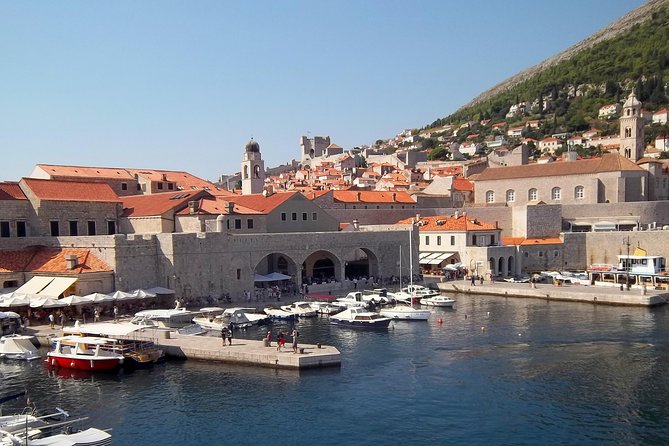
Reviewed · WALKING TOURS
Welcome to Dubrovnik Walking Tour
Dubrovnik clicks into place on foot. This private Old Town tour (in English) led by Vesna focuses on how Dubrovnik grew, from its founding to the 1991 conflict, and I like that the story stays clear and well paced. I also love the mix of major landmarks and small, surprising stops, like the working pharmacy inside an active monastery and the Cultural-Historical Museum in the former Republic’s government seat.
One possible drawback to plan for: it’s a walking tour with moderate physical fitness required, and the route runs on uneven old-stone streets. Wear smart-casual clothes, and dress for all-weather conditions since the tour operates in every kind of day.
In This Review
- Quick hits before you go
- Entering the walled city at Pile Gate, then getting your bearings
- The oldest existing pharmacy, still active inside an active monastery
- Republic power and the Cultural-Historical Museum stop
- The oldest public building on the main street, why it matters
- Old Town streets and the city port, medieval life in real form
- The church of the city patron, religion as civic glue
- The monastery stop again, with museum and art gallery context
- Where you end, and why the finish spot matters
- Upgrade time: adding an extra hour for the walls (and customizing what you want)
- Price and value: what $197.71 per group really buys
- English guide with a resident perspective, and why that changes everything
- What the tour feels like in real time: pacing, weather, and walking pace
- Who should book this walking tour
- Should you book Walking With Vesna?
- FAQ
- How long is the Dubrovnik Walking Tour?
- What languages is the tour offered in?
- Is this a private tour, and how many people can be in a group?
- Where does the tour start and end?
- Can I upgrade the tour to include the city walls?
- What is the cancellation policy?
Quick hits before you go
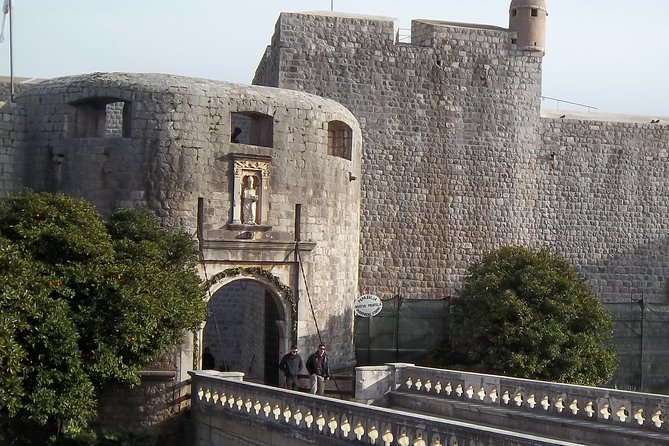
- Private guide time with room to ask questions and steer the route
- Old Town orientation from Pile Gate, so the walled city makes sense fast
- Working-history stops, including the oldest existing pharmacy in Europe
- Government and daily-life context, from the Dubrovnik Republic to monastery life
- Upgrades that match your pace, including an extra hour for the walls
- Strong family-friendly feedback, with some small kid-focused touches
Entering the walled city at Pile Gate, then getting your bearings
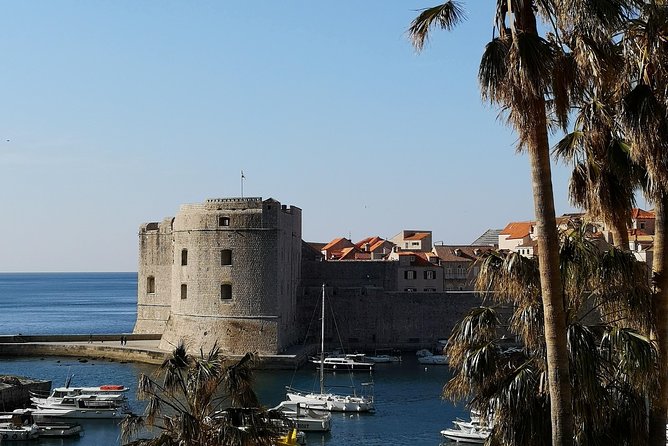
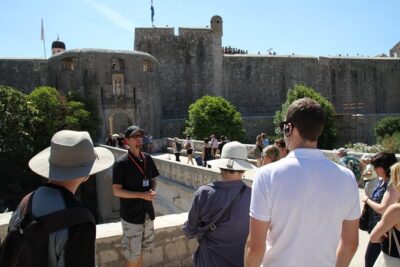
The tour starts at Pile Gate, right at the Dubrovnik city wall entrance (Dubrovačke Gradske Zidine). That’s a smart starting point. You’re not just wandering. You’re learning the layout while the city is still “compressed” into a walkable radius.
Vesna’s approach helps you read Dubrovnik instead of just seeing it. You’ll connect street names and building shapes to why the Republic mattered, why the walls were essential, and why the modern city still carries the marks of its past. That’s the difference between sightseeing and real wayfinding.
And since this is a private tour, you’re not stuck with a group pace that forces you to follow instead of observe. You can ask, pause for photos, and ask again when something catches your curiosity. The pace is usually timed so you’re walking steadily, but not rushed.
The oldest existing pharmacy, still active inside an active monastery
One standout moment is the oldest existing pharmacy in Europe, located inside an active monastery. This is one of those stops where Dubrovnik feels different in your hands. You’re not only viewing an artifact. You’re looking at a place that is still part of daily life and tradition.
Practically, this is also a great “reset” stop in a walking tour. After a bit of moving through open streets, you get a calmer, indoor-feeling change of pace. It’s easy to regroup, listen, and then keep going with a better sense of how the city’s institutions worked.
If you like history that has fingerprints you can still see, this monastery stop is a highlight. It also sets up other monastery elements you’ll encounter nearby, including museum and art gallery features tied to the monastery complex.
More Walking Tours in Dubrovnik
- Dubrovnik: Old Town Walking Tour★ 4.8 · 5,174 reviews
- Dubrovnik Discovery Old Town Walking Tour★ 5.0 · 4,458 reviews
- Dubrovnik: Game of Thrones Walking Tour★ 5.0 · 1,732 reviews
Republic power and the Cultural-Historical Museum stop
Next comes the seat of government of the former Dubrovnik Republic, which today functions as the Cultural-Historical Museum. This is where Dubrovnik stops being just a beautiful wall city and becomes a political story.
What I like about this stop is how it explains power in a way you can picture. When you stand where decisions were made, you can understand why the city invested in walls, institutions, and public buildings. The Republic wasn’t abstract. It was built into architecture, administration, and public space.
This also helps you later when you hear about the city’s later conflict period. You’ll understand how a place that survived centuries of pressure still had to face the hardest modern chapter. Vesna connects those dots in a way that doesn’t turn into a lecture.
The oldest public building on the main street, why it matters

The tour includes a stop at the oldest public building on the main street. This is the kind of detail that’s easy to miss if you’re only looking for the obvious photo points.
Public buildings tell you how the city functioned. Who met where. How decisions got displayed. How communal life was organized. When you learn this early, you start to notice similar patterns elsewhere: the rhythm of arches and façades, the concentration of civic space, and the way the main corridor feels like a spine.
It’s also useful because it gives you a “reference point.” After this, the rest of the Old Town stops feel less random. You’re reading the city as a system.
Old Town streets and the city port, medieval life in real form
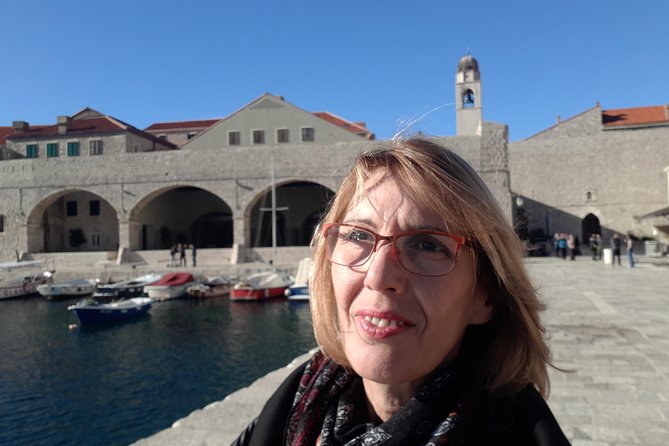
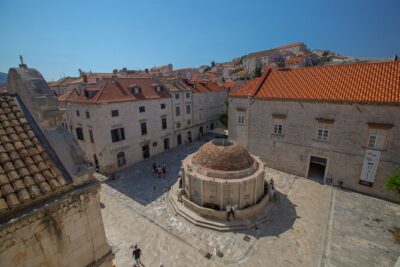
The core walk through the Old Town is built around seeing the streets and the city port, and understanding what “real life” in a medieval walled city would have meant. The Old Town here isn’t just a museum set. It’s been lived in, shaped by generations, and still shows the practical realities behind the romance.
Port areas are especially important because maritime trade is one of the engines of why Dubrovnik grew. Standing near where ships would have arrived, you understand why this city needed strong defenses and efficient organization. The city’s physical strength and its economic identity are tied together.
Vesna’s style makes this section easier. She gives context clearly and keeps the pace from turning into trivia overload. One reason so many people rate this tour highly is that the information feels tuned to your attention span, not padded.
More marble lanes taken slowly:
- Dubrovnik Old Town History Walking Tour
★ 5.0 · 1,684 reviews - Dubrovnik: City Walls Early Morning or Sunset Walking Tour
★ 4.8 · 1,523 reviews - Dubrovnik: Ancient City Walls & Wars Walking Tour
★ 5.0 · 1,270 reviews - Dubrovnik: City Walls, Old Town Walking Tour & Adriatic View
★ 4.9 · 982 reviews
The church of the city patron, religion as civic glue
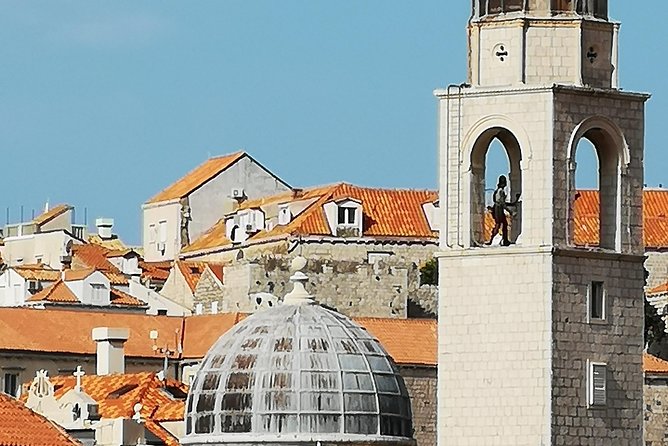
Another planned stop is the church of the city patron. This isn’t included as a “pretty church, end of story” moment. You’re guided to understand how patronage and faith worked like civic glue.
In a compact city like Dubrovnik, religion and community life were intertwined. A patron church wasn’t only about worship. It also carried identity, ceremony, and symbolism that helped people feel connected, especially during hard times.
It’s a good stop because it slows you down again, and it balances the more political and civic stops earlier in the walk.
The monastery stop again, with museum and art gallery context
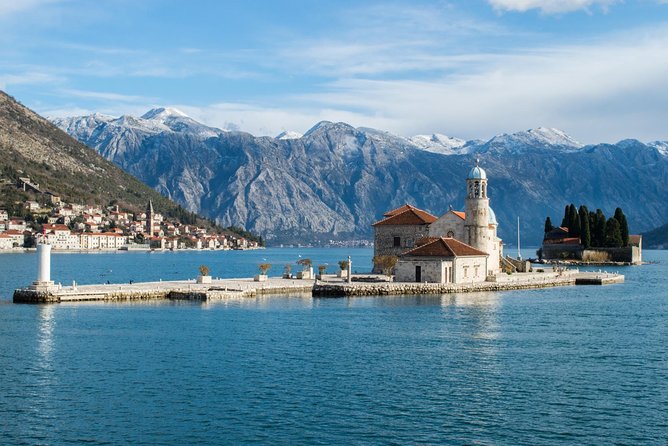
The tour also includes an active monastery area with a museum and art gallery component. Even if you’re not a museum fanatic, this works because you’re not treating it as one more room to rush through. You’re seeing how the monastery connects to education, culture, and daily continuity.
The pharmacy inside adds a special layer. It’s the rare kind of “old but still alive” experience. That’s what makes the monastery segment land emotionally, not just intellectually.
If you tend to enjoy architecture details, you’ll likely appreciate how the guide frames what you’re looking at. If you prefer story over stone, you’ll still get value. The guide stitches the visual cues to meaning as you walk.
Where you end, and why the finish spot matters
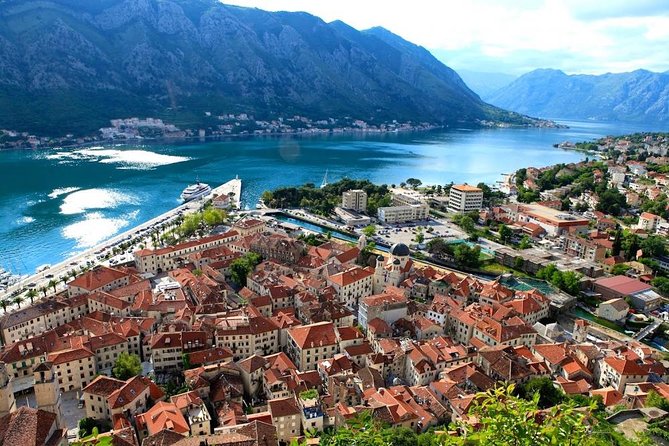
The tour ends on Brsalje ul. 1. That matters because you don’t want to finish somewhere awkward and far from where you want to keep exploring.
By ending near a practical area for your next steps, you can roll into the rest of your Dubrovnik day without needing a complicated plan. Think of it as a clean “anchor point” after you’ve gotten your orientation inside the walls.
Upgrade time: adding an extra hour for the walls (and customizing what you want)
The tour offers an upgrade to extend it by an extra hour, typically for walking the walls. Even if you already plan to do the wall walk separately, this upgrade can feel efficient. You get the context first, then you see the defensive system from above while the story is still fresh in your head.
The walls also tend to create natural photo opportunities. In feedback from families, people have called out viewpoint moments like a basketball court view, the kind of small everyday detail that shows Dubrovnik is not only postcard views.
Best of all, you can often tailor the extra hour to your preferences. If you want a specific interest, bring it up. In past experiences, Vesna has adjusted routes when someone asked to see a place like the synagogue, which signals the tour is flexible rather than rigid.
Price and value: what $197.71 per group really buys
The price is $197.71 per group (up to 8) for about 2 hours. That sounds like a lot if you’re thinking per person. But with private tours, your real comparison is not versus a group bus. It’s versus paying for individual time, individual attention, and the guide’s ability to adapt to your pace.
Here’s the practical math:
- For 2 people, you’re effectively paying about $99 per person for a guided, private walk.
- For 4 people, it’s about $50 per person.
- For 6 people, it’s about $33 per person.
- For 8 people, it’s about $25 per person.
The value sweet spot is when you have 3 to 6 people in your party and want one guide to tailor the walk. It also works well for families who want a paced tour that can handle kids questions without turning into a stressed scramble.
And if you’re traveling with an interest in history, Dubrovnik rewards precision. The guide’s focus on the city’s story from founding to the 1991 conflict is not just “events on a timeline.” It helps you understand why the walls look the way they do and why certain buildings are where they are.
One more value point: the tour is booked about 93 days in advance on average, which usually means demand is high during many travel weeks. If your dates are fixed, you’ll feel smarter booking early.
English guide with a resident perspective, and why that changes everything
This tour is offered in English, and it’s guided by Vesna. What stands out most in feedback is her way of explaining complicated moments in a grounded, understandable tone.
People consistently mention that the guide stays focused, with clear explanations and humor along the way. That matters. A tour can be packed with facts and still be exhausting. Here, the delivery is built to keep you engaged without dragging.
Another big theme in the feedback is the personal resident perspective. Vesna grew up in the Old City and currently lives there. That is not a small detail. It changes the kinds of answers you get. You can ask what life is like during peak tourist season, what the city feels like outside the crowds, and how the walls affect daily routines. When the guide can speak from lived experience, the city stops feeling like an outdoor set.
For families, there’s also mention of kid-friendly pacing and small touches at the end for children, which can turn a history tour from stressful to genuinely fun.
What the tour feels like in real time: pacing, weather, and walking pace
You’re looking at about 2 hours of walking on moderate-fitness terrain. That means you should come prepared for stone steps, tight corners, and the natural stop-start rhythm of a historic area.
The tour runs in all weather conditions, so plan around rain, heat, or strong sun. Since you’ll be outdoors for most of the time, packing a light layer and a small weather plan is smart.
Dress code is smart casual, so you won’t feel underdressed in normal travel clothes. It’s also a good idea to wear comfortable shoes you trust on uneven pavement. This is the kind of day where the wrong shoes can quietly ruin your mood.
Who should book this walking tour
This is a strong fit if:
- You want a first-day orientation so your later self-guided walks make sense.
- You care about how Dubrovnik’s political story connects to the buildings you see.
- You prefer a private, flexible pace over a large group tour.
- You’re traveling with kids and want a guide who can work with their questions.
It’s also a good choice if you’ve heard Dubrovnik is beautiful but want the meaning behind it. The city’s story includes the 1991 conflict with Serbia, and the guide handles that kind of topic in a way that helps you place it in context, not just memorize dates.
If you hate walking tours, this might not be your best match. The whole point here is movement plus explanation.
Should you book Walking With Vesna?
If you want a Dubrovnik introduction that feels personal, practical, and story-driven, I’d book it. The combination that wins is simple: private guide attention, a walk that ties key landmarks to why they exist, and a resident perspective that turns the Old Town from scenery into understanding.
Consider booking this sooner than later if your dates fall during peak periods, since demand is high and the tour is often reserved about 93 days ahead. And if you want the best “full-circle” experience, look at the upgrade for an extra hour on the walls, especially if you want the views with context attached.
If your group is 3 to 6 people, it also tends to deliver the best value per person. For larger groups up to 8, you can stretch the cost even further while still keeping the tour private.
FAQ
How long is the Dubrovnik Walking Tour?
The tour lasts about 2 hours.
What languages is the tour offered in?
The tour is offered in English.
Is this a private tour, and how many people can be in a group?
Yes, it is a private tour. The price is per group up to 8.
Where does the tour start and end?
It starts at Pile Gate (Dubrovačke Gradske Zidine), 20000, Grad, Dubrovnik, Croatia, and ends at Brsalje ul. 1, 20000, Dubrovnik, Croatia.
Can I upgrade the tour to include the city walls?
Yes. You can upgrade to extend the tour an extra hour to walk the walls or customize it to your preferences.
What is the cancellation policy?
You can cancel for a full refund if you cancel up to 24 hours in advance of the experience start time.
Latest arrivals logged at Dubrovnik




Walking Tours, compared.

Walking Tour of Split and Diocletian’s Palace
Read our review →
Krka Waterfalls tour with Trogir Walking tour and Krka panoramic boat cruise
Read our review →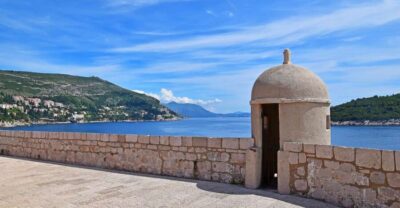
City Walls Early Morning or Sunset Walking Tour
Read our review →Browse the lists this tour appears in