
Reviewed · MUSEUMS
Cavtat: Shell Museum Entry Ticket with Guided Tour Option
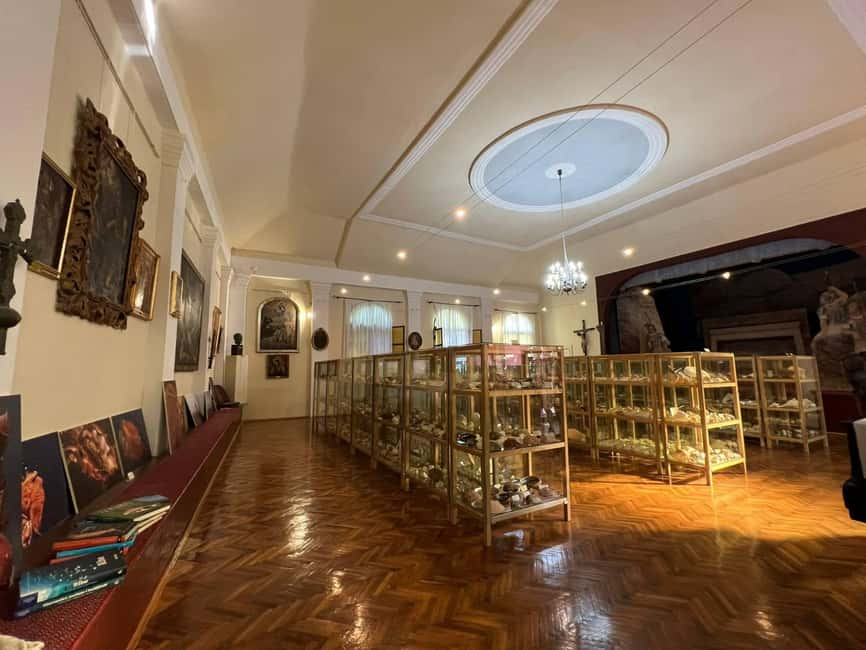
Shells have secrets, and this place tells them. At the Shell Museum in Cavtat, you get a hands-on look at marine life through a standout private collection, with stories that mix natural history and human creativity. You’ll like how the exhibits connect mollusks to real science, not just decoration, through clear display screens and interpretive notes.
I also really like the range of what you can see, including about 3,000 seashells collected from around the world. The museum goes beyond biology with sections on shells in art, architecture, and royalty, plus surprising topics like ancient shell currencies and mythology. One key consideration: the basic ticket includes entry and gallery access, but the guided tour experience and the kids add-on are not included, so decide ahead if you want the extra-led visit.
In This Review
- Key highlights you will actually care about
- Shell Museum in Cavtat: what you’re really signing up for
- Price and value: $8 that can feel like more
- Finding the entrance near St. Nicolas Church stairs
- What to expect inside: museum and gallery flow
- The 3,000 shells stop: why sheer variety matters
- Natural history meets art, architecture, and royalty
- Guided tour option vs audio guide: choose your learning style
- Families and kids: what’s available, what costs extra
- Who this is for, and who might want to adjust expectations
- Practical rules inside the museum
- Should you book? My decision checklist
- FAQ
- Where is the meeting point for the Shell Museum ticket?
- How long does this experience last?
- What is included with the standard entry ticket?
- Is the guided tour included?
- Is an audio guide available, and what languages does it cover?
- Is this experience suitable for wheelchair users?
- Are pets allowed?
- What is the cancellation policy?
Key highlights you will actually care about
- 3,000 seashells worldwide: A big visual wow-factor that still stays educational.
- Natural history plus cultural uses: You’ll connect shells to science, art, and social history.
- Interactive-style learning: Display screens share fun facts as you move through the museum and gallery.
- Audio guide in multiple languages: Follow at your own pace in English, Croatian, German, Italian, French, Russian, and Spanish.
- Skip the ticket line: You spend more time inside and less time waiting around.
- Family-friendly options: The kids’ experience exists as an add-on, with a real shell gift for children when booked.
Shell Museum in Cavtat: what you’re really signing up for
This isn’t a museum that treats shells like random trophies. It’s built around a clear idea: shells are biological objects with scientific meaning, but they also became symbols people used in daily life and in culture.
What makes it rewarding is the mix. You get the natural history angle, then the museum shifts to how shells were used and represented, including shells in art, architecture, and royalty. If you like your travel stops with a bit of story and a bit of context, this format works.
The collection is described as one of Europe’s most stunning private seashell collections, and the scale matches that claim. You’re told to expect 3000 different seashells from around the world, which is why the museum can feel both personal and huge at the same time.
Price and value: $8 that can feel like more
At about $8 per person, the math is straightforward. You’re buying standard entry to the museum and gallery, plus access to display screens with fun facts about seashells. That matters because many budget attraction tickets leave you with mostly glass cases and minimal explanation, here you get built-in learning prompts.
What you might pay more for depends on how you like to travel. The guided tour experience is listed as not included, so if you want the more structured walkthrough, you’ll likely need to choose that option separately. If you prefer self-guided, the audio guide is included, so your base ticket can still feel complete.
In short, this is good value if you want a calm, indoor, high-interest stop that doesn’t cost much and doesn’t require advanced science knowledge. It’s especially good if you can tolerate reading and looking closely, because the payoff is in the details.
More Croatian rooms out of the sun:
- Skip the Line: Love Stories Museum Admission Ticket★ 5.0 · 87 reviews
- Visit Shell Museum Cavtat★ 5.0 · 43 reviews
- Museum of Selfies & Illusions Dubrovnik Ticket★ 4.0 · 23 reviews
Finding the entrance near St. Nicolas Church stairs
Your meeting point is about 50 meters up the stairs from St. Nicolas Church. That’s the kind of direction that works well in practice, because it gives you a “landmark plus a short walk” instead of a vague address.
Since the host or greeter handles check-in, you’ll also want to arrive a few minutes early so the timing feels smooth. One nice touch: the experience notes host or greeter services in English and Croatian, so you’re not stuck if your local language skills are rusty.
And yes, there’s a skip the ticket line note. For a museum, that can be the difference between “I can relax” and “I’m watching the clock.”
What to expect inside: museum and gallery flow
The experience is listed as lasting 1 day, but the important part is what the museum includes: both the museum and the gallery. Plan on a slow, steady walk rather than a sprint, because you’re meant to notice variety.
As you move through, you’ll see shells grouped with explanation about their natural history and their scientific significance. The museum also highlights the artistic uses of shells, and it doesn’t treat that as an afterthought. Shells show up as design material and as cultural objects, including references to royalty, mythology, and even ancient shell currencies.
Expect display screens with fun facts to guide you. These screens are a big deal for mixed groups, like a blend of kids and adults, because they keep the learning going without requiring a live tour at every moment.
If you’ve ever walked past a shell display and felt you were missing the story, this place is set up to fix that feeling. The learning is baked into the route.
The 3,000 shells stop: why sheer variety matters
When a collection lists 3000 different seashells, it’s easy to think it’s only about quantity. But in this case, that scale is what makes the comparisons interesting.
You’ll be able to notice patterns in how shells form, how they differ across species, and how people have used those differences as inspiration. The museum’s structure supports that, because it doesn’t just show shells, it also frames what to think about: origin, nature, and human use.
From a practical standpoint, the sheer variety also makes the museum easier for kids. They may not remember every scientific label, but they will remember the “which one is the weirdest” and “look at that shape” conversations.
Still riding at anchor off Dubrovnik
- Blue Cave Small-Group Boat Tour from Dubrovnik
★ 5.0 · 9,360 reviews - Full-Day Dubrovnik Elaphite Islands Cruise with Lunch and Drinks
★ 5.0 · 8,823 reviews - Dubrovnik: Epic Game of Thrones Tour + Lokrum & Saver Option
★ 4.9 · 5,995 reviews - Dubrovnik: Elaphiti Islands Full-Day Cruise with Lunch
★ 5.0 · 5,938 reviews
Natural history meets art, architecture, and royalty
One of the strongest reasons to choose this stop is that it crosses disciplines. You’re not limited to marine science. You get shells explained through their biology, then shells shown through art, architecture, and royalty.
That’s where the museum can surprise you. Shells can look like decorative objects, so it’s useful when the museum links them back to why they mattered. The information highlights scientific significance, but it also connects shells to myth, symbolism, and even historical economic uses through references to ancient shell currencies.
If you’re the type of traveler who likes a museum that feels more like a storybook than a textbook, this part is the payoff.
Guided tour option vs audio guide: choose your learning style
There are two ways to experience the museum conceptually: a guided tour add-on, or an audio guide you can follow.
Here’s the key practical point: guided tour experience is not included in the standard entry listed. So if you want that led experience, check that you’re selecting it, not assuming it’s automatically part of the base ticket.
The audio guide is available in English and Croatian, plus German, Italian, French, Russian, and Spanish. Reviews also strongly suggest that choosing the audio guide makes a difference in how much you absorb, which makes sense. Shell museums can be “read your way” experiences, and an audio track can turn that into a smoother flow.
So how do you choose?
- If you like a structured explanation and you’re moving as a group, the guided tour option is worth considering.
- If you prefer to pause, reread, and go at your own pace, the audio guide is often the smarter match.
In both cases, the museum’s display screens with fun facts are built in, so you won’t feel totally lost without extra help.
Families and kids: what’s available, what costs extra
If you’re traveling with kids, this museum is set up with family in mind. The information specifically mentions an interactive kids’ experience and notes that it includes a real shell gift for children, but it is listed as not included by default.
That tells you something useful: families can build a more playful version of the visit, but you need to select the kids add-on. If your child likes collecting small souvenirs, that included real shell gift can be the kind of incentive that keeps attention from drifting.
Even without the kids add-on, the museum’s screens and the visual variety of shells do a lot of the heavy lifting. You’ll likely find there are plenty of “tell me about this one” moments.
Who this is for, and who might want to adjust expectations
This works best for you if you’re any mix of:
- a nature lover who enjoys looking closely
- a history fan interested in how objects carry meaning
- someone who likes indoor attractions that still feel educational
It’s also a strong pick for mixed groups. Adults get the natural history and cultural connections, while kids get constant visual variety and easy-to-grasp fun facts.
Two “manage your expectations” notes:
- Wheelchair users: the experience is listed as not suitable for wheelchair users, so you’ll want an alternative plan for mobility needs.
- If you expected everything, including guided and kids add-ons, to be part of the standard ticket, double-check what you’re purchasing. The base includes entry and screens, the guided experience and kids add-ons are listed separately.
Practical rules inside the museum
This is a smaller, indoor experience, so basic visitor rules matter. The museum notes that pets are not allowed, and food and drinks are not allowed. Swimwear is also listed as not allowed, which is common for indoor museums.
These rules are there for comfort and cleanliness, but they can also affect how you plan your day. If you’re coming from a seaside morning or you packed snacks for kids, plan to handle meals outside first so you don’t run into issues at the entrance.
Should you book? My decision checklist
If your priority is an inexpensive, high-interest stop in Cavtat that’s more thoughtful than it looks on the outside, I’d book it.
I’d especially book it if:
- you want to spend time indoors with a strong focus on natural history and cultural context
- you like collections and enjoy looking closely for differences
- you’re willing to use the audio guide to get the most out of the labels and story
I would not treat this as a must-book if:
- you need wheelchair accessibility
- you only want a fully guided experience and do not want to add anything beyond the base entry
- you’re the type who gets impatient with “walk, read, and look closely” museums
Bottom line: for $8, the museum and gallery entry, the built-in fun-fact screens, and the option to follow with an audio guide make this a strong value. And once you’re inside, the combination of 3,000 shells plus topics like art, architecture, royalty, and ancient shell currencies gives it more depth than a quick browse would suggest.
FAQ
Where is the meeting point for the Shell Museum ticket?
The meeting point is 50 meters up the stairs from St. Nicolas Church.
How long does this experience last?
It is listed as valid for 1 day.
What is included with the standard entry ticket?
Standard entry to the museum and gallery is included, along with display screens featuring fun facts about seashells.
Is the guided tour included?
No. The guided tour experience is listed as not included.
Is an audio guide available, and what languages does it cover?
Yes. An audio guide is included, available in English, Croatian, German, Italian, French, Russian, and Spanish.
Is this experience suitable for wheelchair users?
No. It is not suitable for wheelchair users.
Are pets allowed?
No. Pets are not allowed.
What is the cancellation policy?
Free cancellation is offered up to 24 hours in advance for a full refund.
Latest arrivals logged at Dubrovnik







Museums, compared.
Blue Lagoon & Underwater Museum from Split with Lunch & Drinks
Read our review →
Skip-the-Ticket-Line Museum of Broken Relationships
Read our review →

Blue Lagoon Underwater Museum Tour w/Lunch & Drinks
Read our review →
PREMIUM Emperor’s Walking Tour for History Lovers + Museum
Read our review →
Klis Fortress GOT and Olive Museum Entry Tickets
Read our review →

Browse the lists this tour appears in