
Reviewed · DIOCLETIAN'S PALACE TOURS
Chill Private Walking Tour of Diocletian’s Palace
A Roman palace in the middle of town feels surreal. This private walk turns Diocletian’s world into something you can picture, street by street, with 3D reconstructions and a guide who keeps it lively. I especially like how you get clear explanations without drowning in dates.
Two things I really like: you can choose optional interior tickets so you control the time, and the pacing stays private for up to 15 people. One consideration: some sights are best experienced outdoors, so if you want a lot of interior time, expect extra ticket cost and a tour that runs closer to the longer end.
In This Review
- Key highlights you should know
- Stepping Into Diocletian’s Palace, Without the Headache
- Start at the Eastern (Silver) Gate and Get Oriented Fast
- Stop 1: The Peristyle, Where Diocletian’s Palace Starts to Make Sense
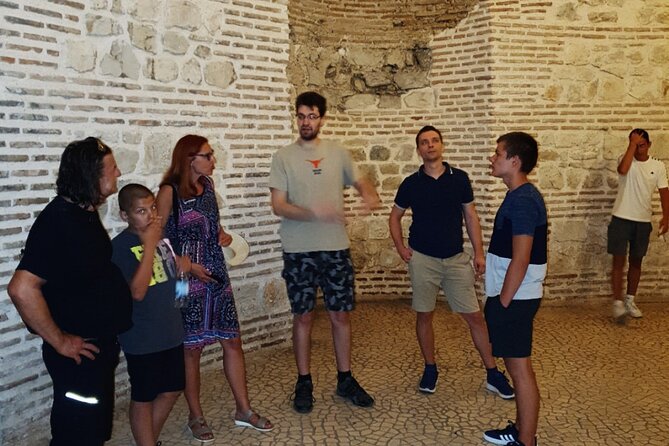
- Stop 2: Diocletian Palace Substructures and the Architecture You Can Feel
- Stop 3: St. Domnius Cathedral and the Roman Tomb-to-Church Story
- Stop 4: The Temple of Jupiter, Still Standing Like It Means Something
- Stop 5: Triklinij, a Partial Reconstruction of Life at the Palace
- Stop 6: Papalićeva ulica, Reading the Palace Through an Alley
- Stop 7: Fruit’s Square (Trg Brace Radic) and the Layers After Rome
- Stop 8: The Golden Gate and the Palace’s Fortifications
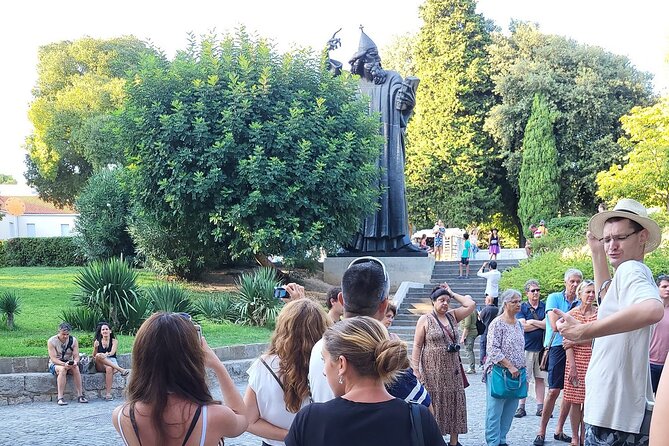
- Stop 9: Grgur Ninski Statue Finish, Turning Stones Into a Story
- Value and Price: What $107.84 Gets You (and How to Judge It)
- Who This Tour Fits Best
- Quick Tips to Get the Most From Your Walk
- Should You Book This Private Diocletian’s Palace Walking Tour?
- FAQ
- How long is the Chill Private Walking Tour of Diocletian’s Palace?
- Is the tour in English?
- Where do we meet, and where does the tour end?
- Are interior visits included?
- Is this a private tour?
- What if the weather is bad, or I need to cancel?
Key highlights you should know
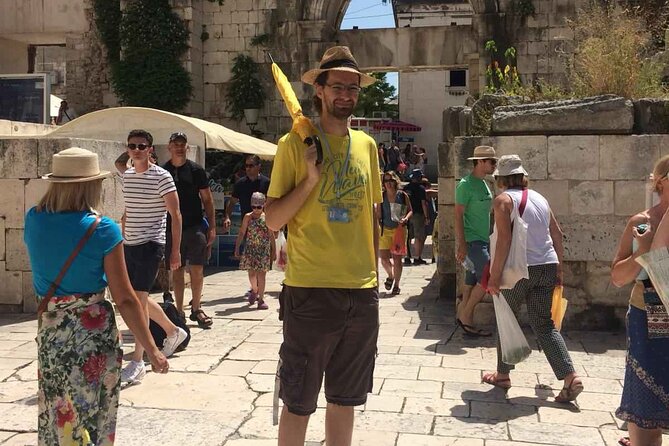
- 3D reconstructions help you see what was there 17 centuries ago, not just what’s standing now
- Optional interiors let you tailor the tour around your interests and ticket budget
- Peristyle to Golden Gate covers the palace’s main public and ceremonial spaces plus the fortifications
- Christian and Roman reuse is explained clearly, especially at St. Domnius
- A finishing story outside the northern gate ties the Roman layer to later Croatian history
- Private group format means your guide can move at your pace and answer questions
Stepping Into Diocletian’s Palace, Without the Headache
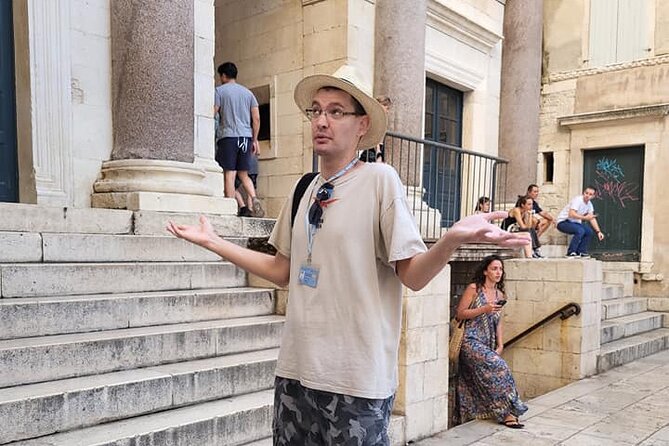
Diocletian’s Palace is one of those places where your brain says, Wait, this is still a neighborhood. Streets run through it. Shops and buildings sit against ancient walls. What should feel confusing becomes satisfying when someone helps you sort the layers.
What I love about this tour format is that it does not just point out ruins. It gives you a way to understand why these spaces were built in the first place, and why they survived in such good condition. Then it tracks what changed when religions and rulers changed too.
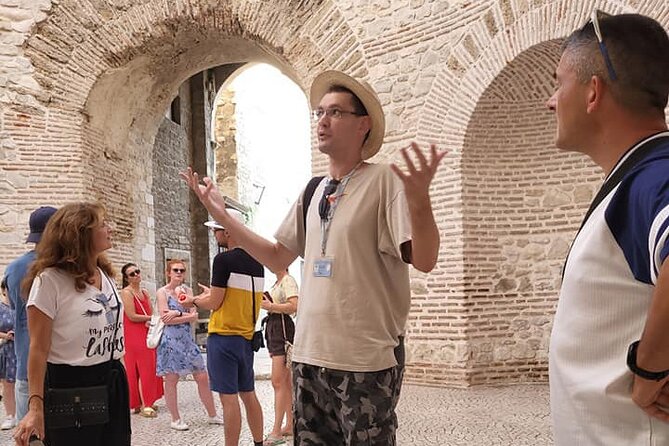
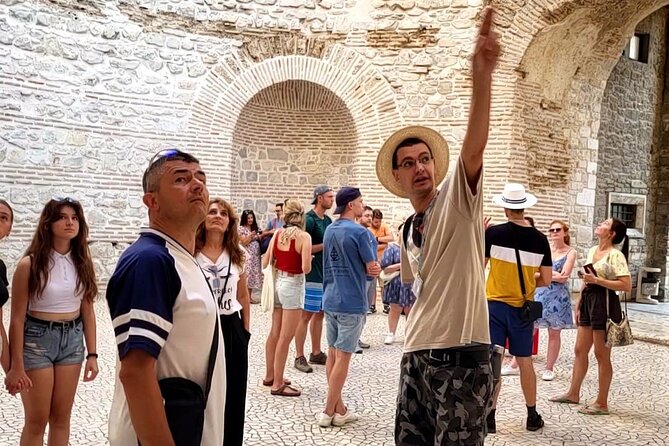
You’re also not stuck with a huge crowd plan. This is a private tour for your group, and that matters in a dense site like Split. You can ask questions, and your guide can keep you moving at a comfortable pace instead of racing.
Start at the Eastern (Silver) Gate and Get Oriented Fast
Your tour begins at the Eastern (Silver) Gate near Poljana kraljice Jelene 5. That’s a smart way to start because it’s a clear entry point into the palace complex, not some random side street.
The walk is scheduled for about 1 hour 30 minutes to 2 hours. That time range is realistic for a thoughtful guided loop: enough time to connect the major monuments, but not so long that you feel fried afterward.
A practical perk: you get a mobile ticket, and the tour operates in English. It’s also listed as near public transportation, which helps if you’re pairing it with other plans in Split.
One more practical detail I’d plan around: the experience requires good weather. If it’s rainy or miserable, the tour may be adjusted or canceled, so keep your schedule flexible.
More Walking Tours in Split
- Split: Old Town and Diocletian Palace Walking Tour★ 4.9 · 4,727 reviews
- Walking Tour of Split and Diocletian’s Palace★ 5.0 · 2,588 reviews
- Krka Waterfalls tour with Trogir Walking tour and Krka panoramic boat cruise★ 5.0 · 1,659 reviews
Stop 1: The Peristyle, Where Diocletian’s Palace Starts to Make Sense
You begin at the Peristyle, the palace’s great central space. This is where the story snaps into focus. Diocletian’s palace was not just a home, it was a power statement, and the Peristyle is tied to the ceremonial feel of the complex.
What makes this stop valuable is the way it sets expectations. Once you understand what the Peristyle represented, the next sections stop feeling like random architectural bits and start feeling like connected rooms in one big machine.
Also note the time built in here, about 20 minutes. This is your anchor stop, so it’s worth paying attention at the beginning. If you do, the later sights land better.
Admission for this segment is listed as free.
Stop 2: Diocletian Palace Substructures and the Architecture You Can Feel
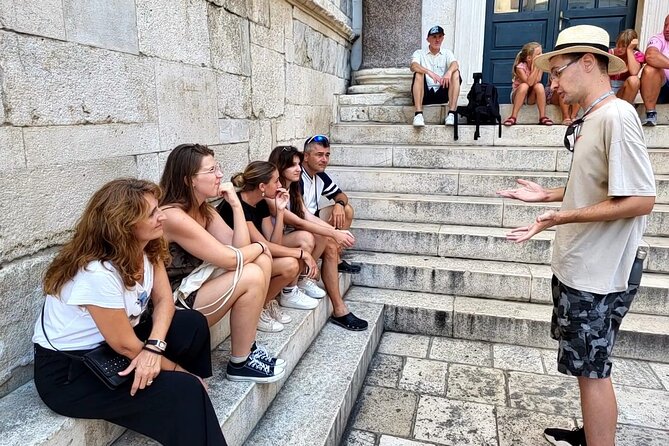
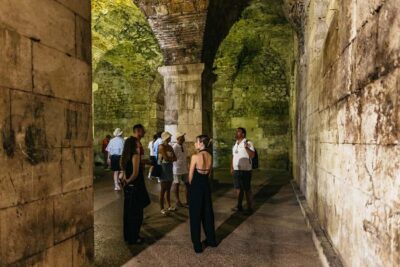
Next you head to the substructures, and you start with the free portion. This is where Roman engineering becomes easier to grasp because you’re moving through spaces the Romans designed to support the palace above.
This stop is listed around 10 minutes for the free part. That’s short, but the goal is not to exhaust the area. It’s to show you how the palace was built and how architecture supported life inside.
Here’s the useful choice built into this tour: if you want to see more, you can buy tickets for the museum part of the substructures. Doing that adds about 20 minutes. So you can go quick if your feet are tired, or slow down if you want more detail.
If you’re the type who likes to understand the how behind the what, this is the stop to extend.
Stop 3: St. Domnius Cathedral and the Roman Tomb-to-Church Story
The Cathedral of Saint Domnius is one of the best preserved Roman structures linked to the palace, and the guide explains it in a clear, conversion story: a Roman tomb turned into a Christian cathedral.
That theme matters. You can see the transformation without it feeling like a history lecture. The reuse of Roman space shows up in lots of places across Europe, but in Split it’s especially tangible because you’re still in the palace complex.
This stop takes about 10 minutes. There’s also an optional interior component. If you have a cathedral ticket, you can go inside and see how the Roman tomb was converted, which adds about 10 minutes.
If you like architecture and symbolism, consider adding the interior. If you’re more into atmosphere and outdoor views, you can skip the ticket and still come away with a solid understanding.
More corridors of the emperor’s palace:
- Split & Diocletian’s Palace Walking Tour
★ 5.0 · 1,125 reviews - Split: Diocletian Palace & Old Town Guided Walking Tour
★ 4.7 · 882 reviews - Split Old Town and Diocletian’s Palace Tour
★ 4.8 · 716 reviews - Split: Game of Thrones Tour with Diocletian’s Palace Cellar
★ 4.8 · 545 reviews
Stop 4: The Temple of Jupiter, Still Standing Like It Means Something
Then you move to the Temple of Jupiter, another well preserved Roman structure tied to Diocletian’s religious world. The guide explains how the church repurposed it, which helps you understand why it still looks so intact.
This stop is also about 10 minutes. If you have a ticket and want to see the small interior, you can do that. If not, the outside visit is still meaningful because you’ll focus on what’s visible and what it reveals about the original design.
This is a good moment to pause your speed. The temple exterior gives you a chance to look more closely at stonework and proportions. And since the tour keeps moving, you still get the bigger narrative without getting stuck.
Stop 5: Triklinij, a Partial Reconstruction of Life at the Palace
The Triklinij is in the south eastern corner of the palace and was mostly destroyed. The good news is that because of how it was constructed, an accurate partial reconstruction was made. That means you can get an impression of how Diocletian might have lived there, even with gaps.
This stop lasts about 15 minutes, and it’s a great bridge from monumental public spaces to the feel of everyday life. You’re not just learning about power displays now. You’re getting a taste of how the palace functioned as a home and a stage for social life.
This is also one of the places where 3D comparisons can be especially useful, because reconstruction makes the missing parts feel less like blank spots.
Admission is listed as free for the stop.
Stop 6: Papalićeva ulica, Reading the Palace Through an Alley
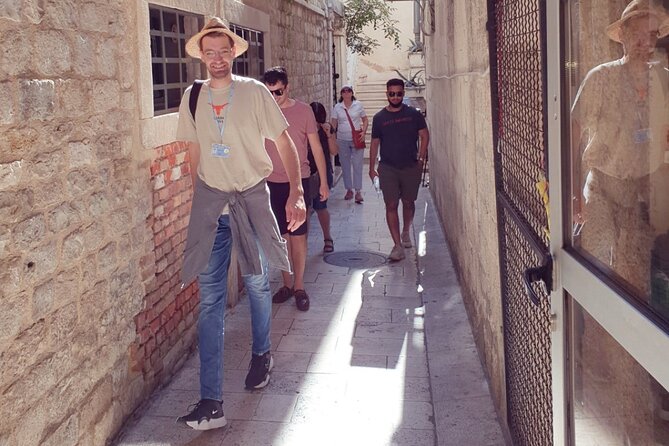
Next comes Papalićeva ulica, the Papalić alleyway on the north half of the palace. This stop is about 15 minutes, and it’s designed to give you a street level understanding of how the palace integrates with later development.
Alleyways in historic places can be quick pass-through zones if you’re self-guiding. Here, the guide’s job is to give you something to notice as you walk. You’ll learn a few interesting facts that connect the alley to the palace’s broader layout and history.
This is a stop that works well if you like small details. If you prefer the biggest monuments only, you might find this one lighter. But it helps you see the palace as lived-in space across time.
Stop 7: Fruit’s Square (Trg Brace Radic) and the Layers After Rome
Outside the palace you hit Fruit’s Square (Trg Brace Radic). This is about 15 minutes, and it shifts the focus to an important period of Croatian history plus how the palace is integrated into newer buildings.
This is where the tour becomes more than Roman sightseeing. You start seeing how a massive ancient structure did not freeze time. It got absorbed into the city and kept shaping what people built around it.
I like this stop because it helps you stop thinking of Diocletian’s Palace as a museum piece. It’s part of Split’s real geography, and the square gives you a clear example of that.
Stop 8: The Golden Gate and the Palace’s Fortifications
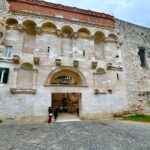
Near the end, you see the palace’s northern gate, called the Golden Gate. This part takes about 10 minutes and focuses on the fortifications, including how they changed from the original construction to the present day.
Gate spaces are smart to include because they tell you about security and movement. When you understand the function of gates and walls, the palace stops being a set of isolated monuments. It becomes a system.
If you like defensive architecture, this stop will give you more than a quick photo moment. You’ll learn how and why changes happened over time.
Stop 9: Grgur Ninski Statue Finish, Turning Stones Into a Story
The tour ends outside the northern gate near the bronze statue of Grgur Ninski, with about 15 minutes to consolidate what you’ve learned. This final stop ties the Roman construction to later Croatian history.
That wrap-up matters. Without it, you might leave with impressive buildings but feel like you missed the storyline that connects them. Here, you get a final human anchor in the statue area, and it helps you understand what the palace represents in Split beyond the Roman era.
If you’re planning the rest of your day, this ending location is convenient because it leaves you right where you can keep walking in the historic core.
Value and Price: What $107.84 Gets You (and How to Judge It)
The price is $107.84 per group, up to 15 people, for about 1 hour 30 minutes to 2 hours. That’s private-tour pricing, so the real question is not the sticker price. It’s how many people you’ll have and how much you want guided time.
Here’s a practical way to think about it:
- If you’re a smaller group, you should compare it to what you’d pay for two or four separate tickets or guided experiences. Private guiding in a complex site often saves time and confusion, which can be worth a lot.
- If you’re traveling with family or friends, the price becomes a clear bargain because the cost is capped per group.
Also, this tour includes useful extras in the value equation. The guide uses 3D reconstructions to show how the palace looked 17 centuries ago. That kind of explanation is hard to get from signage, and it helps you interpret what you’re seeing now.
Optional interiors can add ticket costs, so decide early whether you want those layers. The good thing is you’re not forced into every interior stop.
Who This Tour Fits Best
This tour is a strong fit if:
- You want a guided story through Diocletian’s Palace instead of random stops
- You like architecture and reuse of spaces across time, Roman to Christian to Croatian city life
- You’re traveling with teens, older relatives, or anyone who benefits from a paced explanation rather than a self-guided scavenger hunt
It’s also a good idea if you care about pop-culture hooks. One guide name that shows up repeatedly in accounts of this tour is Mili, and people note that he brings practical context and even Game of Thrones-related inside info if you’re into that angle.
If you only want to take photos and you already feel comfortable reading ancient sites on your own, you might not need a guide. But if you want the palace to make sense, a private walking tour is one of the most efficient ways to do it.
Quick Tips to Get the Most From Your Walk
- Wear comfy shoes. The route is a walking loop through tight historic space.
- If you’re debating interior tickets, pick the one or two you care about most, like St. Domnius or the Temple of Jupiter.
- If it’s hot, consider timing that avoids the peak sun. The tour does move outdoors between stops.
- Bring a curious brain. This kind of tour works best when you treat each stop as a clue.
Should You Book This Private Diocletian’s Palace Walking Tour?
I’d book it if you want the palace to feel coherent, not just impressive. The combination of private pacing, a strong guide experience, and visual help through 3D reconstructions makes this one of the better ways to get your bearings fast in Split’s most important site.
Skip it only if you’re committed to exploring entirely on your own or you want a full-day deep museum plan. For a tight time window and a high-impact story, this tour is a smart choice.
FAQ
How long is the Chill Private Walking Tour of Diocletian’s Palace?
It’s listed as about 1 hour 30 minutes to 2 hours.
Is the tour in English?
Yes, the tour is offered in English.
Where do we meet, and where does the tour end?
You meet at the Eastern (Silver) Gate, Poljana kraljice Jelene 5, 21000 Split. It ends outside the northern gate of the palace, by the bronze statue of Grgur Ninski at Dioklecijanova 7.
Are interior visits included?
Some interiors have optional tickets and are not included in the tour price. The tour describes both free outdoor sections and optional interior add-ons.
Is this a private tour?
Yes. It’s a private tour, and only your group participates.
What if the weather is bad, or I need to cancel?
The experience requires good weather. If it’s canceled due to poor weather, you’ll be offered a different date or a full refund. There is free cancellation up to 24 hours in advance for a full refund.
Marble Lanes, Slowly



Latest arrivals logged at Split






Diocletian's Palace Tours, compared.
Walking Tour of Split and Diocletian’s Palace
Read our review →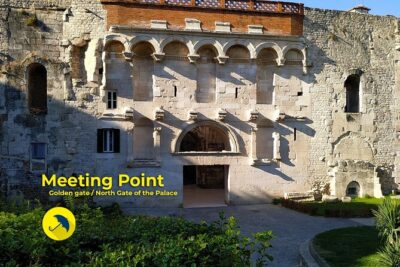
Diocletian Palace & Old Town Guided Walking Tour
Read our review →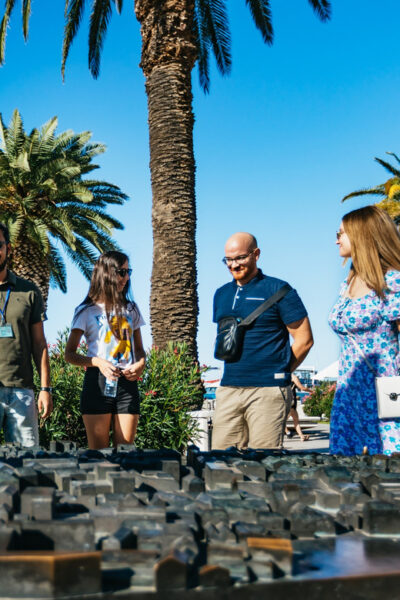
Game of Thrones Tour with Diocletian’s Palace Cellar
Read our review →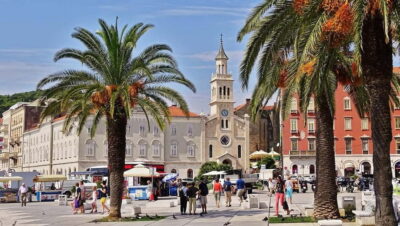
Diocletian’s Palace and Old Town SMALL GROUP Walking Tour
Read our review →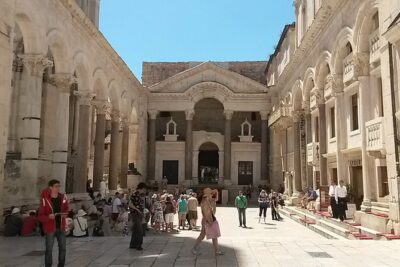
PRIVATE Walking Tour of Diocletian’s Palace & Old Town
Read our review →Browse the lists this tour appears in