
Reviewed · DIOCLETIAN'S PALACE TOURS
Diocletian Palace and Split Old Town SMALL GROUP Walking Tour
Step into Roman ruins that still shape modern Split. This small-group tour focuses on the Palace details you would miss wandering on your own, then threads them into the lively streets around it. You get a licensed guide and a tight 1 hour 30 minutes route that hits major landmarks, from palace entryways to the Cathedral area.
What I like most is the way the stops are organized around the Palace itself: Diocletian’s Palace substructures and the Peristyle give you a framework for understanding the whole complex, not just taking photos. Second, you end up seeing how the Palace functions as part of today’s city, especially around Pjaca Square and the Riva harbor promenade. It feels like history with directions you can actually use later.
The main thing to consider is that the Palace and Old Town can get crowded and sound can be hard to catch. If you prefer fast-paced commentary or you have trouble hearing a guide in busy spaces, pick a calm time of day and plan to stay close to your guide.
In This Review
- Key highlights you should care about
- Entering Diocletian’s Palace like a pro
- Golden Gate start: the quickest way to get your bearings
- Stop 1 and 2: Substructures cellars and the Peristyle core
- Palazzo di Diocleziano: how the Palace lives inside Split
- Stop 4: Golden Gate again, this time as a reference point
- Stop 5: Narodni Trg (Pjaca Square) and the role of public space
- Stop 6: Riva Harbor, Split’s most famous street
- Stop 7: Vestibulum of Diocletian’s Palace as a transitional scene
- Stop 8 and 9: Cathedral of Saint Domnius and Temple of Jupiter
- Guides are the real difference in a 90-minute Palace tour
- Value check: what you really get for $16.94
- Logistics that matter on your feet
- Who should book this tour, and who might skip it
- Should you book the Diocletian Palace and Split Old Town small-group walk?
Key highlights you should care about
- Golden Gate meeting point makes it easy to locate your start at Dioklecijanova 7
- Roman substructures and peristyle help you understand the Palace layout fast
- Short, efficient stops keep the walk to about 90 minutes without dragging
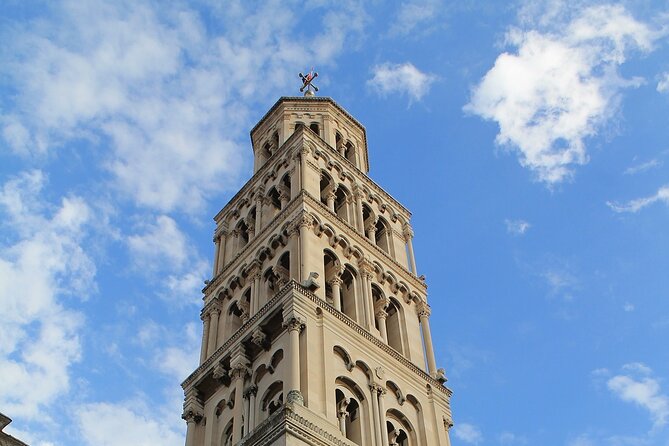
- Cathedral of Saint Domnius and Temple of Jupiter add major religious and Roman layers
- Riva harbor and Narodni Trg show how the Palace connects to daily life in Split
- Guides bring the story to life with humor and practical orientation (Slavko, Antonia, Ante, Marta, Mia, and Maria are repeatedly praised)
Entering Diocletian’s Palace like a pro
Diocletian’s Palace is famous, but it is also confusing at first glance. The walls are massive, the entrances feel intentional, and the streets inside are suddenly streets in modern Split. This is exactly why a guided route helps. You are not just looking at old stone, you are learning the logic behind where you stand and why it matters.
A lot of the best value here is time management. At about 1 hour 30 minutes, you cover the areas most likely to unlock the Palace’s layout for you. You also get a licensed guide leading you between the right points rather than wandering in circles.
Golden Gate start: the quickest way to get your bearings
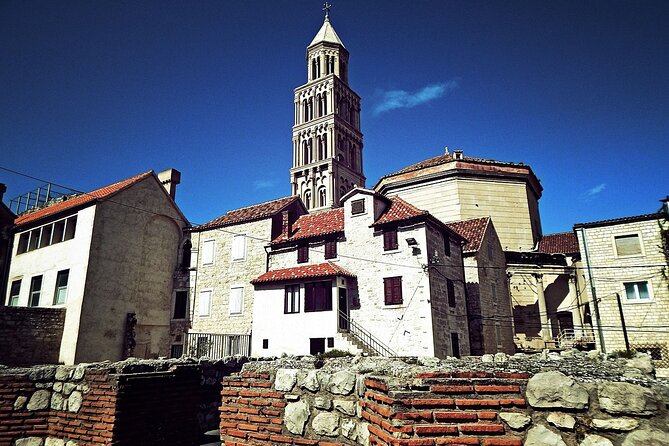
Your tour begins at the Golden Gate, the main Palace entrance and the meeting point. You can use Dioklecijanova 7, 21000 Split, as your anchor, which matters because Old Town streets can look similar fast.
Why this start works: once you know the Golden Gate, you can mentally map what comes next. Your guide uses that point to frame the Palace, so later, when you return on your own, the complex stops feeling like random corridors of stone. It also sets the pace. In about five minutes, you move from arrival to an actual introduction.
If you hate uncertainty, this matters. You are not trying to figure out where the tour begins while people stream past you in all directions.
More Walking Tours in Split
- Split: Old Town and Diocletian Palace Walking Tour★ 4.9 · 4,727 reviews
- Walking Tour of Split and Diocletian’s Palace★ 5.0 · 2,588 reviews
- Krka Waterfalls tour with Trogir Walking tour and Krka panoramic boat cruise★ 5.0 · 1,659 reviews
Stop 1 and 2: Substructures cellars and the Peristyle core
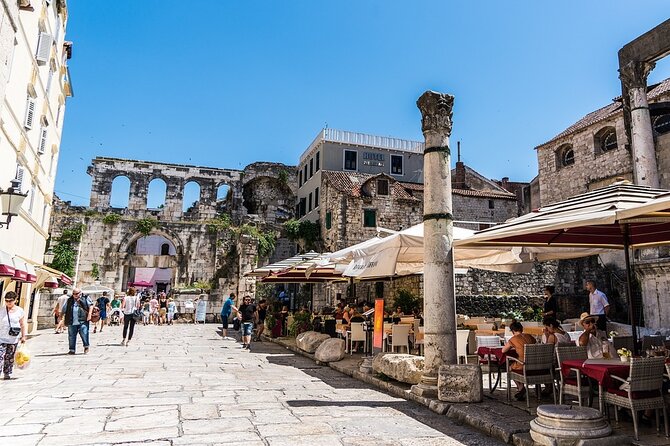
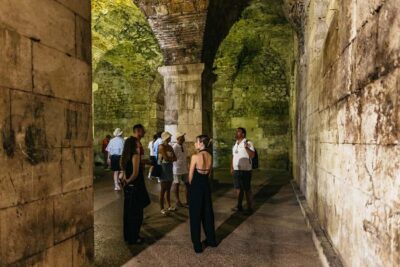
The first thematic shift comes quickly. You visit the Diocletian Palace substructures, with time in the Palace cellars. These spaces are cool in both the literal and story sense. In many Roman complexes, the under-level areas help explain how the site was built to function, not just how it looks from the street.
Then you head to the Peristyle, the Palace center. This is the kind of place where the scale hits you. Even if you have seen photos, a guided stop helps you notice what to look for: how open space inside the Palace creates a visual center, and how that center connects to the surrounding passages.
Practical tip for these two stops: wear shoes that handle uneven surfaces. You will move through areas that feel ancient underfoot, and you do not want sore feet cutting your attention away from the details.
Palazzo di Diocleziano: how the Palace lives inside Split
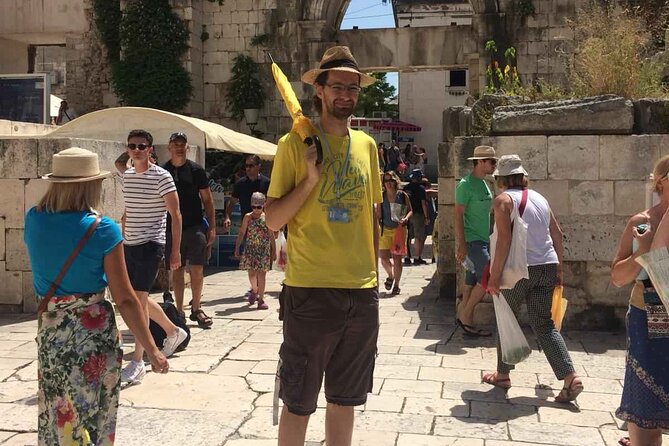
Next comes the longer look, the Palazzo di Diocleziano, described as the 1700-year-old Diocletian’s Palace in the modern city of Split. This is where you start to understand the real trick of Split. The Palace is not only a monument. It is also a living neighborhood, folded into the streets and routines of today.
At around 30 minutes, you get enough time to slow down. The guides who get the most praise, like Slavko and Ante, are described as patient and funny, and that combo matters here. A Palace can overwhelm you, but a calm pace helps you build a mental map instead of just absorbing facts.
Possible drawback: a few people report that the pace and interruptions can vary by guide and group dynamics. If your main goal is a brisk, tightly scripted experience, keep some flexibility in your head. The best moments still tend to come when the guide is able to hold the group together and explain the major spatial clues without constant regrouping.
Stop 4: Golden Gate again, this time as a reference point
After the Palace interior focus, the route brings you back to the Golden Gate as a major reference. This is not redundant, it is teaching. When you see an entrance before you understand the complex, you think of it as a doorway. Later, after the substructures and peristyle, it reads like a functional piece of the whole Roman design.
It is a smart rhythm: start with one anchor, zoom in on what sits behind it, then return to the anchor so the story clicks.
More corridors of the emperor’s palace:
- Split & Diocletian’s Palace Walking Tour
★ 5.0 · 1,125 reviews - Split: Diocletian Palace & Old Town Guided Walking Tour
★ 4.7 · 882 reviews - Split Old Town and Diocletian’s Palace Tour
★ 4.8 · 716 reviews - Split: Game of Thrones Tour with Diocletian’s Palace Cellar
★ 4.8 · 545 reviews
Stop 5: Narodni Trg (Pjaca Square) and the role of public space
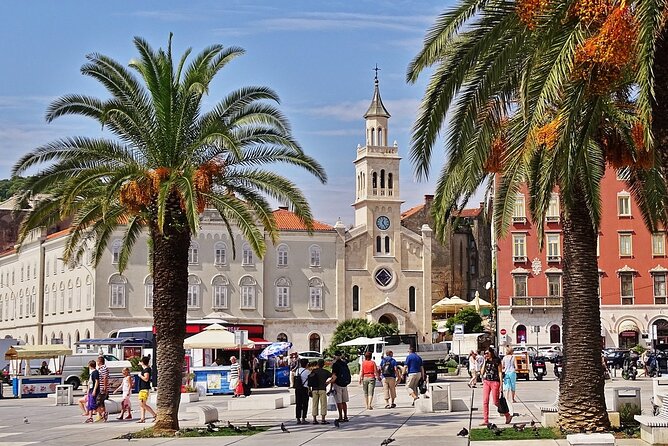
Then you step into Narodni Trg, the famous Pjaca Square. Here the tour shifts from Roman layout to what that Roman layout eventually became for daily life. The guide explains the importance the square once had, which helps you understand why this square is still a magnet for people.
Square stops are underrated in walking tours. They give you a reset for your eyes. After walls and corridors, open space makes the city easier to read. It also helps you regroup without losing the narrative thread.
If you are photographing, this is a good moment to pause. The Palace architecture and the square’s urban feel both land well in pictures, and you are not fighting tight hallways.
Stop 6: Riva Harbor, Split’s most famous street
From there, you move to Riva Harbor, the famous promenade described as the busiest street in Split. This part is quick, about five minutes, but it is meaningful. A Palace tour can feel like a history museum, but Riva brings you back to the city’s present rhythm.
Why I think this stop is worth it: you see the contrast. Roman power and controlled design inside the Palace, then the high-energy public street outside. Even in a short stop, that contrast helps you connect the dots between stone and lived experience.
You will want water here, especially if it is warm. Several guides are noted for being attentive to shade and keeping the walk comfortable, so if the weather is hot, you can lean on that. Still, do not assume shade will solve everything. Bring a hat and plan for the sun.
Stop 7: Vestibulum of Diocletian’s Palace as a transitional scene
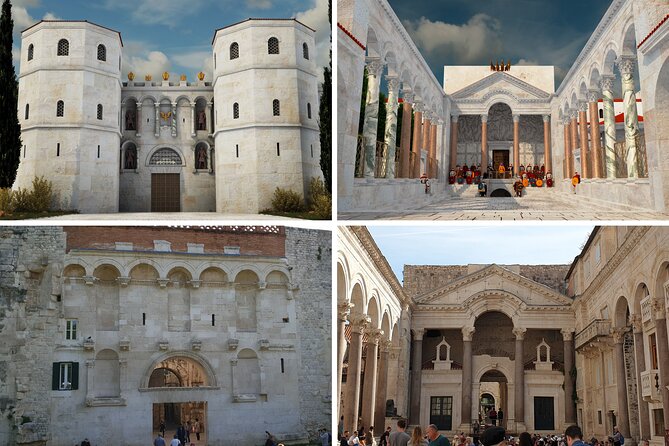
Next is the Vestibulum of Diocletian’s Palace. This is one of those stops that feels like it should be brief, and yet it is useful because vestibules and transitional spaces are where you feel how the site guides movement.
A vestibulum is not only a room. It is a buffer zone between bigger spaces, often used to shape circulation and experience. Your guide uses this stop to connect the story you already heard about the Palace structure to the walk you are about to continue.
If you like architecture details, this is where you start noticing the how, not just the what.
Stop 8 and 9: Cathedral of Saint Domnius and Temple of Jupiter
The final stretches tackle two major layers of Split’s identity: the Cathedral of Saint Domnius and the Temple of Jupiter.
The Cathedral stop helps you see continuity. Roman spaces did not stay frozen in time. Over centuries, new religious and civic meanings were layered on top of existing sites. Even without deep technical explanations, a guide can point out what to focus on so you understand why this corner matters.
Then comes the Temple of Jupiter, bringing you back to the Roman story with a clear payoff. Temple architecture, especially on a guided walk, is easier to interpret when you already know how the Palace site is organized. Your earlier stops set that stage.
For people who want a tidy ending: these two stops close the loop between Roman origins and what you see in modern Split today.
Guides are the real difference in a 90-minute Palace tour
This tour is short, so the guide’s style matters a lot. The strongest praise in the tour notes points to guides who balance facts with humor and clear pacing. Names that show up again and again include Slavko, Antonia, Ante, Marta, Mia, Alexandria, and Maria.
What stands out about the best-guided versions:
- Humor that keeps the group relaxed without losing the thread
- Clear English (and if you are English-speaking, this is a major plus)
- Enough pacing to let you actually look at what they point out
- Practical city orientation at the end, so you know where to go next
If you care about storytelling, this is one of the few Palace tours where you can reasonably expect the guide to help you enjoy the stones, not just recite dates.
Value check: what you really get for $16.94
At $16.94 per person for about 1 hour 30 minutes, the value is mostly in what is included and how efficiently the time is used.
You get:
- A licensed guide
- A guided route that hits multiple major Palace and Old Town landmarks
- Admission tickets listed as free for the stops on this route
- A mobile ticket and English-language service
The practical value is this: you likely would not piece together all these Palace references in the right order on your own in the same time. Even if you have some guidebook knowledge, a guided sequence makes the complex feel solvable.
Small-group structure also helps. The maximum group size is listed as 15 travelers, which usually means fewer people blocking views and fewer gaps in the explanation.
Logistics that matter on your feet
A few details from the tour setup help you plan like a local.
- The tour ends back at the meeting point, so you are not stranded far away if you are catching transit.
- It is described as near public transportation, which makes it easier to plug into a day in Split.
- Service animals are allowed, which you should already know if you travel with one.
- Most travelers can participate, which suggests the walk is meant to be manageable for a typical visitor.
What you should still expect: stone and streets. Even an easy walk can feel tougher if you have worn-out shoes or if you are unprepared for stairs and uneven surfaces around historic sections.
Who should book this tour, and who might skip it
Book this if you want:
- A fast, structured intro to Diocletian’s Palace and the parts of Split it powers
- A guided explanation of the Palace layout, especially the substructures and the peristyle core
- A short walking plan with recognizable landmarks like Pjaca Square and the Riva promenade
- English narration and a group size capped at 15
You might reconsider if:
- You struggle in crowded spaces and need extra audio support, because Old Town density can make it harder to hear every word
- You prefer long, slow exploration where you can linger for 20 to 30 minutes per highlight, since this route is designed to cover more in less time
Should you book the Diocletian Palace and Split Old Town small-group walk?
If you are visiting Split for a day or two, I think this is a smart move. The route is short, focused, and designed to help you understand why Diocletian’s Palace still controls the city layout. With guides like Slavko, Antonia, Ante, Marta, Mia, and Maria repeatedly praised for clarity and humor, you have a good chance of leaving with both facts and direction for the rest of your trip.
If you go, do one thing to make it better: come with comfortable shoes, and stay near your guide during the crowded Palace segments. That small choice makes the 90 minutes feel like a personal lesson, not just a queue walk.
Marble Lanes, Slowly



Latest arrivals logged at Split






Diocletian's Palace Tours, compared.
Walking Tour of Split and Diocletian’s Palace
Read our review →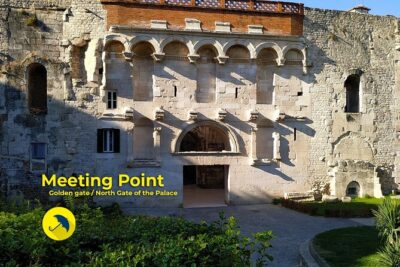
Diocletian Palace & Old Town Guided Walking Tour
Read our review →
Game of Thrones Tour with Diocletian’s Palace Cellar
Read our review →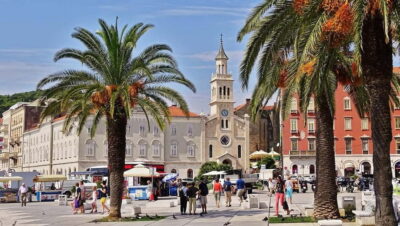
Diocletian’s Palace and Old Town SMALL GROUP Walking Tour
Read our review →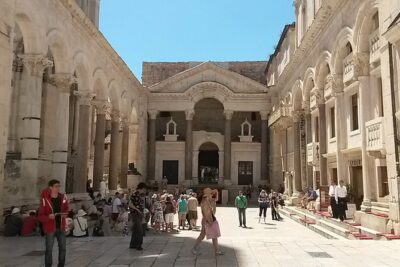
PRIVATE Walking Tour of Diocletian’s Palace & Old Town
Read our review →Browse the lists this tour appears in