
Reviewed · WALKING TOURS
Šibenik: Medieval Night Walking Tour
Šibenik at night feels medieval, not touristy. This is a 1-hour night walk through stone streets that were effectively unlit in the Middle Ages, with over 600-year-old lanes, tunnels, and covered passageways that make the whole town feel like a living set. It is history told through real locations, not just dates and names.
I love two things most: the way the guide links the cathedral’s design to what people believed about light and meaning, and the hands-on feeling of the stop at the medieval cistern with four wells, where water collection becomes understandable in a whole new way. It is also one of the rare tours that doesn’t rush past the small, physical details like stairs, narrow turns, and the layout of the old core.
One thing to think about is that you’re walking at night on old, uneven stone in a medieval layout with stairs. If you are sensitive to the dark or have mobility limits, this may feel more demanding than a daytime stroll.
Key points to know before you go
- Meet at the cathedral portal facing west, opposite the statue of Juraj Dalmatinac, not the lion doors
- One hour, focused routes that still hit the cathedral square, cistern, oldest street, and St. Lawrence area
- Stories with strong local specifics, including the pillar of shame and the city’s bells
- A “water” stop that makes medieval life click, the cistern with four wells
- Multiple languages offered, including English and Croatian (and Serbo-Croatian)
- $29 is mostly about guide time and access to narrative stops, with no church or museum entrance fees on this short walk
In This Review
- The feel of Šibenik after dark: narrow streets, unlit vibes, and real atmosphere
- Where you start matters: the cathedral portal, west-facing, opposite Juraj Dalmatinac
- Cathedral square first: construction stories, 72 bells, and why light mattered
- St. John’s church and reliefs: small carvings, big context
- The medieval cistern with four wells: how water collection worked underground
- Oldest street, stairs, and tunnels that make the town feel smaller
- Monastery of St. Lawrence and the cave-in feel next to it
- Column of shame, medieval fairs, and the moral geography of Šibenik
- Plague near 1649 and the long question of how quickly the cathedral happened
- Crafts, a medieval sign of the Šibenik subway, and the chapel of a 1419 doctor
- Dario Mikulandra’s guiding style in English and Croatian, with room for questions
- Price and value: $29 for a focused hour that saves you time and money
- Timing and comfort: early in your trip, cooler air at night, and what to wear
- Who should book, and who might want a different plan
- Should you book this Šibenik Medieval Night Walking Tour?
- FAQ
- How long is the Šibenik Medieval Night Walking Tour?
- What is the price per person?
- Where is the meeting point?
- What languages is the tour guide available in?
- Is this tour including church or museum entrance fees?
- Does the provider offer hotel pickup?
- Can I cancel or pay later?
The feel of Šibenik after dark: narrow streets, unlit vibes, and real atmosphere
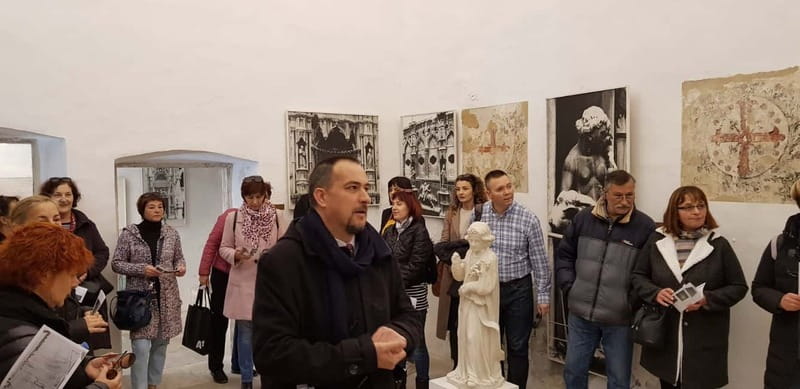
A lot of walking tours look good in photos. This one works better for your feet, your eyes, and your brain. In the evening, Šibenik’s medieval streets shrink visually, and the guide’s stories land because you’re moving through the same tight geometry medieval people used every day.
The core experience is simple: you walk together through narrow streets and covered passages that help you picture how life worked when “lighting” meant something far different than today. The tour leans into that feeling on purpose, so it is not just a checklist of sights.
I also like that it is short. One hour keeps the pace lively, and it helps you pack the rest of your trip with daytime plans like cathedral visits or the Šibenik area museums on your own time.
Where you start matters: the cathedral portal, west-facing, opposite Juraj Dalmatinac
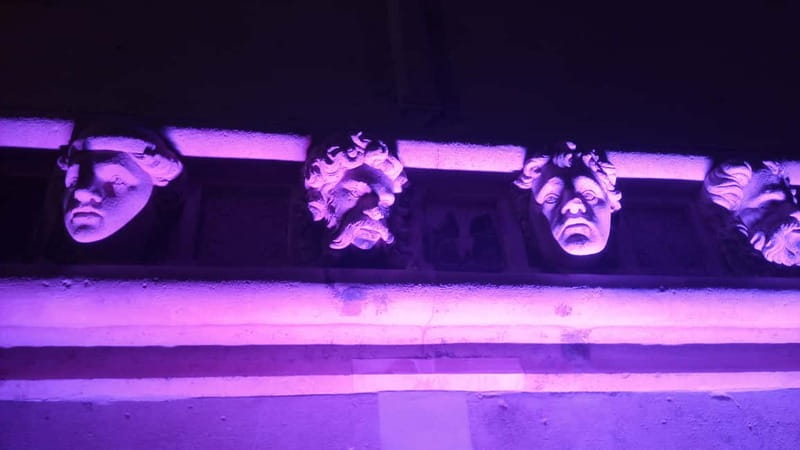
Your meeting point is the main entrance-portal of the cathedral, the one facing west. You do not start at the cathedral doors with the lions. The guide will be at the main entrance area opposite the statue of the sculptor Juraj Dalmatinac.
This is useful in practice because it gets you oriented fast. If you arrive early, you can stand in that spot and take five minutes to understand the cathedral square layout before the stories begin.
If pickup is needed, the guide waits at your hotel’s reception. Otherwise, plan on being at the cathedral portal, then starting the walk right away.
Cathedral square first: construction stories, 72 bells, and why light mattered
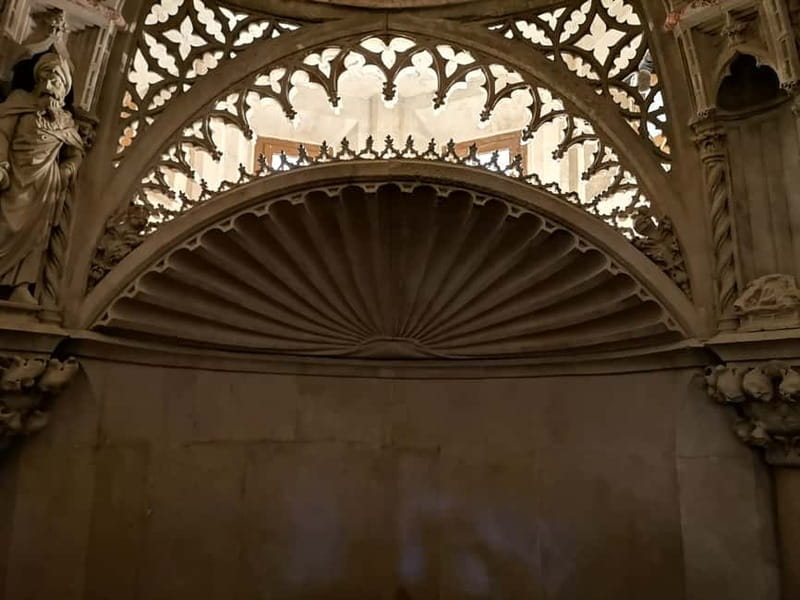
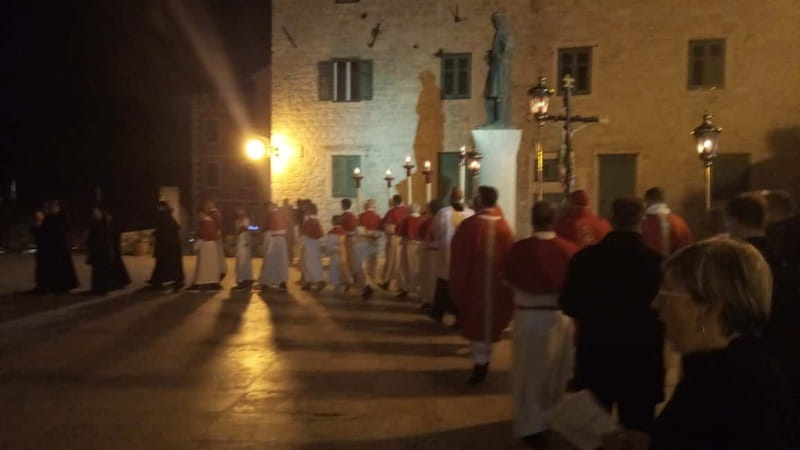
The tour begins with a walk in the cathedral square and a story about what went into creating the most beautiful Croatian cathedral. This is not just “when it was built.” The guide explains what the cathedral represented to people in Šibenik, including how the construction itself carried meaning.
You’ll also hear specifics tied to the way the cathedral lived with the city. The tour covers why all 72 bells rang, and how midnight on December 17 was greeted. Even if you do not remember every detail, the point sticks: the cathedral was not only a building, it was a public voice for the community.
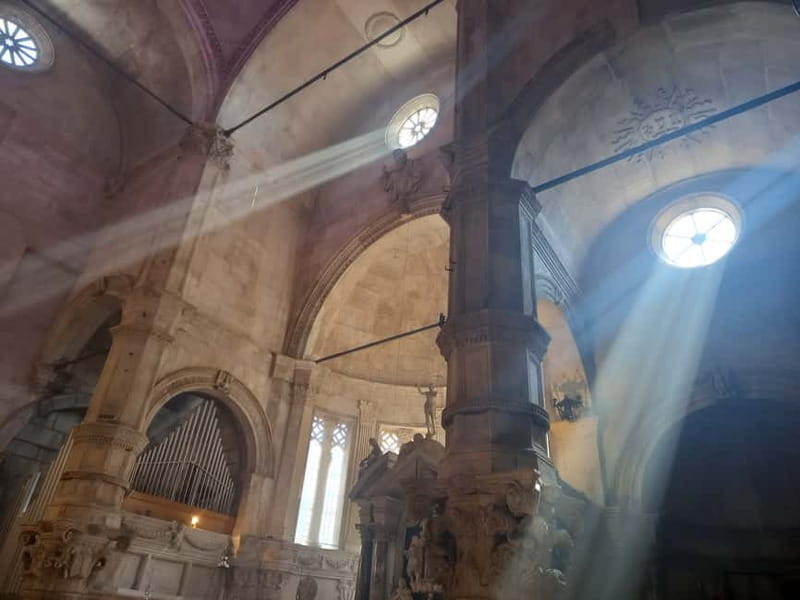
Another nice touch is the “light” angle. You see what light meant in the cathedral’s construction and how day-to-night life changed as lighting became available. Included in the walk is a look at the first public lighting lamp from 1895, which gives you a neat bridge from medieval darkness to modern street life.
More Walking Tours in Sibenik
- Private Sibenik Walking Historical Morning or Evening Tour★ 5.0 · 93 reviews
- Sibenik: Guided Evening Walking Tour★ 4.9 · 62 reviews
- From Sibenik: Private Walking Sibenik Sightseeing Tour★ 4.9 · 15 reviews
St. John’s church and reliefs: small carvings, big context

From the cathedral square, the walk continues through the older religious landmarks that shaped the medieval town. You visit the church of St. John and look at the reliefs on it.
This stop is brief but meaningful because reliefs are the medieval version of visual storytelling. When you’re standing close and listening to what the guide connects them to, the carvings start to feel less like decoration and more like communication.
It also works as a rhythm break. After the cathedral stories, a closer look at religious art gives your eyes something to do besides track street turns and stairs.
The medieval cistern with four wells: how water collection worked underground
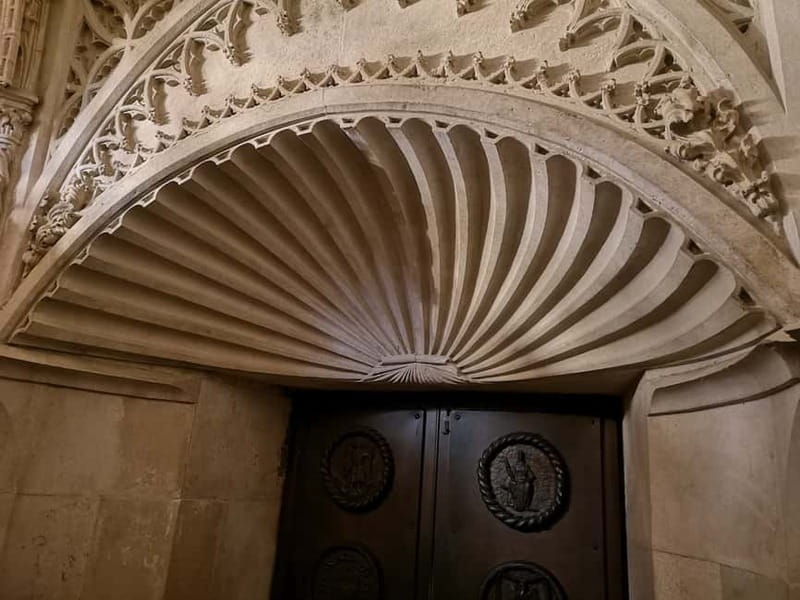
One of the most memorable included stops is the medieval cistern with four wells. The tour doesn’t treat this as a quick glance at a hole in the ground. You learn what it looked like inside, and you hear how the city collected water.
This matters because water is what makes medieval life feel real. When you understand storage and collection, everything else, from neighborhood density to daily routines, starts to make sense. It also changes how you experience the town layout above ground, since the underground plumbing and storage are a major reason old cities held together the way they did.
If you like practical history, this cistern stop is where the tour pays off most. You get a tangible “how did they actually do it” moment, not just a legend.
Oldest street, stairs, and tunnels that make the town feel smaller
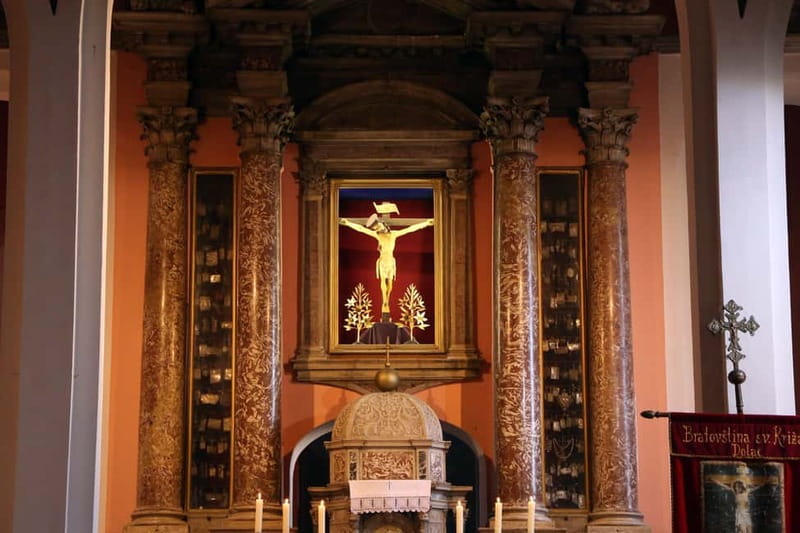
You also visit the oldest street in the city, plus narrow lanes known for their stairs and medieval layout. The guide talks through why houses were built inside the old city core, and how the geography shaped daily movement.
This portion is where the night setting does its real job. In daylight, you can see the street edges and think, “Okay, this is charming.” At night, with limited lighting, you more easily imagine the medieval reality the tour is describing, especially the idea that the streets were not lit the way we expect today.
The route also includes walking through tunnels and covered passageways. Those sections can feel a little like time travel because your direction changes and the sound changes as you move through covered spaces.
Practical tip: wear shoes you trust. Even when the tour is “easy walking” for able feet, medieval surfaces still ask for attention, especially in the dark.
More marble lanes taken slowly:
- Dubrovnik: Old Town Walking Tour
★ 4.8 · 5,174 reviews - Split: Old Town and Diocletian Palace Walking Tour
★ 4.9 · 4,727 reviews - Dubrovnik Discovery Old Town Walking Tour
★ 5.0 · 4,458 reviews - Walking Tour of Split and Diocletian’s Palace
★ 5.0 · 2,588 reviews
Monastery of St. Lawrence and the cave-in feel next to it
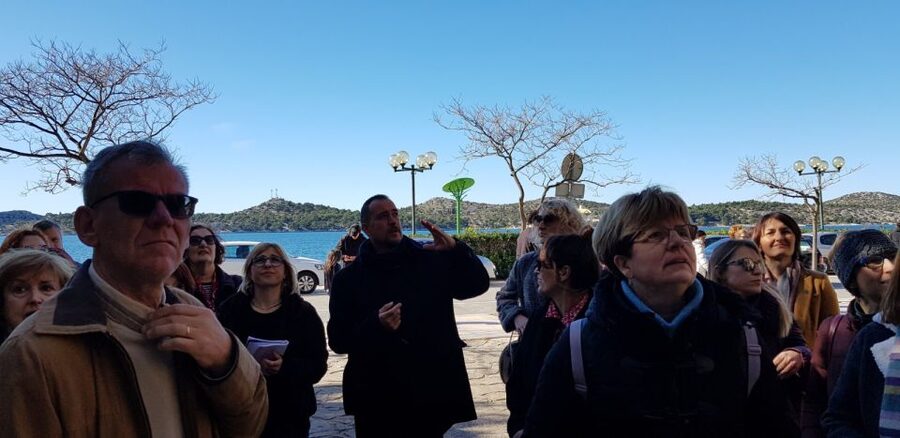
A major included stop is the monastery of St. Lawrence. This is one of those places where the architecture supports the stories. The tour includes details about nuns praying for the city in darkened monasteries, which helps the monastery feel like a part of the town’s daily spiritual rhythm, not just a photo stop.
Near the monastery, you visit a cave in the old town area. The tour frames it as part of the city’s layered physical history next to St. Lawrence, and it adds variety to the walking route because you’re no longer only moving between church fronts and street corners.
If you are the type who likes tours that feel like you are walking through a movie set, this is the segment that delivers that vibe without needing theatrics.
Column of shame, medieval fairs, and the moral geography of Šibenik

The tour includes a stop connected to the pillar of shame in Šibenik. You also hear stories about cheaters escaping from the medieval fair, and how medieval justice and public spectacle were woven into city life.
These are not random bits of drama. The guide uses them to show how the city worked socially. In medieval towns, public spaces were where rules were enforced and reputations were made, so it makes sense that these markers sit right inside the street network you are walking through.
The tour also touches local custom and historical events that affected daily life, including why there are no weddings in Šibenik during May. It is the kind of detail you would never guess while wandering independently, and it makes you understand the town’s rhythms as something shaped by history, not tradition-by-momentum.
Plague near 1649 and the long question of how quickly the cathedral happened
You’ll hear about the plague that almost destroyed the city in 1649. That story adds weight, because it reframes the beauty of the cathedral and the romance of old stone as something people built and rebuilt under pressure.
The guide also addresses a question visitors often wonder: was the cathedral built for a long time or in a record short time? The value here is not memorizing the answer. The value is hearing why the construction mattered to the people of Šibenik and what building the cathedral represented culturally.
Even if you are not a “construction nerd,” you’ll likely remember the emotional theme: the cathedral project was tied to identity. That idea pulls together many of the stops you see on the walk.
Crafts, a medieval sign of the Šibenik subway, and the chapel of a 1419 doctor
The tour includes a stop for the city’s crafts. This gives you a break from pure architecture and history and reminds you that medieval towns were economic systems, not just religious centers.
You’ll also see the medieval sign related to the Šibenik subway. The phrasing in the tour description points to a local reference about underground spaces, and seeing it in context helps you connect it to the cistern and the idea of hidden routes.
Another included stop is the chapel of the first Šibenik doctor from 1419. That is a sharp reminder that history is not only war and worship. It is also medicine, daily survival, and how communities cared for health when options were limited.
Dario Mikulandra’s guiding style in English and Croatian, with room for questions
This tour is run by Magnificat, with owner Dario Mikulandra as the guide. The experience gets consistently high marks for Dario’s enthusiasm and his ability to make history feel connected to the street corners you are standing on.
In practical terms, the guide is described as engaging, with strong language ability in English, and a sense of humor that keeps the stories from getting heavy. That matters because a medieval night walk can already feel intense if the storytelling is all doom and gloom.
The tour also emphasizes Q and A. If you stop and ask something, you’ll likely get more than a one sentence answer, which is one reason the walk feels like a conversation with Šibenik instead of a scripted lecture.
Price and value: $29 for a focused hour that saves you time and money
At $29 per person for 1 hour, the value depends on what you want. If you are the kind of traveler who learns best with context as you walk, this price is reasonable because you’re paying for a live specialist who connects multiple sites into one story.
The tour also works financially in a simple way: it is a short night tour where churches and museums have no entrance fees included for this specific format. That means you’re mostly paying for guidance, not ticketed access.
You also get maps and brochures in your language. That is not just a souvenir. It helps you go back the next day and connect what you saw at night with what you can observe in daylight.
For me, the best value angle is pacing. You get a strong overview of the old town core in a time window that does not steal your whole evening.
Timing and comfort: early in your trip, cooler air at night, and what to wear
One of the smart uses of this tour is timing. Doing it early in your visit can help you get your bearings fast, then return later to explore on your own with a mental map of what you learned.
Night also helps comfort, especially in warmer months, because you’re often walking in the cooler evening air. The included focus on darkness also makes the experience more coherent, since you are experiencing the unlit feeling the tour is built around.
Dress for the reality of medieval streets. Bring comfortable shoes, and be ready for stairs. The route is designed around walking, not rolling, so plan accordingly if you have balance or mobility concerns.
Who should book, and who might want a different plan
I think this tour suits you if you want history that feels physical. It is ideal for first timers who want a fast overview, and for repeat visitors who think they know the town but want a different angle, like cistern water systems, construction symbolism, or the social meaning of the pillar of shame.
It is also a good fit for people who like religious and civic history tied together, since you’ll see cathedral context, monastery atmosphere, and practical stops like water collection.
You might want to pick a different activity if you dislike night walking, have limited tolerance for stairs, or get uncomfortable in darker spaces. The tour does not pretend the medieval street setting is the same as a modern sidewalk.
For families, there is at least one experience where a family of four with two young children enjoyed the walk. Still, use your judgment based on your kids’ energy and comfort with nighttime crowds and steps.
Should you book this Šibenik Medieval Night Walking Tour?
If you’re in Šibenik and you have one hour to invest, I’d book it. The combination is rare: cathedral square meaning, a four-well cistern you can picture, and street-level stories tied to local landmarks like the monastery of St. Lawrence and the pillar of shame.
This is not a generic night promenade. It’s a guided interpretation of the town’s medieval systems, spiritual life, and public rules, delivered in a route that makes sense in the dark.
If you want an easy, sit-down kind of sightseeing evening, skip it. If you like walking, listening, and learning by moving through the streets, this is a strong use of your time.
FAQ
How long is the Šibenik Medieval Night Walking Tour?
The tour lasts 1 hour.
What is the price per person?
The price is $29 per person.
Where is the meeting point?
Meet at the cathedral’s main entrance-portal facing west, opposite the statue of sculptor Juraj Dalmatinac. This is the main entrance portal, not the cathedral doors with the lions.
What languages is the tour guide available in?
The live guide is available in English, Croatian, and Serbo-Croatian.
Is this tour including church or museum entrance fees?
For this short night tour, there are no entrance fees for churches and museums.
Does the provider offer hotel pickup?
In case pickup is necessary, the guide will wait for you at the hotel reception.
Can I cancel or pay later?
Yes. You can reserve now and pay later, and you can cancel up to 24 hours in advance for a full refund.
Riva Evenings


Latest arrivals logged at Sibenik







Walking Tours, compared.
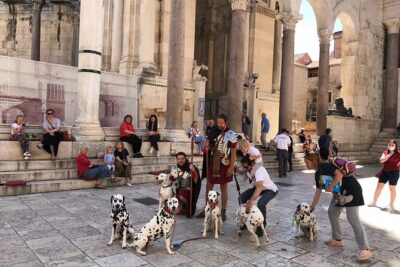
Walking Tour of Split and Diocletian’s Palace
Read our review →
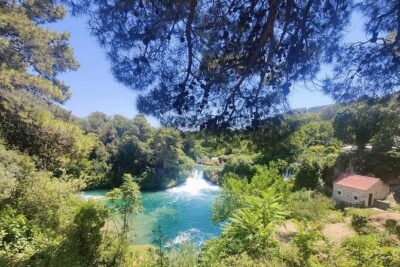
Krka Waterfalls tour with Trogir Walking tour and Krka panoramic boat cruise
Read our review →
City Walls Early Morning or Sunset Walking Tour
Read our review →Browse the lists this tour appears in