
Reviewed · DIOCLETIAN'S PALACE TOURS
Split Diocletian Palace Highlights – Private walking tour
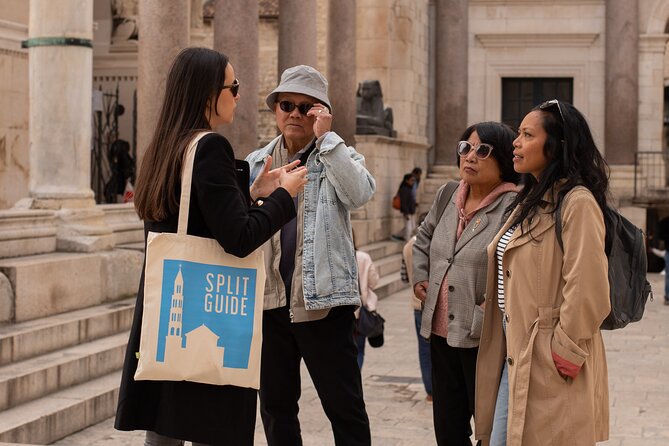
Old walls, real life. That is what makes this walk different from a typical museum tour. You get a clear, guided path through the Diocletian’s Palace complex, where Roman structures still shape today’s streets, shops, and daily routines.
I like the way the tour keeps it practical and efficient, covering the big set-pieces in about 90 minutes. I also love that you do not have to budget extra for entry tickets, since the stops are viewed from outside and the guide still explains what you are looking at. One thing to think about, though: because it is weather-dependent, rain or heavy heat can make a short outdoor walking tour less comfy.
In This Review
- Key highlights to look for on this route
- Diocletian’s Palace, but you still walk through a living neighborhood
- Getting your bearings at Split Riva
- Diocletian’s Palace: where Roman power becomes everyday space
- The south gate and Diocletian’s Cellars
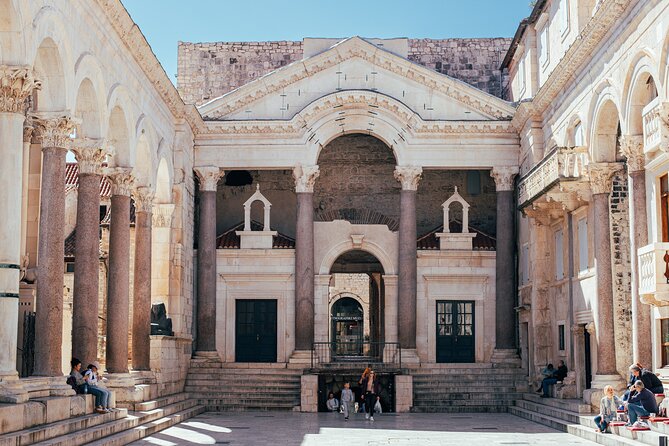
- The Peristyle: where the emperor showed himself
- Cathedral of Saint Domnius: the pagan mausoleum becoming Christian space
- East gate to the market: Iron Gate and today’s food stalls
- Triklinij, the dining room where the details matter
- Vestibulum: the entrance to Diocletian’s private chambers
- Temple of Jupiter: now a baptistery
- West gate to Pjaca: Iron Gate again, different purpose
- Golden Gate and Salona’s connection
- Green Market: east side life inside the walls
- Ending where you started: Split Riva again
- Price and value: what $137.80 gets you in real terms
- Who this tour fits best
- A quick note on guides and the private feel
- Should you book this Split Diocletian Palace highlights tour?
Key highlights to look for on this route
- A private pace: small group, designed for up to 6 people, with a stated maximum cap at 10
- No entry fees to sights: you see the palace features from the outside only
- Real orientation, fast: gates and major spaces that help you understand how the palace layout works
- Markets built into the story: the walk connects Roman gates to everyday local food stalls
- An excellent guide experience: Dana is highlighted as exceptional for sharing stories and context
Diocletian’s Palace, but you still walk through a living neighborhood
Split’s Diocletian’s Palace can feel like a maze if you wander alone. The streets turn, the buildings press in, and you wonder what mattered and what is just scenery. This tour helps you read the place like a map, because you move gate to gate and space to space, with clear explanations of what each area meant in Roman times.
What I like is that the tour does not treat the palace like a sealed-off artifact. Inside the walls, you will find houses and stores and people going about their day, so your mental picture gets grounded in reality. It is also a nice “first Old Town” option because it gives you structure before you go off on your own.
Practical note: you are walking outside for the whole experience, and the tour runs only when weather cooperates. If you are visiting in hot summer sun, wear comfortable shoes and plan on short pauses for water.
Getting your bearings at Split Riva
You start on the Riva, Split’s famous promenade. It is one of those places where locals and visitors share the same benches and café tables, so it’s a good emotional warm-up. The guide uses this start point to frame how the palace relates to the seaside edge of the city.
If you have limited time in Split, this is smart. You get an immediate sense of the city’s rhythm: sun, people watching, and that easy coastal energy. It also helps you understand why the palace was such a powerful edge between inland control and maritime access.
One small consideration: the Riva can be busy and bright. If you are sensitive to glare, bring sunglasses and consider a hat.
More Walking Tours in Split
- Split: Old Town and Diocletian Palace Walking Tour★ 4.9 · 4,727 reviews
- Walking Tour of Split and Diocletian’s Palace★ 5.0 · 2,588 reviews
- Krka Waterfalls tour with Trogir Walking tour and Krka panoramic boat cruise★ 5.0 · 1,659 reviews
Diocletian’s Palace: where Roman power becomes everyday space
Your next stop is at the main palace area, built and used by Emperor Diocletian more than 1,700 years ago. The key idea here is that Diocletian’s Palace is not a classic museum. It is a working neighborhood inside ancient walls, with shops and residences still in use.
From a visitor’s point of view, this is exactly what makes it memorable. You are not only looking at stones, you are seeing how Roman planning influenced the city’s everyday life. The guide’s job is to translate the scale and intent of the Roman layout into something you can notice as you walk.
Since the tour focuses on views from outside, you should expect less time inside and more time understanding big-picture structure. That is a plus if you want momentum and context, and a minus if you were hoping for extensive interior access.
The south gate and Diocletian’s Cellars
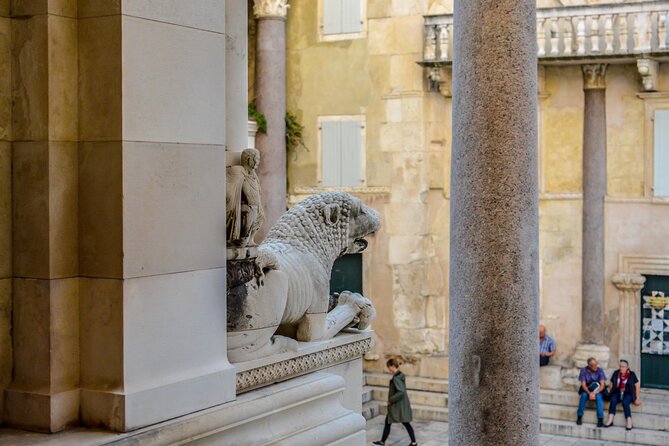
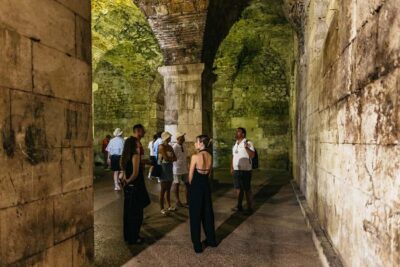
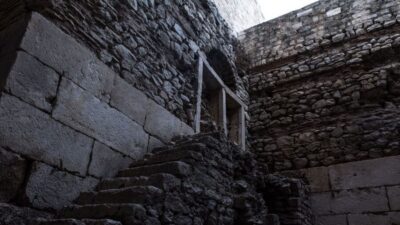
Next you go through the south gate into the palace cellars. These underground spaces were built over 1,700 years ago and are described as very well preserved. Even without going deep into a ticketed exhibit, the cellars help you “feel” the palace scale.
This is one of those stops where your imagination does the work. You look at what survives, and the guide connects it to what the space was for in the original palace system. It’s also a quick reality check. Roman architecture was not just about temples and monuments. It was also about storage, logistics, and control.
Because this is a short stop, do not rush your notes. If you are the type who likes photos, grab a couple here so you remember how different the cellar atmosphere feels compared to the bright street above.
The Peristyle: where the emperor showed himself
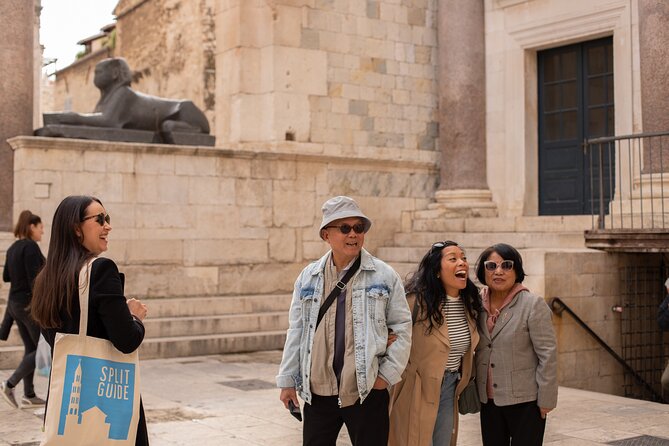
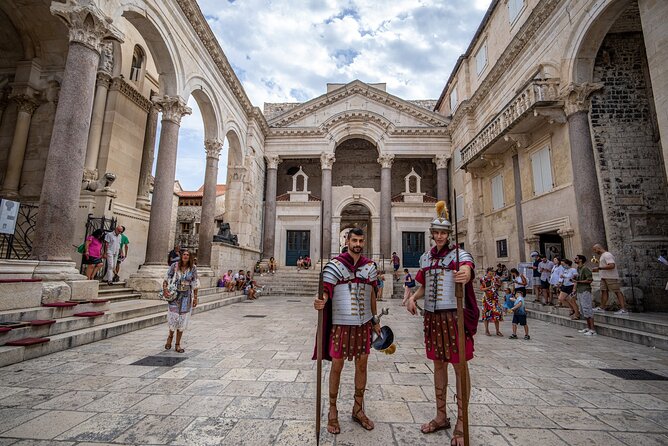
Then you reach the Peristyle, described as a sacred meeting place in Diocletian’s time. The Peristyle is tied to public display and religious symbolism, including the idea of Diocletian being worshipped as a connection to Jupiter.
This part of the route is valuable because it gives you the emotional tone of the palace. It is not just architecture. It is power in stone. Standing in the right area, you can start to picture how processions and audiences might have worked.
Drawback to consider: since you are mostly viewing from outside, you will not get a long, museum-style explanation of artifacts. The value comes from how the guide helps you read the space you are in.
More corridors of the emperor’s palace:
- Split & Diocletian’s Palace Walking Tour
★ 5.0 · 1,125 reviews - Split: Diocletian Palace & Old Town Guided Walking Tour
★ 4.7 · 882 reviews - Split Old Town and Diocletian’s Palace Tour
★ 4.8 · 716 reviews - Split: Game of Thrones Tour with Diocletian’s Palace Cellar
★ 4.8 · 545 reviews
Cathedral of Saint Domnius: the pagan mausoleum becoming Christian space
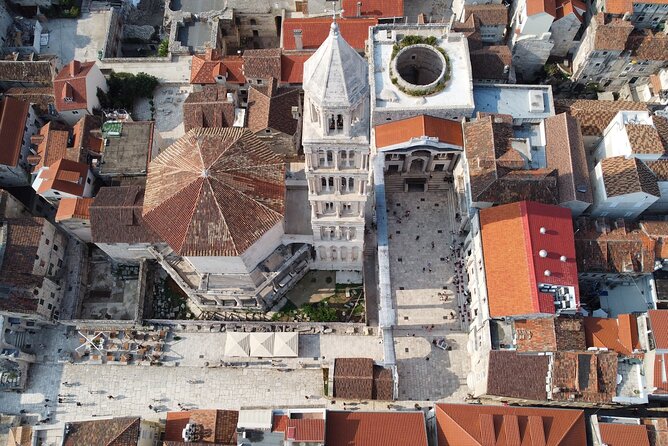
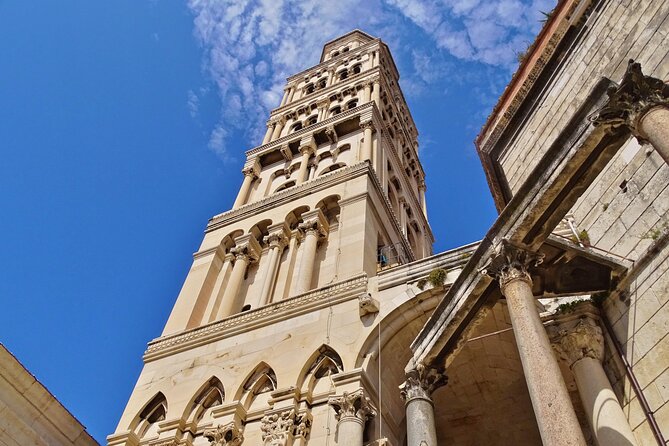
The tour moves to the Cathedral of Saint Domnius and looks at it from the outside. The connection is the fascinating part: the cathedral was once Diocletian’s mausoleum, and during Christianization the emperor’s coffin and remains disappeared, while the mausoleum became a cathedral.
You do not need to pay an entrance fee for this stop, and the outside view can still make the transformation feel real. It’s also a good moment to pause, look up, and notice how the function of a space can change across centuries while the bones of the building remain.
If you are someone who likes to compare eras, this stop is a payoff. If you want extensive interior details, you will likely still want a separate visit later.
East gate to the market: Iron Gate and today’s food stalls
Next comes the Iron Gate by the market area. The description notes that the east gate, often referred to as the Silver Gate, was walled up multiple times over the centuries and reopened in the 1940s. Today, the gate area leads to the market where local products are offered.
This is where the tour becomes more than Roman sightseeing. You see how ancient access points became modern circulation, and how the city’s food culture still occupies the same general area of movement.
Practical tip: if you have shopping stamina, the market zone is the place to pick up snacks for later. The tour’s timing is short here, so grab what you want quickly.
Triklinij, the dining room where the details matter
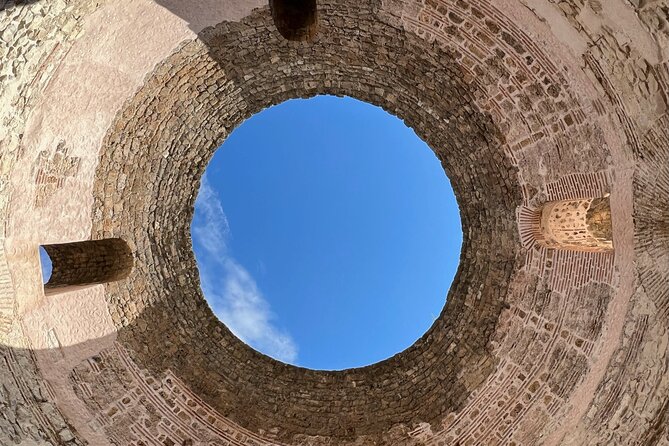
Then you visit Triclinium, which the guide explains as the dining room. This stop is where the tour turns from stone reading to human-scale imagination. You learn that Diocletian dined with guests here and that Mediterranean dishes were central, including local wine and fish, plus honey.
The description also mentions that a full dinner could include up to 20 different courses. Even though you are looking at this from the outside, that specific detail helps you stop thinking of the palace as only military and religious. It was also where power hosted power, and where an emperor performed hospitality.
If you love food history, this is one of the best stops. It makes the palace feel less like a cold ruin and more like a lived setting.
Vestibulum: the entrance to Diocletian’s private chambers
The vestibule is your next clue into how the palace worked privately versus publicly. The vestibule is described as the entrance area to Diocletian’s private chambers.
This stop is short, but it’s useful because it helps you understand the palace as a system of movement. Public areas had different roles, and private access points were controlled. Even if you cannot go inside, the guide’s framing helps you “place” the spaces in your mind.
If you tend to get lost in big sites, stops like this are what keep your mental map intact.
Temple of Jupiter: now a baptistery
Next is the Temple of Jupiter, which today is a baptistery. Again, you view it from the outside only. That said, the idea of an ancient temple repurposed for Christian worship is exactly the kind of transformation this tour does well.
This stop also works as a reminder that many famous religious sites are not frozen in time. They evolved. The stones outlast the beliefs, and the uses change.
Consideration: if you were expecting to go inside and see architecture up close, the “outside only” format may leave you wanting more. It is still worth the stop for the contextual storytelling.
West gate to Pjaca: Iron Gate again, different purpose
You circle back to another major access point, the Iron Gate on the west side of the palace. The description explains that the west gate was built as a double gate, called Propugnaculum, so attackers could be trapped between gates and attacked with stones, arrows, and hot oil.
Yes, it sounds grim. But it also makes sense of why gates mattered so much. This stop changes how you picture the palace. It wasn’t only about ceremonies and dining. It was designed to resist threats.
Leaving the gate, you enter Pjaca, a beautiful square. It is a helpful final feeling because the route ends with you stepping from ancient defenses into a more open public space.
Golden Gate and Salona’s connection
Then you see the Golden Gate, the north gate of the palace, described as the most important gate in Roman times. The guide connects it to the road leading to Salona, the capital of the Roman province.
This stop is more “orientation” than “show and tell.” It gives you a sense of direction and influence. You start thinking beyond Split as a standalone city and instead as part of a wider Roman network.
If you are planning day trips or future reading about Dalmatian history, this is a strong anchor fact.
Green Market: east side life inside the walls
Finally, you reach the Green Market on the east side of the palace, where fresh fruits, vegetables, and other traditional foods are sold every day. This stop is short, but it is a nice capstone. It turns your Roman route into a modern experience you can actually taste.
It is also a great place to buy something small for later rather than trying to squeeze shopping into a tight schedule. When your walking tour is ending, your energy is limited, so a market stop at the right moment is real value.
Ending where you started: Split Riva again
The tour finishes back at the Split Riva, following the palace walls to the promenade. Like the start, it’s a mix of sun, cafes, and that see-and-be-seen energy.
Ending here is practical because you are back in a lively zone with lots of options. If you want gelato, a drink, or a casual dinner, you are already in the right neighborhood. If you want to keep exploring, it also makes it easier to decide where to go next.
Price and value: what $137.80 gets you in real terms
At $137.80 per person for about 1 hour 30 minutes, you are paying for a focused private walking experience rather than a long bus tour or a timed ticketed museum circuit. The value improves because there are no entrance fees included for the listed sights, and the tour emphasizes exterior viewing with explanations.
You are also not just getting directions. You are getting restaurant and bar recommendations plus suggestions for leisure activities, with the option for the tour to be customized. That matters in Split because the best next step is often subjective. Your guide can help you choose based on time, interests, and energy.
The group format is also a real selling point. The tour is designed for a group of maximum 6 participants, which usually means more questions and less standing around. There is also a stated maximum of 10 travelers, so still expect a small crowd, not a massive stampede.
Who this tour fits best
This is a smart match if you:
- Want a structured orientation to Old Town Split in a short amount of time
- Prefer stories and context over spending extra hours paying entry fees
- Like the idea of Roman sites still in use as part of modern life
- Want a guide to point you toward where to eat and what to do next
If you are the type who wants long interior museum time and lots of ticketed exhibits, you might feel held back by the outside-only format. Still, you could use this as your primer and then return later for anything that truly grabs you.
A quick note on guides and the private feel
This kind of tour works or fails on the guide’s storytelling. One name comes up strongly in the feedback: Dana. People highlight her as exceptional for sharing history and stories, and for making Old Town Split feel clear and enjoyable. That lines up perfectly with what this itinerary is trying to do, it is not only about seeing places, it is about understanding them fast.
And because it’s private, you can ask follow-up questions as you walk. That turns a list of stops into a conversation, and the palace starts to make sense in your own head.
Should you book this Split Diocletian Palace highlights tour?
Book it if you want a fast, guided path through the most important parts of Diocletian’s Palace, with zero entry fees for these stops and a guide who can connect the Roman layout to what you see today. It’s a great way to get oriented early, then spend the rest of your day exploring with confidence.
Skip it if you are mainly chasing interior access, long museum time, or detailed stops that require ticketed entries. Also think twice if you are traveling with limited flexibility around weather, since it needs good conditions and the route is outdoors.
If your goal is to get the big story and the right walking route in about 90 minutes, this is a strong choice for value and clarity.
Marble Lanes, Slowly



Latest arrivals logged at Split






Diocletian's Palace Tours, compared.

Walking Tour of Split and Diocletian’s Palace
Read our review →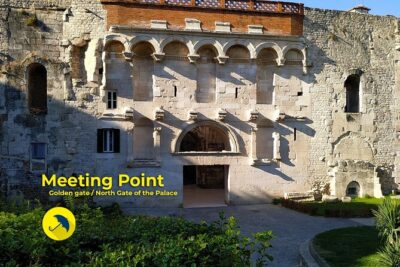
Diocletian Palace & Old Town Guided Walking Tour
Read our review →
Game of Thrones Tour with Diocletian’s Palace Cellar
Read our review →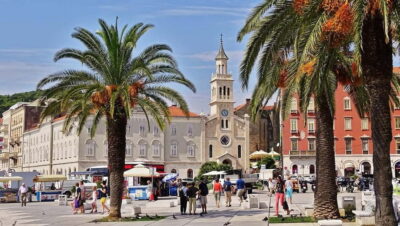
Diocletian’s Palace and Old Town SMALL GROUP Walking Tour
Read our review →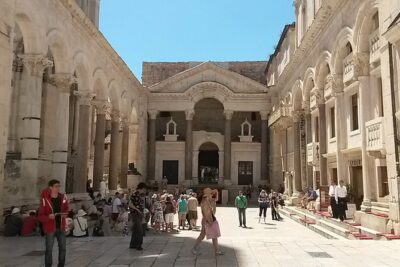
PRIVATE Walking Tour of Diocletian’s Palace & Old Town
Read our review →Browse the lists this tour appears in