
Reviewed · DIOCLETIAN'S PALACE TOURS
Split: Private Walking Tour and Diocletian’s Palace
Split is one of those places where street corners feel ancient. This private walking tour ties Diocletian’s Palace to everyday old-town life, with stops that explain why Split looks the way it does. You also get a guided pass through the UNESCO-listed core, plus entry to the palace’s cellars.
What I like most is the mix of big monuments and small street details, so you do not just see famous spots, you understand them. I also appreciate that you walk a logical loop through key squares and the Riva promenade, which makes the whole old town feel connected. The one drawback to plan around is that the route is not set up for people with mobility impairments, so wear supportive shoes and expect a steady walking pace.
In This Review
- Key things to know before you go
- Split in 90 Minutes, a Private Walk That Makes the Old Town Click
- Meeting at South Tours, Then Getting Oriented Fast
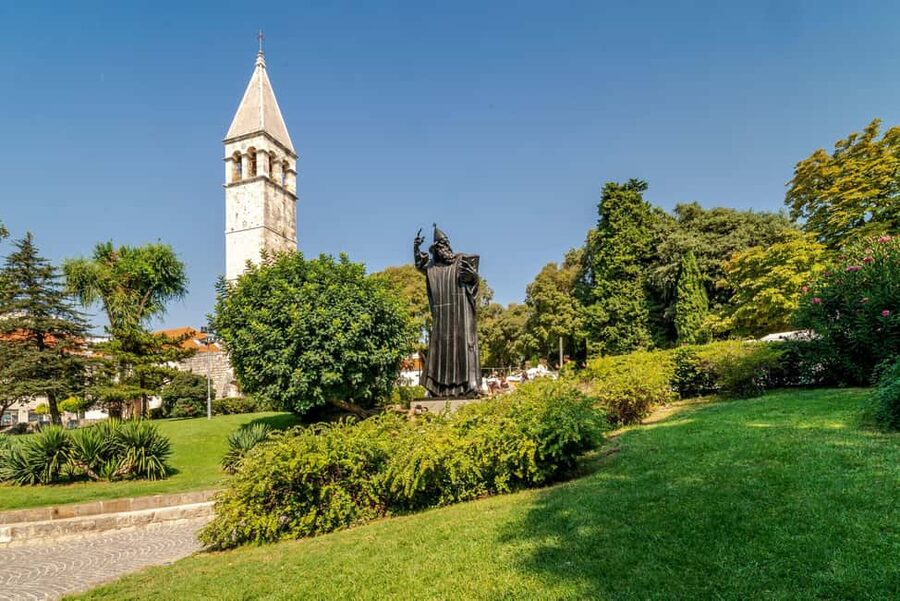
- Golden Gate and a Quick Culture Stop: From City Entry to City Identity
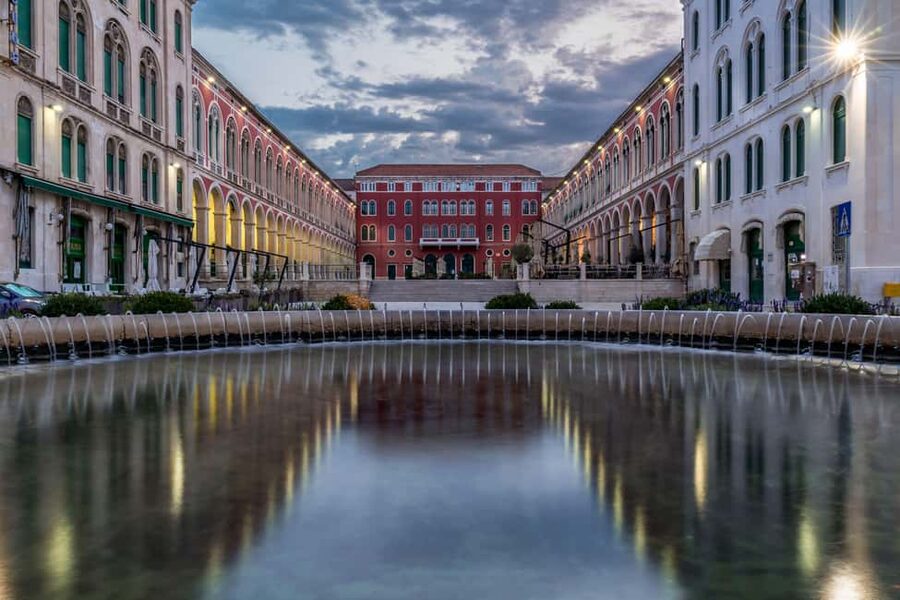
- People’s Square and Fruit Square: Where Split Feels Local
- Riva Promenade: A Break With Views Built for Strolling
- Diocletian’s Cellars: Why the Palace Keeps the Cool Story Going
- Peristil: The Open Core That Makes the Whole Palace Make Sense
- Cathedral of Saint Domnius: When Old Sacred Space Still Lives
- Vestibul Photo Stop: A Small Moment That Helps You Remember the Shape of It All
- Price and Value: Is $117 Per Person Fair for This Experience?
- Who This Private Split Tour Is For (And Who It Might Not Be)
- Should You Book This Split Walking Tour?
- FAQ
- What is the duration of the Split private walking tour?
- Where does the tour start?
- Is entry to Diocletian’s Cellars included?
- What languages are available for the live guide?
- Is this tour private?
- Are food and drinks included?
- What should I bring?
- Is the tour suitable for people with mobility impairments?
Key things to know before you go
- Diocletian’s Palace cellars are included with your ticket, not something you have to add later
- A private group means more questions and less rushing
- Guiding in English or Spanish, with an audio guide also included for extra clarity
- UNESCO old town route links gates, squares, and major palace spaces
- About 90 minutes is long enough to learn the main story without eating your whole day
Split in 90 Minutes, a Private Walk That Makes the Old Town Click
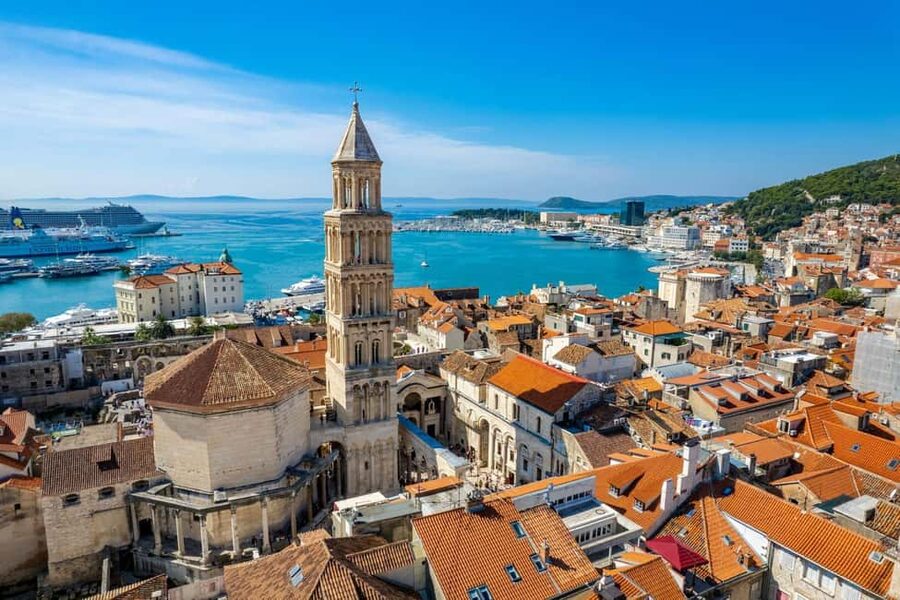
At $117 per person, this is not the cheapest way to see Split. What makes it worth your attention is how tightly it focuses on the city’s most important layers: Roman planning inside Diocletian’s Palace, then the living city that grew around it for centuries. In a short span, you get a route that helps you connect each landmark to the one right before it.
This is also the kind of tour where you will feel the benefit of a human guide. You are not just reading plaques. You get interpretations, context, and practical wayfinding as you go, which matters in Split’s old town where streets can look similar if you are on your own.
The group is private, so it does not turn into a loud, crowded shuffle. You can ask questions, and your guide can adapt the pace to what you seem most interested in, whether that is Roman engineering, medieval church spaces, or the city’s modern charm.
Meeting at South Tours, Then Getting Oriented Fast
You meet at the South Tours office at Mrčelina 1 in Split. Arrive about 15 minutes early so you can check in without stress and get settled before the walk starts.
Right away, you can think of this as an orientation tour. You start near where the route will feed you into Split’s biggest story, Diocletian’s Palace, then you fan outward through the surrounding streets and squares. That structure is useful because it helps you avoid the common first-day problem of wandering without a mental map.
Bring comfortable shoes. The tour is designed around walking the core, including palace areas and city-center corners where cobblestones and uneven footing can slow you down if you are not prepared.
More Walking Tours in Split
- Split: Old Town and Diocletian Palace Walking Tour★ 4.9 · 4,727 reviews
- Walking Tour of Split and Diocletian’s Palace★ 5.0 · 2,588 reviews
- Krka Waterfalls tour with Trogir Walking tour and Krka panoramic boat cruise★ 5.0 · 1,659 reviews
Golden Gate and a Quick Culture Stop: From City Entry to City Identity
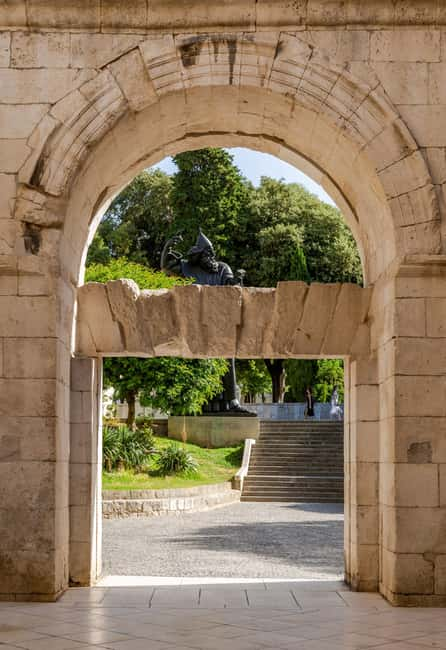
The first named stop is the Golden Gate. This is one of the points where the palace and the broader city feel like they share the same boundaries. A guided walk here helps you understand that this was not just a pretty entrance, it was part of a planned world built by and for power.
Next you pass the Game of Thrones Museum. Even if you are not a fan, the value of this stop is that it shows how Split keeps old stones relevant in modern ways. You can treat it as a quick moment for a photo or a sensory break, then you move right back into the architectural story.
The trick for enjoying these quick stops is to use them as anchors. Golden Gate gives you orientation. The museum stop adds a little modern pop culture energy so the tour does not feel like you are only staring at archaeology text.
People’s Square and Fruit Square: Where Split Feels Local
You then head to People’s Square. This is where the tour stops being only about ancient walls and starts showing how a city breathes around its history. A guide can help you read public space, what it is for, and why it tends to attract the kind of daily life you want to experience.
After that, you visit Fruit Square. This kind of stop matters because marketplaces and food squares often preserve the city’s habits. Even when you are not buying anything, you learn what the area signals to locals, and that makes the old town feel less like a museum and more like a place people actually live in.
What I like about including multiple squares is that you are not stuck in one style of sightseeing. You get Roman scale, then you step into civic scale, and then you return to palace scale again soon after. That rhythm keeps your attention from flattening.
Riva Promenade: A Break With Views Built for Strolling
Then you stroll down the Riva promenade. The practical value of this stop is that it gives you an outdoor visual reset. You can look out, catch the light, and connect your walking route to the harbor-facing side of Split.
It is also a good place to notice how the city uses its setting. Split’s waterfront mood changes through the day, and the guide can point out cues you might miss if you are only focused on buildings. Take a minute here to slow down, watch movement, and let the earlier stops settle in your head.
If you tend to get museum-tired, this is the moment that will help. It is still part of the route, but it feels more like a relaxed city walk.
More corridors of the emperor’s palace:
- Split & Diocletian’s Palace Walking Tour
★ 5.0 · 1,125 reviews - Split: Diocletian Palace & Old Town Guided Walking Tour
★ 4.7 · 882 reviews - Split Old Town and Diocletian’s Palace Tour
★ 4.8 · 716 reviews - Split: Game of Thrones Tour with Diocletian’s Palace Cellar
★ 4.8 · 545 reviews
Diocletian’s Cellars: Why the Palace Keeps the Cool Story Going
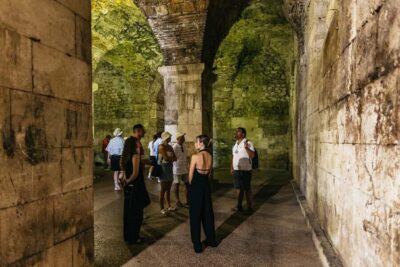
One of the best stops is Diocletian’s Cellars. Your ticket entry is included, which is a big value point because you are not paying extra on arrival. The cellars are where the palace feels most grounded. You are underground, close to stone, and you start understanding that the palace was built to control space and function, not just show off.
A guided visit also helps you place the cellars in the broader palace complex. You are looking at beautifully preserved spaces, but the real payoff comes from tying them to the logic of the palace at the turn of the fourth century, when Diocletian’s vision shaped how power and daily life could be organized in one place.
I like that you spend about 15 minutes here. It is enough time to feel the space without turning it into a long museum detour that drains your energy. If you enjoy architectural details, this is the stop that most rewards your attention.
Peristil: The Open Core That Makes the Whole Palace Make Sense

After the cellars, you reach Peristil. This is the kind of palace space that acts like the hub of everything you have already seen. The architecture opens up your understanding, because Peristil shows you how movement and gathering were designed into the complex.
Guides tend to focus on how these spaces functioned in the palace system, and that is what you want. If you only look up, you miss the point. If you listen for the explanation, you start to see the palace as a living machine, then you see why it later became part of the city’s everyday fabric.
Peristil also works as a visual reward. It breaks the tour out of the tighter underground feeling and brings you into a more open, photo-friendly environment.
Cathedral of Saint Domnius: When Old Sacred Space Still Lives
Next is the Cathedral of Saint Domnius. This stop is valuable because it shows the continuity between eras. Roman planning gave the structure, and later generations shaped religious life within that structure. Even if you do not go inside for a long time, the guided context helps you notice what changes and what stayed.
This is also one of those places where the guide’s pacing matters. If you are moving too fast, you might skim the meaning. If you pause at the right time, you can absorb how a sacred space can anchor a city’s identity.
Think of it as the emotional checkpoint. Earlier you learned palace logic. Here you see how that logic got re-used, reinterpreted, and kept relevant.
Vestibul Photo Stop: A Small Moment That Helps You Remember the Shape of It All
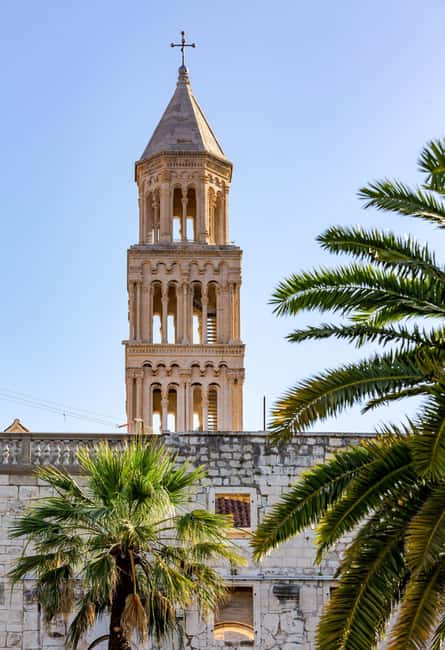
You end with a stop at the Vestibul, including a photo stop and guided explanation. This is short, but it is effective. A well-timed photo moment can actually help you remember spatial relationships, and in Split’s palace areas, those relationships are everything.
Before you leave, it helps to look back mentally. Your earlier stops built the story from entry points and squares, then cellars, then open core spaces, then sacred space. The Vestibul ties that together visually so you can navigate on your own afterward with more confidence.
If you are planning to keep exploring after the tour, spend an extra minute where you can. Notice the lines of movement, what feels like the center, and how the old streets connect to the palace interior.
Price and Value: Is $117 Per Person Fair for This Experience?
At $117 per person, you are paying for more than walking. You are paying for a focused private guide, plus entry to the palace cellars, within a route that hits key landmarks in a compact loop.
Here is how I’d think about value:
- If you want a self-guided stroll, you could do the basic sights on your own. But you would miss a lot of the “why this is here” context that makes Split click.
- If you love architecture and city planning, the palace stops are the heart of the price. Cellars entry being included is also a clear win.
- If you like your tours tailored, the private group is part of the value equation because you are not stuck with a rigid pace.
If you are traveling with limited time in Split, this 90-minute format can be a smart way to get your bearings fast while still learning real details.
Who This Private Split Tour Is For (And Who It Might Not Be)
This is a great fit if you want to see Split’s most famous Roman and central-city landmarks in one plan. It suits you best if you like guided explanations and you appreciate a structured walking route rather than wandering randomly through the old town.
You should also consider it if you enjoy learning history that connects to what you see on the street today. The route intentionally blends palace spaces with civic squares and the Riva, which helps you understand Split as a real city, not only a historical site.
It might not be the best choice if you have mobility limitations, since it is not suitable for people with mobility impairments. You will want to choose a different format that offers less walking and easier access.
Should You Book This Split Walking Tour?
Book it if you want a tight, high-impact overview of Split that focuses on Diocletian’s Palace, the UNESCO-listed old town, and the spaces people still connect with every day. I would also book it if you care about having a guide explain what you are looking at, because the tour is designed for understanding, not just sightseeing.
Skip it if you are planning a super relaxed day and you dislike walking in old-town streets, or if you need an accessibility-friendly route. Otherwise, this is one of the more efficient ways to turn your first views of Split into a story you can carry with you as you explore.
FAQ
What is the duration of the Split private walking tour?
The tour duration is 90 minutes.
Where does the tour start?
You meet at the South Tours office at Mrčelina 1, Split.
Is entry to Diocletian’s Cellars included?
Yes. Entry ticket to the cellars of Diocletian’s Palace is included.
What languages are available for the live guide?
The live guide is available in Spanish and English. An audio guide is also included in Spanish and English.
Is this tour private?
Yes. The group type is private.
Are food and drinks included?
No. Food and drinks are not included.
What should I bring?
Wear comfortable shoes for walking.
Is the tour suitable for people with mobility impairments?
No. It is not suitable for people with mobility impairments.
Marble Lanes, Slowly



Latest arrivals logged at Split



Diocletian's Palace Tours, compared.

Walking Tour of Split and Diocletian’s Palace
Read our review →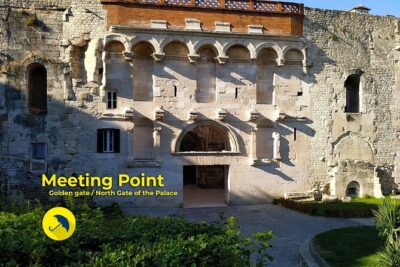
Diocletian Palace & Old Town Guided Walking Tour
Read our review →
Game of Thrones Tour with Diocletian’s Palace Cellar
Read our review →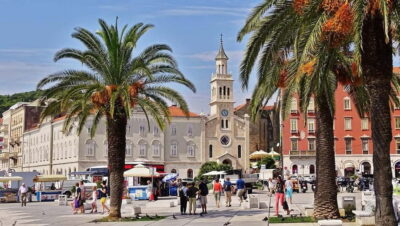
Diocletian’s Palace and Old Town SMALL GROUP Walking Tour
Read our review →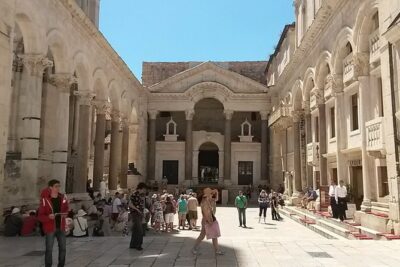
PRIVATE Walking Tour of Diocletian’s Palace & Old Town
Read our review →Browse the lists this tour appears in