
Reviewed · ZAGREB TOURS & ACTIVITIES
Discover Zagreb: Small-Group Tour with a Local
Zagreb gets personal fast. In this small-group walk, Dorotea leads you through old streets and the Upper Town at a calm pace, keeping the stories conversational instead of lecture-style. You start in the city’s most beloved green pocket, then work your way toward the iconic sights that make Zagreb feel like a real place, not a checklist.
I love the mix of famous stops and local details, from St. Mark’s Square and its colorful tiled roof to the short funicular ride that saves your legs. One catch: it is a 2-hour walk with uphill sections and uneven ground, and it is not suitable for wheelchair users.
In This Review
- Key things that make this tour worth your time
- Meeting in Zrinjevac Park, where the walk starts like a local habit
- Ban Jelačić Square, Zagreb’s main stage and its local meaning
- Ilica Street to the funicular, saving steps the smart way
- Gornji Grad cobblestones, old streets with stories about daily life
- St. Mark’s Square and its coat-of-arms roof you will actually notice
- Old pharmacy stop and Stone Gate chapel, where religion and life overlap
- Radićeva Street, the Bloody Bridge alley, and Tkalčićeva Street after dark or by day
- Opatovina Park and Dolac Market, the local food culture moment
- Zagreb Cathedral, the big finale and the story behind the city name
- Price and value for $41, what’s actually included in the deal
- Who should book this walk, and who might want a different option
- Final call: should you book Discover Zagreb with Dorotea?
- FAQ
- How long is the Zagreb tour?
- What is the price per person?
- Is the funicular ticket included?
- Where do we meet the guide?
- What landmarks are covered?
- Are museums or galleries included?
- Are food and drinks included?
- What languages is the tour offered in?
- Is the tour suitable for wheelchair users?
Key things that make this tour worth your time
- Max 6 people so you get real conversation, not a crowd shuffle
- Dorotea’s personal guiding style, including local legends and everyday life stories
- St. Mark’s Square with the coats of arms theme you’ll actually notice and remember
- Stone Gate and the chapel inside, explained in a way that makes the landmark feel lived-in
- Bloody Bridge and Tkalčićeva Street, where the story behind the name matters
- Dolac Market and the Cathedral, closing with the meaning of Zagreb’s name
Meeting in Zrinjevac Park, where the walk starts like a local habit
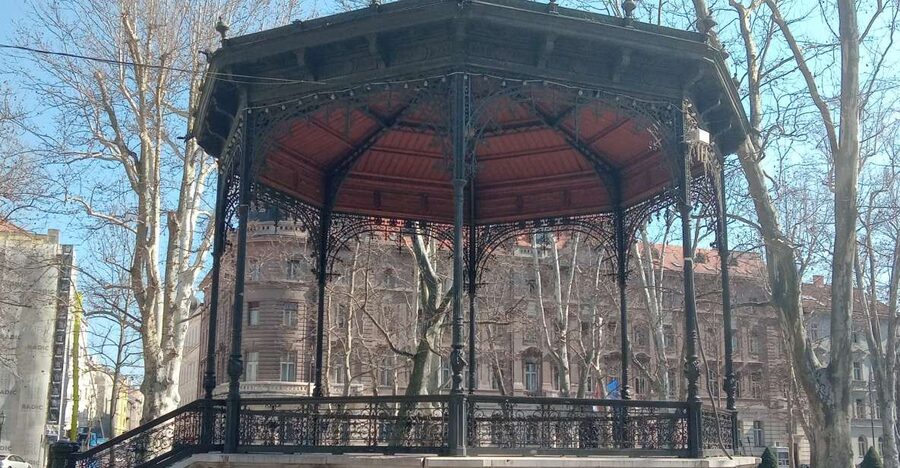
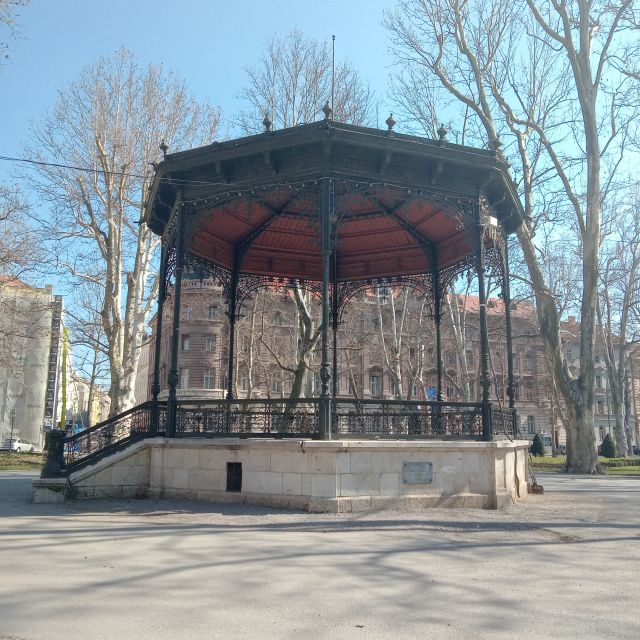
Your first step is easy and friendly: meet in Zrinjevac Park at the music pavilion, where the guide stands with the inscription My happy walk. Zrinjevac is one of those “locals recharge here” spots. It works as a perfect warm-up, because you are not starting your visit with a sprint. You settle in, you see a green center in the middle of the city, and you get the tone of the day.
Dorotea frames the tour like Zagreb is her home town, because it is. She was born and raised in the city, and that comes through quickly. Instead of treating Zagreb like a museum, she connects the big landmarks to small moments, like how people move through streets, what locals notice on ordinary days, and why certain places became important.
This start matters for first-timers. If you only arrive and jump straight into major monuments, you can miss the city’s rhythm. Starting at Zrinjevac helps you get that rhythm early, so later stops land harder.
Ban Jelačić Square, Zagreb’s main stage and its local meaning
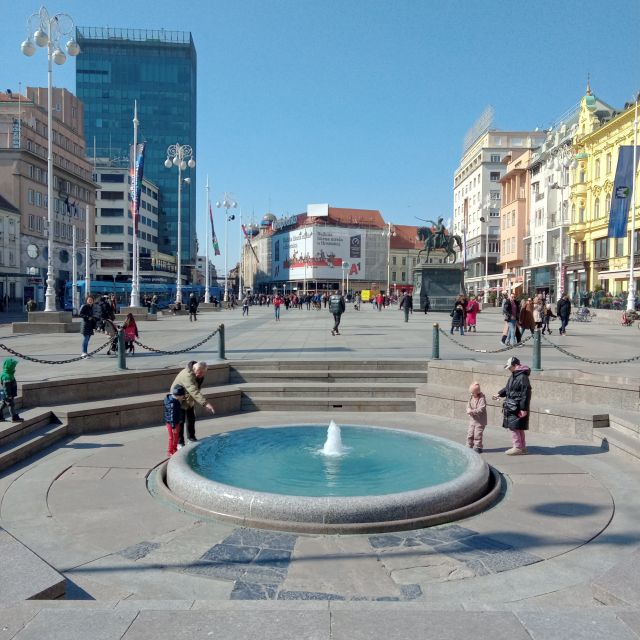
From Zrinjevac, the walk flows to Ban Jelačić Square, Zagreb’s main square. It is the kind of place where you feel the city’s pulse even if you do not know much yet. Dorotea keeps it practical, sharing a few clear facts about history and why the square matters to locals today.
Here’s what I like about beginning with the main square: it gives you a reference point. As you move through the city’s different levels and neighborhoods, you can always mentally anchor yourself back to where you started. By the time you circle back at the end, the whole walk feels like one connected loop.
Also, this is a good moment to check how you feel physically. The tour is 2 hours, and the fun is worth it, but it is still a walking experience. If you’re arriving from travel, use this stretch to adjust your pacing.
Still riding at anchor off Zagreb
- From Zagreb: Plitvice & Rastoke Guided Day Trip with Ticket★ 4.9 · 2,955 reviews
- Zagreb: Rastoke & Plitvice Lakes Guided Tour with Ticket★ 4.9 · 1,897 reviews
- Communism & Croatian Homeland War Tour★ 5.0 · 1,355 reviews
Ilica Street to the funicular, saving steps the smart way
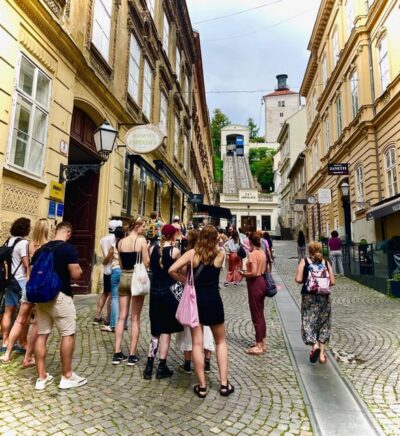
Next comes Ilica Street, which leads you to the funicular. The tour includes a funicular ticket, and the plan is to take the shortest funicular ride to reach the Upper Town, Gornji Grad.
That detail matters more than it sounds. Zagreb has hills, and the Upper Town is full of charm but also full of slopes. The funicular is not just a transportation tool here. It is part of the tour’s rhythm, turning the climb into a quick transition. You get a view shift, your legs get a break, and you arrive ready to enjoy the old streets instead of arriving exhausted.
If you like efficient sightseeing, this is a nice compromise between getting elevation and keeping the day comfortable. If you prefer walking every step, you might still appreciate the funicular, since the rest of the walk includes cobblestones and tight lanes that are easier to enjoy when you are not fighting fatigue.
Gornji Grad cobblestones, old streets with stories about daily life
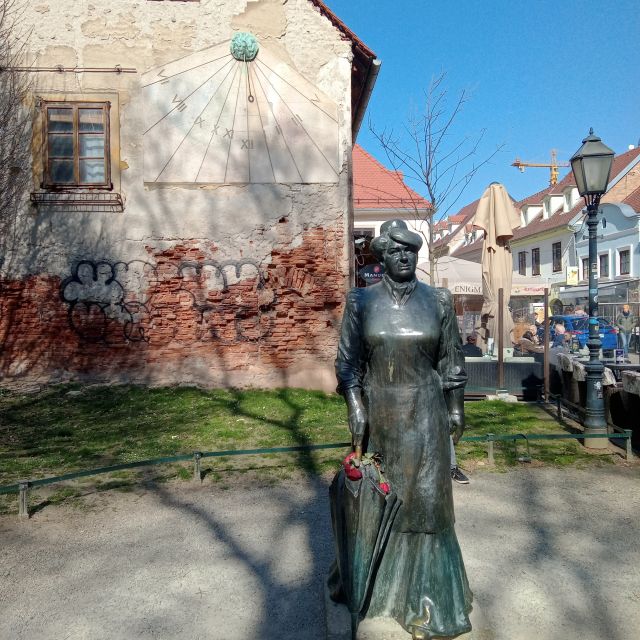
Once you’re in Gornji Grad, the tour becomes what Zagreb does best: compact streets with real character. You’ll be strolling along cobblestones, and Dorotea uses the setting to tell stories about everyday life in the past and a few local legends that do not feel like trivia. They feel like context.
This is where small group size turns into a real advantage. With up to 6 participants, it is easier to ask questions and keep pace. Dorotea’s answers are tied to what you are seeing right now, like a quick historical explanation that you can immediately attach to a building, a street shape, or a landmark’s placement.
A good sign for this tour is that the legends are not random. They connect to why the place looks the way it does, or why certain symbols and chapels matter. That makes the Upper Town feel understandable, not just scenic.
St. Mark’s Square and its coat-of-arms roof you will actually notice
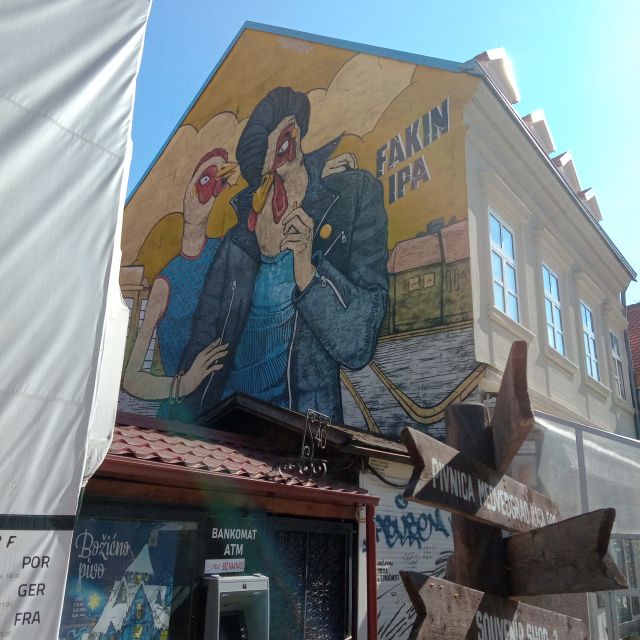
One of the most iconic stops is St. Mark’s Square, famous for its colorful tiled roof depicting the coats of arms of Croatia, Dalmatia, Slavonia, and Zagreb.
What makes this stop great is that the symbolism gives you something to look for. Instead of staring at a landmark and hoping it clicks, you get a specific lens. Once you know what the tiles represent, you start seeing the roof as a map of identities, not just decoration.
Dorotea also frames the square as more than a pretty viewpoint. It is described as a political center, and you hear how pride and identity show up in the way Zagreb developed. That matters because many cities treat political history as distant. Here, it feels connected to the city’s self-image.
Tip: if you’re the kind of person who likes to take photos, pause before you start snapping. Look up first, read the roof theme in your mind, then take pictures. You will end up with photos that mean something, not just pictures of a famous roof.
Two moorings down in Zagreb:
- Zagreb: City and WWII Tunnels Walking Tour
★ 4.9 · 1,230 reviews - Zagreb: City & History Walking Tour & WW2 Tunnels
★ 4.9 · 1,202 reviews - Plitvice Lakes with Ticket & Rastoke Guided Tour from Zagreb
★ 5.0 · 966 reviews - Zagreb: Communism and Croatian Homeland War Tour
★ 4.9 · 927 reviews
Old pharmacy stop and Stone Gate chapel, where religion and life overlap
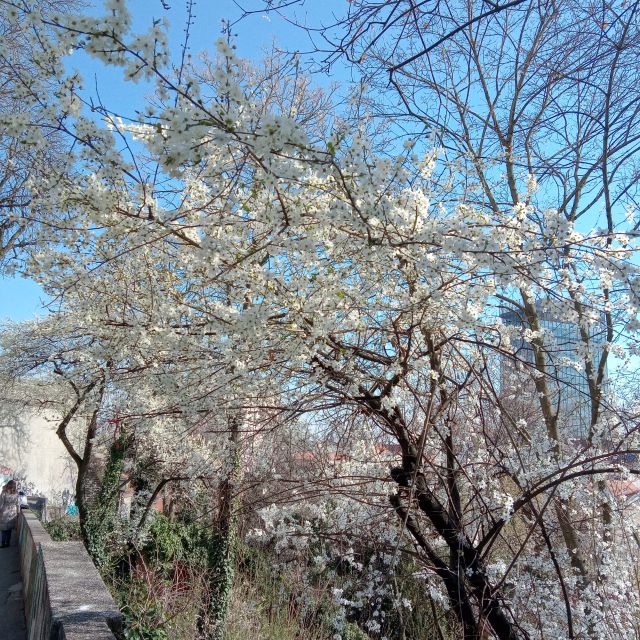
As you continue through the Upper Town, you pass the oldest pharmacy in Zagreb. Dorotea explains how medicines were made in the Middle Ages and how people once sought cures and remedies. Even if you do not care about pharmacy history, the idea is human. You see how everyday needs shaped buildings and street importance.
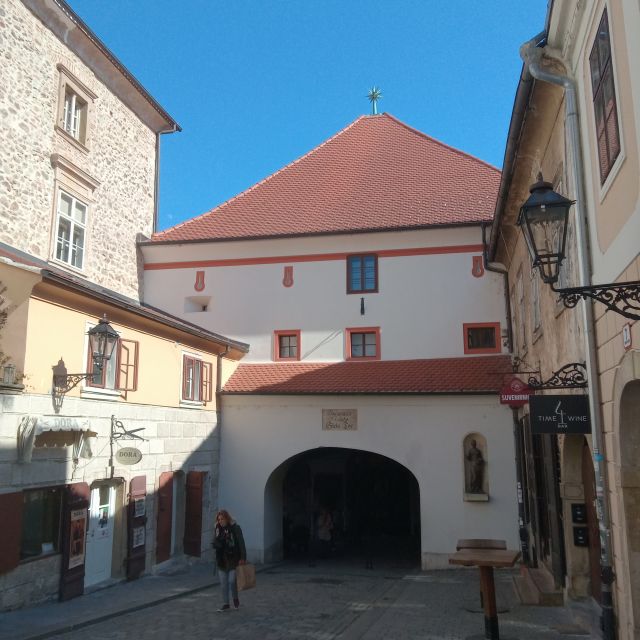
Then you move to Stone Gate, the only preserved city gate. Inside there is a small chapel, dedicated to Zagreb’s patron saint, and it is described as one of the city’s beloved landmarks. This is the kind of detail that makes walking tours worth it. A gate is easy to spot. A chapel inside a gate changes how you read the place. It turns a defensive structure into something spiritual and community-centered.
If you enjoy seeing how cities evolve, this segment is a good example. You see layered functions: protection, worship, and public life in one compact area.
Radićeva Street, the Bloody Bridge alley, and Tkalčićeva Street after dark or by day
From Stone Gate, the tour descends Radićeva Street, then crosses a tiny alley called the Bloody Bridge. Dorotea explains how it got its name, and that story does not feel like a gimmick. The name makes you pay attention, and the explanation gives you a reason to remember it.
After that, you enter Tkalčićeva Street, described as one of Zagreb’s liveliest and most charming pedestrian streets. This is where the walk balances history and present-day feel. You can sense the street’s social life without needing a long detour.
What I like here is that the tour does not dump you into nightlife talk only. It connects the area’s past to how life changed over the centuries. That way, the street feels like it has a timeline, not just a scene.
Practical note: Tkalčićeva is pedestrian, so it is an easy place to slow down and take in details like shopfronts and street textures. If you feel like you need a quick reset, this is a good spot to breathe, then keep going.
Opatovina Park and Dolac Market, the local food culture moment
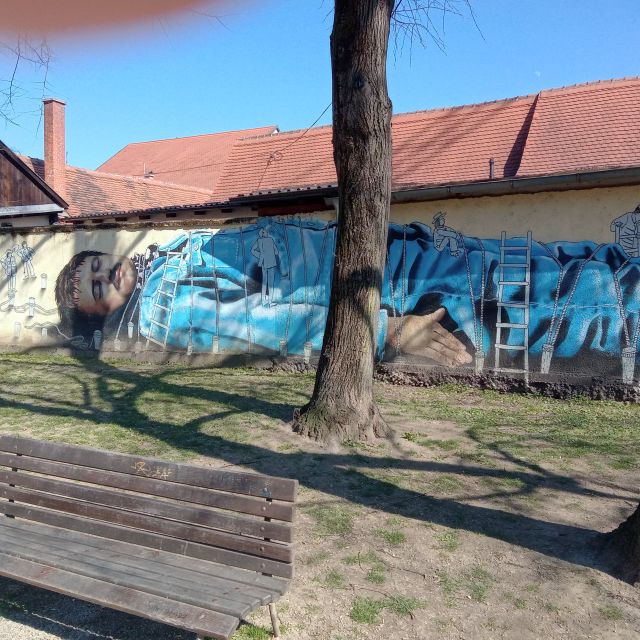
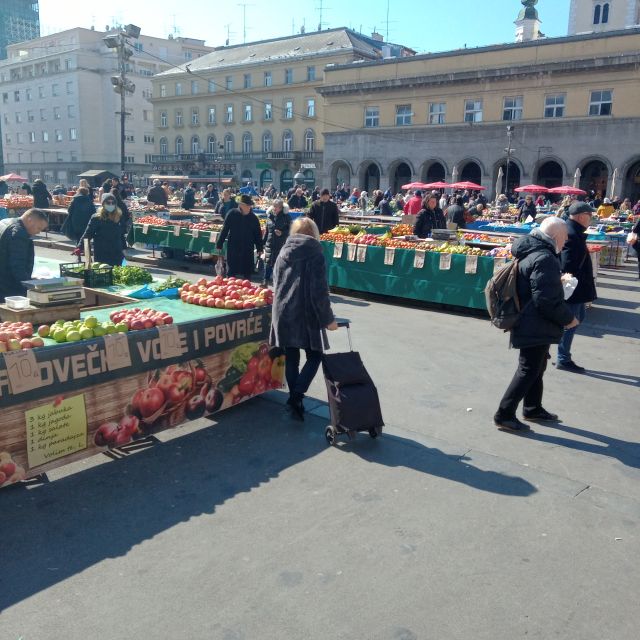
Next you reach Opatovina Park, then continue to Dolac Market, Zagreb’s famous open-air market. Dorotea explains how markets work as social places as much as shopping places.
If the tour is in the morning, you get the market at its most lively, with plenty of color, scents, and sound. Even if you do not plan to eat on the tour, it helps to see how locals shop and talk. It gives you a better sense of what kind of city Zagreb is at street level.
One important point: food and drinks are not included. That’s normal for a walking tour, but it does mean you should be ready to buy on your own if you want to sample. The good news is that Dorotea is said to share food and drink recommendations, which can help you spend your money wisely once you’re inside the market area.
If you have a sensitive stomach, markets can be a lot for a first-time visitor. Keep water handy and pace yourself. You can enjoy the atmosphere without trying to taste everything.
Zagreb Cathedral, the big finale and the story behind the city name
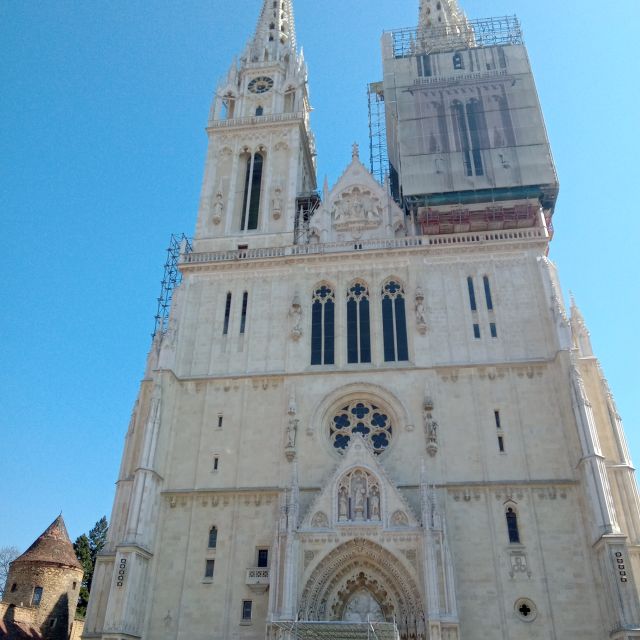
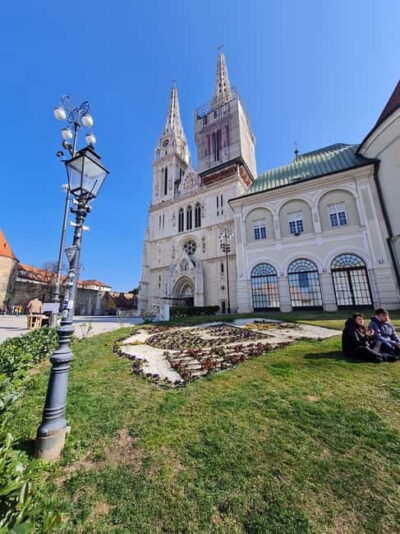
The tour’s last major stop is the Cathedral, one of Zagreb’s most iconic landmarks. Dorotea shares stories from the Cathedral’s long history, which helps you see it as more than a photo stop.
Then the walk ends back at Ban Jelačić Square. Dorotea finishes with what she calls the most beautiful Zagreb story, explaining how the city got its name. That closing detail is a smart move. It gives you a final thread that connects the landmarks you saw to the city identity itself.
This ending works well for short visits. You start with orientation at Zrinjevac, you climb into the Upper Town, and you come back down with meaning. By the time you’re back at the main square, Zagreb feels less like a place you passed through and more like a place you understand.
Price and value for $41, what’s actually included in the deal
At $41 per person for 2 hours, this tour is priced like a focused, guided experience, not a huge production. The value comes from three things you should care about:
- You get a licensed local guide and personal guiding from Dorotea.
- The tour includes a funicular ticket, which takes care of a key transport piece into the Upper Town.
- It’s a small group (max 6), which means you get more conversation and less waiting.
What is not included matters too. Museums and galleries are not part of the tour, and food and drinks are not included. So if you want formal museum time, you’ll need separate plans. The tour is designed to give you context and orientation, plus the main outdoor icons and story-driven stops.
Also, the tour is offered in English and Croatian. If you’re traveling with someone who prefers a slower pace or asks lots of questions, this language support plus small group format can make the experience easier.
Who should book this walk, and who might want a different option
This tour fits best if you:
- Want a first-time Zagreb introduction with clear story connections
- Prefer short, guided sightseeing over self-guided wandering
- Like legends, symbolism, and local explanations tied to what you see
- Enjoy small-group pacing, where questions do not get lost
It is not for you if:
- You use a wheelchair (the tour is explicitly not suitable)
- You need a fully flat route with no uneven ground
- You are looking for museum entry or a food-focused tasting program
If you’re traveling solo, this tour can feel especially welcoming because the group is tiny and the guide is actively engaged. If you’re in a couple or a small group, it’s also a strong pick, because you still get the personal feel.
Final call: should you book Discover Zagreb with Dorotea?
I’d book it if your goal is to leave Zagreb with stories you can repeat and a clear sense of the city’s layout. This tour is built around the best mix: iconic landmarks like St. Mark’s Square and the Cathedral, plus the kind of details that turn a gate, a bridge, and a market into meaningful places.
Skip it only if you want museum time, food included, or fully accessible routes. Otherwise, Dorotea’s approach, the small-group cap, and the included funicular ticket make it a solid value for a short window in Zagreb.
FAQ
How long is the Zagreb tour?
The tour lasts 2 hours.
What is the price per person?
The price is $41 per person.
Is the funicular ticket included?
Yes, the tour includes a ticket for the funicular.
Where do we meet the guide?
You meet at Zrinjevac Park, at the music pavilion. The guide stands in the pavilion with the inscription My happy walk.
What landmarks are covered?
The route includes St. Mark’s Square, Stone Gate, and the Cathedral, along with other historic streets and areas like Dolac Market and the Bloody Bridge.
Are museums or galleries included?
No, visits to museums and galleries are not included.
Are food and drinks included?
No, food and drinks are not included.
What languages is the tour offered in?
The live guide offers the tour in English and Croatian.
Is the tour suitable for wheelchair users?
No, it is not suitable for wheelchair users.
Latest arrivals logged at Zagreb



Zagreb Tours & Activities, compared.
Plitvice & Rastoke Guided Day Trip with Ticket
Read our review →
Rastoke & Plitvice Lakes Guided Tour with Ticket
Read our review →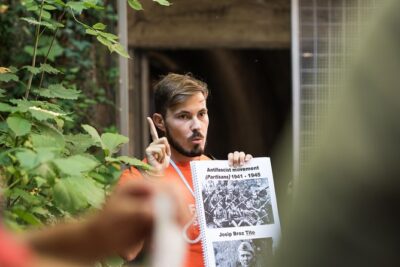
Plitvice Lakes with Ticket & Rastoke Guided Tour from Zagreb
Read our review →
Skip-the-Ticket-Line Museum of Broken Relationships
Read our review →Browse the lists this tour appears in