
Reviewed · ZAGREB TOURS & ACTIVITIES
Kumrovec: Croatian Ethno Village & Josip Broz Tito’s Birthplace
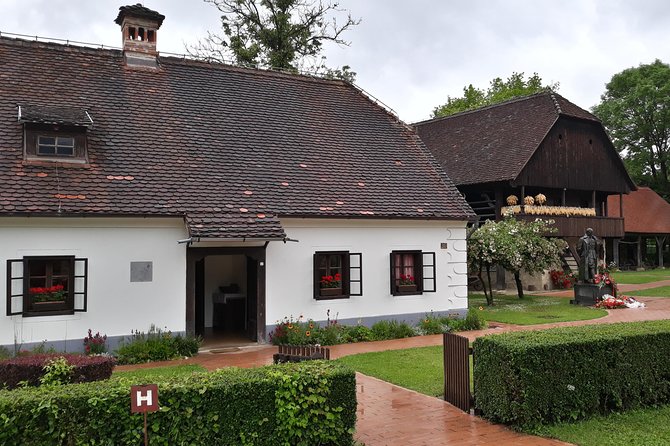
Tito starts in a small Croatian village. Kumrovec and the Staro selo open-air museum turn everyday rural life into something you can walk through, then connect it directly to Josip Broz Tito with sites like his childhood school and the grounds where public figures visited. It is a strong pick when you want history with clear textures, wood and stone, not just timelines.
What I like most is how carefully the village feels kept and readable. You are not looking at a copied set, you are moving through the kind of place where thatched roofs, gardens, workshops, and interior rooms are part of the story. A second win is the Tito thread, which runs through the visit in tangible stops, from a bronze tribute to his public-life displays. The one drawback is simple: this is a single main stop with time built in for exploring it, so if you are chasing multiple big sights, you may want a longer day.
In This Review
- Key takeaways before you go
- Kumrovec and Staro selo: an open-air village that feels lived-in
- Inside the village: houses, gardens, and the kind of authenticity that shows
- Tito’s birthplace connection: statue, school, and public-life rooms
- Crafts, blacksmithing, and daily work you can walk through
- Thatched roofs and the maintenance story most museums skip
- Food and wine time at the end of the visit
- Timing and logistics: how the 5-hour day from Zagreb feels
- Price and value: what $328.59 covers in real-world terms
- Best-fit travelers: who will enjoy this most
- Quick practical tips to enjoy Staro selo without rushing
- Should you book Kumrovec and Tito’s birthplace?
- FAQ
- What does the tour include?
- How long is the experience?
- Where does the tour start?
- Is pickup offered?
- Is the tour private?
- What language is the tour offered in?
- How much does it cost?
- Can I get a refund if plans change?
- Do I need a ticket on my phone?
Key takeaways before you go
- Original village layout and buildings: the homes and structures are on their original sites, not moved in from elsewhere.
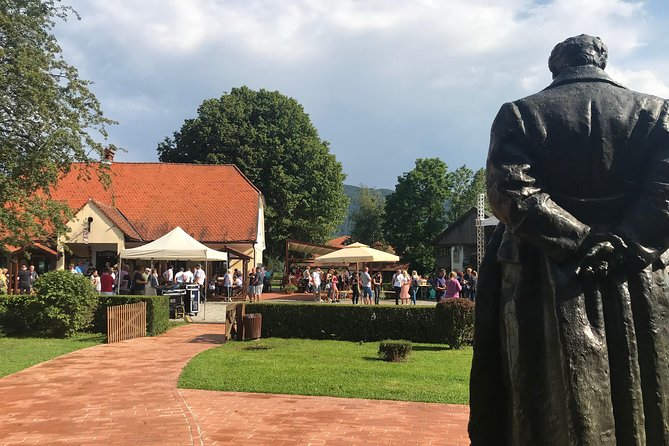
- Tito childhood context you can see: you visit key personal and public-life references tied to Tito’s early years.
- Crafts and workspaces beyond the house museums: blacksmithing and other specialties show how people lived and made things.
- Thatched-roof reality check: you learn about maintenance cycles, like how often roof replacements are needed.
- Small-food breaks inside the village: there are cafés and snack options so you can keep exploring without rushing.
- A well-kept setting for a slow walk: pedestrian-only village lanes make it easy to take your time and look closely.
Kumrovec and Staro selo: an open-air village that feels lived-in
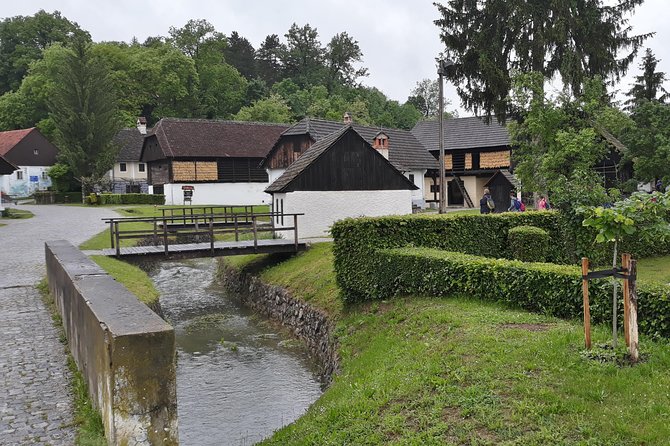
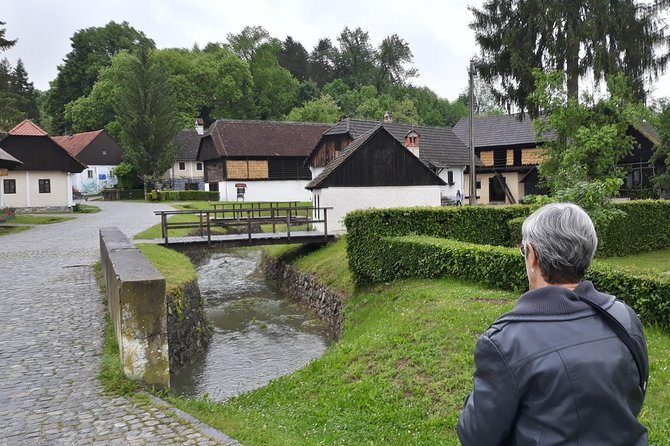
Kumrovec is built around an old rural core that has been preserved as an open-air ethnographic museum. The idea is straightforward: walk through Staro selo and see what life looked like in the 19th and early 20th centuries, with traditional houses that locals call hize. You are not bouncing between disconnected stops. You are settling into one place and letting the village speak in rooms, tools, and courtyards.
The atmosphere helps. The village is fully pedestrian, so the pace is naturally calmer than a typical city walk. That matters because the best parts are the details: how interiors are set up, how rooms are interpreted, and how the grounds connect different themes across the site. When you slow down, you notice the small signals that this is meant to represent everyday life rather than theater.
A practical point for your planning: most of your time is spent right there in the village. That is great if you like walking and looking. It is less ideal if you prefer fast tours that hit a long list of highlights in one go.
Inside the village: houses, gardens, and the kind of authenticity that shows
This is the kind of museum where the maintenance quality changes how you experience it. The houses are described as well kept, with gardens that make the village feel comfortable instead of crowded or stiff. You also get a stronger sense of authenticity because the buildings are presented as original structures, not a kit assembled for tourism. That difference is subtle until you compare it to the usual version of an open-air site, where you are often aware of relocation.
You will likely notice several categories of spaces as you move along. Some buildings focus on family and home life. Others are organized around skills and trades. The mix keeps the visit from turning into one long look at furniture. You get a fuller idea of how people worked, what tools they used, and how crafts fit into daily routine.
Even the ground rules help your experience. Since it is a pedestrian village, you can stop often without feeling like you are holding up a bus schedule. If you enjoy slow travel, take advantage of that. If you are the type who wants quick snapshots, you can still do it, but you might feel tempted to move faster than the site deserves.
Still riding at anchor off Zagreb
- From Zagreb: Plitvice & Rastoke Guided Day Trip with Ticket★ 4.9 · 2,955 reviews
- Zagreb: Rastoke & Plitvice Lakes Guided Tour with Ticket★ 4.9 · 1,897 reviews
- Communism & Croatian Homeland War Tour★ 5.0 · 1,355 reviews
Tito’s birthplace connection: statue, school, and public-life rooms
The Tito component is what pulls many people here, and it is not treated as a single photo stop. Instead, it threads through the visit with multiple references that help you connect the person to a place. You start with a bronze statue tied to the founder of communist Yugoslavia, which sets the tone right away. From there, you move into the childhood context: Tito’s elementary school is part of the visit, so you are not just absorbing ideology, you are looking at an origin point.
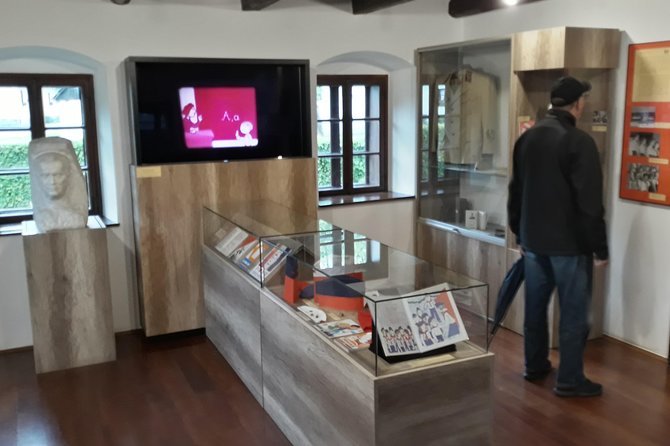
One detail I would not skip if you have time to slow down is the contrast between public messaging and private life. The museum approach gives you that contrast through the way rooms are presented. For example, you can see Tito’s home environment, and the interpretation includes personal objects. In one room, there is a focus on his public life, including gifts associated with dignitaries.
There is also a powerful kind of specificity in how the site handles the human story. One review I read highlighted a poignant, physical detail about a cradle. The cradle was described as original, but it had scratches on the floor where it had been rocked often. That kind of information is a reminder that museums can go beyond facts and into lived texture.
If you are curious about how history scales up, you might also notice references to Tito’s large public profile. One room points to his funeral, described as attended by 100 heads of state. Even if you do not study the politics, it signals how far a childhood in a small village connected into world-level events.
Crafts, blacksmithing, and daily work you can walk through
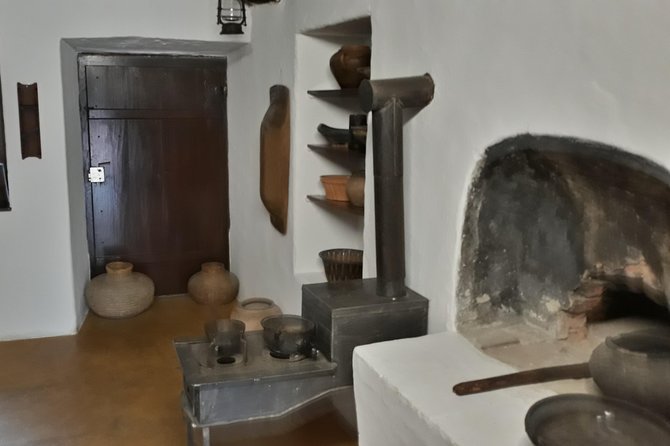
The village is not only about Tito or homes. It also treats the skills side of rural life as part of the narrative. As you explore, you should see spaces dedicated to crafts like blacksmithing and other specialties. This is where the visit can become surprisingly satisfying, even if you are not a hardcore history reader.
Why it works: tools and workshops are easier to picture in your head than abstract descriptions. You can look at the shape of equipment, the way a workshop is organized, and the sense of how tasks were done. The museum does not just say people worked, it shows settings built around work.
If you like interpretive clarity, you might appreciate how the village categorizes different functions of daily life. It prevents the experience from becoming only a long stroll through rooms of furniture. Instead, you get a pattern: home and family settings, then skills and making, then the outdoor rhythm of village life.
And if you are the sort of person who likes buying a small souvenir that feels connected to place, there is a souvenir shop in the village. Reviews mention items like Tito-themed shirts and magnets, along with traditional handmade toys. That makes it easy to grab something small without feeling like you missed the local crafts part.
Thatched roofs and the maintenance story most museums skip
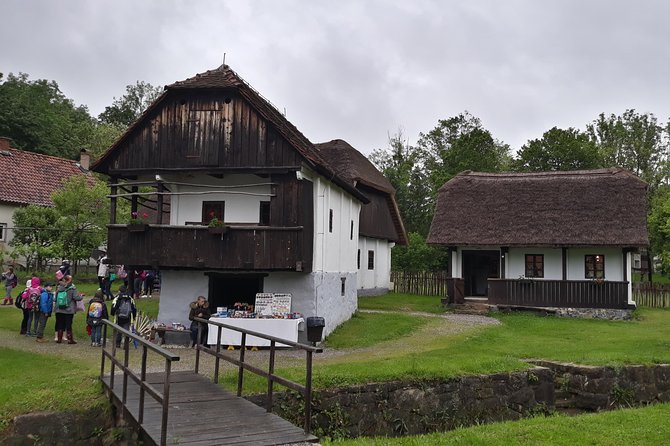
Even the roofline becomes a lesson here. Some buildings use thatched roofs, and you can learn about the maintenance schedule, including how often replacements are needed, described as roughly every 30 years. That detail might sound minor, but it actually signals something important: the museum is showing how rural life required ongoing upkeep.
This is the kind of information you rarely get in a typical museum. When you hear about maintenance cycles, you start to understand how ordinary buildings are in motion. They are not frozen. They are repaired. They are kept alive.
It also changes your way of looking at the village. After learning that roofs get replaced on a long but real cycle, you will likely notice how materials are presented, and you may look for clues about condition and craftsmanship.
Two moorings down in Zagreb:
- Zagreb: City and WWII Tunnels Walking Tour
★ 4.9 · 1,230 reviews - Zagreb: City & History Walking Tour & WW2 Tunnels
★ 4.9 · 1,202 reviews - Plitvice Lakes with Ticket & Rastoke Guided Tour from Zagreb
★ 5.0 · 966 reviews - Zagreb: Communism and Croatian Homeland War Tour
★ 4.9 · 927 reviews
Food and wine time at the end of the visit
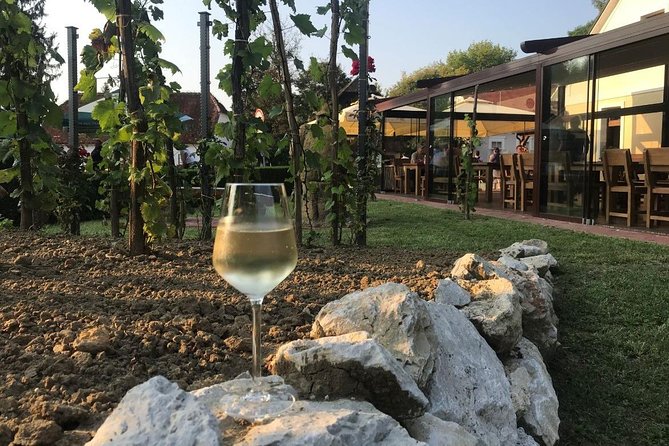
The schedule includes time for local food and wine at the end of the Kumrovec visit. That matters because it gives you a chance to continue the theme of rural life without immediately jumping back to your vehicle.
Even if you keep it light, eating on-site is one of the easiest ways to extend the experience. A village museum can feel like a study, but food helps you treat it like travel. You can also use cafés and snack stops within the village to keep your energy steady while you explore.
Plan for a slow finish. If you rush, you will miss the comfort of doing something simple in a place that feels designed for lingering.
Timing and logistics: how the 5-hour day from Zagreb feels
This trip is built for a half-day rhythm. It starts around 9:00 am, and pickup is offered for all travelers. The tour runs about 5 hours, with about 3 hours allocated for your time in the village itself. That means you will have enough space to look closely at buildings, move between sections, and take breaks without the clock feeling aggressive.
The English experience is designed for visitors who want to understand what they are seeing as they walk. Interpretation matters a lot at sites like this, because the meaning is embedded in room layout, object selection, and how different houses are grouped by theme. If you prefer to explore with context rather than just reading plaques, you will likely appreciate the guide-based explanation.
One more practical detail: it is a private tour/activity with only your group participating. That typically helps you move at a pace that suits your questions and interests, rather than feeling tethered to a large crowd.
Price and value: what $328.59 covers in real-world terms
The price is listed at about $328.59 per person for the experience duration. At first glance, that can sound steep for a single village. The value comes down to three things you are getting together.
First, you get a guided, English-focused visit tied to a specific cultural and historical site. Second, admission to the museum is included, which reduces the guesswork and extra spending once you arrive. Third, pickup is part of the package, which saves time and makes the outing easier from Zagreb, especially if you do not want to figure out local transport.
If you are traveling as a small group and you value a structured visit rather than DIY, this kind of half-day plan can make sense. If you are a solo traveler on a tight budget, you might look at whether you are the type who will use the guide time well. For Tito-focused travelers, this is usually money well spent because the connection is not just a name on a plaque. It is a chain of specific locations inside one coherent site.
Best-fit travelers: who will enjoy this most
I think Kumrovec works best for people who like history that you can see and walk through. You do not need to be an expert in Yugoslav politics to enjoy this. The village format does a lot of the teaching for you: you absorb the setting first, then the Tito story clicks in place.
You will probably have the best time if you enjoy any of these:
- slow walking and detail watching
- museums with real buildings, not just exhibits
- Tito-related history that connects home life to larger events
- craft and rural life interpretation, especially blacksmithing and workshops
If you want a big, modern Croatia city day with lots of different neighborhoods and major landmarks, this may feel narrow. But if you want one meaningful place and time to look closely, the single-site focus is actually the strength.
Quick practical tips to enjoy Staro selo without rushing
Wear shoes you can walk in comfortably. The experience is village-based, and you will likely spend more time on foot than you expect for a 5-hour tour. Bring a light layer too, since outdoor museum weather can shift.
When you arrive, keep your eyes open for how the site is organized. Start by taking in the layout, then go back to the rooms that interest you most. That approach helps because you will see how different parts of the museum connect, like home life leading into workspaces and public-life displays.
If food and wine are on your mind, time it as your pace allows. The plan puts it at the end for a reason, and letting it land when you are ready can keep the whole day feeling easy rather than rushed.
Should you book Kumrovec and Tito’s birthplace?
Book this tour if you want a focused, guided open-air experience that connects Tito’s early life to broader public history through specific places inside Kumrovec. The combination of well-kept village presentation, authentic original buildings, and Tito-linked stops like the elementary school makes it more than a one-note visit.
Skip it only if you are chasing a long checklist of widely different attractions in one day. This is a single-site half-day plan, designed for quality viewing, not speed.
If you value pickup convenience, English interpretation, and an included admission ticket, it offers practical value for your time. And if you enjoy rural life details, crafts, and the kind of history that lives in rooms and tools, you will likely find this visit memorable in a grounded, real-world way.
FAQ
What does the tour include?
The tour includes a visit to Staro selo museum in Kumrovec, with the admission ticket included. The visit also includes time to enjoy local tasty food and wine at the end of the Kumrovec visit.
How long is the experience?
It runs for about 5 hours total, with around 3 hours at Staro selo museum.
Where does the tour start?
It starts at 9:00 am.
Is pickup offered?
Yes. Pickup is offered for all travelers.
Is the tour private?
Yes. Only your group will participate.
What language is the tour offered in?
The tour is offered in English.
How much does it cost?
The price is listed as $328.59 per person.
Can I get a refund if plans change?
Yes, free cancellation is available. You can cancel up to 24 hours in advance of the experience start time for a full refund.
Do I need a ticket on my phone?
You get a mobile ticket.
Latest arrivals logged at Zagreb




Zagreb Tours & Activities, compared.
Plitvice & Rastoke Guided Day Trip with Ticket
Read our review →
Rastoke & Plitvice Lakes Guided Tour with Ticket
Read our review →
Plitvice Lakes with Ticket & Rastoke Guided Tour from Zagreb
Read our review →
Skip-the-Ticket-Line Museum of Broken Relationships
Read our review →Browse the lists this tour appears in