
Reviewed · WALKING TOURS
Private Walking Tour of Split with a Local
Split unfolds fast when you hear the palace story. This private walking tour pairs a licensed local guide with a tight loop through Diocletian’s Palace and the waterfront, so you get the big picture without drowning in dates and names.
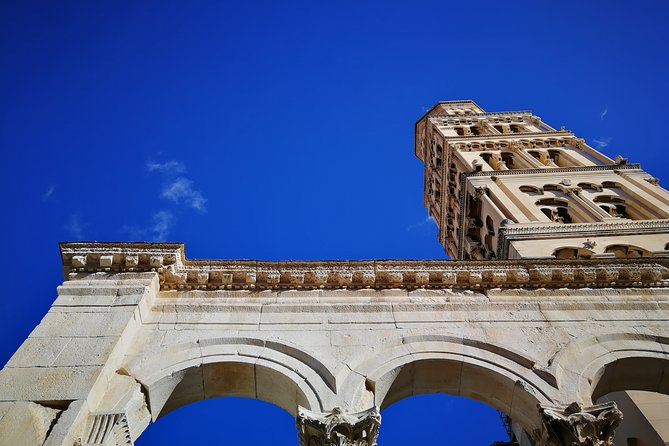
I especially like the included visit to the Cathedral of Saint Domnius, once Diocletian’s mausoleum, where the Romanesque bell tower gives you a clear sense of how empires and faith changed in place. The only catch: it’s still a real walking tour, with uneven old-stone streets and a viewpoint finish at Prva Vidilica on Marjan, so bring moderate stamina.
In This Review
- Key highlights at a glance
- A 2.5 to 3 hour route that actually makes sense
- Golden Gate and Diocletian’s Palace: start where the emperor entered
- What to look for
- Peristyle: where the palace becomes a public square
- A practical tip
- Cathedral of Saint Domnius: mausoleum to cathedral, in one stop
- What makes this stop feel different
- Vestibulum and palace chambers: short, but surprisingly memorable
- Riva Harbor and Pjaca: Split’s everyday stage
- A good way to enjoy these stops
- Split Fish Market: a sensory tour of the Adriatic
- Quick practical advice
- Prokurative: the square that frames the harbor
- Prva Vidilica on Marjan: the viewpoint payoff
- Why this finish matters
- The storytelling quality that makes it worth paying for
- Price and value: what $96.13 buys you in Split
- Who this tour suits best (and who should think twice)
- Should you book this Private Walking Tour of Split with a Local?
- FAQ
- How much does the Split private walking tour cost?
- How long is the tour?
- Is the tour private?
- What time does the tour start?
- Where does the tour start and end?
- What language is the tour in?
- What attractions or entrances are included?
- Is coffee or tea included?
- Is the tour good for people with moderate mobility?
- What is the cancellation policy?
Key highlights at a glance
- A licensed local guide in English who tells the story, not just random facts
- Diocletian’s Palace stops in smart order, Golden Gate to Peristyle to the Cathedral area
- Cathedral of Saint Domnius entrance included, plus the Romanesque bell tower
- Real-life Split moments at Riva Harbor, Pjaca, and the Fish Market
- A payoff view from Prva Vidilica on Marjan, about 15 minutes on foot from the old town
A 2.5 to 3 hour route that actually makes sense
This tour is built for first-time visitors who want Split to click fast. You cover major landmarks in about 2 hours 30 minutes to 3 hours, with short stops that keep things moving. It’s private, so you can ask questions as you walk instead of saving them for the end.
I like that the tour is structured around contrast: imperial architecture first, then street life, then views. That pattern keeps you from feeling like you are just moving from one monument to another. You also have the option to start with coffee and/or tea, which is a small thing, but it sets the tone and helps your guide tailor the flow to your interests.
One more practical note: this is a moderate-fitness walk. Most stops are in the old center, but you will want comfortable shoes, and you should expect some uneven pavement. If you hate hills, plan carefully, because the last part heads toward a viewpoint.
Golden Gate and Diocletian’s Palace: start where the emperor entered
The tour begins at the Golden Gate (Dioklecijanova 7), right where Diocletian entered his main palace space. Even if you have seen palace walls in photos, this is different. You get scale quickly, and you start to understand why Diocletian could retire and still hold power.
A nice detail here is the statue of Croatian bishop Grgur, positioned overlooking the gates. Your guide will explain the idea of good luck for travelers, and it gives the stop a little character beyond architecture.
The Golden Gate stop is about 15 minutes, and the best part is that it feels like the entrance to a story rather than a single photo spot. Tickets for this stop are free, so you can focus on the explanation.
More Walking Tours in Split
- Split: Old Town and Diocletian Palace Walking Tour★ 4.9 · 4,727 reviews
- Walking Tour of Split and Diocletian’s Palace★ 5.0 · 2,588 reviews
- Krka Waterfalls tour with Trogir Walking tour and Krka panoramic boat cruise★ 5.0 · 1,659 reviews
What to look for
- The way the gate frames the palace interior, it helps you orient the whole complex
- The symbolic statue placement, a reminder that this site kept cultural meaning long after Roman times
Peristyle: where the palace becomes a public square
Next you head to the Peristyle, the geographical and spiritual center of the palace. This is the kind of place where the stone does part of the storytelling for you. The square feels monumental, and you can see how it would have functioned as a focal point.
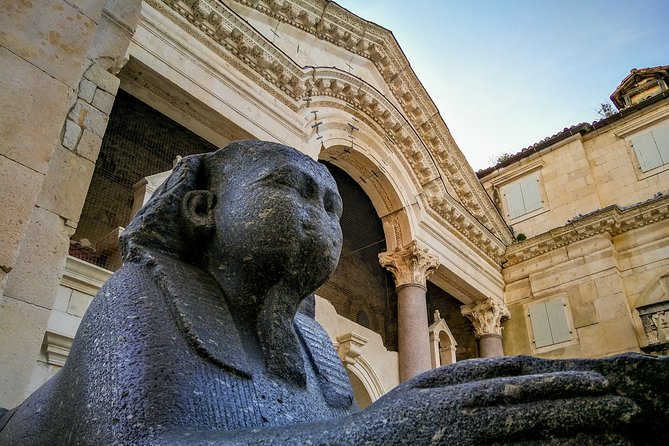
One standout detail: a 3500-year-old sphinx is described as being closely guarded there. That alone makes the Peristyle worth slowing down for. It is not just a relic on display, it is a visual anchor that helps you feel how layers of time sit side by side in Split.
Just before you reach Peristyle, you pass through some of the best preserved ancient substructures, and this is where the tour adds a very modern twist. Local artists often work in the area and exhibit and sell their pieces. So you are not only walking through a ruin, you are walking through an active creative zone.
This stop is roughly 20 minutes, and it is also free.
A practical tip
If you care about photos, ask your guide when the best angles are. Peristyle sits at a key point in the palace layout, and your guide can point you to viewpoints that match the history being explained.
More marble lanes taken slowly:
- Split & Diocletian’s Palace Walking Tour
★ 5.0 · 1,125 reviews - Walking Tour of Split with a ‘Magister’ of History
★ 5.0 · 1,122 reviews - Split Walking Tour with Professor of History
★ 5.0 · 926 reviews - Split: Diocletian Palace & Old Town Guided Walking Tour
★ 4.7 · 882 reviews
Cathedral of Saint Domnius: mausoleum to cathedral, in one stop
The third major stop is the Cathedral of Saint Domnius, and this is where the included ticket pays off. The tour notes that this is the oldest building in the world that has a cathedral situated in it, plus there is a stunning Romanesque bell tower in front.
Your guide will frame it in a way that makes the building feel alive. Diocletian’s mausoleum became a cathedral, which is not just a fun fact. It is the clearest example of how political power and religious identity can overwrite the same space without erasing it.
This stop runs about 20 minutes, with entrance included. That matters for value because it removes one common headache on walking tours: hunting for the right ticket and time slot while you are already trying to enjoy the morning.
What makes this stop feel different
You get to see how one building can hold multiple eras. When you look at the bell tower and the cathedral space together, it becomes easier to understand why Split’s old center is still the heart of the city.
Vestibulum and palace chambers: short, but surprisingly memorable
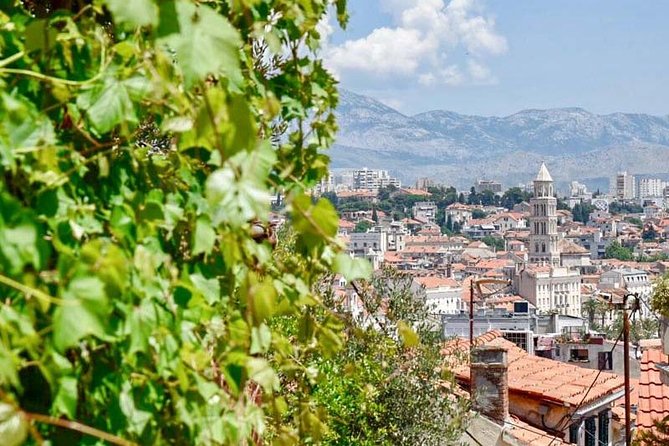
Next comes the Vestibulum of Diocletian’s Palace, described as a striking round hallway where you can hear local klapa singing. Even if you only catch a bit, it adds emotion to the stone. It is one of those moments where a “history stop” turns into a living sound track.
This is a shorter stop, about 10 minutes, and the admission here is free. The benefit of the short timing is that you do not get tired. You move right along, but you leave with a sensory memory, not just facts.
If you are the type who likes to listen, this part is made for you. Let the guide explain what you are seeing, then just pause for a moment and listen to the singing echo in the space.
Riva Harbor and Pjaca: Split’s everyday stage
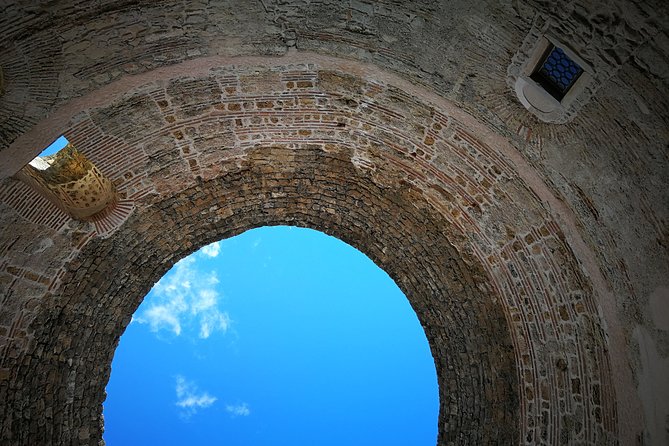
After the palace interior vibe, the tour shifts to the city’s daily rhythm.
First is Riva Harbor, often described as Split’s living room, the most important public place for everyday theater. This is where you see how locals use the waterfront: strolling, meeting, and simply being out in the open. The tour keeps this stop around 15 minutes, and it is free.
Then you move to Pjaca, the central stage of city life. Here you are told that citizens rest, meet, see and be seen, and yes, football conversations are part of the scene. This sounds simple, but it’s exactly the point. The tour does not treat Split as a museum. It treats it as a place with regular human energy.
Both Riva and Pjaca are free and short stops around 10 to 15 minutes, but they help you understand why the palace survived. It was not isolated. It sat at the center of what the city needed.
A good way to enjoy these stops
Look for details your brain would skip on a fast self-guided walk, like how people gather in shade, where the strongest sightlines are, and which corners feel like natural meeting points.
Split Fish Market: a sensory tour of the Adriatic
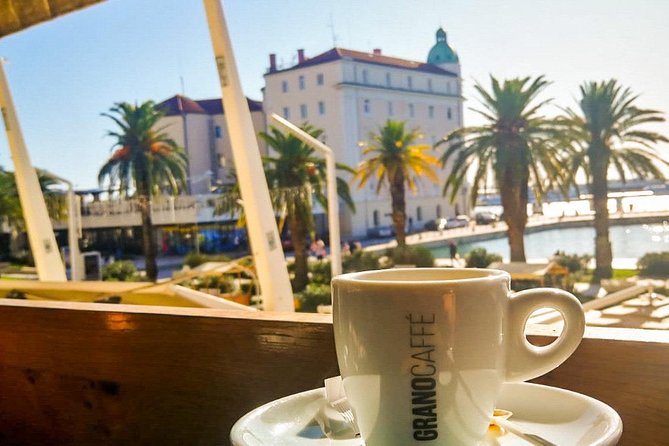
Next is the Split Fish Market, another free stop. The tour describes it as central to city folklore, with all that the Adriatic offers: hakes, picarels, sardines, mackerels, breams, sea bass, shrimps, sea shells. It even jokes that the only thing missing are the flies.
Even if you are not buying anything, the market is useful for understanding Split’s economy and diet. Fish is part of the city’s identity here, and seeing the range on display gives the history behind the harbor more weight.
This stop runs around 10 minutes, which is about right. You will get the atmosphere without getting stuck in the middle of crowds for too long.
Quick practical advice
Wear shoes that handle busy, potentially damp ground. Markets can mean slick surfaces, and you will be moving through people and stalls.
Prokurative: the square that frames the harbor
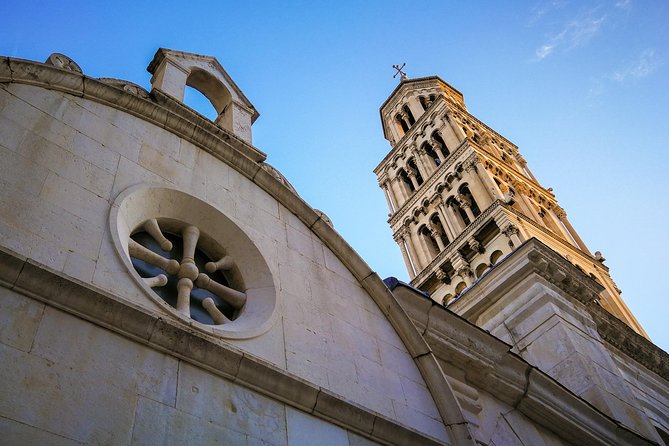
Then you reach Prokurative (also known as Republic Square). The tour compares it to Venice’s St. Marks Square, but with Split’s own harbor-facing layout. The key detail is that it is open on the south side, giving you a beautiful harbor view.
This stop is about 10 minutes and is free. It works as a bridge between the older palace streets and the more open panorama you will get at the end.
Prokurative is also one of those places where your guide can point out geometry. Once you understand the square’s role in city movement, you will recognize it again later even if you leave the route.
Prva Vidilica on Marjan: the viewpoint payoff
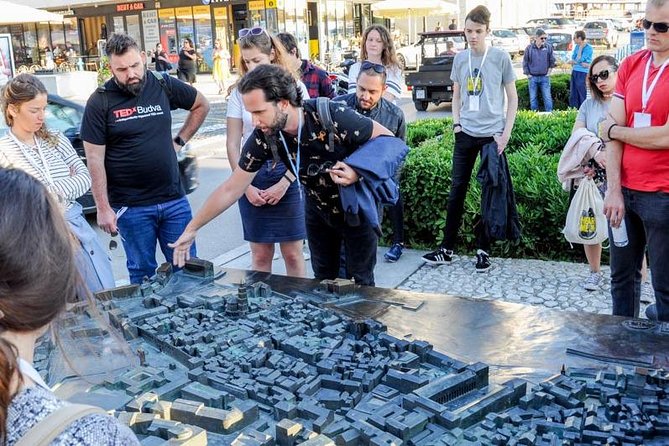
The tour ends with Prva Vidilica na Marjanu, a terrace that is about 15 minutes on foot from the old town. This is the place where Split spreads out below you, and you finally see how all those compact streets connect to the coastline.
It is listed as about 10 minutes on tour time, and it is free. Even though it is a short stop, it is a big emotional finish. After palace stones and market noise, the view resets your brain.
You’ll likely walk a little uphill or at least on uneven ground to get there, so save your best energy. Bring water if it is hot, because this is the part where you stand and look.
Why this finish matters
The viewpoint helps you anchor the information. When you can connect the palace area to the harbor and beyond, the day’s story becomes map-like in your head.
The storytelling quality that makes it worth paying for
This is a private tour, but the real differentiator is how your guide connects the dots.
The strongest praise is for guides who tell the story and keep it organized. Names that come up include Boska and Pavle. The way they explain things is described as balanced, engaging, and not overwhelming. What I think you should care about is this: good guides make you feel oriented quickly.
For example, one guide style highlighted is starting with the right amount of palace context, then bringing it back at later stops so you understand why each site matters. That is exactly what turns a walk into learning, without turning it into a lecture.
If you like history but hate being buried in dates, you will probably enjoy this format. And if you want more time at a certain spot, a guide who listens can shift the emphasis while still keeping the route moving.
Price and value: what $96.13 buys you in Split
At $96.13 per person, you are paying for a private, licensed English-speaking guide plus key admissions. The duration, 2 hours 30 minutes to 3 hours, is long enough to feel like you did something substantial, but short enough to fit easily into a busy itinerary.
What makes it better value than a cheaper option is the included entrance fee to the Cathedral of Saint Domnius. Ticket costs add up, and this one is a major stop. The tour also includes coffee and/or tea if you want it, which is a small local touch that can help on a morning start.
There are also notes about group discounts and a mobile ticket, which can help if you are traveling with friends and want everything handled smoothly.
The one value risk is obvious: since it is private, the cost per person stays higher than a group tour. If you are traveling solo or just two people and you want deep context fast, it can still feel fair. If you are comfortable walking independently with a good guidebook, you might find it pricier than you need.
Who this tour suits best (and who should think twice)
This tour is a great fit if you:
- Want a first-time overview of Split that connects major sights
- Like history explained through places you can physically see
- Prefer a guide who tells a story and paces the walk well
- Enjoy mixing monuments with everyday local scenes like Riva, Pjaca, and the Fish Market
You might think twice if:
- You struggle with uneven streets and a viewpoint finish at Marjan
- You prefer a fully self-paced visit with lots of free time in just one spot
- You want a deep museum style experience, with long indoor time, since this tour is mostly outdoor walking
Should you book this Private Walking Tour of Split with a Local?
Yes, if you want Split to make sense quickly. The combination of Diocletian’s Palace highlights, an included visit to the Cathedral of Saint Domnius, and real city stops at Riva and the Fish Market is a solid mix. Add a viewpoint finish at Prva Vidilica and you get a full arc, palace to people to panorama.
I would book it especially if you care about how the story is told. When a guide like Pavle or Boska balances context and pace, you end up with more than photos. You end up with a mental map of the city.
If you are short on time, but you still want the core of Split, this route is a smart use of your morning or late start day.
FAQ
How much does the Split private walking tour cost?
The price is $96.13 per person.
How long is the tour?
It runs about 2 hours 30 minutes to 3 hours.
Is the tour private?
Yes. It is a private tour/activity, and only your group participates.
What time does the tour start?
The start time is 9:00 am.
Where does the tour start and end?
You start at the Golden Gate (Dioklecijanova 7, 21000, Split). The tour ends at Vodoskok, Trg Franje Tuđmana, 21000 Split, in front of the fountain at the beginning of the Riva promenade.
What language is the tour in?
The tour is offered in English.
What attractions or entrances are included?
Entrance to the Cathedral of Saint Domnius is included. All other listed stops are described as free.
Is coffee or tea included?
Coffee and/or tea is included if you choose to start with it.
Is the tour good for people with moderate mobility?
The tour notes that travelers should have a moderate physical fitness level.
What is the cancellation policy?
Free cancellation is available up to 24 hours in advance for a full refund.
Latest arrivals logged at Split

Walking Tours, compared.
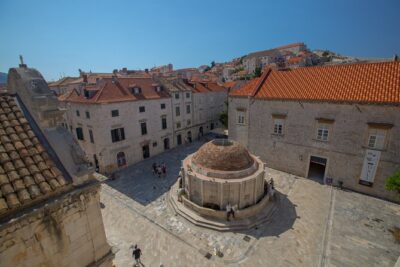
Walking Tour of Split and Diocletian’s Palace
Read our review →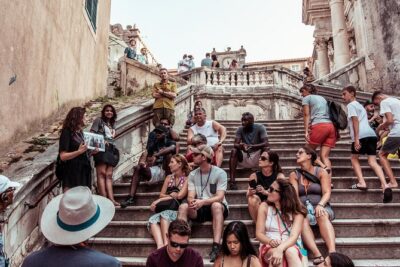
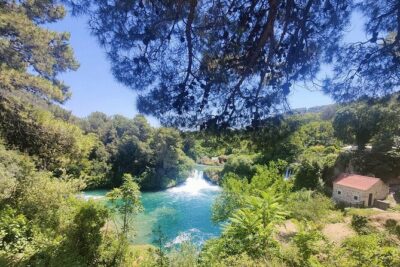
Krka Waterfalls tour with Trogir Walking tour and Krka panoramic boat cruise
Read our review →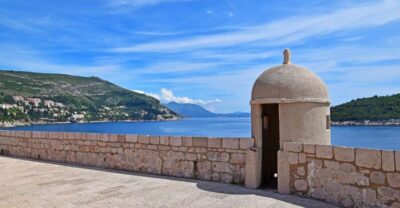
City Walls Early Morning or Sunset Walking Tour
Read our review →Browse the lists this tour appears in