
Reviewed · WALKING TOURS
Split: city center private walking tour 2 h
Split is basically a stone city with stories baked in. I love the way this private walking tour stitches Roman power to today’s street life, and I especially like seeing Diocletian’s Palace cellars, then rising to Peristil for the big visual moments. One drawback to think about: the route is built around key sights, so if you are craving lots of off-the-map wandering into tiny alleyways, you may want extra time on your own afterward.
The guide experience is the real win here. You get a licensed guide, with your pace and interests shaping what feels slow, what feels quick, and what you zoom in on. Expect plenty of walking on older, uneven surfaces, and plan your outfit for the cathedral rules if you want to go inside St. Duje.
In This Review
- Key Highlights You’ll Notice Right Away
- Diocletian’s Palace Still Feels Like the Center of Everything
- Starting on Riva, Then Using the Model to Get Oriented
- Green Market and Riva: Quick City-Life Flavor Before the Monuments
- Diocletian’s Palace: From Imperial Residence Logic to What You See Today
- Peristil: The View Up, the Meaning In
- St. Duje Cathedral and the Story of a Mausoleum Turning Into a Church
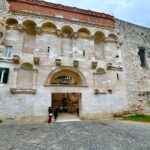
- Golden Gate, Gregory of Nin, and the Quick Photo Moments That Still Matter
- People’s Square, Old Town Hall, and the Venetian-Era Shift
- Fruit Square and Split Fishmarket: Where the Senses Kick In
- Pacing, Uneven Surfaces, and Why Private Means You Can Actually Adjust
- Price and Value: What $141 Covers and What Costs Extra
- Guides, Language Options, and How to Get More Out of Your Time
- Who This Tour Suits Best in Split
- Should You Book This 2-Hour Private Split Walk?
- FAQ
- Where does the tour meet?
- How long is the Split city center private walking tour?
- Is the tour private or shared?
- Are entrance fees included for the cathedral and cellars?
- What should I wear to enter St. Duje Cathedral?
- Is the tour wheelchair accessible?
Key Highlights You’ll Notice Right Away
- Diocletian’s Palace cellars with a mix of Roman purpose and pop-culture trivia, including Game of Thrones filming lore
- Peristil and the St. Duje complex, where the city’s ancient spine stays visible today
- A true old-town orientation, starting with a model of Split’s historical core
- Market-and-square moments like the Green Market and People’s Square, not just monuments
- Private, tailored pacing so you can linger at photos or move faster if you have a tight schedule
Diocletian’s Palace Still Feels Like the Center of Everything
Split is a UNESCO-listed time machine, but it is not a museum that shuts down at night. The city’s historic core still works, with shops, daily errands, and people taking breaks in the shade. That is why this tour works: it focuses on the bones of the city first, then shows you how the neighborhood keeps living around those bones.
Diocletian’s Palace is the headline for a reason. Even if you have seen photos of Split’s “palace walls” before, you will feel the scale in person. And the best part is that the tour does not stop at a quick look from the outside. You see the palace from multiple angles, then step into spaces that help you understand what those buildings were designed to do.
I also like that the tour connects the big Roman story to the later layers. You move from the palace world to Peristil and the cathedral area, then out toward the medieval and Venetian-era public squares. It is not just names and dates. You get a sense of how one era repurposed what the previous one left behind.
Starting on Riva, Then Using the Model to Get Oriented
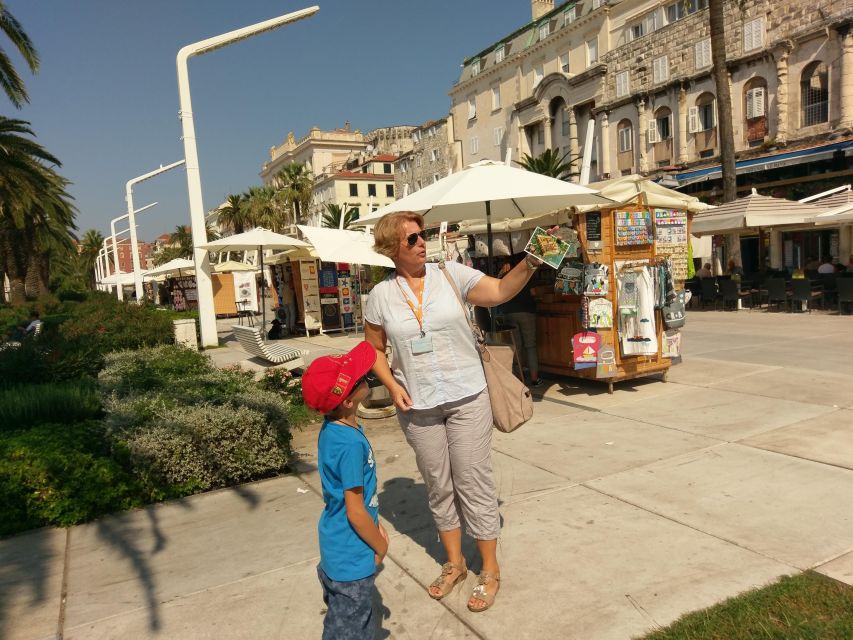
You meet on the promenade at Riva, right by the entrance to Diocletian’s Palace cellars. The practical advantage is that you are placed at the heart of things immediately, instead of getting dropped somewhere far away and walking in blindly.
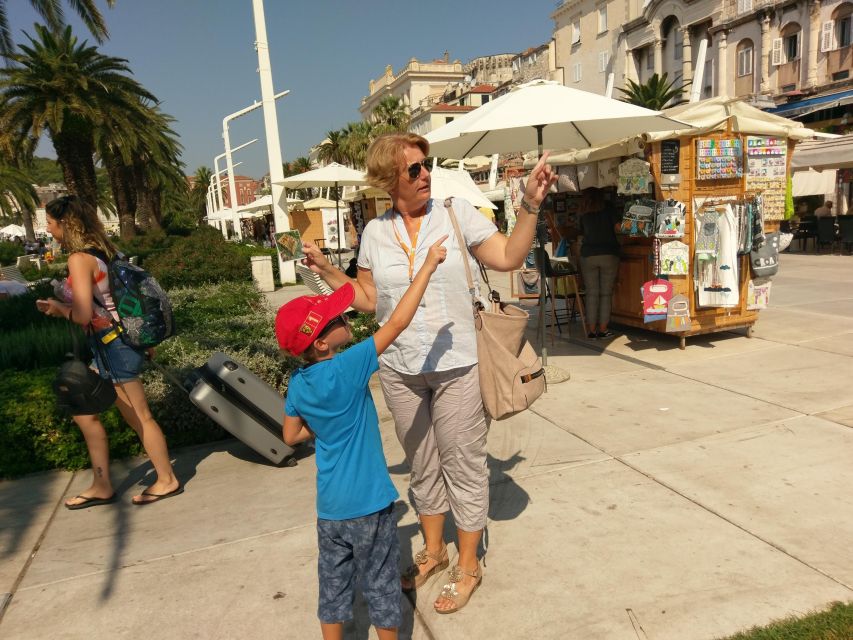
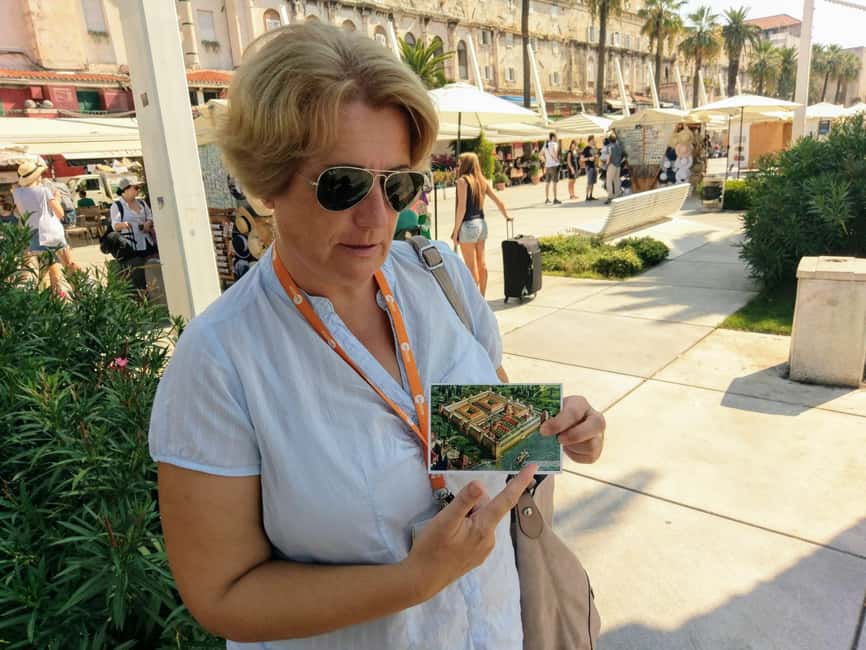
Before the main monuments, the tour begins with a stop at a model of the historical core of Split. This small moment is surprisingly useful. If you struggle to picture where everything sits, the model helps you map what comes next. You stop guessing, and you start seeing the route as a logical loop through the old city.
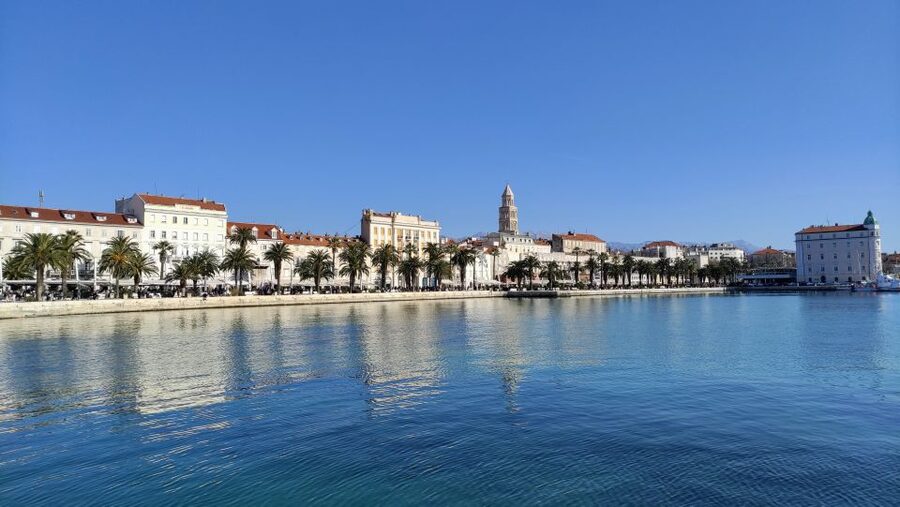
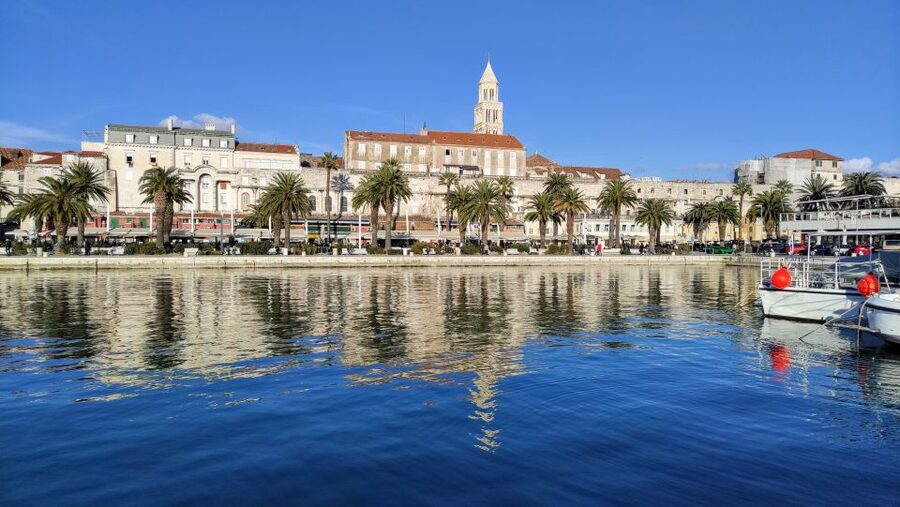
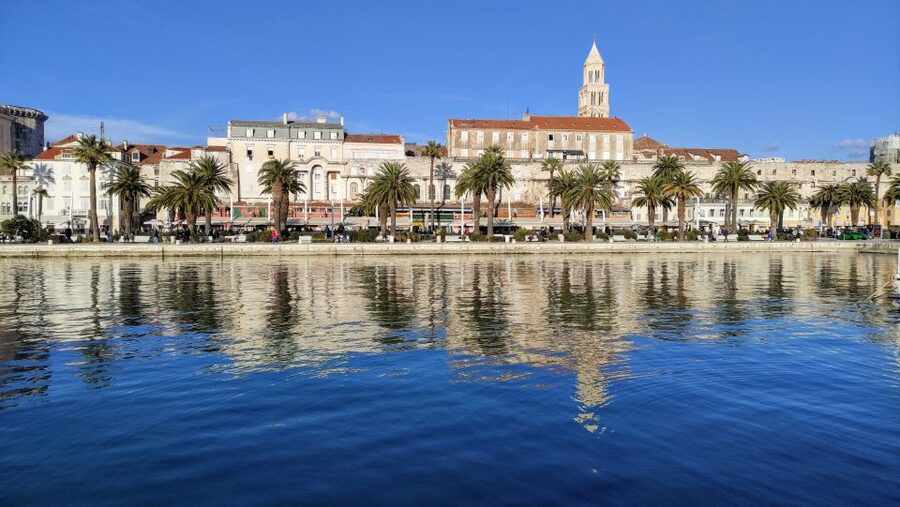
From there, you roll into the waterfront atmosphere. Riva is one of those places where you can feel the city’s rhythm in minutes: people watching, cafes, and the kind of daylight that makes stone look warmer. The tour includes a short visit here, which is enough to reset your bearings before you hit the heavier history.
More Walking Tours in Split
- Split: Old Town and Diocletian Palace Walking Tour★ 4.9 · 4,727 reviews
- Walking Tour of Split and Diocletian’s Palace★ 5.0 · 2,588 reviews
- Krka Waterfalls tour with Trogir Walking tour and Krka panoramic boat cruise★ 5.0 · 1,659 reviews
Green Market and Riva: Quick City-Life Flavor Before the Monuments
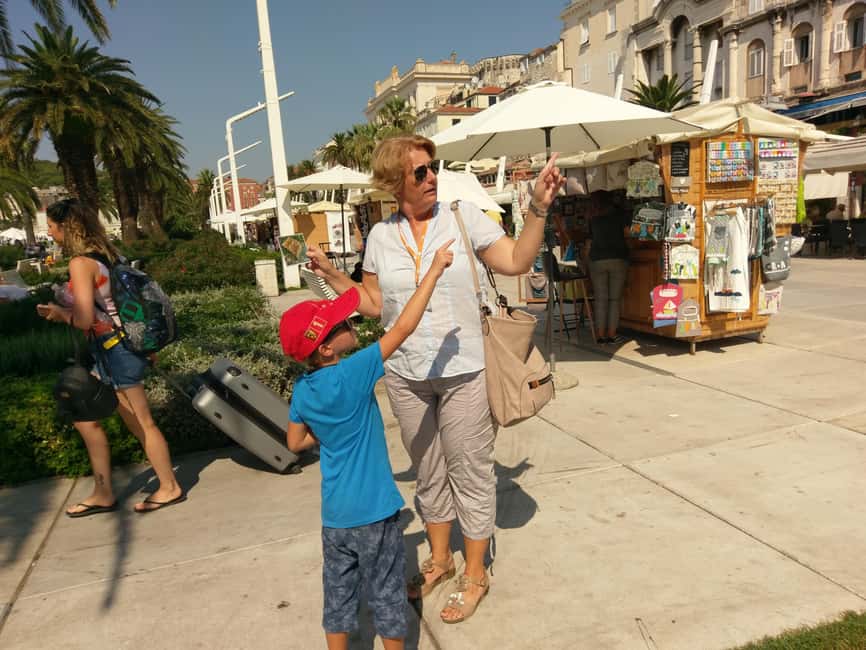
You then head to the Green Market for a short visit with time for shopping. The market stop is not meant to turn into a long detour. It is a taste of everyday Split: produce, quick exchanges, and the feeling that local life runs right through the UNESCO zone.
Even if you are not buying anything, you’ll benefit from seeing the city this way. After you tour the palace and its ceremonial spaces, the market helps you remember that you are not just looking at relics. The old streets still host real needs, real conversations, and real commerce.
If your goal is photography, this is also a friendly segment. The light tends to look good in the market area, and the scene gives you texture beyond monumental stone.
Diocletian’s Palace: From Imperial Residence Logic to What You See Today
The center of the tour is Diocletian’s Palace, where you spend about 45 minutes with a guided walk. This is the part that gives you the strongest “how it all fits together” feeling.
The palace is today the heart of Split, and you can see why quickly. Once you are inside, the architecture does not just sit there. It guides your movement. You notice corridors and thresholds, and you start to understand how the layout supported an upper residential area and more functional spaces below.
The tour’s focus on the cellars is a key reason it stands out. The architectural purpose of the cellars is explained in a way that helps them make sense, not just look impressive. In other words, you are not only getting stone photography. You are learning why this space exists in this exact form.
A fun extra detail: the cellars are also connected to Game of Thrones filming. That matters because it gives the space a second layer of recognition, especially if you came to Split with modern pop-culture reference points in your head.
Important practical note: entrance to the cellars is not included in the tour price. Plan for an additional ticket cost if you want to go inside. Also keep your expectations realistic, because cellars are one of the places where you can’t always linger forever in tight spaces.
Peristil: The View Up, the Meaning In
After the palace area, the tour climbs toward Peristil, one of the dramatic “open-air rooms” of the complex. You spend around 15 minutes here, long enough for the space to land but short enough to keep the whole two-hour pace.
Peristil was meant for Diocletian and the cult of the living son of Jupiter, and the tour also points out the temple area. Even if you do not know the mythology before you arrive, you will come away with a clear mental picture of the religious and political intention behind the design.
This stop is where your eyes often get a reset. Cellars feel enclosed and structural. Peristil feels ceremonial and outward. You look up, take in the scale, and understand how the palace could host both power and public presence within the same stone shell.
More marble lanes taken slowly:
- Split & Diocletian’s Palace Walking Tour
★ 5.0 · 1,125 reviews - Walking Tour of Split with a ‘Magister’ of History
★ 5.0 · 1,122 reviews - Split Walking Tour with Professor of History
★ 5.0 · 926 reviews - Split: Diocletian Palace & Old Town Guided Walking Tour
★ 4.7 · 882 reviews
St. Duje Cathedral and the Story of a Mausoleum Turning Into a Church
Next comes the cathedral of St. Duje, originally Diocletian’s mausoleum. The tour includes a visit focused on the church connection, and it also shares the tradition that it is the oldest cathedral in the world. Since the wording you are given includes the it is said idea, treat it as a commonly repeated claim rather than a measured historical fact.
This is one of the easiest places to feel grateful for the guide. Cathedral interiors are not just for looking, they are for decoding, and you get help noticing what to pay attention to.
There is also a simple clothing rule you need to plan for. To enter the cathedral, your shoulders and knees have to be covered. If you arrive in shorts and a tank top in the summer heat, you might have to decide between a change of clothes or skipping the interior.
If you want the full experience, pack a light layer. A thin scarf or light cover can solve the shoulders issue. For knees, longer pants or skirts work best.
Golden Gate, Gregory of Nin, and the Quick Photo Moments That Still Matter
Between the bigger stops, the tour includes short photo opportunities. You will pause at the Golden Gate, then at the Gregory of Nin statue. These are brief segments, but they are not random.
Golden Gate connects you to a key point of access in the palace area, and it is the kind of viewpoint where you can finally put together what you saw below and around. Gregory of Nin is one of those iconic Split images people expect to see, and the photo stop gives you that checkpoint moment.
If you prefer less posing and more walking, you can still move quickly between these stops. The tour is private, so you can ask your guide to adjust. That flexibility is one of the most practical perks of this format.
People’s Square, Old Town Hall, and the Venetian-Era Shift
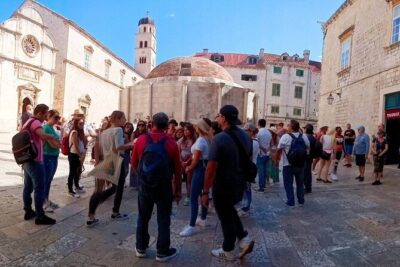
People’s Square, also called Pjaca, is next. The tour frames it as a public center from the period of Venetian rule, which helps you understand why the square feels the way it does. It is a place built for gathering, announcements, and daily life.
You get a stop here that includes a short photo moment plus time for visit and shopping. This is another place where Split feels alive rather than staged. Look at the storefront rhythms. Notice how the square works like a meeting point for the neighborhood.
You also stop for a quick look at the Old Town Hall. Even if the time is short, a guided marker like this helps you connect monuments to the civic life they served.
Then the tour takes you onward toward Fruit Square, another photo stop, and keeps the momentum moving without turning the route into a marathon.
Fruit Square and Split Fishmarket: Where the Senses Kick In
Fruit Square and the fishmarket are included stops that add daily texture. These segments are shorter, but they do something important for your overall understanding of the city.
Markets like these are where Split’s location and routines show up fast. You get a sense of how people eat, buy, and trade close to the center. The fishmarket, in particular, brings a strong sensory element that you will not get from cathedral stone alone.
You do not need to be a foodie to enjoy these stops. Even just taking in the atmosphere is part of the value. Plus, it balances the tour. After walking through formal palace spaces, you end up in a part of town where life feels immediate.
Pacing, Uneven Surfaces, and Why Private Means You Can Actually Adjust
This is a two-hour private walking tour. “Private” here matters because you are not fighting a crowd or getting dragged by someone else’s pace. You also get a guide who can tailor the tour to your interests and tempo.
One practical heads-up: the tour includes a lot of walking on uneven surfaces. Split’s historic core means stone slabs, steps, and corners where your footing matters. Comfortable shoes are a must. Think supportive walking shoes, not lightweight fashion sneakers.
Wheelchair accessibility is listed as yes. That said, older cities can be uneven even when routes are possible. If you are using a wheelchair, it is smart to tell your guide your needs at the start, so they can keep the route realistic.
As for the earlier drawback, the tour route is built around key sights. That is a good thing for structure and clarity, but it can feel less like a meander through hidden side alleys. If that style is your priority, treat this as your “core highlights with context” tour, then add free time after for wandering.
Price and Value: What $141 Covers and What Costs Extra
The price is listed at $141 per group up to 20, for a two-hour experience. That is a meaningful value if you are traveling with a small group because the guide cost gets shared across your group size.
What you need to budget separately is clear: entrance fees to the cathedral and cellars are not included. So even though the guided walking is priced up front, you still have to pay for the places that require tickets.
There are also no transfers included. This is a walking tour built for meeting at the start and moving through the old town on foot. If you are staying elsewhere, you will want to plan your own way to Riva at the beginning.
If you want a simple rule for value: pay for a guide when you want interpretation. Pay a ticket fee when you want access inside the big spaces. This tour does both, but it separates the ticket costs from the guide cost.
Guides, Language Options, and How to Get More Out of Your Time
Languages offered are English, French, and Croatian. That matters because you can ask sharper follow-up questions, and you can get better explanations if your language matches your comfort.
In the guide feedback you can see names like Zrinka and Yvonna showing up, both described as friendly, engaging, and great at making the city feel understandable. Even if you get a different guide, the format promises licensed-guided attention, and the route is designed to explain the meaning behind what you see.
To get more out of your two hours, do two things before you start:
- Tell your guide what you care about most, Roman architecture, Christian layers, or city life and markets
- Ask for one or two photo moments that you personally care about, then let the guide keep you moving efficiently
Because it is private, your guide can usually find the balance between photos and walking.
Who This Tour Suits Best in Split
This tour fits best if you want an organized introduction to Split’s center without spending your whole day reading guidebooks. It is also a good fit when the weather is hot and you want the strongest sights early, with breaks built around markets and squares.
It works well for:
- First-time visitors who want Diocletian’s Palace explained clearly
- Couples or small groups who value a private pace
- Travelers who like context, not just checklists
- Anyone who wants both monuments and some real local street scenes
It might not be your top pick if:
- You want lots of narrow back-alley wandering as the main goal
- You plan to skip entrances, since a big part of the experience revolves around the cathedral and cellars
Should You Book This 2-Hour Private Split Walk?
Yes, if your plan is to see the essentials of Split’s historic core with real meaning behind it. The combination of Diocletian’s Palace, cellars, Peristil, St. Duje, and then quick market and square stops gives you a well-rounded picture in only two hours.
I’d recommend booking if you appreciate a guide who can adjust to your pace, and if you are willing to pay a little extra for entrance fees to get inside the places you came for. If you are the type who loves getting lost in tiny lanes for hours, you can still do that, just think of this tour as your structured starting point, not your only plan.
FAQ
Where does the tour meet?
You meet on the promenade Riva in front of the entrance to the cellars of Diocletian’s palace, Obala Hrvatskog narodnog preporoda 15b, 21000 Split, Croatia.
How long is the Split city center private walking tour?
The tour lasts 2 hours.
Is the tour private or shared?
It is a private group experience.
Are entrance fees included for the cathedral and cellars?
No. Entrance fees to the cathedral and cellars are not included.
What should I wear to enter St. Duje Cathedral?
You need shoulders and knees covered to enter the cathedral.
Is the tour wheelchair accessible?
Yes, wheelchair access is listed as available, though the route includes a lot of walking on uneven surfaces.
Latest arrivals logged at Split





Walking Tours, compared.
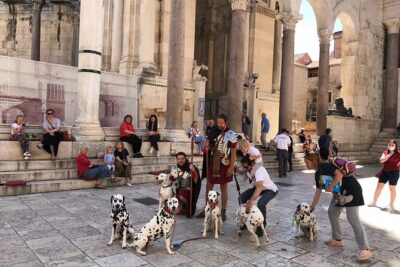
Walking Tour of Split and Diocletian’s Palace
Read our review →
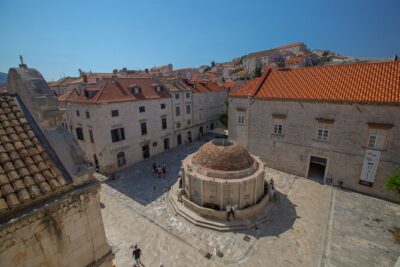
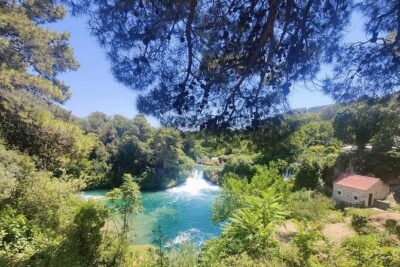
Krka Waterfalls tour with Trogir Walking tour and Krka panoramic boat cruise
Read our review →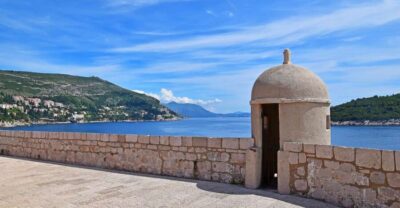
City Walls Early Morning or Sunset Walking Tour
Read our review →Browse the lists this tour appears in