
Reviewed · WALKING TOURS
Split City Walking Tour
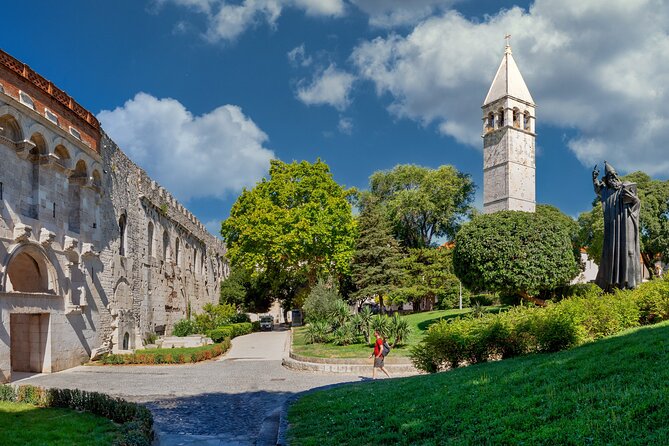
Split is one of those places where you can walk 10 minutes and feel like time changes clothes. This tour threads the needle from Roman leftovers to living Christian spaces, all at an easy walking pace.
I like that it keeps the focus tight, you hit key stops like the Cathedral of Saint Domnius and the Temple of Jupiter without wasting time. I also love the small-group feel, with a local guide who can explain what you’re looking at and keep things moving. The main thing to consider is the dress code for churches and select museum spaces, because knees and shoulders must be covered or you may be turned away.
You also get options that fit real schedules, with a choice of morning or evening. The route ends right in Diocletian’s Palace area, so you can flow into the rest of your day without backtracking.
In This Review
- Quick highlights you’ll feel fast
- Price and what you actually get for $94.12
- Meeting point, route feel, and how the walk fits your day
- Stop 1: Cathedral of Saint Domnius, Roman tomb to Christian church
- Stop 2: The Temple of Jupiter and the Roman magic that still reads clearly
- Stop 3: Diocletian’s Palace Peristyle, the palace heart in one guided loop
- The in-between sights: Trg Braće Radić and Benedictine monastery remains
- Your guide matters more than the monuments
- Timing: the 2-hour format and why it works
- Who should book this tour, and who might skip it
- Should you book the Split City Walking Tour?
- FAQ
- How long is the Split City Walking Tour?
- What is the price per person?
- Where do I meet, and where does the tour end?
- Is the tour offered in English?
- What should I wear because of dress code rules?
- What if the tour does not meet the minimum number of travelers or I need to cancel?
Quick highlights you’ll feel fast
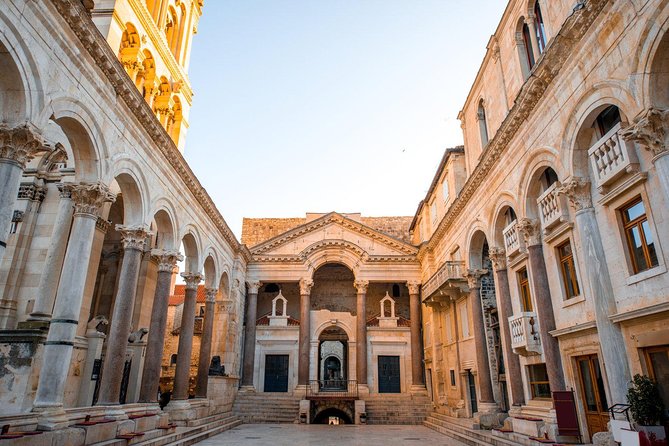
- St. Domnius as a former Roman mausoleum turned church, with big meaning in a small space
- Temple of Jupiter, a Roman shrine stop that’s easy to miss without guidance
- Diocletian’s Palace Peristyle, the central palace space and a great point to understand how it worked
- Small group up to 15, so your guide can actually answer questions
- Smart-casual rule plus strict church/museum dress code, plan your outfit before you arrive
- Two-hour format, so it’s a good fit even when you have limited time in Split
Price and what you actually get for $94.12
At $94.12 per person for about 2 hours, this isn’t a budget-only stroll. The value comes from what you avoid: guessing your way through Roman ruins and early Christian reuse without context. When you pay for a guide, you’re paying for clarity, and for the quick, organized pace that stops you from wandering in circles.
Here’s what’s included: a local guide. You also get a mobile ticket, which is handy in a city where you’ll be juggling phone maps and short walks. What isn’t included is hotel pickup and drop-off, so you’ll want to reach the meeting point on your own.
The tour is offered in English, and the group size max is 15 travelers. That matters more than people expect. In a big crowd, you spend time waiting and then you rush the details. Here, the tighter group size makes it easier to stay oriented and hear the guide over the street noise.
Also keep in mind the timing: each of the big featured stops is relatively short, roughly 10 to 15 minutes at each. That’s not a drawback if you like getting oriented quickly and then exploring on your own after. If you want lingering, take your time after the guided portion.
Meeting point, route feel, and how the walk fits your day
You start at Ul. kralja Tomislava 15, 21000, Split. You finish at Diocletian’s Palace, 21000, Grad, Split.
That end point is key. Diocletian’s Palace sits right at the heart of old Split life, with lanes and arches that lead to other sights and food stops. Ending there means you’re not hauling yourself back across town when you’re already tired. It’s a smart design for a short tour.
The tour is described as a walking experience through Split’s lively atmosphere, which usually means you’ll be moving between areas rather than taking long breaks. Near public transportation, the meeting point is also an easier target if you’re using buses or if you’re staying somewhere central.
Dress code is something you can prepare for in advance. You’re asked for smart casual, and for places of worship and select museums, you need your knees and shoulders covered for both men and women. Shorts and sleeveless tops are a risk. If your outfit fails the requirement, you could be refused entry, even if the tour is timed carefully.
Two more practical notes: service animals are allowed, and most people can participate. If you have mobility concerns, the walking duration is short enough that you should still consider it, but your ability to handle uneven old-town streets matters.
More Walking Tours in Split
- Split: Old Town and Diocletian Palace Walking Tour★ 4.9 · 4,727 reviews
- Walking Tour of Split and Diocletian’s Palace★ 5.0 · 2,588 reviews
- Krka Waterfalls tour with Trogir Walking tour and Krka panoramic boat cruise★ 5.0 · 1,659 reviews
Stop 1: Cathedral of Saint Domnius, Roman tomb to Christian church

The first stop is the Cathedral of Saint Domnius. This isn’t just a pretty church stop. It’s a former mausoleum of a Roman emperor, later transformed into a Christian church. That one fact gives you a whole new lens for the building.
Why it’s worth starting here: the cathedral is a physical example of how power and belief can reuse the same walls across centuries. When you understand that transformation, the place feels less like a random religious site and more like a survival story. Even in a brief visit, the guide can help you connect Roman engineering and later religious architecture without turning it into a lecture.
The tour notes free admission at this stop, and the time you’ll spend is about 10 minutes. Ten minutes is fast, but it’s enough for the basics: where you are, what makes the structure special, and how it fits into Split’s larger Roman-to-Christian thread. If you want more time, you can always circle back after the tour ends, because you’ll finish in the palace area nearby.
Potential drawback: a cathedral visit is still a visit inside. If the dress code catches you, this is where you could lose momentum. Check your outfit before you meet.
Stop 2: The Temple of Jupiter and the Roman magic that still reads clearly
Next up is the Temple of Jupiter. This stop is described as a magical Roman heritage site, and that matches what you’ll likely feel when the Roman world suddenly stops being theoretical.
The big value of this guided stop is interpretation. Roman ruins can be gorgeous but confusing. Columns and stone fragments don’t automatically tell you what happened there or why the space mattered. With a guide, you get the story that makes the place make sense.
Time here is about 15 minutes, and admission is again listed as free for this stop. Fifteen minutes is enough to see the key features, learn what to look for, and not feel rushed. It’s also a good buffer, because after St. Domnius, you’ll have Roman context, and the Jupiter stop becomes the next step instead of a separate detour.
If you’re the type who loves atmosphere and wants a sense of how people lived and worshiped in different eras, this stop delivers. If you prefer only the most famous landmarks, you might wonder why this isn’t a headline-level attraction. But in a short tour, it’s exactly the kind of stop that gives you a fuller Split picture.
Stop 3: Diocletian’s Palace Peristyle, the palace heart in one guided loop
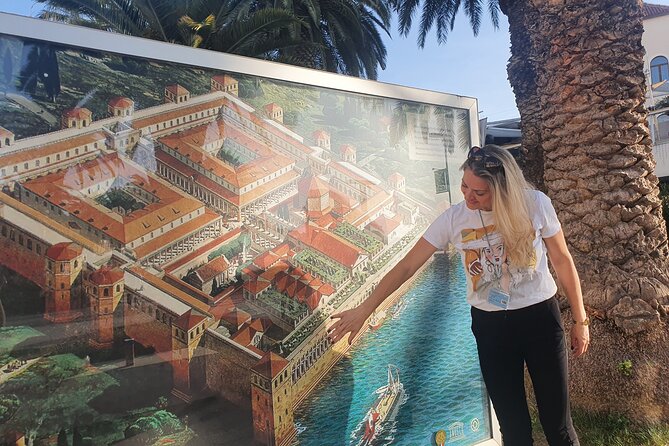
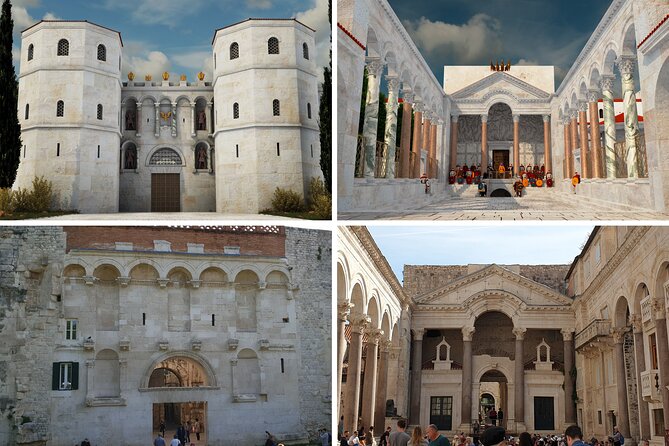
The third featured stop is the Peristyle of Diocletian’s Palace, sometimes called the Peristil. This is described as the heart of the palace, and it’s paired with incredible spaces in the former emperor’s quarters.
This is where the tour earns its keep. The Peristyle is central and symmetrical, and that makes it a natural starting point for understanding the palace layout. Without context, it’s easy to treat it like a courtyard you pass through. With a guide, you can learn how the palace was designed, why the central space mattered, and how the surrounding areas connect.
You’ll spend about 15 minutes here, and admission is listed as free in the tour notes. Like the other stops, it’s short and focused. That’s ideal if you want to get the “why” quickly, then roam later on your own with better instincts.
This is also where pacing shows. One of the best pieces of feedback from guide performance is that the guide didn’t linger in one area too long. That style fits the Peristyle well, because you want to see enough to understand it, without getting stuck waiting for the group to catch up.
If you want a suggestion for after the tour: use the Peristyle stop as your orientation anchor. When you walk away from it, you’ll likely feel less lost in the palace streets.
More marble lanes taken slowly:
- Split & Diocletian’s Palace Walking Tour
★ 5.0 · 1,125 reviews - Walking Tour of Split with a ‘Magister’ of History
★ 5.0 · 1,122 reviews - Split Walking Tour with Professor of History
★ 5.0 · 926 reviews - Split: Diocletian Palace & Old Town Guided Walking Tour
★ 4.7 · 882 reviews
The in-between sights: Trg Braće Radić and Benedictine monastery remains
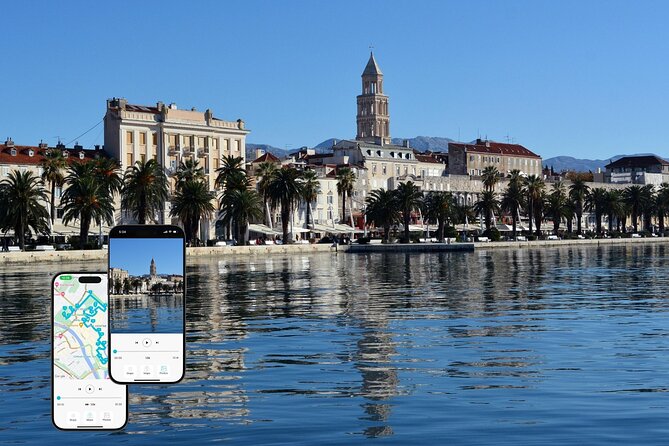
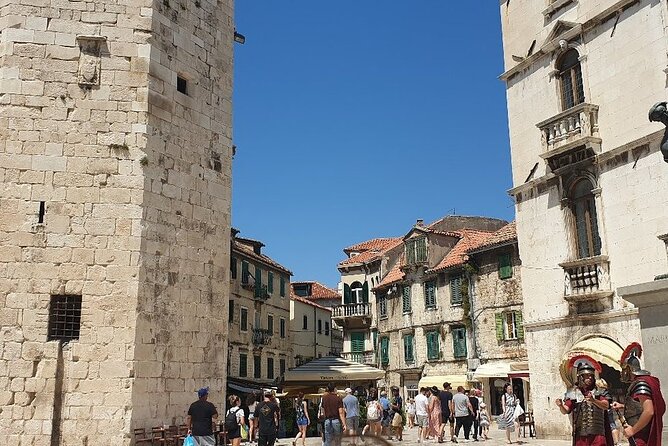
Beyond the main three stops, the tour highlights include Trg Braće Radić and the Benedictine monastery remains. These are the kinds of spots that round out the story.
Trg Braće Radić gives you a sense of Split’s public life, not only its ancient layers. It helps you see the city as it is today, not as a museum you’re walking through for two hours.
The Benedictine monastery remains add another layer of continuity. Even if you don’t know the details beforehand, a good guide can connect ruins and remnants to the city’s later chapters. That makes your time feel less like a single-era Roman pilgrimage and more like a layered walk where different eras overlap in real space.
These “in-between” stops are one reason the tour works well for first-timers. You get the headline sites, then you get enough texture to understand why Split feels like Split, not just a collection of monuments.
Your guide matters more than the monuments
This tour leans on a local guide, and the feedback is consistent: the best part is the explanation style, not just the stones themselves. One guide, Ana, is singled out as upbeat and passionate, with energy that pulls you into the story. Another strong comment is that the guide delivered clear history of Diocletian’s Palace without turning it into a slow march.
This matters for you because the sites are close together, but the meanings are not. If you only see Roman and Christian facts, you still need help connecting them. A guide can do that in small doses, keeping the tour lively and letting you keep your bearings.
With a maximum of 15 travelers, you’re also more likely to get personalized attention. That doesn’t mean it’s private every time. It does mean you have a better chance of hearing answers when you ask what you’re seeing. For many people, that’s the difference between a “nice walk” and a walk that sticks.
Timing: the 2-hour format and why it works
The tour runs about 2 hours. The featured stops are short, about 10 minutes at St. Domnius and 15 minutes each for the Jupiter Temple and the Peristyle. That adds up fast, and it’s meant to.
A short guided loop is often the best first pass in old towns. You can only absorb so much while standing in the sun on uneven streets. This format gives you the essential story beats and then sends you back out with clearer priorities.
Also, you can choose a morning or evening excursion. Even without turning it into a weather forecast, the simple fact of two time options helps you build Split day planning without forcing a rigid schedule.
Who should book this tour, and who might skip it
This is a strong pick if you:
- want Roman and early Christian context without spending a whole day researching
- like walking tours that stay organized and don’t drag
- want a guide who can explain Diocletian’s Palace in a way that feels vivid and easy to follow
- appreciate small groups, with a max of 15 and a pace that keeps you moving
You might think twice if:
- your closet is mostly shorts and sleeveless tops and you don’t want to adjust for the strict dress code in churches and select museums
- you hate short stops and want deep time in one site, because each major stop is brief by design
- you need hotel pickup, since it’s not included
Should you book the Split City Walking Tour?
Yes, if you want your first taste of Split’s Roman core to come with context and direction. At $94.12 for about 2 hours, the price makes sense because you’re buying interpretation of major landmarks that can otherwise feel confusing or disconnected.
I’d book it especially if you plan to spend additional time afterward in the Diocletian’s Palace area. The guided stop gives you the mental map to explore the rest of the palace streets with more confidence.
But if your clothing doesn’t meet the knees-and-shoulders rule, fix that first. This tour can be refused entry to worship spaces if you don’t comply, and it would be a shame to lose the main payoff.
FAQ
How long is the Split City Walking Tour?
It runs about 2 hours (approx.).
What is the price per person?
The price is $94.12 per person.
Where do I meet, and where does the tour end?
Meet at Ul. kralja Tomislava 15, 21000, Split and end at Diocletian’s Palace, 21000, Grad, Split.
Is the tour offered in English?
Yes, it is offered in English.
What should I wear because of dress code rules?
For places of worship and select museums, no shorts or sleeveless tops are allowed, and knees and shoulders must be covered for both men and women. If you do not meet the requirements, you may be refused entry.
What if the tour does not meet the minimum number of travelers or I need to cancel?
If the tour is cancelled because the minimum booking requirement is not met, you receive a full refund. For cancellations by you, it offers free cancellation up to 24 hours in advance for a full refund.
Latest arrivals logged at Split




Walking Tours, compared.

Walking Tour of Split and Diocletian’s Palace
Read our review →
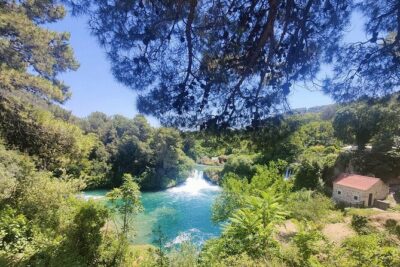
Krka Waterfalls tour with Trogir Walking tour and Krka panoramic boat cruise
Read our review →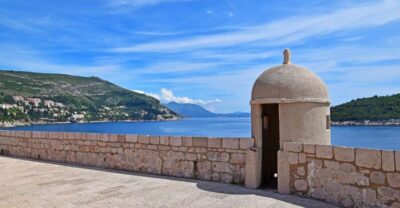
City Walls Early Morning or Sunset Walking Tour
Read our review →Browse the lists this tour appears in