
Reviewed · WALKING TOURS
Split; Private Morning Walking Tour in Split
Split reads best on foot, early. This private morning walk lets you pick apart the streets under and around Diocletian’s Palace, then slow down for St. Domnius, Peristil, the Golden Gate area, the Riva promenade, and the local Pazar market. I especially like how the route mixes big sights with smaller details, and how the guide’s storytelling can be personal and clear, like Kristina and Christina have been known for with German language groups. One drawback to consider: it is only 2 hours, so each landmark is a highlight visit, not a long stay.
Because you start in the morning, you get that calmer feel people look for in Split. You will also get plenty of chances to pause for photos and questions without the pressure of moving with large crowds. Still, it is a walking tour, so bring water and wear shoes that handle cobblestones.
The tour runs with a live licensed guide in German or English, and you will get more than just dates. Expect discussion that connects past and present, plus practical tips on where to eat and what else to do later that day, including nightlife ideas and other activities in the wider area.
In This Review
- Key reasons this Split private morning walk works
- A calm morning way to read Split’s old town
- Before you start: the Model of Split’s historical core
- Diocletian’s Palace streets: photo stop, scale, and orientation
- Guided tour of Diocletian’s Cellars: where the palace becomes real
- St. Domnius (Sveti Duje) Cathedral: mausoleum to landmark
- Peristil: the courtyard that connects the palace world
- Golden Gate photo stop: a scenic pause with a story
- A secret stop plus People’s Square: slowing down for real life
- Riva promenade and Maketa grada Splita: wrap the day with context
- Pazar market: seeing Dalmatian life through what people buy
- Price and value: what $129 gets you in a 2-hour private format
- Who should book this Split private morning walking tour?
- Should you book this Split private morning walking tour?
- FAQ
- How long is the Split private morning walking tour?
- Where does the tour start?
- What is included in the price?
- How much does it cost?
- What languages are available for the live guide?
- Does the tour include time at Diocletian’s Palace cellars and St. Domnius?
- Is the Split Green Market, Pazar, included?
- What should I bring?
- What is the cancellation policy?
Key reasons this Split private morning walk works
- Real orientation at the start: you begin at the model of Split’s historical core to understand the layout fast
- Diocletian’s Palace beyond postcards: you visit the cellars and the substructures that make the palace feel tangible
- A steady pace with stops built in: photo breaks and guided chunks, not nonstop marching
- Culture in everyday places: time in local squares and the Split Green Market, Pazar
- A private format for questions: you can ask for more detail as you go, with a licensed guide like Kristina or Christina
A calm morning way to read Split’s old town
Split’s old center can feel like a maze, but it does not have to. Starting early helps you see the city breathe. You catch the small rhythms first, then the major monuments make more sense.
This tour is designed for people who want to avoid the crowd-and-sprint vibe. You get a walking route through the historic core, with enough pauses that you can actually process what you are looking at. For me, that is the big value of a private format here. You are not stuck watching a guide disappear into a group. You can ask why a place looks the way it does, and the guide can answer in your language.
If you are the type who likes to understand the why behind the what, you will probably enjoy this. The focus is on history and culture, not just photo stops. If you only care about checking off names on a list, you might find some segments shorter than you want.
Before you start: the Model of Split’s historical core
You meet at the Model of the historical core of the city of Split. This is not just a quirky starting point. It is a smart way to get your bearings quickly.
I like starting with a model because it shrinks the confusion. After you see where the palace, cathedral area, and key squares sit in relation to each other, the walk feels less like random turning and more like a planned route. You also tend to notice details sooner, since you already understand what section of the city you are in.
A practical note: you will be walking right after the start, so use this moment to plan your water and pacing. Cobblestones do not care about good intentions.
More Walking Tours in Split
- Split: Old Town and Diocletian Palace Walking Tour★ 4.9 · 4,727 reviews
- Walking Tour of Split and Diocletian’s Palace★ 5.0 · 2,588 reviews
- Krka Waterfalls tour with Trogir Walking tour and Krka panoramic boat cruise★ 5.0 · 1,659 reviews
Diocletian’s Palace streets: photo stop, scale, and orientation

Your first real monument moment is inside the Diocletian’s Palace area. You get a photo stop plus a visit component that acts like an orientation sweep. Even with limited time, this kind of opening matters because it sets the tone for everything that comes later.
Diocletian’s Palace is not only impressive because it is old. It is impressive because it is still part of daily life. Streets, passages, and the structure beneath the surface are part of how people move and live. As you walk, pay attention to how the palace walls create boundaries and corridors. Those shapes explain a lot of the street pattern you will keep seeing.
What can feel slightly awkward, though, is that this is a photo-and-orientation chunk rather than a long guided immersion. If you want extended time walking at your own speed with deep explanation at every corner, you might wish the first stop was longer.
Guided tour of Diocletian’s Cellars: where the palace becomes real
Next up is the Diocletian’s Cellars, with a guided visit. This is the segment that tends to turn architecture into understanding. Cellars and substructures are where you grasp how the palace worked, not just how it looks.
In a short 10-minute guided visit, the guide can only hit the essentials, but that is often enough for a big lightbulb moment. You start to see the logic behind the space: storage, protection, and the way the palace’s functions sat beneath the main public layers.
If you are the kind of person who likes tactile details, you will likely appreciate this stop. It gives you a different viewpoint than the open courtyards and squares. And it sets up your cathedral visit later, because now you are thinking about the palace as a whole system, not just isolated monuments.
St. Domnius (Sveti Duje) Cathedral: mausoleum to landmark
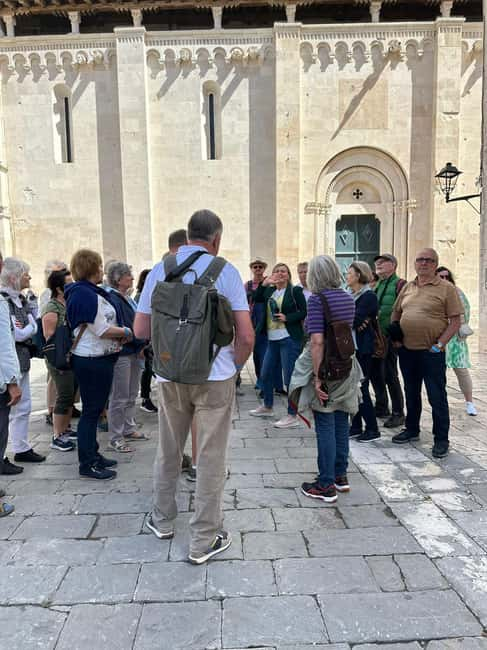
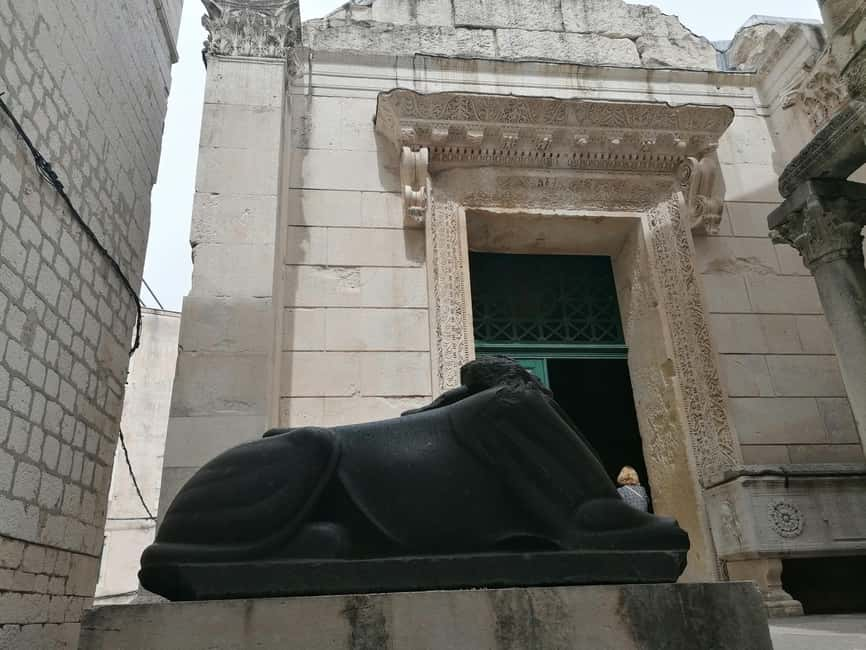
Then you move to the Cathedral of Saint Domnius, also known as Sveti Duje. You get a guided tour with sightseeing time, designed to explain what you are seeing and why it matters.
St. Domnius is special because it started as Diocletian’s mausoleum at the turn of the fourth century and later became a cathedral. That transformation helps you understand how layers of belief and power get reused instead of erased.
With about 10 minutes of guided time here, your best strategy is to let the guide point out the main features first, then take your own few moments to absorb the space. If you rush, you miss the point. If you pause, you will notice how the cathedral carries the palace past while functioning as a living site.
One consideration: like many cathedral visits in Europe, this stop can feel focused and rules-based. Wear comfortable clothing and follow what the guide asks, so you do not waste time.
More marble lanes taken slowly:
- Split & Diocletian’s Palace Walking Tour
★ 5.0 · 1,125 reviews - Walking Tour of Split with a ‘Magister’ of History
★ 5.0 · 1,122 reviews - Split Walking Tour with Professor of History
★ 5.0 · 926 reviews - Split: Diocletian Palace & Old Town Guided Walking Tour
★ 4.7 · 882 reviews
Peristil: the courtyard that connects the palace world
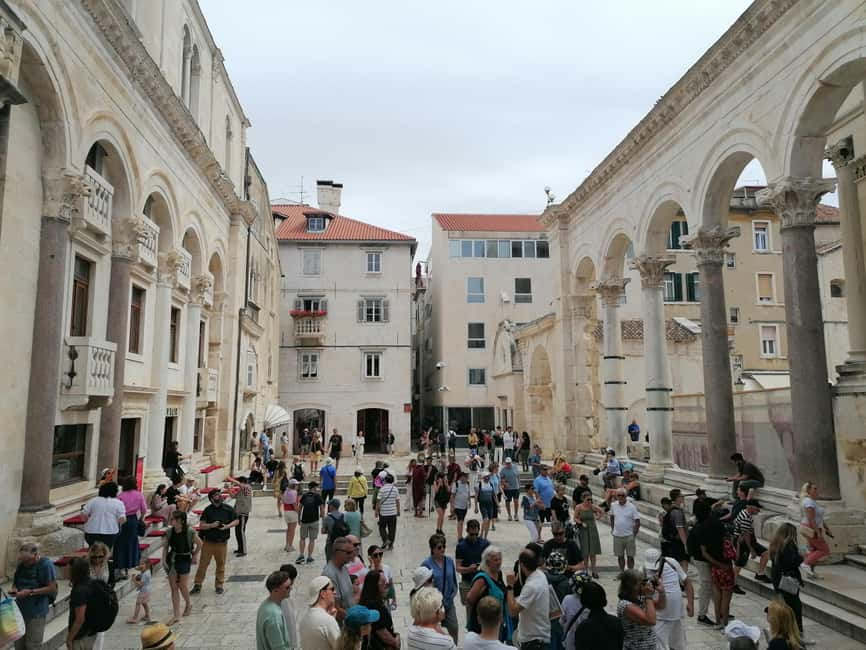
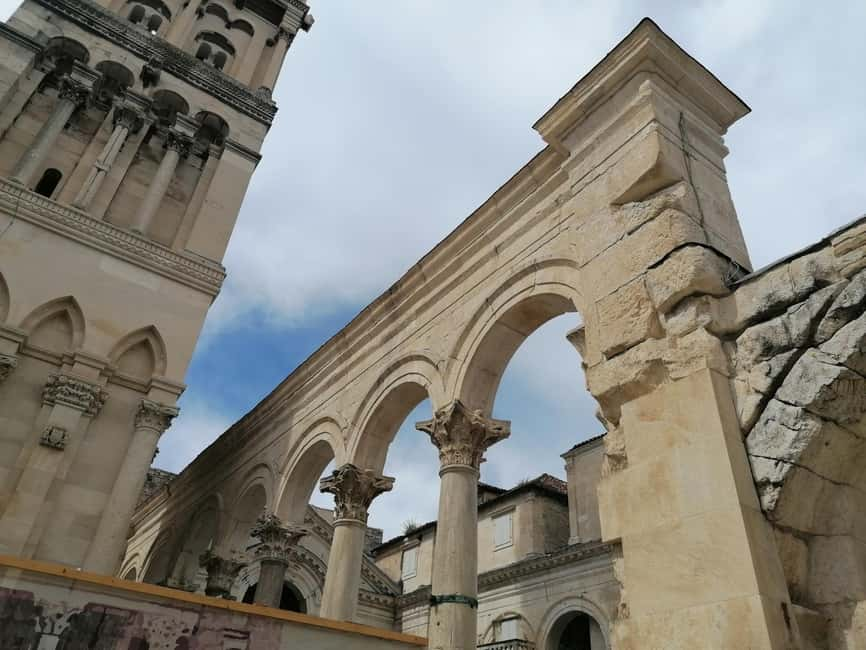
After the cathedral area, you visit the Peristil for about 15 minutes. This is where the palace stops feeling like stone and starts feeling like a stage.
Peristil is essentially the grand courtyard rhythm of the palace. Even in a relatively short visit, it helps you connect earlier stops to the palace’s central idea: order, movement, and the way public space shapes everyday life.
I like this stop because it is a bridge. You go from sacred and monumental details back to a space where you can breathe, watch, and reframe what you learned. If you want to feel that city breathing part of Split, this is a good place for it, even without long downtime.
A practical drawback is simple: 15 minutes goes fast. If you want a long sit-down, bring a plan for after the tour.
Golden Gate photo stop: a scenic pause with a story

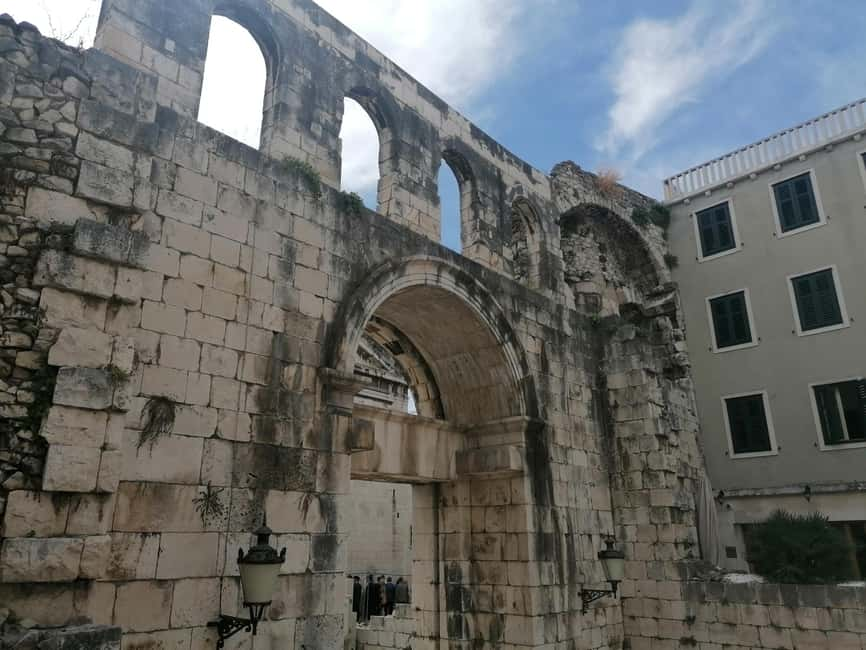
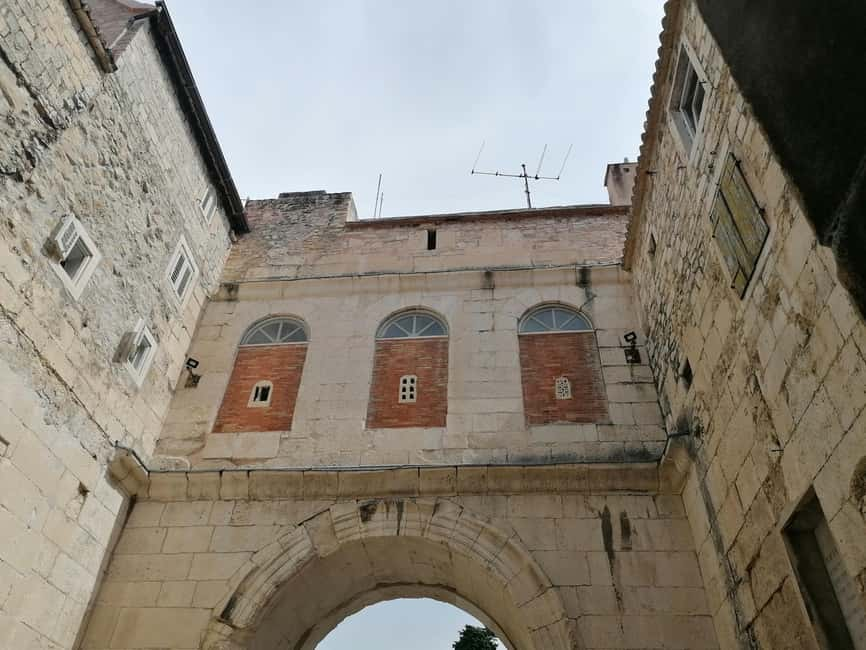
You then reach the Golden Gate area for a photo stop with sightseeing time. At around 15 minutes, it is enough for quick pictures plus a guided explanation of what you are looking at.
Golden Gate matters because gates are where cities negotiate arrival and control. They are built to impress and to manage movement. In Split, the palace and old town structure mean that gates are not just entrances. They are also clues to how the city organized itself over time.
Use this stop to shoot your key photos, and also to ask one or two questions. A gate viewpoint is a great moment to ask how the city grew around the palace and why certain routes feel natural.
A secret stop plus People’s Square: slowing down for real life
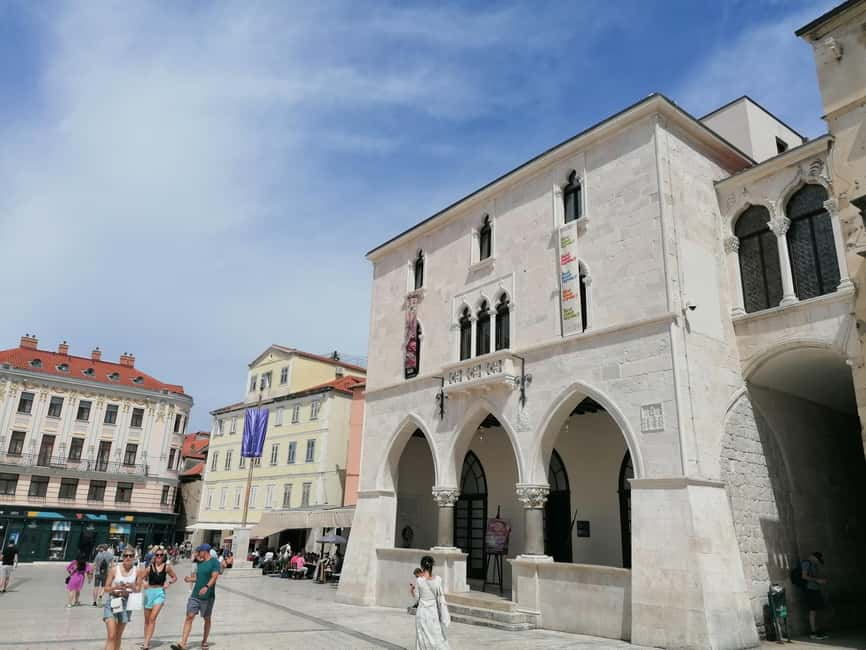
About 20 minutes are set aside for a secret stop. Since it is not just another named landmark, treat it as your time to notice details you might otherwise miss. This is where you often get the small, “this is how people actually use the space” feel.
Right after that, you spend time at People’s Square for shopping and sightseeing for about 15 minutes. This is a more everyday segment of the walk. It is not only about architecture. It is about street life: storefronts, walking patterns, and the flow of local activity.
I like pairing a less obvious stop with a people-facing square. The secret stop helps you look more carefully. People’s Square helps you look more broadly.
If you are sensitive to noise or foot traffic, keep in mind this segment can be more active than the quiet palace corners. Still, in a private morning format, you are not trapped in a moving crowd.
Riva promenade and Maketa grada Splita: wrap the day with context

You finish with a photo stop at the Riva promenade, plus a break time at Maketa grada Splita for about 10 minutes.
Riva is the classic waterfront spine of Split, and this kind of stop does one useful job: it reminds you that you are not only touring ruins and landmarks. You are in a working coastal city. The sea-facing views and promenades make the old town feel connected to the present.
Then the Maketa grada Splita break helps you reset. Even though you start with a model, a mid-to-late break at another model-style spot gives you a second chance to “put it all together” mentally before you go off on your own.
My practical advice: after the tour, use what you learned to choose the right next stops for your interests. You now have a mental map, so you can wander without losing time.
Pazar market: seeing Dalmatian life through what people buy
One of the highlights is a stop at the Split Green Market, Pazar. This is where locals buy and sell products native to Dalmatian soil.
This is valuable because markets are cultural education in action. You see what is in season, what people value, and what daily life looks like when you are not thinking about monuments. It is also a low-pressure place to interact with the guide for tips, even if you do not plan to do a big purchase.
If you enjoy food and ingredients, this stop can be the moment that gives your whole trip flavor. Even if you just browse, you will come away with a better sense of what local cooking likely uses.
A small consideration: markets can involve stairs and uneven ground. Wear shoes you trust.
Price and value: what $129 gets you in a 2-hour private format
The price is $129 per group, up to 10 people, for a duration of about 2 hours.
Here is how I think about value. A private licensed guide costs money, but the price can become reasonable fast if you are traveling with friends or family. If you fill closer to the upper group size, the per-person cost can get quite attractive. If it is just two people, it is still a fair deal for a guided, structured walk through major sites in one morning.
The real value is not that you see everything in 2 hours. It is that you see the right highlights in the right order, with interpretation that ties them together: palace substructures, cellars, St. Domnius, Peristil, a gate viewpoint, local squares, Pazar, and Riva.
Also, since this is a private group, you get a better chance to ask questions in German or English without feeling rushed. That is hard to price, but it often makes the tour feel worth it.
Who should book this Split private morning walking tour?
This tour fits best if you want a calmer start and prefer understanding over sprinting. It is ideal for:
- Couples and small groups who want a crowd-light morning
- First-time visitors who need orientation to Diocletian’s Palace and the old town layout
- People who enjoy clear, personal explanations, especially if you are learning in German or English
- Anyone who likes pairing monuments with local life, including shopping time and Pazar
If you already know Split well and want a very deep, long-duration dive into interiors, you might find the time at each stop short. But if your goal is to get the big picture fast and then explore on your own, this hits the sweet spot.
Should you book this Split private morning walking tour?
I would book it if you want your first morning in Split to feel organized and meaningful. Starting at the model, then moving through the palace, cellars, St. Domnius, Peristil, and local squares gives you a clear structure. The Pazar market stop also makes the experience feel connected to real daily life, not just stone and statues.
Skip it only if you need long museum-style time at interiors or you do not like walking for 2 hours on uneven old-town streets. If you are unsure, the free cancellation window and the reserve-and-pay-later option make it easier to plan without stress.
And if you like asking questions, this private format is exactly the right kind of setting. You get the stories and the context, then you leave with a map in your head and a morning’s worth of momentum.
FAQ
How long is the Split private morning walking tour?
It lasts 2 hours.
Where does the tour start?
You meet at the Model of the historical core of the city of Split.
What is included in the price?
A licensed tour guide is included.
How much does it cost?
It costs $129 per group, up to 10 people.
What languages are available for the live guide?
The tour guide is available in German and English.
Does the tour include time at Diocletian’s Palace cellars and St. Domnius?
Yes. You visit Diocletian’s Cellars with a guided tour and also visit the Cathedral of Saint Domnius with a guided tour.
Is the Split Green Market, Pazar, included?
Yes. The tour includes a stop at the Split Green Market, Pazar.
What should I bring?
Bring water.
What is the cancellation policy?
You can cancel up to 24 hours in advance for a full refund.
Latest arrivals logged at Split


Walking Tours, compared.
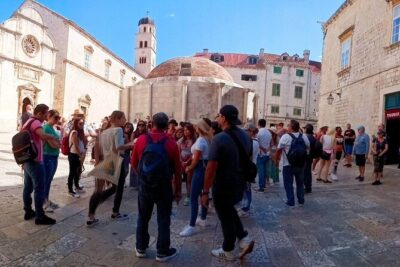
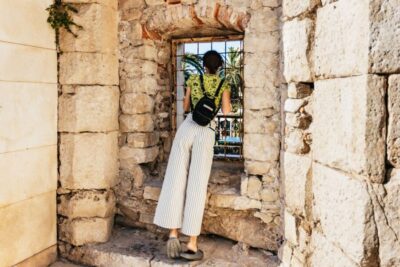
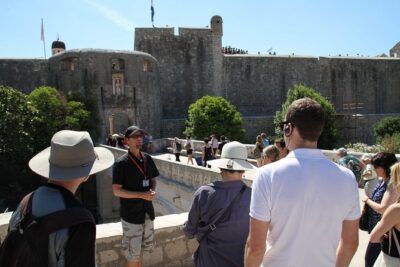
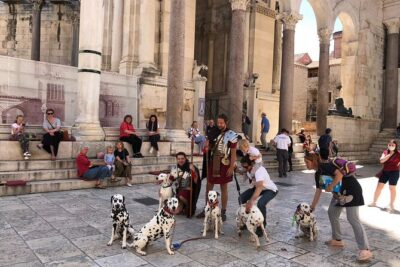
Walking Tour of Split and Diocletian’s Palace
Read our review →
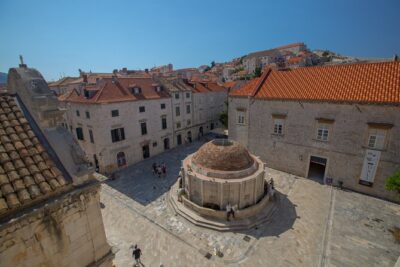
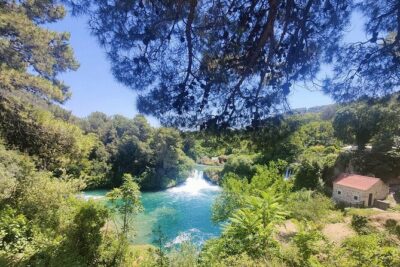
Krka Waterfalls tour with Trogir Walking tour and Krka panoramic boat cruise
Read our review →
City Walls Early Morning or Sunset Walking Tour
Read our review →Browse the lists this tour appears in