
Reviewed · WALKING TOURS
Split: Walking Tour of Split with Art Historian
One fountain, then suddenly 1,700 years of Split clicks into place. This walking tour with Josipa, an art historian and the owner of Aspalathos Guided Tours, turns the old town into a story you can follow. I especially love how she pairs the big sights with the small, visual clues, and how you get honest local advice at the end.
My favorite part is also the thing to think about first: it is a walking tour with unavoidable steps. If you have mobility issues, it is not the best fit, and it is also not for wheelchair users or hearing-impaired people. Still, for most visitors who want real context without touristy fluff, this is excellent value at $27 for two hours.
In This Review
- Key highlights you’ll feel right away
- Split’s palace bones: why this walk feels different
- Meeting at Strossmayer Park and getting your bearings fast
- From Bishop Gregory to the Golden Gate: starting just outside the action
- Bronze Gate, Silver Gate, and the palace rhythm you can feel
- Peristyle and Jupiter’s Temple: when the big rooms explain the palace
- Street Let Me Pass, Vestibul photo stop, and Triklinij
- Diocletian’s Cellars: the underground that turns the tour practical
- Riva waterfront, then Fruit Square and People’s Square
- Price, pacing, and who this tour suits best
- Should you book this Split walking tour with Josipa?
- FAQ
- How long is the walking tour?
- Where does the tour start?
- How much does the tour cost?
- Is the tour only in English?
- Does the tour enter paid sites like the Cathedral or Temple of Jupiter?
- Will the tour run in bad weather?
- Is the tour a small-group experience?
- How strenuous is the walk?
- Is it suitable for wheelchair users or hearing-impaired people?
- What if I’m late due to summer traffic?
Key highlights you’ll feel right away
- Art historian Josipa leads the way, making the palace architecture make sense, not just look impressive.
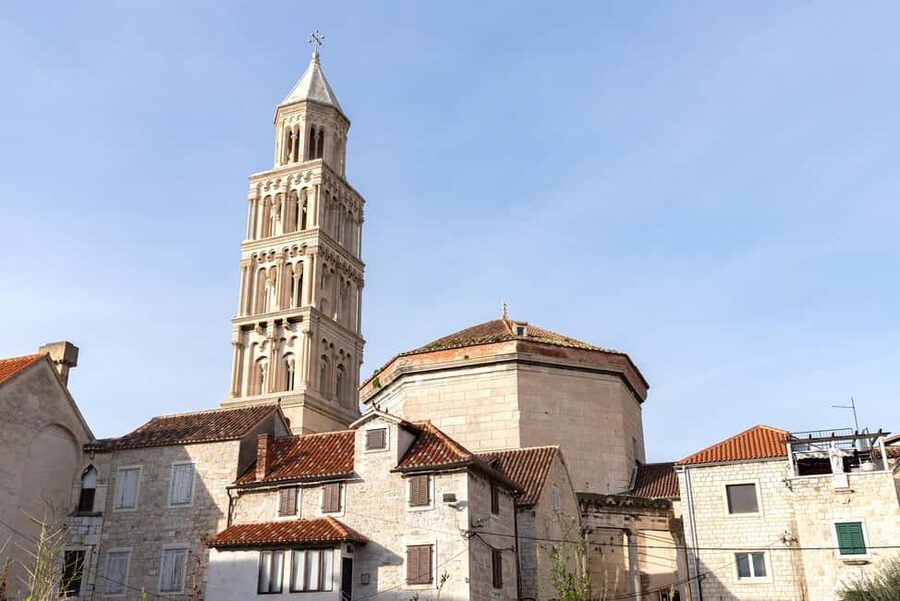
- Hidden details in Diocletian’s Palace, including Egyptian sphinxes you might miss without a guide.
- A relaxed small-group pace, with time for questions and personalized answers when the group is tiny.
- Busy-day strategy, with guidance on where to stand and when to explain, so you spend less time baking in the sun.
- Practical end-of-tour recommendations for viewpoints, food, and how to experience Split like a local.
- You see major paid sites from the outside, then get suggestions for how to visit them later on your own.
Split’s palace bones: why this walk feels different

Split can be all “wow” and no “why.” This tour fixes that. In two hours, you do not just tick off sights in Diocletian’s Palace, you learn how the spaces worked and what to notice while you walk.
I like that Josipa’s approach stays grounded in what you can actually see. The tour connects Roman building choices to what you experience on the street now. That makes your photos better, sure, but more importantly, your understanding sticks.
And it avoids the usual trap of a checklist tour. Instead of rushing, Josipa keeps the explanations timed to the spots you are standing in, so you are not hearing history while you are already moving on.
Meeting at Strossmayer Park and getting your bearings fast
Your start point is Strossmayer Park, around the Strossmayerova Fountain. It sits above the Golden Gates area, near the statue of Bishop Gregory. If you search your map for Strossmayer Park or Strossmayerova Fountain, you should land in the right place.
Look for Josipa holding a yellow and blue sign that says Aspalathos Guided Tours. This matters because the old town streets can look similar fast, and you have a short buffer for waiting.
One more practical note for summer: traffic can slow your arrival, and the tour has a max waiting time of 10 minutes. After that, the group leaves and Josipa is already guiding, so she will not be reachable by phone. Build in a little extra time, then you can relax.
More Walking Tours in Split
- Split: Old Town and Diocletian Palace Walking Tour★ 4.9 · 4,727 reviews
- Walking Tour of Split and Diocletian’s Palace★ 5.0 · 2,588 reviews
- Krka Waterfalls tour with Trogir Walking tour and Krka panoramic boat cruise★ 5.0 · 1,659 reviews
From Bishop Gregory to the Golden Gate: starting just outside the action
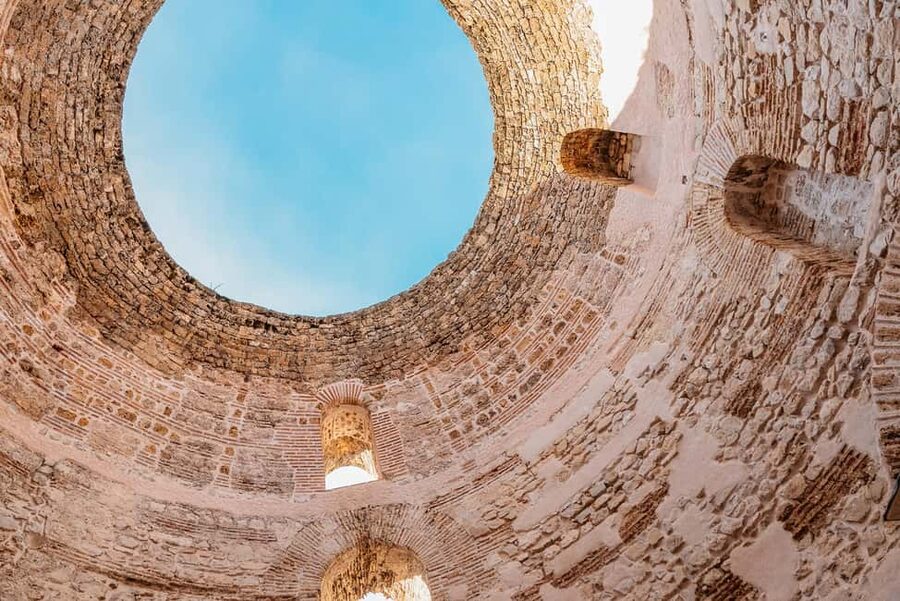
You begin at the fountain in the park, which is a nice warm-up. From here you are oriented toward the palace walls and the main gate area.
Next up is the Gregory of Nin Statue. This stop is quick, around 10 minutes of guided time, but it sets a tone. You get a sense of how the city’s later identity sits on top of the earlier Roman core.
Then you move to the Golden Gate. The value here is not the arch itself, but the framing. Josipa explains what you are looking at and why gates mattered to how Diocletian’s Palace functioned. You start to see Split less like a random old neighborhood and more like a planned machine.
You also make a short stop at Sv. Martin. It is brief, but it helps break up the big palace blocks and keeps the walk from feeling like one long hallway of stone.
Bronze Gate, Silver Gate, and the palace rhythm you can feel
After the Golden Gate area, you continue through the gate sequence, including the Bronze Gate and the Silver Gate. These stops are guided for about 5 to 10 minutes each, and that is exactly the right pace. You get a focused explanation without losing momentum.
This is where you learn to “read” the palace. Instead of treating every entryway like a photo op, you start noticing how the layout guides movement and separation of spaces.
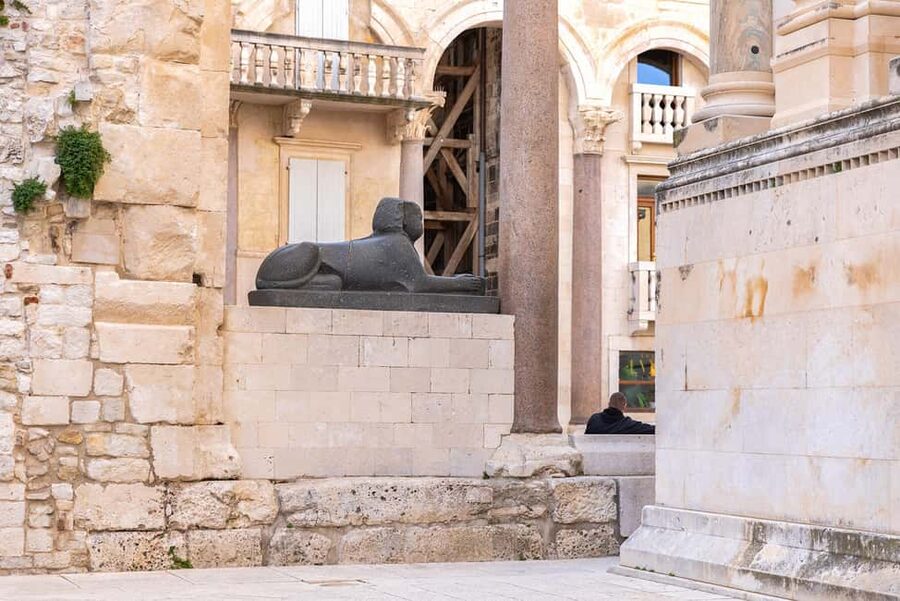
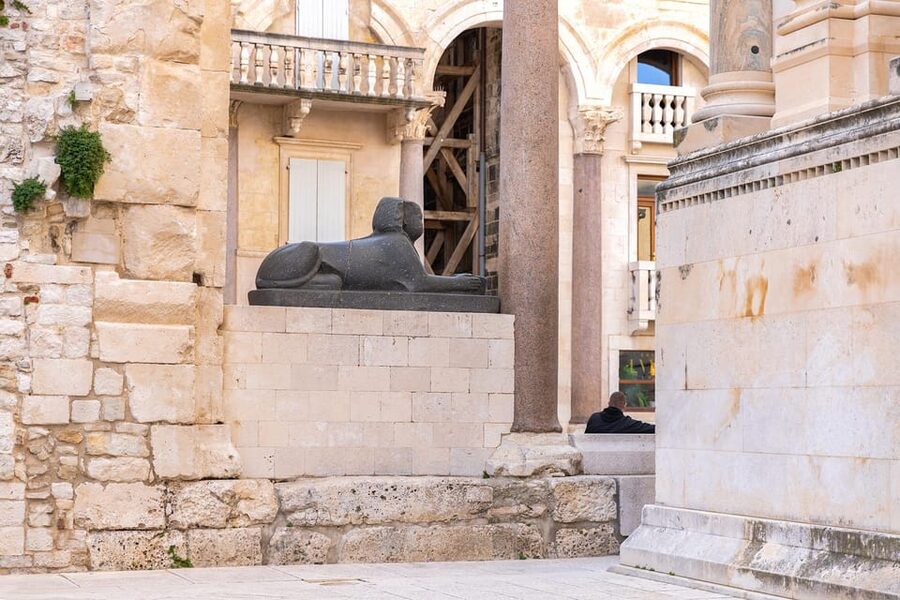
A standout part of the Diocletian Palace experience is the Egyptian sphinxes you can spot hidden in plain sight. You do not have to know what to look for before the tour. Josipa helps you notice them where they sit among the everyday visual clutter of the palace complex. That moment alone is worth having a guide, because it turns an easy overlook into a real story.
And while you are in this section, Josipa also shares what she calls the newest findings from ongoing excavations. The point is simple: you are not studying a dead museum layout. You are walking through a place where archaeology and scholarship still keep changing the picture.
Peristyle and Jupiter’s Temple: when the big rooms explain the palace
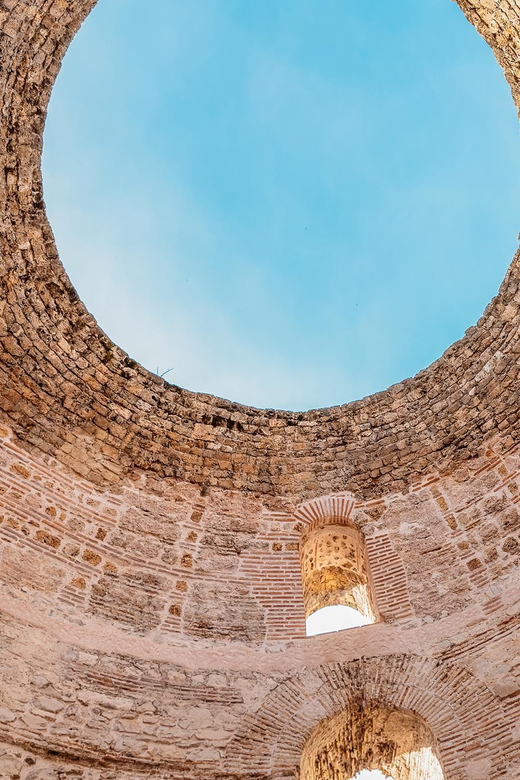
Then comes the Peristyle, guided for about 10 minutes. This is one of the spots where the tour really earns its “art historian” angle. You are not just told it is impressive. You are taught how it functioned and what the architectural details signal about use and design.
From there, you stop at Jupiter’s Temple. You will learn what it was tied to in the palace world and why people paid attention to it. The important practical detail: the tour does not enter paid sites. So you are viewing key areas and hearing the story, then getting clear directions on how to visit interior sites later if you want to.
If you love architecture, this section is the payoff. It helps you understand why Roman design feels orderly even when everything is crowded with later life. You start seeing lines, thresholds, and entrances as the logic of the place.
More marble lanes taken slowly:
- Split & Diocletian’s Palace Walking Tour
★ 5.0 · 1,125 reviews - Walking Tour of Split with a ‘Magister’ of History
★ 5.0 · 1,122 reviews - Split Walking Tour with Professor of History
★ 5.0 · 926 reviews - Split: Diocletian Palace & Old Town Guided Walking Tour
★ 4.7 · 882 reviews
Street Let Me Pass, Vestibul photo stop, and Triklinij

The next stops are smaller and more intimate, but they matter. You pass Street Let Me Pass, then reach a Vestibul photo stop. These are shorter, around 5 to 10 minutes.
Why do these brief stops feel worthwhile? Because Josipa uses them to connect the palace layout to what daily movement would have looked like. You get the sense that people did not wander randomly. They followed corridors, paused at thresholds, and moved between zones for different activities.
Then you arrive at Triklinij, guided for about 5 minutes. This is one of those locations where your questions start forming naturally. You might wonder what kind of room it was, what went on there, and how it connected to the rest of the palace. The guide’s job here is to give you enough context so the space makes sense on your walk back through your own photos.
And yes, the photo stop is exactly that. It is not a trick. It is time for you to capture the space while your brain is actually able to label what you are seeing.
Diocletian’s Cellars: the underground that turns the tour practical
Next you go to Diocletian’s Cellars, with about 10 minutes of guided time. Cellars are interesting for one reason: they make the palace feel real as a living complex. Even without entering paid interiors, you get stories that explain why underground spaces mattered.
This stop also helps you plan your future self-guided exploring. Josipa shares instructions and suggestions on how to visit major paid sites later, including places like the Substructures and the Cathedral area (these are not entered on this tour). You do not feel left hanging. You feel pointed toward the next steps.
The best tours give you two things, what to see now and what to see later. This one does that well.
Riva waterfront, then Fruit Square and People’s Square
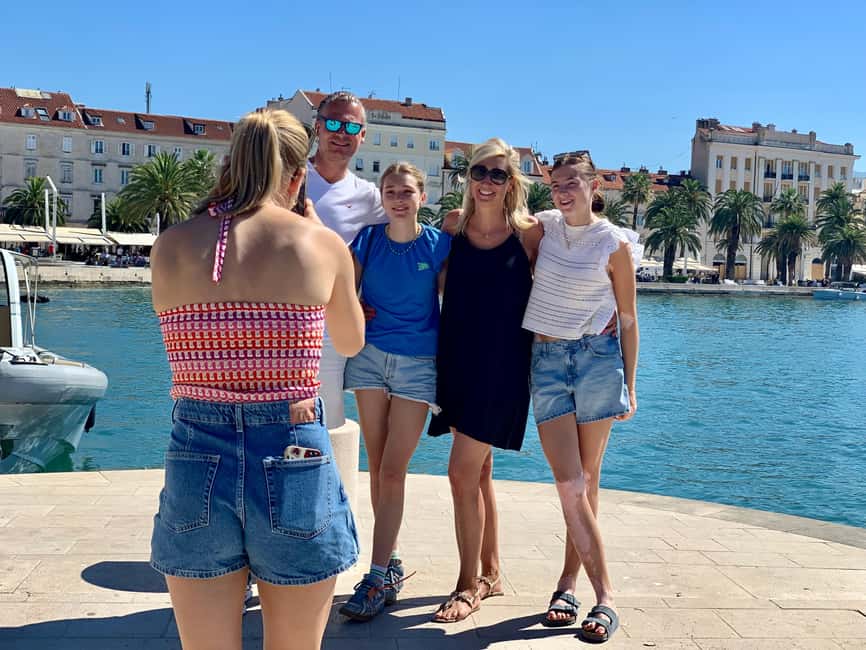
After the palace, you step out toward the Riva, Split’s famous waterfront, with about a 10-minute guided segment. This change of pace is smart. It helps your brain reset after stone corridors and gate explanations.
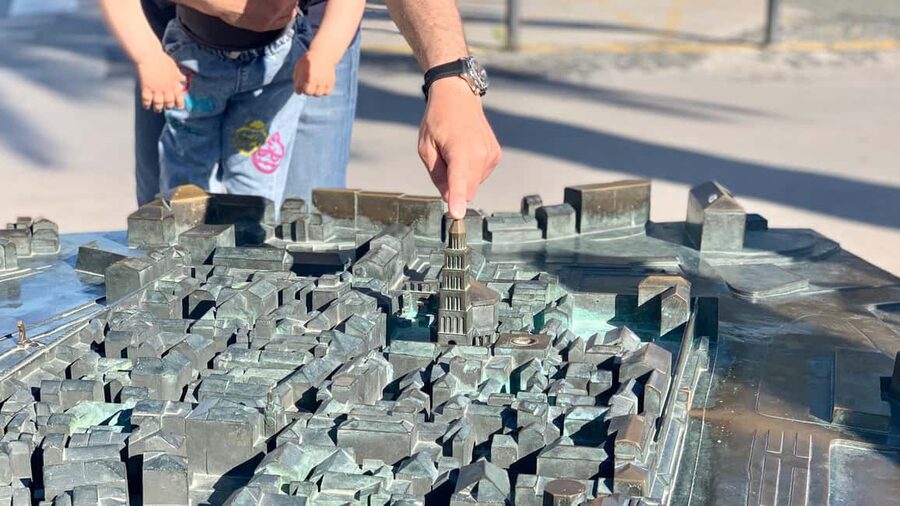
From there, you see a model of the historical core of the city of Split. This is a small stop, guided for about 10 minutes, but it is a cheat code. The palace layout becomes clearer when you can see how the zones relate in one view. It also helps you plan where to go next without wandering in circles.
Then you move on to Fruit Square, guided around 5 minutes, followed by People’s Square, around 10 minutes. These stops bring you back into the everyday city layer. You start understanding how people live and gather where the old structures frame their streets.
The result is that Split does not feel like “Roman ruins plus modern shops.” It feels like one continuous city.
Price, pacing, and who this tour suits best
At $27 per person for two hours, you are paying for more than someone walking you to sights. You are getting a licensed guide, Josipa, who uses architecture and art history to explain what you see on the street. In places like Split, where paid entry tickets can add up, the fact that you do not enter paid sites but still get the stories and directions can be a real value move.
Pacing is also a big deal. Two hours is long enough to teach you the “why,” but short enough to keep the walk enjoyable before dinner. One of the reviews’ themes was that the tour time fit neatly as a pre-dinner activity. If you like sightseeing with a plan, this works.
This is not a universal fit. The tour is not suitable for wheelchair users, people with mobility impairments, or hearing-impaired people. It also includes several unavoidable steps and runs rain or shine.
If you are physically able to walk and climb stairs a bit, you will get the most out of the small-group format. The tour often becomes a very personal experience when the group is small, and that can mean more direct answers to your questions.
Should you book this Split walking tour with Josipa?
Book it if you want Split with context, not just photos. I would especially recommend it if you like Roman architecture, you enjoy learning what buildings were for, and you want practical advice on how to spend the rest of your time in Croatia after the walk.
Skip it if steps and uneven walking are a problem for you, or if you need accessibility accommodations not included in this experience. Also skip it if you only want casual strolling with zero explanations, because this tour is built around guided storytelling and active looking.
FAQ
How long is the walking tour?
The tour lasts 2 hours.
Where does the tour start?
It starts around Strossmayerova Fountain in Strossmayer Park, just above the Golden Gates and near the Gregory of Nin statue. Look for the guide holding a yellow and blue Aspalathos Guided Tours sign.
How much does the tour cost?
The price is $27 per person.
Is the tour only in English?
Yes, the tour is available in English.
Does the tour enter paid sites like the Cathedral or Temple of Jupiter?
No. The tour does not enter paid sites. It passes them and your guide explains them and tells you how to visit them later.
Will the tour run in bad weather?
Yes, it takes place rain or shine.
Is the tour a small-group experience?
Yes, it is described as a small-group walking tour, which allows for a more relaxed and personal pace.
How strenuous is the walk?
The tour includes several unavoidable steps. It is not suitable for people with mobility impairments.
Is it suitable for wheelchair users or hearing-impaired people?
No. It is not suitable for wheelchair users or hearing-impaired people.
What if I’m late due to summer traffic?
There is a max waiting time of 10 minutes after which the group departs from the starting point, and the guide will not be reachable by phone during the tour.
Latest arrivals logged at Split





Walking Tours, compared.
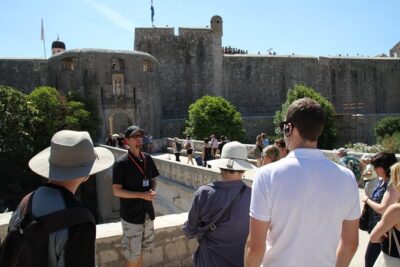

Walking Tour of Split and Diocletian’s Palace
Read our review →
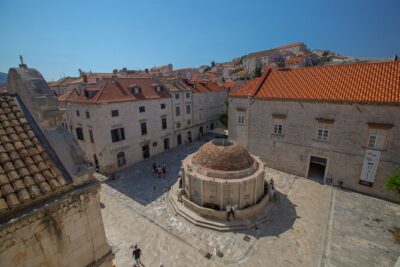
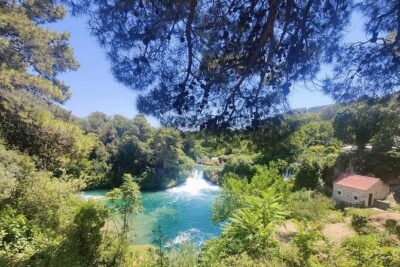
Krka Waterfalls tour with Trogir Walking tour and Krka panoramic boat cruise
Read our review →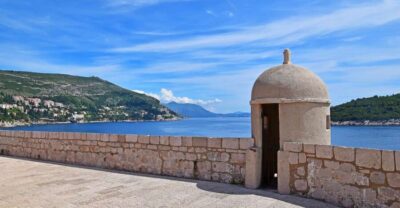
City Walls Early Morning or Sunset Walking Tour
Read our review →Browse the lists this tour appears in