
Reviewed · WALKING TOURS
Walking tour of Split with an Art Historian
Split can feel like Roman ruins and laundry lines at once.
This walk helps you read the place in order, with an art historian style that connects the stones to daily life. You start in Strossmayer Park, then move straight into Diocletian’s palace through the gates, streets, and quirky corners that most people miss.
I love the small-group pace and the way Josipa, the guide, turns architecture into stories you can picture. I also love the practical payoff: you’ll learn where to look, what to photograph, and what to explore next, without paying for extra museum time.
One consideration: the tour includes unavoidable steps, and while most walking is manageable, some spots have uneven ground. If heat and steps are a problem for you, plan accordingly and bring water.
In This Review
- Key highlights that make this tour worth it
- Why Strossmayer Park sets the tone for Split
- Tower 2 and the gates, where you learn the palace’s logic
- Golden Gate: the main northern entrance
- Iron Gate: the platinum gate idea
- Eastern (Silver) Gate: a short detour with a point
- Gregory of Nin and Let Me Pass, the folklore stops you’ll laugh about
- Cardo Maximus and the hidden rhythm of Roman streets
- The Peristyle: where the palace turns into stagecraft
- Cathedral of Saint Domnius: why you see it, even without entering
- Vestibulum, klapa acoustics, and that “stop for photos” strategy
- Substructures shortcut to Riva, and how to plan the rest of your day
- Riva Harbor: the civic heart of Split
- Maketa Grada Splita: your last mental map
- The art historian advantage: why Josipa’s approach feels different
- Price and value: what $30.23 buys you in real time
- Best timing, comfort tips, and how to get the most out of the walk
- Should you book this Split art-historian walk?
- FAQ
- How long is the Split walking tour with an art historian?
- Does the tour include entering museums or paid sites?
- Where does the tour start and end?
- What language is the tour offered in?
- Will the tour run in bad weather?
- Can I bring a service animal or a pet?
Key highlights that make this tour worth it
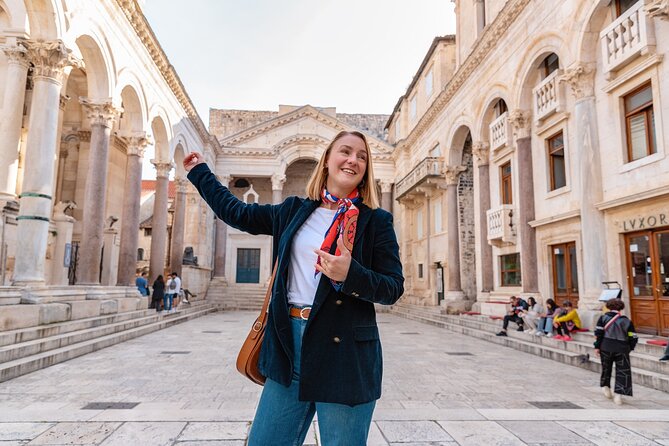
- Josipa’s storytelling links Roman, medieval, and modern Split so the palace feels like a living place, not a history slideshow.
- A tight, max 10-person group means you can ask questions and hear clearly.
- Gates and street layout explained in human terms (not just dates and names).
- Photo-smart stops like the Vestibulum area for pictures and a great spot for clapping or hearing song acoustics.
- Folklore and tiny details you actually remember (like Gregory of Nin’s toe for luck).
- No paid sites entered, so you still get a strong hit of the palace without squeezing your day around ticket lines.
Why Strossmayer Park sets the tone for Split
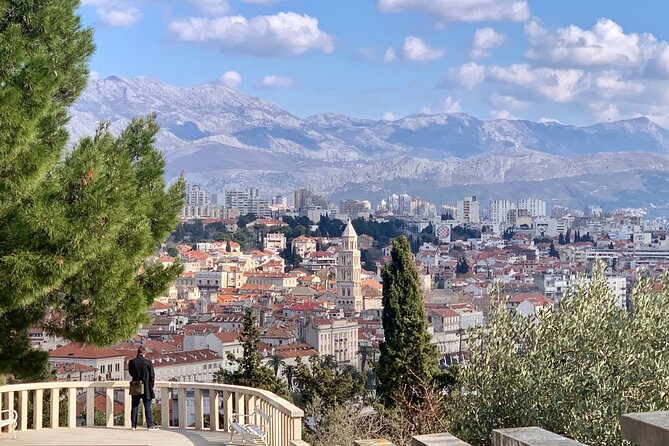
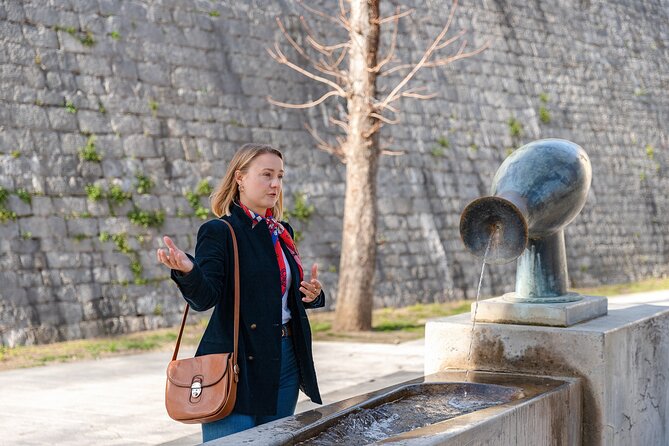
You meet in the middle of Strossmayer Park, locally called Đardin, next to the central fountain at Strossmayerova Fountain. It sounds simple, but it’s a smart opening move. Instead of starting with grand ruins, you start with water, and how it kept the Palace going for over 17 centuries.
This matters because Split’s Roman core can look like a museum from far away. By beginning with water and function, the whole tour becomes more than sightseeing. It turns into, How did people actually live here?
You also get a breather right away. You’ll be in an easy, local setting before the pace tightens inside Diocletian’s world.
Tower 2 and the gates, where you learn the palace’s logic
From the park, you step toward Tower 2 of Diocletian’s palace. It might not look glamorous. That’s exactly why it works. Your guide uses this stop to help you understand what makes Split unique worldwide: you are not only looking at walls. You are reading defenses, planning, and the way the palace was built to last.
Then you start moving through the entrance points that define the palace’s “address system.”
More Walking Tours in Split
- Split: Old Town and Diocletian Palace Walking Tour★ 4.9 · 4,727 reviews
- Walking Tour of Split and Diocletian’s Palace★ 5.0 · 2,588 reviews
- Krka Waterfalls tour with Trogir Walking tour and Krka panoramic boat cruise★ 5.0 · 1,659 reviews
Golden Gate: the main northern entrance
At the Golden Gate, you get a clear explanation of its role as one of four entry points. This stop is also your bridge into the main street concept. You’ll learn about Cardo, the principal Roman street running north to south.
Why it’s useful: once you understand Cardo, you stop getting lost. Even if you wander later on your own, your brain will have a map.
Iron Gate: the platinum gate idea
Near the Iron Gate, the tour leans into why it mattered so much. You’ll hear the story behind why this gate became the city’s “platinum” gate over time.
This is a great moment for the way Josipa teaches. You’re not just memorizing a label. You’re learning how history layers itself over architecture.
Eastern (Silver) Gate: a short detour with a point
At the Eastern (Silver) Gate, there’s a quick but meaningful detour. You’ll hear what the stop reveals that you might miss if you were speed-walking through on your own.
Small detours are where the tour shines. They make you feel like you have insider vision.
More marble lanes taken slowly:
- Split & Diocletian’s Palace Walking Tour
★ 5.0 · 1,125 reviews - Walking Tour of Split with a ‘Magister’ of History
★ 5.0 · 1,122 reviews - Split Walking Tour with Professor of History
★ 5.0 · 926 reviews - Split: Diocletian Palace & Old Town Guided Walking Tour
★ 4.7 · 882 reviews
Gregory of Nin and Let Me Pass, the folklore stops you’ll laugh about
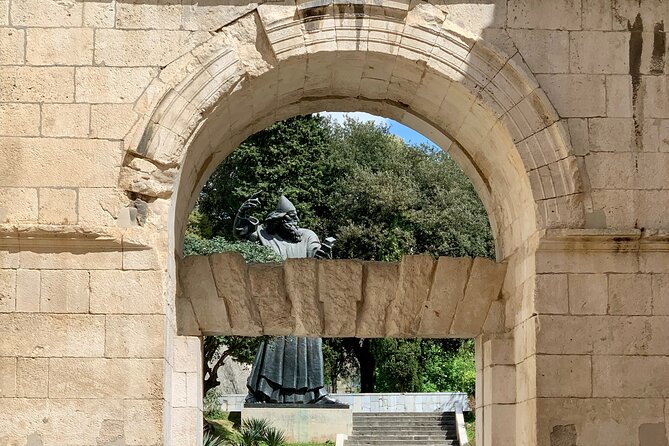
Before you head through the Golden or Northern gate area toward the palace interior, you pause at the Gregory of Nin statue. This is a perfect example of how Split mixes art, religion, and street-level culture.
It’s also where you’ll do a classic local move: you’ll learn about the tradition of rubbing Gregory of Nin’s toe for good luck. Your guide also shares details about the monument, created by Croatian sculptor Ivan Meštrović, so it doesn’t feel like a tourist prop.
Then comes Pusti me da prodjem (Let Me Pass) Street, one of the narrowest streets in the world by the tour’s description. It’s less than 10 meters long and only about 57 centimeters wide.
Here’s the practical part. This stop is short, but it’s a reset for your eyes. You move from big palace thinking to a tiny human-scale feature. It’s also a photo win, and it helps you remember Split’s personality: Roman scale, but still firmly everyday.
Cardo Maximus and the hidden rhythm of Roman streets
Once inside, you travel along Cardo Maximus, the main north-south street. This is the spine of the palace layout. And if you like urban planning, you’ll enjoy how the tour makes it feel readable.
You’ll also pass through Dioklecijanova, a historic path that leads you to a hidden garden inside the palace area. Even though time is limited, you get that sense of private space inside a huge Roman structure.
This section has a nice rhythm: walk a bit, stop, connect what you’re seeing to what it means. It prevents the classic old-town fatigue where everything starts to look the same.
The Peristyle: where the palace turns into stagecraft
Approaching the Peristyle of Diocletian’s Palace, you feel the shift. The tour frames it as the moment when Diocletian’s palace grandeur becomes obvious.
You’ll learn the story of its origin and how its role evolved over time. And you’ll also hear the point that this spot once impressed Scottish architect Robert Adam in the 18th century, when he listed it among the most beautiful European monuments. That helps you place it in a wider art-and-architecture context, not just local pride.
Your guide also explains how the Peristyle fits with surrounding spaces. You’ll walk along the Decumanus approach to the area, which makes the whole palace feel less like random stone and more like an intentional machine.
Cathedral of Saint Domnius: why you see it, even without entering
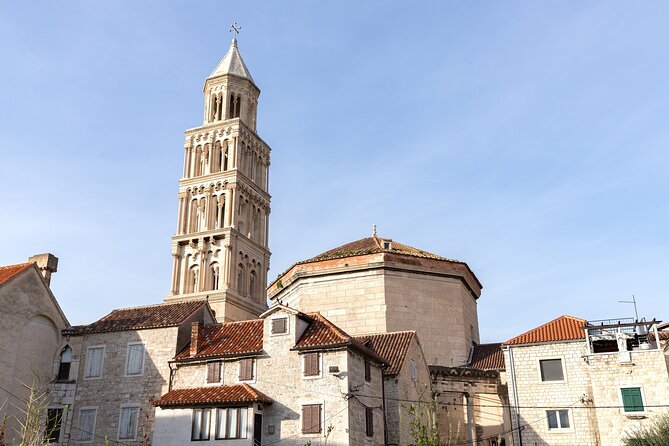
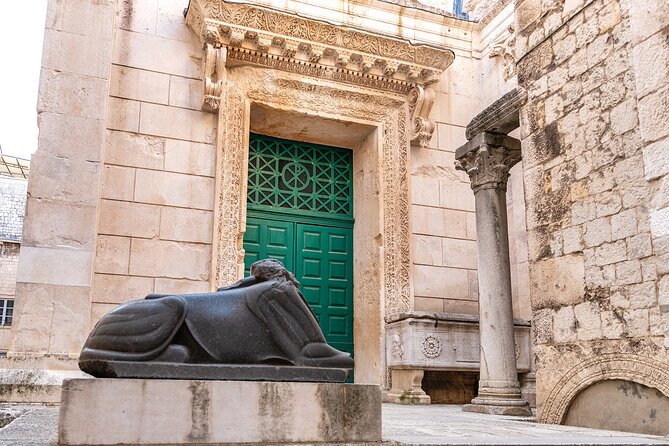
On the Peristyle, you also stop at the Cathedral of Saint Domnius. This is where the story becomes Roman-to-Christian in one view: it started as a mausoleum for the Roman emperor, later repurposed as a Christian cathedral.
Important practical detail: the tour does not include entering the Cathedral because it’s a paid site. Still, you get the meaning and context. That’s valuable, because you’ll understand what you’re looking at even if you decide to visit the interior later on your own day.
Vestibulum, klapa acoustics, and that “stop for photos” strategy
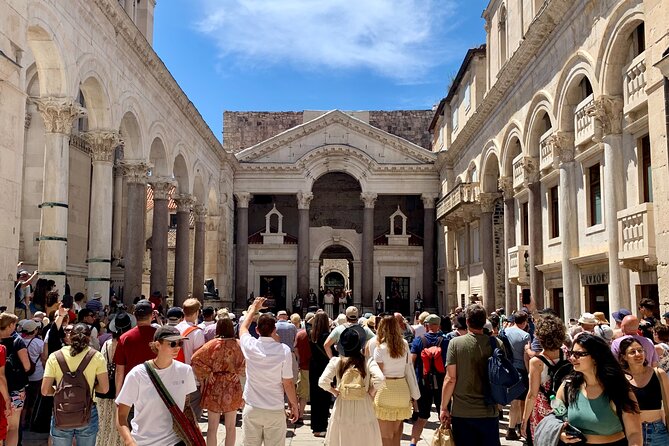
Next is the Vestibulum of Diocletian’s Palace. This is one of those locations where you can tell your guide has walked these routes on a hundred days.
Why it’s great: you’re given time to pause, admire scenery, and take photos without feeling like you’re being rushed through. You’ll also learn about the space as a former entry point to Diocletian’s quarters, then see how it became a popular open-air photo spot.
Josipa’s favorite trick here is tied to sound. She often mentions klapa singing, which can be performed in this acoustically rich area. Even if you do not hear a live performance, it helps to understand why the space is used for it.
Substructures shortcut to Riva, and how to plan the rest of your day
As you head toward the waterfront, you take a “shortcut” through Diocletian Palace substructures area. The tour explains the mood change: from the brighter, more public Peristyle area to quieter, darker substructures before you re-emerge toward the Riva waterfront.
One key drawback, handled upfront: you won’t explore the substructures in their entirety. The full substructure visit involves additional admission fees and time constraints, and this tour is designed not to include paid sites.
But you still get the big picture. You can then decide if you want a separate guided visit later, when you have the time and budget.
Riva Harbor: the civic heart of Split
When you pop out onto Riva, you’re on Split’s famous meeting place, and you’ll feel it. Riva works as a street, promenade, and square all at once.
Even with just a portion of it covered, the tour uses Riva to help you shift from “palace visitor” mode to “city visitor” mode. Your brain starts thinking, Where will I eat? Where will I stroll this evening?
Maketa Grada Splita: your last mental map
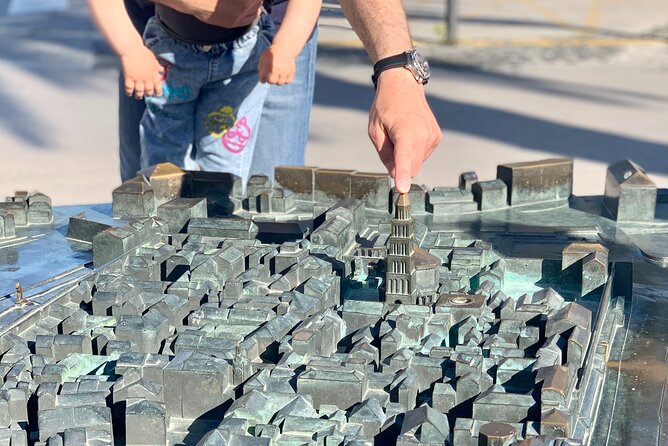
At the seaside exit area, you pause by Maketa Grada Splita, a large model of Split’s old town. This is a smart wrap-up tool. It helps you understand city layout and topography after you’ve already been walking through the real thing.
The tour often ends here. If time allows, you might continue, but the main goal is to help you leave with a grounded sense of how the old town sits and where you might wander next.
The art historian advantage: why Josipa’s approach feels different
What makes this experience work for first-time Split visitors is not any single stop. It’s the guide’s method.
Josipa connects history, geography, and culture so the Roman palace doesn’t feel like a sealed chapter. You’ll hear how Roman planning became the medieval and modern city structure you walk through today.
From the vibe of the tour, you also get the sense that Josipa adjusts her pacing. In the small-group setting, she can slow down for questions. She can also offer recommendations for what to do after the walk, including places to eat.
If you’ve ever taken a palace tour where you spend most of your time staring at plaques, you’ll appreciate that this one spends more time teaching you how to look.
Price and value: what $30.23 buys you in real time
At $30.23 per person for roughly 1 hour 40 minutes to 2 hours, this is strong value for two reasons.
First, it stays focused on the palace layout and story, without requiring paid-entry time. Even though some nearby big-ticket sites exist (like the Cathedral interior and parts of the substructures), this tour does not charge you for entrance tickets to accomplish the main interpretive job: helping you understand what you’re seeing.
Second, it’s run in a max group of 10, and you can feel that. When you can ask questions and hear the guide clearly, you get more out of every minute you’re paying for. A cheap tour that forces you to stand behind others can burn your time fast. This one is built to avoid that.
There’s also a small timing hint from how it’s booked: the average booking window is about 25 days in advance, which usually means it sells out on the calendar during busy periods. If Split is part of your fixed trip plan, book early.
Best timing, comfort tips, and how to get the most out of the walk
If you can choose your start time, I’d aim for earlier in the day when possible. One reason is simple: Split’s old town gets more crowded later, and a calmer morning helps you keep hearing the guide clearly and enjoying the stops without shoulder-to-shoulder stress.
Comfort-wise, take the tour’s own advice seriously:
- bring sun protection and a water bottle, because hot weather happens
- wear shoes for uneven stone in a few sections
- keep in mind the route has unavoidable steps, so think honestly about your comfort and balance
The good news: most walking is described as fairly doable, with some uneven areas. If you’re okay with short climbs and a steady walking pace, you’re likely fine.
Should you book this Split art-historian walk?
I’d book it if you want a first taste of Split that feels organized and human. This tour is ideal when you like architecture and stories, but you do not want a day of ticket queues or museum detours.
I’d skip it or at least think hard before booking if your mobility is limited, because there are steps you cannot avoid. Also, if you only want the absolute “inside paid sites” experience, this tour is intentionally structured to keep you outside those paid interiors.
If you want to understand Diocletian’s palace like a local map in your head, this is a solid starting move.
FAQ
How long is the Split walking tour with an art historian?
The tour lasts about 1 hour 40 minutes to 2 hours.
Does the tour include entering museums or paid sites?
No. The tour does not enter any museums or paid sites. The Cathedral of Saint Domnius is not entered, and the substructures are not fully explored due to additional admission requirements.
Where does the tour start and end?
You start at Strossmayerova Fountain on Ul. kralja Tomislava 12, Split, and the tour ends at the bronze model of Split Old Town at Obala Hrvatskog narodnog preporoda 23, Split.
What language is the tour offered in?
The tour is offered in English.
Will the tour run in bad weather?
Yes. The tour takes place rain or shine.
Can I bring a service animal or a pet?
Service animals are allowed. If you want to bring a dog, you should contact the provider before booking to discuss details so everyone stays comfortable.
Latest arrivals logged at Split




Walking Tours, compared.
Walking Tour of Split and Diocletian’s Palace
Read our review →
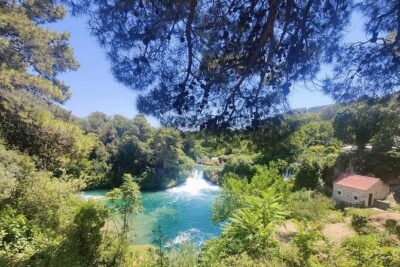
Krka Waterfalls tour with Trogir Walking tour and Krka panoramic boat cruise
Read our review →
City Walls Early Morning or Sunset Walking Tour
Read our review →Browse the lists this tour appears in