
Reviewed · WALKING TOURS
Zadar Walking Tour sponsored by Gligora Cheese and deli.
Zadar has a way of stacking centuries on top of each other. This walking tour puts you right in the middle, starting on Narodni trg and walking you through the city’s medieval and Roman layers without making it feel like homework. You also get practical guidance for meals and shopping, plus a Gligora Cheese and deli tie-in that adds a delicious local touch.
I love how easy it is to join, with the meeting point on People’s Square (Narodni trg) and an overall pace that suits first-time visitors. I also like the mix of landmarks and everyday life, especially when you reach the market and the churches that carry serious artifacts like St Simeon’s silver casket. The tour runs in English with small-group energy.
One thing to consider: the walk is mostly outdoors, so bring water and plan for warm weather. Also, one review flagged confusion about finding the guide, so arrive a few minutes early and double-check the meeting instructions you receive.
In This Review
- Key highlights worth your time
- Starting on People’s Square, right where Zadar begins
- Narodni trg sights: City Guard, St Lawrence, and the oldest layers
- St Simeon’s church: why one casket changes the tone
- Five Wells and Queen Jelena park: water engineering meets public space
- Trznica Zadar market: local foods and where your guide adds real value
- Churches that anchor Zadar: St Chrysogonus and St Anastasia
- Roman Forum to St Donatus: the part where timelines overlap
- Pace, group size, and getting value from 90 minutes
- Price and what makes it feel like a good deal
- Which guides you might meet, and why that matters
- Should you book this Zadar walking tour?
- FAQ
- How long is the Zadar Walking Tour?
- Where does the tour start?
- What is the cost per person?
- Is the tour offered in English?
- Is there a maximum group size?
- Do I need a paper ticket?
- Are there admission fees for the stops?
- Are service animals allowed?
- What is the cancellation policy?
- Can I join from different departure times?
Key highlights worth your time
- Narodni trg meeting point makes it simple to start in the heart of old Zadar
- English tour with a maximum group size of 30 keeps it manageable
- Gligora Cheese and deli adds a real taste of the region
- Historic landmarks plus market time helps you connect the past to daily Zadar
- Five Wells and St Donatus give you standout sights in a short loop
Starting on People’s Square, right where Zadar begins
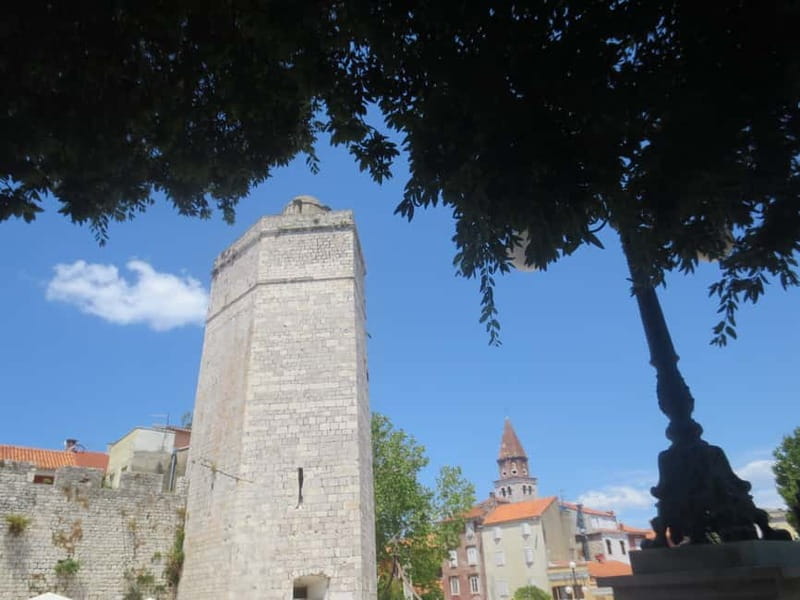
The tour starts at Narodni trg, People’s Square, which is a smart choice if you want to understand the city fast. This is Zadar at street level, where medieval foundations, Venetian-era influences, and later changes all sit within walking distance. You do not waste time hunting for an obscure side street.
From the jump, your guide frames what you are seeing. The square itself traces back to Middle Ages life as Platea Magenta, the center of public activity. One side features the City Guard, Gradska straža, designed by Venetian architect Michele Sanmicheli and built in 1562. Standing here, you get a quick sense of how power and daily life were organized in different eras.
Because the group is capped at 30, it feels like a true walking tour rather than a stampede. You get enough attention to ask questions, and you can actually hear the story.
Practical tip: People’s Square is busy at times, so keep an eye out for your group right near the main square area. If you are meeting on a tight schedule, arrive early. That tiny buffer saves stress.
Narodni trg sights: City Guard, St Lawrence, and the oldest layers
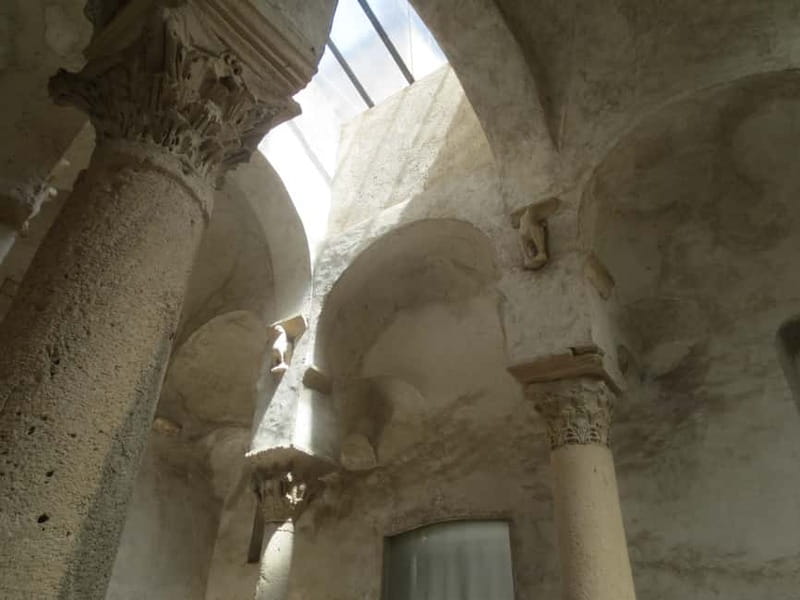
The first stretch is built around Narodni trg’s oldest beats. After the square introductions, you move toward the remnants of a pre-Romanesque church tied to the 11th century. This is the kind of detail that is easy to miss if you are wandering on your own.
St Lawrence church remains are reached through the premises of Cafe Lovro on the square, which is exactly why a guided stop helps. You see the landmark, but more importantly, you understand why it sits where it does, and what part of the city it represents. You also get a sense of how religious sites reused and reshaped earlier spaces over time.
Even if you are not a church person, these stops work because the guide connects architecture to what people needed. In old European cities, buildings were never just scenery. They were community infrastructure.
And yes, this section is short, about 10 minutes. The goal is not to cram. It is to set your mental map before the tour shifts into the bigger icons.
More Walking Tours in Zadar
- Zadar Walking Tour sponsored by Gligora Cheese and deli★ 4.9 · 716 reviews
- Zadar City Tour 120min Walk★ 5.0 · 203 reviews
- NEW! Zadar Food Tasting & Old Town Guided Walking Tour by Šušur★ 5.0 · 123 reviews
St Simeon’s church: why one casket changes the tone
Next comes St. Simon’s Church and one of the tour’s most unusual moments. In a silver casket of major artistic value, there is a mummified body associated with Simeon, often described through the Gospel of Luke context as the man who greeted the child Jesus. The church is tied to Saint Simeon as the city’s patron saint, so the reverence here is personal to Zadar, not just a historical footnote.
This stop is quick, but it has big impact. When you see something like a medieval goldsmith piece preserved in a modern city, the whole old-town experience stops being abstract. It becomes physical. You also pick up a clearer timeline for how Zadar viewed itself across the centuries.
If you like history that feels human, this is a strong stop. The stories your guide shares can make you notice details you would normally glaze over.
Five Wells and Queen Jelena park: water engineering meets public space
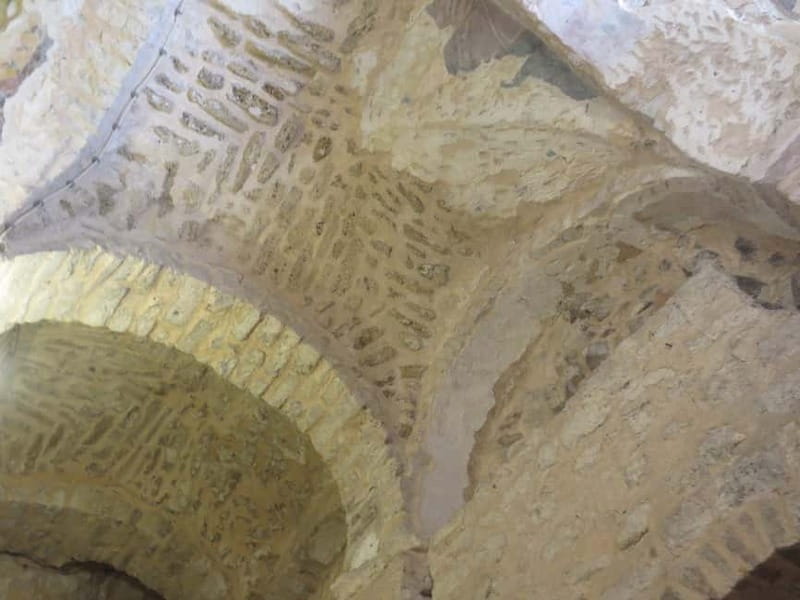
Then the tour gets very practical, in a very old-world way. Five Wells sits in a site between medieval city walls and the Renaissance bastion Grimani. The “five wells” name comes from a defensive ditch below old walls. During the 16th century, the Venetians helped Zadar withstand Turkish sieges by building a large water cistern with five ornamental wellheads. So yes, the wells are decorative, but they also solved a survival problem.
This is a great moment to slow down a bit. Even on a short tour, you can feel the logic: cities had to store water, and they built it into public spaces. That is why the square feels like more than a postcard.
From Five Wells, you step into Perivoj kraljice Jelene Madijevke, Queen Jelena Madijevka park. It sits on top of the Grimani bastion, built from 1829 by Austrian commander Baron Franz Ludwig von Welden. The park is said to be the first public park in Dalmatia. Putting a garden on a military structure sounds odd until your guide explains the intention, and then it starts making sense.
If you want a Zadar moment that feels peaceful, this is it. It is also an excellent break from constant stone surfaces.
Trznica Zadar market: local foods and where your guide adds real value
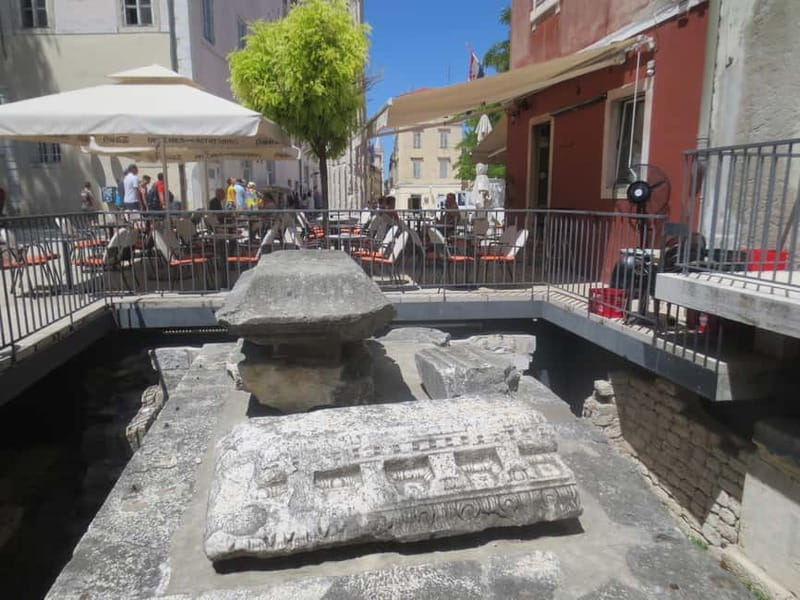
The tour continues to Trznica Zadar, the main green market in old Zadar. This is a key stop because it turns your trip from architecture appreciation into everyday local life. You get a sense of how Zadar feeds itself, buys its produce, and keeps traditions alive.
You also learn that the market connects to earlier spaces. While the market in its current place is relatively recent, the tradition goes back to a Roman Forum location. Your guide frames it as an uninterrupted display of local products, including locally grown organic food, fruits and vegetables, freshly caught fish, home-grown meat, and traditional indigenous items and souvenirs.
This is also where the Gligora Cheese and deli connection really matters. Several guides on this tour bring the cheese into the story with a tasting and a local shopping recommendation. In past groups, people have specifically enjoyed trying Pag cheese and getting pointed to the cheese store.
What I like about this setup for you: you leave with specific names and practical advice. Not vague, not generic. You get ideas that fit your food mood that day, whether you want something simple at lunch or a cheese-focused snack for later.
If you are sensitive to strong smells, markets can be intense. You only spend about 10 minutes here, so it is manageable. Go in with curiosity, not expectations of a museum.
Still riding at anchor off Zadar
- Krka Waterfalls & Wine and Cheese Tasting Tour from Split
★ 5.0 · 261 reviews - From Split: Krka Waterfalls with Wine & Cheese Tasting Tour
★ 4.6 · 33 reviews - KRK: Cheese factory inside tour and product tasting–guide
★ 4.3 · 31 reviews
Churches that anchor Zadar: St Chrysogonus and St Anastasia
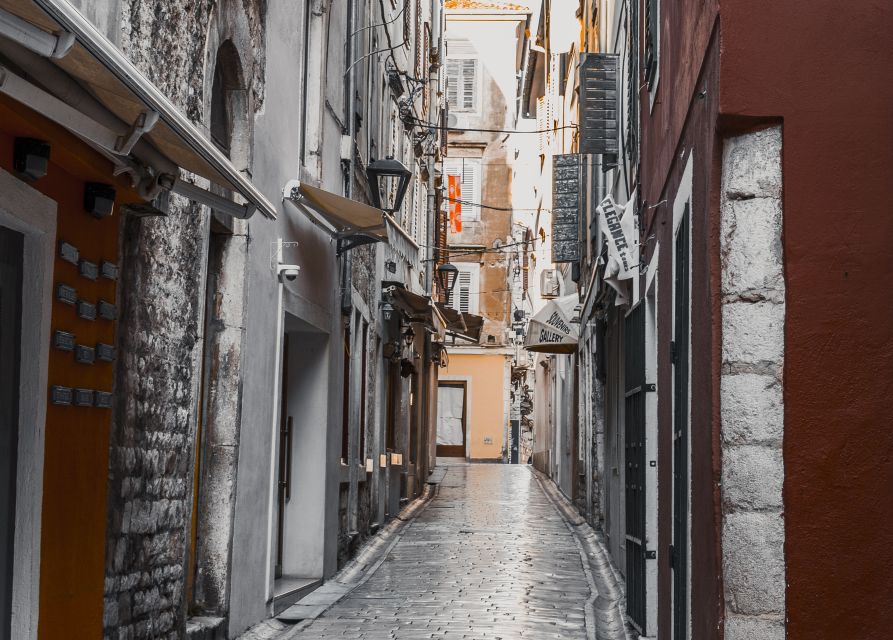
Next you move toward Church of St. Krsevan, which is also known as St Chrysogonus. The Romanesque church was consecrated in 1175 by Lampridius, Archbishop of Zadar. Your guide explains how it sits on a Roman emporium site and how it replaced Church of Saint Anthony the Hermit. It also became the remaining part of a larger medieval Benedictine abbey, which tells you how religious sites evolved rather than simply being built once and left alone.
You also hear a striking story connected to Elizabeth of Bosnia, murdered queen dowager of Hungary and Dalmatia. In 1387 she was secretly buried here, and her body stayed for three years before being moved to another basilica. Even on a quick walk, this kind of detail changes how you look at the facade.
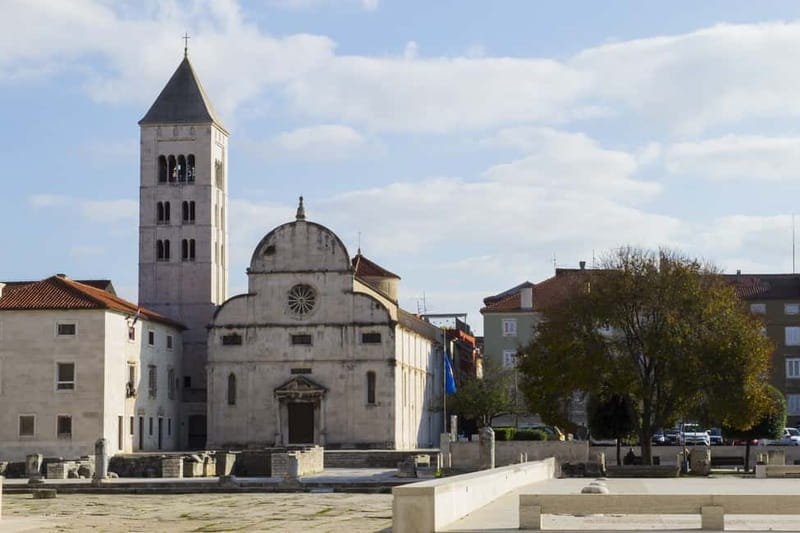
From there, you head to the Cathedral of Saint Anastasia. Built in the 12th and 13th centuries, it has a decorated facade and a dramatic three-nave interior. Bombing during WWII led to reconstruction, so the cathedral carries both medieval design and modern survival. On the altar in the left apse, there is a marble sarcophagus containing the relics of St Anastasia, and the choir includes lavishly carved stalls.
One practical detail: there is a glass vestibule that lets you look inside when the cathedral is closed. That means you still get something instead of feeling shut out by hours.
This stop is a good reminder that Zadar is still alive. Sacred buildings are not frozen. They adapt.
Roman Forum to St Donatus: the part where timelines overlap
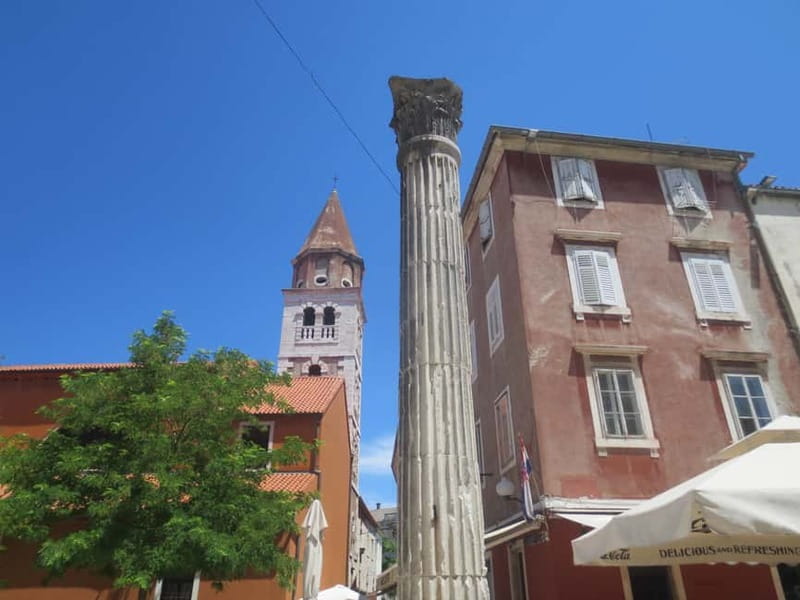
Zadar’s layout can feel like Roman ruins pop up randomly from the streets. The Forum area is where you see why. You walk to the ancient Forum site connected to civic and religious life between the 1st century BC and the 3rd century AD.
St Donatus’ Church dominates one side of that story. It is a circular Byzantine-style church dating from the beginning of the 9th century, commissioned by a bishop. This church also has a survival claim tied to the Mongol invasion in the 13th century, when only a handful of buildings from the early Croatian kingdom survived.
Inside, you get a tidy set of physical details your guide highlights: two complete Roman columns reused from the Forum and paving slabs revealed after the original floor was removed. That reuse is a big theme in old towns, but here it is easy to understand because the church shape makes the history visible.
Also, St Donatus has not been used for services for around 200 years. Today it often functions as a concert hall or exhibition space. That means you are not only looking at the past. You are seeing how the past continues to serve modern culture.
This last stretch is one of the best places to ask questions. Your guide can connect what you have just seen, like the Forum foundations and the nearby churches, into a single story you can remember later.
Pace, group size, and getting value from 90 minutes
The tour runs about 1 hour 40 minutes, and the stops are mostly around 5 to 10 minutes each. That may sound short, but it works because the tour is designed to hit big landmarks quickly while still giving you context for what matters.
Small group size helps. With a maximum of 30 travelers, you can usually get your questions answered without feeling like you are interrupting a megaphone line.
The meeting point on Narodni trg is central and easy to reach on foot. The tour is also near public transportation, which matters if you are moving between beaches, ferry routes, and old town.
Comfort note: you will walk between churches, squares, and the market. If it is hot, wear good shoes and bring water. Several guides keep a good pace, but in warm months you still feel the sun.
Also, you get a local perspective on where to eat and shop in Zadar. That is not a small extra. It changes what you do after the tour. A good walking tour should help you plan the next 24 hours, not just point out plaques.
Price and what makes it feel like a good deal
At $18.14 per person, this tour is priced like a budget-friendly way to orient yourself. The value is not only in the landmarks. It is in the combination of quick historical context plus practical guidance.
You are getting:
- A structured route through major old-town highlights
- Entrance tickets that are free for each of the listed stops
- English narration
- A Gligora Cheese and deli component tied to local food recommendations
- A local guide who points you to where to eat and shop afterward
If you are visiting Zadar for the first time, this is the kind of spend that saves you time. You learn the city’s “why” fast, then you can explore on your own with better instincts.
If you are already deep into independent exploring, you might not need every stop. But even then, the market and St Donatus combo is hard to recreate without some guidance.
Which guides you might meet, and why that matters
The experience shines when the guide brings it to life. In past groups, people have praised guides like Melina, Sara, Jasmina, Hajdi Josic, Lucinja, Zendka, Hadji, Mirena, and Inez. Common themes show up in the feedback: clear storytelling, room for questions, and a friendly approach that keeps the walk engaging.
When a guide is from the area, the tips can feel sharper. You get real suggestions for what to try next, not just a list of sights to check off. That matters most after the tour ends, when you decide where to eat and what to buy.
Should you book this Zadar walking tour?
Book it if you want a fast way to understand old Zadar, especially if you are interested in churches, Roman layers, and how the Venetians shaped parts of the city. The 90-minute format is perfect for first-time visitors who still want depth, plus it adds a food element with Gligora Cheese and deli.
Skip it only if you prefer very long museum-style visits or you hate walking in heat. You are going to cover outdoor ground, and the stops are short by design.
If you are deciding between self-guided wandering and a guided start, this one leans strongly toward getting your bearings fast, then letting you roam smarter afterward.
FAQ
How long is the Zadar Walking Tour?
The tour lasts about 1 hour 40 minutes.
Where does the tour start?
The meeting point is People’s Square, Narodni trg, 23000, Zadar, Croatia.
What is the cost per person?
The price is $18.14 per person.
Is the tour offered in English?
Yes, the tour is offered in English.
Is there a maximum group size?
Yes, the tour has a maximum of 30 travelers.
Do I need a paper ticket?
You get a mobile ticket.
Are there admission fees for the stops?
The listed stops show admission ticket free.
Are service animals allowed?
Yes, service animals are allowed.
What is the cancellation policy?
You can cancel for free up to 24 hours in advance for a full refund.
Can I join from different departure times?
Yes, there are three morning or afternoon departure options to choose from.
Marble Lanes, Slowly


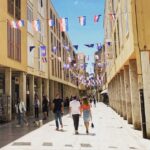
Latest arrivals logged at Zadar




Walking Tours, compared.
Walking Tour of Split and Diocletian’s Palace
Read our review →
Krka Waterfalls tour with Trogir Walking tour and Krka panoramic boat cruise
Read our review →
City Walls Early Morning or Sunset Walking Tour
Read our review →Browse the lists this tour appears in