
Reviewed · HISTORICAL TOURS
Zadar: Private Walking Tour Through 3,000 Years of History
Zadar tells its story in stone and sound. In just two hours you pair the Sea Organ with the city’s Roman and Venetian anchors, and you do it with a private guide who keeps the walk focused and easy to follow.
You also get a proper local flavor moment with maraschino cherry liqueur, a drink tied to old Zadar itself.
One thing to plan for, though: churches can require covering knees and shoulders, so wear something that makes that easy to fix.
In This Review
- Key highlights you should care about
- A tight 2-hour plan that hits Zadar’s biggest eras
- Finding the Sea Gate meeting point, then settling into old-town pace
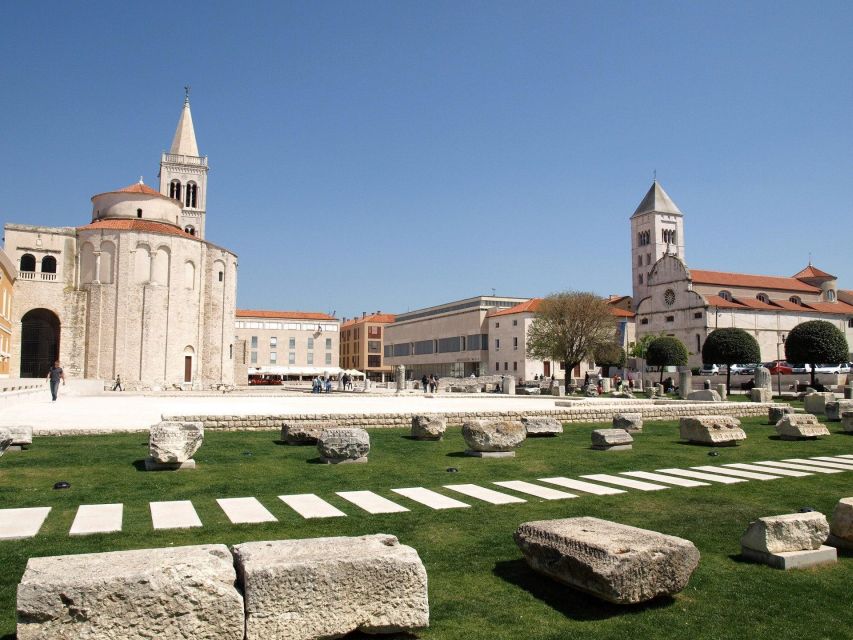
- Roman Forum remains, where public life used to happen
- Kalelarga, the main street where the city’s rhythm shows
- Venetian walls, Fosa port, and the Land Gate defense story
- St. Donat and Zadar Cathedral, symbols you can actually stand in front of
- Sea Organ and Greeting to the Sun at the Riva promenade
- Maraschino cherry liqueur tasting, what you’re actually sampling
- Price and value: $288 per group up to 15
- Choosing the right guide, and why language matters
- Practical tips so you stay comfortable the whole 2 hours
- Who this Zadar private walking tour suits best
- Should you book this Zadar 3,000-year history tour?
Key highlights you should care about
- 3,000 years of Zadar in one loop from 1000 BC settlement to modern seaside art
- Roman Forum remains tied to the biggest Roman forum built in Croatia and everyday public life
- Venetian defensive walls and the Ottoman-era story plus the port view at Fosa and the Land Gate
- Kalelarga, Zadar’s main street where the city’s flow of life becomes visible on foot
- St. Donat and Zadar Cathedral where Zadar’s identity feels symbolic, not just historical
- Sea Organ plus Greeting to the Sun at the Riva promenade, with the sea making the music
A tight 2-hour plan that hits Zadar’s biggest eras
This tour is short on purpose. You get a curated walk through the layers that shaped Zadar: settlement starting around 1000 BC, a Roman colony in the 1st century, then centuries when it became the capital of Dalmatia after the fall of the Western Roman Empire, continuing all the way to the end of the First World War. That span can sound abstract on paper. On foot, it turns into specific places and clear stories.
The best part is the contrast. You start in the old-town core with Roman and medieval-adjacent landmarks, then you end at the waterfront where modern art uses the sea as an instrument. It is one city with two time moods, and you feel both without rushing.
Finding the Sea Gate meeting point, then settling into old-town pace
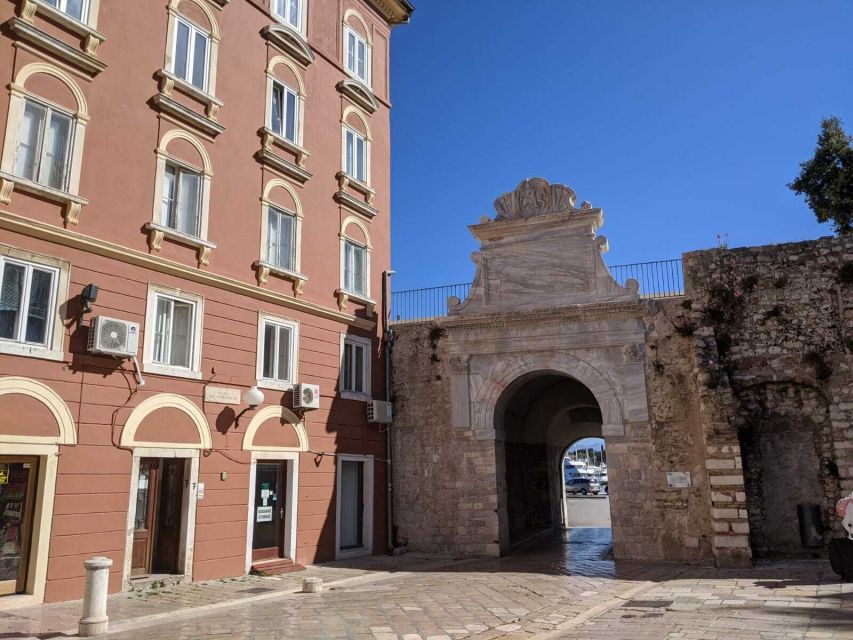
You meet at a souvenir shop in a red building next to the Sea Gate, Poljana Pape Aleksandra III 7, 23000 Zadar. It is a solid starting spot because Sea Gate naturally leads you toward the old-town core, and you are not guessing how to connect the sights.
From the first minutes, the private format matters. Instead of joining a big group that moves like a train, you can keep a steady pace and get the kind of answers that help you actually remember what you just saw. This is especially useful in Zadar, where the highlights are spread across a compact area but still require context to connect them.
More Walking Tours in Zadar
- Zadar Walking Tour sponsored by Gligora Cheese and deli★ 4.9 · 716 reviews
- Zadar City Tour 120min Walk★ 5.0 · 203 reviews
- NEW! Zadar Food Tasting & Old Town Guided Walking Tour by Šušur★ 5.0 · 123 reviews
Roman Forum remains, where public life used to happen
The tour includes the remains of a Roman Forum, described as the biggest Roman forum built in Croatia. That detail matters because it is not just a ruin. A forum was the social and civic heart. You are looking at the kind of space where daily life, decisions, and public gatherings would have centered.
If you like when history comes with visuals, you will probably appreciate how the tour supports what you are standing in front of. One of the strongest takeaways from past tours is the ability to see image reproductions of the past, which makes the fragments feel more complete. That is the difference between seeing stones and understanding what they meant.
Practical tip: take a moment here, even if you feel tempted to walk straight through. The forum stop sets your mental map for everything that comes next.
Kalelarga, the main street where the city’s rhythm shows
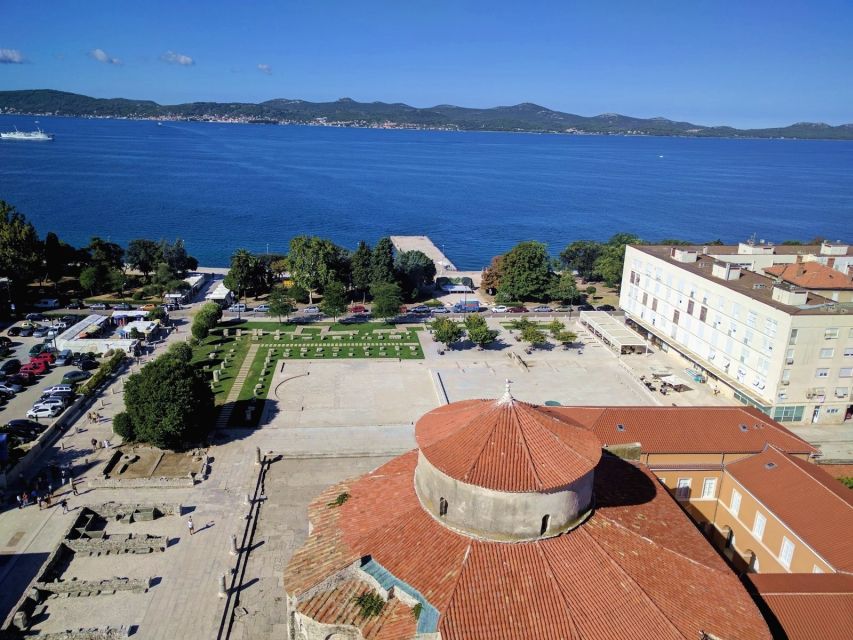
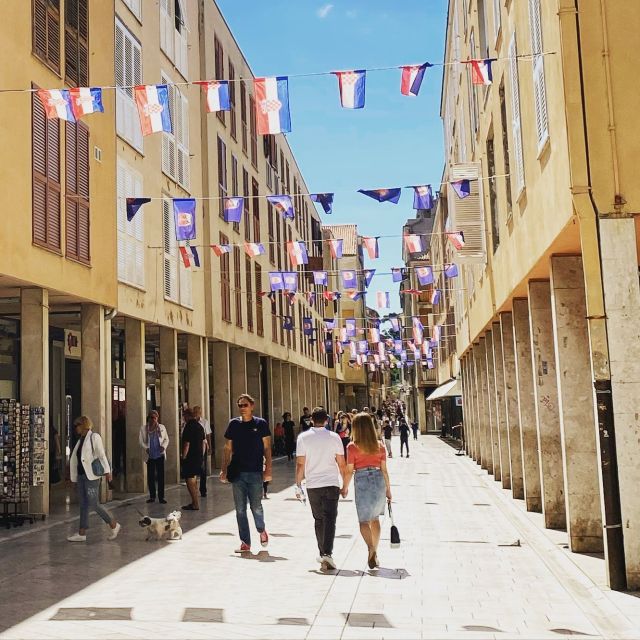
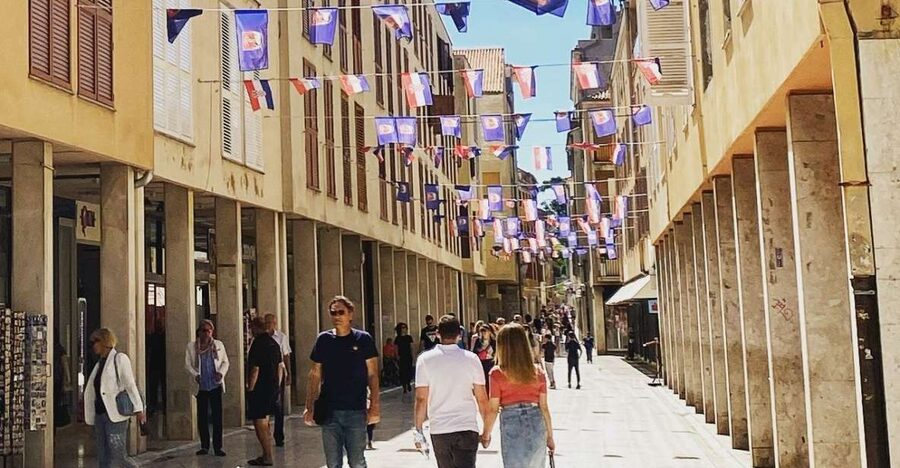
After the Roman layer, you move into the street life of Zadar by walking Kalelarga, the city’s main and most famous street. This is one of those places where a guide can help you read the city like a scene rather than a checklist.
Kalelarga is not just a path between monuments. It is the connective tissue, the practical route people would have used again and again. When you hear the surrounding stories, the street becomes a timeline you can physically follow.
Also, this is a good mid-tour moment to pause, check your footing, and drink water. You will still be walking, and you will want your legs working well for the waterfront finale.
Venetian walls, Fosa port, and the Land Gate defense story
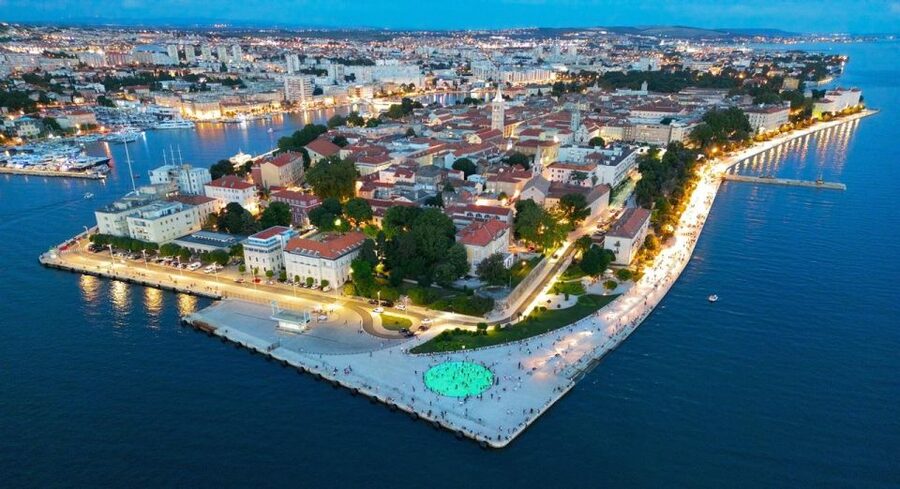
Zadar’s survival story is partly about walls. You hear about the defensive walls the Venetian Republic built in the 16th century to protect the city from the Ottomans. That historical angle changes how you look at stone edges and old city lines. Instead of decorative architecture, it becomes practical engineering tied to real pressure.
You also see the picturesque port of Fosa and the Land Gate. Ports are always more than scenic. They are where trade, movement, and power meet. The more you understand Zadar as a regional capital across such a long period, the more this port view feels like a logical outcome of history, not a random postcard.
More marble lanes taken slowly:
- Zadar Walking Tour sponsored by Gligora Cheese and deli.
★ 5.0 · 119 reviews - Zadar: Food Tasting & Old Town Walking Tour
★ 5.0 · 94 reviews - Zadar: Virtual Reality Guided History Walking Tour
★ 4.4 · 86 reviews - Zadar City Tour 120min Walk
★ 5.0 · 45 reviews
St. Donat and Zadar Cathedral, symbols you can actually stand in front of
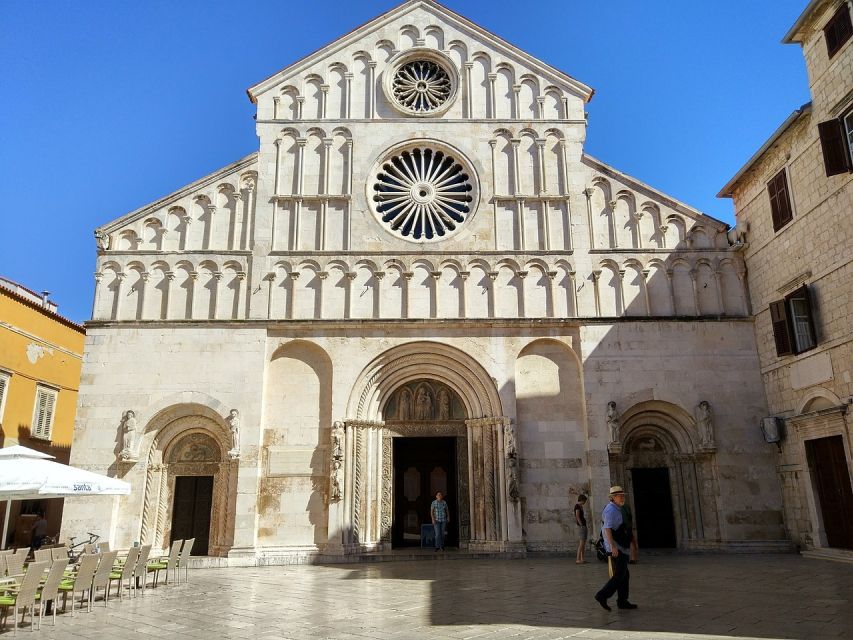
Next you slow down for two landmark church moments.
You stand in front of the church of St. Donat, which is described as a symbol of Zadar. That word matters. It signals that the city uses this building as identity, not only religious function. Seeing it in person helps you understand why locals would treat it as a signature.
Then you visit Zadar Cathedral dedicated to St. Anastasia. Hearing the reasoning for why specific saints and symbols were emphasized can make the city feel more personal, not just ancient. It also helps you notice architectural choices and how they project confidence across centuries.
Dress note that actually matters: you will need to cover your knees and shoulders when entering the church. If you forget, you might need to improvise, and it can slow things down. Plan ahead with a light layer you can easily put on or adjust.
Sea Organ and Greeting to the Sun at the Riva promenade

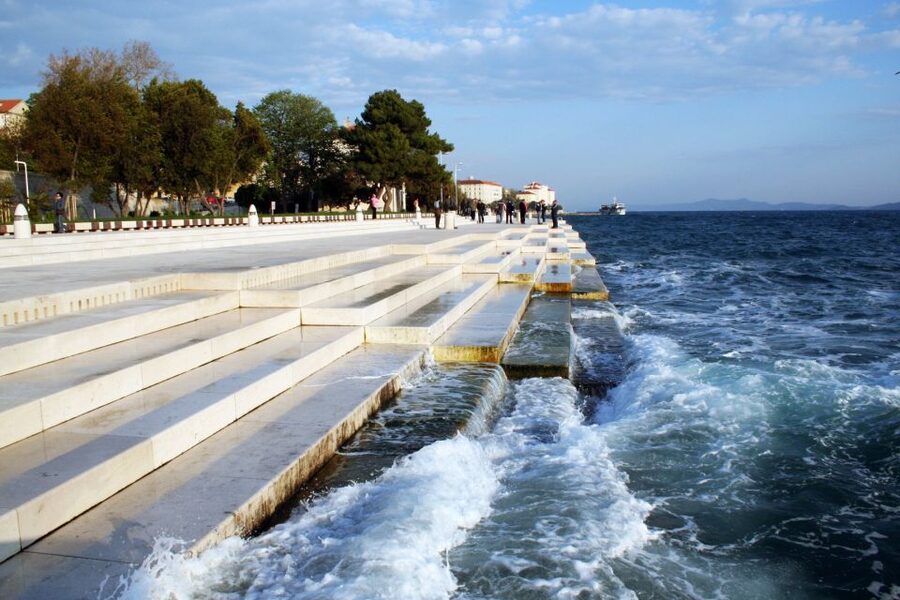
Now for the part that people remember. You head to the Riva promenade to experience the Sea Organ and the Greeting to the Sun installations. This is where Zadar flips from ancient to modern and does it in a clever, not gimmicky way.
The Sea Organ is famous because the sea plays it. You listen to the unique music created by water movement, and you get facts about how the installation works. Even if you are not a science person, the explanation makes the sound feel earned rather than accidental.
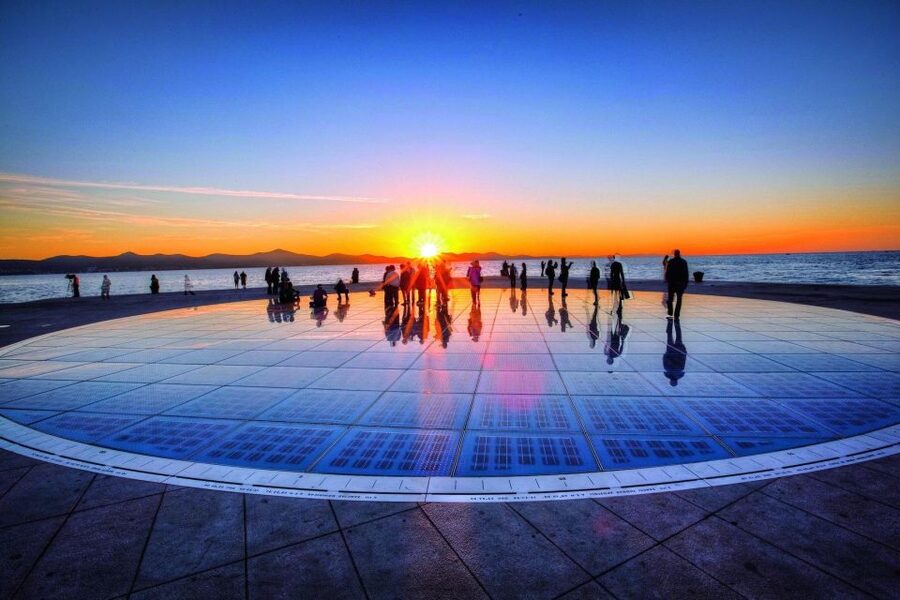
Then there is the Greeting to the Sun art installation. You learn the background of the concept while you are right there, which is a lot more satisfying than reading about it later. The key is that these are not distant monuments. They are active parts of the promenade experience.
If you want one takeaway for this whole tour, it is this: Zadar refuses to treat the sea as scenery. It treats it as an instrument, a light source, and a storyteller.
Maraschino cherry liqueur tasting, what you’re actually sampling
The tour ends with a taste of maraschino cherry liqueur. The recipe dates back to the 16th century, which gives this tasting a strong link to the city’s long timeline. You are not just trying a sweet drink. You are sampling a flavor tradition that reflects the same centuries that shaped the walls, ports, and religious landmarks you just visited.
Important alcohol rule: maraschino liqueur will only be served to participants who are allowed by law to consume alcohol. If you cannot or do not want alcohol, it is still worth doing the tour for the history stops and the installations, because the tasting is just one chapter.
If you do taste it, pay attention to how it fits with the overall vibe of the day. After centuries of stone and stories, this is Zadar in liquid form.
Price and value: $288 per group up to 15
The price is $288 per group for up to 15 people, and the tour lasts 2 hours. That sounds like a big number until you do the math. If you fill the group with the maximum 15 people, it works out to under $20 per person. If your group is smaller, the per-person cost rises, but private walking tours often work out better for families and small groups than booking separate tickets and guides.
What makes it feel like good value is that you are getting:
- a licensed local guide
- a private format
- entry-free walking through major Zadar landmarks
- a guided tasting
If you are traveling solo or as a couple, you can still get value, but the budget will depend on whether you want a private guide at this specific time.
Choosing the right guide, and why language matters
The tour includes a live licensed local guide. You can request languages including French, Italian, Spanish, English, German, Polish, and Croatian.
One guide name you may run into is Jalena, and there is specific feedback praising her for being wonderful and speaking great English while sharing a lot of information. That kind of clarity matters on a tour like this, where the city’s time periods overlap and you want your guide to help you keep them straight.
If you are booking for English or another specific language, double check the language option you select, since the pacing and how easily you can ask questions often depends on it.
Practical tips so you stay comfortable the whole 2 hours
Bring your passport or ID card, plus water and comfortable shoes. This is a walking tour, so your footwear will do more work than your “tour outfit.”
Plan for church rules before you arrive. Cover your knees and shoulders when entering St. Donat or the cathedral area. A light scarf, a thin layer, or an outfit that naturally covers both solves 90 percent of the problem.
If you care about timing, remember this is a 2-hour experience. You should treat it as a highlights tour that sets you up for the rest of your day. After the Sea Organ and Greeting to the Sun, you will likely want a little free time to keep looking at the waterfront on your own.
Wheelchair accessible is listed, so if mobility is a factor, this tour is designed to accommodate you. Still, wear supportive footwear and go in with realistic expectations for outdoor walking.
Who this Zadar private walking tour suits best
This is a smart pick if you want:
- a compact way to see the main Zadar landmarks without piecing together multiple visits
- both Roman and Venetian eras plus the modern waterfront installations in one day
- a guide who can explain what you are looking at, especially at stops like the Roman Forum and the Sea Organ
- a small-group, private pacing so you can actually ask questions
It may not be ideal if you hate walking, prefer to move entirely on your own schedule, or want long museum-style time inside buildings. This is about walking and seeing, not lingering for hours in one room.
Should you book this Zadar 3,000-year history tour?
I would book it if your goal is to understand Zadar quickly and feel how the city changes over time. The best reason is the pairing: Roman Forum and defensive walls on one side, then Sea Organ music and the Greeting to the Sun on the other. That contrast is a Zadar signature, and you only get it this cleanly when someone connects the dots for you.
I would skip or reconsider if you already know Zadar’s highlights and you only want one type of experience, ancient ruins only or modern art only. Also, if you dislike alcohol tasting moments, go in knowing the tasting follows legal serving rules, but the walk is still built around major sights.
If you want one practical way to decide, think about your current state of mind. If you want a guided on-ramp to the city, this tour is a good on-ramp. If you want full independence, you might prefer a self-guided plan.
Venetian Stones, Roman Streets


Latest arrivals logged at Zadar







Historical Tours, compared.
Walking Tour of Split with a ‘Magister’ of History
Read our review →
Split Walking Tour with Professor of History
Read our review →
Split History and Gastro Small-Group Tour with Food and Drinks
Read our review →
PREMIUM Emperor’s Walking Tour for History Lovers + Museum
Read our review →Browse the lists this tour appears in