
Reviewed · HISTORICAL TOURS
Zadar: Private walking tour through history and modern time
Zadar changes pace every block. In my 2-hour private walk, I loved how Tomislav, known as Tom, links the Roman Forum with today’s sea-side surprises like the Sea Organ.
I also like the feel of a guide who talks like a person, not a script. You get clear explanations of why key landmarks matter, from ancient rulers and defensive walls to the way Zadar carries those layers into modern life. One possible drawback: if you want to go inside museums or churches where tickets apply, those tickets are not included, so you may need to budget extra time and money.
In This Review
- Key things that make this Zadar walk worth it
- Where Zadar’s story starts, at the Rimski forum
- The Greeting to the Sun and Sea Organ, modern Zadar in real time
- People’s Square and Market Zadar, the city at human speed
- St. Anastasia Cathedral, the biggest cathedral in Dalmatia
- Saint Donat, the church that makes Zadar feel special
- Trg pet bunara, five wells and a clever urban detail
- Land Gate and Church of St. Simon, fortifications and faith side by side
- The pacing, the questions, and why Tom’s style gets such high marks
- Price and value at $47 per person for a 2-hour private guide
- How to get the most out of your walk
- Who this tour is best for
- Should you book this private Zadar walking tour?
- FAQ
- How long is the private walking tour in Zadar?
- Where does the tour start and where do you meet?
- How much does the tour cost?
- What’s included in the price?
- Are museum or church tickets included?
- What languages does the guide speak?
- Is the tour wheelchair accessible?
- What is the group type?
- What should I bring?
- Can the tour be tailored to my interests?
Key things that make this Zadar walk worth it
- Tomislav, called Tom, tells stories in a way that clicks, with lots of time for questions
- Roman Forum to Kalelarga-style main streets, so you see how the city moves from old to new
- Sea Organ and Greeting to the Sun, Zadar’s modern “you have to see it live” moment
- St. Donat and St. Anastasia, standout church stops that feel like anchors in the city
- Trg pet bunara and Land Gate, small squares and fortification details that add real texture
- Private group pace, meaning the walk can match your interests and speed
Where Zadar’s story starts, at the Rimski forum
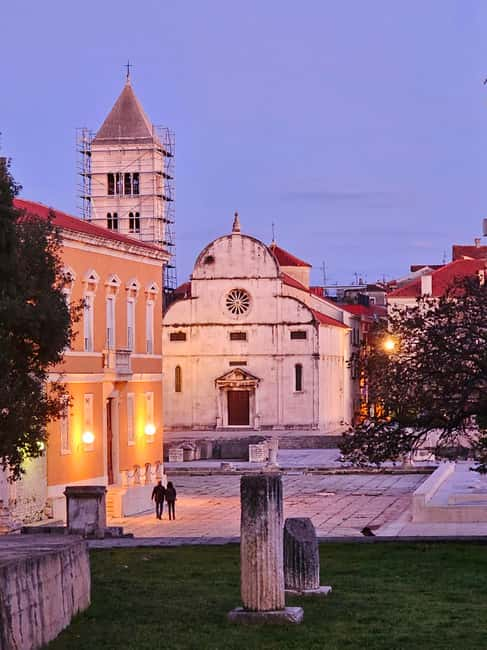
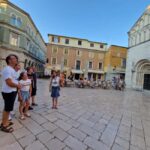
The tour begins at the Rimski forum area, and your meeting point is in front of Saint Mary’s Church on the Forum, on the left side if you face the sea, next to the Archaeological museum. That spot is a smart choice because you are already in the middle of the “core zone,” where Zadar’s layers sit close together.
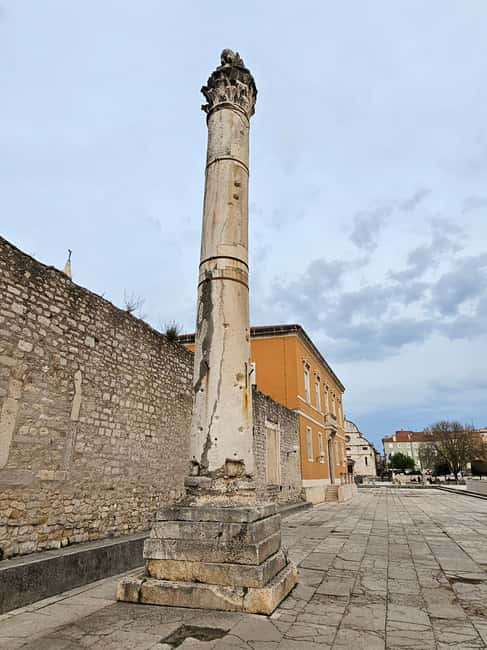
From there, the first major stop is the Roman Forum itself. This is not just a quick look and move on. Tom builds context around the setting, so the stones do more than look old. You get a guided sense of how Roman power and civic life shaped the city, then how later periods kept reshaping that same space.
I like this approach because it helps you stop seeing Zadar as a postcard city and start seeing it as a working place with a long memory. The Roman Forum becomes a reference point for everything else you see afterward.
The Greeting to the Sun and Sea Organ, modern Zadar in real time
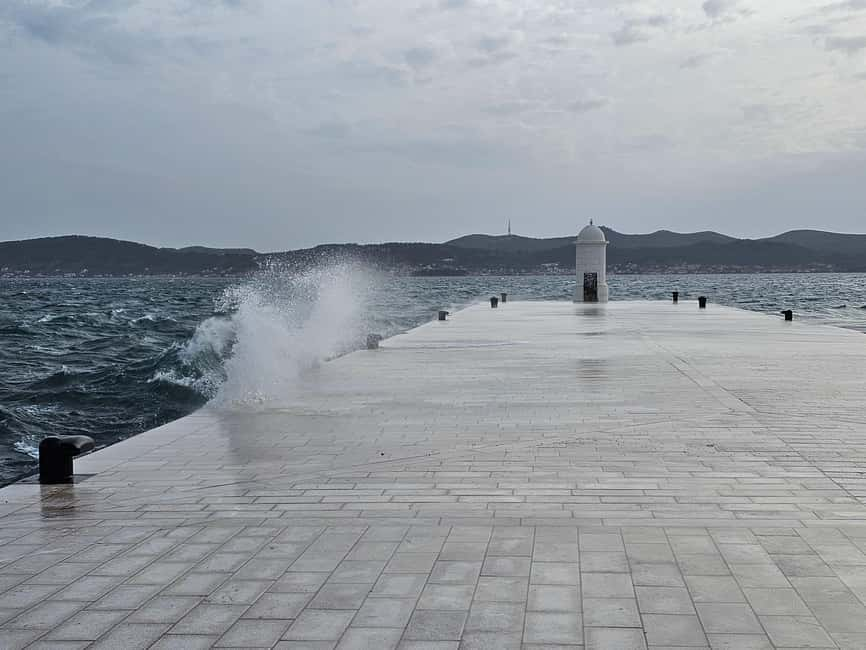
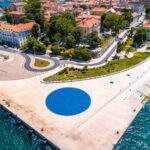
After you’ve set the ancient stage, the walk shifts toward the waterfront and Zadar’s most talked-about modern works: the Sea Organ and the Greeting to the Sun.
This is one of those moments where a guide matters. Tom explains what you are looking at and why it is part of Zadar’s identity now, not just a photo spot. The Sea Organ is tied to the relationship between architecture and the sea, and the Greeting to the Sun turns light and time into a visible event.
Here’s why this stop is so valuable on a walking tour: it changes your perspective. You start the day in stone history, then you end up experiencing a piece of modern design that reacts to the environment. Even if your “modern art” interest is small, Zadar’s waterfront works because it’s physical and observable.
More Walking Tours in Zadar
- Zadar Walking Tour sponsored by Gligora Cheese and deli★ 4.9 · 716 reviews
- Zadar City Tour 120min Walk★ 5.0 · 203 reviews
- NEW! Zadar Food Tasting & Old Town Guided Walking Tour by Šušur★ 5.0 · 123 reviews
People’s Square and Market Zadar, the city at human speed
Once you move inland again, you’ll hit the People’s Square and Market Zadar. These stops are great if you want more than monuments. You get a sense of how Zadar functions day to day, and Tom uses those corners to connect the dots between civic life in different centuries.
People’s Square is the kind of place where you can feel the city rhythm. Market Zadar adds a more grounded layer, because markets are where history stops being abstract. Even without going deep into museum-style exhibits, you see how a place stays livable.
I’d call this the “breathing room” part of the walk. The first half gives you landmarks and stories. This section gives you texture, the ordinary life that makes the big sights feel relevant.
St. Anastasia Cathedral, the biggest cathedral in Dalmatia
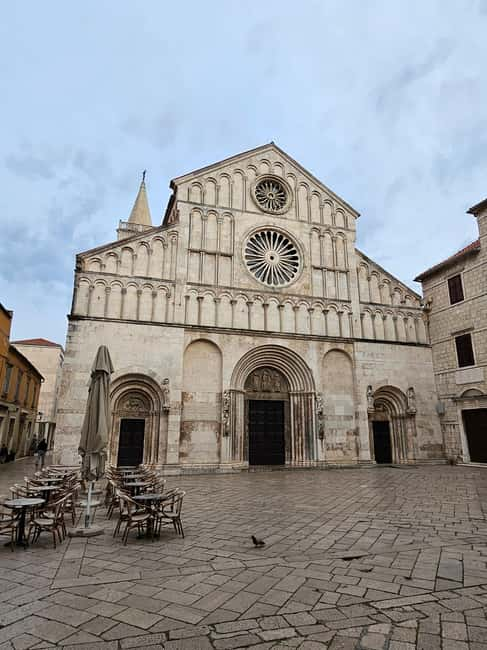
Next comes the Cathedral of St. Anastasia, described as the biggest cathedral in Dalmatia. Even if you do not consider yourself a cathedral person, this stop is worth it because it marks a change in scale and mood. Churches like this tend to act like city landmarks, not just religious buildings.
Tom’s style helps here. Instead of treating it as a checklist stop, he connects architecture to the historical timeline you’ve been building in your head. You’ll likely hear how the city evolved through different eras, including medieval layers, and how Zadar’s identity kept adjusting without fully disappearing.
If you’re the type who enjoys seeing how faith, politics, and culture overlap in one place, St. Anastasia will feel like a key chapter. If you’re short on time in Zadar, this is one of the stops I’d keep, even if you later tailor the rest.
Saint Donat, the church that makes Zadar feel special
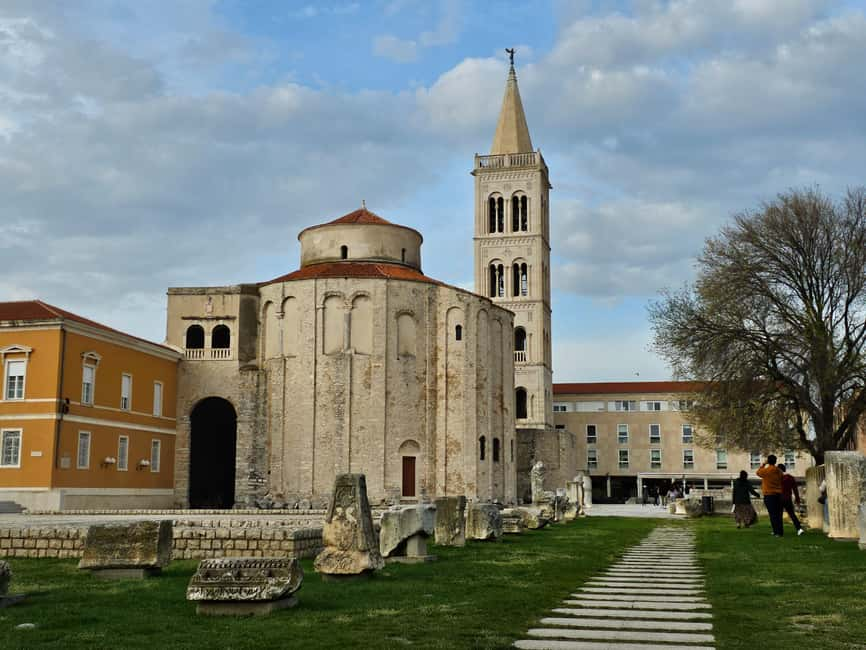
A standout in the highlights is Saint Donat (often associated with the Church of St. Donat). This is one of those landmarks that people remember, partly because it’s striking and partly because it’s hard to forget the way it sits in the city fabric.
Tom uses St. Donat as a focal point to talk about what makes the structure rare and why that matters for understanding Zadar as a whole. The stories you get here are not only about dates. They are about the city’s resilience and its ability to endure different political eras, including Venetian influence that you can connect to the defensive feel of places like the Land Gate later on.
More marble lanes taken slowly:
- Zadar Walking Tour sponsored by Gligora Cheese and deli.
★ 5.0 · 119 reviews - Zadar: Food Tasting & Old Town Walking Tour
★ 5.0 · 94 reviews - Zadar: Virtual Reality Guided History Walking Tour
★ 4.4 · 86 reviews - Zadar: Private Walking Tour Through 3,000 Years of History
★ 4.7 · 71 reviews
Trg pet bunara, five wells and a clever urban detail
Then you reach Trg pet bunara, also known as the Square of Five Wells. This is a small stop in terms of walking distance, but it has big payoff. Squares like this are where Zadar’s details start to feel personal.
A place like Trg pet bunara is useful because it breaks the pattern of only seeing giant monuments. You get to notice civic design and practical life, like how a city supplies itself and organizes shared spaces. Tom’s storytelling tends to make these details feel intentional, not random.
If you like the kind of travel where you leave with one or two favorite micro-moments, this square is a strong candidate.
Land Gate and Church of St. Simon, fortifications and faith side by side
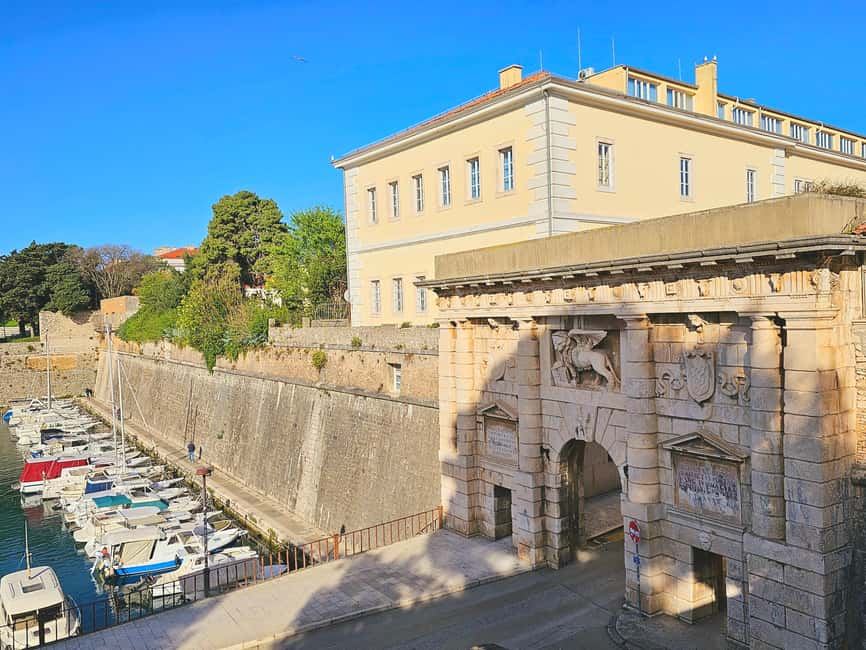
The walk finishes with a blend of defensive history and religious landmarks. You’ll visit the Land Gate and the Church of St. Simon before returning back toward the Forum.
Land Gate is a meaningful stop because it helps you visualize Zadar’s boundaries. Gates are not just entrances. They are strategies, reminders that cities have always needed protection. Tom ties in historical context, including references to Venetian walls, which gives you a clearer picture of why the city built and maintained defenses in the first place.
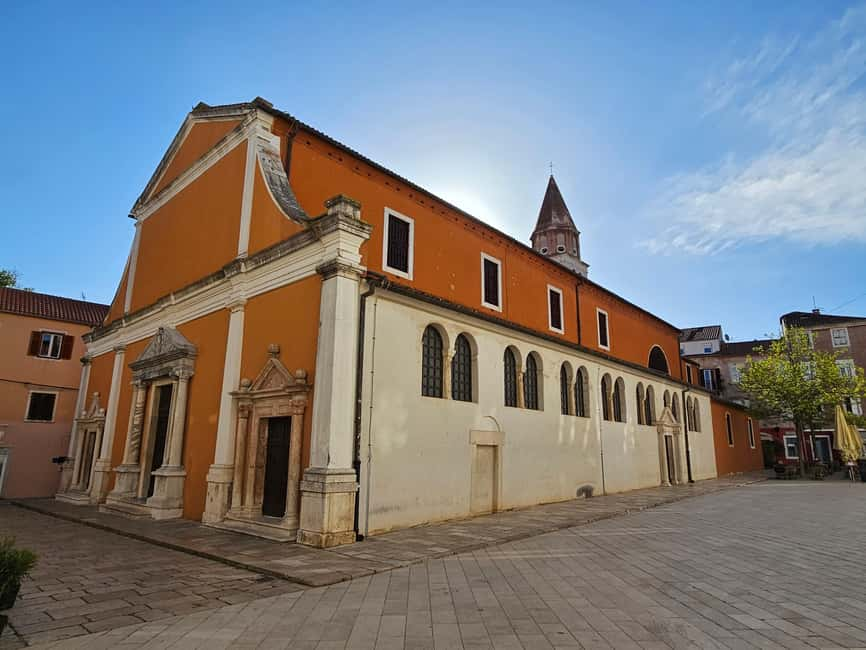
Church of St. Simon adds the faith angle to complement the fortification mood of Land Gate. Together, these two stops make the end of the tour feel like a wrap-up, not a random scatter of sights. You end the walk with a sense of how Zadar balanced protection, belief, and everyday life across different time periods.
The pacing, the questions, and why Tom’s style gets such high marks
What really makes this tour work is how smoothly it stays at a human pace. The walk is designed for a two-hour window, which is enough time to hit the major points without turning Zadar into a speed run.
Tom’s big strength is responsiveness. In multiple situations, you’ll get the sense that he takes questions seriously and adjusts based on what you care about. If you want to focus more on medieval change, you can steer that way. If you prefer the modern waterfront, he keeps bringing you back to modern connections like the Sea Organ and Greeting to the Sun.
This is also a tour where you can ask for practical local pointers afterward. Many people come away with dinner and drinks advice that fits how Zadar actually feels, not generic tourist patterns.
Price and value at $47 per person for a 2-hour private guide
At $47 per person for a 2-hour private walking tour, you’re paying for guided storytelling, not just access to famous sights. Since it’s private, the guide can keep the pacing comfortable and respond to your interests rather than forcing everyone into one tempo.
Also, your money goes into interpretation. You’re not just looking at the Roman Forum, St. Donat, or St. Anastasia. You’re getting explanations that help you understand why the city is built the way it is, and how different eras left their marks side by side.
One cost note: tickets to museums and churches are not included if you request those stops. If you want to go inside places where ticketing applies, plan for extra spending and potentially a little more time.
How to get the most out of your walk
This is the kind of tour that rewards curiosity. Come with a few loose interests, like Roman Zadar, Venetian-era influence, church architecture, or modern waterfront design. Tom can tailor the walk based on that, including stops in parks or museum visits if you ask.
Bring water, since it is a walking format and you’ll be outside for a solid chunk of time.
If you care about entering churches or museums, ask early whether tickets will be needed for the specific stops you want. That way you can avoid any last-minute surprises and keep the flow of the walk pleasant.
Who this tour is best for
This fits best if you want:
- A private, guided way to see Zadar’s key landmarks without getting lost in details
- A balance between ancient centers, religious architecture, and modern design
- A guide who can answer questions in a natural way and slow down when needed
It’s especially good for first-time visitors who want context fast. It’s also a nice choice for people who have already seen a few monuments on their own and want the “why” behind what they’re looking at.
Should you book this private Zadar walking tour?
If you want a guided walk that links the Roman Forum to St. Donat, then flips you to the modern waterfront with the Sea Organ and Greeting to the Sun, this is a strong booking. The private format and the guide’s flexibility make it easy to customize, and the pacing is built for a satisfying 2 hours instead of a rushed checklist.
I’d skip it only if you prefer to roam independently with no guidance, or if you already know you won’t want any church or museum ticket stops. Otherwise, $47 for a certified guide, in-depth landmark context, and time to ask questions is a practical value in Zadar.
FAQ
How long is the private walking tour in Zadar?
It lasts 2 hours.
Where does the tour start and where do you meet?
You meet in front of Saint Mary’s Church on the Forum, on the left side if facing the sea, next to the Archaeological museum.
How much does the tour cost?
The price is $47 per person.
What’s included in the price?
The tour includes a walking tour with a certified tour guide.
Are museum or church tickets included?
No. Tickets to museums and churches are not included if visited by special request.
What languages does the guide speak?
The live guide speaks Croatian, English, and German.
Is the tour wheelchair accessible?
Yes, it is listed as wheelchair accessible.
What is the group type?
It is a private group.
What should I bring?
Bring water.
Can the tour be tailored to my interests?
Yes. The walk can be tailored depending on your interest, including possible stops at parks or museums if you request them.
Venetian Stones, Roman Streets

Latest arrivals logged at Zadar




Historical Tours, compared.
Walking Tour of Split with a ‘Magister’ of History
Read our review →
Split Walking Tour with Professor of History
Read our review →
Split History and Gastro Small-Group Tour with Food and Drinks
Read our review →
PREMIUM Emperor’s Walking Tour for History Lovers + Museum
Read our review →Browse the lists this tour appears in