
Reviewed · HISTORICAL TOURS
Zadar: Hidden Gems and History Tour
History in Zadar feels personal fast. This 2-hour small-group walk strings together Roman and medieval landmarks, with stories you will not easily find online. I also like the local produce tasting that turns the route into something you can actually taste, not just see. One consideration: it is a walking tour, so plan on comfortable shoes and a steady pace.
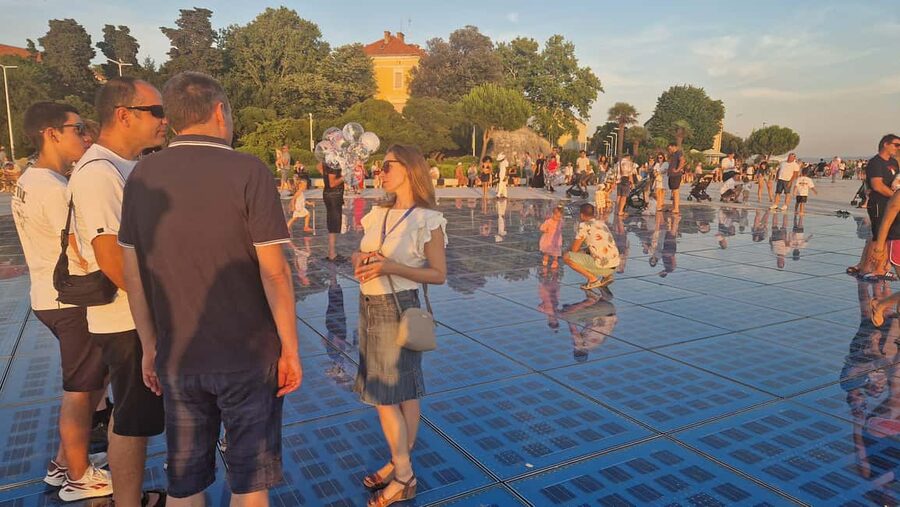
You start at the latest installation of the Greeting to the Sun, then follow your guide through key sites that many people miss when they wander on their own. In the best case, you get María, who clearly explains what you are looking at and why it matters, including the more subtle religious landmarks along the way. With a limit of 10 participants and guide options in English or Spanish, the tone stays personal rather than rushed.
The payoff is a mix of major stops and quick detours, ending in a park that makes for easy photos. You will spend time at St. Chrysogonus, and you will also hit a market and People’s Square area that feels more local than touristy. Just note that some photo moments are best if you are ready to step aside and angle your shots with other people moving through.
In This Review
- Key points to know before you go
- Starting at Greeting to the Sun, then jumping 3000 years
- Roman Forum remains and St. Donatus, Zadar’s 9th-century statement
- St. Mary’s convent, St. Anastasia bell tower, and the Melia Aniana arch
- St. Chrysogonus romanesque apses, where the camera has a job
- Zadar food market tasting and why it makes the history stick
- People’s Square, the off-the-map stop, and the Old Town entrances
- Queen Jelena Madijevka Park to end with photos and breathing room
- Price, time, and who this $29 walk is best for
- Practical tips to get the most from the 2-hour walk
- Should you book this Zadar history and local food walk?
- FAQ
- Where is the meeting point for the tour?
- How long is the Zadar Hidden Gems and History Tour?
- How much does it cost?
- Is the tour a walking tour?
- What is included in the ticket price?
- What languages are available?
- How big is the group?
- Can I cancel for a refund?
Key points to know before you go
- Small group of 10 keeps questions in the flow
- Greeting to the Sun is a smart, easy meeting start
- St. Donatus and Roman remains give you timeline context quickly
- St. Chrysogonus apses are built for close-up photos
- Food market tasting adds a real local flavor to the walk
Starting at Greeting to the Sun, then jumping 3000 years

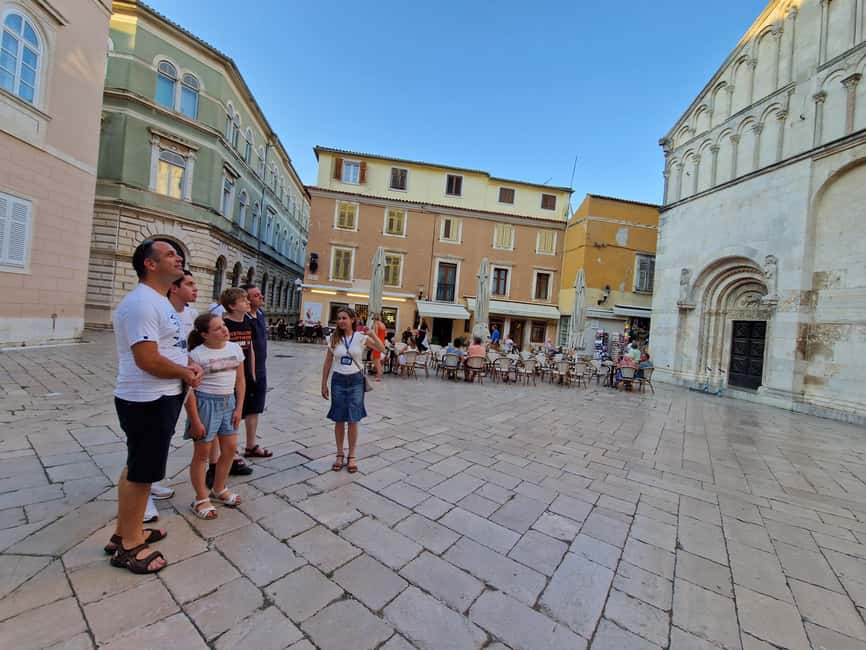
The tour begins at the Greeting to the Sun installation, which is a great “anchor point” for orientation in Zadar. From there, the guide moves you through layers of time, starting with the Roman Forum remains and then shifting into the medieval world. In other words, you are not stuck in one era. You are getting a way to understand how Zadar’s center evolved over centuries.
This matters because Zadar can feel like a pile of impressive buildings unless someone gives you the map in your head. The guide does that by connecting each stop to the next, so you see patterns instead of random highlights. With a 2-hour duration, it stays brisk but not chaotic, the kind of format that works when you want history without losing half a day.
Also, the group size helps. Limited to 10 participants, you are less likely to get left behind or miss details while the guide repeats themselves. And since the tour runs in English and Spanish with a live guide, you are not relying on headphones and guesswork.
If you are the type who likes to ask why something is where it is, you will probably appreciate the way the walk is structured around explanations, not just location announcements.
Roman Forum remains and St. Donatus, Zadar’s 9th-century statement
One of the first big stops is the remains of the Roman Forum. This is your early “context layer,” where you get the sense that Zadar’s core was planned long before many of the streets and churches you see today. You do not just look at stones, you learn what the space was for and how the city’s later identity grew around it.
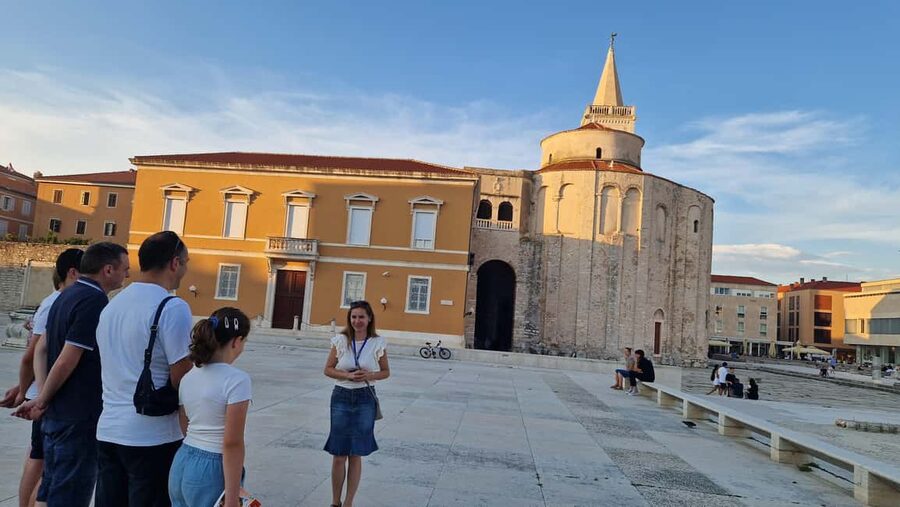
Then the route brings you to the church of St. Donatus, described as Zadar’s emblematic symbol built in the 9th century. That word emblematic is important because it points to more than architectural charm. It is a signpost for the era and for the kind of power and faith shaping the city back then.
What I like about this section is the way the guide connects architecture to meaning. St. Donatus is easy to spot once you know what you are hunting for, but the tour helps you understand why it became a symbol. You are also given a sense of how different religious sites interacted in the city, including the importance of St. Mary’s convent nearby.
If you are coming from another Mediterranean city, you may notice that Zadar’s Roman-to-medieval story feels less “straight line” and more like a city that kept rewriting itself. This part of the walk helps you read those rewrites instead of only admiring the surfaces.
More Venetian stones and Roman streets:
- Zadar: Virtual Reality Guided History Walking Tour★ 4.4 · 86 reviews
- Zadar: Private Walking Tour Through 3,000 Years of History★ 4.7 · 71 reviews
- Zadar: Private walking tour through history and modern time★ 5.0 · 19 reviews
St. Mary’s convent, St. Anastasia bell tower, and the Melia Aniana arch
After St. Donatus, the walk keeps moving through religious landmarks, which is where the tour becomes more interesting than the typical “top sights only” route. You learn about the importance of St. Mary’s convent near the area, and that adds depth to what you see. A convent is not just a building. It is a clue to how communities lived, prayed, and organized time.
Next you pass St. Anastasia bell tower on the way to a stop called Melia Aniana arch. The fact that the bell tower is a passing moment is actually a plus. You get the visual cue, then the guide brings you quickly onward, so you are not stuck lingering when you could be collecting multiple points of reference in the same 2 hours.
Melia Aniana arch is positioned as another key feature you might not spot on your own wandering around. That is the value of a guide here. Even if you have seen Zadar photos online, you still may not know what to look for at street level. The arch gives you that “oh, so that’s what this area is” feeling.
This section works especially well if you like architecture that is slightly off the main postcard path. It also helps you understand how Zadar’s old defenses and city structure connect to religious buildings, even when the city today is more open and pedestrian-friendly than it used to be.
St. Chrysogonus romanesque apses, where the camera has a job
One of the tour’s photo-focused moments is the romanesque apses of church of St. Chrysogonus. The stops in this area are timed so you can actually take good pictures rather than just snap as you walk past. Romanesque apses can look abstract if you only see them from far away. Close-up, you start to notice the design logic and how the forms create rhythm.
I especially like that the guide directs your attention to what makes these apses special. You are not just handed a name and told to photograph it. You learn what to look for, and that makes your pictures more meaningful. Think of it as turning “I saw a church” into “I recognized the style and understood the intent.”
There is also a practical side. Church visits often require you to move politely and stay aware of people coming and going. A small group format helps here because the guide can keep you flowing without you standing in the wrong place at the wrong time.
If you are traveling with a phone camera that struggles in shade, this stop can still work, but plan to take a few angles. Try wide first, then step in for details. The tour’s focus on photography is a good reminder that not every stop is about speed. Some are about getting the right view.
Zadar food market tasting and why it makes the history stick
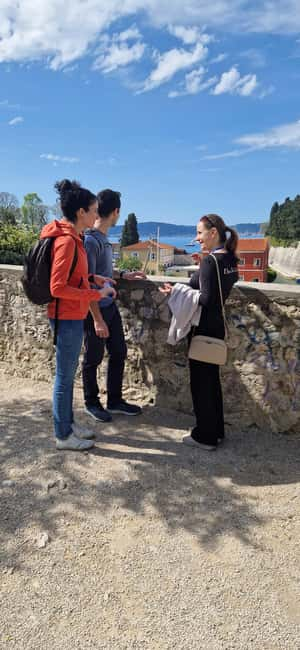
Then comes one of the most memorable parts of the walk for many people: the Zadar food market, where you taste some local produce. This is the “break the pattern” moment. Up to now, you are in stone and stories. At the market, you get flavor and texture, and that helps the history anchor in your memory.
The tour does not list a full menu, and that is fine. The point is not to turn the walk into a food tour with a checklist. Instead, it gives you a small taste to round out the experience. When you connect what you hear about the city to what you try, you start to feel like you are experiencing Zadar, not just studying it.
I also like that the tasting is placed after the church and architecture section. You are not leaving your brain at the first snack. You are using the tasting as a reset, so the final stretch feels new instead of like a blur.
A practical tip: when you are tasting, pay attention to what the guide says about the produce and how it fits local habits. You do not need to memorize everything. Just use the explanations to guide what you might seek out later on your own in Zadar. That is how tours like this lead to better independent choices.
Still riding at anchor off Zadar
- Zadar: Plitvice Lakes Guided Day Tour with Tickets
★ 4.9 · 3,148 reviews - Zadar: Island Luxury Speedboat Tour with Snorkeling
★ 5.0 · 2,452 reviews - Zadar: 3-Stop Blue Lagoon & Snorkeling Cruise with Drinks
★ 4.9 · 1,621 reviews - Zadar: Kornati Boat Trip with Lunch and Swim Stops
★ 4.5 · 1,498 reviews
People’s Square, the off-the-map stop, and the Old Town entrances
After the food market tasting, the route moves toward People’s Square. The tour highlights this as one of the off-the-map stops, not charted on city maps in the usual way. That matters because it changes your experience from tourist scavenger hunt to “someone shows you something you would not find by accident.”
Then you reach the remains of three eastern entrances to the Old Town of Zadar. This is the kind of historical detail that can be invisible from street level unless you know it is there. Eastern entrances sounds technical, but on a walk it becomes very concrete. You start to understand how movement and access shaped the old city, and why certain areas grew in importance.
I like that the guide frames these entrances as remains, not as abstract history. You are seeing remnants of a past urban system. Then the guide connects it to the rest of the walk so it does not feel disconnected from St. Donatus or the forum remains. It all clicks as parts of the same story.
If you enjoy city walls, gates, and the way cities protected themselves, this section is likely to be your favorite. If you do not usually care about defensive structures, you might still appreciate the way the entrances explain why the old town feels the way it does today.
Queen Jelena Madijevka Park to end with photos and breathing room
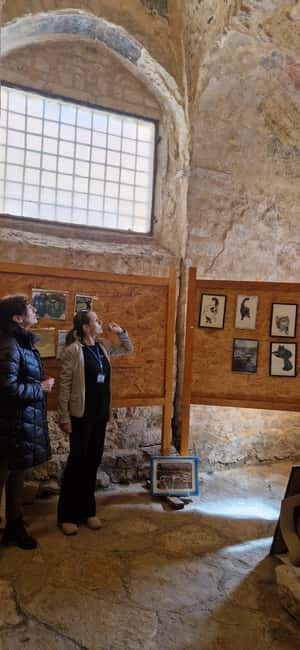
The tour ends in Queen Jelena Madijevka Park, and that is a smart closing choice. After two hours of stone, churches, and city structure, you get a calmer moment to look around and take pictures of picturesque sights.
This is where you can slow down. You can compare what you saw earlier, like the Roman and medieval layers, to what the city looks like from a more open space. It is also helpful because it gives you a buffer before you head off on your own. When a tour ends in a place where you can stand comfortably, it is easier to process what you learned and decide where to go next.
If your travel style is to keep moving but still want a satisfying finish, the park ending fits. You leave with a handful of clear images, like Greeting to the Sun, St. Donatus, St. Chrysogonus, plus the gate remains you might otherwise have walked past without noticing.
Price, time, and who this $29 walk is best for
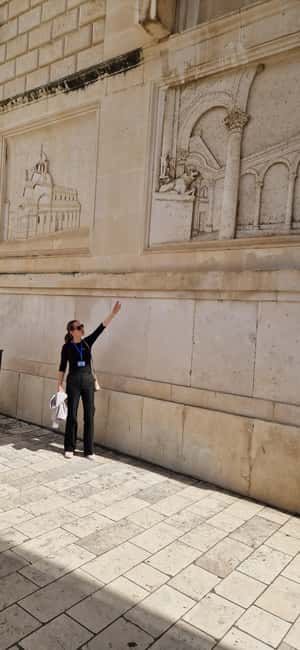
At $29 per person for a 2-hour small-group walking tour with local produce tasting, the value comes from three things: the guided route, the concentration of major and lesser-seen landmarks, and the fact that you taste something local as part of the experience.
If you tried to DIY this route, you might still reach the big sites, but you would likely lose the connective tissue, the “why this and why here” explanations. The tour is designed to compress that context into a time window that works for most itineraries.
The small group size matters for value too. Limited to 10 participants, you get better attention and a better chance to ask follow-up questions. With live guides in English and Spanish, you also avoid the frustration of feeling like you missed half the story because the audio lagged or the group moved too fast.
This tour is ideal if you want an efficient Zadar history overview plus a food market stop. It is also a good fit if you prefer walking with direction, not wandering with guesswork.
If you are someone who hates walking or needs long periods of sitting, you may find the pace a bit much for 2 hours. But if you are comfortable with city walking, it is a strong way to spend a morning or early afternoon.
Practical tips to get the most from the 2-hour walk
- Wear comfortable shoes, since this is a walking tour with multiple stops.
- Bring a camera or phone charger, because you will have specific photo moments at places like the romanesque apses and the park.
- If you want the tasting experience to feel more meaningful, listen for what the guide says about the produce, even if you only plan to taste a small amount.
- Dress for the weather. Zadar can be bright and sun-heavy in parts of the day, and you will be outside for the full duration.
Also, consider your timing. A tour that covers a lot of central landmarks is best when you are not rushed to catch another timed activity immediately after.
Should you book this Zadar history and local food walk?
Book it if you want a guided route through Roman remains, St. Donatus, and the key church stop at St. Chrysogonus, plus a food market tasting that gives you a local flavor to match the stories. I also think it is worth it if you like “explain it to me” sightseeing, because the guide approach is built around context, not just names.
Skip it only if you strongly prefer self-guided strolling, or if you know you want minimal walking. If your ideal day includes lingering long in one place, you might feel constrained by the compact 2-hour format.
If you are doing Zadar for the first time and want to get the city’s timeline in your head while seeing spots you might miss on your own, this is a smart, efficient choice.
FAQ
Where is the meeting point for the tour?
Meet your guide at the Greeting to the Sun installation.
How long is the Zadar Hidden Gems and History Tour?
The duration is 2 hours.
How much does it cost?
The price is $29 per person.
Is the tour a walking tour?
Yes, it is a walking tour.
What is included in the ticket price?
The tour includes the walking tour and a tasting of local produce.
What languages are available?
The live tour guide is available in English and Spanish.
How big is the group?
The tour is limited to 10 participants.
Can I cancel for a refund?
Yes, you can cancel up to 24 hours in advance for a full refund.
Latest arrivals logged at Zadar



Historical Tours, compared.
Walking Tour of Split with a ‘Magister’ of History
Read our review →
Split Walking Tour with Professor of History
Read our review →
Split History and Gastro Small-Group Tour with Food and Drinks
Read our review →
PREMIUM Emperor’s Walking Tour for History Lovers + Museum
Read our review →Browse the lists this tour appears in