
Reviewed · HISTORICAL TOURS
Discover Split’s Hidden History – Guided Walking Tour
History hits harder when it has corners and shadows. This Split walking tour strings together three major sights so you understand how the Roman palace city turned into the Split you see today. It is short, well-paced, and built for orientation, not a marathon.
What I like most is the small-group feel and the way the guide helps you place each stop in the bigger story. I also like that the tour focuses on places you can actually stand inside or right beside, including the Peristyle courtyard and the bell tower area at the Cathedral of Saint Domnius.
One consideration: you will spend the whole time on foot, and there are some steps. It is not presented as a hard workout, but you should wear solid shoes if you do not love stairs.
In This Review
- Quick hits before you go
- The 90-minute mindset: why this route works
- Stop 1: Diocletian’s Peristyle, where the palace felt alive
- Stop 2: Cathedral of Saint Domnius, the emblem and the treasury
- Stop 3: Temple of Jupiter, the palace cult in one preserved structure
- Walking route, start time, and what to expect on foot
- Price and value: is $41.70 actually fair?
- Who this tour suits best, and who should skip
- Should you book this Split guided walking tour?
- FAQ
- How long is the Split walking tour?
- What language is the tour offered in?
- Where does the tour start and end?
- What time does the tour start?
- How many people are in the group?
- What is included in the price?
- Are admission tickets included for all three stops?
- Is coffee or tea included?
- What if the weather is bad?
Quick hits before you go
- Peristyle of Diocletian’s Palace as the courtyard heart, tied directly to the fortress built by late Roman power
- Saint Domnius Cathedral with its bell tower as a city emblem, plus the surrounding colonnade of 24 columns
- Temple of Jupiter from the 3rd century, linked to Diocletian’s belief that he was Jupiter reincarnate
- 90 minutes, three stops, so you get the big picture without losing the whole day
- Up to 15 people and a certified English-speaking local guide, great for questions
- Included admission tickets for all three sites mentioned in the route
The 90-minute mindset: why this route works
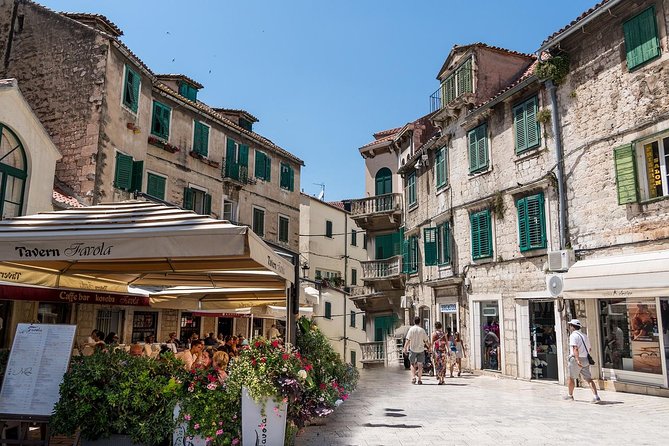
Split can feel like a maze, especially if you wander without a plan. This tour keeps you on a tight loop in the old core, so you get your bearings fast and you leave with names you can actually remember. You cover three power centers in Roman-and-post-Roman Split, which is the smart way to learn a city like this.
The timing matters. Around 1 hour 30 minutes means you are not rushing through everything, but you also are not dragging through stops that blur together. I like that the pace is built around short chunks, about 30 minutes at the first two stops and then 15 minutes at the temple. That structure helps you absorb what you see instead of just ticking boxes.
You also get a mobile ticket, which is handy on a day when you might be juggling phone batteries and changing street plans. The tour runs in English and is capped at a maximum of 15 travelers, so it stays conversational. If you prefer tours where you can ask real questions instead of shouting over the crowd, this setup fits.
Stop 1: Diocletian’s Peristyle, where the palace felt alive
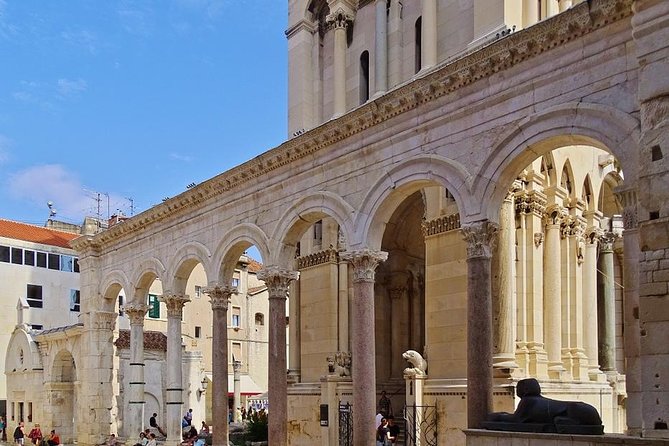
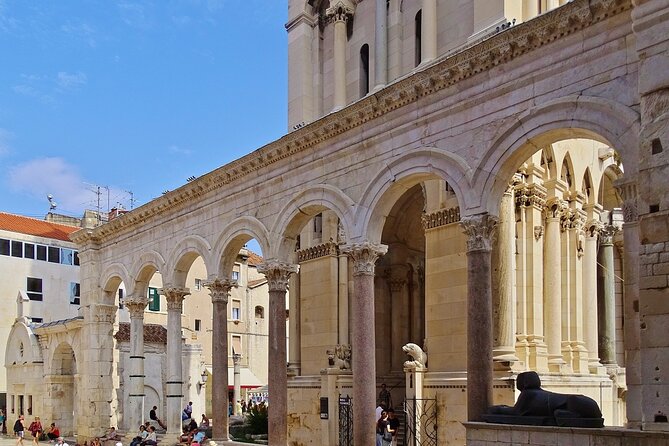
Your first big moment is the Peristyle of Diocletian’s Palace, described as the beating heart of Split. This is not just a pretty courtyard. It is originally the courtyard of a fortress built by one of the last Roman emperors, so you are looking at a space that was meant to function as a power center, not a sightseeing backdrop.
Here is what makes the Peristyle special for your visit: it gives you scale. When you stand in a palace courtyard that big, you can feel how a ruler’s world worked. It is easier to understand why the old city grew around the remains of Diocletian’s complex, instead of starting from scratch. Roman architecture tends to impress, but the courtyard effect is different. It is social and practical at the same time, a stage for movement, authority, and daily life.
The Peristyle is also a strong first stop because it sets your mental map. After this, the Cathedral of Saint Domnius makes more sense, and the Temple of Jupiter becomes less like a random ruin and more like a deliberate part of the same palace universe. The tour also lists that the Peristyle stop includes an admission ticket, so you are not left outside craning your neck. You get inside the experience.
Practical tip: take a few minutes before you start looking for details. I like to first glance around to understand the courtyard layout, then go back and notice the architectural rhythm. In this kind of Roman space, small visual patterns are what tell you how it was designed to feel.
More Walking Tours in Split
- Split: Old Town and Diocletian Palace Walking Tour★ 4.9 · 4,727 reviews
- Walking Tour of Split and Diocletian’s Palace★ 5.0 · 2,588 reviews
- Krka Waterfalls tour with Trogir Walking tour and Krka panoramic boat cruise★ 5.0 · 1,659 reviews
Stop 2: Cathedral of Saint Domnius, the emblem and the treasury
Next up is the Cathedral of Saint Domnius, called the most popular attraction in Split for good reason. This is the type of sight where the outside is famous, but the inside adds the real depth. The cathedral was built as a mausoleum for Diocletian, including the pointed reminder that the last great Roman emperor is tied into Christian history in a complicated way.
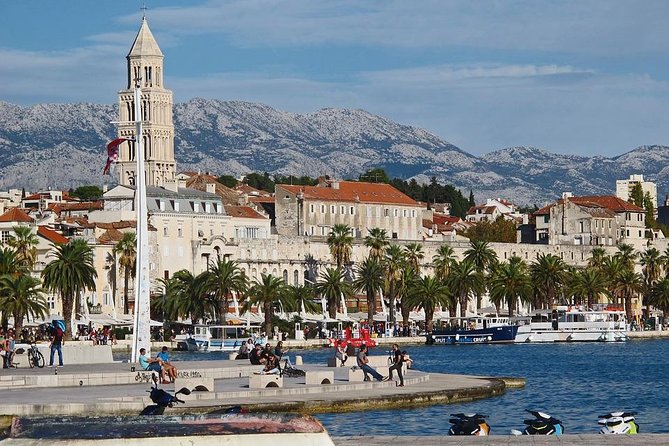
One key detail that helps you “read” the building: the bell tower. It is described as part of the cathedral complex and now serves as an emblem of the city. Even if you think you are not a cathedral person, you will still feel why locals love it. Emblems become emblems because they are instantly recognizable, and the tower is built into Split’s visual identity.
Then there is the exterior colonnade. The tour information notes an original set of 24 columns that still encircles the building. That number is your clue that this is not a generic church facade. It is architecture preserved enough to keep its original rhythm, even after centuries of change.
If you enjoy the human side of churches, you will appreciate the mention of the treasury. This cathedral complex houses a treasury with reliquaries, icons, church robes, illuminated manuscripts, and documents in Glagolitic script. That mix tells you the cathedral has served as a collector of faith and culture, not just a worship space. Even if you only catch a few items during your ticketed time, the fact that such materials are housed here changes how you see the building.
The stop is allotted 30 minutes, with admission included. That is the right amount of time to climb into the emotional mood of the place, look at the key features, and still not feel rushed.
A quick note on stairs: some routes here include steps, and the tour is not sold as step-free. If you want a comfortable experience, wear shoes with grip and give yourself a steady pace.
Stop 3: Temple of Jupiter, the palace cult in one preserved structure

You finish with the Temple of Jupiter, constructed in the 3rd century as part of Diocletian’s Palace. It is described as one of the most well-preserved Roman temples in the world, and I agree that this kind of preservation changes the whole experience. When a temple holds its form, you can compare it to how you expect a Roman temple to look, instead of trying to imagine it from broken stones.
This stop also works well because it connects the dots about Diocletian’s identity. The tour notes that Diocletian believed he was the reincarnation of Jupiter, the king of the gods. That belief mattered because Jupiter worship was highly practiced until the Roman Empire shifted under Christian rule. In other words, the temple is not only an old building, it is a marker of a religious and political transition.
Why this matters for you as a traveler: most Roman sites tell you about stone and dates. This one also tells you about meaning. If you remember only one idea from this temple stop, make it this: Diocletian built his palace world with his own religious story in mind. When Christianity rose, the meaning of those spaces did not disappear overnight, but it certainly changed.
The Temple of Jupiter stop is scheduled for about 15 minutes, with an admission ticket included. That is just enough time to see the structure, absorb why it sits here, and then move on before you hit the sightseeing wall. Short tours work best in places like this because the city itself keeps drawing you onward.
Walking route, start time, and what to expect on foot
The tour starts at Obala Lazareta 3, 21000, Split, at 9:00 am, and it ends back at that same meeting point. That “return to start” format is a relief. It means you can plan the rest of your morning without worrying about a new drop-off zone. It also fits well if you want to follow up with a coffee stop or a beach walk after.
Duration is listed as about 1 hour 30 minutes, and the group size max is 15. In my experience, that small ceiling makes a big difference for a walking tour. You can hear the guide without cranking your head, and you can ask questions without feeling like you are delaying the whole line.
The tour is offered in English, and the guide is described as certified and local. In the reviews, the guide named Nicole is highlighted as answering questions and keeping things informative and at a just-right pace. You can treat that as a useful expectation: you will get explanations that actually help you look at the sites differently, not just a list of dates.
Weather matters too. The experience states that it requires good weather, and if it gets canceled due to poor conditions, you are offered another date or a full refund. Even if you travel in shoulder season, this is one tour you should check the forecast for. Roman stone and open courtyards are lovely, but rain turns them into slippery history.
What to bring is simple: comfortable walking shoes, a light layer, and some water. Since coffee and/or tea are not included, plan your drinks around the tour schedule instead of hoping a stop magically appears.
More marble lanes taken slowly:
- Split & Diocletian’s Palace Walking Tour
★ 5.0 · 1,125 reviews - Walking Tour of Split with a ‘Magister’ of History
★ 5.0 · 1,122 reviews - Split Walking Tour with Professor of History
★ 5.0 · 926 reviews - Split: Diocletian Palace & Old Town Guided Walking Tour
★ 4.7 · 882 reviews
Price and value: is $41.70 actually fair?
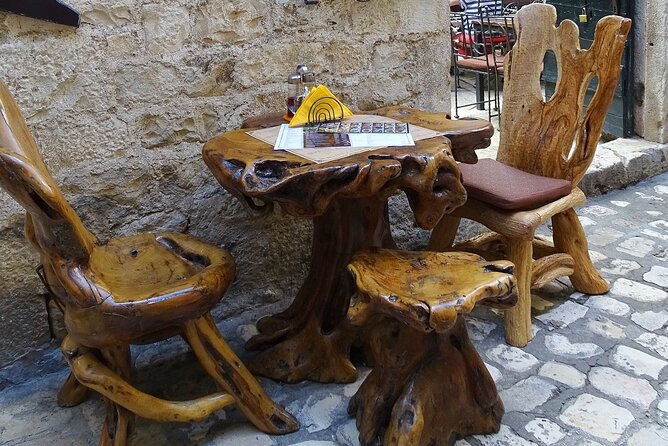
At $41.70 per person, you are paying for three things: guided orientation, a small-group experience, and included admissions for the specific stops. For Split, that is a reasonable deal for a focused 90-minute tour, especially if you would otherwise pay for entry tickets on your own and still be left wondering what you are looking at.
Here is the practical value calculation I like to use. If you are only going to see one or two major sights, a guided tour can feel expensive. But here you see three major components tied to one storyline: Diocletian’s palace courtyard, Diocletian’s mausoleum-linked cathedral, and Diocletian’s Jupiter temple cult tie-in. That is a tight route with built-in context.
Also, the included admission tickets matter. It is one less hassle. When entrances are folded into the tour, you spend your time standing in front of the sites, not scanning signs trying to figure out which ticket you need.
One caution about costs: the tour information says coffee and/or tea are not included, and it also notes that all fees and taxes are not included. It also lists optional entrance fees. At the same time, each stop includes an admission ticket. So the safest way to think about it is this: the main entry costs tied to these three sights are covered, but if you add extras on your own, you will pay for those.
If you like guided help to get your bearings and understand what you are seeing, the price feels fair for the time you gain.
Who this tour suits best, and who should skip
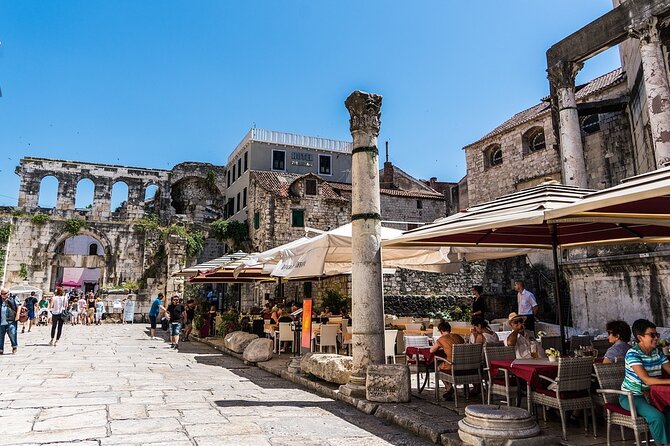
This experience is ideal if you:
- Want a fast start in Split with strong orientation
- Like Roman sites but also want the story of what happened after
- Prefer short tours with a clear route and a small group
- Plan to ask questions instead of silently snapping photos
In the reviews, the guide Nicole gets praised for being extremely knowledgeable in terms of answering questions, and also for being personal and friendly. That points to a tour style that works well for curious travelers, not just people who want a passive lecture.
If you are the kind of traveler who hates guided tours and wants full freedom to wander slowly at your own pace, you might not love the structured stop times. But if your goal is to understand Split’s center quickly, a guided loop like this gives you a payoff that self-guided wandering often misses.
Also, if you have strong mobility issues with steps, you should be cautious. The tour is not framed as extremely strenuous, but it is a walking tour with some stairs, so plan accordingly.
Should you book this Split guided walking tour?

I think you should book it if you want a smart, efficient way to learn Split’s core without losing your morning. Three major sites, each with included admission, in about 1 hour 30 minutes, is a solid deal. The small group and the English-speaking local guide make it feel practical, not scripted.
Skip it only if you already know Split well and you prefer to explore completely unguided. Otherwise, this is a strong first-tour choice because it connects Diocletian’s palace world to what you see today, and it does it in a pace that does not exhaust you.
FAQ
How long is the Split walking tour?
It lasts about 1 hour 30 minutes.
What language is the tour offered in?
The tour is offered in English.
Where does the tour start and end?
It starts at Obala Lazareta 3, 21000, Split, Croatia, and ends back at the same meeting point.
What time does the tour start?
The start time is 9:00 am.
How many people are in the group?
The tour has a maximum of 15 travelers.
What is included in the price?
It includes a certified English-speaking local guide and a guided tour of Split Old Town. Admission tickets are included for the listed stops.
Are admission tickets included for all three stops?
Yes, the itinerary lists admission ticket included for the Peristyle of Diocletian’s Palace, the Cathedral of Saint Domnius, and the Temple of Jupiter.
Is coffee or tea included?
No, coffee and/or tea are not included.
What if the weather is bad?
This experience requires good weather. If it is canceled due to poor weather, you will be offered a different date or a full refund.
Venetian Stones, Roman Streets



Latest arrivals logged at Split



Historical Tours, compared.
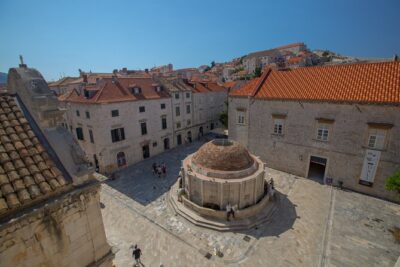

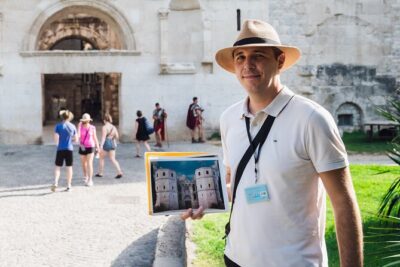
Walking Tour of Split with a ‘Magister’ of History
Read our review →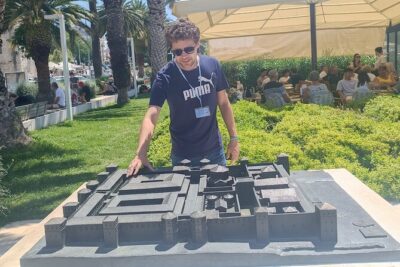
Split Walking Tour with Professor of History
Read our review →

Split History and Gastro Small-Group Tour with Food and Drinks
Read our review →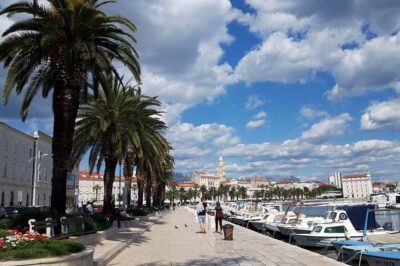
PREMIUM Emperor’s Walking Tour for History Lovers + Museum
Read our review →Browse the lists this tour appears in