
Reviewed · MUSEUMS
From Zagreb to Castle Trakoscan & Museum of Evolution in Krapina
Two worlds, one beautiful Zagorje route.
This trip pairs Trakošćan Castle with the Krapina Neanderthal Museum, so you go from a medieval family stronghold to the fossils that explain Europe’s deep past.
I like the practical setup: private, air-conditioned transportation from Zagreb, with an English-speaking guide. I also love the time split, about 3 hours at the castle and 2 hours at the museum, which gives you enough time to look around instead of rushing.
One drawback to plan for: the castle visit includes lots of stairs, so bring sensible shoes and pace yourself.
In This Review
- Key highlights you should care about
- The ride from Zagreb to Croatian Zagorje, in one half-day
- Trakošćan Castle: fairy tale views, real medieval architecture
- Plan for stairs and how to pace your visit
- Castle ticket reality to budget for
- How the Krapina Neanderthal Museum connects to the Hušnjakovo site
- Why this museum visit feels different than a typical history stop
- The museum’s values, translated into how you experience it
- Audio and guide support you can actually use
- Timing and what a 3+2 stop day really means
- A simple strategy to get the most from both stops
- What you get for the money, and where the extra costs show up
- Guide quality can make or break a day like this
- Small-group feel, flexibility, and how to set expectations
- A reality check for planning
- Tips that make your visit smoother at both stops
- Wear shoes built for stairs
- Use the audio guide when you want control
- Bring a question for your guide
- Keep cash or a card ready for the castle fee
- Who this day trip suits best
- Should you book the Zagreb to Trakošćan and Krapina half-day?
- FAQ
- Where does the tour start and end?
- How long is the experience?
- Is this a private tour?
- What is included in the price?
- Is the Trakošćan Castle ticket included?
- How much time do you spend at each stop?
- Is the tour suitable for most people?
- Does the tour require good weather?
- What is the cancellation policy?
Key highlights you should care about
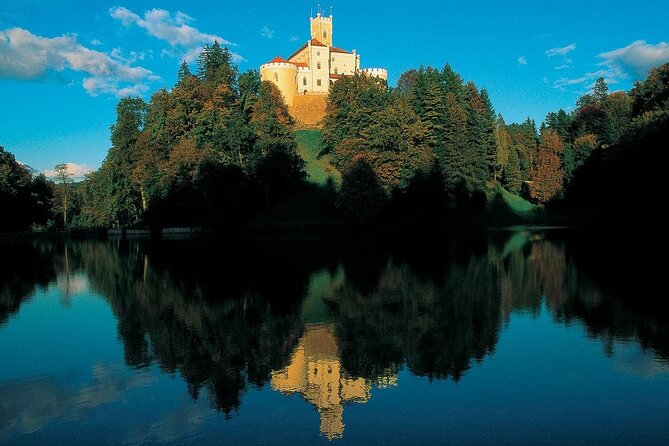
- Trakošćan Castle is built for slow sightseeing, with a castle, a park, a forest park, and a lake tied into one protected historic setting
- The Neanderthal Museum is attached to the Hušnjakovo story, since it sits near the major 1899 excavation area
- English guide plus audio support (English and German) helps you follow both sites without feeling lost
- It can run like a small, flexible group, including successful days for solo travelers when the group size allows
- Castle entry may cost extra, with Trakošćan Castle listed at €10 per person, while the Neanderthal Museum entrance is included
- Sturdy walking shoes matter, because the castle experience involves climbing and stair sections
The ride from Zagreb to Croatian Zagorje, in one half-day
This is a true half-day style excursion, roughly 4 to 6 hours from Zagreb. The meeting point is Zrinjevac 2, 10000 Zagreb, and the tour ends back there, so you do not need to think about trains, parking, or navigation.
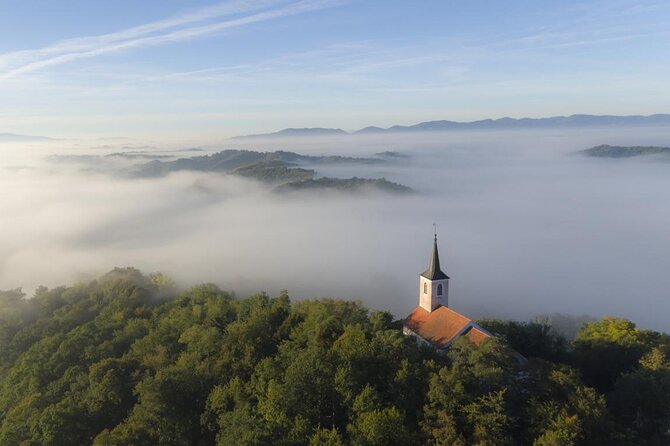
You travel in a private vehicle with air-conditioning, which is a big quality-of-life upgrade if you are visiting in warmer months or just want an easier start. The route takes you into Croatian Zagorje, a region that feels more countryside than city. It is the kind of drive that makes the castle stop feel like a destination, not just a photo stop.
Also note the tour is described as private, meaning it is just your group. That usually leads to fewer waiting moments and more flexibility when plans shift inside the sites, like taking a few extra minutes to see a room that catches your eye.
Trakošćan Castle: fairy tale views, real medieval architecture
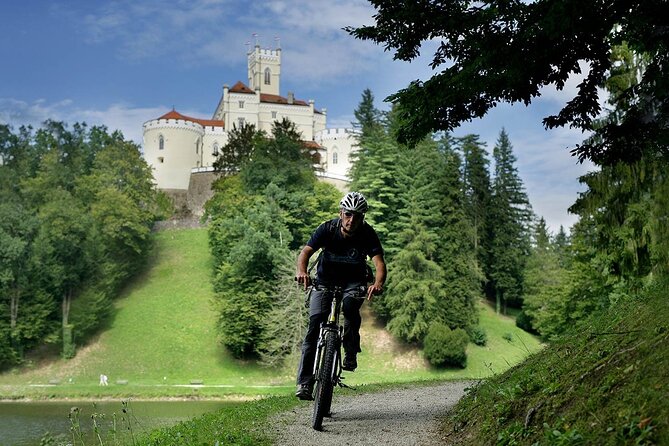
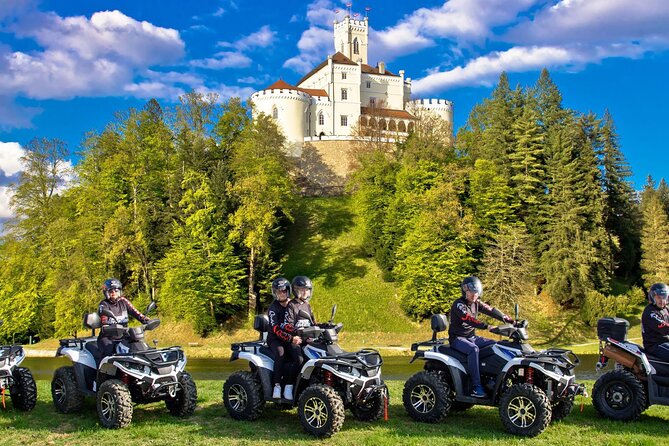
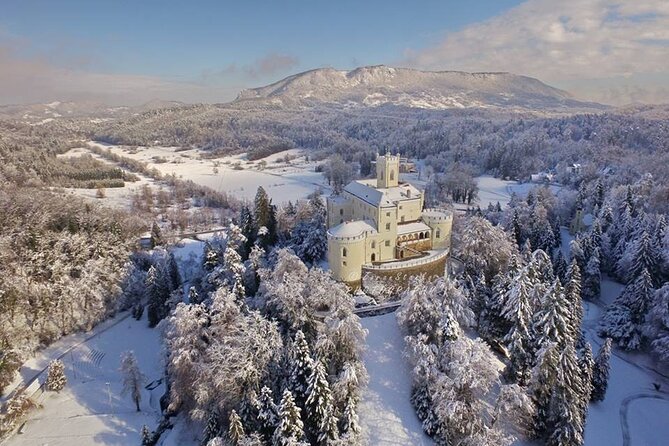
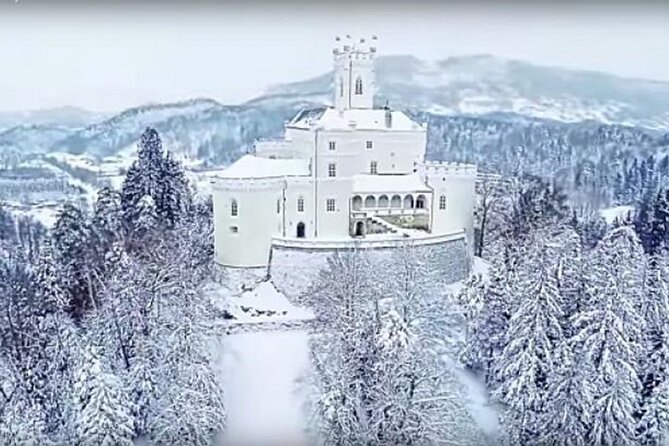
Trakošćan Castle, or Dvor Trakošćan, is the reason this trip works for people who love beautiful places and people who love history. The castle dates back to the late 13th century, and it is tied to the defense system of its era. That is not just trivia, it explains why the building, layout, and preserved holdings feel so intentional.
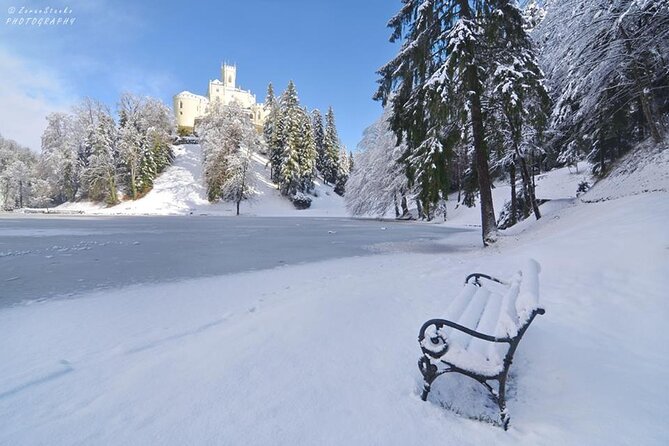
The name Trakošćan appears in written documents from 1334, and the castle history is closely linked with the Drašković family. What I like about that detail is how it turns the site from a generic castle into a specific home with a long life. The castle is described as one of the rare Croatian sites with preserved holdings, plus it includes the castle itself, a building next to it, and a wider park and forest park with a lake.
More Croatian rooms out of the sun:
- Zagreb: Skip-the-Ticket-Line Museum of Broken Relationships★ 4.5 · 847 reviews
- Zagreb: Nikola Tesla Technical Museum Ticket★ 4.5 · 520 reviews
- Zagreb: Museum of Illusions Entrance Ticket★ 4.0 · 261 reviews
Plan for stairs and how to pace your visit
If you do anything differently because of this trip, do it here. Expect lots of stairs. That is not a deal-breaker, but it changes what kind of day you will have. If you know you tire out on steps, build in slower breaks and stick to a steady rhythm.
You will spend about 3 hours at the castle. Use that time to do two things instead of trying to see everything at maximum speed:
- Start with the core castle areas so you get the structure and setting right away.
- Then shift into the grounds, where the park and lake help you reset between indoor climbs.
Castle ticket reality to budget for
One practical detail: Trakošćan Castle entrance is listed as €10 per person as not included. Meanwhile, the itinerary notes admission ticket included for the castle. Because the price details can vary by how your booking package is structured, treat this as a budgeting check: assume you may pay the €10 castle entry unless your confirmation explicitly says otherwise.
Either way, the good news is that even with an extra ticket cost, you are paying for a structured visit with a guide, plus a setting that is hard to replicate on your own in a short time.
How the Krapina Neanderthal Museum connects to the Hušnjakovo site
After the castle, you head to Krapina and the Krapina Neanderthal Museum, located near the famous excavation area known as Hušnjakovo. This is a museum concept that makes sense instantly, because it does not feel like you are viewing fossils in isolation. The setting ties the objects to the place they came from.
The big story starts in 1899, when Hušnjakovo produced the world’s largest collection of Neanderthal fossil bones. The museum context is built around that scale: more than nine hundred fossil bones of Neanderthals, plus numerous fossils from Pleistocene animals such as woolly rhinoceros, cave bear, wolf, elk, and giant deer. It also includes evidence of material culture, with over a thousand stone tools.
Still riding at anchor off Zagreb
- From Zagreb: Plitvice & Rastoke Guided Day Trip with Ticket
★ 4.9 · 2,955 reviews - Zagreb: Rastoke & Plitvice Lakes Guided Tour with Ticket
★ 4.9 · 1,897 reviews - Communism & Croatian Homeland War Tour
★ 5.0 · 1,355 reviews - Zagreb: City and WWII Tunnels Walking Tour
★ 4.9 · 1,230 reviews
Why this museum visit feels different than a typical history stop
Many history museums show you artifacts. This one also shows you the logic of how scientists reconstructed a past life from fragmented evidence. Even if you are not a science person, the pairing of fossils and stone tools gives you a clearer sense of what Neanderthals did, not just what they were.
You spend about 2 hours at the museum. That is a sweet spot for absorbing the story without feeling like you are standing in front of cases for too long.
The museum’s values, translated into how you experience it
The museum’s mission is described in European values terms, with a focus on responsible use of natural and cultural heritage and mutual understanding in a democratically governed society. You do not need to quote mission statements to benefit from it. In practice, it often means the museum experience is framed as learning that helps you connect the past to shared human questions, not just collecting facts.
Audio and guide support you can actually use
Your trip includes an English guide, plus an audio guide in English and German. That matters because it lets you move at your own speed. If you want to re-check something, you can listen again without stopping the group. It is also helpful when exhibits are busy and you want extra context without asking the guide every minute.
Timing and what a 3+2 stop day really means
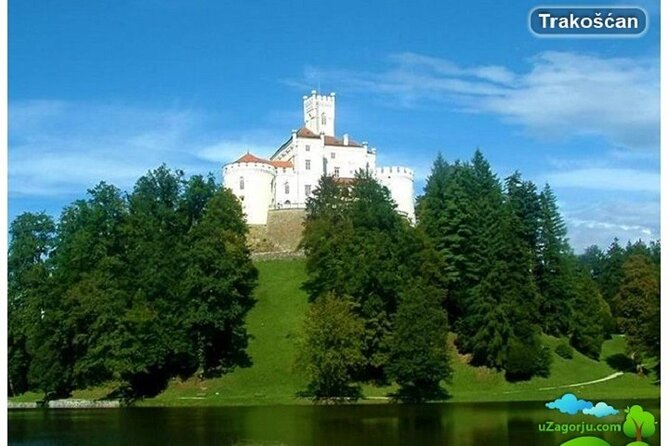
The schedule is structured in a way that makes sense: castle first, then Krapina. You have roughly 3 hours for Trakošćan Castle and 2 hours for the Neanderthal Museum, all within a 4 to 6 hour total day.
That means your day is not broken up into long drives or multiple short windows. Instead, it is designed as a concentrated two-topic experience. For you, that usually translates into better memory. You are not hopping between half a dozen sites, so your brain can keep track of themes, like medieval life versus Ice Age survival.
A simple strategy to get the most from both stops
Here is how I’d do it if I were optimizing the day for enjoyment:
- At the castle, prioritize the parts that establish the layout and defensive feel first, then shift to the grounds and lake views.
- At the museum, focus on the fossils and the stone tools early, then use the rest of the time for whatever sections catch your interest most.
Because the tour is private to your group, you should be able to ask your guide for a sensible order inside each site, especially if the route feels confusing on arrival.
What you get for the money, and where the extra costs show up
The listed price is $144.46 per person, typically booked about 10 days in advance. You also get group discounts, and the tour includes private transportation plus an English guide.
Here is the value math in plain terms:
- You are paying for a short, curated experience with guided interpretation at both stops.
- You are paying for transportation and air-conditioning, which reduces decision fatigue.
- The Neanderthal Museum entrance fee is included.
- The castle may have an extra €10 per person entry fee, depending on your package confirmation.
So the price is not just about ticket costs. It is about getting someone to translate what you are seeing, and getting you from Zagreb to a pair of very different places without logistics stress.
Guide quality can make or break a day like this
I cannot promise who your guide will be, but the experience descriptions include one standout name: Sanja. In the feedback provided, Sanja is described as informative, friendly, flexible, and especially accommodating for a solo guest. That kind of guide style matters here, because you are dealing with a walking-heavy castle and an information-heavy museum in the same day.
The best case is a guide who helps you pace the stairs, points out what to look at, and keeps the museum story understandable.
Small-group feel, flexibility, and how to set expectations
Even though this is a private tour, one theme in the experience feedback is that the day can sometimes run with a very small group, and that flexibility can turn the excursion into something warmer than a big bus day.
If you are traveling solo, it is also encouraging to know the tour can work for one person when the operator can accommodate the group size. That said, a private operation can have constraints if the minimum traveler threshold is not met or if conditions are not suitable.
A reality check for planning
This experience requires good weather. If the day turns bad, you may be offered a different date or a full refund. Also, since it is not a massive multi-van operation, a transportation issue can be disruptive in rare cases. If you are on a tight schedule in Zagreb, keep your day flexible and make sure you can reach your operator.
Tips that make your visit smoother at both stops
A few things will quietly improve your day, and they match what the experience already emphasizes.
Wear shoes built for stairs
At the castle, plan for stair sections. Bring shoes you can trust and give yourself permission to go slower than you think you need to. The grounds and lake are a big part of the charm, so a slower pace actually helps.
Use the audio guide when you want control
With the audio guide in English and German, you can pause to replay a section without turning the day into a stop-and-go conversation. I find audio best for when you are moving between rooms or sections and want a clean explanation without asking questions every time.
Bring a question for your guide
The museum has the kind of details that are easy to miss unless someone frames them. If you ask something like how the tools and fossils fit together as evidence, you will often get a clearer story than just reading labels.
Keep cash or a card ready for the castle fee
Because the castle entrance is listed as not included at €10 per person, I recommend having a payment method ready so there is no stress at the gate.
Who this day trip suits best
This is a great fit if you want:
- A romantic castle setting plus meaningful historical context
- Prehistory that feels grounded, because the museum is tied to Hušnjakovo
- A guided, time-efficient experience from Zagreb
It is also a good choice for couples and small groups who want a shared story. Families might enjoy it too, but the stairs at the castle are a factor, so think about kids energy levels and how you handle step-heavy sites.
If you prefer completely flat walking, you may find the castle challenging. If that is you, consider adjusting your expectations or choosing a different itinerary.
Should you book the Zagreb to Trakošćan and Krapina half-day?
I think you should book this trip if you like your Croatia days to have contrast. You get medieval atmosphere at Trakošćan and then you switch gears into Ice Age evidence at Krapina, all guided and packed into one efficient schedule.
I would hesitate only if:
- You cannot manage stair-heavy sites, or you dislike that kind of walking.
- You are traveling with fixed commitments and cannot absorb a weather-related date change, since good weather is required.
- You want a fully self-guided day without any extra entry fees, since the castle admission is listed as €10 per person in the not-included details.
If your goal is a memorable half-day that mixes fairy tale beauty with real scientific history, this is a strong pick. The castle grounds and the Neanderthal story work together better than you might expect, and a good guide like Sanja can turn it into a genuinely smooth day.
FAQ
Where does the tour start and end?
The tour starts at Zrinjevac 2, 10000 Zagreb, Croatia and ends back at the same meeting point.
How long is the experience?
The duration is approximately 4 to 6 hours.
Is this a private tour?
Yes. It is a private tour/activity, and only your group participates.
What is included in the price?
Included are private transportation, an air-conditioned vehicle, English guide, audio guide (English and German), and entrance fee to the Museum of neanderthal.
Is the Trakošćan Castle ticket included?
No. The entrance fee to Castle Trakošćan is €10.00 per person and is listed as not included.
How much time do you spend at each stop?
You spend about 3 hours at Trakošćan Castle and about 2 hours at the Krapina Neanderthal Museum.
Is the tour suitable for most people?
The tour notes that most travelers can participate.
Does the tour require good weather?
Yes. The experience requires good weather.
What is the cancellation policy?
You can cancel for a full refund up to 24 hours in advance. If you cancel less than 24 hours before the start time, the amount paid is not refunded.
Latest arrivals logged at Zagreb



Museums, compared.
Blue Lagoon & Underwater Museum from Split with Lunch & Drinks
Read our review →
Skip-the-Ticket-Line Museum of Broken Relationships
Read our review →
Blue Lagoon Underwater Museum Tour w/Lunch & Drinks
Read our review →
PREMIUM Emperor’s Walking Tour for History Lovers + Museum
Read our review →
Klis Fortress GOT and Olive Museum Entry Tickets
Read our review →
Browse the lists this tour appears in