
Reviewed · HISTORICAL TOURS
Split History Walking Tour – Rome away from Rome (small group)
Diocletian’s palace starts at the sea. This Split walk is a quick but smart way to see how one imperial waterfront fortress became the everyday heart of the city. I like that it connects big monuments with street-level meaning, so the places feel lived-in, not just postcard-perfect.
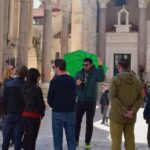
Two things I especially like: the focus on UNESCO-listed Diocletian’s Palace spaces (cellars, Peristyle, Vestibulum, and more), and the fact that the guide, Anita, brings the story alive in clear English with a local touch. A small-group format also keeps the pace human and the questions flowing.
One thing to consider: the tour is only about 1.5 hours, so if you like long stops and slow wandering, you may want to save extra time for the sites that catch your eye most.
In This Review
- Key highlights you will feel right away
- A 90-minute route that turns Split into Rome, minus the stress
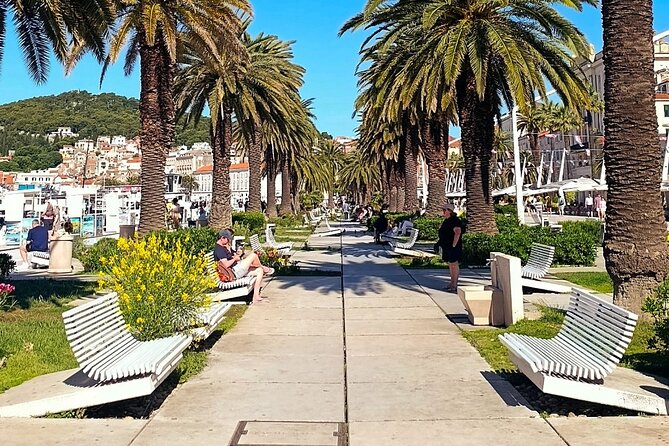
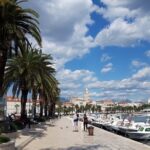
- Riva Harbor: where the palace waterfront became your promenade
- Diocletian’s cellars and the palace substructures you can actually picture
- Peristyle: the emperor’s square, now your photo-friendly time machine
- A small Roman structure with extra-cost interior access
- Vestibulum of Diocletian’s Palace: the acoustics lesson
- Triklinij: the emperor’s dining room and the idea of carpe diem
- Mausoleum turned cathedral, then the Golden Gate’s defensive logic
- Grgur Ninski statue: the legend you can act out
- Narodni Trg and Fruit Square: the layers after the empire
- Price and value: why this feels fair for what you get
- Before you go: the little things that make the tour easier
- Should you book this Split History Walking Tour?
- FAQ
- How long is the Split History Walking Tour – Rome away from Rome?
- What is the price per person?
- Is the tour offered in English?
- What group size should I expect?
- Is there a mobile ticket?
- Where do I meet, and where does the tour end?
- Can I get a refund if my plans change?
- Are service animals allowed, and is it suitable for most people?
Key highlights you will feel right away
- Max 10 travelers, so you get real guide attention, not a herd-in-a-hurry.
- Diocletian’s Palace in one loop, including cellars, Peristyle, Vestibulum, and Triklinij.
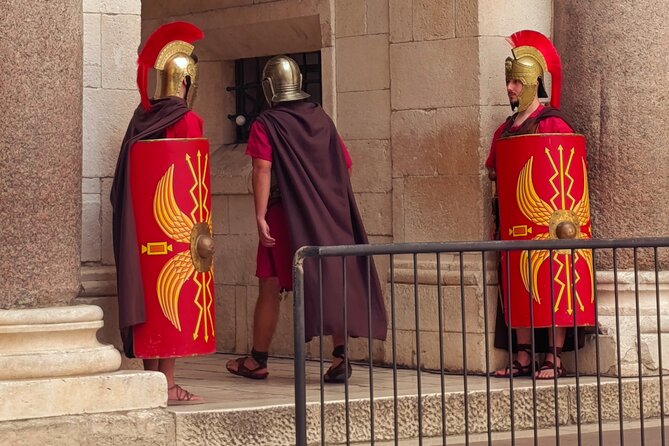
- How the military camp became daily life, then later a cathedral, all in one storyline.
- Klapa singing context tied to the Vestibulum acoustics.
- Local legends and photo moments, especially around Grgur Ninski’s golden toe.
A 90-minute route that turns Split into Rome, minus the stress
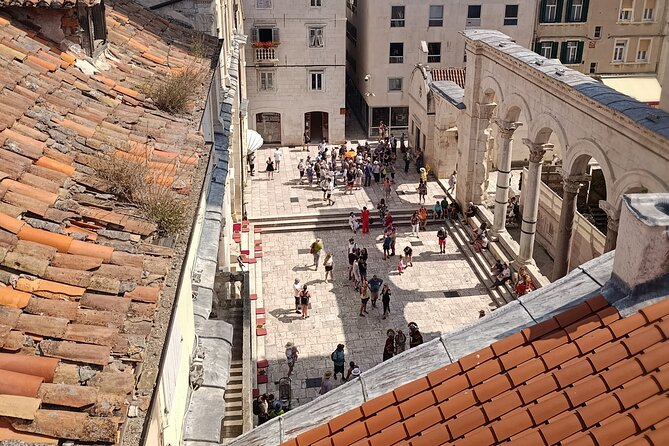
Split can feel like it is always under layers. The oldest parts do not sit behind museum ropes, they run along the promenade, between apartments, and through the squares where people meet after work. This tour gives you a clean path through that complexity without making you memorize dates.
You start with the seaside edge, then work your way into the palace core. You end back out in city squares where the story keeps moving beyond late antiquity. It is the kind of walking that helps you get your bearings fast, and then later you can roam on your own with a stronger sense of what you are looking at.
The group stays small, with a maximum of 10 people, which matters in a place like this. Tight corridors and busy streets can turn a crowded tour into a line shuffle. Here, you get more breathing room, and the pace feels designed for actually seeing.
Riva Harbor: where the palace waterfront became your promenade
The first stop is Riva Harbor, where you meet the guide and begin at the waterline. The key idea the guide works on is simple: this promenade did not start as a leisure walk. It evolved from a palace waterfront into something local residents treat like their living room.
Even if you have seen photos of Split’s waterfront, this start reframes it. You start noticing how the shoreline links to the palace’s original presence, and you begin to understand why people keep gathering here. The harbor area is quick, about 10 minutes, so it works as a “warm-up lens” for everything that comes next.
Practical note: this area is open and active, so it is a good place for your brain to kick into city mode before you go into the palace spaces.
More Walking Tours in Split
- Split: Old Town and Diocletian Palace Walking Tour★ 4.9 · 4,727 reviews
- Walking Tour of Split and Diocletian’s Palace★ 5.0 · 2,588 reviews
- Krka Waterfalls tour with Trogir Walking tour and Krka panoramic boat cruise★ 5.0 · 1,659 reviews
Diocletian’s cellars and the palace substructures you can actually picture
Next comes the palace cellars, including the central area of Diocletian’s substructures. This is one of those stops where you will likely learn more in 10 minutes than you would by just roaming and taking guesses.
What makes this useful is that the guide frames the cellars as a functional part of the palace, not a random underground maze. You come out understanding why these vaulted complexes from late antiquity are so well preserved in the wider world. That vaulting is not just impressive engineering, it is also part of how the palace worked and how it lasted.
This is also where the tour earns its value. Many walking tours rush famous exteriors. Here, you are spending real time on the underpinnings that explain how the palace could transition from imperial project to reused city space over centuries.
Peristyle: the emperor’s square, now your photo-friendly time machine
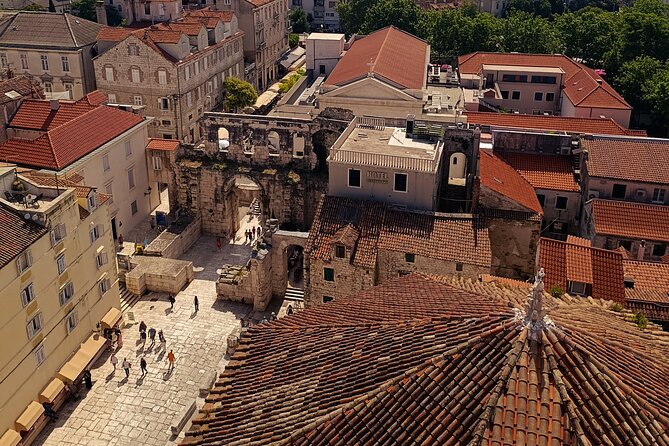
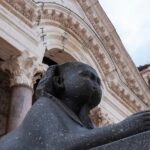
At the Peristyle of Diocletian’s Palace, you step into the great open square ringed by columns. The sensation you are supposed to get is about how power was staged. The guide explains what it would have felt like to participate in adoration of an emperor, arriving and moving through the spaces set up for viewing.
You also connect the palace layout to the bigger city grid. The guide points out Cardo and Decumanus, the two main street lines, and shows how these routes transformed over centuries as architectural styles changed around them. This is a “map in your head” moment. After this, when you later walk the old town, you will recognize the logic behind street directions.
If you like architecture, this stop is a highlight for a reason. It is also one of the stops where you can pause for a good look before moving on, about 15 minutes.
A small Roman structure with extra-cost interior access
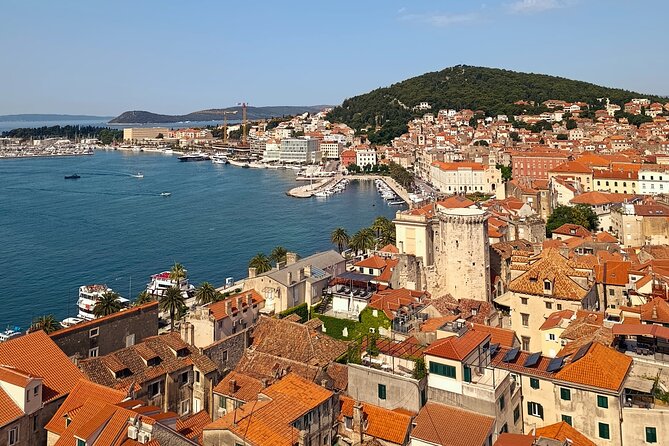
Just a few steps away, you will see a beautiful piece of antiquity tucked between houses. It is one of those “how is this here?” objects. The guide connects it to British architect Robert Adam, who visited Split in the 18th century and included it among Europe’s most beautiful monuments.
Here is the practical angle: the stop is designed so you understand the exterior and context on the spot. Visit to its interior is available for an additional fee, so you can choose whether you want to spend money to go further or keep your time budget tight. Either way, you get the meaning first, which is the part that often gets skipped.
More marble lanes taken slowly:
- Split & Diocletian’s Palace Walking Tour
★ 5.0 · 1,125 reviews - Walking Tour of Split with a ‘Magister’ of History
★ 5.0 · 1,122 reviews - Split Walking Tour with Professor of History
★ 5.0 · 926 reviews - Split: Diocletian Palace & Old Town Guided Walking Tour
★ 4.7 · 882 reviews
Vestibulum of Diocletian’s Palace: the acoustics lesson
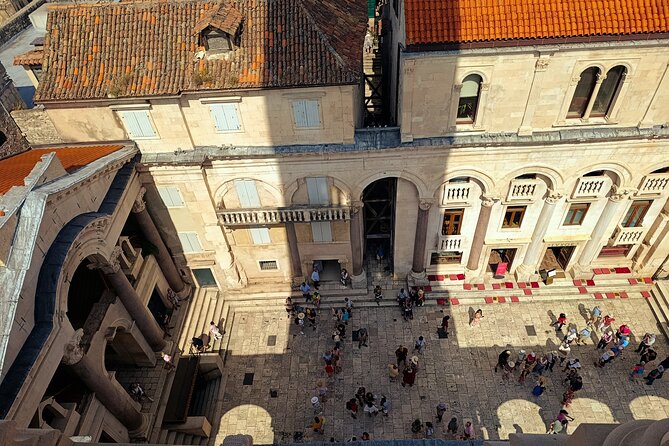
Then you reach the Vestibulum of Diocletian’s Palace, a circular building with an open ceiling. The guide stresses two things: the structure as a lobby leading into residential quarters, and the way it performs acoustically.
The acoustics point is not just trivia. It explains why this space gets used by klapa singing groups, which preserve Dalmatian a cappella style of singing. The guide ties it to UNESCO protection, giving you a reason to pay attention even if you are not a classical music person.
This stop is quick, about 10 minutes, but it changes how you listen in Split. If you hear singing later, you will know why this kind of space matters.
Triklinij: the emperor’s dining room and the idea of carpe diem
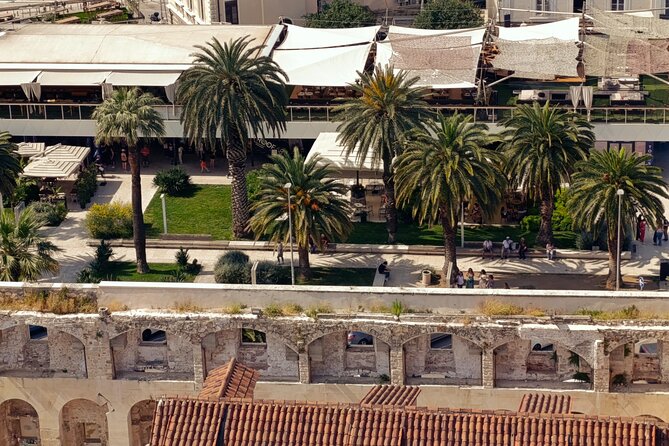
Next is Triklinij, the area that shows what remains of an emperor’s dining room. You will get a sense of Roman-style dining and, importantly, the guide uses that to talk about daily rhythm, what they ate, and why the vomitorium gets mentioned so often.
The ending message lands with a phrase you will remember: carpe diem. Even if that motto is famous, it hits differently when it is attached to a specific room and a specific way people used public and private space in their day-to-day life.
This part also keeps the pace moving, about 10 minutes, so you do not get stuck in one spot too long.
Mausoleum turned cathedral, then the Golden Gate’s defensive logic
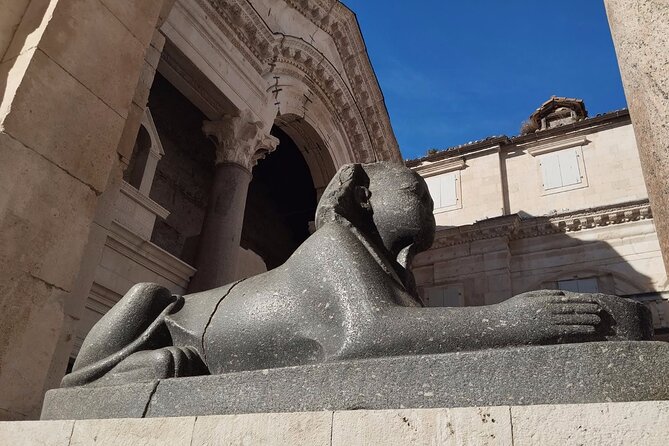
As the tour moves along, it shifts from late Roman to later reuse. The stop near Diocletian’s Mausoleum explains how the mausoleum became an impressive cathedral. The guide also points out the elegant bell tower on the Dalmatian coast, a visual cue that time has layered over the original imperial form rather than erased it.
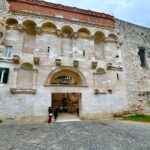
Then comes the Golden Gate, where the story turns more military. You step into the propugnaculum, and the guide shows why entering the palace built as a military camp was not meant to be easy. You will also see the best-preserved wall of the palace.
A neat detail here is the mention of the oldest chapel in Split being hidden nearby. That is exactly the kind of clue that makes you look differently as you pass through old streets later.
This section is about 10 minutes, so it stays punchy, but it gives you a strong sense of how the palace kept changing roles.
Grgur Ninski statue: the legend you can act out
No matter how many times you have seen this statue in photos, seeing it in context feels different. Grgur Ninski is both a landmark and a tradition, and the guide explains why the statue matters.
You will also learn about the sculptor, Ivan Meštrović, who is mentioned as one of the best sculptors in the world. Then the practical fun begins: there is a legend that your wish will come true if you touch his golden toe, so people do exactly that, and yes, it makes a great photo moment.
At about 5 minutes, it is short, but it is memorable. Also, it is one of those stops where you get a local habit explained, not just a stop listed.
Narodni Trg and Fruit Square: the layers after the empire
The tour finishes by moving into two squares that show Split after the palace story. First is Narodni Trg, the main square of the old town today. The guide notes that the square’s name changed multiple times, which is a reminder that cities are shaped by politics as much as by architecture.
Then you reach Fruit’s Square (Trg Brace Radic), where you can see a striking example of baroque architecture in Split. This stop also connects Split’s survival story to the Venetian Republic, especially how Venice protected Split from Ottoman Empire attacks. You also hear about Marko Marulić, described as the father of Croatian literature, and how he connects to local identity.
This is where the tour does a smart job of expanding your view. You are not only learning about one emperor and one palace. You are learning why the city kept reinventing itself as different powers and cultures arrived.
The ending point is by Gelateria Voćni trg on Trg Braće Radić (Fruit Square), so you finish in a place where it is easy to keep walking or grab a snack.
Price and value: why this feels fair for what you get
At $24.03 per person and around 1 hour 30 minutes, this walk sits in the lower range for a guided deep look at UNESCO-listed spaces. The value jumps when you factor in what is actually included.
You get a professional, licensed guide who lives in Split, and you get sightseeing of the 1700-year-old Diocletian’s Palace UNESCO site. Admission tickets are marked as free for the main listed areas, which matters because even small entry fees add up when you are trying to see more than just the outside.
The small group size, max 10 travelers, is another value driver. You are not fighting for attention, and the guide can slow down for key story beats like Peristyle power staging and Vestibulum acoustics.
One more thing: the tour uses a mobile ticket, which is handy in a city where you likely will be moving between attractions using your phone anyway.
If you want to minimize planning stress, this is a good pick. If you want full-day wandering and long museum-style visits, you might choose a longer format instead.
Before you go: the little things that make the tour easier
A few practical pointers based on how this kind of palace-and-old-town loop works.
- Wear comfortable shoes, because you will move through multiple palace spaces and then back out into active city squares in one tight window.
- Expect English. The tour is offered in English, so you can rely on that for the storytelling and structure.
- Use the mobile ticket. You do not need to print anything.
- Plan for weather. Since several parts are outdoors near the harbor and squares, bring a light layer even in warmer months if you are the type to get chilled.
If you like to lock in good times, booking ahead helps. This one averages being reserved about 22 days in advance, so it is not a last-minute-only option.
Should you book this Split History Walking Tour?
Book it if you want a fast, guided way to understand Split’s old core without getting lost in jargon. I especially recommend it if you enjoy architecture plus culture stories, because this walk connects spaces to use, like how the palace became a cathedral and how the Vestibulum fits into klapa singing.
Skip or supplement it if your priority is long free time inside each monument. This tour is structured, so you get strong context but not hours of independent exploring. You will likely want to return on your own after you know what you are looking at.
If you are torn between taking a guided loop or doing everything solo, this is a strong middle choice: enough time to build real understanding, small group so you stay engaged, and key palace zones covered in sequence.
FAQ
How long is the Split History Walking Tour – Rome away from Rome?
The tour lasts about 1 hour 30 minutes.
What is the price per person?
The price is $24.03 per person.
Is the tour offered in English?
Yes, the tour is offered in English.
What group size should I expect?
This tour/activity has a maximum of 10 travelers.
Is there a mobile ticket?
Yes, the tour uses a mobile ticket.
Where do I meet, and where does the tour end?
You start at Split sign 21000, Grad, Split, Croatia. The tour ends at Gelateria Voćni trg, Trg Braće Radić, 21000, Split, Croatia.
Can I get a refund if my plans change?
Yes. You can cancel for a full refund up to 24 hours in advance of the experience’s start time.
Are service animals allowed, and is it suitable for most people?
Service animals are allowed, and most travelers can participate. The tour is also near public transportation.
Venetian Stones, Roman Streets

Latest arrivals logged at Split





Historical Tours, compared.
Walking Tour of Split with a ‘Magister’ of History
Read our review →
Split Walking Tour with Professor of History
Read our review →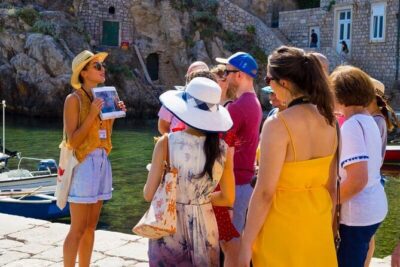
Split History and Gastro Small-Group Tour with Food and Drinks
Read our review →
PREMIUM Emperor’s Walking Tour for History Lovers + Museum
Read our review →Browse the lists this tour appears in