
Reviewed · HISTORICAL TOURS
Split Old Town History Walking Tour
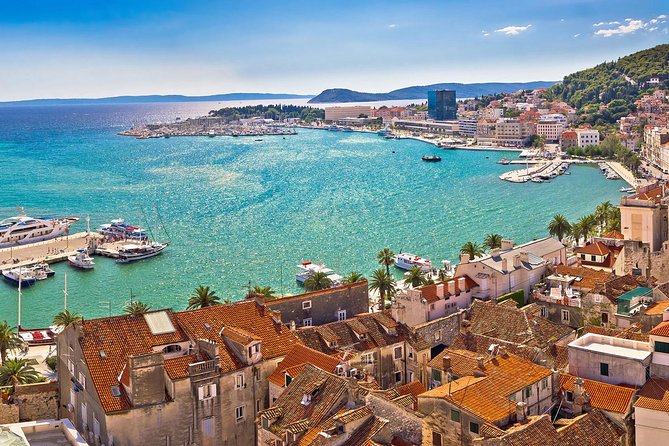
Diocletian built Split, then went underground. This 90-minute Split Old Town History Walking Tour threads from the seaside promenade into Diocletian’s Palace substructures, then back out through the Golden Gate, with sea views the whole time.
I love the licensed local guide angle. You get clear storytelling about what you are actually looking at, plus practical tips for where to eat, drink, and explore next. I also like that many major stops are marked as admission ticket free, so you are paying mainly for guide time, not monument entry fees.
One possible drawback is the pace. You cover a lot of palace highlights quickly, so if you want a slower, deeper history class in the complex, you might want extra time on your own after the tour, especially around Diocletian’s Palace. Also, despite being described as operating in all weather, the operator notes it can be canceled due to poor weather, with an alternative date or full refund.
In This Review
- Key things to know before you go
- Why this short Old Town tour makes sense in Split
- Riva promenade meetup: start where the city breathes
- Obala Hrvatskog narodnog preporoda: your orientation to Split’s layout
- Diocletian’s Palace substructures: the cellars that explain the whole palace
- Saint Domnius: Roman columns meet a cathedral built on power
- Vestibulum and the dome acoustics, plus the chance of klapa
- Temple of Jupiter, now a baptistery: sculptures and a preserved sarcophagus
- Triklinij banqueting hall: Roman dining culture in a real room
- Golden Gate and Gregory of Nin: exit the palace like a local
- Narodni trg (Pjaca) and Fruit’s Square: Venetian faces and everyday life
- Back to the Riva: closing the loop with sea views
- Price and value: what $30.23 gets you in the real world
- Guides and pace: you’ll get the best results by asking questions
- Should you book this Split Old Town History Walking Tour?
- FAQ
- What is the meeting point for the tour?
- How long is the Split Old Town History Walking Tour?
- Is the tour offered in English?
- What is included in the price?
- Are food and drinks included?
- Is admission included for the sites on the route?
- What happens if weather is poor?
Key things to know before you go
- A tight 1.5-hour loop that starts and ends on the Riva promenade, so you are never far from the waterfront.
- Free entry is built in at each stop (cathedral, cellars, temple, and palace chambers are listed as ticket free for this tour).
- You walk through different layers of the same place, Roman substructures, later Christian use, and everyday Split squares.
- Roman daily life shows up in the details, from banquets in the triklinij to acoustics in the vestibulum.
- Guides like Anita, Iva, Toni, Petra, Katarina, and Rocco get praised by name for passion, clarity, and answering questions.
- Maximum 20 people keeps it small enough to hear your guide without getting swallowed by a big crowd.
Why this short Old Town tour makes sense in Split
Split’s Old Town can feel like a maze until someone gives you a map you can walk. This tour does that fast. You get a guided route that links the obvious big sights, like Saint Domnius, with the less flashy but more interesting pieces, like the palace cellars and the vestibulum dome.
At $30.23 per person for about 1 hour 30 minutes, the real value is not the monuments themselves, since the stops are marked as admission ticket free. The value is the guide who can translate what you are seeing into a story you can remember, and the local recommendations you can use right after.
If you like your sightseeing to be efficient, this fits your style. If you love slow wandering and long stays in one area, treat this as your orientation walk, then plan your personal deep dive afterward.
Riva promenade meetup: start where the city breathes
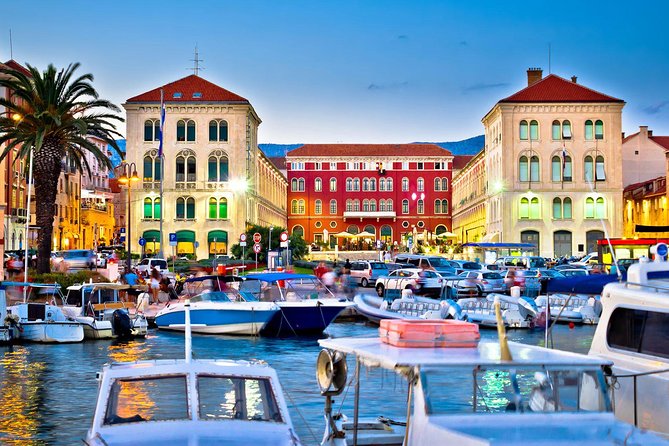
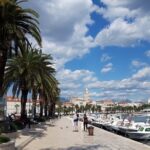
You begin at Obala Hrvatskog narodnog preporoda 21, on Split’s Riva promenade. Even before you enter the palace complex, you are in the place locals see every day: the waterfront, the sea light, the rhythm of people moving through the center.
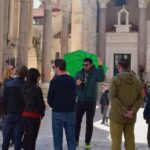
Your guide uses this stop to set the stage. You get a practical introduction to the city’s layout and what to watch for as you move inward toward Diocletian’s Palace. This matters because Split is not just old buildings sitting still. It is a living center, with centuries stacked on top of each other.
If you are the kind of person who hates being rushed, do not worry about being dropped into the palace with zero context. Starting on the Riva helps you orient quickly and feel less like you are “only passing through.”
More Walking Tours in Split
- Split: Old Town and Diocletian Palace Walking Tour★ 4.9 · 4,727 reviews
- Walking Tour of Split and Diocletian’s Palace★ 5.0 · 2,588 reviews
- Krka Waterfalls tour with Trogir Walking tour and Krka panoramic boat cruise★ 5.0 · 1,659 reviews
Obala Hrvatskog narodnog preporoda: your orientation to Split’s layout
That first part of the promenade stop is short, but it is doing important work. You learn how the city’s streets relate to the palace and why certain buildings feel connected, even when they do not look connected at first glance.
For me, the best guided starts are the ones that teach you how to notice. Here, you start with sea views and a lively local atmosphere, then you shift your attention to the structures that control the geometry of the Old Town. Once you see that, everything inside starts making more sense.
One practical note: the meeting point is near public transportation. That makes it easier to fit into a day that also includes beach time or a ferry arrival.
Diocletian’s Palace substructures: the cellars that explain the whole palace
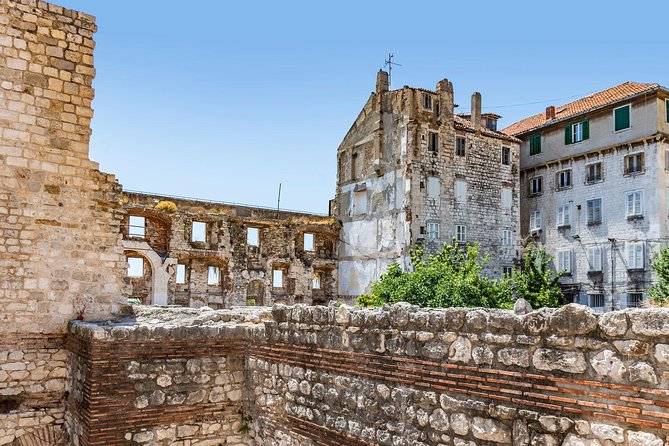
Next you enter the well-preserved substructures beneath the palace. This is one of the smartest stops on the route because it turns “ruins” into function. Instead of only admiring what is above, you see the underground chambers that helped support the emperor’s residence.
You do not just look around. Your guide connects these spaces to how people lived in the Roman Empire, and why the underworld level mattered for the palace’s stability and daily operations. It also gives you a different sense of scale. The palace above can feel huge or mysterious. The cellars make it feel engineered and intentional.
The main consideration here is simple: it is a walking tour with limited time at each point. You will see highlights, but not every corner. If you want to study stonework closely, arrive with the mindset that the tour gives you the “what and why,” and you come back later for “how exactly.”
Saint Domnius: Roman columns meet a cathedral built on power
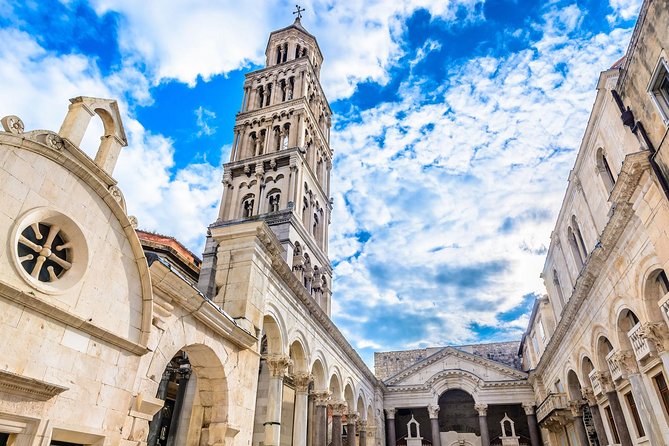
Then you step into the heart of the palace with the Cathedral of Saint Domnius. This stop is a lesson in continuity. Roman columns and architecture sit side by side with a cathedral that was once connected to imperial status, including its role as an emperor’s mausoleum.
What makes this moment click is that you can read the building like a timeline. You are not just looking at a place of worship. You are looking at a former symbol of Roman authority that later became part of Christian Split’s identity.
It is also one of the places where your guide’s explanations really earn their fee. The cathedral is visually impressive, but the story gives you reasons to keep looking, not just snapping photos and moving on.
More marble lanes taken slowly:
- Split & Diocletian’s Palace Walking Tour
★ 5.0 · 1,125 reviews - Walking Tour of Split with a ‘Magister’ of History
★ 5.0 · 1,122 reviews - Split Walking Tour with Professor of History
★ 5.0 · 926 reviews - Split: Diocletian Palace & Old Town Guided Walking Tour
★ 4.7 · 882 reviews
Vestibulum and the dome acoustics, plus the chance of klapa
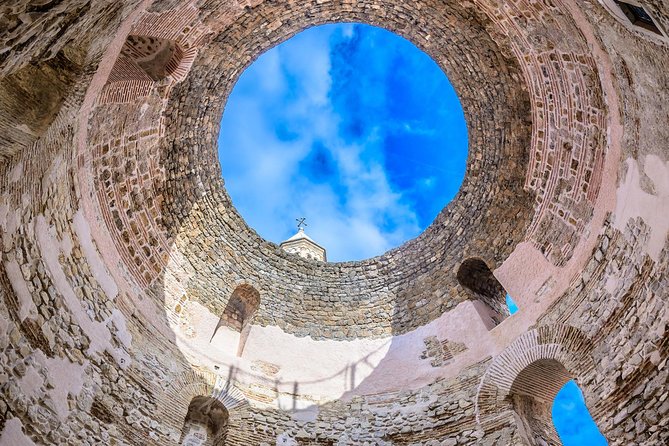
A quick stop at the vestibulum gets you under the circular open dome. This is a small window into a big idea: sound travels differently in older spaces, and buildings can shape music as much as streets shape conversation.
The tour mentions that if you are lucky, you might hear live klapa singers. Even if you do not catch singing, you still get a feel for the space as a performance room, not just a corridor.
I like this stop because it breaks the pattern of always seeing stone. You get something more sensory, and it helps the whole palace complex feel less like a museum and more like a stage built for human moments.
Temple of Jupiter, now a baptistery: sculptures and a preserved sarcophagus
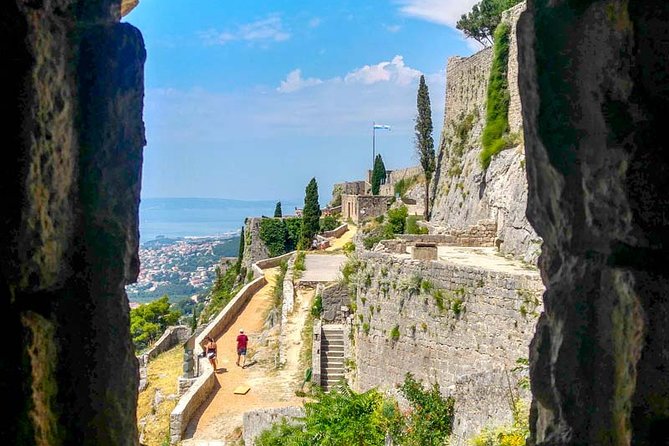
At the Temple of Jupiter, you see how Roman sites did not just get abandoned. They got repurposed. The temple is now a baptistery, and it comes with ancient sculptures and a preserved sarcophagus.
This stop is quick, but it gives you a very tangible reminder that history is not only about what survives. It is also about how later people reused what they inherited.
If you are someone who thinks of ancient artifacts as untouchable behind glass, this is a useful correction. You walk close to the objects and structures, guided by someone who can explain what you are seeing without turning it into a textbook.
Triklinij banqueting hall: Roman dining culture in a real room
Then you reach the triklinij, the banquet area where Diocletian hosted lavish meals. This is where the tour shifts from architecture to behavior.
Your guide explains Roman dining culture and imperial luxury, using the room itself as the evidence. Even with limited time, this stop helps you picture what “banquet” meant when the palace was a living residence, not a historic site.
A benefit of including dining is that it makes Roman history feel human. You start thinking about seating, hosting, and ceremony, not just emperors and dates. That is the kind of mental image that makes later independent exploring easier.
If you prefer facts with less storytelling, still stay engaged here. The room is the anchor, and the explanation gives it meaning.
Golden Gate and Gregory of Nin: exit the palace like a local
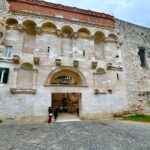
After the palace interior highlights, you exit through the grandest of the four palace gates, the Golden Gate. This is a satisfying transition point. You go from enclosed space to daylight, and you start feeling the Old Town open up around you.
Outside, you stop at the statue of Gregory of Nin. Then comes the local tradition: rub his toe for good luck. It is silly in the best way, and it is one of those small cultural habits that makes you feel connected to the city rather than only observing it.
This is also where your guide’s city tips become more practical. You are heading back toward squares and cafés, and you get guidance on where to linger next.
Narodni trg (Pjaca) and Fruit’s Square: Venetian faces and everyday life
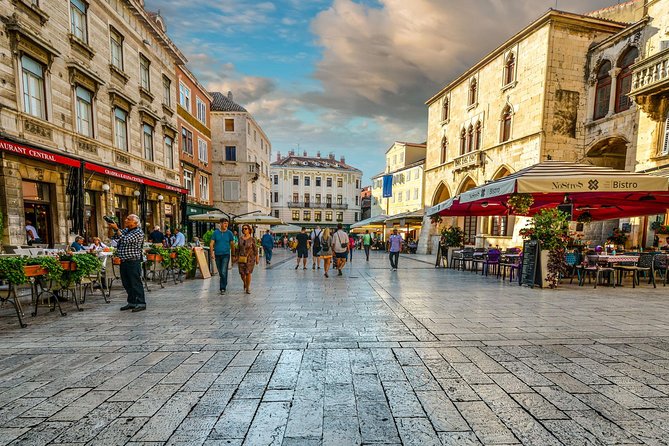
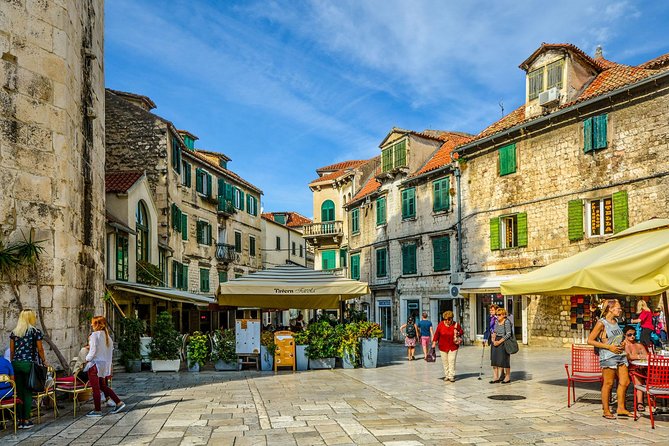
Next you stroll through Narodni trg, also known as Pjaca. The vibe here is about old city life: Venetian-era buildings around a historic square, plus an old city clock and cafés where people actually sit.
Then you move to Fruit’s Square, or Trg Brace Radic. The name comes from fruit markets once held there. Today the baroque palaces and the street energy keep the place feeling like a working part of Split, not a frozen set.
These square stops are short by design. Their job is to connect the palace story to modern street life. You finish with a sense of where you can slow down after the tour ends.
If you want a low-effort plan, pick one square and stay there with a drink for 20 to 30 minutes. The tour gives you context. Your job is to let it settle.
Back to the Riva: closing the loop with sea views
The tour ends where it begins, back at Obala Hrvatskog narodnog preporoda on the Riva. That loop matters. You see the same waterfront light after your brain has been trained to recognize layers of the city.
This return also makes it easy to keep moving. From the Riva you can head to beaches, find dinner, or connect to other parts of Split without needing a complicated transfer.
It is a nice finish because it turns the walk into a story arc, not just a checklist.
Price and value: what $30.23 gets you in the real world
For $30.23, you get a guided history route in English, about 1.5 hours long, with a small group size capped at 20 people. That small group limit is not a luxury feature. It affects the quality of the tour, because you are less likely to be stuck behind taller heads at key moments.
The other big value factor is what you do not pay for. Each stop on the route is listed as free with an admission ticket, including the cathedral and the palace substructures. So your money goes toward interpretation, not entrance fees.
You also do not get food or drinks included. That is normal for a walking tour, but it means your guide tips become more useful. After the tour, you should be ready to choose a place to eat without guessing.
If you are short on time in Split, this is a good “first day” option. You will come away with the main landmarks plus a mental map of how they connect.
Guides and pace: you’ll get the best results by asking questions
A big theme in the guide praise is passion and clarity. Names that show up often include Anita, Iva, Toni, Petra, Katarina, and Rocco. The common thread is that the guides explain what you are looking at, then answer questions in a way that makes the city feel personal.
The pace is brisk. One person noted the tour spent a lot of time in the palace area, which makes sense since so many of the highlights sit there. Another person wished there was a bit more time on history. That is your cue to do this with the right expectations.
You should treat this as a guided highlights walk, not an all-day seminar. If you want extra history, use the tour to pick your “must return” spots and add independent time after.
Also, one real caution from the reviews: in a small number of cases, people reported issues like cancellation confusion or a missing booking record at the desk. You can protect yourself by keeping your confirmation and showing it promptly at the meeting point, even if you think the operator already has everything.
Should you book this Split Old Town History Walking Tour?
I think you should book if you want a smart, efficient way to understand Split’s center. It is especially good if you are pairing this with beach time or day trips and you do not want to spend the whole day reading plaques.
You should also book if you like walking tours that focus on places with function, not just photo spots. Cellars, banqueting rooms, domes with acoustics, and repurposed Roman spaces give you more than one angle on the same monument complex.
Skip it or plan extra time if you want slower, deeper explanations. The route is tight, and some stops are short on purpose.
If you can do it early in your stay, you will get the most out of it. The guide will give you a framework you can use all day, from where to eat to where to wander next.
FAQ
What is the meeting point for the tour?
The tour meets at Obala Hrvatskog narodnog preporoda 21, 21000 Split, Croatia, and it also ends back at the same meeting point.
How long is the Split Old Town History Walking Tour?
The duration is about 1 hour 30 minutes.
Is the tour offered in English?
Yes, the tour is offered in English.
What is included in the price?
The tour includes a professional licensed local guide.
Are food and drinks included?
No. Food and drinks are not included.
Is admission included for the sites on the route?
Each stop is listed as admission ticket free, so you should not need separate tickets for the listed sites during the tour.
What happens if weather is poor?
The experience can be canceled due to poor weather. If that happens, you will be offered a different date or a full refund.
Venetian Stones, Roman Streets

Latest arrivals logged at Split





Historical Tours, compared.
Walking Tour of Split with a ‘Magister’ of History
Read our review →
Split Walking Tour with Professor of History
Read our review →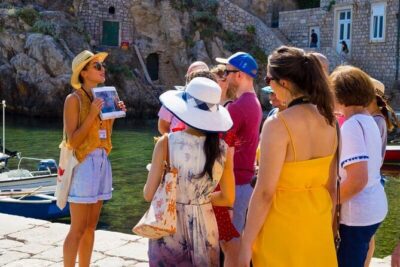
Split History and Gastro Small-Group Tour with Food and Drinks
Read our review →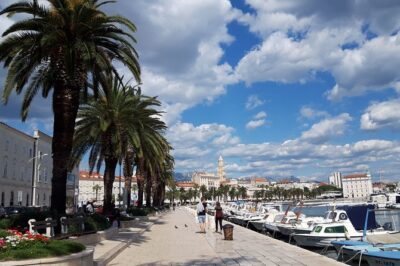
PREMIUM Emperor’s Walking Tour for History Lovers + Museum
Read our review →Browse the lists this tour appears in