
Reviewed · HISTORICAL TOURS
Split: Walking tour of Split with a ‘Magister’ of History
Rome lives inside Split.
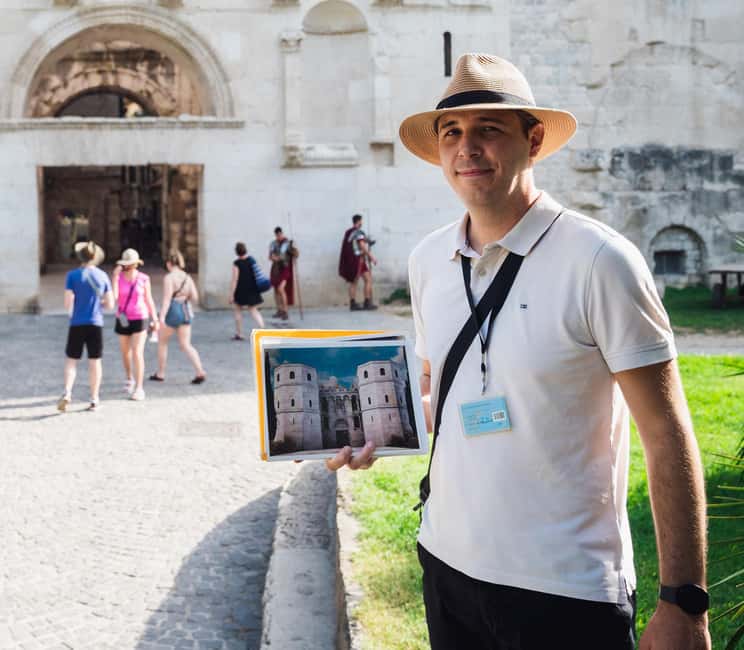
This walking tour is built around the Diocletian’s Palace and the way its Roman walls turned into everyday Split life, with 3D reconstructions that make the vanished buildings feel close. You start at the seaside Bronze Gate, then work your way through Roman, medieval, and Venetian layers, finishing near the Golden Gate.
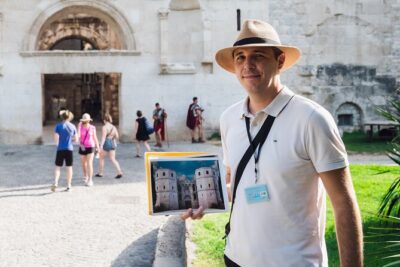
What I like most is the way Toni teaches. He is Toni Šare, a local who was born and lives in Split, with a Master’s degree in history and a former teacher background, so the stories come with structure, not just facts. I also like the interactive style, you get encouraged to ask questions, and the pace keeps moving but never feels rushed.
One thing to consider: this is a walking tour that runs rain or shine, and it is not for wheelchair users or people over 95. You will be on your feet through narrow palace passages and gates, so wear solid shoes and plan for a steady stroll.
In This Review
- Key highlights you will feel right away
- Why Diocletian’s Palace works so well on foot
- Meet Toni at the Bronze Gate, then start with the Roman entry point
- Diocletian’s Cellars and Basement Halls, where the palace feels practical
- Peristil square, Mausoleum views, and why courtyards tell the biggest stories
- Vestibule and Triklinij, Roman rooms made understandable
- Cathedral of Saint Domnius and Jupiter’s Temple, modern faith beside Roman stone
- Silver Gate to Golden Gate, the palace edges that explain medieval and Venetian Split
- 3D reconstructions: the secret sauce for understanding ruins
- Price, pacing, and value for a 110-minute walking tour
- What you should bring and wear for an easy, comfortable day
- Who this tour suits best in Split
- Should you book this Split history walk?
- FAQ
- How long is the Split walking tour?
- Where does the tour start?
- Is the tour in English?
- What is included in the price?
- Do you enter any paid museums or sites?
- What sites will you see during the walk?
- Will the tour run in bad weather?
- What should I bring?
- Is the tour wheelchair accessible?
- Who is it not suitable for?
- What is the cancellation policy?
Key highlights you will feel right away
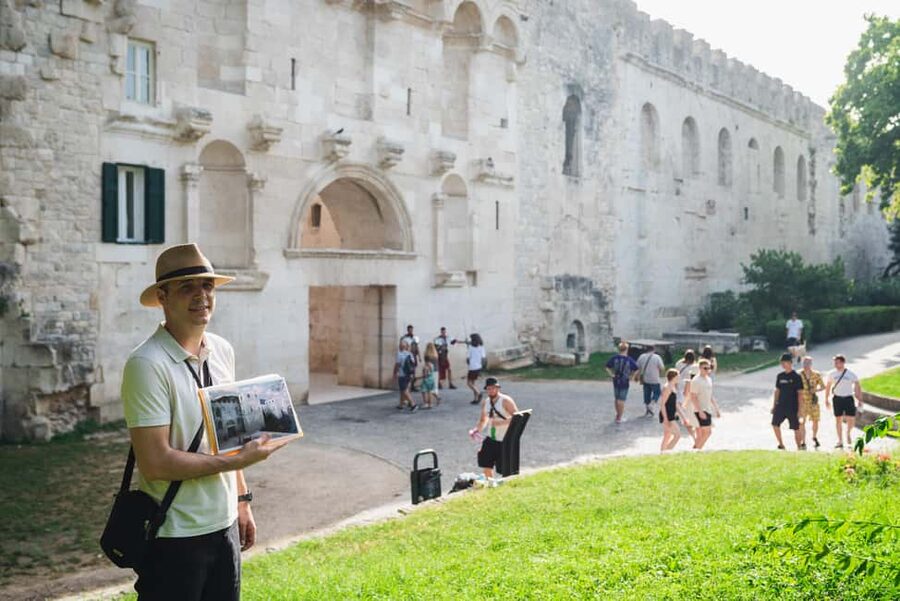
- Toni Šare’s teacher style: questions welcome, answers stay clear and organized
- 3D reconstructions during the walk: you can picture what the palace looked like before it was ruins
- Palace first, then time layers: Roman to medieval and Venetian to modern Split
- Quiet, shaded pacing: he tends to move you toward calmer corners when possible
- Iconic stops in one loop: Peristil square, Cathedral of Saint Domnius, and the major gates
- No extra museum detours: you focus on the palace core without paid-site wandering
Why Diocletian’s Palace works so well on foot
Split can feel like two cities at once. You have a modern seaside town, and then, suddenly, you are walking through a Roman fortress that became a neighborhood. This tour is smart because it uses that contrast. You do not just see monuments, you see how people reused them, built over them, and carried the city forward.
Diocletian’s Palace is also ideal for a guided walk because the layout tells a story. Gates lead into spaces, spaces lead into courtyards, and courtyards explain why certain buildings ended up where they did. When you understand the “why,” the palace stops looking like random stone and starts looking like a functional plan.
I also like that you are not stuck staring at a single viewpoint. You move through multiple iconic parts, so your brain keeps updating its picture of the past as you go from gate to hall to square.
Meet Toni at the Bronze Gate, then start with the Roman entry point
You begin at Obala hrvatskog narodnog preporoda 22, at the Bronze Gate of Diocletian’s Palace, the southern seaside entrance from the Riva promenade. If you get oriented by finding the Riva first, the gate is a short, direct walk from there.
That first entrance matters. Starting at a gate keeps the tour grounded in movement and access, not just sightseeing. Toni typically starts by placing you in context, then guides you through the early Roman steps of the palace so later stops make more sense.
You will also get a short first segment that sets expectations for the route. The idea is simple: start at the oldest core and gradually move through time, so you can feel the city layering rather than memorizing a timeline.
More Walking Tours in Split
- Split: Old Town and Diocletian Palace Walking Tour★ 4.9 · 4,727 reviews
- Walking Tour of Split and Diocletian’s Palace★ 5.0 · 2,588 reviews
- Krka Waterfalls tour with Trogir Walking tour and Krka panoramic boat cruise★ 5.0 · 1,659 reviews
Diocletian’s Cellars and Basement Halls, where the palace feels practical
One of the most memorable parts is the brief transition into the palace’s lower spaces, including the Diocletian’s Cellars area and then the Basement Halls. Even without a long museum-style visit, these spaces change how you read the palace. You start seeing stone as infrastructure, storage, and engineering, not only as scenery.
This is also where the tour’s teaching style really comes through. Toni pauses to answer questions, and the pacing gives you enough breathing room to ask the kind of questions you normally save for later and forget. If you ever wondered how a fortress could turn into a lived-in town, this stop is a strong early answer.
A practical note: your route stays close to the palace passages, so wear shoes with good grip. The walk is not presented as an extreme adventure, but you are still moving across uneven, historic surfaces.
Peristil square, Mausoleum views, and why courtyards tell the biggest stories
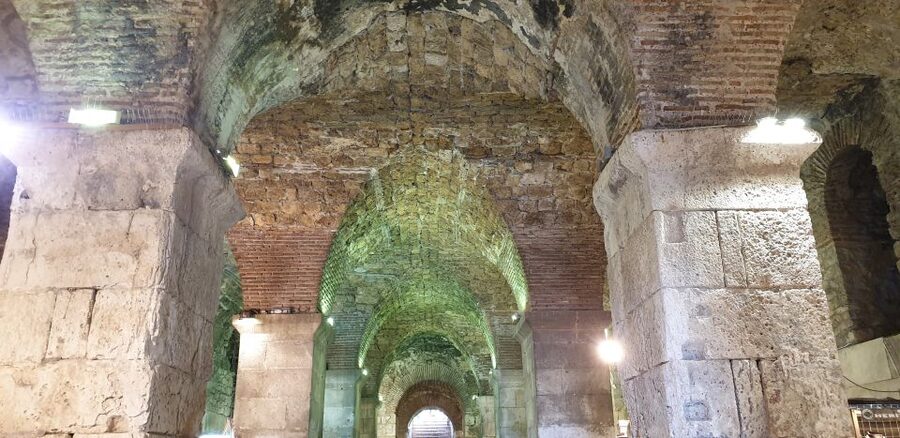
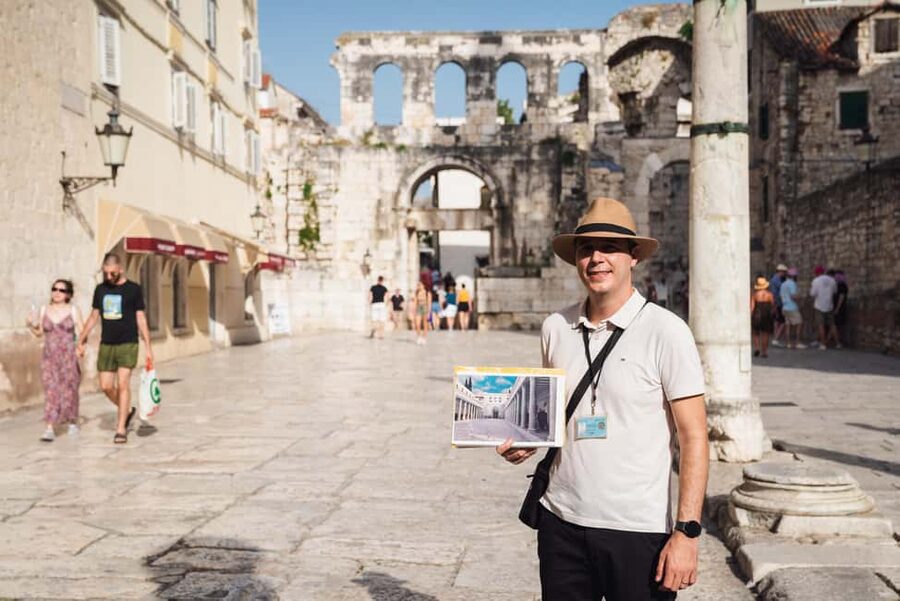
From the lower spaces, the tour rises into the palace’s showpiece zone, the Peristil. This is where the Mausoleum of Diocletian, the Temple of Jupiter, and the Vestibule come into focus. Courtyards are a clever teaching tool because they bring multiple buildings into a single frame. You can see how public and private spaces connect.
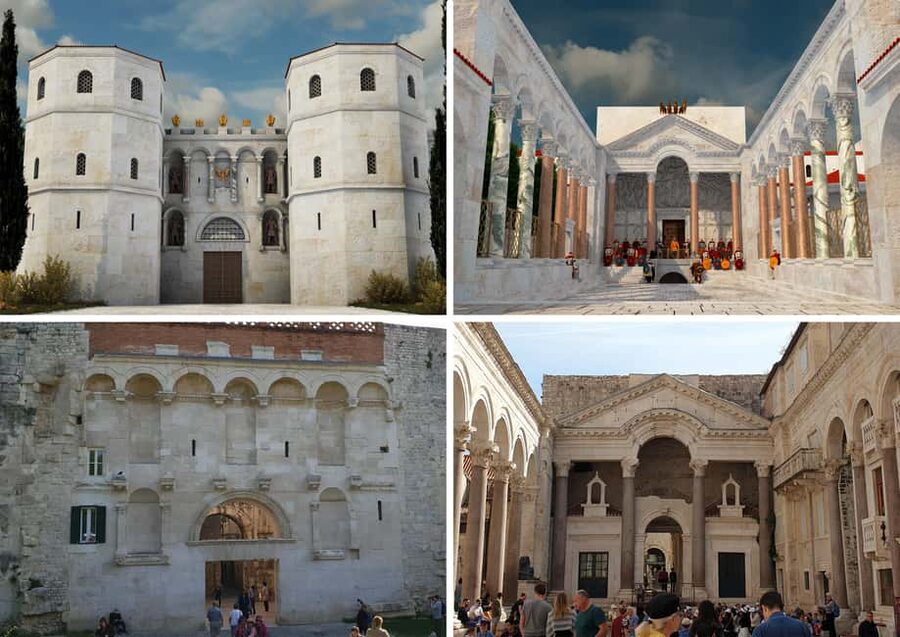
Toni’s 3D reconstructions play a key role here. Stone ruins can be hard to mentally rebuild, especially if you have never studied Roman architecture. The reconstructions help your eyes and your imagination agree on scale, placement, and shape. The result is that when you look at the actual site, you understand what you are seeing instead of guessing.
I also like that the tour emphasizes “preserved” elements and not only dramatic highlights. That makes the experience feel more real, because the palace today is a mix of intact structure, adapted rooms, and partial traces. You are not just chasing wow moments, you are learning how the palace survives and changes.
Vestibule and Triklinij, Roman rooms made understandable

After Peristil, you move through the Vestibul and then toward Triklinij, with guided stops that explain what these spaces were for. These names may sound technical at first, but the tour approach keeps them human. You are shown how rooms connect to daily life and how the palace design shaped movement and access.
This is a good section if you like learning through specifics. Toni can point to where something sat or how a space functioned, then connect that to what you can still sense in the remains. Even if you do not remember every term, the mental picture tends to stick.
There is also a subtle benefit to this structure. If you come into Split with the idea that Diocletian’s Palace is only Roman, the later room explanations help you see it as an evolving setting. The palace was meant for one life, then it adapted for the next. This walk keeps that idea clear, step by step.
More marble lanes taken slowly:
- Split & Diocletian’s Palace Walking Tour
★ 5.0 · 1,125 reviews - Walking Tour of Split with a ‘Magister’ of History
★ 5.0 · 1,122 reviews - Split Walking Tour with Professor of History
★ 5.0 · 926 reviews - Split: Diocletian Palace & Old Town Guided Walking Tour
★ 4.7 · 882 reviews
Cathedral of Saint Domnius and Jupiter’s Temple, modern faith beside Roman stone
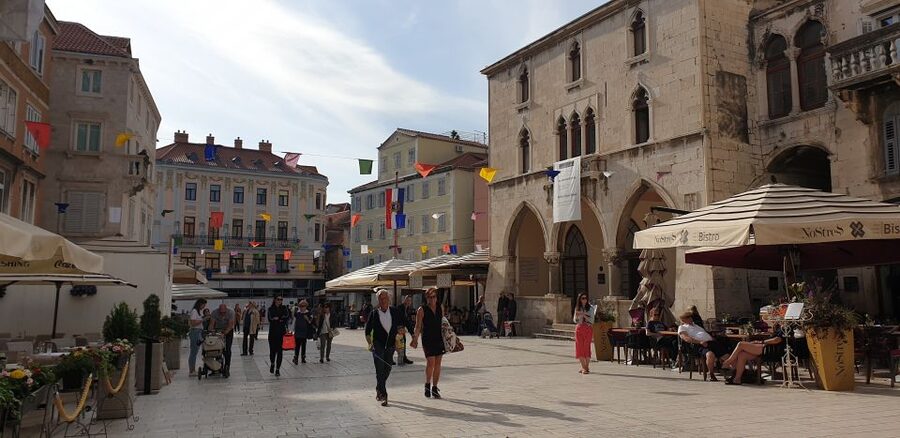
The Cathedral of Saint Domnius is a key pass-by moment, followed by a stop connected to Jupiter’s Temple. These are big-name sites, but the tour treats them as part of the same layered story, not separate attractions.
Why this works for you is that it prevents the usual “photo sprint.” Instead of treating the cathedral and the Roman temple as two unrelated stops, you understand them as evidence of what kept being valued. Places of worship and symbolic architecture tend to outlast political changes, and Split is a strong example of that.
If you like context, this is also a section where Toni’s local perspective helps. He can connect the architecture to the way the city kept functioning after centuries of change. You start to see how Split’s identity formed, not just what each era left behind.
Silver Gate to Golden Gate, the palace edges that explain medieval and Venetian Split
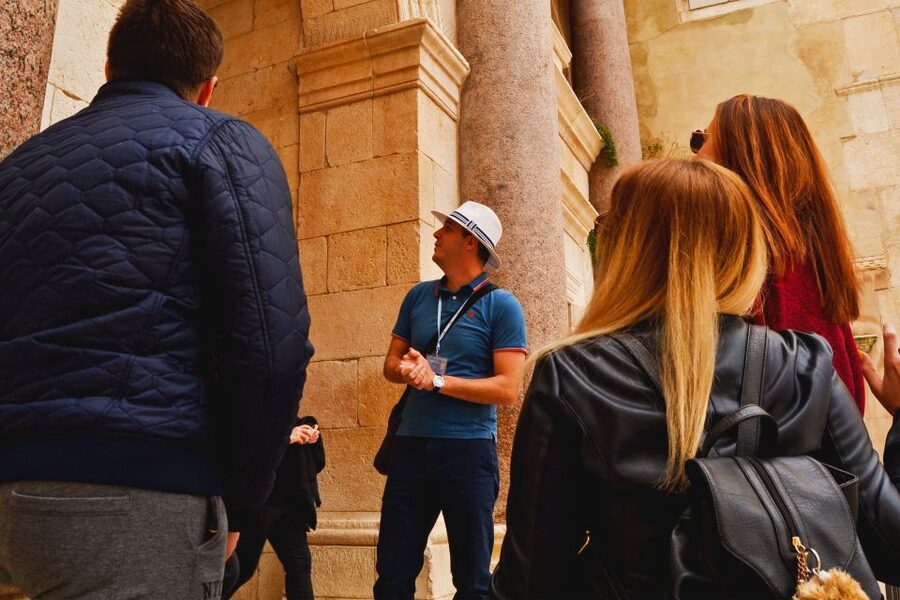
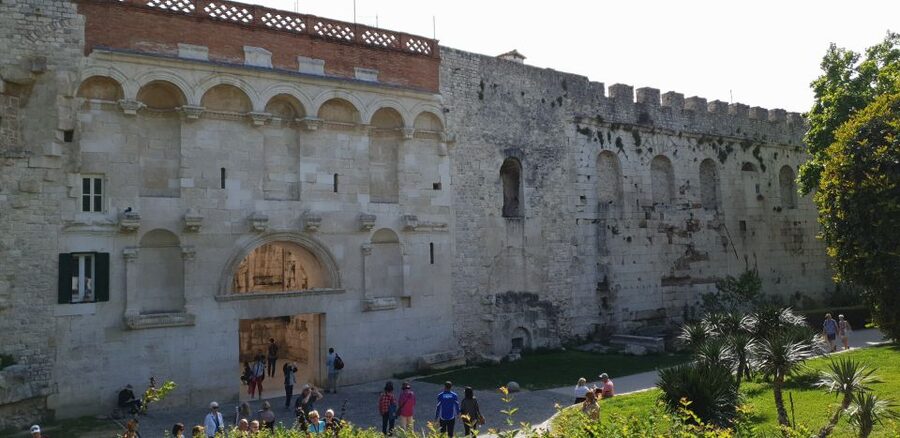
Near the end, you transition toward the palace exits, including the Silver Gate pass-by and then the Golden Gate, where the tour finishes. These gates are more than photo backdrops. They are city wiring, the boundaries where the palace met the surrounding evolution.
Toni guides you through remnants of medieval houses that were preserved through time, and the route also reflects Venetian and medieval heritage beyond the Roman core. You get the sense that the palace did not disappear. It became the framework on which later city life built.
One charming detail that I found especially fitting for this tour is the focus on recognizable landmarks, like the statue of Bishop Gregory of Nin along the north wall of the palace area, visible as you head toward the main square zones. It is a reminder that even inside Roman walls, Split’s story keeps producing new figures that people keep honoring.
3D reconstructions: the secret sauce for understanding ruins
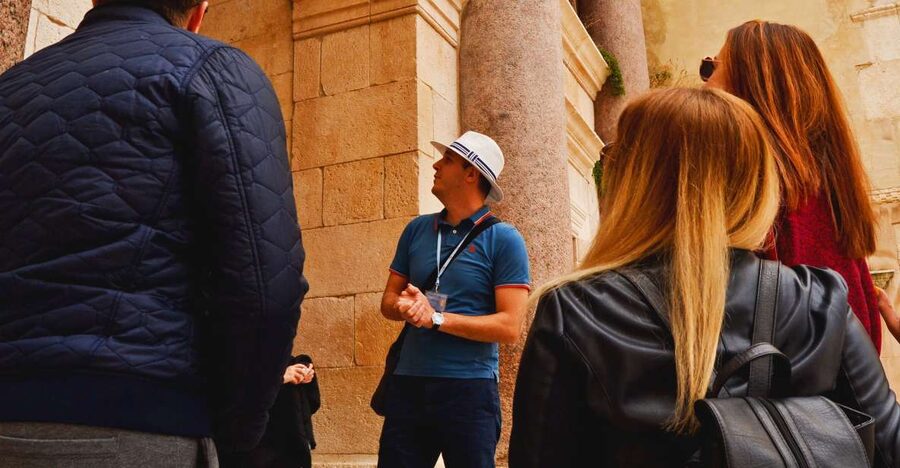
This tour is not just a walk among stones. It is a walk with visual explanations, and the 3D reconstructions are the tool that makes the palace readable. Toni uses them to show how iconic structures likely looked when they were whole, based on what you can infer from remains and palace design.
This matters because Diocletian’s Palace can overwhelm first-timers. The scale is big, and the damage and reuse over centuries can hide original relationships between buildings. With the 3D views, you can compare: this is what you are seeing now, and this is what the space was designed to do.
Even better, the reconstructions do not replace the real site. They work like training wheels for your eyes, then you step back and your understanding clicks into place. That is the moment the palace stops being confusing.
Price, pacing, and value for a 110-minute walking tour
At $33 per person for about 110 minutes, this is priced for people who want real explanation without spending half a day. You are paying for three things: a history-trained local guide, on-the-ground access through the palace core, and the built-in reconstructions that you cannot get by wandering alone.
It is also good value because you do not spend time on paid museum detours. The tour keeps the focus on what is already there around the palace, and entry to Diocletian’s Palace itself does not require admission for this experience. You mainly pay for the interpretation, not for extra tickets.
Pacing is another part of value. Many history walks either race through highlights or stall in the same spot too long. This one keeps you moving through key areas while allowing short pauses for questions, including at the Basement Halls segment. Reviews also mention Toni helping with shade and steering away from crowds when possible, which is a practical touch in a sun-heavy old town.
One more practical tip: bring drinks. The tour runs rain or shine, so plan for weather changes and keep water handy.
What you should bring and wear for an easy, comfortable day
The basics are simple. Bring drinks, and wear comfortable shoes that handle old-stone streets and palace steps. If you have a small day bag, keep it light so you can move without bumping into people around narrow gates.
Because the tour is rain or shine, pack a rain layer if you travel in shoulder seasons. Even in good weather, old town walks can be sweaty, and you will be doing a continuous circuit around the palace core.
Also, if you have flexibility in timing, consider choosing an earlier start. The route gets easier when you can avoid the peak crowds, and the walk tends to feel calmer earlier in the day.
Who this tour suits best in Split
This is a strong choice if you want your Split visit to be more than a list of monuments. If you like turning architecture into stories, Toni’s style fits well. It also helps if you enjoy asking questions, because the tour actively encourages it rather than treating questions as interruptions.
It is a good match for first-timers to Split who want the big “how did this city form” answer fast. It is also useful for people who have visited Roman sites before but find it hard to visualize what they are looking at. The 3D reconstructions do a lot of the heavy lifting.
It is not a good fit if you need wheelchair access, and it is also not recommended for people over 95. If you fall into either group, you may prefer a shorter, less walking-heavy alternative.
Should you book this Split history walk?
Book it if you want Diocletian’s Palace explained in a way that actually helps you read the site. This tour combines a local historian with a teacher background, question-friendly pacing, and 3D reconstructions that make Roman ruins understandable. For $33 and 110 minutes, it is a focused way to get the city’s layers into your head before you roam on your own.
Skip it if you are hoping for a very relaxed, minimal-walking experience. This is active. You will be moving through gates, halls, and palace streets, so plan for steady steps and weather.
If your goal is to leave Split understanding why the Romans built this place the way they did, and how it turned into a lived-in city, this is an easy yes.
FAQ
How long is the Split walking tour?
The tour lasts about 110 minutes.
Where does the tour start?
The meeting point is at the Bronze Gate (also called the Brass Gate) of Diocletian’s Palace, at Obala hrvatskog narodnog preporoda 22.
Is the tour in English?
Yes, the tour is offered in English.
What is included in the price?
The guide is included, along with 3D reconstructions used during the tour.
Do you enter any paid museums or sites?
The tour does not enter any paid sites or museums. Diocletian’s Palace itself does not require admission for this experience.
What sites will you see during the walk?
You will pass or stop at the Bronze Gate, Diocletian’s Cellsars area, the Diocletian’s Palace key areas, Peristil, the Vestibule, Triklinij, the Cathedral of Saint Domnius, Jupiter’s Temple, Silver Gate, and finish at the Golden Gate.
Will the tour run in bad weather?
Yes. It runs rain or shine.
What should I bring?
Bring drinks.
Is the tour wheelchair accessible?
No, it is not suitable for wheelchair users.
Who is it not suitable for?
It is not suitable for people over 95 years.
What is the cancellation policy?
Free cancellation is available up to 24 hours in advance for a full refund.
Venetian Stones, Roman Streets



Latest arrivals logged at Split






Historical Tours, compared.
Walking Tour of Split with a ‘Magister’ of History
Read our review →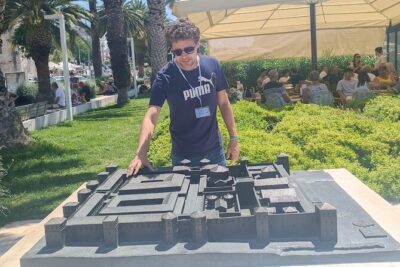
Split Walking Tour with Professor of History
Read our review →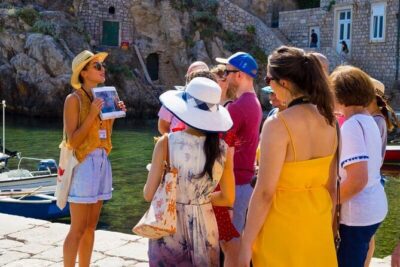

Split History and Gastro Small-Group Tour with Food and Drinks
Read our review →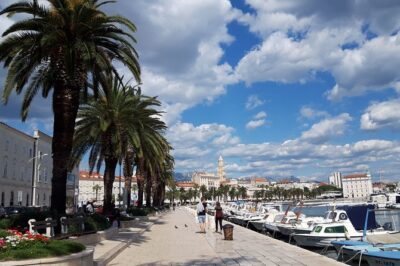
PREMIUM Emperor’s Walking Tour for History Lovers + Museum
Read our review →Browse the lists this tour appears in