
Reviewed · HISTORICAL TOURS
Split Walking Tour with History Professor
Roman Split has a way of sticking with you.
This Split walking tour turns Diocletian’s Palace into a time machine, with history professor Mario guiding you from Roman power to medieval streets and modern city life. You will also spot Game of Thrones locations along the way, plus legends and real local detail that makes the stone feel lived-in.
What I like most is the small private-group feel, and the way Mario teaches like a professor, with humor and questions that keep you switched on. Second, the route is smart: you do not stop at the postcard highlights, you also walk the streets that show how Venice, Ottomans, and Napoleon shaped the city over time.
One consideration: this tour is not suitable for wheelchair users, so it is best if you can comfortably handle a city walking route on uneven historic surfaces.
In This Review
- Key things I’d watch for on this Split tour
- Why a history professor changes the way you see Split
- Meeting at the Brass Gate, then using Riva Harbor to get your bearings
- Diocletian Palace substructures: the part most people skip
- Diocletian Palace substructures (about 5 minutes)
- Peristyle (about 10 minutes)
- Vestibule (about 10 minutes)
- Cathedral of Saint Domnius and the Temple of Jupiter: Roman continuity with later purpose
- Cathedral of Saint Domnius (about 20 minutes, admission excluded)
- Temple of Jupiter (about 10 minutes, admission excluded)
- The Golden Gate, Grgur Ninski, and Marmontova Ulica: from palace power to city rhythm
- Golden Gate (about 10 minutes)
- Grgur Ninski Statue (about 10 minutes)
- Marmontova Ulica (about 10 minutes)
- Prokurative and Fruit’s Square: where later Split shows its personality
- Prokurative (about 10 minutes)
- Fruit’s Square, Trg Brace Radic (about 15 minutes)
- Price and value: why $23 makes sense for this route
- What this tour is like in real life
- Who should book this Split walking tour
- Should you book this Split tour?
- FAQ
- How long is the Split walking tour?
- Where does the tour start?
- Is the tour in English?
- Are entrance fees included for the Cathedral of Saint Domnius and Temple of Jupiter?
- Is this tour wheelchair accessible?
- Can I get a refund if I need to cancel?
Key things I’d watch for on this Split tour
- Professor-style storytelling that stays lively, not lecture-y
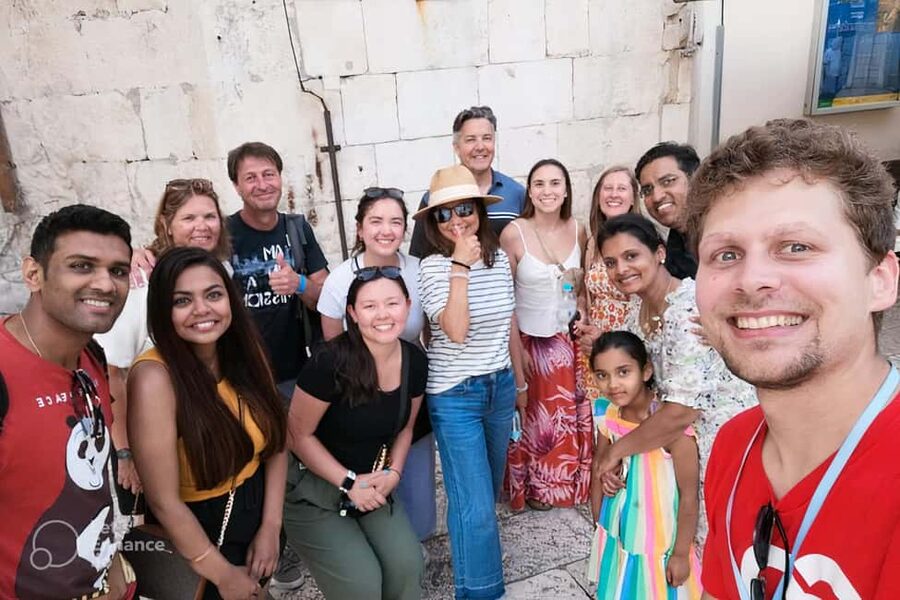
- Small private groups that make it easier to ask questions
- Diocletian Palace highlights in the right order, starting with the substructures context
- Cathedral of Saint Domnius plus Temple of Jupiter, with admission not included
- Old-town street stops that connect the Roman core to later influences
- Game of Thrones locations worked into the walking route, not treated like a side quest
Why a history professor changes the way you see Split
Split can feel like one big layer cake of eras. The problem is that, on your own, it is easy to see the sights but miss the story connecting them. This tour’s big win is that it uses a professor approach to make cause and effect click.
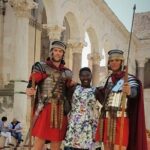
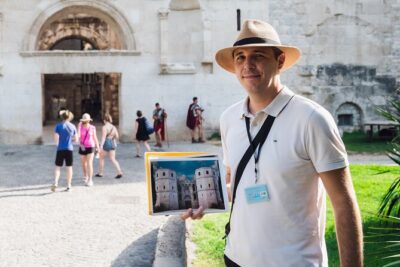
Mario’s style matters. He does not just rattle off dates. He uses context, then points you toward what to look for so you understand why a wall, a gate, or a square looks the way it does today. And because the group stays small, you get more back-and-forth than the typical large-tour vibe. In the reviews, people highlighted his enthusiasm, humor, and the fact that he kept the group involved, which is exactly what makes a short walk worth your time.
For you, that means less time wondering what you are seeing, and more time noticing details you would otherwise gloss over.
Meeting at the Brass Gate, then using Riva Harbor to get your bearings
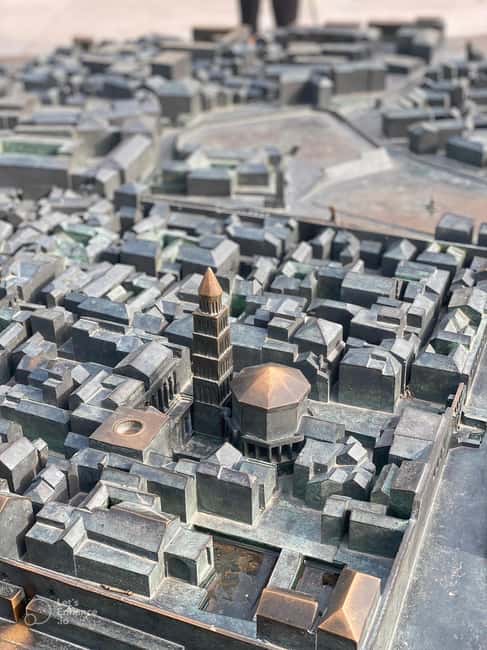
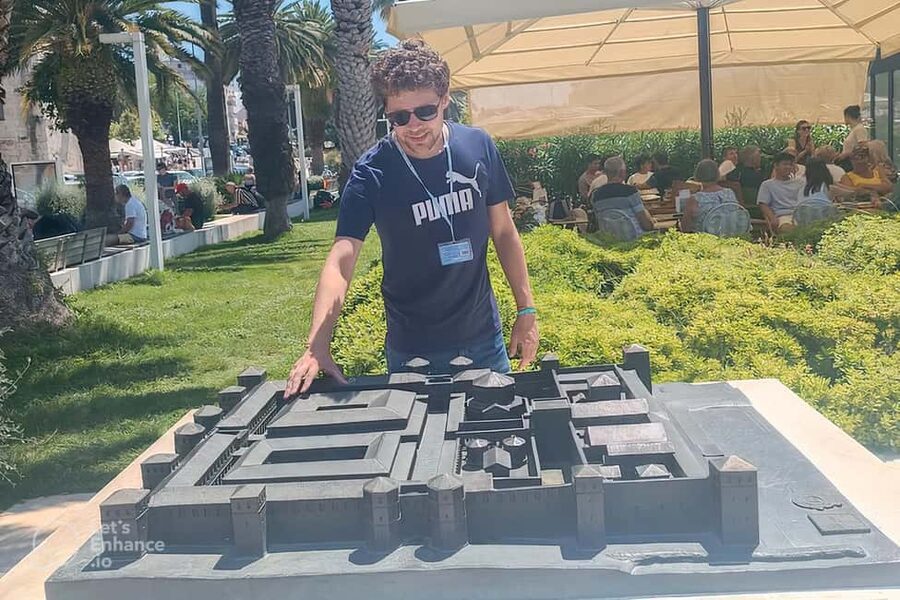
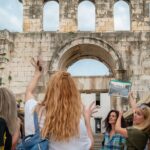
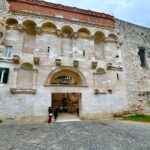
You start near the Brass Gate of Diocletian’s Palace, so you are immediately in the historical core zone rather than wandering in from somewhere random. From there, the first stop is a model of the historical core of the city of Split at Riva Harbor.
This is a clever start. Before you commit to the walk, you get a quick spatial sense of where the palace fits, how the old city grew around it, and why certain buildings feel like they belong together. If you like to understand a place visually, this model step helps you read the rest of the tour.
There is a short orientation stop, then you move into the main sites right away. The pacing is built so you do not spend your whole time walking without context.
More Walking Tours in Split
- Split: Old Town and Diocletian Palace Walking Tour★ 4.9 · 4,727 reviews
- Walking Tour of Split and Diocletian’s Palace★ 5.0 · 2,588 reviews
- Krka Waterfalls tour with Trogir Walking tour and Krka panoramic boat cruise★ 5.0 · 1,659 reviews
Diocletian Palace substructures: the part most people skip
The tour then focuses on Diocletian’s Palace, but it does it in a more satisfying way than the usual quick scan. You begin with the substructures and related palace areas, then move into the key interior spaces.
Diocletian Palace substructures (about 5 minutes)
These lower areas are where you start to feel the fortress logic. You are not just looking at pretty stone, you are seeing the functional underside of the complex. This is one of those spots where a guide can change your experience quickly. Mario’s teaching style helps you connect what you see to how the palace worked in its Roman-era life.
A small drawback here is also practical: substructure areas can be less comfortable if you are sensitive to enclosed or shaded spaces. Wear breathable clothes, and keep your eyes up and level, not just on the ground.
Peristyle (about 10 minutes)
Next, you move into the Peristyle, a central open court that helps you understand how the palace structured movement, light, and daily life. This is where you start reading the palace as a living architectural plan rather than a museum shell.
More marble lanes taken slowly:
- Split & Diocletian’s Palace Walking Tour
★ 5.0 · 1,125 reviews - Walking Tour of Split with a ‘Magister’ of History
★ 5.0 · 1,122 reviews - Split Walking Tour with Professor of History
★ 5.0 · 926 reviews - Split: Diocletian Palace & Old Town Guided Walking Tour
★ 4.7 · 882 reviews
Vestibule (about 10 minutes)
Then you hit the Vestibule area. This stop is short, but it is a useful bridge between the grand impression of the palace and the reality of gates, entries, and transitions. Mario’s style shines here, because you get explanations that make the shapes feel intentional rather than random.
Even if you have already seen photos of Diocletian’s Palace, walking through these specific palace segments in sequence helps you build a mental map fast. And that makes the later street stops far more meaningful.
Cathedral of Saint Domnius and the Temple of Jupiter: Roman continuity with later purpose
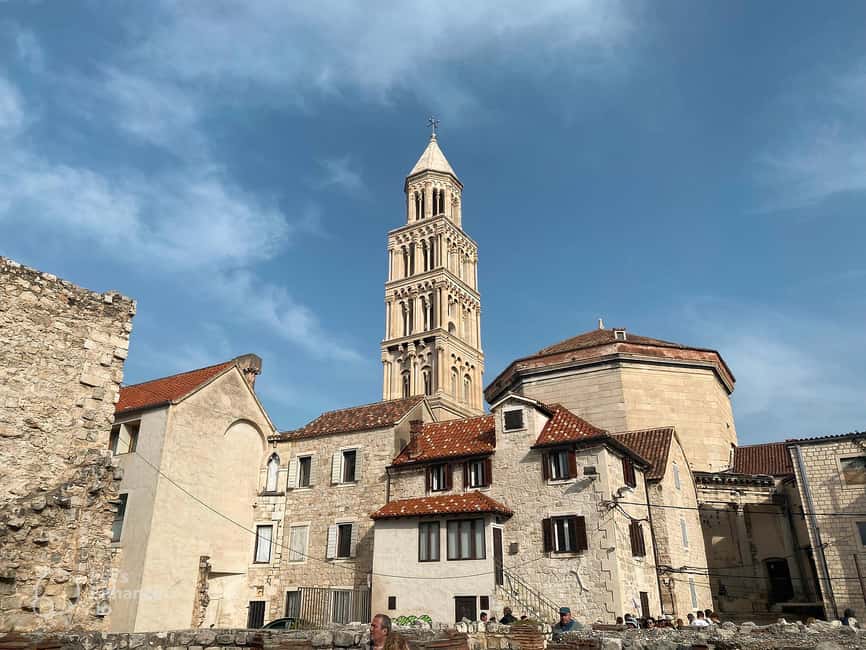
After the palace interiors, the tour shifts to two major anchors of Split: the Cathedral of Saint Domnius and the Temple of Jupiter.
Cathedral of Saint Domnius (about 20 minutes, admission excluded)
You get a longer stop here, about 20 minutes, which signals that it is not just a quick photo opportunity. The cathedral is a key landmark tied to the city’s layered identity, and having time on site helps you notice the architectural and symbolic weight of the place.
Important practical note: admission is excluded, so you should plan for potential entry cost if you want to go inside. Also, give yourself a little buffer in your head, because you will want a moment to orient before the guide moves you along.
Temple of Jupiter (about 10 minutes, admission excluded)
Then you visit the Temple of Jupiter, again with admission excluded. This stop is shorter, but it complements what you just learned in the palace area. It is one more step in the chain from Roman origins to how those Roman structures were treated in later centuries.
If you love Roman architecture, this segment delivers. If you are more into later history, it still pays off because it gives you a baseline for what changed and what stayed recognizable.
The Golden Gate, Grgur Ninski, and Marmontova Ulica: from palace power to city rhythm
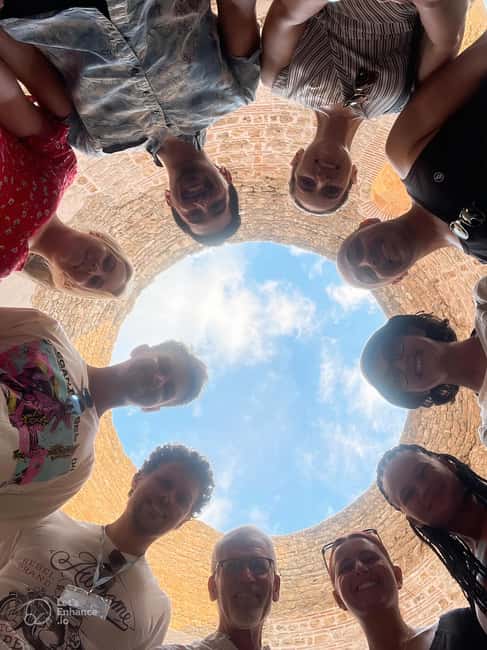
Once you step out into the broader historic core, the tour becomes more street-level and more human.
Golden Gate (about 10 minutes)
You stop at the Golden Gate, which is one of those features that looks dramatic in photos, but also makes sense once you understand the palace layout around it. This is a great spot for Mario’s style of storytelling, because the explanation turns the gate from a landmark into a system, a controlled entrance tied to older city logic.
Grgur Ninski Statue (about 10 minutes)
Then you reach the Grgur Ninski statue. This is where the tour starts to feel less like architectural sightseeing and more like cultural memory. People are more likely to pause here for a quick moment, and having a guide adds value by giving you the meaning behind the presence and placement.
Even if you keep your photos quick, use this stop to regroup. After palace interiors and church-adjacent landmarks, it helps to step into a point of public symbolism.
Marmontova Ulica (about 10 minutes)
Marmontova Ulica is part of the move toward a more modernized city feel, and it also helps connect influences over time. The tour uses this street time well, keeping it short enough that you do not get bored, but long enough for you to notice how the street life and architecture blend.
If you prefer self-guided wandering after a tour, this is a good corridor to remember, because you can keep walking it once the tour ends.
Prokurative and Fruit’s Square: where later Split shows its personality
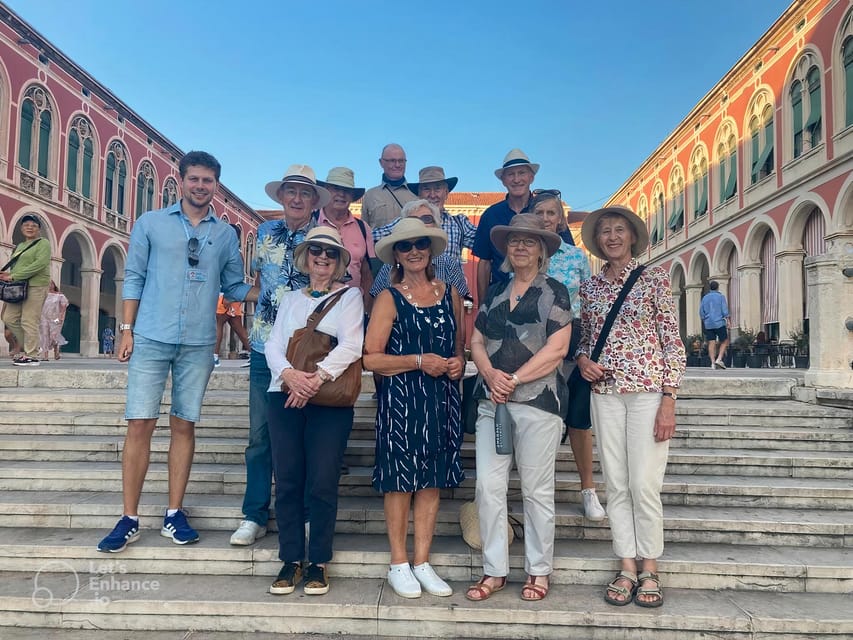
The final stretch heads through a couple of civic, social, and shopping-adjacent areas, giving you a sense of how Split’s center operates now.
Prokurative (about 10 minutes)
Prokurative is a key city-space stop. Even if you are not the type to sit down for long, you will benefit from the guide’s framing of how these spaces relate to later European influence. This is also where the tour’s promise of medieval and modern Split starts to show clearly, not just in buildings but in the way city space works for people.
The good part: you end up with landmarks you can actually return to later, not just something you passed through.
Fruit’s Square, Trg Brace Radic (about 15 minutes)
You finish at Fruit’s Square, Trg Brace Radic, with about 15 minutes. This longer final stop helps you land the tour with a real sense of place: a square where life happens, where you can look around and understand what the city feels like when it is not in Roman-era context.
If you want to keep exploring after the tour, this is a practical ending point. You can take a breather, grab a drink, and decide where to go next based on what you now understand.
Price and value: why $23 makes sense for this route
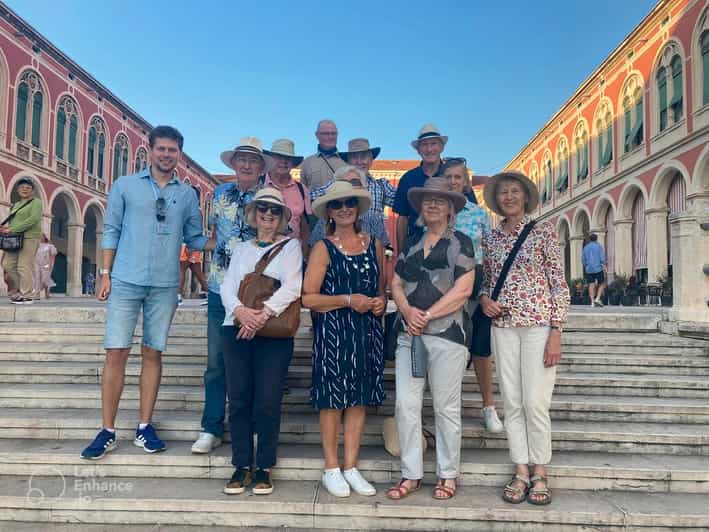
At $23 per person for about 2 hours (the highlight also notes a version that runs around 2 hours and 15 minutes), you are paying for more than a walk. You are paying for interpretation at multiple levels.
Here is what you get for the money, in plain terms:
- A guide who can connect Roman palace architecture to later Split
- Several major landmarks in one compact route, including Diocletian Palace substructures, Peristyle, and Vestibule
- A church-and-temple pairing (Cathedral of Saint Domnius and Temple of Jupiter)
- A sequence of old-town streets and civic spaces (Golden Gate, Grgur Ninski, Marmontova Ulica, Prokurative, Trg Brace Radic)
- A small private-group format that makes Q and A feel normal
The one trade-off is that admission is excluded for the Cathedral of Saint Domnius and Temple of Jupiter. That is not a deal-breaker, but it means your real total might be a bit higher if you choose to enter. Still, even if you only focus on the exterior viewpoints, you get enough stops and context to justify the price.
If you are comparing against paying for multiple separate entry or guide experiences, this is typically better value. It is a packed route that keeps your time efficient without feeling like a race.
What this tour is like in real life
This tour is appropriate for all ages, and that matches the structure: it is guided walking with stops that vary from short landmark looks to a couple of longer moments like the cathedral and the final square.
The biggest factor is the guide delivery. Mario comes across as personable and friendly, with humor. In the reviews, people also mentioned his interaction style and that he kept them from getting bored. That lines up with the tour design, because it is built around frequent transitions. You are not stuck in one place for too long, and you keep moving from Roman to medieval to later modern influences.
One practical note for your comfort: wear comfortable shoes and plan for uneven historic surfaces. The tour is also not suitable for wheelchair users, so if you are using mobility assistance, you should look for alternatives.
Who should book this Split walking tour
Book this if you want:
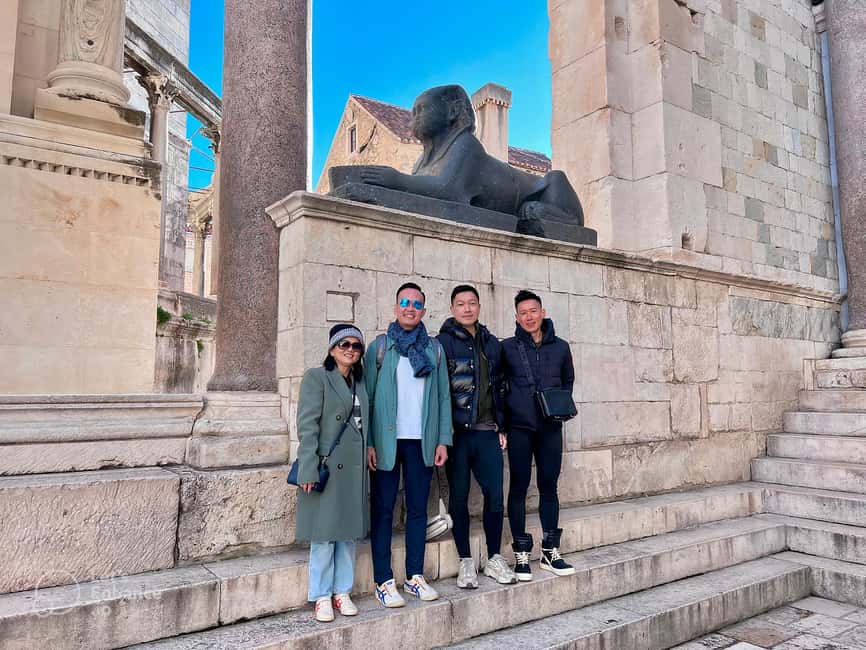
- A guided way to understand Diocletian’s Palace beyond the obvious highlights
- A history professor style that explains how different eras influenced each other
- A short, focused route that still hits Roman, medieval, and modern Split
- A mix of major sights and city-space stops like Prokurative and Trg Brace Radic
You might skip it if you want a totally self-paced tour, or if you need full wheelchair accessibility. Also, if you have very limited stamina, the walking route and old-stone surfaces may feel like more than you want for two hours.
Should you book this Split tour?
If you like your travel with context, this one is easy to recommend. The route is well chosen, the time feels tight in the best way, and Mario’s approach makes the sites make sense fast. You get the Roman core, then you get the city that grew around it, plus Game of Thrones locations sprinkled through the walking route rather than treated like a gimmick.
If you are comfortable walking and you want a guide who can explain what you are seeing in plain language, $23 for a two-hour professor-led walk through Split’s key landmarks is a strong deal. Just remember admissions for the cathedral and Temple of Jupiter are not included, and this is not wheelchair friendly.
FAQ
How long is the Split walking tour?
The tour duration is listed as 2 hours.
Where does the tour start?
The guide waits next to the Brass Gate of Diocletian’s Palace.
Is the tour in English?
Yes, the live tour guide is provided in English.
Are entrance fees included for the Cathedral of Saint Domnius and Temple of Jupiter?
No. Admission is excluded for both the Cathedral of Saint Domnius and the Temple of Jupiter.
Is this tour wheelchair accessible?
No, it is not suitable for wheelchair users.
Can I get a refund if I need to cancel?
Yes. Free cancellation is available up to 24 hours in advance for a full refund.
Venetian Stones, Roman Streets

Latest arrivals logged at Split




Historical Tours, compared.
Walking Tour of Split with a ‘Magister’ of History
Read our review →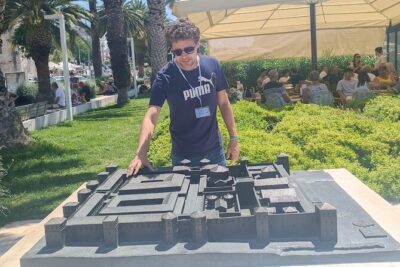
Split Walking Tour with Professor of History
Read our review →
Split History and Gastro Small-Group Tour with Food and Drinks
Read our review →
PREMIUM Emperor’s Walking Tour for History Lovers + Museum
Read our review →Browse the lists this tour appears in