
Reviewed · WALKING TOURS
Pula 2 Hour Walking Tour with a Local
Two hours is enough for Pula to click. I love the close Roman sights you get, especially the Amphitheatre de Pula, and the local storytelling that makes the streets feel personal. One thing to plan for, two stops need admission tickets on your own, so check your budget before you go.
This tour is designed to be easy to follow and simple to fit into your day. You start at Park NimfejaArena and finish in the Forum, so you end right in the heart of modern Pula after seeing the big ancient landmarks.
You’ll walk at a moderate pace with good weather needed for the experience. It also stays small enough to feel human, with a maximum of 40 people and English offered, plus a mobile ticket for easier check-in.
In This Review
- Key highlights worth your time
- Why a 2-hour Pula walk is the right size
- Amphitheatre de Pula: the Roman Arena that still does its job
- Tito’s Park: a green break with a modern mirror of the old city
- Twin Gates of Pula: an old entry point that photographs well
- Zerostrasse: World War I history underground
- Gate of Hercules and Arch of the Sergii: two Roman landmarks, different moods
- How the route helps you understand Pula, not just see it
- Pacing, group size, and comfort on a moderate walk
- English tour value: what you pay for at $23.66 per person
- Who this tour suits best, and who might prefer something else
- Should you book Augustus Walks in Pula?
- FAQ
- Is this tour in English?
- How long is the Pula walking tour?
- How much does the tour cost?
- Where does the tour start and end?
- What are the main stops on the tour?
- Are admission tickets included for all stops?
- What kind of ticket do I get?
- How big is the group?
- Do I need a certain fitness level?
- Is free cancellation available?
- Does weather affect the tour?
Key highlights worth your time
- Roman Arena you can really see up close at Amphitheatre de Pula, plus context for how it was used
- Short, focused stops that keep you moving without turning the walk into a sprint
- Mix of free and paid sights, so you can budget knowing where admission applies
- Zerostrasse shelter stories that add World War I context under the city
- Ancient gates for photos including the Twin Gates and Gate of Hercules
- A personal route with local tips that help you explore beyond the tour
Why a 2-hour Pula walk is the right size
Pula can feel like a pile of ruins until someone gives it a spine. This 2-hour format gives you that backbone fast, linking the Roman town, later additions, and even World War I life underground. I like that the stops are timed tightly, so you get the big moments without burning half a day.
You also end in a good place for your next move. Finishing in the Forum means you can roll into lunch, a coffee break, or a self-guided stroll among Roman remnants without backtracking.
One more practical win, you can keep your plans flexible. English is offered, and you’re issued a mobile ticket, so you’re not juggling paper vouchers or last-minute printing.
Amphitheatre de Pula: the Roman Arena that still does its job
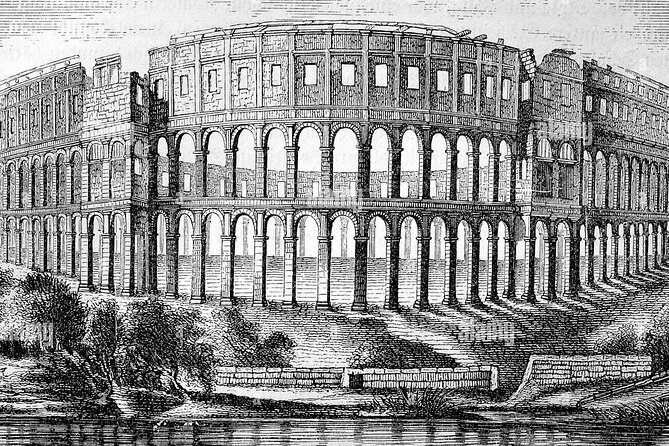
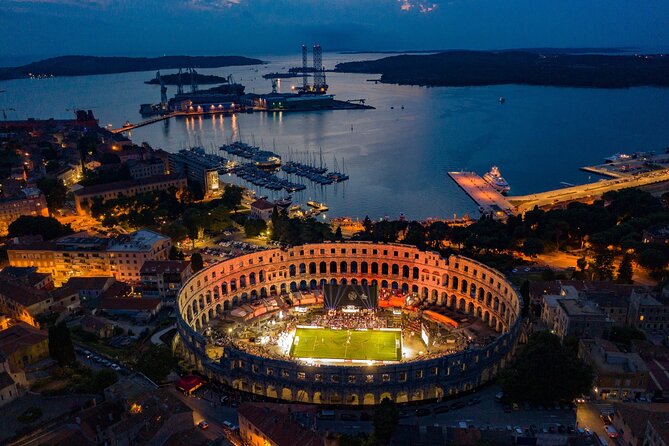
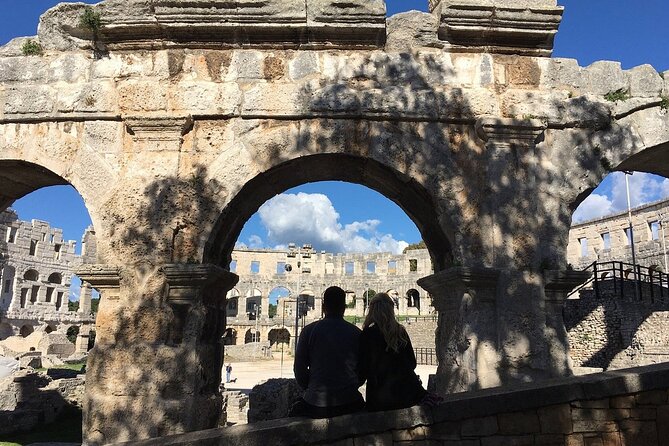
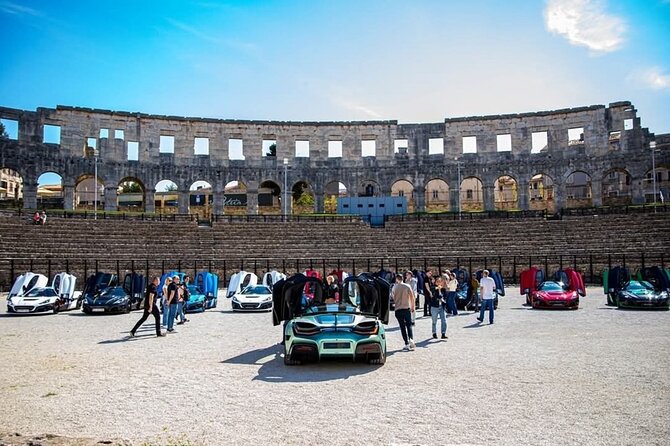
This is the stop that gets attention for a reason. Amphitheatre de Pula is one of the best-preserved Roman arenas in the world, and seeing it with a guide helps you understand what you’re looking at. You’re not just looking at stone, you get the sense of how gladiator fights and other public spectacles once filled the space.
A couple of tips for getting the most out of this moment. First, give yourself a minute to study the shape and seating levels before you rush on, it helps the scale click. Second, since admission is not included here, arrive ready to pay the entry ticket and avoid that awkward start-stop feeling.
What you gain here is momentum. After the arena, the rest of the city feels less random. Even the gates make more sense because you can picture how people moved through Pula in Roman times.
More Walking Tours in Pula
- Pula: Historic Walking Tour with Local Guide & City Views★ 4.8 · 214 reviews
- Pula walking tour★ 5.0 · 96 reviews
- Pula: Historic Sites Guided Walking Tour★ 4.8 · 78 reviews
Tito’s Park: a green break with a modern mirror of the old city
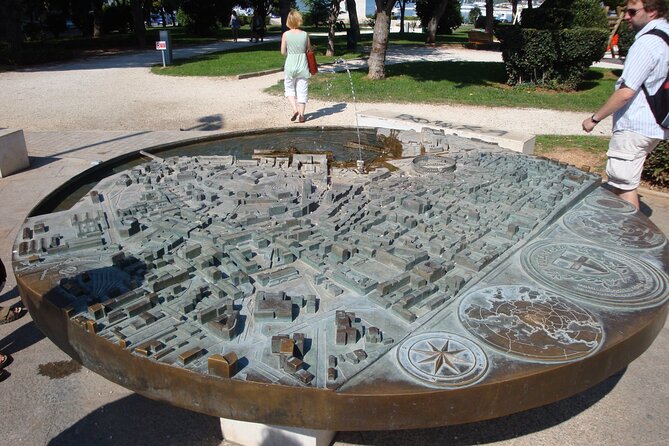
After Roman stone, Tito’s Park gives you a softer landing. This park is dedicated to Josip Broz Tito and offers walking paths, sculptures, and a model of the city of Pula. That model matters more than it sounds, because it helps you connect what you’ve just seen at the arena to the wider layout of the old town.
This is also one of the free stops, so it’s a low-pressure way to reset. You get a little breathing room, and you can slow down your brain for a moment. If you’re the type who likes to understand a city’s shape, this is a helpful pause.
There’s a small consideration, parks can be a bit “slow” compared to ruins. If you came purely for dramatic architecture, you might treat this as a short scenic intermission and then refocus for the gates.
Twin Gates of Pula: an old entry point that photographs well
Next come the Twin Gates, an ancient Roman structure dating back to the 2nd century. These gates once served as entrances to the city, and that historical role is exactly what makes them interesting. With a guide, you’re more likely to notice the architectural details that show how formal arrivals worked in Roman times.
This stop is free, and that makes it easy to take your time. Since it’s only around 15 minutes, I recommend you use that short window for two things: take your main photo from a sensible angle, then look for the symmetry and stonework. Gated entrances were designed to impress, so you’ll often feel that intention even if you don’t know every technical term.
If you’re walking with a camera, this is a good place to pause and wipe your lens. Bright daylight around gates can make photos look a bit harsh unless you take a second to frame carefully.
Zerostrasse: World War I history underground
Then you shift into something totally different, Zerostrasse, an underground tunnel system built during World War I as a shelter. This part adds another layer of Pula, because it shows how the city wasn’t only Roman and coastal. It was also adapting to wartime reality, hiding people beneath the streets.
Admission is not included here, so budget for an extra ticket. Still, the time on this stop is short, around 5 minutes, which means you won’t lose the whole tour to logistics.
One practical note for this kind of site, you might find it cooler underground. Even if it’s warm above, the tunnels can feel damp or chilly, so a light layer can help without weighing your bag down.
If you’re someone who likes historical contrast, this stop is your payoff. The gates and arena are about public life. Zerostrasse gives you survival life, a different kind of story.
More marble lanes taken slowly:
- Pula Essentials Walking Tour
★ 4.8 · 64 reviews - Pula Essentials Walking Tour
★ 5.0 · 62 reviews - Pula Private Walking Tour
★ 5.0 · 32 reviews - Pula Food Walking Tour
★ 4.5 · 22 reviews
Gate of Hercules and Arch of the Sergii: two Roman landmarks, different moods
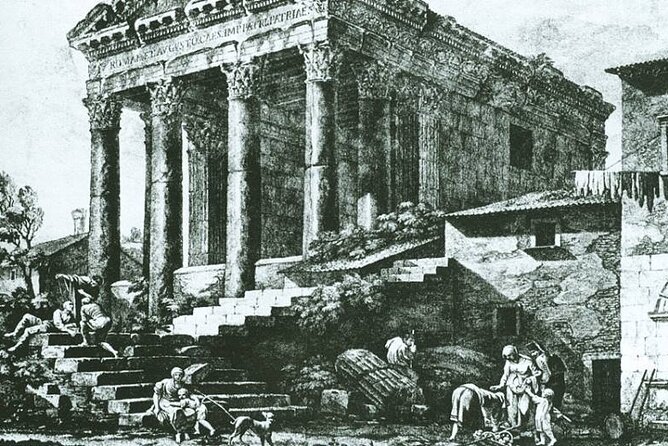
Gate of Hercules is another Roman gate, and it includes the iconic head of Hercules. This is one of those quick photo stops that still feels meaningful, because myth and architecture were often linked in Roman public spaces.
It’s free and short, around 5 minutes, so it’s best used as a photo moment plus a quick look at how the ornament is placed. When you leave, you’ll probably spot Hercules again in your memory later, because it’s an instantly recognizable detail.
Then you get the Arch of the Sergii, a commemorative Roman arch tied to the Sergi family. This one sits in a busier area of the old town, which means you’ll likely hear street life while you’re reading the stone. That contrast is part of the fun, you’re standing in a modern city, but the arch is still doing its Roman job.
It’s also free and takes about 10 minutes. That’s enough time to notice the arch proportions, and it’s long enough to ask your guide to connect it to the bigger picture of how Roman families used public monuments to stay visible.
How the route helps you understand Pula, not just see it
This walk works because it moves in a logical sequence. You go from a major public space (the amphitheater) to a city entrance symbol (the gates), then into a wartime underground system, then back up into more monuments. Even when the stops are brief, they build a chain of meaning.
I especially like that several stops are free. That means you can focus your money on the two paid admissions without feeling like the whole walk is built around ticket costs. In practice, it keeps the experience within control, even if you’re traveling on a tighter daily budget.
And the guide style is part of the value. The best tours don’t just recite dates, they explain why those places mattered and how locals still see them. With this kind of local-led approach, you often leave with better self-guided ideas, like what to prioritize next around the Forum area.
Pacing, group size, and comfort on a moderate walk
The tour is about 2 hours long and meant for people with moderate physical fitness. That’s a good match if you can handle walking through town and standing for photos. You’re not being asked to do anything extreme, but it’s still a real walk with multiple stops.
Group size is capped at 40, which usually keeps the experience organized. You should expect a guide who can manage questions without the group feeling chaotic. It also helps if you want to hear the explanations clearly while you’re moving.
As for timing, the stops are short and scheduled, so you may not linger as long as you would on your own. If you’re the type who wants a lot of time at one monument, you’ll still get the essentials here, then you can return later for a slower look.
English tour value: what you pay for at $23.66 per person
The price, $23.66 per person, is a reasonable way to buy context. You’re not paying just for walking from point to point. You’re paying for a person who can connect Roman structures to how the city functioned, and connect Tito’s park to how newer layers shaped Pula’s identity.
Here’s how I think about the value. Two stops do not include admission tickets: Amphitheatre de Pula and Zerostrasse. The rest are free, including Tito’s Park, the Twin Gates, Gate of Hercules, and the Arch of the Sergii. So your total day cost will depend on those two admissions, but your guide time is covered in the base price.
For many visitors, this is a sweet deal. You get an organized route, a clear narrative, and photo-worthy architecture without needing to figure it all out with an app while you’re tired.
Who this tour suits best, and who might prefer something else
This works best if you want a guided orientation to Pula’s main historical layers. If you like Roman monuments but also enjoy the modern and wartime angles, you’ll likely feel satisfied by the variety in a short time window.
It’s also a strong option if you prefer a relaxed pace with room for humor and local perspective. You won’t just hear facts, you’ll get personal stories and practical recommendations that help you explore after the walk ends at the Forum.
If you only care about one type of site, like purely Roman ruins with lots of time to linger, then a focused walking tour may feel a bit brisk. In that case, you might choose a longer, single-site plan instead. But for most first-timers, this route gives a lot of value for the time invested.
Should you book Augustus Walks in Pula?
Yes, if you want an efficient, human-scale introduction to Pula. I’d book this style of tour when you have limited time and you want the city to make sense quickly, from Roman arenas and gates to Tito’s Park and the underground shelter of Zerostrasse.
I’d think twice only if you strongly dislike paying extra admissions during a tour, or if you need long stretches alone at each site. Otherwise, the mix of free sights, a 2-hour structure, and a local-led approach make it an easy win for an enjoyable first pass through Pula.
FAQ
Is this tour in English?
Yes. The tour is offered in English.
How long is the Pula walking tour?
It lasts about 2 hours.
How much does the tour cost?
The price is $23.66 per person.
Where does the tour start and end?
It starts at Park NimfejaArena, 52100, Pula, Croatia, and ends at the Forum, 52100, Pula, Croatia.
What are the main stops on the tour?
You’ll visit Amphitheatre de Pula, Tito’s Park, the Twin Gates of Pula, Zerostrasse, Gate of Hercules, and the Arch of the Sergii.
Are admission tickets included for all stops?
No. Admission tickets are not included for Amphitheatre de Pula and Zerostrasse. The other listed stops are free.
What kind of ticket do I get?
You receive a mobile ticket.
How big is the group?
The tour has a maximum of 40 travelers.
Do I need a certain fitness level?
You should have a moderate physical fitness level.
Is free cancellation available?
Yes. You can cancel for a full refund up to 24 hours before the experience starts.
Does weather affect the tour?
Yes. The experience requires good weather, and if it’s canceled due to poor weather you’ll be offered a different date or a full refund.
Latest arrivals logged at Pula







Walking Tours, compared.
Walking Tour of Split and Diocletian’s Palace
Read our review →
Krka Waterfalls tour with Trogir Walking tour and Krka panoramic boat cruise
Read our review →
City Walls Early Morning or Sunset Walking Tour
Read our review →Browse the lists this tour appears in