
Reviewed · HISTORICAL TOURS
Pula: Historic Sites Guided Walking Tour
Roman Pula fits neatly into 90 minutes. This Pula Amphitheater-started walking tour turns scattered ruins into a clear story, and I like how quickly it connects you to Roman life, especially once you reach the Augustus Temple area and its 2,000-year-old presence.
I also love the built-in change of pace from street level up to the Pula Castle viewpoints, then back down into the old-town center with mosaics, forums, and gates. The one drawback to keep in mind is that entry tickets are not included, so you may need a little extra budget if you choose to go inside any monuments.
In This Review
- Key Highlights That Make This Tour Worth Your Time
- Entering Pula Arena First, So the Roman Story Makes Sense
- Up to Pula Castle for City Views and Venetian-Era Clues
- The Cathedral Stop That Helps You See the City Beyond Rome
- Roman Forum Highlights, Including Augustus Temple and City Hall
- Roman Mosaics and Street-Level Clues You Might Miss Alone
- Arch of Sergii, Pula Market, and the Two-Worlds Ending at the Gates
- What the Guide Brings, and Why English Clarity Matters
- Price and Time: The Real Value of $20 for 90 Minutes
- Who This Tour Suits Best (and Who Might Want to Skip It)
- Quick Practical Tips Before You Go
- Should You Book the Pula Historic Sites Guided Walking Tour?
- FAQ
- Where does the tour start and where does it end?
- How long is the guided walking tour?
- What is included in the price?
- Are entry tickets included for the monuments?
- What languages is the tour offered in?
- Is the tour canceled if it rains?
- Is video recording allowed during the tour?
- Is the tour suitable for people with mobility impairments?
Key Highlights That Make This Tour Worth Your Time
- Start in front of the Arena, so the whole Roman setting clicks early
- Pula Castle viewpoints built by the Venetians in the 17th century, with a real sense of place
- Augustus Temple and Roman Forum stops that focus on what matters most
- Roman mosaics and the Arch of Sergii, with stories that connect details to the bigger picture
- Pula Market and the early-1900s feel, before you end at the ancient Gate of Hercules and Twin Gate
Entering Pula Arena First, So the Roman Story Makes Sense
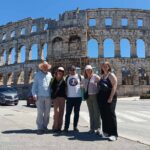
Most history walks in old towns jump straight to ruins and hope you can piece it together. This one starts right in front of the Pula Arena, and that choice is smart. You begin with a quick, guided overview that gives you the right frame before you start moving.
From there, the guide helps you see the city as a layered place. You are not just looking at old stones, you are learning how Pula’s Roman identity shaped the layout around it. In the group I learned from, people praised how the guide set the tone without dragging. The best tours do that: clear structure, no wandering, just good pacing.
Also, the meeting setup is practical. You meet the guide at the Arena entrance, with a blue card around their neck and an umbrella in hand. Rain happens, and you will be walking regardless.
Up to Pula Castle for City Views and Venetian-Era Clues
The tour’s second act feels like a mini reset. You head up to Pula Castle, a 17th-century structure tied to the Venetians. Even if you only have a short time in town, going there on a timed walk helps you understand how Pula spreads out below.
This stop is not just for photos. I like it because it adds context. When you stand somewhere higher, you start to grasp why certain Roman and later civic buildings were where they were. The guide also covers who lived there before, and that kind of transition matters. A city changes hands many times, and Pula is no exception.
If you are the kind of visitor who likes city skylines, you will probably linger here. But since the tour stays to about 90 minutes, you still keep a full run of core sights afterward.
More Walking Tours in Pula
- Pula: Historic Walking Tour with Local Guide & City Views★ 4.8 · 214 reviews
- Pula walking tour★ 5.0 · 96 reviews
- Pula Essentials Walking Tour★ 4.8 · 64 reviews
The Cathedral Stop That Helps You See the City Beyond Rome
After the views, you return toward the old center with the Cathedral on the route. This is a good moment to catch your breath because it shifts you from the Roman timeline into the later religious and civic story.
The Cathedral stop also helps answer a simple question I always ask when I visit historic towns: what came after the empire? Roman Pula is impressive, but the city kept going. A guided route makes the shift feel natural instead of like a sudden left turn.
Roman Forum Highlights, Including Augustus Temple and City Hall
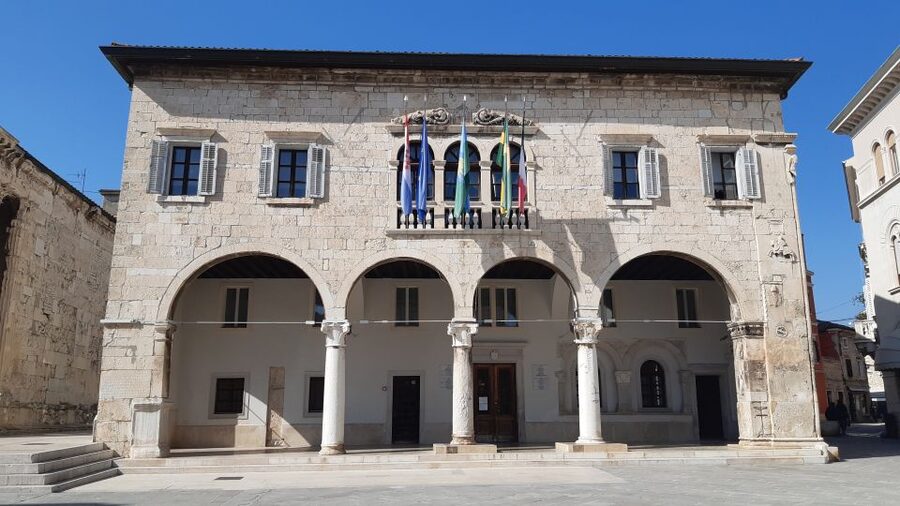
Now the walk gets Roman again, and this is where the tour earns its reputation. You move into the Roman Forum area, and you specifically hit the Augustus Temple zone and the nearby civic structures, including City Hall on the route.
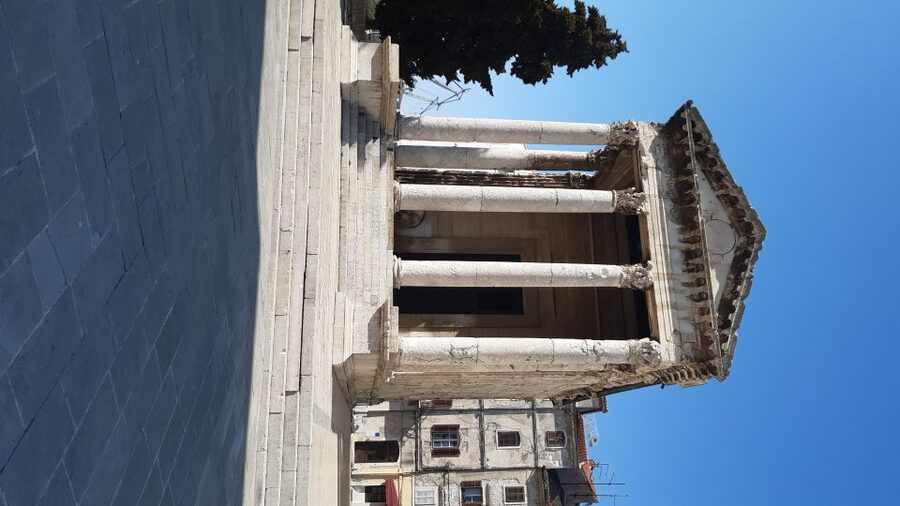
The Augustus Temple is the star for many people because it is presented as the 2,000-year-old anchor of the area. Even if you have seen other Roman sites before, the Forum context helps you understand why this part of town became a focal point. You are not just staring at one building. You are seeing how the space connected power, religion, and public life.
This section is also ideal if you like architecture details. The guide points out what to look for and how to connect it to the broader Roman plan. And because the pace stays manageable, you can ask questions without feeling rushed.
Roman Mosaics and Street-Level Clues You Might Miss Alone
One of the best values of a guided walking tour is learning what to notice in between the big monuments. Here, you get that in a couple of ways, including Roman mosaics along the route.
Mosaics can be easy to overlook when you are moving fast. With a guide, the mosaics become proof of daily culture, not just decoration. They show a level of artistic effort that hints at the wealth and taste in the Roman world.
I also like the way the tour connects the small and the important. You are not handed a list of sites. You are learning how fragments fit into a single city picture.
More marble lanes taken slowly:
- Pula Essentials Walking Tour
★ 5.0 · 62 reviews - Pula Private Walking Tour
★ 5.0 · 32 reviews - Pula Food Walking Tour
★ 4.5 · 22 reviews - Pula: Old Town Walking Tour for Foodies with Dinner and Wine
★ 4.6 · 18 reviews
Arch of Sergii, Pula Market, and the Two-Worlds Ending at the Gates
After the Forum stops, you continue to the Arch of Sergii. This kind of monument is useful because it shows Roman messaging in stone: why certain structures were built, and what they were meant to communicate.
Then comes the Pula Market stop. It is described as established in the early 1900s, and that time period gives you a break from ancient ruins. Markets are where you feel the living city, even in a historic setting. If you like to understand a place through how locals shop and gather, this stop is worth paying attention to.
Finally, you finish at the older city entrances, including the Gate of Hercules and the walk ending at Twin Gate. Ending at the gates is a clever way to wrap the story. You start with the Arena, the public spectacle of Roman life, and you end with the city’s threshold spaces, where movement and control were built into the stone.
What the Guide Brings, and Why English Clarity Matters
A big reason this tour scores highly is the guide quality. Many people singled out the guide named Sini and praised his English as excellent. They also talked about his style, mixing solid explanation with a friendly tone.
I like that the guide encourages questions. If you are the type who wonders why certain buildings faced the way they did, or what a particular Roman structure likely meant in its time, you will get answers instead of a silent nod.
There is also a practical storytelling tool mentioned by visitors, a town-style diorama that helps map the route and key monuments. That kind of visual cue can make the walk feel more confident, especially if you are a first-time visitor.
Price and Time: The Real Value of $20 for 90 Minutes
At $20 per person, this tour is priced like a bargain if you want a focused overview. The catch is the one thing I would plan for up front: entry tickets are not included.
That means your best value comes when you treat the tour as a guided orientation plus exterior and accessible interior viewpoints where possible. If you plan to pay additional entry fees separately, you might still feel the tour is worth it because it tells you what you are seeing and what to prioritize.
For me, the biggest value is time efficiency. You are getting the top anchors of Roman Pula plus key later layers in about 90 minutes, rain or shine. When your time is limited, that matters as much as the sites themselves.
Also, the tour stays walkable and paced. People noted that the monuments are pretty close together, which helps you spend less time in transit and more time listening and looking.
Who This Tour Suits Best (and Who Might Want to Skip It)
This tour is a strong fit if you want a compact, high-signal tour of Pula’s main historical stops. It is also a good choice if you like Roman architecture and public sites like forums, arches, and temples, because the route is built around those themes.
It is not listed as suitable for people with mobility impairments. It is also a rule-based experience: video recording is not allowed, so be ready to rely on your camera for still photos and your notes for details.
If you are traveling with limited patience for long explanations, you will still likely enjoy it because the tour aims to cover main sites comfortably within the time window. If you prefer ultra-slow museum-style wandering, you may find it a bit structured.
Quick Practical Tips Before You Go
- Dress for walking and rain or shine. If you hate wet pavement, pack a light rain layer.
- Expect you will be moving through historic streets. Wear shoes you trust.
- Bring a short list of questions, like what each Roman stop likely did in daily life.
- Plan on not filming. If you love videos, this is a tour for still photos and memory.
Should You Book the Pula Historic Sites Guided Walking Tour?
I would book this tour if you want fast clarity and a guided route through Pula’s most important historical highlights without getting lost in the details. The start at the Arena is a smart setup, the Castle viewpoints help you read the city, and the Roman Forum section, including Augustus Temple, gives you the 2,000-year-old anchor that makes Pula feel genuinely ancient.
If you are sensitive to extra costs from entry fees, check your plans for what you want to go inside. And if you need mobility accessibility support, skip this one because it is not listed for mobility impairments.
Overall, the combination of value pricing, a clearly timed 90-minute route, and a guide praised for strong English and engaging stories makes it an easy yes for first-time visitors who want a well-shaped introduction to Pula.
FAQ
Where does the tour start and where does it end?
You meet your guide in front of the Amphitheater entrance. The tour ends at Twin Gate.
How long is the guided walking tour?
It lasts about 90 minutes.
What is included in the price?
The local expert tour guide is included.
Are entry tickets included for the monuments?
No. Entry tickets are not included.
What languages is the tour offered in?
The live guide provides the tour in English.
Is the tour canceled if it rains?
No. The tour takes place rain or shine.
Is video recording allowed during the tour?
No. Video recording is not allowed.
Is the tour suitable for people with mobility impairments?
No. It is not suitable for people with mobility impairments.
Venetian Stones, Roman Streets

Latest arrivals logged at Pula






Historical Tours, compared.
Walking Tour of Split with a ‘Magister’ of History
Read our review →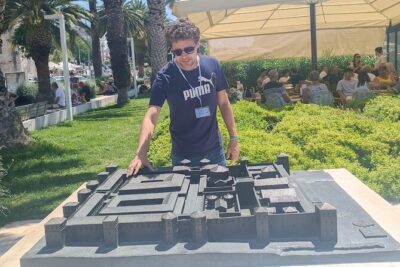
Split Walking Tour with Professor of History
Read our review →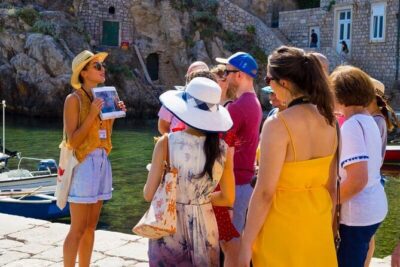
Split History and Gastro Small-Group Tour with Food and Drinks
Read our review →
PREMIUM Emperor’s Walking Tour for History Lovers + Museum
Read our review →Browse the lists this tour appears in