
Reviewed · HISTORICAL TOURS
Explore layers of Pula’s History in German or English
Roman Pula makes sense fast. This 2-hour walk connects the city’s big Roman landmarks into one easy storyline, with history explained in English and sometimes German depending on the departure. I especially love the way the guide makes the stones readable, and how the pace stays friendly instead of rushing you past everything.
Two things I like a lot: main highlights in a tight loop and real storytelling from a local guide, with some groups even noting guides like Erwin for tons of facts plus personal context. One thing to plan for: admission tickets are not included for key stops like the Temple of Augustus, the Pula Arena, and the Historical and Maritime Museum of Istria.
You start right in the old-town area at Forum b.b and finish back there. Expect a small group feel, with a maximum of 30 travelers, and a mobile ticket you can use on the day.
In This Review
- Key Highlights Worth Booking
- Entering Roman Pula Starts at the Forum
- Temple of Augustus at Forum b.b (and the first ticket detail)
- Arch of the Sergii: A quick stop with real civic weight
- Gate of Hercules: Same timing, different vibe
- Twin Gates of Pula, plus that fun secret passage idea
- Pula Arena: The main draw, with extra tickets to plan for
- Historical and Maritime Museum of Istria: Defensive castle views
- Franciscan Monastery of St. Francis of Assisi: A calm church finish
- What the Guide Does That Makes the Walk Work
- Price and Value: $17.04 for the route, plus extra entry fees
- Timing, Comfort, and How to Pair It With Your Own Pula Plans
- Should You Book This Walking Tour?
- FAQ
- How long is the Pula history walking tour?
- Where does the tour start?
- Is the tour offered in English?
- What is the price per person?
- Is admission included for all stops?
- Which stops have free admission?
- Which stops do not include admission tickets?
- How many people are in the maximum group?
- Can I use a mobile ticket?
- What if the weather is bad or I cancel?
Key Highlights Worth Booking
- A focused 2-hour route that hits Pula’s most important Roman sites without overdoing museum time
- Free monuments balance the paid ones, including the Arch of the Sergii, Gate of Hercules, and Twin Gates
- Clear guide-led context, including helpful visuals mentioned by past participants
- Small group limit (up to 30) for a calmer walking experience
- Mobile ticket and group discounts, which can help value if you’re splitting costs
- Ends where you start, so it’s easy to continue exploring on your own
Entering Roman Pula Starts at the Forum
Pula is one of those cities where ruins are not tucked away. They’re placed right in your path, in busy squares and quiet corners alike. This tour is built for that reality. You walk a short distance at a time, and each stop explains what you’re looking at and why it mattered.
The biggest win for you is that the route feels like a guided “map in your head.” Instead of treating each monument as a random photo spot, you start seeing the city as a connected Roman world. And because the total time is about 2 hours, you can still roam afterward without feeling like you’ve burned your whole day.
Temple of Augustus at Forum b.b (and the first ticket detail)
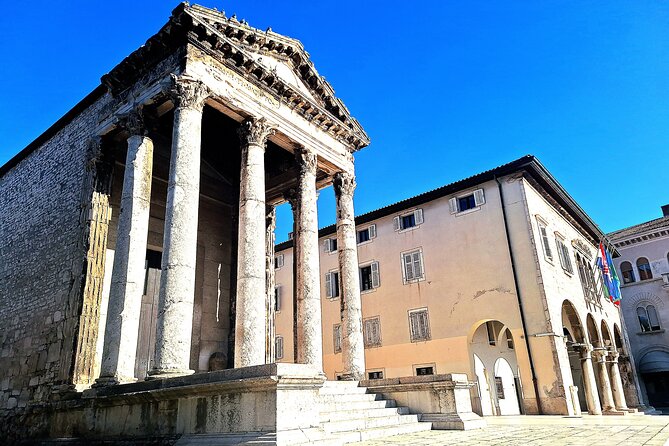
Your walk begins at Temple of Augustus, starting at Forum b.b in Pula. This is a great first stop because it sets the tone. You get an introduction to the city and its story before you start hopping between arches, gates, and major civic sites.
The practical bit: admission tickets are not included here. You’ll want to budget for that if you plan to enter rather than just view from outside. The good news is you’re only at this stop about 15 minutes, so you’re not stuck in ticket lines for half your tour.
One small travel tip: arrive with a basic idea of what you want from this monument. If you’re the kind of traveler who likes to read and connect dots, this opening stop will click fast.
More Venetian stones and Roman streets:
- Pula: Historic Walking Tour with Local Guide & City Views★ 4.8 · 214 reviews
- Pula: Historic Sites Guided Walking Tour★ 4.8 · 78 reviews
- Olive Oil Guided Tasting and History in Pula★ 4.5 · 34 reviews
Arch of the Sergii: A quick stop with real civic weight
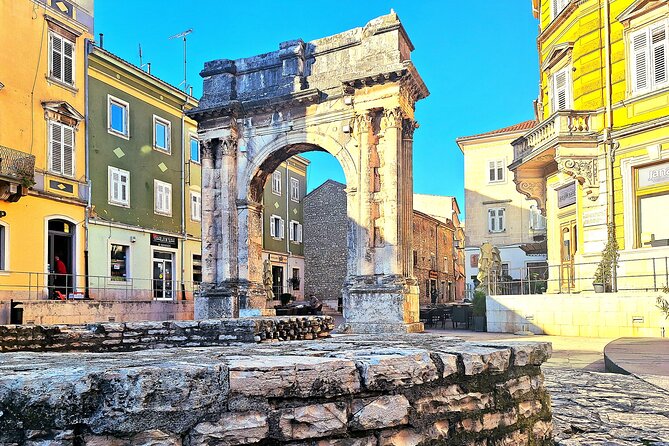
Next up is the Arch of the Sergii. This is one of those monuments that looks simple until someone explains what it’s tied to. Here, the tour keeps you moving, with about 15 minutes for this stop.
Admission is free, so you can treat it as a walk-by that still feels meaningful. The best way to enjoy it is to slow down for the explanation, then take your photos with the story in mind. Even if you only spend a few minutes at the arch itself, the context tends to make it more satisfying.
If you’re the type who likes short breaks during walking tours, this is a good tempo change. It also helps you avoid the feeling of “only big stops count.”
Gate of Hercules: Same timing, different vibe
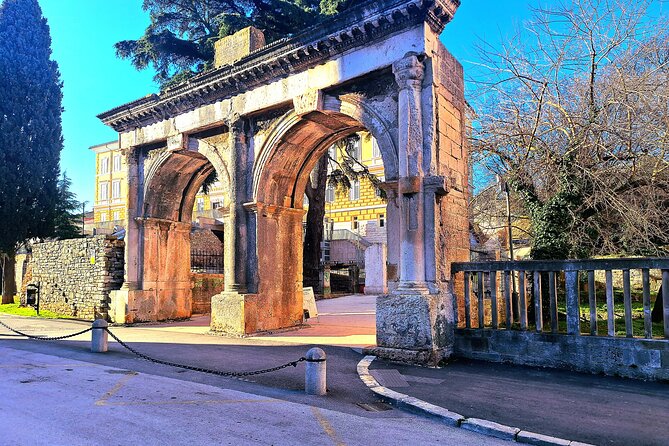
Then you reach the Gate of Hercules. Like the Arch of the Sergii, this is another monument that benefits from guided interpretation. You’ll be there about 15 minutes, which is enough time to understand the significance and still keep the tour energy up.
This stop also has free admission. In other words, it’s a good place to focus on details you might otherwise miss. Look around your surroundings too. Roman-era sites often connect to later street patterns, so the setting itself becomes part of the story.
Twin Gates of Pula, plus that fun secret passage idea
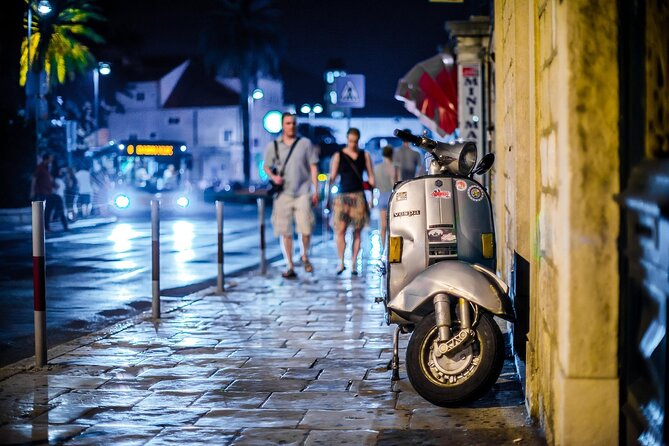
The Twin Gates of Pula are the kind of stop that feels like a movie set. The tour describes them as spectacular from ancient times, and it also highlights a detail that makes them stand out: a secret passage leading to the city castle.
You’ll get about 10 minutes at this stop, with free admission. Ten minutes sounds short, but for gates and viewpoints, it usually works. You’re not trying to read an entire museum label wall. You’re trying to absorb what the place is and why it matters.
If you’re thinking ahead for your own exploring after the tour, this is one stop that can give you a stronger reason to walk toward the castle area on your own, even if you don’t plan to go inside immediately.
Still riding at anchor off Pula
- Pula: Arena Entrance Ticket
★ 4.3 · 2,590 reviews - Medulin -Kamenjak 5h boat trip with lunch & drinks on Sandra Boat
★ 5.0 · 1,621 reviews - Full-Day Boat Tour of the Medulin Archipelago from Medulin
★ 5.0 · 1,389 reviews - 3hours all inclusive Sunset&Dolphin Tour from Medulin on Sandra
★ 5.0 · 1,130 reviews
Pula Arena: The main draw, with extra tickets to plan for
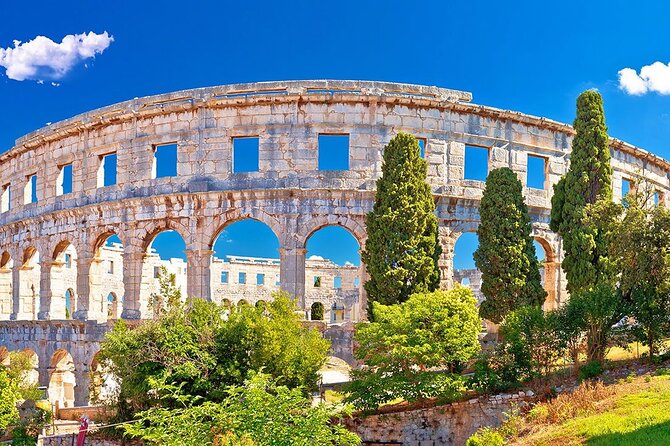
Now you get to the big one, Pula Arena, Pula’s famous Roman amphitheatre. This is typically the stop people most want to see, and the tour frames it as a monument designed for entertainment.
You’ll spend about 15 minutes here. And this is where your ticket plan matters: admission is not included. Past participants also flagged that the Arena visit is not bundled with entry, so you should expect to pay for the ticket separately if you want full access.
Is it still worth it without the included entry? Usually yes, if you want the context. Seeing the building first through an explanation makes the photos look better, and the structure makes more sense when you know what you’re looking at.
If you’re the type who wants more time inside an arena, you can use the tour’s introduction as the warm-up, then return later for a longer stop. This tour keeps you moving, which is its style.
Historical and Maritime Museum of Istria: Defensive castle views
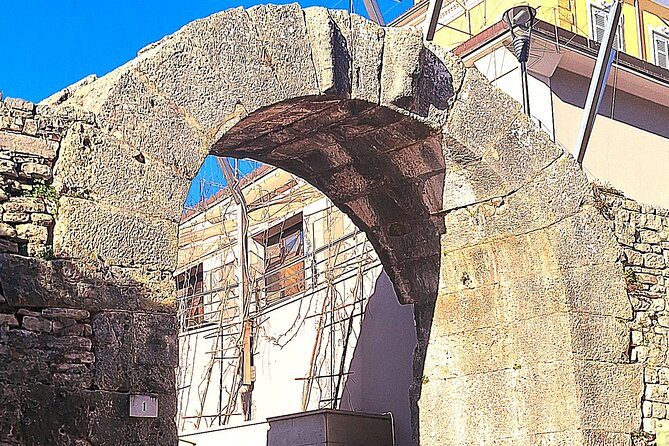
After the arena, you’ll head to the Historical and Maritime Museum of Istria. The tour positions it as a look at the town’s main defense area around a castle, surrounded by many churches.
You’ll get about 10 minutes here, and admission is not included. That means you’ll likely make a choice: enjoy the setting and exterior context quickly, or pay to enter if it’s a priority for you. Either way, it’s a smart pivot point because it shifts your mindset from games and public spectacle to protection, trade, and daily survival.
The best way to get value in a shorter stop is to treat it like a compass. You don’t need to read everything. You just want enough context to understand why this area matters and how the museum fits into Pula’s bigger story.
Franciscan Monastery of St. Francis of Assisi: A calm church finish
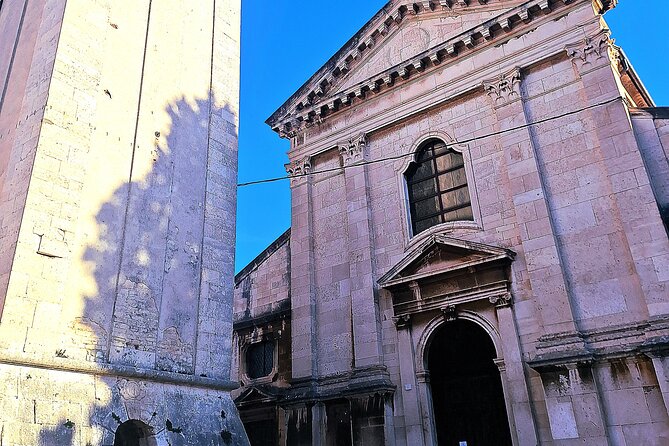
The tour wraps with the Franciscan Monastery of St. Francis of Assisi. This is your final step, around 10 minutes, with free admission.
Ending here works because it brings you back to the human scale of the city. After Roman arches and amphitheatre thinking, a monastery stop gives you a different lens. It’s also a tidy way to close the loop, since the tour has already been focusing on what Pula was and how it changed over time.
If your feet are tired by now, this ending still feels worthwhile because it’s low-pressure. You’re not dealing with tickets at this point, and you can focus on the church atmosphere and surroundings.
What the Guide Does That Makes the Walk Work
A walking tour can be either a list of stops or a story. This one leans hard toward story. The strongest praise centers on guides being friendly, flexible with the route, and great at explaining how each building connects to the city’s past.
One recurring theme in feedback is that guides don’t just name monuments. They add facts in a way that’s easy to follow. Some groups also mentioned having photos showing what areas looked like in the past and how they’ve changed. That kind of visual anchor is powerful in Pula, because so much of the charm is in contrasts: old walls beside modern streets, and “then and now” in the same frame.
If you meet a guide like Erwin, expect a personal tone and lots of specific information. Even if your guide is someone else, the style is clearly meant to keep you engaged, not just passing by stone.
Price and Value: $17.04 for the route, plus extra entry fees
The price is $17.04 per person, and the tour lasts about 2 hours. For a 7-stop walking route with a local guide, that’s generally solid value, especially since several monuments are free to view and stop at.
Here’s the honest value math you should do before booking:
- Some major sites require separate admissions: Temple of Augustus, Pula Arena, and Historical and Maritime Museum of Istria.
- Several other stops are free: Arch of the Sergii, Gate of Hercules, Twin Gates of Pula, and Franciscan Monastery.
So the ticket you’re paying for is really the guided experience and route structure. You’re not buying a full “all-in” ticket package. If you already planned to enter the Arena or museum anyway, this tour can save you time and help you understand what you’re seeing once you pay.
Also note the maximum of 30 travelers. That matters. Smaller groups usually mean fewer interruptions and more chance to ask questions without getting lost in the crowd.
Timing, Comfort, and How to Pair It With Your Own Pula Plans
This tour is designed as a morning or early-day type activity, because you need energy for the short walks between stops. It also works well as an orientation tour. You’ll come away knowing where the big monuments cluster, so your later self-guided exploring is easier.
For comfort, wear shoes you trust on uneven old-town surfaces. Even if each stop is only 10 to 15 minutes, you still want your feet to feel good.
After the tour ends back at the meeting point, I recommend using that momentum to do one or two longer looks. For example, if the Arena caught your attention, plan your return for a longer visit. If churches and monastery vibes appeal to you, continue in that direction on foot since the tour ends with that theme.
Because the tour is only about 2 hours, it pairs neatly with lunch nearby and a flexible second half of your day.
Should You Book This Walking Tour?
You should book this tour if you want a guided, efficient way to connect Pula’s Roman sites into a single storyline. The short stop times, the small group size, and the focus on explaining what you’re seeing make it a smart pick for first-time visitors.
Skip or adjust your expectations if you strongly prefer fully included entrances and long museum time. Since admissions are not included for key stops like Pula Arena and the Temple of Augustus, you’ll pay extra if you want to go inside.
My simple decision rule:
- If you’re curious about meaning and context, book it.
- If you’re only interested in one site and already know exactly what you want, you might choose to spend your money on that entry instead.
FAQ
How long is the Pula history walking tour?
The tour is approximately 2 hours.
Where does the tour start?
The tour starts at Forum b.b, 52100, Pula, Croatia.
Is the tour offered in English?
English is listed as the offered language. The tour is also described as being available in German or English depending on the option.
What is the price per person?
The price is $17.04 per person.
Is admission included for all stops?
No. Admission tickets are not included for some key locations, and free admission applies to others.
Which stops have free admission?
Free admission is listed for the Arch of the Sergii, Gate of Hercules, Twin Gates of Pula, and the Franciscan Monastery of St. Francis of Assisi.
Which stops do not include admission tickets?
Admission tickets are not included for the Temple of Augustus, Pula Arena, and the Historical and Maritime Museum of Istria.
How many people are in the maximum group?
The tour has a maximum of 30 travelers.
Can I use a mobile ticket?
Yes, it’s listed as having a mobile ticket.
What if the weather is bad or I cancel?
The experience requires good weather. Cancellation is free up to 24 hours before the start time for a full refund, and within 24 hours the amount paid is not refunded. It can also be canceled if a minimum number of travelers is not met.
Latest arrivals logged at Pula







Historical Tours, compared.
Walking Tour of Split with a ‘Magister’ of History
Read our review →
Split Walking Tour with Professor of History
Read our review →
Split History and Gastro Small-Group Tour with Food and Drinks
Read our review →
PREMIUM Emperor’s Walking Tour for History Lovers + Museum
Read our review →Browse the lists this tour appears in