

Reviewed · WINE TOURS
Zagreb Restaurants Food & Wine Tasting with Old Town Walking Tour
Zagreb tastes better when you walk its old streets, and this 3 to 4 hour food and wine walk strings together tastings and landmarks from Jelačić Square to the Bloody Bridge. I love the regional food variety (Istria cold starters, Zagreb and Zagorje mains, and a dessert finale) and the small group pace that makes it easy to ask questions. The main tradeoff is that it is a serious walking tour, so wear real shoes and expect lots of steps.
Each stop is tied to the city around it, and the professional local guide can adapt if you have dietary needs, including vegetarian choices, and can also keep non-drinkers happy with non-alcoholic options. I’d go for it for the included tasting set: up to 5 Croatian dishes, plus rakija and three wine sorts, with the alcohol portion served only for people 18 and up.
In This Review
- Key highlights before you go
- Price, duration, and what you’re really paying for
- Meeting point at Ban Josip Jelačić Square, right where Zagreb splits into two worlds
- European Square and the miniature city model
- Stop for Istrian cold appetizers, plus wine that matches the region
- Dolac Market, the food stop that explains Zagreb to you
- Second restaurant stop near Dolac: warm Zagreb-region appetizers
- Tkalčićeva Street, lively local street life between meals and monuments
- Stone Gate and the quiet side of old-town Zagreb
- Zagreb Cathedral: Gothic spires you can spot from all over
- St Mark’s Square and the political heart of old town
- Lotrščak Tower and Gradec’s defensive roots
- Uspinjača funicular ride and the “shortest” stairs moment
- Strossmayer promenade for panoramic photos and perspective
- Tunnel Grič and Bloody Bridge: war-era space plus a legend of conflict
- Third restaurant: Mesnička ul. 6 and the Zagreb plus Zagorje main dish
- The dessert finale at Skalinska ul. 5, with surprise sweetness and dessert wine
- Alcohol rules, vegetarian options, and how to handle allergies
- How to get the most out of a 4-hour walking food tour
- Should you book this Zagreb food and wine tasting walk?
Key highlights before you go

- Up to 5 Croatian dishes across multiple regions, not just one repetitive restaurant menu
- Rakija tasting and three wine sorts, with clear age rules for alcohol service
- Dolac Market as a cultural anchor, famous since 1930
- Old town sights as food-waypoints, from Stone Gate to Zagreb Cathedral
- Max 9 people in the group, which helps with pacing and questions
- View moments built into the route, including Strossmayer promenade
Price, duration, and what you’re really paying for
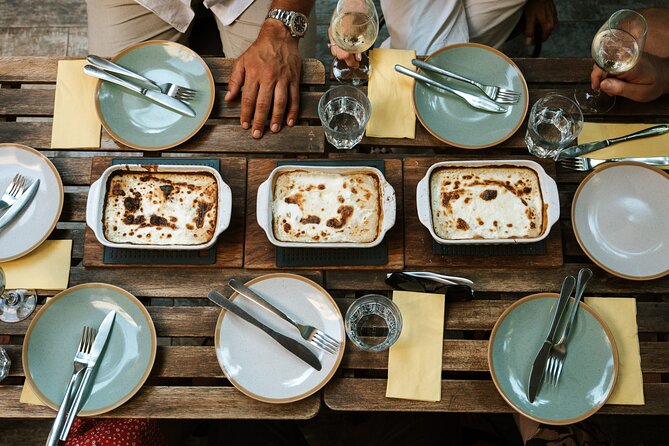
At $107.17 per person, this isn’t a budget snack-and-stroll. What makes it feel fair is what’s included. You get a professional local guide, tastings of up to 5 Croatian dishes, a rakija tasting, and three different Croatian wine sorts. That’s a lot of structured food value for a half-afternoon.
Timing matters too. The tour runs about 3 to 4 hours, starting at 4:00 pm. You’ll spend a lot of that time walking between stops, so the “worth it” factor depends on whether you like moving and grazing instead of sitting through one long meal.
One more practical note: there’s no hotel pickup, and the group size is kept small, with a maximum of 9 people. In other words, show up at the meeting point ready to go.
Meeting point at Ban Josip Jelačić Square, right where Zagreb splits into two worlds
The tour starts at Trg J. Jelačića (Ban Jelačić Square), in the area called Gornji Grad – Medveščak. I like this start because the square functions as a reference point. It’s the heart of the city, and it sits below the old-town cores of Kaptol and Gradec.
Even before you taste anything, you’re getting geographic context. Zagreb’s layout is part of the story here, and that “two-part city” idea comes back later near the Bloody Bridge.
What to watch for: the square is a real-life hub for events today, and it used to be a marketplace back in the 1600s. That continuity makes the old-town walking feel grounded instead of staged.
More Food Tours in Zagreb
- Zagreb: Restaurants, Food & Old Town Walking Tour★ 5.0 · 191 reviews
- Zagreb: Restaurants, Food & Old Town Walking Tour★ 4.7 · 170 reviews
- Zagreb: Food Tour with Tastings★ 4.9 · 153 reviews
European Square and the miniature city model
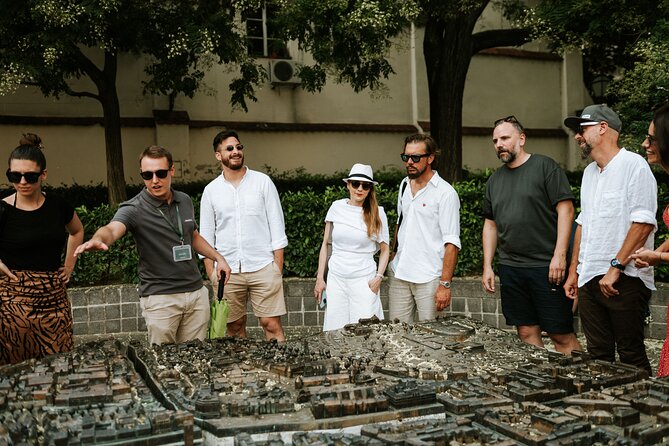
After a short walk, you reach European Square, near the cathedral area. This is a quick orientation stop, and I appreciate that the tour adds something that helps your brain “map” the city.
You can see a miniature model of Zagreb with major locations and streets. It’s one of those simple tools that makes later landmarks click faster, especially if it’s your first time in Zagreb.
There are also often outdoor events here, which gives the area a lively feel even when you’re just passing through.
Stop for Istrian cold appetizers, plus wine that matches the region
Your first restaurant stop is on Ul. Augusta Cesarca 2, and it’s built around Istrian flavors. Expect a cold appetizer concept that ties back to Istria’s culinary customs, along with a regional wine and a region-specific cold dish.
This matters because it sets the tone: you’re not just sampling random plates. You’re getting a mini lesson in how geography shapes food in Croatia. Istria is its own world, and tasting it early gives you something to compare with the later Zagreb and Zagorje dishes.
Also, the tour includes rakija and multiple wine tastings overall. Alcohol will follow the stated age rules (18+ only), but the structure is the same: learn, taste, move on.
Dolac Market, the food stop that explains Zagreb to you
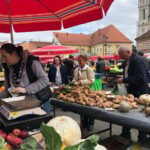
Then you walk into Dolac Market, a farmers market that’s been a major Zagreb fixture since 1930. This is more than a scenic stop. It gives you the cultural logic behind the tastings: where local food comes from, how the market tradition has shaped everyday eating, and why this area is still so central.
Dolac is a mix of an open-air market and a sheltered section next to it. I like that design because it reflects how people shop in real weather, not just in postcards.
The practical tradeoff: because it’s a market area, it can be busy and lively, so give yourself a little space to watch and listen while staying on schedule.
More Walking Tours in Zagreb
- Zagreb: City and WWII Tunnels Walking Tour
★ 4.9 · 1,230 reviews - Zagreb: City & History Walking Tour & WW2 Tunnels
★ 4.9 · 1,202 reviews - Walking tour of Zagreb
★ 5.0 · 383 reviews - Zagreb Small Group Guided Walking Tour with WW2 Tunnels
★ 5.0 · 380 reviews
Second restaurant stop near Dolac: warm Zagreb-region appetizers
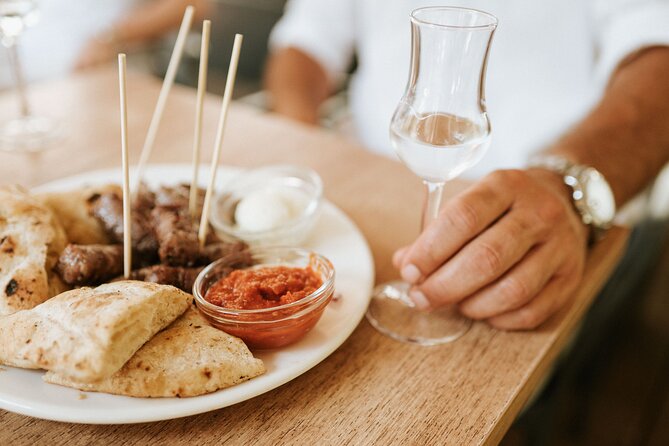
At Dolac 2, the focus switches from Istrian cold starters to warm appetizers from the Zagreb region. This is the moment that usually helps the tour click. After the walk and the first tasting, warm food tends to feel like a reward, and it makes the remaining walking more comfortable.
You’ll also learn about Zagreb culinary culture through what’s served. The warm shift matters for pacing, too. It’s a “keep going” step, not a “sit and linger” step.
Tkalčićeva Street, lively local street life between meals and monuments
Next comes Tkalčićeva Street (the tour passes through many cafes, smaller restaurants, and traditional shops and boutiques). This is your street-level introduction to the “past and present” vibe of Zagreb, and it’s a nice reset between heavier landmarks.
I like this segment because it breaks the pattern. You’ve had a square, a model, a restaurant, and a market. Now you’re seeing the everyday city feel that makes old-town sights more than just buildings.
Stone Gate and the quiet side of old-town Zagreb
The walk continues to the Stone Gate, one of Zagreb’s important monuments. It was part of the city’s 13th-century defense system and now functions as an oath site where many people visit to pray and light candles.
This stop shifts the mood. After shopping streets and food areas, you get something serene and still. It’s a good reminder that this old-town route isn’t only about restaurants. It’s also about the meanings places hold for locals.
Zagreb Cathedral: Gothic spires you can spot from all over
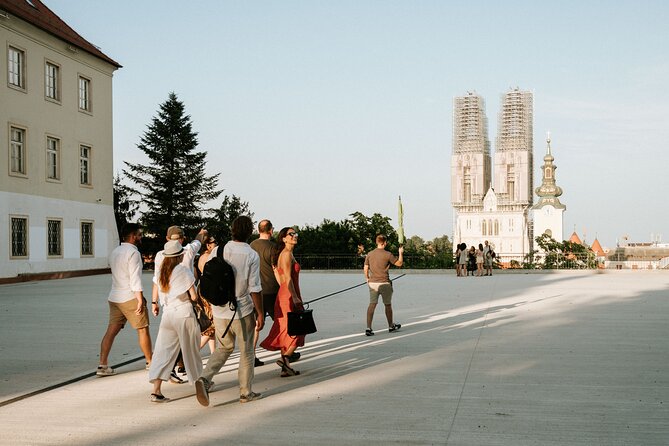
Then you reach the Cathedral of Zagreb, a Roman Catholic church in Gothic style. One detail I find especially useful for orientation is the scale: it’s described as the second tallest building in Croatia, and its two spires are visible from various parts of the city.
The tour also mentions a treasury connected to the cathedral, housing important religious documents and items. Even if you don’t plan a deep visit inside, knowing the treasury exists gives you extra context when you look at the building and ask questions.
St Mark’s Square and the political heart of old town
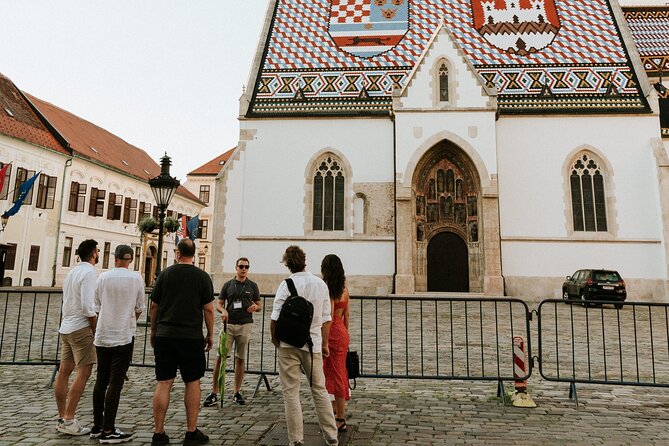
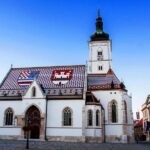
Next is Saint Mark’s Square, which shares its name with a church and is also the location of the Croatian Parliament. This is a strong “structure” stop. You see how old-town space can function in modern civic life.
It also helps connect the route’s earlier defensive theme (Stone Gate, Lotrščak) to something present-day and national. Zagreb’s old streets aren’t frozen in time.
Lotrščak Tower and Gradec’s defensive roots
From St Mark’s Square, you head toward Lotrščak Tower, located in Gradec. The tour frames it as a symbol of Zagreb, a formidable defense tower and one of the last remnants of the old defense system.
I like this stop because Gradec feels like a different “side” of Zagreb from Kaptol. You’re not only crossing streets, you’re moving through layers of city identity. That becomes even more clear later near Bloody Bridge.
Uspinjača funicular ride and the “shortest” stairs moment
On the way to the third restaurant stop, you pass by Uspinjača, described as the world’s shortest funicular ride. You’ll also see the Uspinjača stairs, which are tied into this transport connection.
It’s a small stop, but it adds variety to the walking. You get a sense of how locals handle elevation in a hill-ringed city without turning the whole tour into a nonstop uphill grind.
Strossmayer promenade for panoramic photos and perspective
This route includes Strossmayerovo šetalište, an iconic promenade known for panoramic views. This is your “pause and look” segment, and it matters more than it sounds.
When you see Zagreb from up high, the earlier bits click: Kaptol versus Gradec, the old core, and the street grid you’re walking through. Your photos will look better too, because the setting gives depth to everything.
If you hate photo stops, at least do a quick look. It gives your feet a reason to feel okay about the next stretch.
Tunnel Grič and Bloody Bridge: war-era space plus a legend of conflict
After the promenade, the tour moves toward an area with a darker story. It passes by Tunnel Grič, built during World War 2. The tour notes it was originally used as a bomb shelter and later served as a pedestrian tunnel and promenade.
Even if you only see the space during the walk-through, it’s a useful historical stop. It connects the “old town defense” narrative to the 20th-century reality that shaped the city.
Then you reach Krvavi Most (the Bloody Bridge) area. The name comes from conflicts between Kaptol and Gradec, the two settlements that later formed Zagreb as a unified city. It’s a short street segment, but the story is big.
This stop is one reason the tour works as more than food. You’re tasting along a route that has real reasons to feel intense at points.
Third restaurant: Mesnička ul. 6 and the Zagreb plus Zagorje main dish
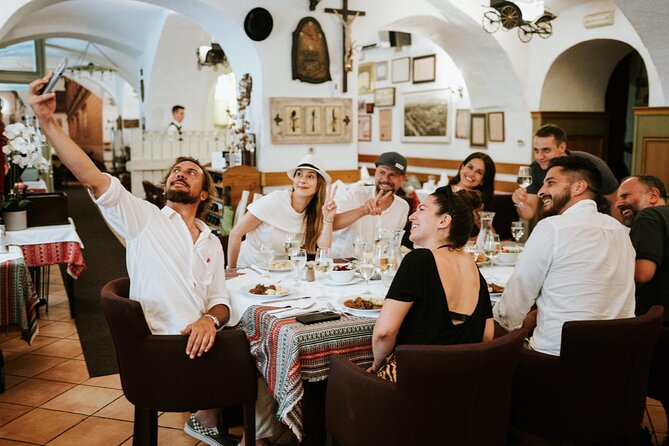
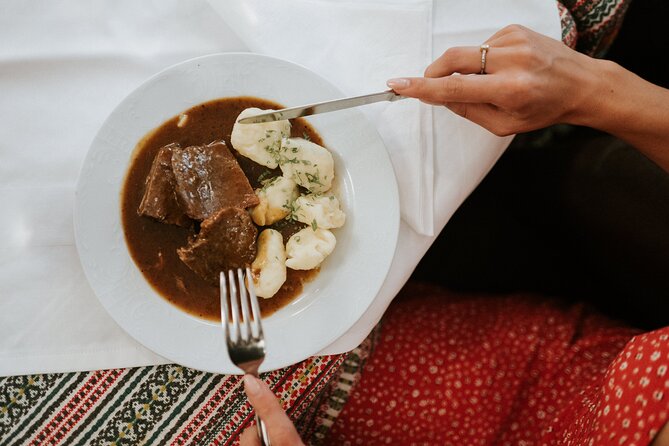
At Mesnička ul. 6, you get to experience a main dish specific to Zagreb and Zagorje. The tour also notes the restaurant houses historical replicas and fascinating pictures, which can add interest while you eat.
This is the part of the tour where you’ll likely feel the most “full,” so pace your bites and keep room for the last sweet stop.
The Zagorje angle is also a smart move. Zagreb-region food can be broad in what it includes, and connecting it to Zagorje helps you understand Croatia’s regional variation in a way a single restaurant menu can’t do.
The dessert finale at Skalinska ul. 5, with surprise sweetness and dessert wine
The tour ends at Skalinska ul. 5 with a regional dessert that stays a surprise. Alongside it, you’ll taste several regional wines specifically used for desserts.
Dessert wine is the kind of tasting that can feel unfamiliar if you normally stick to table wine. I like this ending because it turns the “food tour” into a true tasting experience, not just a single sweet plate at the end.
Then you finish in the area around Ul. Ivana Tkalčića 16, where the walking route concludes.
Alcohol rules, vegetarian options, and how to handle allergies
Here’s what you should know up front.
- Alcohol service is only for people 18 and up. If you’re under 18, you’ll be served non-alcoholic drinks.
- The tour says they can accommodate dietary restrictions such as vegetarian.
- I also like that the tour’s format has enough flexibility for different preferences, including situations where someone doesn’t drink alcohol, while still keeping them in the tasting loop with non-alcoholic drinks.
If you have allergies, treat it as a practical step: mention it clearly when you book and again to the guide at the start. You’ll move through five tastings, so clarity matters more than hoping for the best.
How to get the most out of a 4-hour walking food tour
This is a walking-heavy experience. I’d plan for a steady pace across squares, market streets, and hill-adjacent old town areas.
My practical advice:
- Wear comfortable, supportive shoes. The route includes a funicular/stairs area and a lot of “no big detours” walking.
- Bring a light layer. It’s an afternoon start at 4:00 pm, and old streets can feel cooler near open squares.
- Pace your eating. You’re tasting, not ordering a full meal at each stop, but the totals still add up.
Because the group is capped at 9 people, the guide can usually keep you together without rushing you into awkward standstills. Still, your comfort comes down to your shoes and your willingness to keep moving.
Should you book this Zagreb food and wine tasting walk?
Book it if you want your Zagreb visit to mix food, local streets, and meaningful landmarks in one half-day. The biggest win is that you’re not just “trying dishes.” You’re learning how regions show up on plates, from Istria cold starters to Zagreb and Zagorje main dishes, then a dessert finish with dessert wines.
Skip it or rethink it if you hate walking or you want a more restful plan built around one long sit-down meal. This is a route, not a single restaurant.
If you’re on your first or second day in Zagreb, this works especially well as a way to get oriented. You’ll end the walk with a mental map of the old core, plus a much better sense of what people actually eat and celebrate in the city.
Courses by the Sea


More Wine Tours in Zagreb

Latest arrivals logged at Zagreb


Wine Tours, compared.
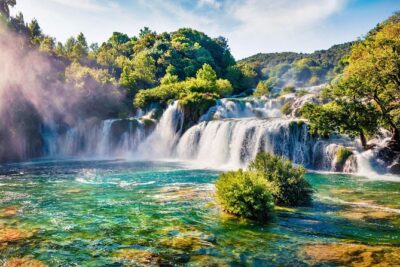
Krka National Park Tour with tour Guide & Wine tasting from Split & Trogir
Read our review →


Guided Speedboat Tour with Food, Oil & Wine Tasting
Read our review →Browse the lists this tour appears in