
Reviewed · WALKING TOURS
Zagreb Small Group Guided Walking Tour with WW2 Tunnels
Zagreb hides a WWII secret underground. This walking tour strings together the city’s big landmarks and daily rituals, with a real WW2-era stop plus classic Upper Town views.
I like the small group size (up to 16). It makes the tour feel human, and you actually get time for questions, even when the route gets busy in the squares.
My other favorite is the mix of famous sights with practical local context. You get your bearings fast, then you learn how Zagreb works at street level, from coffee culture on Tkalčićeva to the daily cannon moment. One thing to plan around: the WWII tunnel and funicular can be unavailable depending on conditions, so your best move is to go in flexible.
In This Review
- What You’re Really Getting: Zagreb in 2.5 Hours, Not a Checklist
- Zrinjevac Start and Jelacic Square: Your Orientation Without the Museum Vibe
- Cathedral, Dolac Market, and Tkalciceva: Architecture and Real Food Talk
- Gric Tunnel and Lotrscak Tower: The Stops With the Most “Wow” per Minute
- The Funicular Question: A Classic Ride, But Confirm It
- Upper Town (Gornji Grad or Gradec): Views, Parliament Seats, and St Mark’s Roof
- Petrini Pyli and Stone Gate Finale: A Small Ending With a Strong Image
- Guides, Pace, and Group Size: What Makes This Tour Feel Good
- Value for Money: Why This $24.20 Feels Fair
- Who Should Book This Zagreb Walking Tour With WWII Tunnels
- Should You Book This Tour?
- FAQ
- How long is the Zagreb small group guided walking tour with WW2 tunnels?
- Where does the tour start and end?
- Is the tour offered in English?
- What is included in the price?
- Can I visit the WWII Gric Tunnel on every departure?
- Is the funicular guaranteed to be operating?
- Is Dolac Market part of the tour every time?
- How big is the group?
- Is the tour fairly active, like lots of stairs?
- Can I cancel, and do I need good weather?
What You’re Really Getting: Zagreb in 2.5 Hours, Not a Checklist
This tour is built for first-time Zagreb visitors who want a strong sense of the city quickly. You cover medieval Upper Town, key squares, major churches, and two headline “Zagreb moments”: the WWII Gric Tunnel and the noon cannon at Lotrščak Tower.
The best part is that it is not just photos. The stops are arranged so you feel how Zagreb “steps up” from the lower center to the old Gradec hilltop. Along the way, your guide explains how places fit together, from why locals meet at Ban Jelačić Square to how the city name ties to the main square area.
Also, this is sold as a small-group experience. In the reviews, guides like Petra, Tom, Tomislav, and Maya show up often, and what stands out is the way they teach: clear stories, patience with questions, and a pace that usually feels right. That matters, because Zagreb is compact, but it is not flat.
Zrinjevac Start and Jelacic Square: Your Orientation Without the Museum Vibe
The walk starts at Zrinjevac Park, in front of the meteorological station. There is a small display there showing temperature and barometric pressure on the north side of the park. It is a tiny detail, but it is a very Zagreb-style welcome: practical, local, and historical.
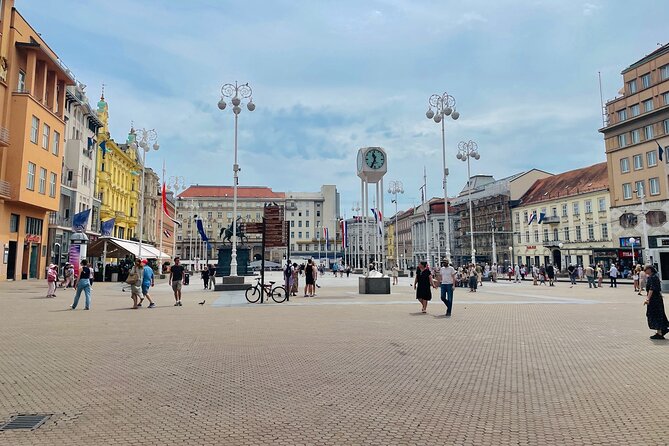
From there you head to Ban Jelačić Square, the city’s main meeting spot. This is where your guide explains how Zagreb got its name and why this square functions like a social hub. Even if you have only been in town a few hours, you leave with a mental map of where everything “pulls” you.
Why I like this early section: it gives you context before you start climbing. By the time you reach the cathedral and markets later, you understand what you are looking at and why it matters.
Possible drawback to note: if you arrive late or start off rushing, it can be harder to catch the story in the first minutes. The tour is only around 2 hours 30 minutes, so early minutes count.
Cathedral, Dolac Market, and Tkalciceva: Architecture and Real Food Talk
Next up is the Cathedral of Zagreb, a monumental Neo-Gothic landmark that can feel surprisingly impressive for a city walk. The outside alone is worth your attention, but the guide’s job is to help you “read” the building, not just admire it.
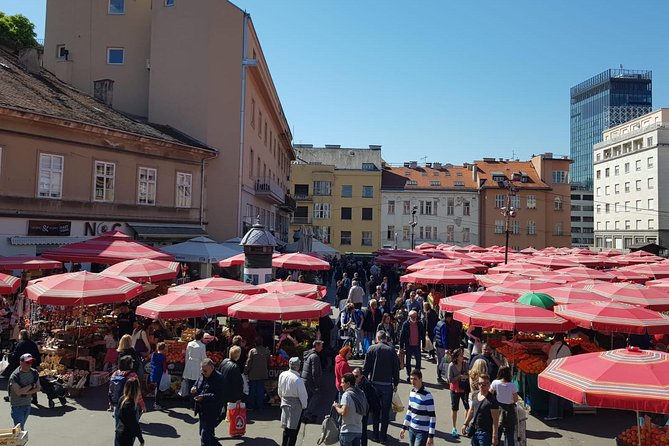
Then you move to Dolac Market, the largest farmers market of Croatia. This is where Zagreb’s food culture becomes visible instead of theoretical. You learn about the statue to Kumica and get the kind of explanation that helps you understand why markets are more than groceries in this region.
Two practical notes for timing:
- Dolac Market is closed for afternoon tours and on public holidays. If your departure lands later in the day, the stop may not match what you see in guide photos.
- The tour duration is short enough that market timing can affect how much you get to do. If you love food stops, you may want to choose a time that gives you a full market moment.
After Dolac, the route goes to Tkalčićeva Street, known as the bar street. Here you hear about lounging and coffee culture in Croatia, which is a nice counterpoint to the WW2 tunnel later in the day. It also helps you understand why Zagreb people seem to treat evenings and conversations as part of the city rhythm, not an afterthought.
More Walking Tours in Zagreb
- Zagreb: City and WWII Tunnels Walking Tour★ 4.9 · 1,230 reviews
- Zagreb: City & History Walking Tour & WW2 Tunnels★ 4.9 · 1,202 reviews
- Walking tour of Zagreb★ 5.0 · 383 reviews
Gric Tunnel and Lotrscak Tower: The Stops With the Most “Wow” per Minute
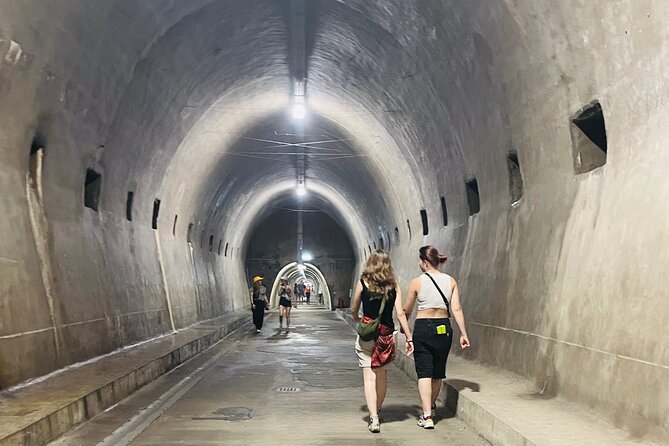
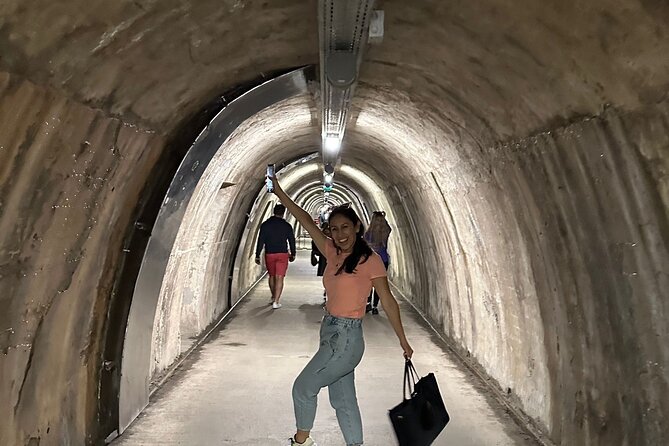
This is the centerpiece sequence. You visit Tunel Gric, a WWII-era tunnel. It is built during the war years, and the stop can be a major highlight because it turns history into something physical under your feet.
A key reality check: the tunnel may be closed to visitors if there is an exhibition, theatre show, or similar event. If it is closed on your day, you will need to accept that your “WWII underground” moment may not happen. The upside is that your guide still gives the surrounding context, and you can still get the full city story even without entering the tunnel.
Then you move to Lotrščak Tower, where you learn about the Gric cannon. The cannon fires each day at noon, marking the midday moment. If your timing works out, this is one of those Zagreb rituals that makes the city feel alive, even if you are just passing through.
One more detail that helps: the tower and cannon stop sits right before the climb into Upper Town. So emotionally, it acts like a beat change, from “under the city” to “over the city.”
The Funicular Question: A Classic Ride, But Confirm It
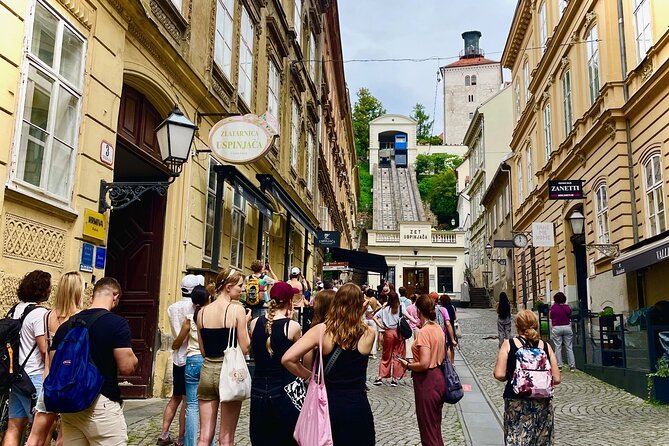
One of the tour highlights is a ride on the city funicular, described as the shortest funicular in the world and the oldest form of public transportation in Zagreb, running for almost 135 years.
But here is the practical gotcha: the funicular is closed due to renovation until March 2026. If your trip lands during that window, you should expect that the funicular ride may not be possible.
You might still enjoy the route. In fact, some departures may mean extra walking uphill and more stairs, especially since the funicular normally helps people reduce that climb. From a comfort standpoint, I would treat this as a “choose your shoes carefully” tour.
Upper Town (Gornji Grad or Gradec): Views, Parliament Seats, and St Mark’s Roof
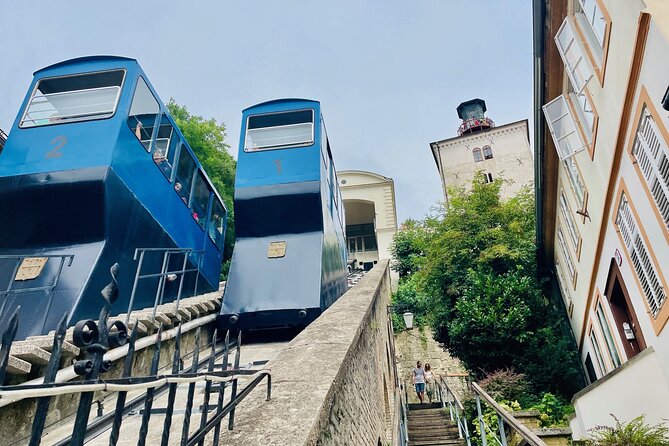
The tour’s long middle stretch is in the Upper Town, or Gornji Grad. This area includes one of the medieval settlements that formed Zagreb, Gradec, so the guide can connect the city’s current shape to its older layers.
You walk the Strossmayer promenade, described as one of the best spots for panoramic views over the rooftops. If you want a “postcard view” that feels real because you are standing there, this is your stop.
Then you hit a cluster of high-value sights:
- The Museum of Broken Relationships from the outside, which gives you a chance to learn about a very specific Zagreb cultural idea.
- The seats of the Croatian Parliament and Government, which adds a modern civic layer to the medieval setting.
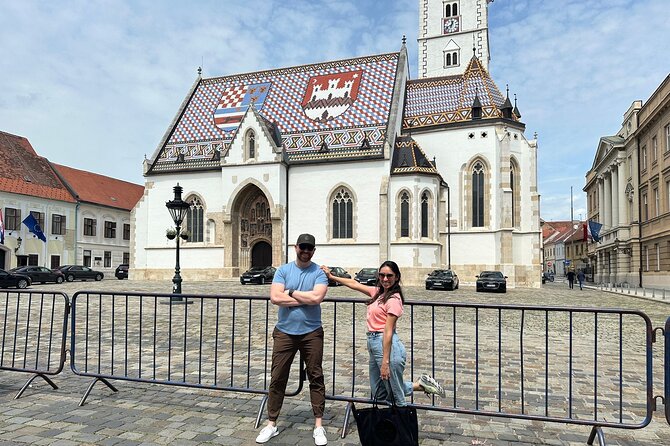
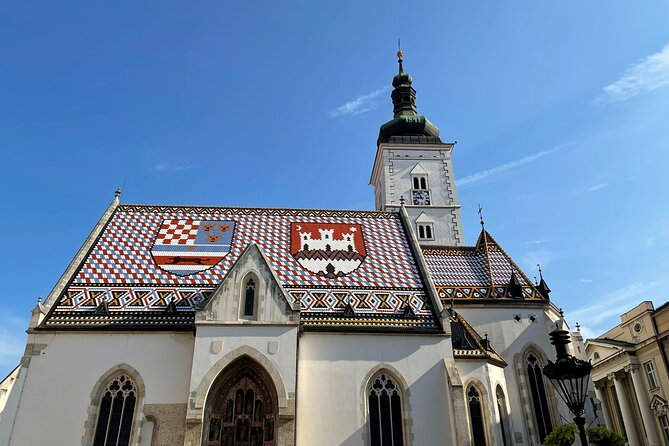
- Saint Mark’s Church, famous for its colorful roof. This roof is one of those details you remember even after you leave the hilltop.
The big value of this section is pacing. You are not just rushing past landmarks. The route gives you a chance to look out over the city, then look back at the story built into the architecture.
Possible drawback: this part takes energy. Even if the total time is only around 2.5 hours, the Upper Town climb is the hardest work on the itinerary. Wear footwear that can handle uneven stone and some incline.
More marble lanes taken slowly:
- Zagreb: Restaurants, Food & Old Town Walking Tour
★ 5.0 · 191 reviews - Zagreb Unveiled: Private walking tour with a local guide
★ 5.0 · 185 reviews - Zagreb: Restaurants, Food & Old Town Walking Tour
★ 4.7 · 170 reviews - Zagreb Private Walking Tour with a local
★ 5.0 · 150 reviews
Petrini Pyli and Stone Gate Finale: A Small Ending With a Strong Image
To finish, you pass Petrini Pyli, also known as the Stone Gate, and you learn why it matters. It is the only medieval city gate that survived to the present day.
Inside the gate area is a small chapel housing a miraculous picture depicting Our Lady, the patron saint of Zagreb. This is the kind of ending that feels quietly personal. It also gives a “wrap-up” moment where the tour’s scattered stops suddenly connect into one theme: Zagreb keeps layers, not eras.
You conclude back at Ban Jelačić Square, where something is always going on. It is a practical finish point too, because it is a central place to catch transit or continue your day planning.
Guides, Pace, and Group Size: What Makes This Tour Feel Good
This is a small-group walk limited to 16 travelers, and that limit is not just marketing. In real terms, it helps your guide manage the flow between stops and keep the group together without turning it into a stampede.
In the reviews, the guides’ strengths show up again and again:
- They often stay engaging and funny without losing accuracy.
- They answer questions patiently.
- They give restaurant recommendations that help you use the rest of your trip more efficiently.
That said, one caution from the overall range of feedback: a walking tour can get stressful if timing slips at one stop. If the tunnel closes or the funicular ride is not possible, the tour still has to cover a lot of ground. That is why I recommend you keep expectations realistic, especially if you have limited time in Zagreb and are juggling other bookings.
Value for Money: Why This $24.20 Feels Fair
At about $24.20 per person, this is strong value for a guided city orientation plus a major “extra” stop. You are not only seeing landmarks, you are getting a story-heavy WW2 site and a timed daily ritual (the cannon firing at noon).
It is also a good deal because the tour includes a licensed local guide, and the itinerary includes stops that normally take time to piece together on your own. Even if you have only one afternoon or a short first visit, you leave with a working map of the city.
The funicular ticket is listed as included, but again, the funicular renovation until March 2026 is the big wildcard. If you are traveling during that time, treat the funicular as a bonus if it runs, not the core promise.
Who Should Book This Zagreb Walking Tour With WWII Tunnels
This tour fits best if you:
- Want a first-day Zagreb orientation with real context.
- Like history, but not in a dry textbook way.
- Appreciate a route that moves between lower center landmarks and Upper Town views.
- Prefer smaller groups where questions feel welcome.
It might be less ideal if you:
- Hate stairs or steep stretches, especially with the funicular not running.
- Need guaranteed access to the WW2 tunnel at all costs. Tunnel access can be affected by events.
If you are choosing between a “high level overview” and a “history stop with impact,” this one leans history with a practical city walking base.
Should You Book This Tour?
Yes, I think you should book it if you want an efficient, story-driven Zagreb introduction that includes a real WWII stop and the noon cannon moment. The small group format and guides who actively engage with questions make it feel worth the time, especially for a first visit.
Just go in knowing the two timing-sensitive pieces: the WWII Gric Tunnel can be closed due to events, and the funicular is under renovation until March 2026. If your priorities include those items, check your day’s situation, wear good shoes for walking, and treat the rest of the route as the core experience.
FAQ
How long is the Zagreb small group guided walking tour with WW2 tunnels?
The tour runs for about 2 hours 30 minutes.
Where does the tour start and end?
It starts at Zrinjevac 2, 10000 Zagreb and ends at Ban Jelačić Square (Trg bana Josipa Jelačića), 10000 Zagreb.
Is the tour offered in English?
Yes, the tour is offered in English.
What is included in the price?
The price includes a licensed local guide, plus admission where applicable and a funicular ride is listed as included.
Can I visit the WWII Gric Tunnel on every departure?
Not always. The Gric Tunnel may be closed to visitors if there is an exhibition, theatre show, or similar event.
Is the funicular guaranteed to be operating?
No. The funicular is closed due to renovation until March 2026, so you may not be able to ride it during that time.
Is Dolac Market part of the tour every time?
Dolac Market is closed for afternoon tours and on public holidays, so your stop timing matters.
How big is the group?
This is a small group with a maximum of 16 travelers.
Is the tour fairly active, like lots of stairs?
You should expect a fair amount of walking. If the funicular is not operating, you may need extra walking, including more stairs, depending on your route that day.
Can I cancel, and do I need good weather?
Cancellation is free up to 24 hours in advance. The tour also requires good weather, and if it is canceled due to poor weather, you are offered a different date or a full refund.
Latest arrivals logged at Zagreb


Walking Tours, compared.
Walking Tour of Split and Diocletian’s Palace
Read our review →
Krka Waterfalls tour with Trogir Walking tour and Krka panoramic boat cruise
Read our review →
City Walls Early Morning or Sunset Walking Tour
Read our review →Browse the lists this tour appears in