

Reviewed · WALKING TOURS
PRIVATE Zagreb walking tour 2.5 hrs
Zagreb clicks into place fast on foot. This private walking tour gives you an organized route through the city’s key landmarks, led by Ivana Ćurić, with story-led stops that connect the sights. I especially like the mix of big-photo classics (like St. Mark’s Church) and street-level life (Dolac Market and the pubs on Tkalča), plus the undivided attention that makes it easy to ask questions. The main thing to keep in mind is that you’ll be walking outdoors most of the time, so plan for solid shoes and expect the tour to depend on good weather.
You’ll also love that the structure is simple: you cover the essentials in about 2.5 hours, then you’re free to roam on your own the rest of the day. The meeting point is the heart of central Zagreb, Trg J. Jelačića, which makes it easy to plug into the rest of your itinerary without backtracking. One possible drawback is the cathedral visit has an entrance time but the Cathedral of Zagreb admission ticket is not included, so you should budget for that one extra cost.
If you want Zagreb orientation without turning your day into a checklist, this kind of guided walk is a smart use of time. It’s offered in English, includes a mix of free stops, and is designed for a moderate walking level. If you prefer slow, long museum-style visits, you may find the pacing brisk, since this tour is built around viewpoints and walking connections between sights.
In This Review
- Key highlights you should care about
- How the 2.5-hour route starts and flows from Jelačić Square
- Cathedral of Zagreb: the first stop sets the tone
- Dolac Market: local food culture without the guesswork
- Kokumi Tkalča and Krvavi Most: the fun street stories side
- Petrini Pyli stone gate: a small stop with big context
- St. Mark’s Church square: where the city becomes visual
- Lotrščak Tower and the approach back toward the center
- Zrinjevac park and the station area, with an included ticket
- Price and value: what you get for $168.58 per person
- Who this Zagreb private walk suits best
- What to do before and after the 2.5-hour walk
- Should you book this private Zagreb walking tour?
- FAQ
- How long is the private Zagreb walking tour?
- Is this tour private?
- Where do we meet, and where does the tour end?
- Is pickup available?
- Are tickets included for every stop?
- What if weather is bad or plans change?
Key highlights you should care about

- Private guide attention means you can tailor questions and move at a pace that suits your group.
- Tight 2.5 to 3 hours covers the core Zagreb sights so you keep the rest of your day for yourself.
- Dolac Market and Tkalča pub street add everyday Zagreb energy, not just monuments.
- Bloody Bridge, Stone Gate, and St. Mark’s Square give you the layered old-town vibe in a single route.
- Lotrščak Tower and Jelačić Square help you understand where the city’s center sits.
- Zrinjevac with included admission rounds out the walk with a more park-and-station feel.
How the 2.5-hour route starts and flows from Jelačić Square
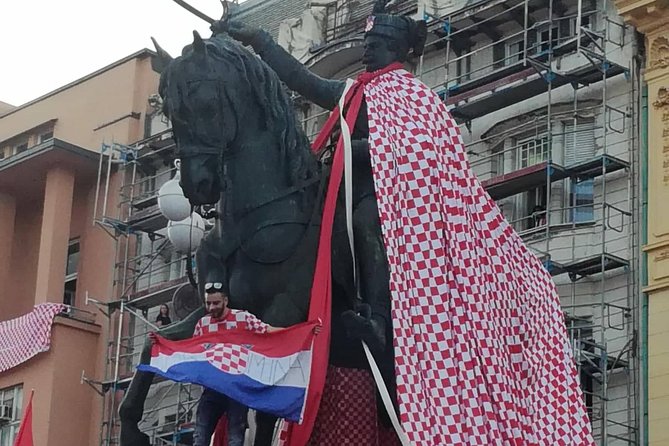
Most good walking tours start where the city actually breathes. This one begins at Trg J. Jelačića, in the Gornji Grad – Medveščak area, and ends right back at the same meeting point. That matters because you do not waste your energy on transit or “end-of-tour scramble.”
The total duration is listed around 3 hours, with the tour described as about 2.5 hours. In practical terms, expect a brisk-but-not-rush walk with short stop time at each landmark, plus time for the guide to put the pieces together. The schedule includes a mix of quick photo moments and short orientation explanations.
Pickup is offered, which can help if you’re staying a bit away from the core. Still, plan to be able to reach the meeting area easily, since the tour is also near public transportation. The physical requirement is moderate fitness. That basically means you should be comfortable with continuous walking and the kinds of streets where uneven pavement and little slopes are normal.
Finally, note the simple planning rule: the tour requires good weather. If skies are bad, you may be offered a different date or a full refund. So keep your walking-day expectations flexible.
Cathedral of Zagreb: the first stop sets the tone
The tour begins with a visit to the Cathedral of Zagreb. You get about 10 minutes there, and the entrance ticket is not included. That short window is intentional. The goal is not a long interior program. It is orientation, context, and a sense of why this church belongs at the top of almost any Zagreb route.
Why this matters early in the day: cathedrals anchor the story of a city. Once you know what you’re looking at, the rest of the architecture you pass later makes more sense. You’ll also be able to match details you see outside the cathedral with what the guide explains, which saves you from doing all the research later.
The drawback is the one practical line item: you should be ready to pay the entrance cost for the cathedral. If you already planned to visit the cathedral anyway, this is mostly a “pay once and move on” situation. If you were hoping for a fully included experience, this is the main part where your budget needs a bit of attention.
More Walking Tours in Zagreb
- Zagreb: City and WWII Tunnels Walking Tour★ 4.9 · 1,230 reviews
- Zagreb: City & History Walking Tour & WW2 Tunnels★ 4.9 · 1,202 reviews
- Walking tour of Zagreb★ 5.0 · 383 reviews
Dolac Market: local food culture without the guesswork
Next comes Dolac Market, and it’s listed as free. This is where Zagreb feels like Zagreb, not a curated postcard. Dolac is a classic Central European market scene, and the best part of having a guide here is that you are not just watching stalls. You’re learning how to read the place: what it does, why it’s central, and how it fits into daily life.
I like market stops on guided tours because they help you understand what to do after the tour ends. After Dolac, you get a clear sense of what neighborhoods and streets actually feel like home for locals. That can help you choose a lunch spot later that fits your style and budget.
One thing to consider is time. Market visits can turn into long, tempting wandering. This tour gives you market orientation rather than unlimited browsing, so if you are a serious shopper or food-focused traveler, you may want to come back later on your own when you have more time.
Also, markets can be lively and busy. If you prefer quieter environments, be ready to pause and step back when crowds thicken, then move in again when you want to take in the details.
Kokumi Tkalča and Krvavi Most: the fun street stories side
Then the route turns to the energy of the old-town streets. You stop at Kokumi Tkalča, a pub street, and later at Krvavi Most (the Bloody Bridge street). Both are listed as free, so they work well as low-cost, high-atmosphere stops.
Here’s why I think this part of the walk is valuable: Zagreb has a serious architectural core, but it also has street legends and small-town humor. When a guide connects those myths to what you see around you, you remember the places longer than you would from photos alone.
Kokumi Tkalča is more about feel than about a single monument. It’s the kind of street where you can sense why people gather, and it gives you a clue about where evening plans might naturally form later. Krvavi Most adds the story element. Bloody Bridge sounds dramatic, but in practice it often becomes a fun conversation about how cities tell their past, even when the details are more legend than textbook.
One caution: if you are not comfortable around nightlife streets, just treat this as a quick orientation stop. You are not expected to turn it into a bar crawl. The goal is to get the cultural context, then keep walking.
Petrini Pyli stone gate: a small stop with big context
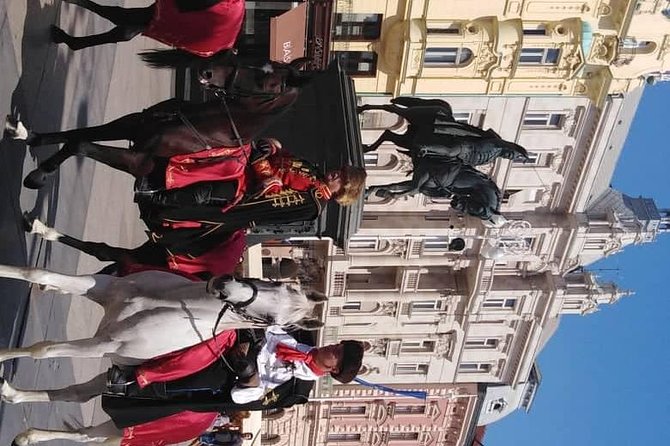
After the lively street scenes, you pass through a more structural, historical moment at Petrini Pyli, listed as a stone gate. This is one of those stops where the value comes from interpretation. A gate can seem like a minor detail if you do not know what to look for, but with a guide, it becomes a clue about how the city’s old movement and boundaries worked.
I like adding one “in-between” landmark like this because it breaks up the route. It gives your eyes a chance to focus on architectural function rather than just plazas and streets. And it keeps the walking tour from feeling like it only hits the famous names.
The listing keeps admission free for this stop, so it is also a low-friction moment in the itinerary. You can spend your time listening, looking closely, and then continue without worrying about a ticket line.
More marble lanes taken slowly:
- Zagreb Small Group Guided Walking Tour with WW2 Tunnels
★ 5.0 · 380 reviews - Zagreb: Restaurants, Food & Old Town Walking Tour
★ 5.0 · 191 reviews - Zagreb Unveiled: Private walking tour with a local guide
★ 5.0 · 185 reviews - Zagreb: Restaurants, Food & Old Town Walking Tour
★ 4.7 · 170 reviews
St. Mark’s Church square: where the city becomes visual
St. Mark’s Church and its square are next, with admission listed as free. This stop is a key reason many people love Zagreb. It is a place where you can see how religious architecture and civic identity overlap.
In a guided format, you usually get two benefits here. First, you understand what makes the church visually distinctive. Second, you learn how the square fits the street plan around it, so when you step away you can still picture the layout in your head.
This is also where your photos tend to look best because the area is designed for viewing from different angles. If you like to take time with photos, this is one of the stops where you can slow down slightly, within reason, while your guide keeps the story flowing.
Since admission is listed as free, it’s a good spot to expect a smooth experience, assuming the square and entry points are accessible in the moment. If the area is crowded, just reposition and keep your eyes moving rather than trying to wedge into the tightest spot.
Lotrščak Tower and the approach back toward the center
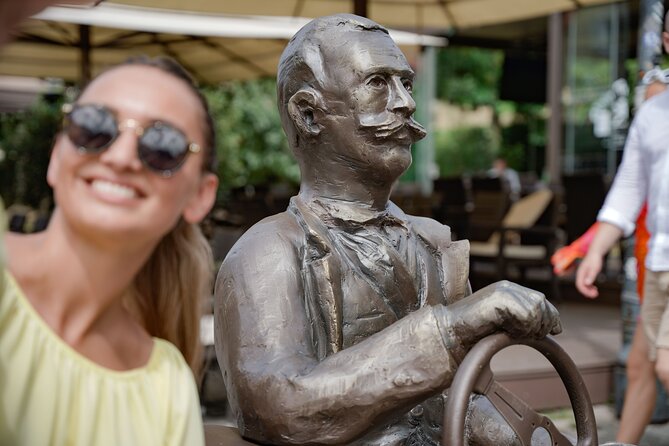
The route then includes Lotrščak Tower, again listed as free. Towers are practical on walking tours. Even if you do not climb anything, you get a strong sense of where the viewpoints would be and how the city once defended itself and watched its surroundings.
I like tower stops because they help you mentally map the city. Zagreb feels compact when you are walking it, but a tower gives you a reference point. After this stop, the rest of your day becomes easier to plan, because you start understanding how central areas relate to each other.
You’ll then reach Ban Josip Jelačić Square, listed as a free stop. This square is basically Zagreb’s anchor. It’s where you naturally end up when you are moving across the city, and it’s helpful that the tour returns you here at the end.
If you want a simple tip: use the time here to orient yourself to where you’ll go next. Pick your next neighborhood, decide your lunch plan, then use public transit or a short walk to get there. The tour has done the heavy lifting of orientation.
Zrinjevac park and the station area, with an included ticket
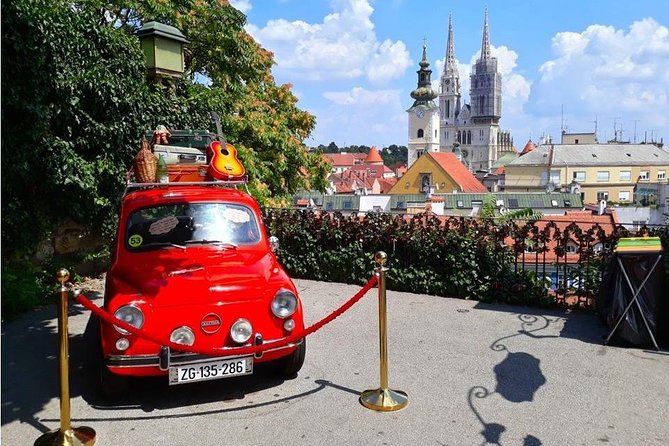
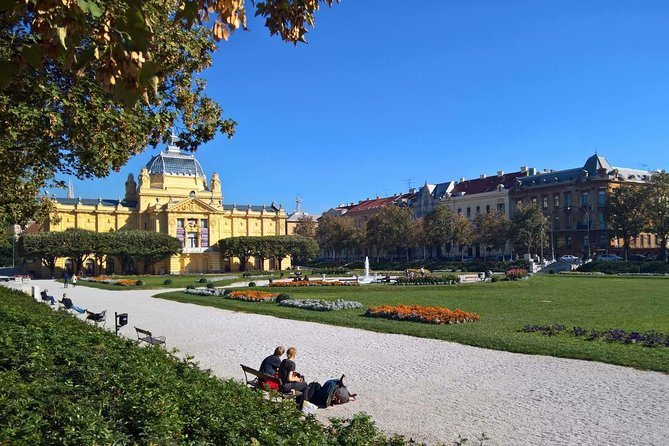
The final segment is Zrinjevac, with a longer stop time listed as about 20 minutes. Zrinjevac is described alongside Tomislav Park, the Main train station building, and the hotel Esplanade area, and the admission ticket is listed as included.
This is a smart ending. After the old-town streets, you get a calmer green space and a more modern civic edge near the station zone. It makes the walk feel like a complete circle, from historic core to the city’s “arrivals and departures” energy.
The included admission matters here because it signals the guide is finishing with a sight you do not have to pay for separately within the tour structure. The exact object of that admission is not spelled out in the data you provided, so I cannot claim it is one specific museum or viewpoint. But the practical takeaway is clear: you should treat this ending as the part where something paid is covered.
If you like to continue your day with a smooth transition, this ending works. You can linger in the park, then head toward your next plan. Or you can treat the nearby station area as your jumping-off point for other parts of Croatia if your itinerary includes day trips.
Price and value: what you get for $168.58 per person
The price is listed at $168.58 per person, and it’s a private walking tour. That private part is the real value driver here. In a city like Zagreb, the difference between “I saw the sights” and “I understood the city” often comes down to whether you can ask questions and adjust the pace.
You also get a route that covers the main highlights in about 2.5 hours, leaving you with time after the tour ends. That time has value too. Instead of spending the afternoon trying to piece together what matters most, you can use those extra hours for lunch, a museum you choose, or a second walk loop at your own speed.
There is one cost consideration: the Cathedral of Zagreb entrance ticket is not included. Everything else on the list is marked free, and the Zrinjevac segment includes admission ticket coverage. So your total out-of-pocket should be mostly predictable, with that cathedral being the one likely extra line item.
Booking timing is also decent. The tour is commonly booked about 36 days in advance on average. If you have fixed travel dates, I’d plan early. Private guides can fill up in popular seasons, and Zagreb walking tours are often in demand because they’re a good first-day activity.
One more value note: you get the route structure, the historical orientation, and the street-life context in one package. That is the kind of efficiency you feel the moment you start walking after the tour ends.
Who this Zagreb private walk suits best
This tour fits best if you want a “get your bearings fast” style day without racing through sights. If you like landmarks but also care about street atmosphere, the stops on Dolac Market and Tkalča pub street help balance the experience.
It’s also a good pick if you enjoy stories tied to real places. The tour guide, Ivana Ćurić, is known for mixing the straightforward historical overview with fun myths and small details that you might not get from a standard book. That storytelling angle makes the walk feel like a conversation, not a lecture.
I think it’s ideal for:
- Couples and small groups who want private attention
- First-time visitors who want Zagreb orientation without planning every turn
- People who want to hit the key sights efficiently, then enjoy the rest of the day freely
It might be less ideal if:
- You want a long, ticket-heavy museum day
- You dislike walking outdoors for extended stretches
- You hate nighttime-area streets even briefly, since Kokumi Tkalča and similar areas bring nightlife energy
What to do before and after the 2.5-hour walk
Before you start, I suggest wearing comfortable shoes with grip. This tour is a walking route with multiple short transitions, and old-city streets can feel uneven underfoot. Bring a light layer too, even in warmer months, since weather shifts happen.
After the tour ends back at Jelačić Square, treat it like a launchpad. You now know where the city center sits, where the major sights connect, and which areas feel lively versus calm. If you want to keep the day easy, choose one neighborhood to revisit for lunch or a longer stroll.
If you are the type who likes to plan, use the Zrinjevac ending to decide next steps. Parks and the station area are practical zones for transit, and you can either wander nearby or hop on a route to your next stop with less stress.
Should you book this private Zagreb walking tour?
Book it if you want a guided first pass that actually helps you understand Zagreb, not just tick off locations. The private format, the tight 2.5 to 3 hour pacing, and the mix of market life plus major squares make it a strong value use of time. I also like that you get a big orientation at the start, then real street stories as you go, with the main paid ticket risk limited to the Cathedral of Zagreb.
Skip it if you prefer slow museum time, or if you know you dislike outdoor walking when weather changes. Also, if you were already planning a deep, stand-alone cathedral visit and want lots of time inside, the cathedral stop here is brief.
If your goal is to return from Zagreb feeling like you understood the city’s layout and character, this one is a solid choice.
FAQ
How long is the private Zagreb walking tour?
It runs about 3 hours, and the experience is described as a private 2.5-hour walking tour.
Is this tour private?
Yes. It is a private tour/activity, and only your group participates.
Where do we meet, and where does the tour end?
You meet at Trg J. Jelačića in Zagreb, and the tour ends back at the same meeting point.
Is pickup available?
Pickup is offered.
Are tickets included for every stop?
Not all stops include admission. The Cathedral of Zagreb has admission not included, while Zrinjevac is listed as admission ticket included. Other listed stops are free.
What if weather is bad or plans change?
The tour requires good weather. If it is canceled due to poor weather, you will be offered a different date or a full refund. You can cancel up to 24 hours in advance for a full refund.
Latest arrivals logged at Zagreb



Walking Tours, compared.
Walking Tour of Split and Diocletian’s Palace
Read our review →
Krka Waterfalls tour with Trogir Walking tour and Krka panoramic boat cruise
Read our review →
City Walls Early Morning or Sunset Walking Tour
Read our review →Browse the lists this tour appears in